
How Do Bulk Ordering Volume Discounts and Flat Shipping Lower Unit Costs?
Short answer: Bulk ordering custom cardboard boxes significantly lowers unit costs by amortizing fixed press plate and die setup expenses across thousands of units. Shipping cartons flat on pallets optimizes freight density, cutting warehouse storage overhead and per-unit transport expenses for growing commercial brands.
On this page
- How does press setup amortization drive bulk volume price breaks
- What are raw material paperboard mill volume discounts
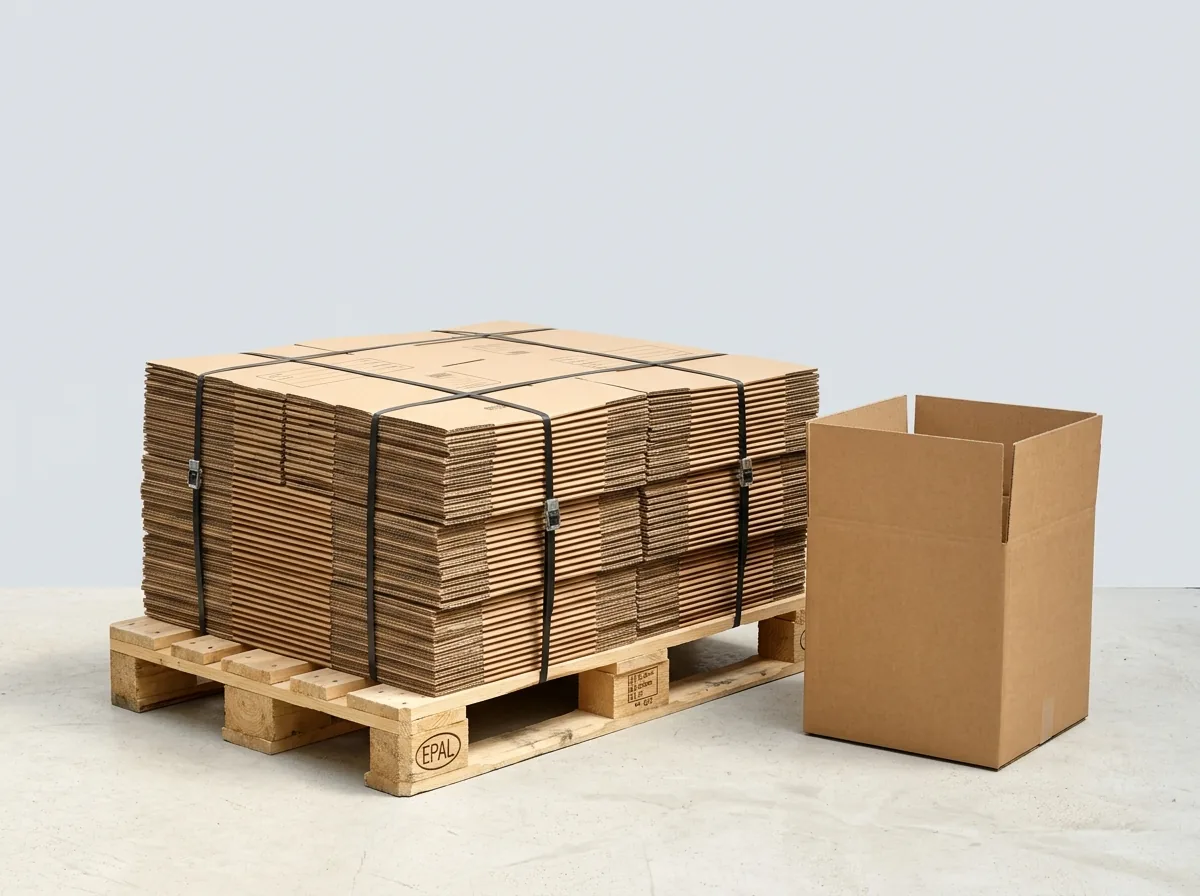
- How does flat-packing (KDF) maximize freight shipping density
- What warehouse storage space is saved by receiving flat-packed boxes
- How do combined multi-SKU gang runs lower costs for growing brands
- What inventory safety stock strategies balance cash flow and volume savings
- Why does CubitPack offer zero die and plate tooling charges
- How does free US ground shipping enhance total landed cost savings
- Common mistakes
- FAQs
Request a custom quoteFree dieline & 3D mockup
Procurement economics in custom box manufacturing are governed by machine setup amortization, raw material mill purchase volumes, and freight logistics density. When ordering custom cardboard boxes, unit pricing drops dramatically as production quantities scale from 500 units to 2,500, 5,000, or 10,000 units. In high-speed offset lithography and flexography, the labor and material required to calibrate print plates, register ink fountains, and adjust rotary die-cutters represent fixed setup costs incurred regardless of run length. On a short run of 500 units, these setup expenses are divided among fewer boxes, resulting in higher unit prices; on a run of 5,000 units, setup overhead is amortized to pennies per container. In addition, shipping cardboard cartons knocked down flat (KDF) on standard wooden pallets maximizes cubic shipping density, lowering inbound freight freight expenses and optimizing warehouse shelf storage.
How does press setup amortization drive bulk volume price breaks?
In commercial printing and converting, preparing an offset lithographic press or flexographic folder-gluer for a production run is labor-intensive. Press operators must mount printing plates, calibrate ink density curves, mix custom PMS spot color formulas, and set rotary creasing rules. This setup process takes one to two hours of skilled machine time and consumes test paperboard sheets. Because this setup expense is fixed, producing 5,000 boxes spreads calibration overhead across ten times as many units as a 500-unit run, dramatically reducing per-unit manufacturing costs, allowing growing brands to capture significant unit cost savings. Bulk packaging procurement enables high-volume brands to protect operating margins and streamline supply chain scheduling across nationwide distribution hubs.
What are raw material paperboard mill volume discounts?
Packaging converters purchase virgin paperboard and fluted containerboard in massive master paper rolls weighing several tons from regional paper mills. When brands place large volume orders exceeding 5,000 units, converters purchase raw paper stock at wholesale truckload volume discounts. These raw material savings are passed directly through to procurement buyers. In addition, large manufacturing runs minimize trim waste along master roll widths, optimizing overall paper yield and lowering net production costs, maximizing raw material utilization across commercial paper converting runs. Bulk packaging procurement enables high-volume brands to protect operating margins and streamline supply chain scheduling across nationwide distribution hubs.
How does flat-packing (KDF) maximize freight shipping density?
Corrugated boxes and paperboard folding cartons are engineered to ship 'knocked down flat' (KDF). When folded flat along their pre-glued manufacturer seams, containers contain zero empty internal air volume. A standard 48x40-inch wooden pallet can accommodate over 20,000 flat folding cartons or 2,500 flat corrugated mailers, stacked and shrink-wrapped securely up to six feet high. Shipping flat maximizes freight trailer cubic capacity, drastically reducing inbound LTL (less-than-truckload) freight costs per unit, ensuring economical bulk distribution across national logistics networks. Bulk packaging procurement enables high-volume brands to protect operating margins and streamline supply chain scheduling across nationwide distribution hubs.
Know your size? Compare pricing across up to 3 quantities.
Request a Quote →What warehouse storage space is saved by receiving flat-packed boxes?
Warehouse floor and pallet rack space carry substantial monthly square-footage overhead costs. Receiving fully assembled boxes consumes massive air volume; an assembled rigid box takes up ten to twenty times more warehouse space than a flat-packed folding carton of identical dimensions. By receiving custom cardboard boxes flat-packed, fulfillment operations can store months of packaging inventory on just two or three pallet rack bays, freeing up valuable floor space for high-margin revenue inventory, maximizing operational efficiency in busy distribution facilities. Bulk packaging procurement enables high-volume brands to protect operating margins and streamline supply chain scheduling across nationwide distribution hubs.
How do combined multi-SKU gang runs lower costs for growing brands?
Brands managing multiple product flavors, scents, or sizes can achieve bulk volume pricing through gang-run printing. In gang-run production, multiple distinct packaging designs sharing identical board calipers and die-cut shapes are imposed together on the same large press sheet. Instead of running four separate 1,000-unit orders with four separate setups, the converter runs a single 4,000-sheet master press run, delivering the top-tier bulk price discount across all four product variations simultaneously, saving thousands of dollars in commercial prepress setup fees. Bulk packaging procurement enables high-volume brands to protect operating margins and streamline supply chain scheduling across nationwide distribution hubs.
What inventory safety stock strategies balance cash flow and volume savings?
Procurement managers must balance volume price discounts against inventory carrying costs and upfront cash flow. A proven packaging inventory strategy is the 90-to-120-day replenishment model. Ordering a four-month supply captures major volume price breaks at the 2,500 or 5,000-unit tier while minimizing the risk of inventory obsolescence from potential regulatory labeling changes. Annual forecasting allows converting partners to schedule paperboard roll allocations in advance, guaranteeing stable pricing and guaranteed raw material availability during peak holiday fulfillment rushes. Bulk packaging procurement enables high-volume brands to protect operating margins and streamline supply chain scheduling across nationwide distribution hubs.
Why does CubitPack offer zero die and plate tooling charges?
Traditional packaging suppliers frequently quote low per-unit prices but add surprise upfront charges for steel-rule cutting dies and printing plates, which can add hundreds of dollars to initial purchase orders. At CubitPack, we eliminate all die and plate setup fees across all standard and custom dimensions. By absorbing structural tooling expenses, we make custom packaging accessible for growing brands, allowing you to invest your budget directly into high-quality materials and finishes, enhancing your brand presence on retail shelves and e-commerce doorsteps. Bulk packaging procurement enables high-volume brands to protect operating margins and streamline supply chain scheduling across nationwide distribution hubs.
How does free US ground shipping enhance total landed cost savings?
In bulk packaging procurement, freight shipping expenses can represent up to twenty percent of the total purchase invoice if billed separately. CubitPack includes free standard ground shipping across the contiguous United States on all custom cardboard box orders. Whether receiving parcel cartons or multi-pallet freight shipments, your quoted price is your final landed cost. Ordering cardboard packaging boxes with transparent, all-inclusive pricing simplifies budget forecasting and maximizes profit margins for growing retail brands seeking predictable supply chain budgeting. Bulk packaging procurement enables high-volume brands to protect operating margins and streamline supply chain scheduling across nationwide distribution hubs.
What common cardboard packaging mistakes should you avoid?
Developing custom cardboard packaging requires balancing structural substrate selection with precise dimensioning. Packaging specialists identify four frequent errors
- Ordering minimum quantities of 500 units repeatedly, paying double or triple the per-unit price compared to a 2,500-unit volume tier.
- Ordering fully assembled rigid boxes when warehouse storage space is limited, quickly overcrowding pallet racking.
- Failing to consolidate multiple product SKUs of identical size into a shared production run to capture volume discounts.
- Forgetting to verify warehouse pallet receiving capabilities (such as loading docks and pallet jacks) before scheduled bulk freight delivery.
Packaging for this

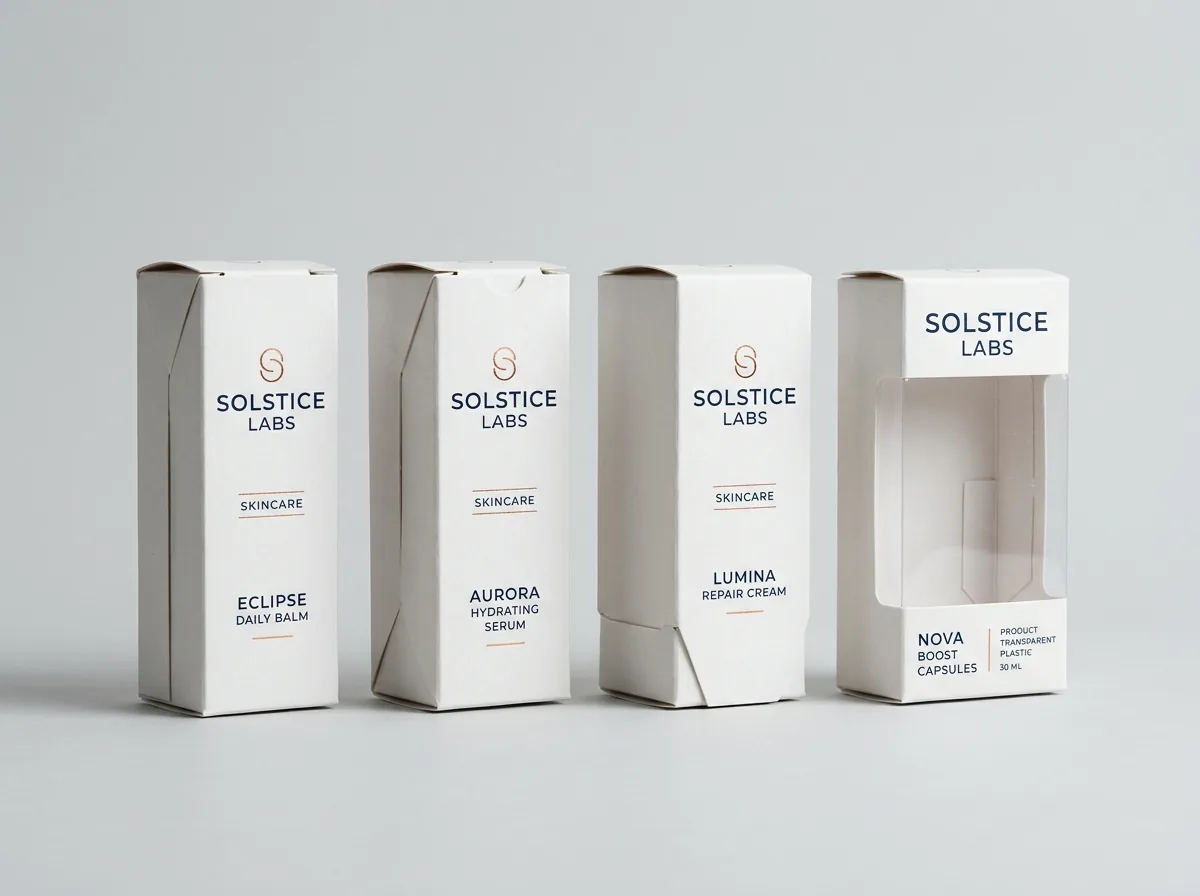

Ready to order cardboard boxes? Compare up to 3 quantities with a free 3D mockup.
Request a Quote →Questions about cardboard boxes
Why does unit price drop so significantly on larger cardboard box orders?
Fixed press calibration, plate mounting, and die setup costs are incurred on every run regardless of quantity. Spreading these fixed costs across 2,500 or 5,000 units reduces setup overhead to pennies per box, lowering unit prices.
What is the optimal order quantity to capture volume discounts?
While our minimum order starts from 500 units for folding cartons and 100 for mailers, significant volume price breaks occur at 1,000, 2,500, and 5,000 units, providing the best balance between unit cost savings and inventory carrying limits.
Do custom cardboard boxes ship flat or assembled?
Custom paperboard folding cartons and corrugated mailers ship knocked down flat (KDF) in strapped bundles on pallets. Shipping flat eliminates air volume, drastically reducing freight costs and warehouse storage space.
Can I combine multiple artwork designs into one bulk order?
Yes. If your product variations share identical box dimensions and board calipers, we can often run them together in a combined gang run, allowing you to achieve higher volume tier discounts across all your SKUs.
Are there any hidden die cutting or plate fees on bulk orders?
No. CubitPack provides complimentary 2D CAD dielines, zero die cutting tooling charges, and zero plate setup fees on all custom orders, regardless of size or order quantity.
Is shipping included in bulk custom cardboard box quotes?
Yes. All our custom cardboard packaging quotes include free standard ground shipping across the contiguous United States, ensuring that your quoted unit price is your complete landed cost with zero surprise freight fees.
Still have a question? Ask a packaging specialist.
Request a Quote →Request your cardboard boxes quote
Tell us your size and quantities, and one dedicated account manager prepares pricing for each tier.
- Free design & AI-to-print studio + 3D mockup
- No die or plate charges · 4–5 day rush available
- Free shipping to all 50 states
- 10% off your first order
Cardboard packaging specifications, paperboard calipers, and fluted fiberboard parameters were verified against Paperboard Packaging Council (PPC) and FEFCO International Fibreboard standards. Reviewed by senior packaging engineers.
Sources
- Paperboard Packaging Council (PPC) folding carton caliper standards and prepress die-cutting tolerances
- FEFCO International Fibreboard Case Code standards for corrugated box styles and flap configurations
- Idealliance G7 Master Color specifications for offset lithographic and flexographic printing on paperboard
What changed
- November 11, 2026: Published technical engineering guide analyzing bulk ordering volume discounts cardboard boxes for custom cardboard boxes, including 5 custom SVG diagrams.
More guides
New packaging guides by email
Sizes, materials and design tips. Unsubscribe anytime.