
Press-to-close vs pocket zipper vs powder zipper: which pouch closure fits your product?
Short answer: Choose a single-track press-to-close zipper for whole snacks, capsules, gummies and hardware, a multi-channel powder-resistant zipper for protein, collagen, spices, flour and bath salts that dust the seal groove, and a front pull-tab pocket zipper for five-panel flat-bottom bags when ordering custom zipper pouches from CubitPack.
On this page
- How do press-to-close, powder-resistant and pocket zippers compare side by side
- When is a standard single-track press-to-close zipper the right choice
- How does a powder-resistant zipper work for protein, spices and bath salts
- Why do flat-bottom box pouches use a front pull-tab pocket zipper
- Should I order top-open or bottom-open zipper pouches for my filling line
- Common mistakes
- FAQs
Request a custom quoteFree dieline & 3D mockup
Not all flexible pouch zippers lock the same way, and picking the wrong track for your product's particle size can leave customers fighting a bag that pops open in the pantry. A standard single-track press-to-close zipper uses one narrow male rib that snaps into a matching female groove across the upper inner walls, making it ideal for solid pieces like gummies, jerky, capsules, dried fruit and hardware fasteners. When you pack fine powders or crystals such as whey protein, matcha, baking mixes or Epsom salts, airborne dust settles inside a single groove during filling or scooping and blocks the rib from seating; a multi-channel powder-resistant zipper solves this with wider textured hooks that shed fine grains as you pinch them shut. Meanwhile, a front pull-tab pocket zipper mounts on the front face of a flat-bottom pouch so your filling crew can pour straight through an unobstructed top mouth.
How do press-to-close, powder-resistant and pocket zippers compare side by side?
All three zipper families are extruded from heat-sealable polyethylene (PE) or polypropylene (PP) in 10 mm to 24 mm flange widths so they weld directly to the inner sealant layer of your barrier laminate at 130°C to 160°C without adhesives or solvents. Where they differ is the cross-sectional geometry of the interlocking tracks, how well they tolerate 50-micron to 500-micron dust in the sealing channel, and whether the strip sits 1.25 inches below the top lip or 2.0 inches down on the front panel. Use the comparison table below to match your product texture, particle size, pouch style and filling method to the right reclosure track when configuring reclosable stand up zipper pouches.
| Zipper closure type | Track structure & location | Best product & bag match |
|---|---|---|
| Single-track press-to-close | One interlocking rib-and-groove welded inside the top mouth below tear notches | Whole snacks, gummies, capsules, jerky, sheet masks, hardware on stand-up or flat bags |
| Powder-resistant multi-track | Wide dual-channel or hook-to-hook textured profile welded inside the top mouth | Whey and plant protein, electrolytes, collagen, flour, spices, bath salts |
| Front pull-tab pocket zipper | Tamper-evident pull tab welded onto the upper front panel; top mouth stays open | Flat-bottom box pouches for specialty coffee beans, granola, rice and pet kibble |
| Pre-closed bottom-fill zipper | Standard or powder top zipper shipped locked with the bottom gusset left open | High-speed auger fillers where falling product would foul an open top zipper |
When is a standard single-track press-to-close zipper the right choice?
A standard single-track press-to-close zipper is the workhorse closure used on the majority of custom stand up pouches and custom flat pouches. Its two flanges are thermally welded to the front and back inner polyethylene layers about 1.0 to 1.25 inches below the top edge, right underneath the laser-scored tear notches. When the customer tears off the top factory heat-seal strip and pinches the two walls together, the single male rib clicks into the female groove to create a tight moisture and aroma barrier. Because the single groove has tight tolerances to keep air out, it performs best when your product consists of discrete pieces larger than 1 to 2 millimeters, or non-shedding items like soft chews, capsules, roasted nuts, whole tea leaves, cotton pads, fishing lures and screws. For those products, a single-track zipper gives the lowest unit cost and the crispest, flattest profile along the upper neck of the bag.
How does a powder-resistant zipper work for protein, spices and bath salts?
Anyone who has ever bought a bag of whey protein, pancake flour or finely ground spices in a standard single-track bag knows the frustration of tapping the top ten times just to get the zipper to catch. During auger filling at the co-packer, a cloud of fine powder billows upward and coats the open female groove. Even if the top heat seal closes the bag for shipping, the moment the customer tears the header off and scoops out the first serving, powder packs into the narrow channel and prevents the single rib from locking. A powder-resistant zipper solves this problem in one of two ways: either by using a dual-track profile with relief channels that push stray granules aside as the two ribs engage, or by using a wider micro-hook profile (similar to miniature interlocking mushrooms) that grips across a broad band even when dusted with fine particles. If you are building custom supplement pouches or custom bath salt pouches, specifying a powder-shedding track is the single best upgrade for everyday customer usability.
- Dual-track relief channels: two parallel sealing ribs separated by a dust-escape trough that clears granules aside.
- Hook-to-hook micro-studs: wide array of Tiny interlocking hooks that snap together without needing exact millimeter alignment.
- Tactile & audible feedback: customers feel and hear a distinct crunch-lock across the full width even with dusty fingers.
- Ideal particle applications: protein isolates, collagen peptides, greens powders, culinary spices, cocoa, baking mixes and bath salts.
Know your size? Compare pricing across up to 3 quantities.
Request a Quote →Why do flat-bottom box pouches use a front pull-tab pocket zipper?
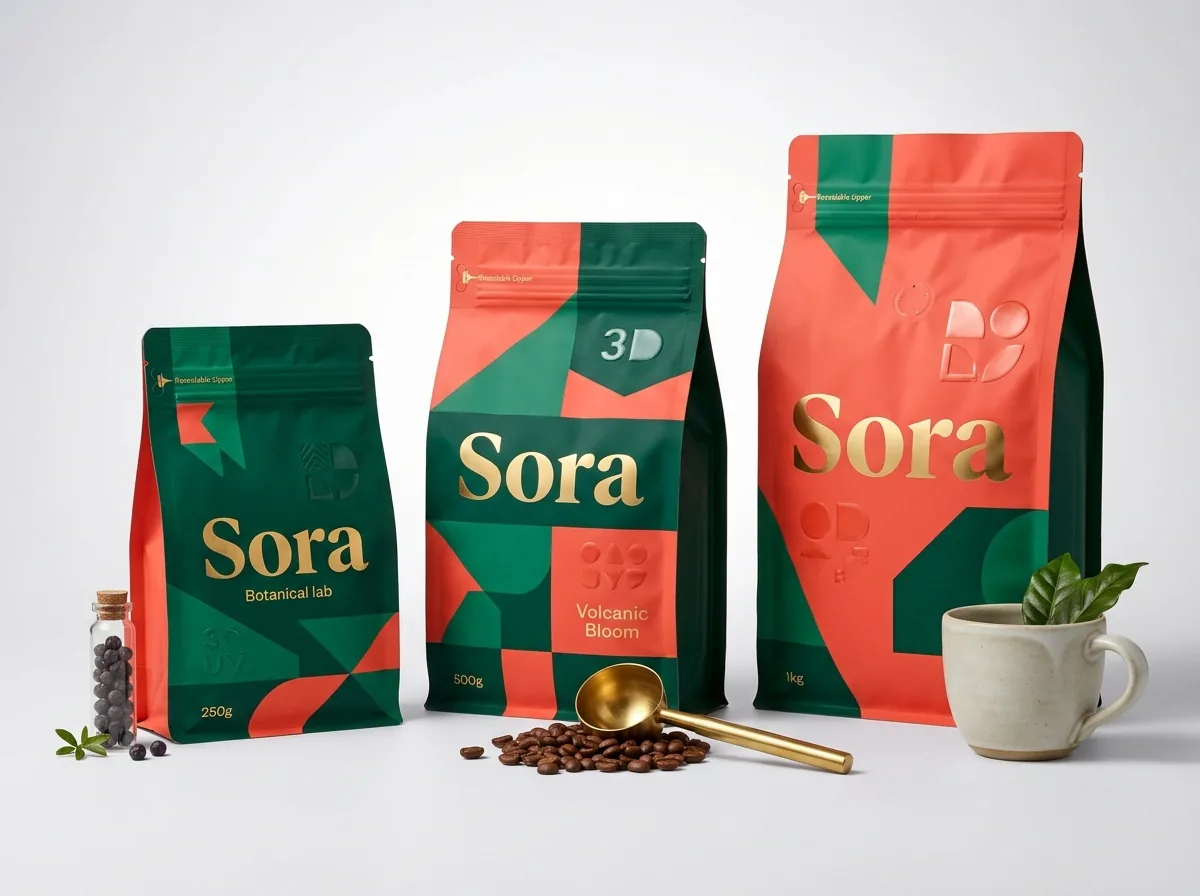
A five-panel flat-bottom box pouch has expandable left and right side gussets folded inward along its sides. If you try to weld a standard top press-to-close zipper across the very top mouth of a side-gusseted bag, the thick four-ply gusset folds on the left and right edges get in the way of the zipper track. Instead, flat-bottom box pouches mount a pocket zipper horizontally across the upper third of the flat front panel only. On the outside of the front panel, a laser-perforated pull tab sits over the zipper track. At the factory, the pocket zipper is already zipped shut and sealed inside the front wall, leaving the entire top mouth of the bag wide open with zero obstruction. Your crew pours whole-bean coffee, granola or pet kibble straight down the open top throat and heat-seals the top seam once. When the customer gets the bag home, they pull the front tab across to expose the pocket zipper on the front face, which is why this setup is standard on premium custom coffee bags.
Should I order top-open or bottom-open zipper pouches for my filling line?
Over 90% of custom zipper pouches are shipped top-open: the bottom gusset and side edges are fully sealed at our converting plant, the zipper is left open (or lightly tacked), and the top 0.375 inch header above the zipper is open so you can drop product in from the top and run the top lip through a band sealer. In a few specialized cases, such as high-speed vertical auger filling of very dusty powders or sticky confections where falling product would coat an open top zipper throat, co-packers request bottom-open pouches. In a bottom-open setup, the top header is factory-sealed, the zipper is locked shut, and the pouch is shipped upside down with the bottom edge open so your filler drops product in from the base and seals the bottom seam last. Tell your CubitPack account manager whether you fill by hand, semi-automatic weigher or rotary pouch machine so we orient the open end to match your equipment.
- Top-open (standard): bottom gusset is factory-sealed; you fill through the top mouth and heat-seal the top lip.
- Front pocket-zipper top-open: zipper sits sealed on the front panel while you fill through an unobstructed top mouth.
- Bottom-open (custom co-packer request): top header and zipper arrive sealed; you fill from the bottom and seal the base.
What are the most common pouch zipper selection mistakes?
Picking the wrong zipper track slows down your packing line or leaves customers unable to reseal the bag after the first serving. Avoid these five mistakes
- Specifying a standard single-track press-to-close zipper for fine whey protein, greens powder, flour or bath salts that clog a narrow groove.
- Trying to put a standard top-mouth zipper across a four-corner side-gusset bag instead of using a front panel pull-tab pocket zipper.
- Letting an auger filler drop dusty powder straight onto an open zipper track without a funnel spout that extends below the zipper line.
- Placing critical front-panel text right across the pull-tab strip of a pocket zipper where the customer tears the film away.
- Skipping ultrasonic side-seal crush welds at the left and right ends of the zipper, which lets air leak around the track corners.
Packaging for this
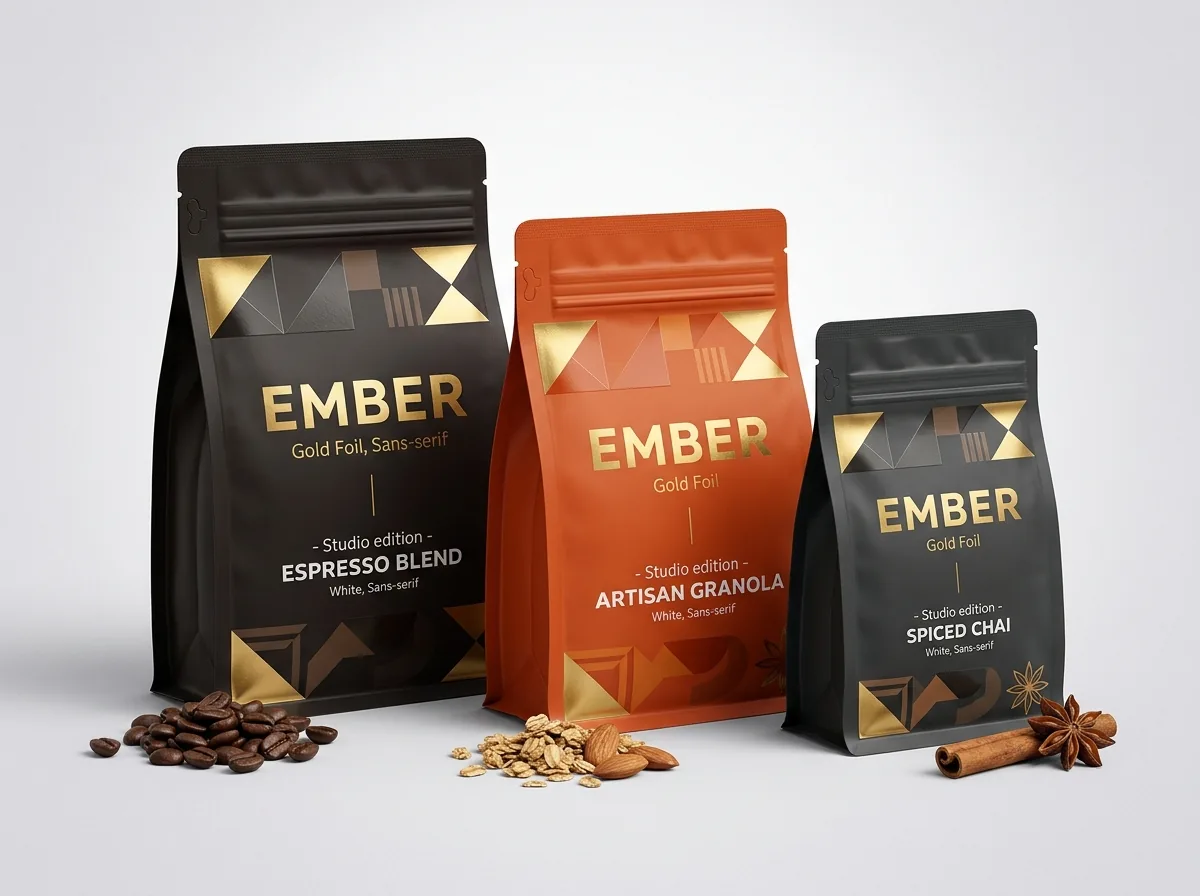
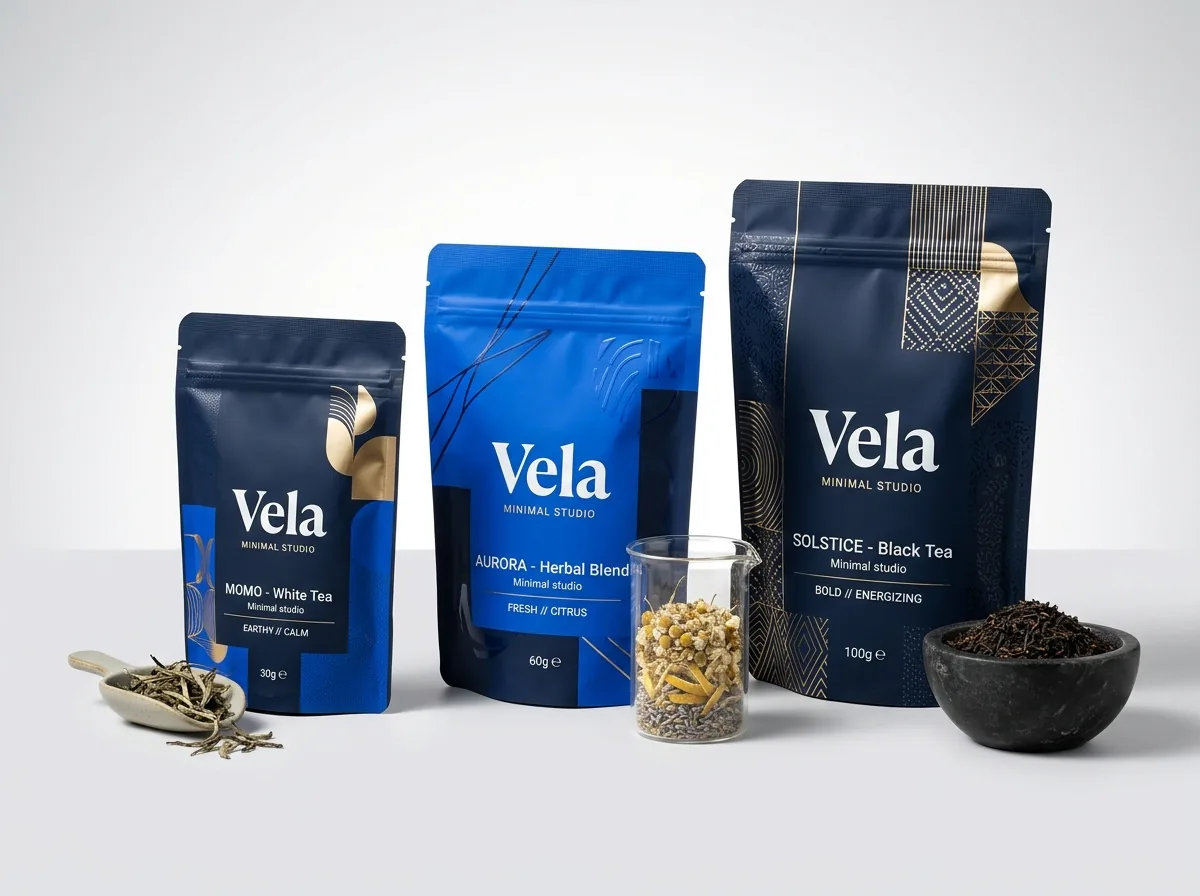
Ready to order zipper pouches? Compare up to 3 quantities with a free 3D mockup.
Request a Quote →Questions about zipper pouches
What is the difference between a single-track zipper and a powder zipper?
A single-track press-to-close zipper has one narrow male rib that clicks into one female groove, which works cleanly for solid items. A powder-resistant zipper uses dual channels or wide micro-hooks that push fine powder granules aside so the track still locks shut after scooping.
How do you keep powder out of the zipper during factory filling?
Use a filling funnel tube that extends 1 inch below the open zipper track before releasing the powder dose, pair it with a dust-collection hood or a powder-resistant zipper profile, or ask about front pocket-zipper pouches where the zipper stays closed during top filling.
Does a front pocket zipper still need a top heat seal after filling?
Yes. On a flat-bottom pocket-zipper bag, the pocket zipper comes sealed on the front panel and the top edge arrives open. After you pour product in through the top, you run the top edge through a heat sealer once to close the bag permanently.
Are all three zipper types safe for direct food contact?
Yes, food-contact polyethylene and polypropylene zipper tracks paired with food-safe inner sealant films are available on request for snacks, coffee, tea and powdered supplements through certified partner facilities. We share partner certificates on request.
Can I get a child-resistant zipper on a custom pouch?
If you package regulated products that require two-step press-and-slide or pinch-and-pull opening mechanics, see our dedicated child-resistant mylar bags page. Never claim child-resistant certification unless a partner test certificate for that exact pouch size and closure is on file.
Can I feel and test the different zipper tracks before ordering?
Yes. Order our $50 sample kit (credited toward your first order) to test single-track press-to-close, powder-resistant and pocket zippers with your own product in your kitchen or warehouse before approving your digital proof and 3D mockup.
Still have a question? Ask a packaging specialist.
Request a Quote →Request your zipper pouches quote
Tell us your size and quantities, and one dedicated account manager prepares pricing for each tier.
- Free design & AI-to-print studio + 3D mockup
- No die or plate charges · 4–5 day rush available
- Free shipping to all 50 states
- 10% off your first order
This comparison is based on flexible packaging converting specifications for single-track polyethylene zippers, multi-channel powder tracks and front pull-tab pocket zippers, reviewed by a CubitPack packaging specialist. Spot an error? Let us know and we will fix it.
Sources
What changed
- October 22, 2026: First published.
- October 22, 2026: Updated specifications, terminology, and verified source links.
More guides
New packaging guides by email
Sizes, materials and design tips. Unsubscribe anytime.