
What size custom zipper pouch do I need below the zipper track?
Short answer: Subtract 1.25 to 1.5 inches from total exterior pouch height to find the usable fill height below the zipper track, and subtract 0.5 to 0.75 inches from total width for the left and right side seals when sizing custom zipper pouches for your product.
On this page
- Why does the top 1.5 inches of a zipper pouch sit above the fill line
- What are the usable dimensions of common custom zipper pouch sizes
- How does opening the bottom gusset change standing height and depth
- How do I size the top opening width for hand scooping or filling chutes
- How do I size flat 3-side-seal zipper pouches for sheets, wipes and hardware
- Common mistakes
- FAQs
Request a custom quoteFree dieline & 3D mockup
Flexible pouch catalogs always list outer dimensions as Width × Height × Bottom Gusset in inches, measured flat from outer edge to outer edge before filling. On a reclosable bag, however, your product can only occupy the internal cavity below the lower flange of the plastic zipper track. The upper 1.25 to 1.5 inches of exterior height is dedicated to the top impulse heat-seal band, the laser-scored tear notches and the extruded zipper profile itself. At the same time, the vertical left and right side seals consume 0.25 to 0.375 inches per side, reducing usable interior width by 0.5 to 0.75 inches. A standard 6 × 9 × 3.5 inch stand-up pouch therefore offers about 5.375 inches of interior throat width and 7.5 inches of usable height below the zipper, which comfortably holds 8 to 12 ounces of dry goods with proper sealing clearance.
Why does the top 1.5 inches of a zipper pouch sit above the fill line?
Every retail reclosable bag has three stacked functional zones across its top mouth before you ever reach the product cavity. At the very top lip sits a 0.25 to 0.375 inch open header zone where your impulse sealer or rotary band sealer clamps down after filling to create a tamper-evident factory seal. Immediately below that seal band sit the left and right V-cut or U-cut tear notches connected by a micro-etched laser score line, occupying about 0.375 inches of vertical room so shoppers can tear the header off cleanly without scissors. Right below the tear line sits the extruded plastic zipper assembly, which consists of interlocking male and female ribs plus upper and lower thermal weld flanges that span 0.5 to 0.625 inches vertically. When you add those three zones together on custom printed resealable pouches, the bottom edge of the zipper flange sits 1.25 to 1.5 inches down from the top lip on small and medium bags, and up to 1.75 inches down on heavy bulk bags.
- Top heat-seal band (0.25 to 0.375 in): unprinted or solid-ink lip clamped by your heat sealer after filling.
- Tear-notch corridor (0.375 in): side notches and laser score path that tear straight across the pouch.
- Zipper track and weld flanges (0.5 to 0.625 in): interlocking plastic ribs welded to the inner sealant film.
- Headspace buffer (0.5 to 0.75 in below zipper): empty clearance so pieces never jam the track when closing.
What are the usable dimensions of common custom zipper pouch sizes?
Although CubitPack builds every pouch to your exact width, height and gusset with zero die or plate charges, most food, supplement, cosmetic and hardware brands benchmark their products against seven standard footprints. The chart below compares outer flat measurements against actual usable interior width (after subtracting two 0.3125 inch side seals) and usable height below the zipper track. Keep in mind that weight capacities in ounces or grams are only estimates based on medium-density dry goods around 0.45 to 0.55 grams per cubic centimeter, such as granola, gummies, roasted nuts or bath salts. Fluffy freeze-dried fruit or herbal leaf tea takes up nearly twice the volume per ounce, whereas dense Epsom salts, protein powders or steel screws pack into a much smaller cavity at the same weight.
| Outer size (W × H × G) | Usable interior (W × H below zipper) | Typical capacity & uses |
|---|---|---|
| 3.5 × 5 in (flat, no gusset) | 2.875 × 3.5 in | 0.5 - 1 oz: sample capsules, seeds, jewelry parts, SD cards |
| 4 × 6 × 2 in | 3.375 × 4.5 in | 1 - 2 oz: travel bath soaks, loose tea tasters, lip balm duos |
| 5 × 8 × 3 in | 4.375 × 6.5 in | 4 oz (113 g): gummies, jerky strips, dried mango, dog treats |
| 6 × 9 × 3.5 in | 5.375 × 7.5 in | 8 - 12 oz (227 - 340 g): granola, nuts, bath salts, collagen |
| 7 × 11 × 4 in | 6.25 × 9.25 in | 16 oz / 1 lb (454 g): baking mixes, protein powder, pet kibble |
| 8.5 × 12 × 4.5 in | 7.75 × 10.25 in | 24 - 32 oz (1.5 - 2 lb): family snack mixes, superfood blends |
| 10 × 14 × 5 in | 9.25 × 12.25 in | 3 - 5 lb bulk: commercial pantry refills, bulk whey protein |
How does opening the bottom gusset change standing height and depth?
When a stand-up pouch arrives flat in its shipping carton, the bottom gusset is folded upward in half between the front and back walls like an inverted W. A 6 × 9 × 3.5 inch pouch has a 3.5 inch bottom gusset folded into two 1.75 inch pleats. Once you pour product inside and push the bottom gusset open into a round or oval base, the front and back panels curve outward to meet that 3.5 inch depth. That outward curve pulls the lower walls down and inward, which reduces the vertical standing height of the filled pouch by roughly 0.75 to 1.25 inches compared with its flat empty height. It also means a flat pouch cannot accept a rigid square object that is the same width as the bag. If you are packing rigid jars, cosmetic tubes or folded apparel inside a reclosable bag, compare custom stand up pouches against custom flat pouches and test the geometry with a physical sample first.
Know your size? Compare pricing across up to 3 quantities.
Request a Quote →How do I size the top opening width for hand scooping or filling chutes?
Many brands focus entirely on whether their product fits inside the lower body of the pouch and forget that the product first has to pass through the narrowed throat of the open zipper track. Because the left and right vertical side seals are ultrasonic-crushed at the ends of the zipper to prevent corner air leaks, the circular opening diameter when you pinch a zipper pouch open is roughly 60% of the usable interior width. On a narrow 4 inch wide pouch with 0.3125 inch side seals, the usable interior width is 3.375 inches, which opens to a round mouth of about 2.1 inches across. That is plenty wide for pouring capsules, seeds or bath salts from a small scoop, but too narrow for a wide 3 inch semi-automatic weigh-and-fill funnel or a customer's adult hand reaching in for trail mix or cookies. For reach-in snacking or wide protein scoops, step up to at least a 6 inch or 7 inch outer pouch width, or explore custom snack pouches and custom mylar bags with wider landscape proportions.
How do I size flat 3-side-seal zipper pouches for sheets, wipes and hardware?
Flat 3-side-seal zipper bags have no bottom gusset fold at all; the front and back films are sealed flat along the left, right and bottom edges. For flat paper or fabric goods such as facial sheet masks, transdermal patches, seed packets or Collector trading cards, simply measure the flat width and height of your insert, add 0.5 inches of clearance on both width and height so the item slides in smoothly without catching the zipper ribs, and then add the 0.625 inch total side-seal allowance and 1.5 inch top zipper header. If you place an object with noticeable thickness inside a flat 3-side-seal zipper bag, such as a 0.5 inch thick coiled charging cable, a bottle of gummies or a stack of cosmetic cotton pads, the front and back walls must bow outward around the thickness of the object. Divide the object's thickness by two and add that amount to both your interior width and interior height below the zipper so the zipper track closes without tension.
- Flat sheet items (under 0.125 in thick): item width + 0.5 in clearance + 0.625 in side seals = outer width.
- Thick objects in flat bags: add half of the object's thickness to both usable width and usable height below the zipper.
- Reach-in hand access: choose at least a 6 inch to 7 inch outer width so the open zipper throat clears four fingers.
- Filling machine spouts: make sure usable interior width is at least 1.5 times the outer diameter of your filling chute.
What are the most common custom zipper pouch sizing mistakes?
Nearly every zipper pouch sizing error happens when brands confuse flat outer bag dimensions with usable interior room below the track. Avoid these five mistakes
- Using total exterior height as usable fill height, forgetting that the top 1.25 to 1.5 inches sits above the lower zipper flange.
- Ignoring the 0.25 to 0.375 inch left and right side heat seals when sizing a flat pouch for a rigid card, sheet mask or blister tray.
- Filling product right up to the bottom of the zipper track with zero headspace, which prevents the front and back walls from pinching shut.
- Picking a tall, narrow pouch whose open zipper throat is narrower than the packing line's weigh-and-fill funnel spout.
- Sizing a flat 3-side-seal bag to the exact width of a thick 3D item without adding half the item's thickness for wall bowing.
Packaging for this

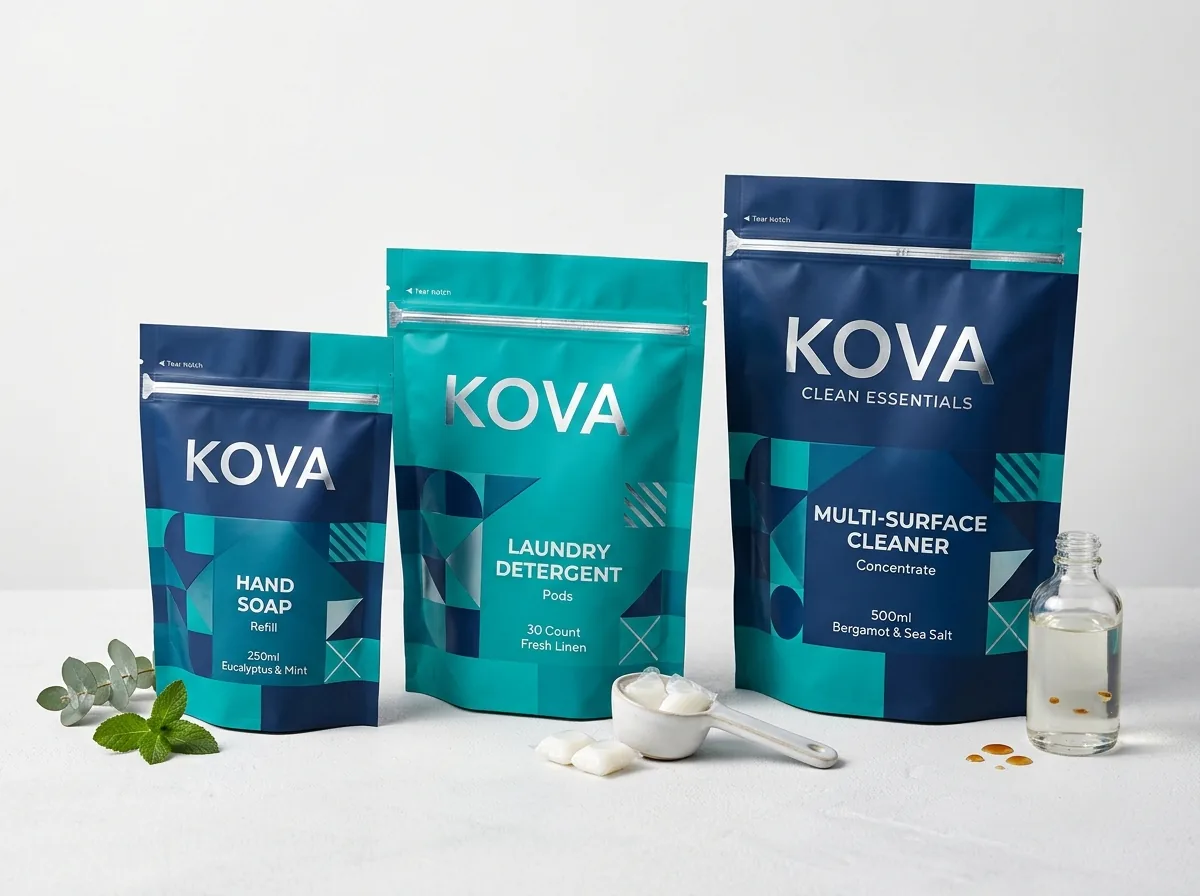
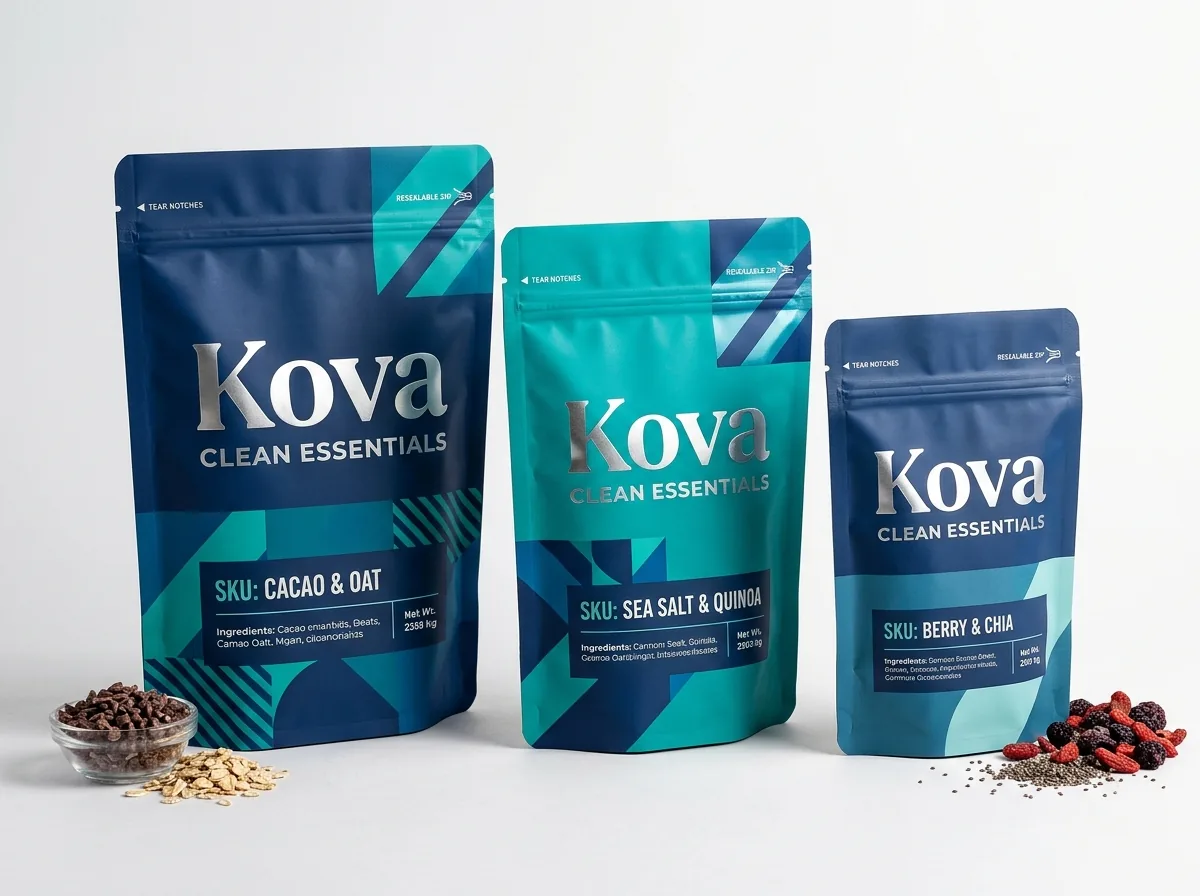

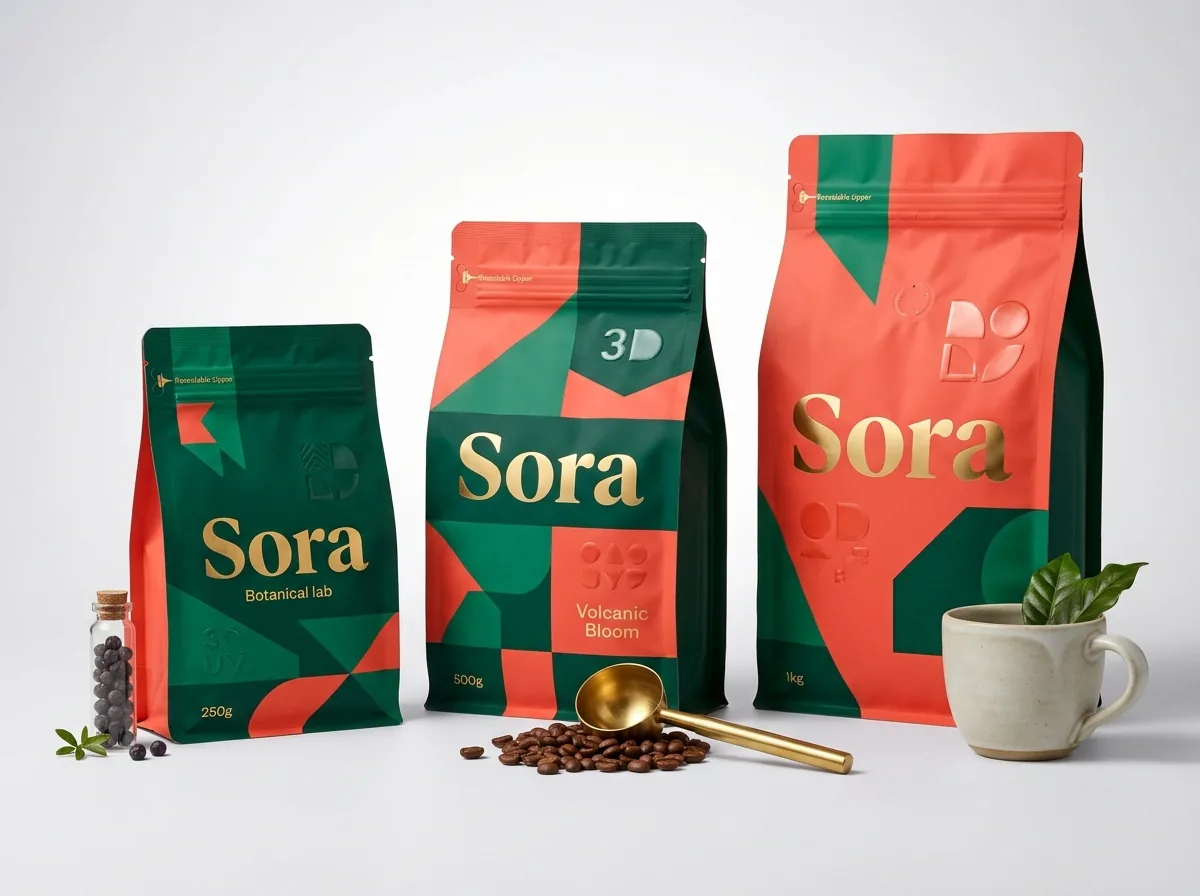
Ready to order zipper pouches? Compare up to 3 quantities with a free 3D mockup.
Request a Quote →Questions about zipper pouches
How far down from the top edge does the zipper sit on a custom pouch?
On standard stand-up and flat 3-side-seal pouches, the center of the zipper track sits about 1.0 to 1.25 inches below the top lip, and the bottom edge of the inner zipper flange sits 1.25 to 1.5 inches below the top lip. That upper space holds the heat-seal strip and laser tear notches.
How wide are the side heat seals on a custom zipper pouch?
Standard vertical side heat seals measure 0.25 inches (6 mm) on small pouches and 0.3125 to 0.375 inches (8 to 10 mm) on medium and large stand-up pouches. Always subtract two side seals (0.5 to 0.75 inches total) from the outer width to find your interior opening width.
Does a 6 × 9 × 3.5 inch zipper pouch hold 8 oz or 12 oz?
It holds both, depending on product bulk density. A 6 × 9 × 3.5 inch stand-up zipper pouch holds 8 oz of lightweight granola, trail mix or freeze-dried fruit, 10 to 12 oz of whole-bean coffee or gummies, and up to 16 oz of dense bath salts.
Can CubitPack make a custom zipper pouch in an exact non-standard height?
Yes. Because we convert every order to your exact dieline with no die or plate charges, you can specify any outer width, height and bottom gusset down to the eighth of an inch so the usable cavity below the zipper matches your fill weight.
How much headspace should I leave below the zipper flange?
Leave at least 0.5 to 0.75 inches of empty headspace between the settled top of your product and the lower edge of the zipper flange. As the bottom gusset opens wide, the front and back films need that slack to angle inward and snap shut.
How can I test my product fit below the zipper before ordering a full run?
You can order our $50 sample kit (credited toward your first order) to test fill volumes across standard pouch sizes on your own gram scale, or request a custom prototype sized to your exact width, height and gusset before production.
Still have a question? Ask a packaging specialist.
Request a Quote →Request your zipper pouches quote
Tell us your size and quantities, and one dedicated account manager prepares pricing for each tier.
- Free design & AI-to-print studio + 3D mockup
- No die or plate charges · 4–5 day rush available
- Free shipping to all 50 states
- 10% off your first order
The interior dimension deductions in this guide use standard flexible converting allowances (0.25 to 0.375 inch side seals and 1.25 to 1.5 inch top zipper headers) verified by a CubitPack packaging specialist. Spot something off? Tell us and we will fix it.
Sources
What changed
- October 22, 2026: First published.
- October 22, 2026: Updated specifications, terminology, and verified source links.
More guides
New packaging guides by email
Sizes, materials and design tips. Unsubscribe anytime.