
How do I turn AI foil and embossing renders into real rigid boxes?
Short answer: Turn AI foil and embossing renders into real luxury packaging by sending your Midjourney, Gemini, or ChatGPT image to CubitPack. Instead of printing yellow or gray pixels as flat ink, our designers isolate 100% solid spot vector masks for hot foil, embossing, debossing, and spot UV on custom rigid boxes starting at 50 units.
On this page
- Why do simulated AI foil and embossing pixels fail on a printing press
- How do packaging designers separate K100 vector masks from an AI image
- Which rigid box styles match the luxury structures AI tools generate
- How are paper wrap turn-ins and custom interior inserts engineered from AI renders
- How do proofing, 50-unit minimums, and turnaround work for AI-designed rigid boxes
- Common mistakes
- FAQs
Request a custom quoteFree dieline & 3D mockup
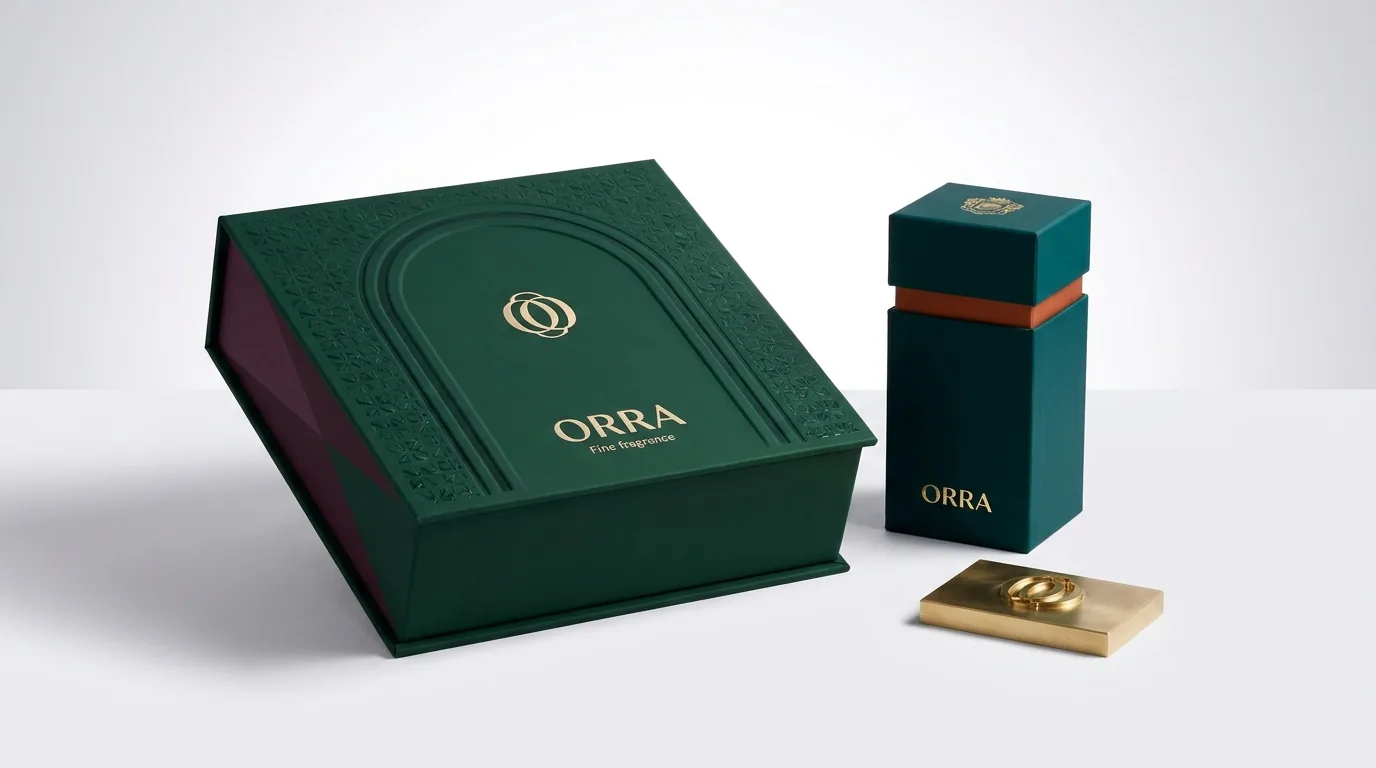
Image generators such as Midjourney, Google Gemini, ChatGPT, and Adobe Firefly love dressing luxury boxes in gleaming gold emblems, sunken blind monograms, and glossy raised patterns. On a phone screen, bright yellow gradients and soft drop-shadow pixels fool the eye into seeing metallic foil and deep relief. On a commercial printing press, however, printing those raw pixels produces dull tan ink and blurry gray halos with zero shine or texture. Physical specialty finishes are not printed with CMYK ink at all: they require dedicated 100% solid K100 spot vector layers that drive heated brass stamping dies, sculpted embossing plates, or UV flood screens. Through CubitPack's free AI-generated packaging rebuild service, our packaging designers separate every simulated finish in your AI concept onto proper press tooling layers, build your wrap and chipboard dieline with zero die or plate charges, and send a 3D mockup before payment.
Why do simulated AI foil and embossing pixels fail on a printing press?
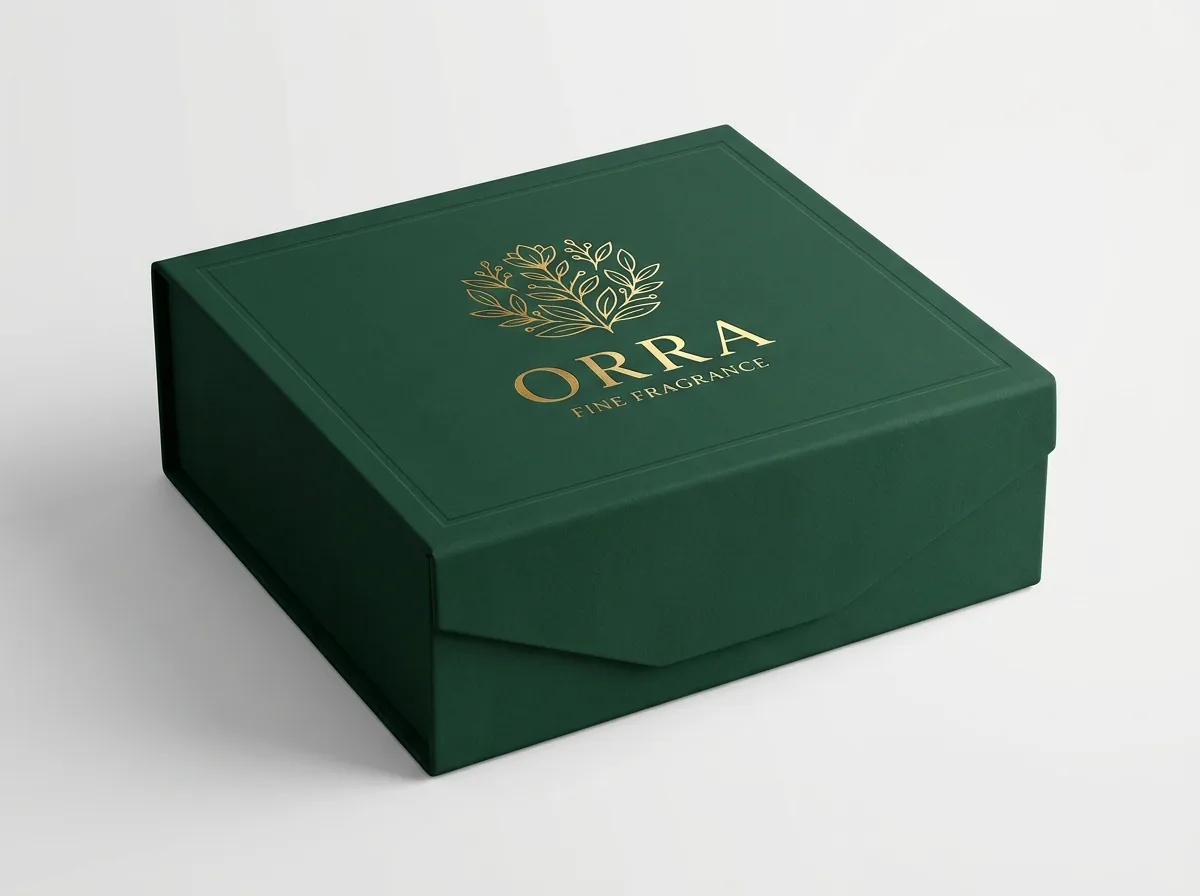
Every image generator paints an illusion of light using red, green, and blue pixels. When you prompt Midjourney or Gemini for a forest-green perfume box with hot-stamped gold foil and blind debossing, the AI draws pale cream specular highlights next to dark brown shadow bands. If a printer outputs that flattened image onto paper wrap for luxury printed setup boxes, the metallic reflection vanishes completely because regular CMYK inks cannot reflect room light like metal or raise paper fibers. Review how each AI effect maps to real physical tooling below.
| Visual effect in your AI render | What raw AI pixels actually contain | Result if printed directly in CMYK | Real press tooling CubitPack builds (free) |
|---|---|---|---|
| Metallic gold, silver, or copper logo | Yellow, beige, and white gradient pixels | Flat mustard or tan ink with zero mirror shine | 100% solid vector mask for heated metallic foil stamping |
| Raised 3D crest or lettering | Bright top highlight line + dark bottom shadow | Flat printed drop-shadow graphic that feels smooth | Male/female metal counter die for physical raised embossing |
| Sunken blind monogram in paper | Dark interior shading pixels inside letter strokes | Muddy dark ink blotches instead of crisp indented board | Uninked vector debossing die pressed into laminated wrap |
| Tone-on-tone glossy pattern over matte | Faint contrast shapes across dark background pixels | Barely visible gray pattern that shifts in color | Soft-touch or matte lamination + clear raised spot UV screen |
| Textured linen or leatherette wrap | High-frequency pixel noise baked into the artwork | Printed photographic grain on smooth coated paper | True textured specialty wrap paper or embossed film |
How do packaging designers separate K100 vector masks from an AI image?
Turning a flattened Midjourney or Gemini render into tactile luxury packaging requires stripping the fake highlights out of the CMYK base layer first, then redrawing every metallic or sculpted element on its own crisp vector spot channel. If the yellow gradient were left underneath the foil stamp, any microscopic press registration shift would expose a yellow halo around your gold crest.
- Base wrap cleanup: Our designers flood your background panel with a clean, uniform CMYK or guaranteed Pantone ink value, healing away every pixel where the AI painted fake highlights or shadows.
- Vector foil channel (foil stamping): Logos, borders, and fine monograms are redrawn as sharp bezier paths set to 100% solid spot color on a non-printing Foil layer, ready for gold, silver, rose gold, copper, or holographic foil rolls.
- Sculpted relief channels (embossing and debossing): Raised or sunken emblems get clean vector stroke clearances so the printed wrap stretches cleanly over chipboard without cracking.
- Contrast gloss channel (spot UV): Tone-on-tone monograms or botanical linework sit on a separate Spot UV vector layer applied over matte or soft-touch lamination.
Which rigid box styles match the luxury structures AI tools generate?
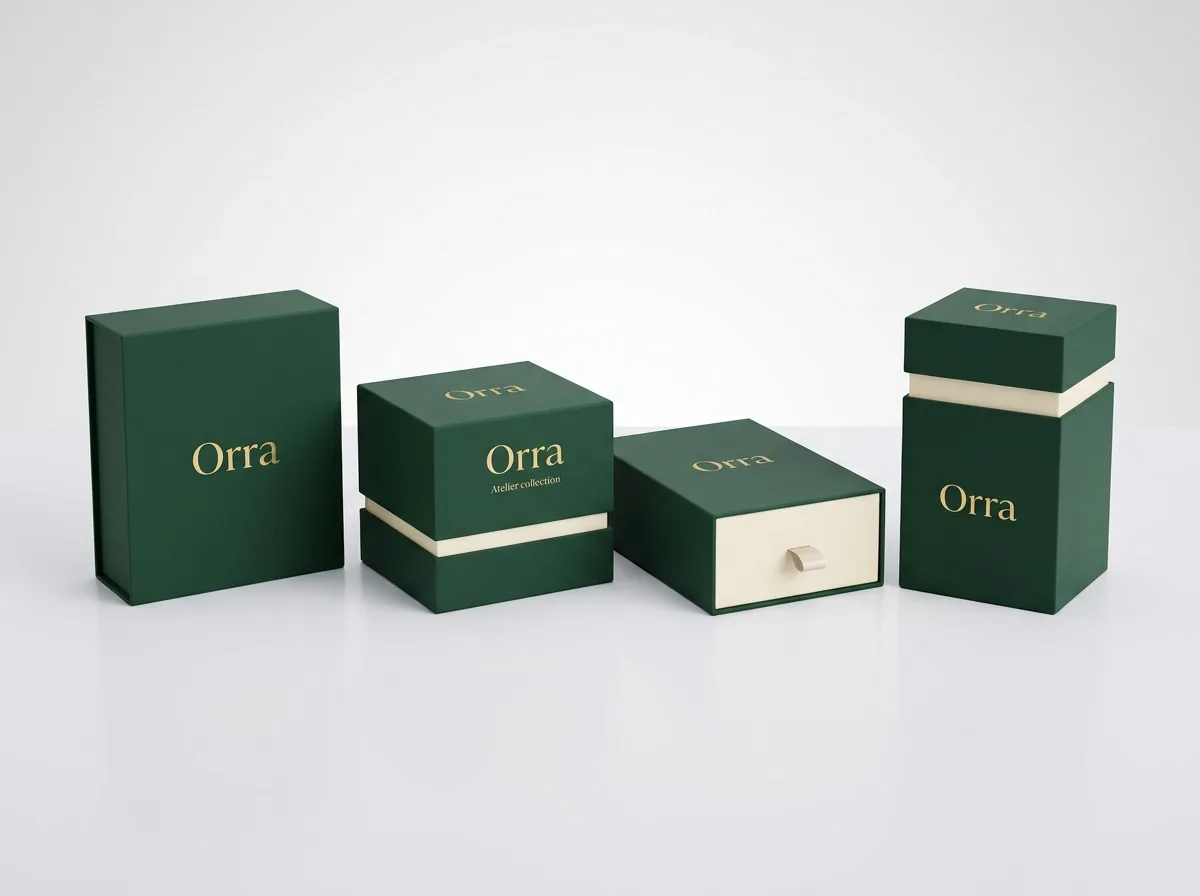
Rigid setup boxes are built around heavy 1.5 mm to 3 mm gray chipboard cores wrapped in printed, laminated, and stamped specialty paper. Unlike folding cartons or corrugated mailers that fold from a single sheet at your packing table, rigid boxes arrive pre-formed with crisp 90-degree corners (or ship flat using concealed magnetic hinges) and deliver heavy keepsake weight in the hand. Because they start at just 50 units at CubitPack, rigid boxes are the go-to choice for fragrance, skincare, candles, jewelry, spirits, corporate gift kits, and influencer PR mailers.
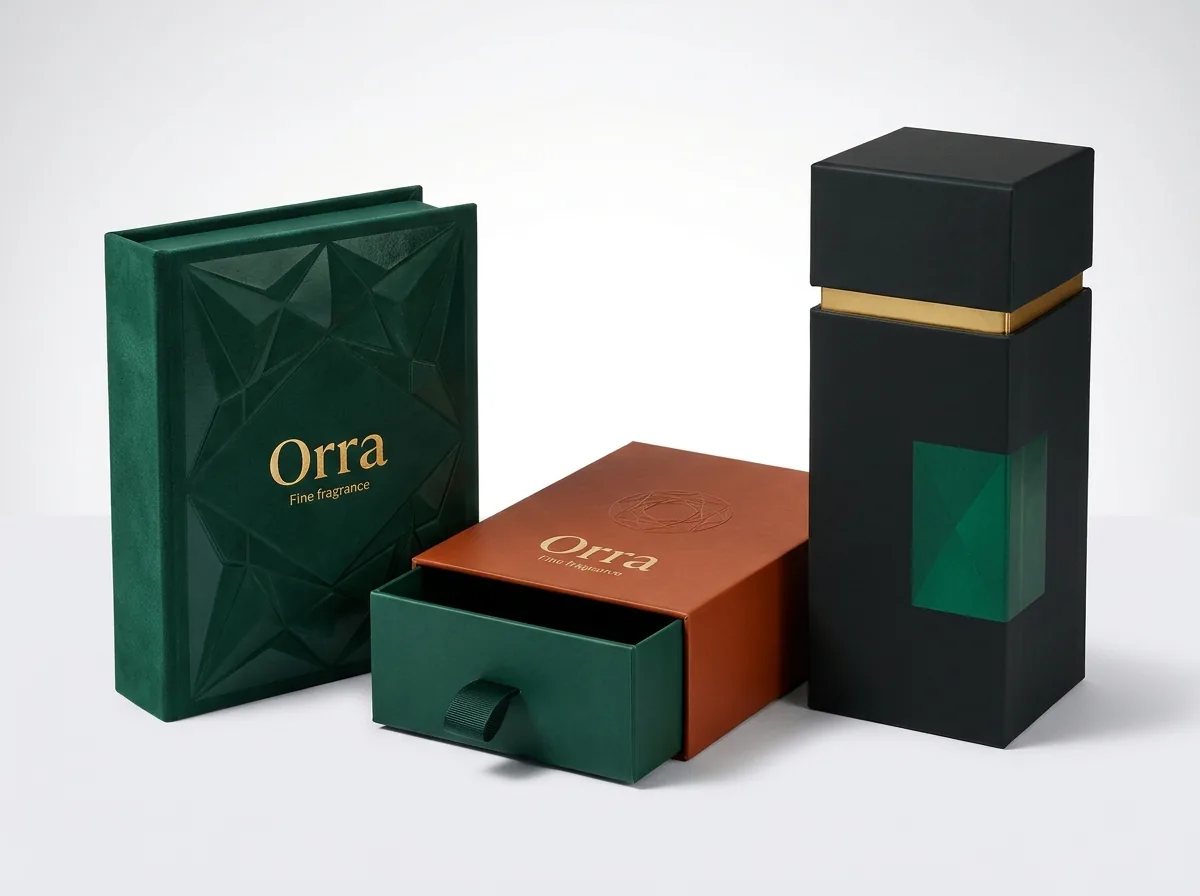
- Book-style magnetic lids: Custom magnetic closure boxes wrap a hinged spine cover around concealed neodymium magnets for a crisp snap closure.
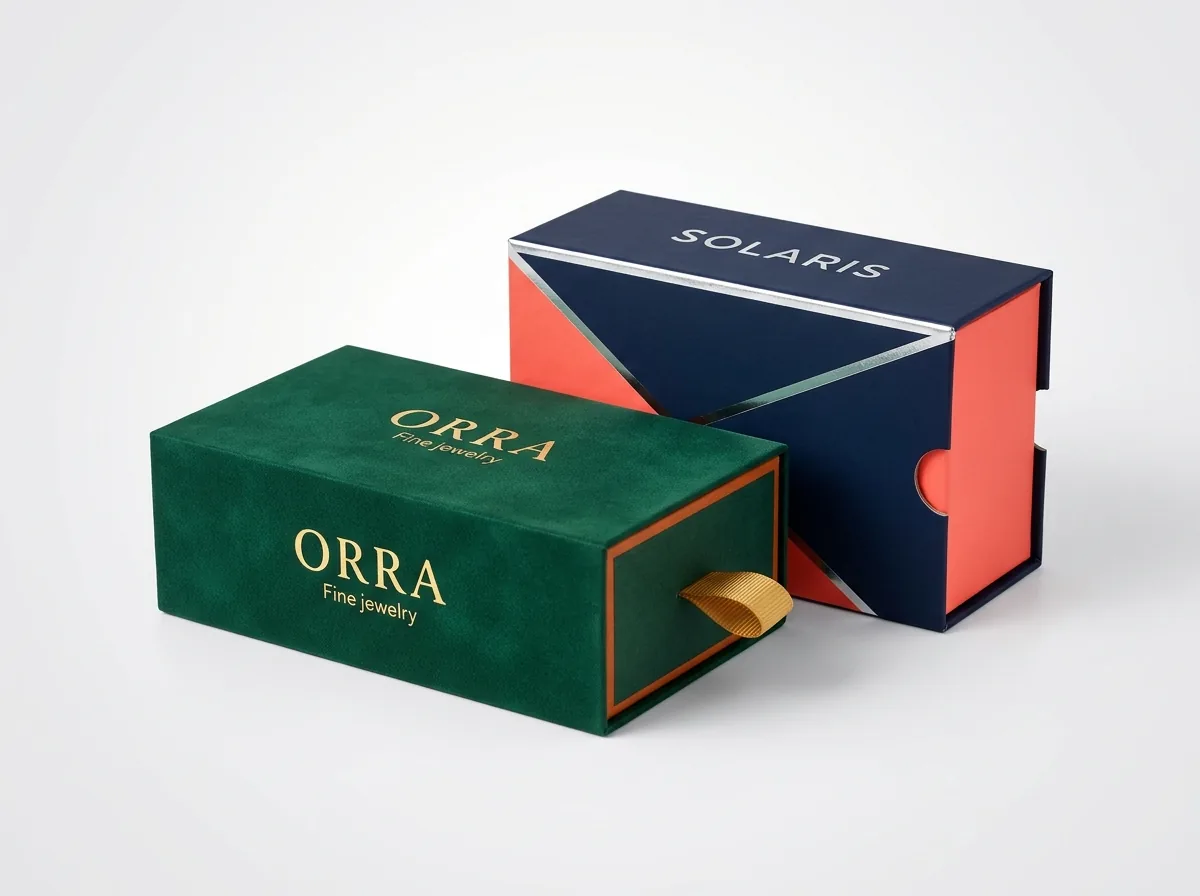
- Slide-out ribbon or thumb-notch trays: Custom drawer boxes pair a foil-stamped outer rigid sleeve with a sliding inner chipboard tray for jewelry, watches, and vials.
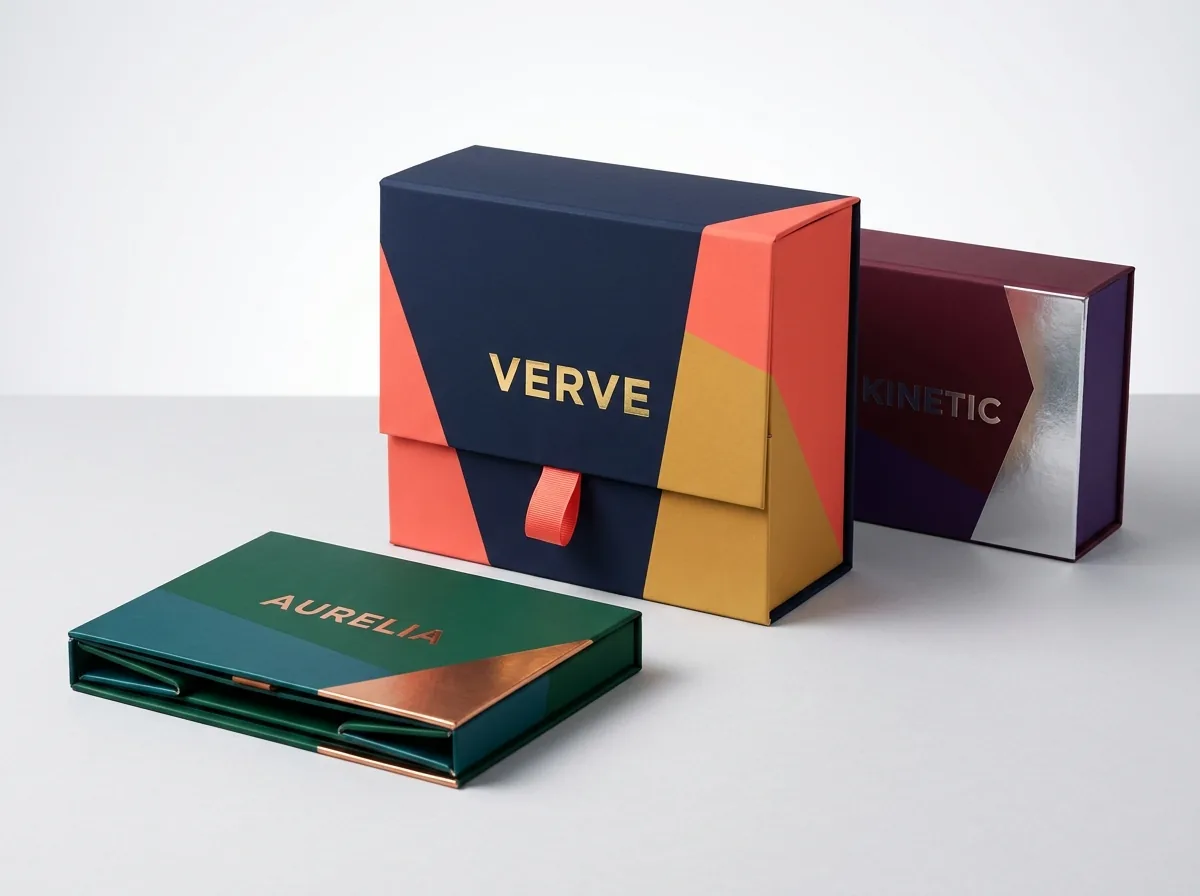
- Flat-shipping luxury boxes: Custom collapsible rigid boxes ship flat to cut warehouse storage volume, then pop upright into a rigid magnetic gift box in seconds.
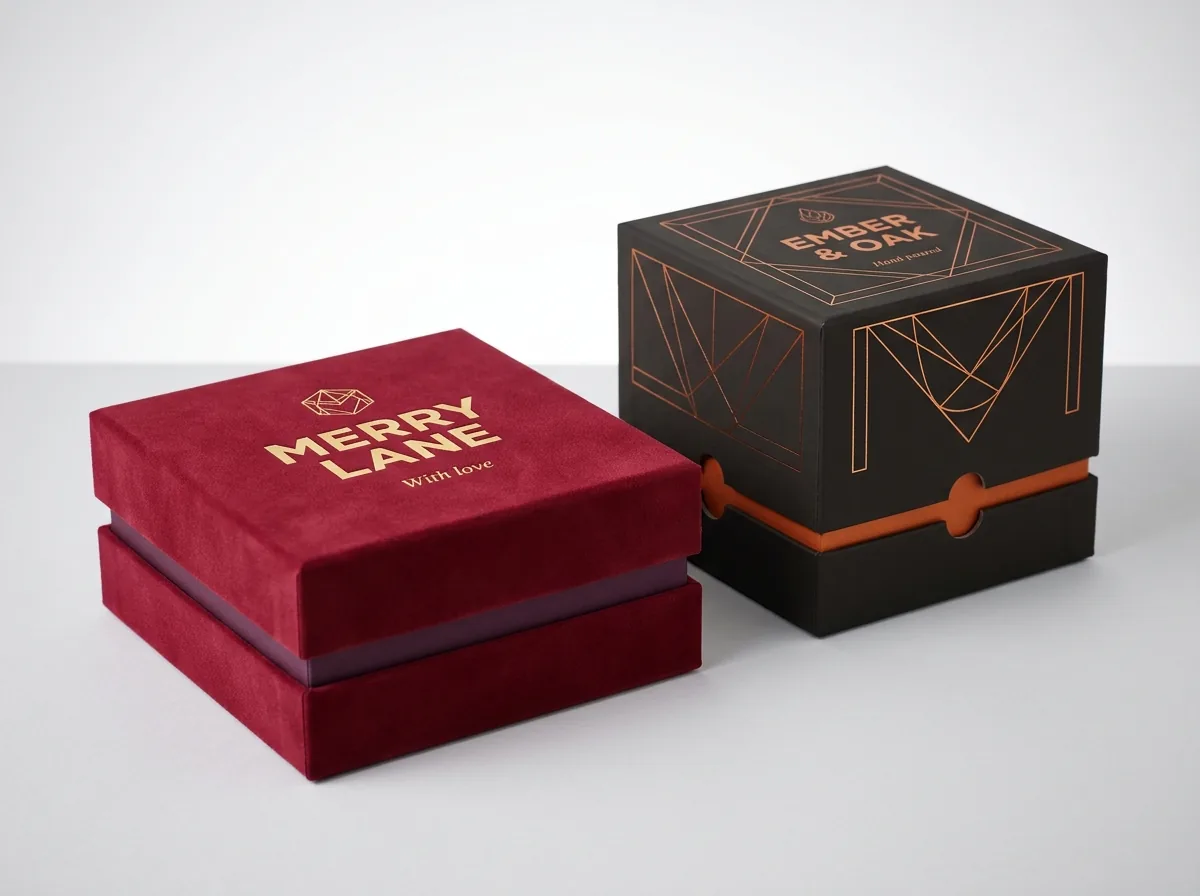
- Classic lift-off lid and shoulder-neck boxes: Two-piece telescope lids and stepped neck collars suit luxury candles, confection assortments, and collector editions.
Know your size? Compare pricing across up to 3 quantities.
Request a Quote →How are paper wrap turn-ins and custom interior inserts engineered from AI renders?
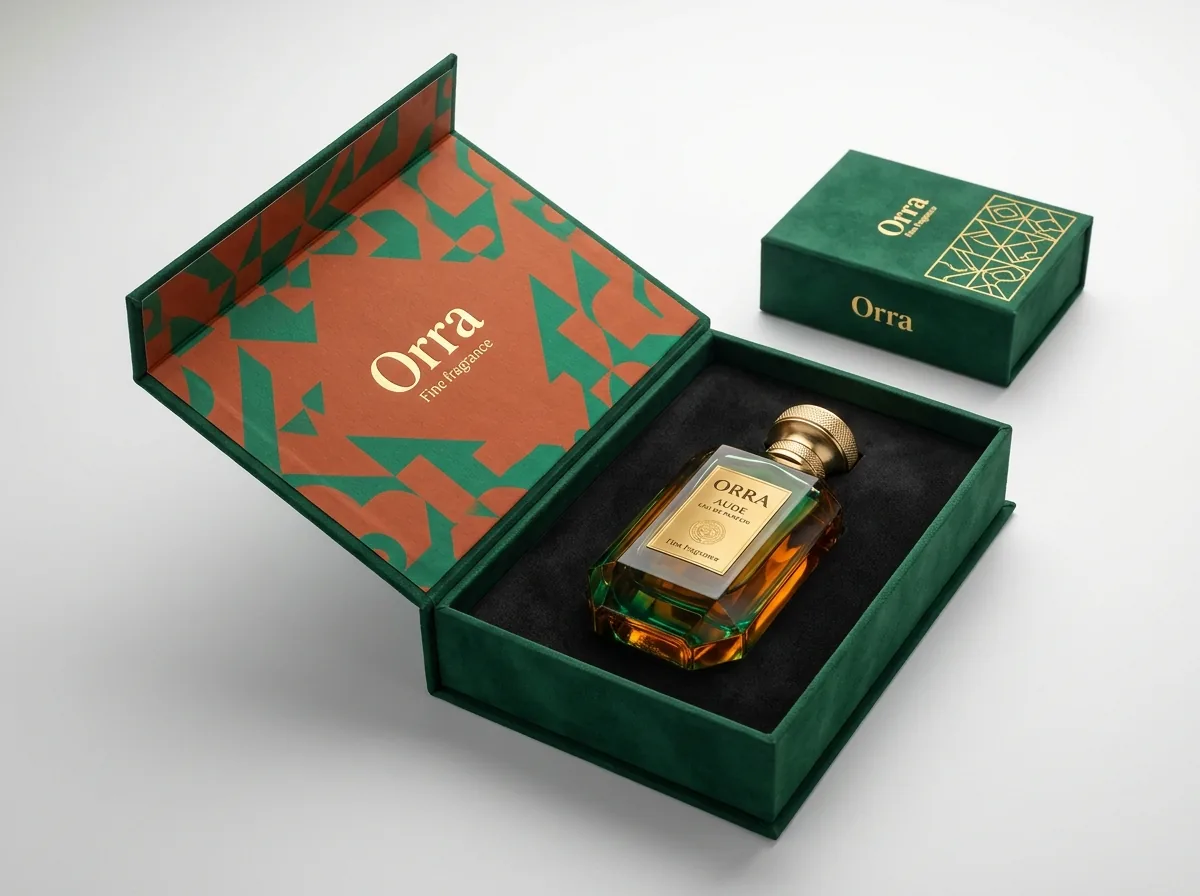
When Midjourney generates an open luxury gift box holding three serum bottles, it rarely calculates how the exterior wrap paper folds 15 to 20 millimeters over the top rim of the grayboard wall, or how deep the interior foam or molded insert needs to sit so the magnetic lid closes flush. Our studio engineers both the exterior wrap dieline and the interior cavity layout together so every lid closes level, finger-pull notches clear glass shoulders, and heavy items stay locked in transit.
- Wrap turn-in extensions: Background colors and patterns extend past the outer wall edge and wrap cleanly over the top rim inside the tray before the inner liner is mounted.
- Hinge and groove clearances: V-grooved chipboard corners create crisp 90-degree architectural edges just like high-end AI renders, while flexible hinge gaps allow book-style lids to open 180 degrees without binding.
- Custom protective inserts: Choose velvet-flocked EVA foam, high-density black or white foam, folded card cradles, or molded pulp trays cut to your exact bottle profile.
- No die or plate fees: Even when your rigid box combines custom V-grooved grayboard, hot foil stamping, blind debossing, and a die-cut insert, CubitPack charges zero die or plate fees.
How do proofing, 50-unit minimums, and turnaround work for AI-designed rigid boxes?
Ordering luxury rigid packaging from an AI render follows a clear, zero-guesswork sequence. Send us your Midjourney, Gemini, ChatGPT, or Firefly image along with your product dimensions and desired quantity (starting from 50 rigid boxes). You receive a written quote in 5 to 7 minutes from a dedicated account manager backed by 24/7 live support. Next, our packaging designers rebuild the flat wrap dieline, chipboard cut sheet, and separated K100 spot layers for foil, embossing, or spot UV at no extra cost. Before you pay a cent, we send a flat PDF proof clearly labeling every finish mask alongside an interactive 3D mockup showing metallic and gloss callouts across every panel. Once approved and paid, standard production runs 10 to 14 business days (with 4 to 5 business day rush available on eligible specs) and ships free across all 50 US states. If you want to touch real board weights, laminations, and foil stamping samples before finalizing specs, a $50 sample kit is available and credited in full toward your first order.
What mistakes ruin luxury finishes when printing AI box designs?
Steer clear of these five prepress mistakes when translating AI foil, embossing, and spot UV renders into rigid boxes
- Leaving yellow or gray AI pixels underneath a foil or emboss mask. Any slight press shift reveals an ugly tan or dark ink outline around your stamped metallic crest.
- Designing ultra-fine hairline strokes for hot foil or embossing. Strokes thinner than press tolerances bridge together under heat and pressure; our studio thickens micro-serifs cleanly.
- Placing deep embossing or foil stamps directly across V-groove fold corners. Heavy metal dies crack paper wrap if pressed right over rigid board hinge creases.
- Applying spot UV directly onto unlaminated uncoated paper. Liquid UV varnish soaks unevenly into raw fibers unless sealed first with matte or soft-touch lamination.
- Forgetting the 15 to 20 millimeter interior wrap turn-in around tray rims. Cropping artwork at the top wall edge leaves a visible strip of plain paper inside the open box.
Packaging for this
Ready to order rigid boxes? Compare up to 3 quantities with a free 3D mockup.
Request a Quote →Questions about rigid boxes
Why won't the gold logo in my Midjourney or Gemini image print shiny on its own?
AI generators simulate gold using yellow, cream, and brown RGB pixels. Standard CMYK ink cannot reflect light like metal, so printing raw pixels looks flat and tan. Our studio isolates your logo as a 100% solid vector mask for genuine metallic hot foil stamping.
Does CubitPack charge extra die or plate fees for foil stamping and embossing?
No. CubitPack charges zero die or plate fees, and our studio rebuilds your separated vector foil, embossing, debossing, and spot UV layers free with your packaging order. You approve the exact finish masks on your PDF proof and 3D mockup before payment.
What is the minimum order quantity for custom rigid boxes with foil or embossing?
Custom rigid setup boxes (including magnetic closure, drawer, two-piece lift-off, and collapsible rigid styles) start at just 50 units. Standard production takes 10 to 14 business days after proof approval, with 4 to 5 business day rush options quoted on request.
Can I combine soft-touch lamination, gold foil, and blind debossing on the same box?
Yes. Pairing velvety soft-touch lamination with bright metallic foil stamping on your primary wordmark and blind debossing or raised spot UV on a secondary border is a popular luxury combination, and we separate each finish onto its own aligned press layer.
How do you make sure the colors on my rigid box wrap match my AI concept?
We remove the uneven directional lighting painted by the AI generator and convert your base palette to press-calibrated CMYK or solid Pantone spot inks. Our Pantone match is guaranteed: if a printed Pantone color is clearly off, we reprint.
Can CubitPack also engineer the foam or card insert shown inside my AI PR box?
Yes. Share the dimensions or physical samples of the bottles, jars, or items inside your render, and we design custom-cut EVA foam, velvet-lined foam, folded paperboard, or molded pulp inserts that hold every piece snugly inside the rigid tray.
Still have a question? Ask a packaging specialist.
Request a Quote →Request your rigid boxes quote
Tell us your size and quantities, and one dedicated account manager prepares pricing for each tier.
- Free design & AI-to-print studio + 3D mockup
- No die or plate charges · 4–5 day rush available
- Free shipping to all 50 states
- 10% off your first order
We checked commercial hot foil stamping, multi-level embossing/debossing, spot UV screen registration, and V-grooved grayboard wrap turn-in tolerances against common raster artifacts in Midjourney, Gemini, and Firefly renders. A packaging specialist verified every tooling rule. Spot something wrong? Tell us and we fix it.
Sources
- Foil & Specialty Effects Association guidelines for hot foil stamping, embossing counter dies, and stroke clearances
- Difference between CMYK process ink builds, Pantone spot inks, and non-ink press spot channels
- Rigid paperboard setup box chipboard caliper, V-grooving, and paper wrap turn-in construction standards
What changed
- November 5, 2026: First published with AI finish-to-tooling conversion table, K100 spot mask layer separation diagram, and 50-unit rigid box guide.
More guides
New packaging guides by email
Sizes, materials and design tips. Unsubscribe anytime.