
How do two-piece rigid box dielines, wrap turn-ins, thumb cuts, and inserts work?
Short answer: A custom two-piece rigid box dieline comprises four coordinated CAD templates: two solid grayboard cores (a wider telescoping lid and a deeper product base, corner-stayed or 90-degree V-grooved) and two oversized decorative paper wrap sheets extending 15–18 mm past every rim for clean interior turn-ins.
On this page
- Why does a two-piece rigid box CAD proof contain separate grayboard and wrap layers
- Should you specify 90-degree V-grooved corners or traditional corner-stayed edges
- When do full-depth telescope lids need semicircular thumb cuts or clear PET windows
- Which custom inserts fit inside a two-piece rigid base for shoes, watches, candles, and chocolates
- How do you prepare print-ready Illustrator files for a two-piece rigid box proof
- Common mistakes
- FAQs
Request a custom quoteFree dieline & 3D mockup
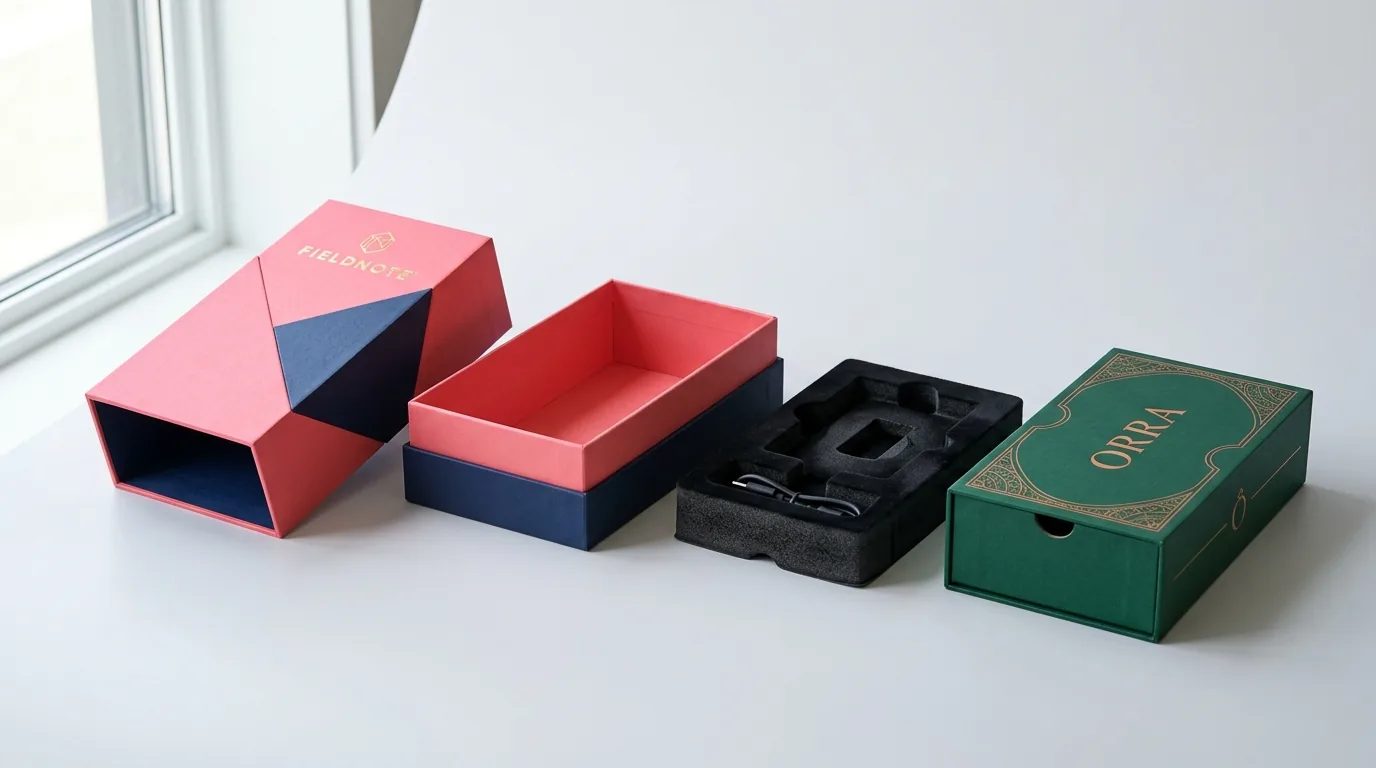
Designers transitioning from one-piece folding cartons to custom two-piece rigid boxes often wonder why their print proof shows two separate cross-shaped board outlines surrounded by wide outer collars. Unlike folding paperboard printed directly onto the structural sheet, turned-edge rigid setup boxes separate strength from graphics: heavy 1.5 to 2.5 mm recycled grayboard provides rigid crush protection underneath, while 128–157 gsm coated art or textured linen paper carries your CMYK colors, Pantone inks, and metallic foil stamping on top. During automated rigid wrapping, glue rollers coat the decorative wrap sheet, center the corner-stayed grayboard tray, and fold 15 to 18 mm of printed wrap cleanly over the top rim and down inside the walls. Pairing clean turn-in bleed margins with optional semicircular thumb cuts and custom EVA foam or PET inserts guarantees retail perfection starting at 50 boxes.
Why does a two-piece rigid box CAD proof contain separate grayboard and wrap layers?
When CubitPack prepress sends your free custom 2D vector dieline, your Illustrator or PDF template separates the rigid structural board paths from the outer printed wrap sheet paths. Unlike a single-sheet folding carton where cut and crease lines share one outline, a turned-edge setup box requires four coordinated templates: a grayboard lid core, a printed lid wrap, a grayboard base core, and a printed base wrap. Understanding what each CAD zone controls ensures your logos center cleanly on the lid skirts, background colors wrap all the way over the rim without showing raw gray chipboard, and corner ear miters fold flat without bunching
- Interior liner sheet boundary: After the 15 to 18 mm exterior wrap turns down inside the tray walls, a clean interior lining sheet covers the remaining inner wall and floor (standard crisp white or dyed black, or custom CMYK printed on request to match your brand palette).
- Outer wrap compensation for board thickness: Because the printed wrap sheet has to climb across the 1.5 to 2.5 mm thickness of the grayboard rim before turning inward, prepress adds exact board-caliper allowances between the outer fold line and the turn-in score automatically so graphics never pull short at the top edge.
| CAD dieline zone | Mechanical role | Designer artwork rule | Why it matters on press |
|---|---|---|---|
| Part A · Lid Top Panel | Center grayboard ceiling (Lid ID L × W) | Center foil crests >= 10 mm inside fold scores | Primary unbroken luxury hero surface |
| Part A · Four Lid Skirts | Vertical side walls (30–100% of base height) | Align wraparound bands across corner seams | Slides smoothly over outer base walls |
| Part B · Base Floor & Walls | Lower rigid product tray (Base ID L × W × D) | Keep dark base wrap continuous on partial lids | Holds product, tissue, or custom insert |
| 15–18 mm Wrap Turn-In Margin | Paper flap folding over top rim into cavity | Extend full background color/pattern 18 mm out | Prevents white unprinted halos inside rim |
| 45° Corner Ear Miters | Notched wrap tabs tucked around vertical edges | Avoid tiny micro-text right on vertical corners | Eliminates thick corner bumps that bind lids |
Should you specify 90-degree V-grooved corners or traditional corner-stayed edges?
Raw 2.0 mm solid grayboard cannot simply be creased on a flat rule like thin 18 pt cereal-box card without cracking the outer fibers or bulging outward along the fold. Rigid box makers form crisp vertical tray walls using two proven industrial corner methods, and choosing the right one sharpens both the exterior silhouette and the lid-to-base glide of your finished setup box
- Higher corner burst resistance: Heat-applied corner stay tape or V-grooved adhesive joints lock all four tray walls permanently in 3D geometry so heavy glass candles, ceramic vessels, or leather boots never split a corner seam under load.
- Consistent telescoping air gap: Because V-grooved corners fold to a true 90-degree right angle with minimal wrap bunching at the corners, prepress can tune the +1.0 to +1.4 mm slow-drop gap with exceptional repeatability across 50 to 5,000+ units.
- Zero raw board visibility: Both methods finish completely hidden underneath your laminated 157 gsm coated art paper, dyed linen cloth, or soft-touch wrap sheet.
| Corner forming method | How the grayboard is prepared | Exterior corner radius | Best luxury packaging use |
|---|---|---|---|
| Traditional Corner Staying | Four corner squares are notched out; walls fold up and bond with heat-activated kraft stay tape | Clean classic ~1.5 mm wrapped corner profile | Footwear boxes, apparel boxes, hat boxes, everyday gift boxes |
| 90-Degree V-Grooving | Precision rotary blades carve a 90° V-channel ~75% through solid grayboard along every fold line | Razor-sharp architectural 90° jewel-box edge | High-horology watch boxes, fine jewelry, flagship tech & candles |
When do full-depth telescope lids need semicircular thumb cuts or clear PET windows?
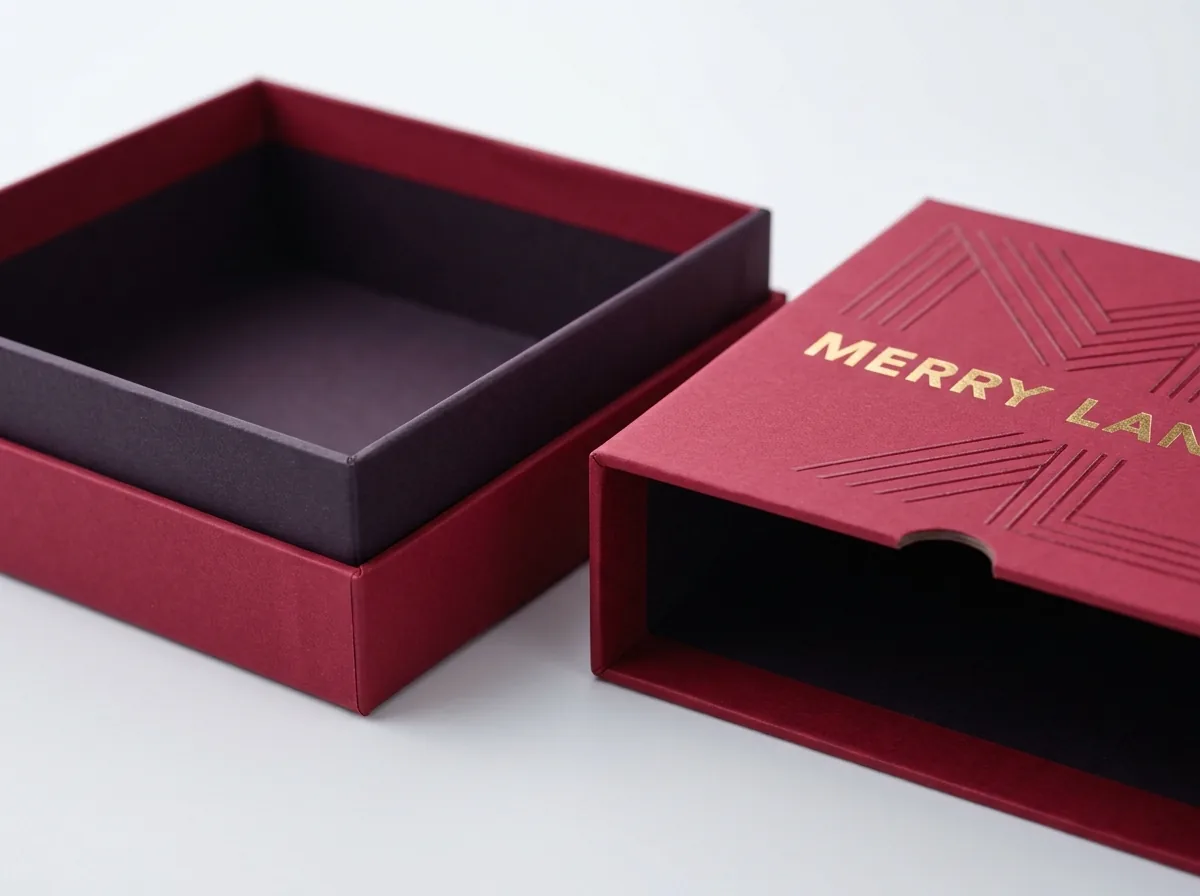
Two optional die-cut features transform how customers interact with a closed two-piece rigid box on a retail shelf, dressing room counter, or vanity table. Adding them during the initial CAD dieline stage costs zero extra die setup fees and prevents frustrating air-lock resistance on deep lids
- Dual semicircular thumb-cut notches (18 to 22 mm wide by 9 to 11 mm high): Whenever your telescoping lid skirt covers 85 to 100% of the base height, air suction slows separation and leaves zero exposed base wall to hold. Punching two matching half-moon cutouts centered on opposite side skirts lets thumb and index finger pinch the contrasting base wall directly for instant two-handed lifting.
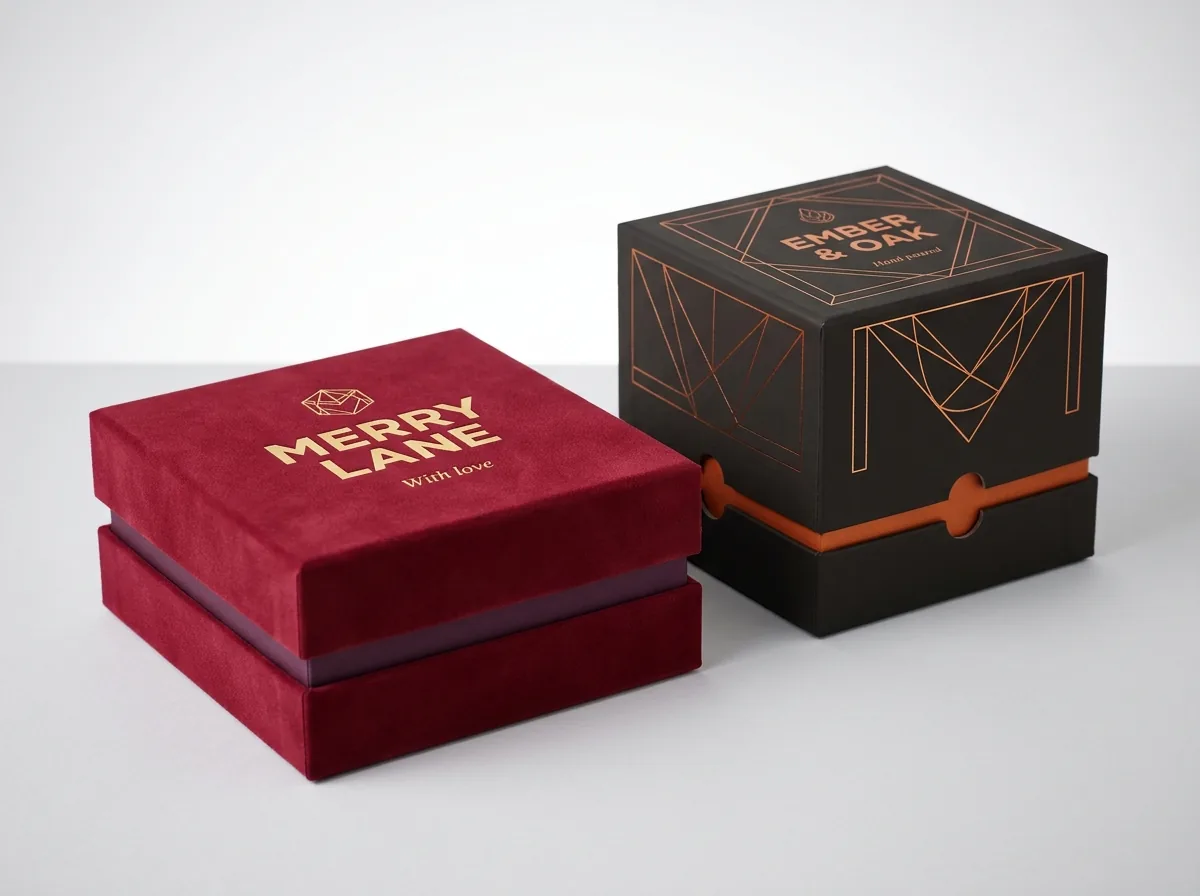
- Color-reveal accent peek: Wrapping the rigid base in vibrant coral, emerald, or metallic gold turns those two semicircular thumb notches into intentional geometric color accents against a matte black, claret, or midnight navy full-depth lid.
- Framed clear PET lid windows: For chocolate bonbon assortments, macarons, cosmetic trios, or collectible keepsakes, prepress can die-cut a centered window at least 15 mm inside the V-grooved lid edges and bond a rigid clear PET sheet underneath the wrap turn-in so no cut plastic edge is ever exposed.
- Satin grosgrain lift ribbons on recessed trays: When a two-piece rigid base holds stacked lookbooks, silk scarves, or leather boots, anchoring a 12 mm grosgrain ribbon tab beneath the bottom item lets shoppers lift heavy contents without tilting the base.
Know your size? Compare pricing across up to 3 quantities.
Request a Quote →Which custom inserts fit inside a two-piece rigid base for shoes, watches, candles, and chocolates?
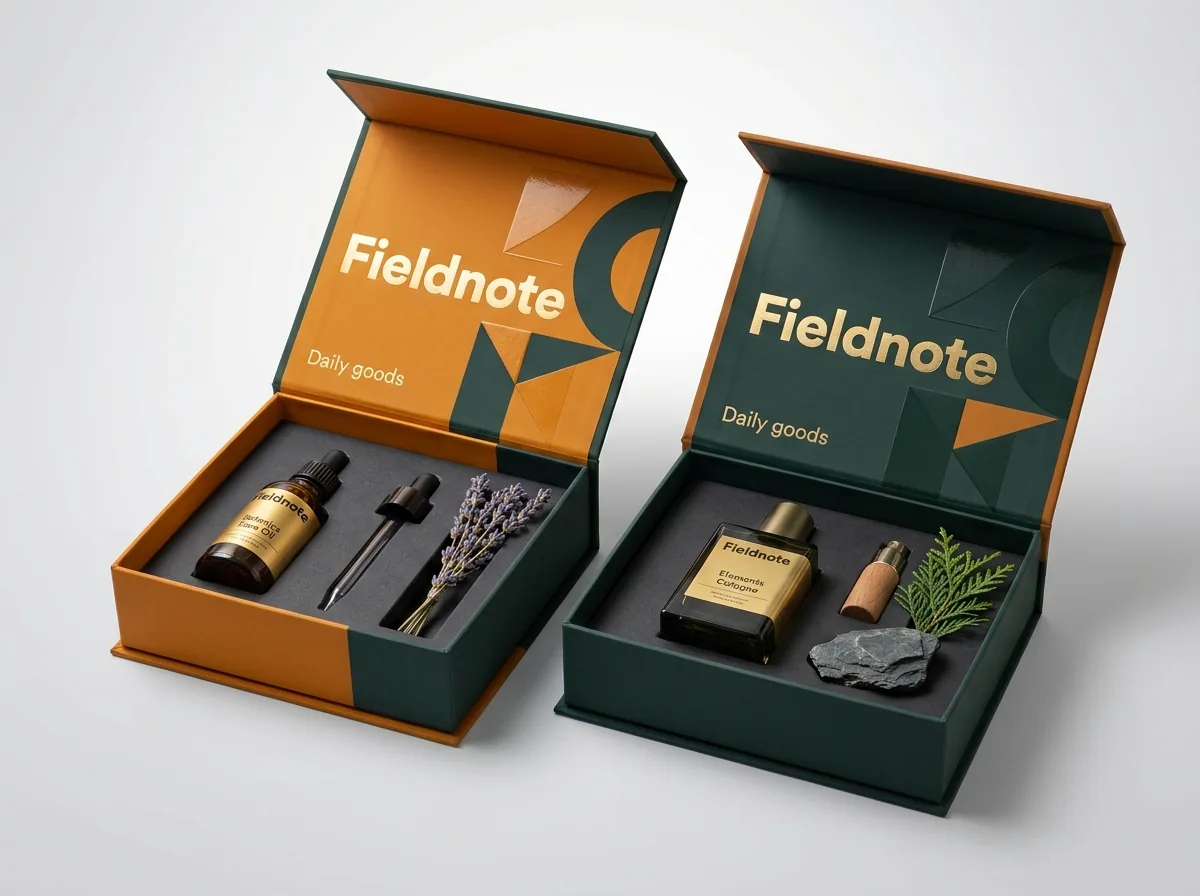
Because two-piece rigid bases open vertically from the top with zero overhanging dust flaps or tuck panels, fulfillment teams enjoy unobstructed 90-degree top-down loading speed while customers experience a clean gallery reveal. Prepress sizes every insert -0.5 mm under your Base Inside L × W so foam or paperboard trays drop in flat without bowing the walls. Explore our custom box inserts, custom eva foam inserts, custom cardboard inserts, custom shoe boxes, and custom jewelry boxes alongside custom printed two-piece rigid boxes starting at 50 units
| Insert option | Structural build | Best product match | Key prepress tip |
|---|---|---|---|
| Velvet-Flocked or Paper-Topped EVA Foam | Die-cut dense closed-cell foam seated flush across Base ID | Glass candles, serums, corporate tumblers, rings & necklaces | Add 16 mm semicircular finger scoops beside snug glass jars |
| Suede Watch C-Pillow + Recessed Well | Compressible velvet/suede cuff seated in a square collar cell | Automatic wristwatches, chronographs, bracelets & cufflinks | Leave 4 mm crown clearance between watch face and lid ceiling |
| Food-Safe Thermoformed PET Tray + Pad | Multi-cell gold, black, or clear cavities + top cushion pad | 16-pc or 24-pc chocolate truffles, pralines & confections | Available with food-safe partner certifications on request |
| Custom Printed Tissue + Dust Bag | Acid-free soy-ink branded tissue folded over open base cavity | Leather sneakers, heels, cashmere sweaters & structured hats | Include a small ribbon pull tab under heavy boot stacks |

How do you prepare print-ready Illustrator files for a two-piece rigid box proof?
Before uploading your artwork, check our companion guides on how to measure and choose grayboard for two-piece rigid boxes and two-piece rigid boxes vs shoulder-neck and magnetic closure boxes. Every CubitPack quote includes a free prepress artwork check, zero die or plate charges, and an interactive 3D digital mockup before payment so you can inspect lid skirt alignment and foil placement from every angle
- Step 1: Extend background colors, gradients, and geometric patterns across the full 15 to 18 mm wrap turn-in bleed zone on both the lid and base templates so interior rims match the exterior.
- Step 2: Supply metallic foil stamping, raised Spot UV, and blind debossing on separate named 100% K vector layers set to overprint so finishing dies register cleanly.
- Step 3: Keep fine typography, QR codes, and small crests at least 6 mm clear of 90-degree fold lines, 45-degree corner ear miters, and semicircular thumb-cut notches.
- Step 4: Convert all live fonts to vector outlines and embed high-resolution 300 DPI CMYK linked imagery alongside Pantone PMS callouts for brand-critical solids.
- Step 5: Confirm whether the interior lid ceiling and base floor remain crisp white, dyed matte black, or custom flood-printed to match your exterior wrap palette.
What are the most common dieline and prepress mistakes on two-piece rigid boxes?
Check your artwork and CAD proof against these five frequent rigid setup errors
- Cropping background colors at the grayboard cut line instead of bleeding 15 to 18 mm across the wrap turn-in zone, leaving a white unprinted stripe inside the lid rim.
- Placing small text or delicate foil hairlines right across a 45-degree corner wrap miter where paper folds over itself.
- Ordering a deep 100% full-telescope candle or shoe lid without semicircular thumb notches, making tight air-sealed lids awkward to grip.
- Cutting a PET lid window closer than 15 mm to a V-grooved corner score, weakening lid rigidity.
- Forgetting finger-scoop cutouts around tightly recessed glass candle jars or bottles inside EVA foam inserts.
Packaging for this
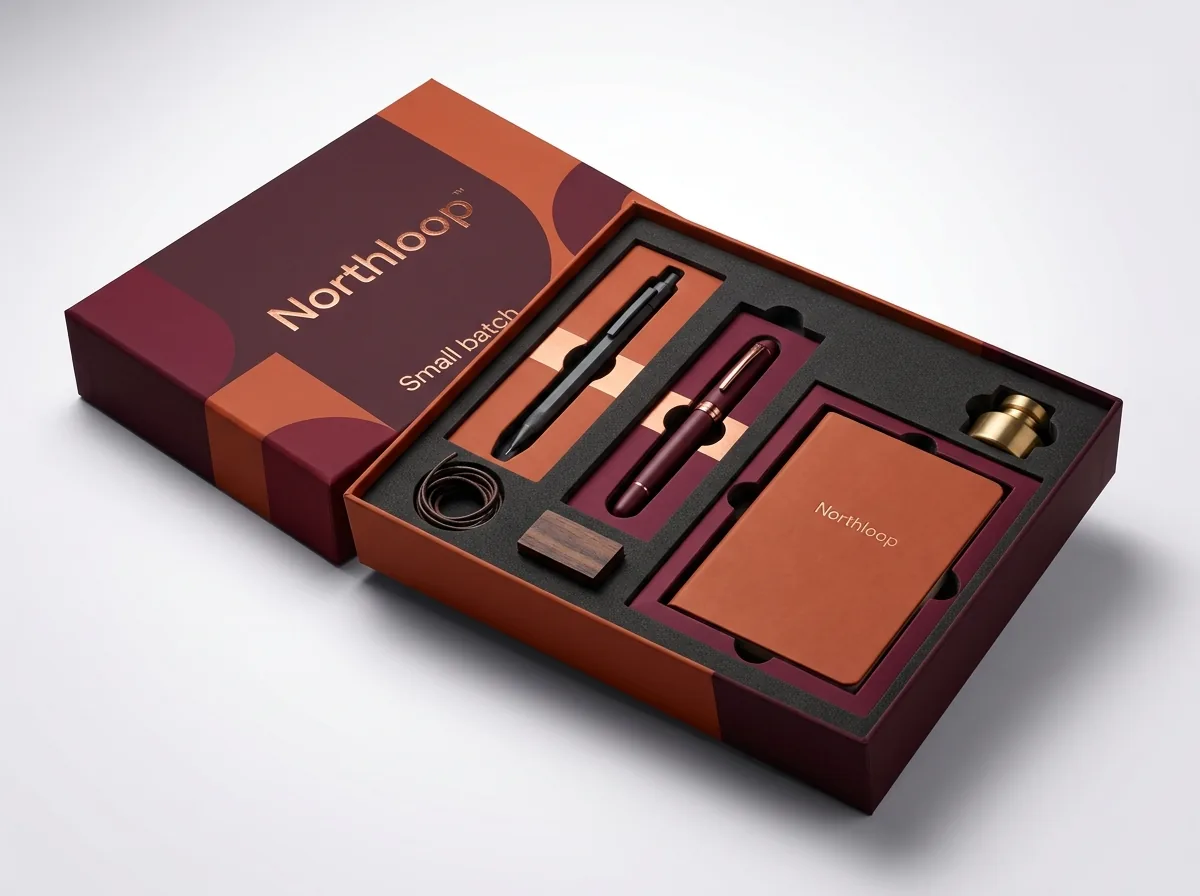

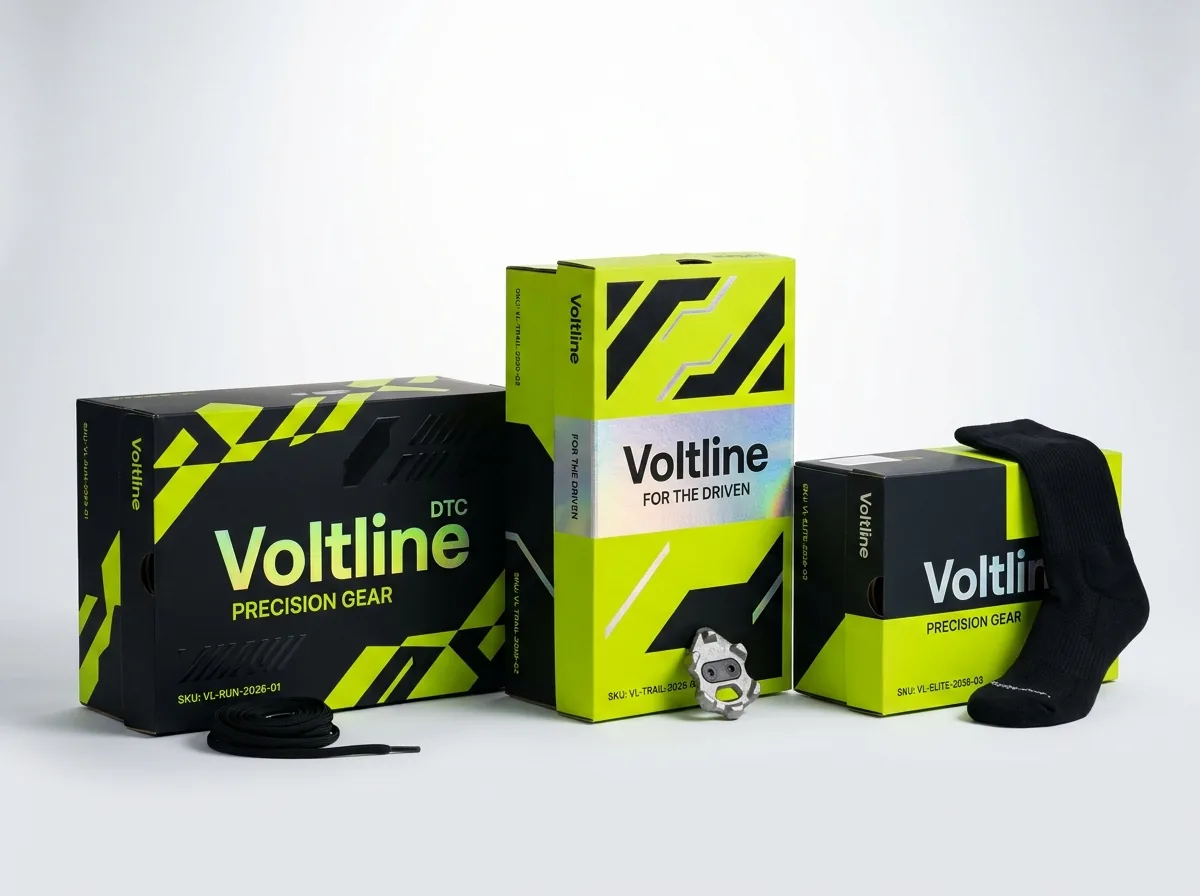
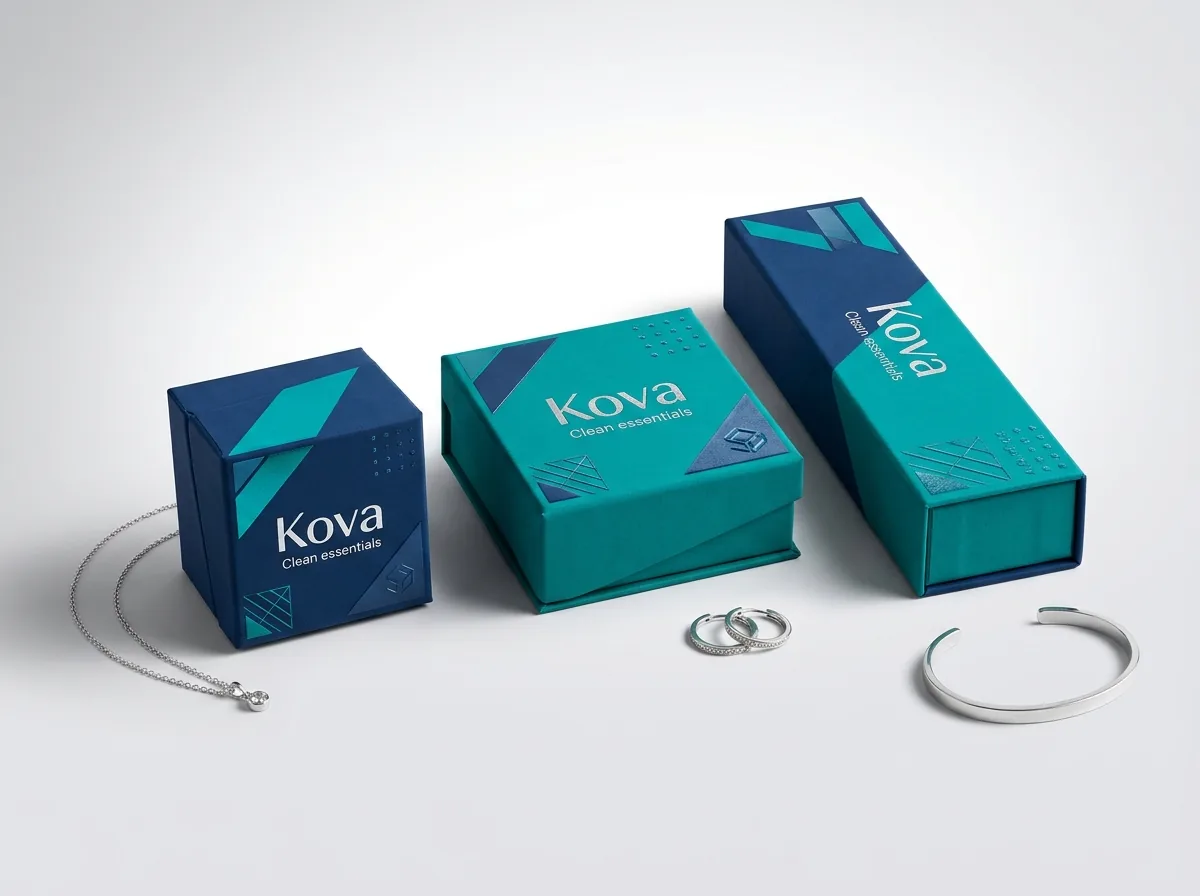
Ready to order two-piece rigid boxes? Compare up to 3 quantities with a free 3D mockup.
Request a Quote →Questions about two-piece rigid boxes
Why does my rigid box dieline need 15–18 mm of bleed instead of the standard 3 mm on folding cartons?
On a turned-edge rigid box, the outer decorative paper wraps completely over the 1.5–2.5 mm thickness of the grayboard rim and folds 15 to 18 mm down inside the tray wall so zero raw gray chipboard is ever visible when the lid is lifted.
Does CubitPack charge extra to generate custom lid, base, and insert CAD dielines?
No. CubitPack builds custom 2D vector dielines for your rigid lid, rigid base, and any fitted EVA foam or partitioned insert free of charge, with zero die or plate setup fees and a 3D mockup before payment.
Where are thumb-cut notches placed on a full-depth two-piece rigid box?
Two matching semicircular notches (typically 18 to 22 mm wide by 9 to 11 mm high) are centered along the bottom edge of the left and right lid skirts so customers naturally grip the base with both hands.
Can wraparound geometric stripes line up from the lid top down all four lid skirts?
Yes. Because the decorative wrap sheet is printed as one flat continuous layout before wrapping over the V-grooved lid core, color-blocking and geometric lines flow cleanly from the top panel down all four vertical skirts.
Can I combine soft-touch matte lamination, metallic foil, and blind debossing on the same rigid lid?
Yes. Soft-touch matte film is laminated to the printed wrap sheet first, followed by hot metallic foil stamping and deep brass-die debossing before or during rigid tray wrapping.
Still have a question? Ask a packaging specialist.
Request a Quote →Request your two-piece rigid boxes quote
Tell us your size and quantities, and one dedicated account manager prepares pricing for each tier.
- Free design & AI-to-print studio + 3D mockup
- No die or plate charges · 4–5 day rush available
- Free shipping to all 50 states
- 10% off your first order
We verified turned-edge rigid lid-and-base CAD dieline layouts, 15–18 mm paper turn-in margins, 90-degree V-grooving versus corner staying, thumb-cut notch dimensions, and custom insert clearances against National Paperbox Association (NPA), Paperboard Packaging Council (PPC), and TAPPI T 411 standards. A packaging specialist reviewed every rule. Spot something wrong? Tell us and we fix it.
Sources
What changed
- November 5, 2026: First published with CAD dieline zone breakdown, V-groove vs corner-stay table, thumb-cut diagram, and 4-insert selector.
More guides
New packaging guides by email
Sizes, materials and design tips. Unsubscribe anytime.