
How do I measure a book-style box and choose the right grayboard thickness?
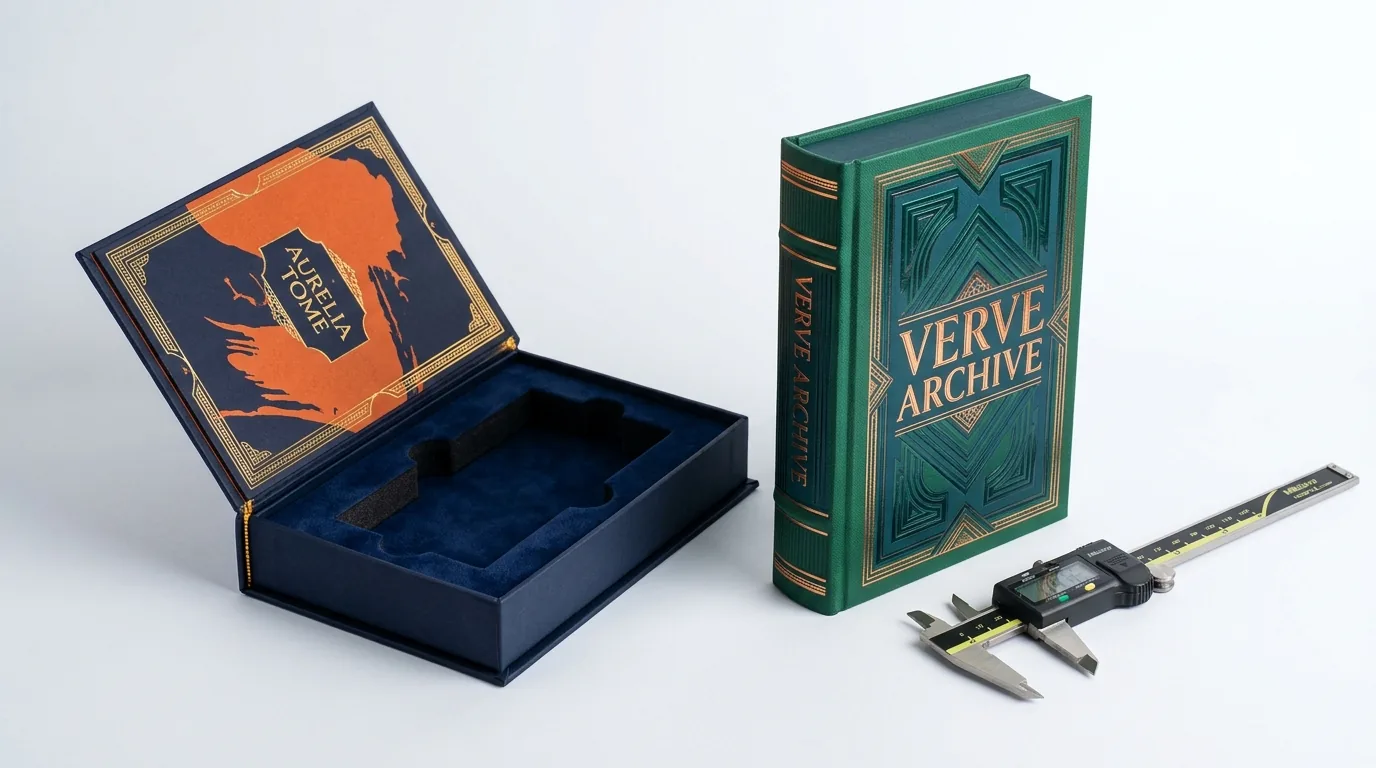
Short answer: Always measure a book-style rigid box from the usable inside cavity of its 4-wall inner tray, Length (L) × Width (W) × Depth (D), then add twice the tray wall thickness plus a +3 to +5 mm hardcover overhang lip on the top, bottom, and right fore-edge to determine the outer book jacket size.
On this page
- What is the 4-step formula for measuring a book-style box inner tray and outer book jacket
- How do the 3 to 5 mm cover overhang lip and 6 to 8 mm spine hinge gap work together
- Which grayboard caliper (1.5 mm, 2.0 mm, 2.5 mm, or 3.0 mm) should I choose for my product
- What are standard custom book-style box dimensions across cosmetics, fragrance, watches, spirits, and PR kits
- How do I verify my book-style box measurements and board stiffness before mass production
- Common mistakes
- FAQs
Request a custom quoteFree dieline & 3D mockup
When ordering custom book-style boxes, every structural dimension starts inside the four-walled inner tray that holds your product or foam insert, written in the sequence Inside Length (L, vertical spine height) × Inside Width (W, horizontal left-to-right width) × Inside Depth (D, usable tray depth). Because a true casebound book-style box mounts that rigid inner tray onto a separate three-board outer jacket (front cover, spine board, and back cover joined by two 6 to 8 mm flexible hinge channels), the outer hardcover panels are intentionally larger than the tray. Adding +3.0 to +5.0 mm of cover overhang on the head (top), tail (bottom), and fore-edge (right opening side) creates the unmistakable silhouette of a hardcover collector tome and gives fingers an immediate lip to lift the front cover. Selecting between 1.5 mm (60 pt), 2.0 mm (80 pt), 2.5 mm (100 pt), and 3.0 mm (120 pt) grayboard keeps wide covers flat without warping.
What is the 4-step formula for measuring a book-style box inner tray and outer book jacket?
Unlike a one-piece folding carton where inside and outside dimensions differ only by a thin sheet of paperboard, a rigid book-style box combines two distinct structures: a V-grooved four-wall inner tray and an overhanging three-board hardcover case. When you enter your size on a CubitPack quote, you only need to provide the usable inside dimensions of the inner tray (L × W × D), and our prepress team calculates the exact board expansions
- Step 1: Measure the Usable Inner Tray Length (L), Width (W), and Depth (D). Place your product or custom EVA foam / molded pulp insert layout on a flat surface. Measure the vertical spine-to-fore-edge height as Length (L), the horizontal hinge-to-opening span as Width (W), and the vertical product height as Depth (D). Add +2.0 to +3.0 mm to your deepest item's height so the closed front cover ceiling never presses down on bottle caps, watch crystals, or ribbon pulls.
- Step 2: Calculate the Inner Tray Outer Dimensions by adding twice the tray's wrapped grayboard caliper (2 × T_tray). For a standard 2.0 mm (80 pt) grayboard tray wrapped in 157 gsm C1S art paper (~2.3 mm assembled wall thickness), the tray's outer length is L + 4.6 mm and its outer width is W + 4.6 mm.
- Step 3: Add the Hardcover Overhang Lip (+3.0 to +5.0 mm per exposed edge) to establish the Front and Back Cover Board sizes. Because the inner tray sits flush against the left spine hinge channel, overhang is added to the top head edge (+4.0 mm), bottom tail edge (+4.0 mm), and right fore-edge (+4.0 mm). Thus, Cover Board Height = Tray Outer Length + 8.0 mm, and Cover Board Width = Tray Outer Width + 4.0 mm.
- Step 4: Calculate the Rigid Spine Board Width. The center spine board must bridge the full outer height of the inner tray (D + 1 × Tray Floor Caliper) plus the thickness of both the front and back cover boards (2 × T_cover) plus +2.0 mm of wrap and inner flyleaf allowance so the front cover closes parallel to the back cover.
How do the 3 to 5 mm cover overhang lip and 6 to 8 mm spine hinge gap work together?
Two geometric tolerances determine whether a book-style rigid box feels like an heirloom collector edition or binds and cracks on the first opening: the cover overhang lip (also called the book square in traditional casebinding) and the flexible spine hinge channel. If the front and back cover boards are cut to the exact same size as the inner tray (0 mm overhang), normal +0.5 mm hand-wrapping tolerances will leave the inner tray protruding awkwardly past the cover edge, and customers will struggle to pry the front cover open unless you add an external ribbon tab. Conversely, if the spine board is glued directly against the front and back cover boards without a 6.0 to 8.0 mm gap, the outer wrap paper will tear as soon as the cover swings past 90 degrees
| Book-style structural zone | Recommended tolerance / dimension | Formula or relationship | Functional purpose in unboxing |
|---|---|---|---|
| Top & Bottom Cover Overhang (Head & Tail) | +3.0 to +5.0 mm (+0.12 to +0.20 in) per side | Cover_H = Tray_Outer_L + (2 × Overhang) | Protects inner tray walls when standing vertically on a bookshelf |
| Right Opening Cover Overhang (Fore-Edge) | +3.0 to +5.0 mm (+0.12 to +0.20 in) | Cover_W = Tray_Outer_W + (1 × Overhang) | Provides an ergonomic finger lip to lift the magnetic or ribbon cover |
| Left Spine Hinge Channel Gap (2 grooves) | 6.0 mm (for 1.5–2.0 mm board) · 8.0 mm (for 2.5–3.0 mm) | Gap = (3.0 × Cover_Board_Caliper) + 0.5 mm | Lets the front cover swing 180° flat onto the table without wrap cracking |
| Rigid Spine Board Width | Tray Outer Depth + 2× Cover Board + 2.0 mm | Spine_W = (D + T_tray) + (2 × T_cover) + 2.0 mm | Keeps the closed front cover 100% parallel to the back cover |
| Outer Wrap Turn-In Margin | 15.0 to 18.0 mm (0.60 to 0.70 in) on all 4 sides | Wraps over board edge beneath inner flyleaf liner | Conceals raw grayboard edges and locks corner miters against fraying |
| Product & Insert Top Recess | -2.0 to -3.0 mm below inner tray top rim | Max_Insert_H = Inner Tray Depth (D) - 2.5 mm | Prevents inside-cover foil or bottle caps from scuffing when closed |
Which grayboard caliper (1.5 mm, 2.0 mm, 2.5 mm, or 3.0 mm) should I choose for my product?
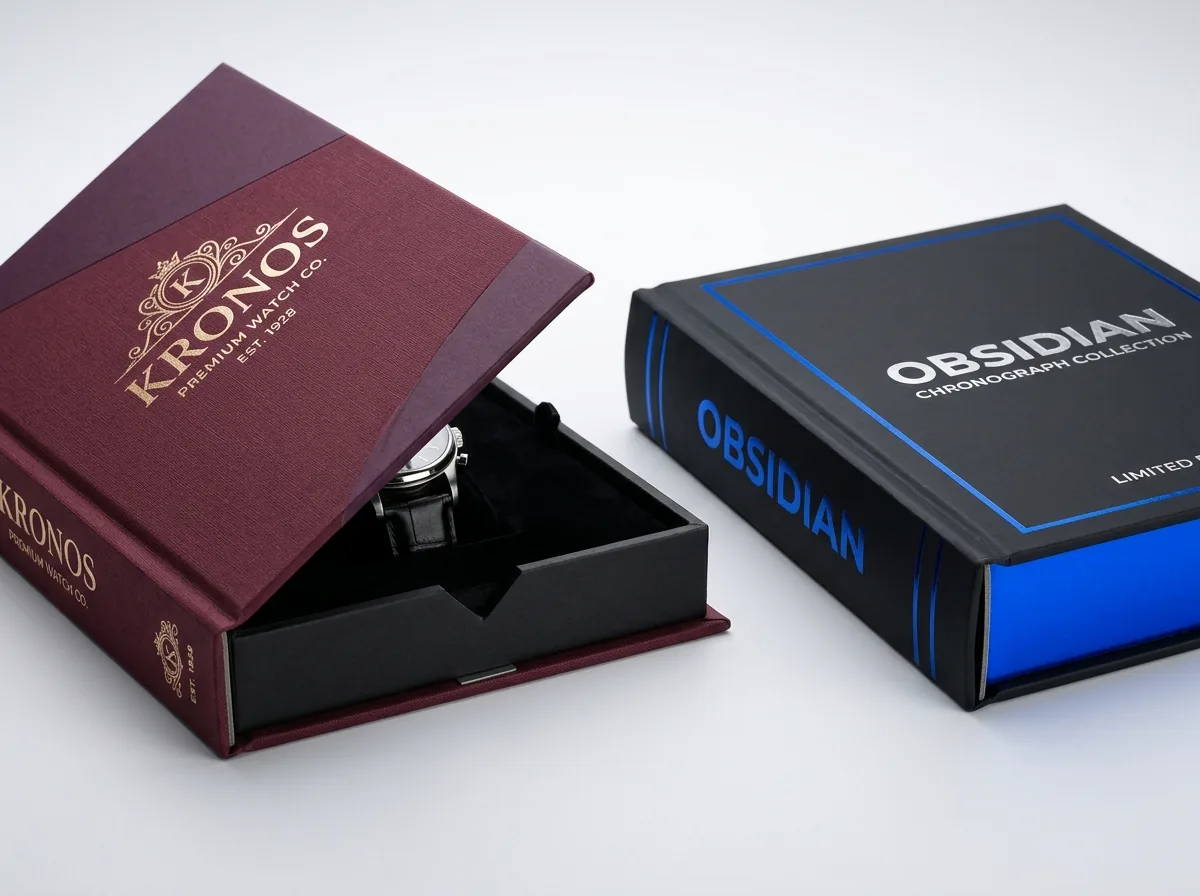
Because the front and back covers of a book-style rigid box are flat cantilevered panels supported only along the left spine hinge when open, choosing the right high-density grayboard caliper is essential to prevent cover bowing or humidity warp. In rigid box manufacturing, grayboard thickness is specified in millimeters, points (1 pt = 1/1000 inch), and grams per square meter (GSM). We also balance cover flatness by matching the outer wrap paper weight (typically 157 gsm C1S art paper or 135 gsm bookbinders cloth) with an equal-tension inner flyleaf liner pasted across the inside cover
| Grayboard caliper & GSM | Assembled wrapped wall thickness | Maximum cover span (L) & payload | Ideal book-style packaging applications |
|---|---|---|---|
| 1.5 mm (60 pt / ~950 GSM) | ~1.8 mm with 157 gsm C1S wrap | Up to 6.0 in (152 mm) · Under 0.5 lb | Fine jewelry rings & earrings, single lipstick or mascara boxes, collector coins, enamel pins |
| 2.0 mm (80 pt / ~1200 GSM): Standard | ~2.3 mm with 157 gsm C1S wrap | 6.0 to 11.0 in (152–280 mm) · 0.5 to 2.5 lb | 50–100 mL eau de parfum bottles, luxury wristwatches, multi-piece skincare discovery kits |
| 2.5 mm (100 pt / ~1500 GSM) | ~2.8 mm with 157 gsm C1S wrap | 10.0 to 15.0 in (254–380 mm) · 2.5 to 5.0 lb | 750 mL reserve wine & spirits bottles, influencer PR mailers, over-ear headphones, gaming editions |
| 3.0 mm (120 pt / ~1800 GSM) | ~3.3 mm with C1S or bookcloth wrap | 14.0 to 20.0 in (355–508 mm) · 5.0 to 10.0+ lb | Heavy crystal spirits decanters, multi-bottle VIP gift trunks, archival museum & publishing tomes |
Know your size? Compare pricing across up to 3 quantities.
Request a Quote →What are standard custom book-style box dimensions across cosmetics, fragrance, watches, spirits, and PR kits?
Every CubitPack rigid box order is custom-cut to your exact product dimensions with zero die or plate charges. Use these eight proven retail benchmarks across our custom rigid boxes, custom magnetic closure boxes, custom cosmetic boxes, custom perfume boxes, custom watch boxes, and custom wine boxes lines to plan your inner tray cavity and outer book jacket proportions
| Product application | Inner Tray Usable L × W × D (in) | Outer Book Case H × W × Spine (in) | Recommended grayboard & closure |
|---|---|---|---|
| Fine jewelry necklace & ring tome | 5.00 × 4.00 × 1.50 in | 5.45 × 4.30 × 1.80 in | 1.5–2.0 mm Grayboard · Hidden magnets + velvet EVA |
| 100 mL Eau de Parfum collector book box | 7.00 × 5.00 × 2.50 in | 7.50 × 5.35 × 2.85 in | 2.0 mm Grayboard · Hidden fore-edge magnets + EVA |
| Chronograph watch & warranty booklet case | 6.50 × 5.50 × 3.25 in | 7.00 × 5.85 × 3.60 in | 2.0 mm Grayboard · Bookcloth wrap + inside pocket |
| 3-piece skincare serum & cream discovery book | 8.50 × 6.50 × 2.25 in | 9.00 × 6.85 × 2.60 in | 2.0 mm Grayboard · Grosgrain ribbon tie + flocked EVA |
| Artisan chocolate bar & truffle library set | 9.00 × 7.00 × 1.75 in | 9.50 × 7.35 × 2.10 in | 2.0 mm Grayboard · Hidden magnets + thermoformed tray |
| Video game or tabletop collector edition tome | 11.00 × 8.50 × 2.75 in | 11.55 × 8.90 × 3.15 in | 2.5 mm Grayboard · Rigid outer slipcase + foil spine |
| Influencer PR media kit with inside-cover screen | 12.00 × 9.50 × 3.50 in | 12.55 × 9.90 × 3.90 in | 2.5 mm Grayboard · Dual N42 magnets + custom EVA |
| 750 mL Reserve spirits bottle & tasting glass trunk | 13.50 × 9.00 × 4.25 in | 14.10 × 9.45 × 4.70 in | 2.5–3.0 mm Grayboard · Wide grosgrain ribbon + EVA |

How do I verify my book-style box measurements and board stiffness before mass production?
Once you have calculated your target inner tray dimensions, explore our companion guides on book-style boxes vs magnetic closure and two-piece rigid boxes and book-style box dieline, spine hinges, and foam inserts explained. When you order custom book-style rigid boxes from CubitPack, our prepress team generates both the V-grooved inner tray dieline and the three-board hardcover jacket dieline for your exact product and insert. Follow this 5-step verification checklist before releasing full production
- Step 1: Measure your physical product components and desired spacing between cavities (at least 10 to 12 mm of foam wall between adjacent glass bottles) to establish your usable Inner Tray L × W × D.
- Step 2: Add +2.0 to +3.0 mm of vertical headspace above your tallest component or foam insert surface so the inside front cover never rubs against your product.
- Step 3: Select your grayboard caliper (1.5 mm, 2.0 mm, 2.5 mm, or 3.0 mm) based on total payload weight and longest cover span (L).
- Step 4: Review your free 2D vector dielines and 3D mockup before payment to verify the 3 to 5 mm cover overhang lip, 6 to 8 mm spine hinge channels, and spine typography centering.
- Step 5: Test a physical sample loaded with your actual product in both flat table orientation and vertical bookshelf spine orientation to confirm zero cover warping and secure magnet or ribbon holding force.
What are the most common measurement and board mistakes on book-style rigid boxes?
Avoid these five dimensional and substrate pitfalls before approving your book-style rigid box dieline
- Quoting the outer hardcover jacket dimensions instead of the usable Inner Tray L × W × D, which shrinks your interior product cavity by 10 to 14 mm.
- Designing the front and back covers flush with the inner tray (0 mm overhang), which eliminates the hardcover book aesthetic and leaves no finger lip to lift the cover.
- Forgetting to add twice the cover board caliper plus +2.0 mm wrap allowance to the spine board width, forcing the front cover to angle upward when closed.
- Specifying thin 1.5 mm grayboard on a wide 12-inch PR mailer or spirits box, allowing the cantilevered front cover to bow and warp in humid warehouses.
- Setting the EVA foam insert or product flush with the top rim of the inner tray instead of recessing it 2 to 3 mm below the tray edge.
Packaging for this
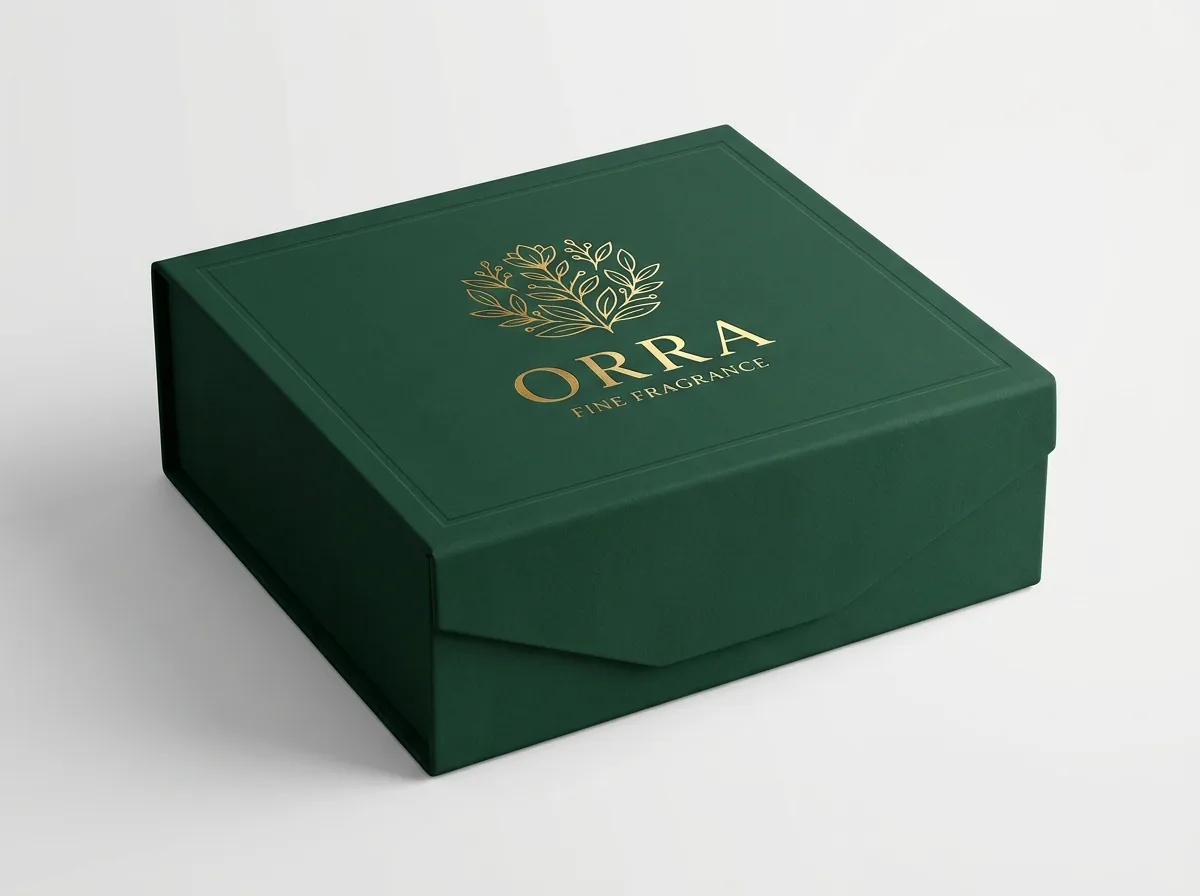



Ready to order book style boxes? Compare up to 3 quantities with a free 3D mockup.
Request a Quote →Questions about book style boxes
Do I enter the inner tray size or the outer book cover size in the quote form?
Always enter the usable inside dimensions of the 4-wall inner tray: Inside Length (L, vertical spine height) × Inside Width (W, horizontal span) × Inside Depth (D, usable cavity depth). Our prepress team automatically adds the grayboard wall thickness, the 3 to 5 mm hardcover overhang lip, and the spine width.
How much larger are the outer book covers than the inner tray?
Because the inner tray mounts flush against the left spine hinge channel, the outer front and back cover boards overhang the inner tray by +3.0 to +5.0 mm on the top edge (head), bottom edge (tail), and right opening side (fore-edge). That adds 6 to 10 mm to total height and 3 to 5 mm to total width beyond the tray's outer walls.
How is the rigid spine board width calculated on a book-style box?
The spine board width equals the inner tray's outer depth (Usable Depth D + 1 × Tray Floor Caliper) plus twice the cover board caliper (front cover + back cover) plus +2.0 mm for paper wrap turn-ins and the inner flyleaf liner. On a 2.0 mm grayboard box with a 50 mm deep cavity, the spine board is 50 + 2 + 4 + 2 = 58 mm wide.
What grayboard thickness is best for a luxury perfume or watch book-style box?
For 50–100 mL fragrance bottles, luxury watches, and skincare discovery sets up to 11 inches tall, 2.0 mm (80 pt / 1200 GSM) high-density grayboard is the industry gold standard. It delivers substantial hardcover heft, razor-sharp 90-degree V-grooved tray corners, and zero cover bowing.
How do you prevent wide book-style box covers from warping over time?
First, upgrade to 2.5 mm (100 pt) or 3.0 mm (120 pt) laminated grayboard whenever cover span exceeds 10 inches. Second, balance moisture tension across the board by pairing the 157 gsm outer wrap sheet with a matching 157 gsm inner flyleaf liner glued with low-moisture animal jelly or PVA adhesive.
Still have a question? Ask a packaging specialist.
Request a Quote →Request your book style boxes quote
Tell us your size and quantities, and one dedicated account manager prepares pricing for each tier.
- Free design & AI-to-print studio + 3D mockup
- No die or plate charges · 4–5 day rush available
- Free shipping to all 50 states
- 10% off your first order
We verified casebound book-style rigid box dimensioning formulas, 3–5 mm hardcover overhang tolerances, 6–8 mm spine hinge channel rules, and 1.5–3.0 mm grayboard caliper ratings against Paperboard Packaging Council (PPC), TAPPI T 411, and Book Manufacturers' Institute (BMI) specifications. A packaging specialist checked every formula and table row. Spot something wrong? Tell us and we fix it.
Sources
- Hardcover book-case overhang allowances (3-5 mm), 6-8 mm spine hinge channel geometry, and 15-18 mm paper wrap turn-in standards.
- High-density laminated grayboard caliper specifications (1.5 mm / 60 pt through 3.0 mm / 120 pt) and V-grooving tolerances.
- 180-degree lay-flat spine hinge mechanics, inner flyleaf liner tension balancing, and bookbinders cloth wrap durability.
What changed
- October 27, 2026: First published with 4-step inner tray to outer book jacket formula, overhang and spine hinge table, 1.5–3.0 mm grayboard selector, and 8-product size chart.
More guides
New packaging guides by email
Sizes, materials and design tips. Unsubscribe anytime.