
How do book-style box dielines, spine hinges, and custom foam inserts work?
Short answer: A custom book-style rigid box uses two separate CAD dielines: a three-board outer hardcover case (front cover, spine board, and back cover separated by two 6 to 8 mm flexible hinge channels wrapped in 157 gsm art paper or bookcloth) and a four-wall V-grooved inner tray fitted with a recessed EVA foam, molded pulp, or paperboard insert.
On this page
- Why does a custom book-style rigid box require two separate CAD dielines in production
- How does the 6 to 8 mm flexible spine hinge channel prevent wrap cracking when opened 180 degrees
- How are hidden neodymium magnets, grosgrain ribbons, and outer slipcases engineered into the dieline
- How do you spec EVA foam, velvet-flocked trays, and molded pulp inserts so products stay locked upright
- How do I prepare my artwork and approve my book-style box dieline before production
- Common mistakes
- FAQs
Request a custom quoteFree dieline & 3D mockup
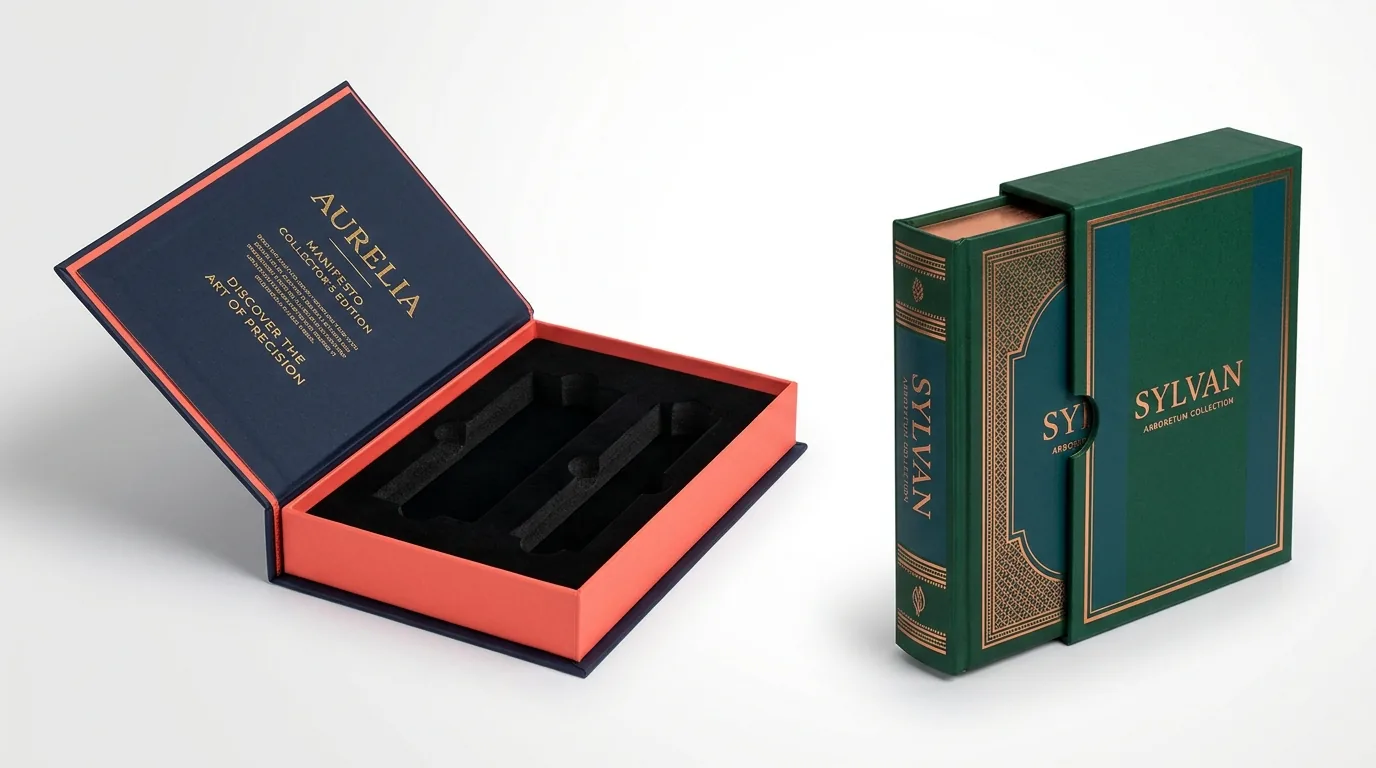
When preparing artwork and structural tooling for custom book-style boxes, your graphic designer does not lay artwork onto a single folding carton blank. Instead, casebound book-style manufacturing relies on two synchronized CAD dieline sets: Part 1 is the outer three-board hardcover book jacket (comprising the back cover board, the center spine board, and the front cover board joined across two 6.0 to 8.0 mm flexible paper or cloth hinge channels with 15 to 18 mm turn-in margins and an inner flyleaf liner), and Part 2 is the separate four-wall rigid inner tray that is V-grooved at 90 degrees, corner-stayed with heat-activated kraft tape, wrapped, and permanently bonded to the inside back cover. Combining that two-part structure with a -0.5 mm compression-fit EVA foam insert and a 2 to 3 mm top recess ensures heavy bottles, watches, and cosmetics stay locked in place whether the box lies flat or stands upright on its spine.
Why does a custom book-style rigid box require two separate CAD dielines in production?
In a standard folding carton, one sheet of paperboard is die-cut, creased, and folded into the finished box. A rigid book-style box is built like a museum-grade hardcover book combined with a luxury presentation vault, requiring six separate die-cut pieces of grayboard and paper across two master CAD templates
- CAD File 1: The 3-Board Outer Book Jacket & Flyleaf: Contains three separate pieces of flat grayboard (Back Cover Board, Spine Board, and Front Cover Board) positioned side by side on a single outer wrap sheet (157 gsm C1S art paper or bookbinders cloth) with 6.0 to 8.0 mm spacing between the boards. Around all four outside edges of the wrap sheet, a 15.0 to 18.0 mm turn-in margin with mitered corner cuts folds inward over the raw grayboard edges, and a single-piece inner flyleaf sheet glues across the inside to conceal the turn-ins and form the inside front cover.
- CAD File 2: The 4-Wall V-Grooved Inner Tray: Contains a cross-shaped grayboard blank where the four side walls meet the tray floor along 90-degree V-grooved channels. Once the four walls fold up at razor-sharp 90-degree angles and are locked at all four corners with heat-activated corner-stay tape, a separate tray wrap sheet covers the exterior side walls and turns 15 mm down into the interior tray cavity before the finished tray is glued onto the inside back cover.
How does the 6 to 8 mm flexible spine hinge channel prevent wrap cracking when opened 180 degrees?
The most critical engineering zone on a book-style rigid box is the pair of flexible hinge channels on either side of the center spine board. If a rigid box maker butts the front cover board directly against the spine board with zero gap (or relies only on a V-groove cut into solid grayboard for a 180-degree opening cover), the board edges pinch against each other as soon as the cover opens past 90 degrees,levering the spine apart and tearing the outer paper wrap after a few cycles. Leaving a calibrated 6.0 to 8.0 mm board-free channel where the outer wrap sheet bonds directly to the inner flyleaf liner creates a supple bookbinding joint: Every millimeter of hinge width must be calibrated to the underlying grayboard caliper so that the cover neither pinches at 90 degrees nor slides loosely when closed on the shelf. Review the caliper-to-hinge lookup table below before setting your spine artwork boundaries
| Grayboard caliper | Required spine hinge channel width | Outer wrap & lamination requirement | Maximum safe opening angle & cycle life |
|---|---|---|---|
| 1.5 mm (60 pt / ~950 GSM) | 5.5 to 6.0 mm (0.22 to 0.24 in) | 157 gsm C1S + BOPP matte/soft-touch film or cloth | 180° lay-flat opening · 500+ flex cycles |
| 2.0 mm (80 pt / ~1200 GSM) | 6.5 to 7.0 mm (0.26 to 0.28 in) | 157 gsm C1S + BOPP film or linen bookcloth | 180° lay-flat opening · 500+ flex cycles |
| 2.5 mm (100 pt / ~1500 GSM) | 7.5 to 8.0 mm (0.30 to 0.31 in) | 157 gsm C1S + scuff-free film or buckram cloth | 180° lay-flat opening · 500+ flex cycles |
| 3.0 mm (120 pt / ~1800 GSM) | 8.5 to 9.0 mm (0.33 to 0.35 in) | Bookbinders cloth, faux leather, or reinforced film | 180° lay-flat opening · Heavy archival duty |

How are hidden neodymium magnets, grosgrain ribbons, and outer slipcases engineered into the dieline?
Because a book-style box has a 3 to 5 mm cover overhang lip on the right opening edge (fore-edge), you have three distinct ways to secure the front cover depending on your product weight, aesthetic direction, and retail channel: Each closure option alters how the front cover board and the right inner tray wall are die-cut prior to paper wrapping, so your closure choice must be locked in before final CAD dieline approval
| Book-style closure system | How it is built into the grayboard | Best product applications | Key dieline design rule |
|---|---|---|---|
| Hidden Fore-Edge Neodymium Magnets | Two N35–N42 disc or bar magnets (10×2 mm or 15×2 mm) sit in die-cut recesses near the right edge of the front cover, mating with steel discs embedded in the right inner tray wall | Eau de parfum, watches, cosmetics, tech gadgets | Offset the inner tray's right wall alignment so the recessed cover magnets land centered over the tray wall thickness |
| Recessed Grosgrain or Satin Ribbon Tie | Two 15–25 mm ribbons pass through routered horizontal slots in the front cover board and right inner tray wall, glued flat under the wrap and flyleaf before covering | Skincare discovery sets, bridal gifts, reserve wine & spirits | Specify 120–150 mm of free ribbon length per side with heat-sealed diagonal or V-notch ends to tie a clean bow |
| Rigid 5-Panel Collector Slipcase | A separate open-backed V-grooved rigid outer case built with +1.5 to +2.0 mm internal clearance so the book box slides in spine-first (leaving the foil spine visible) | Tabletop games, luxury publishing, multi-volume collector sets | Add a 20 mm semicircular thumb notch on the slipcase side panels or a pull ribbon inside the slipcase floor |
Know your size? Compare pricing across up to 3 quantities.
Request a Quote →How do you spec EVA foam, velvet-flocked trays, and molded pulp inserts so products stay locked upright?
Unlike a standard two-piece box that always rests flat on its base, a book-style rigid box is frequently stood upright vertically on its spine on a retail shelf or home bookcase. That means your interior insert must hold every bottle, jar, watch pillow, or vial against gravity without allowing items to tip forward against the inside front cover when opened. We engineer custom inserts across our custom box inserts, custom perfume boxes, and custom cardboard inserts lines using these exact retention tolerances: Whether you choose die-cut closed-cell EVA foam, velvety flocked trays, or sustainable hot-pressed molded fiber, calibrating cavity interference and finger-notch access guarantees a frustration-free reveal
| Insert material & top finish | Cavity-to-product fit tolerance | Recommended wall bridge & height recess | Best book-style product match |
|---|---|---|---|
| 38–45 kg/m³ High-Density EVA Foam (Uncoated or Paper-Lined) | -0.5 to -1.0 mm undersized compression grip | Min 10–12 mm foam bridge between cavities · Recess top 2–3 mm below tray rim | Heavy glass perfume flacons, 750 mL spirits bottles, ceramic jars, audio gear |
| EVA Foam + Velvet Flocking or Satin Cloth Wrap | -0.3 to -0.5 mm snug velvet-cushioned grip | Min 12 mm bridge · Add 18–22 mm semicircle finger notches on both sides of item | Fine jewelry, chronograph watches, dropper serums, collector coins |
| Smooth Hot-Pressed Molded Fiber / Bamboo Pulp | +0.3 to +0.5 mm clearance + 1.5° draft angle | Include snap-in side retention ribs so items stay seated when standing on spine | Eco-luxury clean beauty kits, botanical wellness sets, sustainable tech |
| Die-Cut 18–24 pt Paperboard Platform & Dividers | +0.5 to +1.0 mm clearance + locking collar tabs | Pair a die-cut top neck retainer with a bottom well for tall cylindrical bottles | Lightweight cosmetics tubes, tea tins, stationery, and chocolate bars |

How do I prepare my artwork and approve my book-style box dieline before production?
After reviewing the structural mechanics above, check our companion guides on how to measure and choose grayboard for book-style boxes and book-style boxes vs magnetic closure and two-piece rigid boxes. When you request a quote on our custom book-style rigid boxes page, our prepress team sends you both the outer book jacket dieline and the inner tray + insert dieline with zero die or plate charges. Use this 5-point prepress checklist before signing off on your proof
- Step 1: Extend all outer wrap background colors and patterns across the full 15 to 18 mm turn-in margin plus an extra 3 mm bleed so the turned inside edges match your cover.
- Step 2: Keep critical spine logos and volume numbers centered within the rigid Spine Board safe zone, at least 3 mm away from the left and right 6 to 8 mm hinge fold channels.
- Step 3: Design the inside front cover (flyleaf) panel with your brand story, usage ritual, or a diagonal corner pocket so the 180-degree opening reveal feels complete.
- Step 4: Verify that your EVA foam or pulp insert top surface sits 2 to 3 mm below the top rim of the inner tray and includes 18 to 22 mm finger notches or a satin lift ribbon under heavy glass items.
- Step 5: Specify scuff-free matte lamination, velvety soft-touch lamination, or woven bookbinders cloth on the outer wrap so the spine hinges never crack across hundreds of openings.
What are the most common dieline, spine hinge, and foam insert mistakes on book-style boxes?
Avoid these five structural prepress errors before releasing your book-style rigid box to production
- Butting the front and back cover grayboards directly against the spine board with 0 mm hinge gap, which tears the paper wrap the first time the cover opens past 90 degrees.
- Stopping outer cover artwork at the edge of the grayboard instead of extending it across the 15 to 18 mm turn-in margin, leaving a white paper frame around the inside cover.
- Printing dark CMYK ink on unlaminated coated paper across the spine hinge channel, causing white ink-cracking lines along the fold.
- Cutting EVA foam cavities +2 mm oversized on a vertical book-style box, allowing heavy glass bottles to fall forward when a customer opens the cover upright.
- Omitting semicircle finger notches (18 to 22 mm) around tight compression-fit EVA foam cavities, making it impossible to lift out flush perfume bottles or watch cases.
Packaging for this
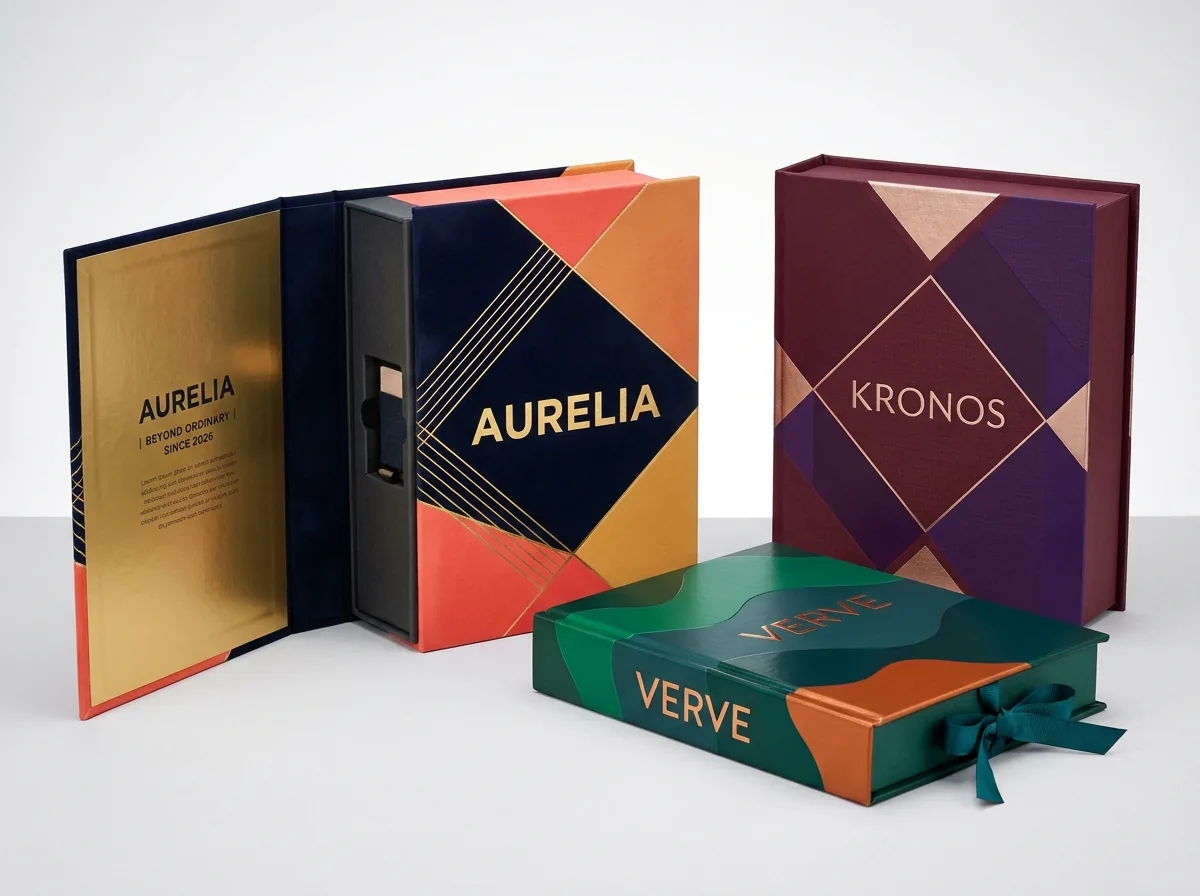
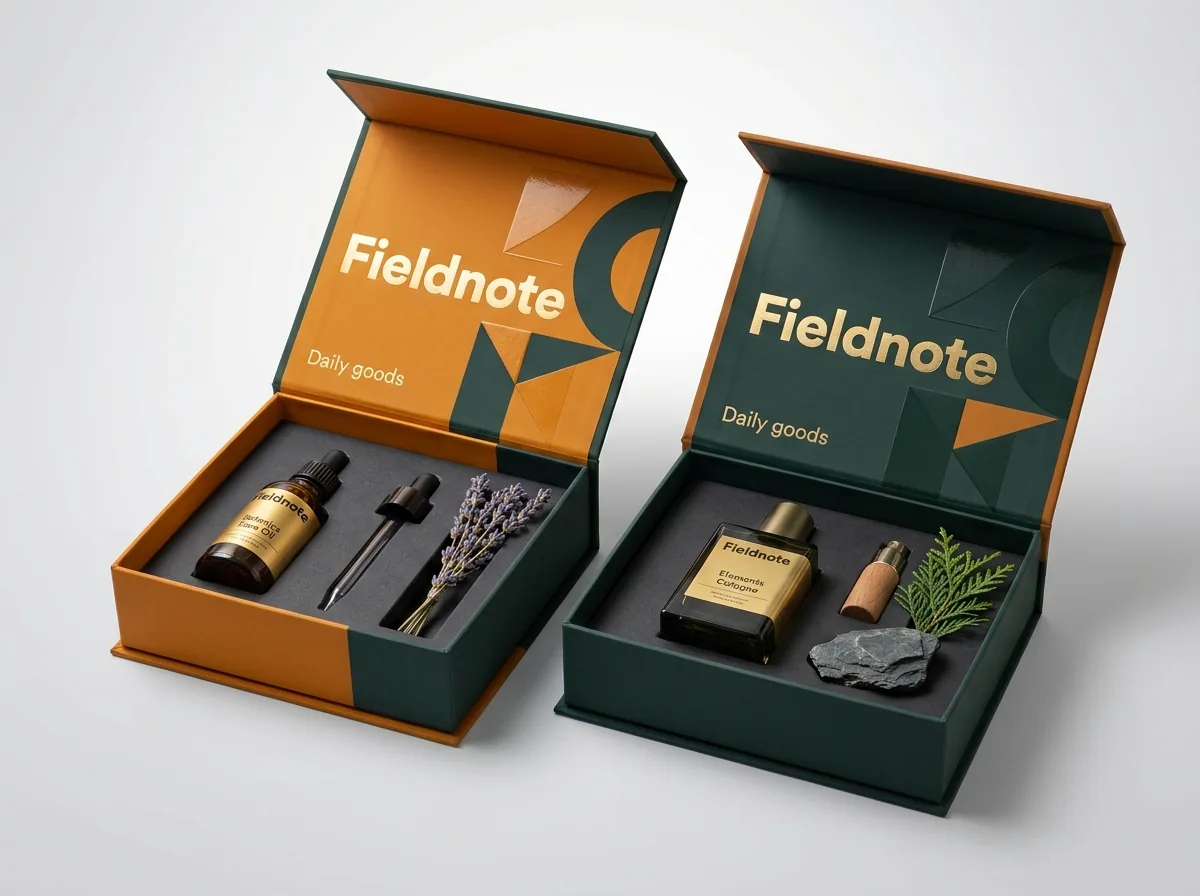


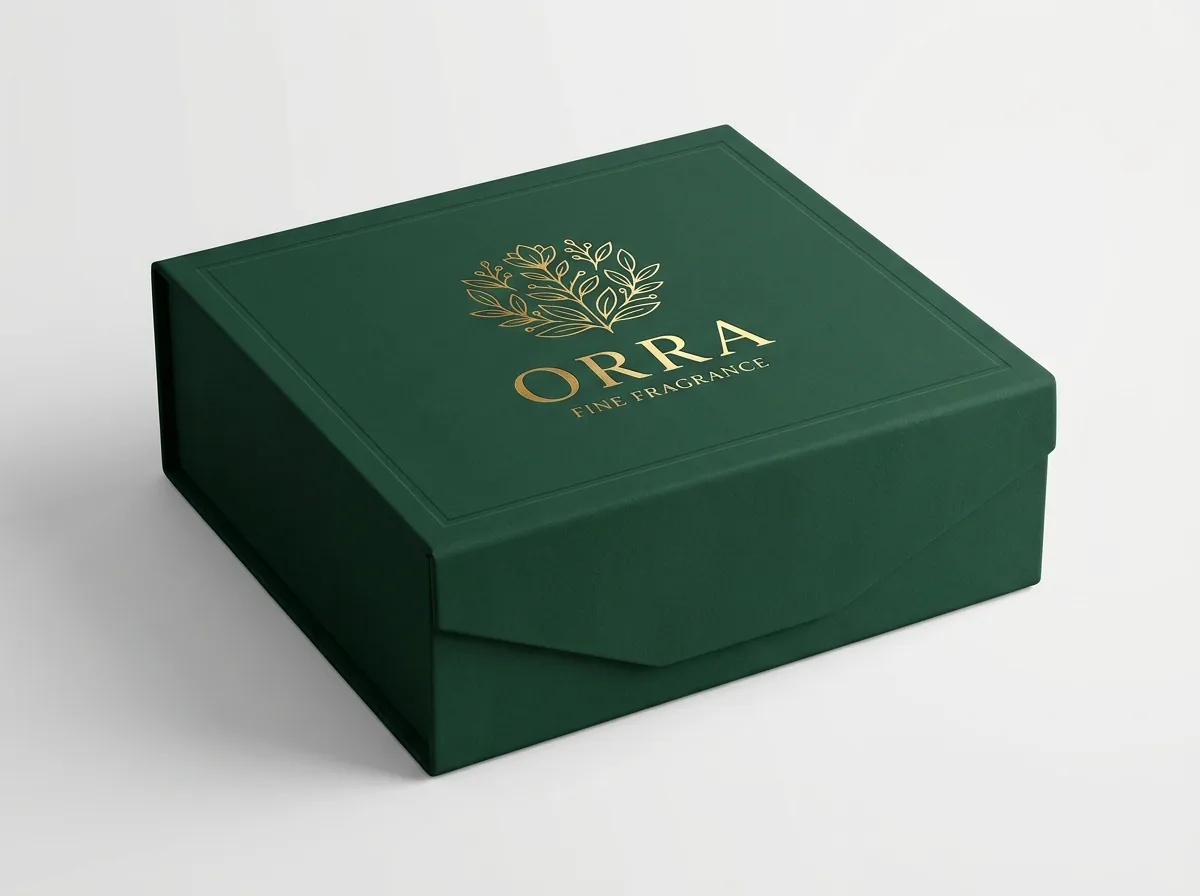
Ready to order book style boxes? Compare up to 3 quantities with a free 3D mockup.
Request a Quote →Questions about book style boxes
Why does my custom book-style box proof have two separate dieline files?
Because a casebound book-style rigid box is assembled from two distinct sub-assemblies: File 1 is the 3-board outer hardcover book jacket (back cover, spine, front cover, wrap turn-ins, and inner flyleaf liner), and File 2 is the 4-wall V-grooved inner tray that mounts onto the inside back cover.
Why is there a 6 to 8 mm gap between the spine board and the cover boards on the dieline?
That 6 to 8 mm board-free zone is the flexible bookbinding hinge channel. In that channel, the outer wrap paper or bookcloth bonds directly to the inner flyleaf liner without rigid grayboard in between, allowing the hardcover lid to swing 180 degrees flat onto the table without binding or cracking.
How do hidden magnets work on a book-style box that has no front flap?
Instead of using an external front flap, we recess high-pull N35 to N42 neodymium magnets into die-cut pockets near the right fore-edge of the front cover board and embed matching steel discs into the top edge of the right inner tray wall, concealed completely beneath the wrap paper.
Should my EVA foam insert be smaller or larger than my product dimensions?
For 38–45 kg/m³ EVA foam in a book-style box, we cut each cavity -0.5 to -1.0 mm smaller than your product's exact 3D profile. That slight interference compression locks glass bottles, jars, and electronics securely in place even when the book box stands vertically on a shelf.
How far below the top of the inner tray should my foam insert sit?
Always recess the top surface of your EVA foam, velvet tray, or tallest product cap 2.0 to 3.0 mm below the top rim of the 4-wall inner tray. That clearance ensures the front cover closes 100% flat against the tray walls and protects inside-cover foil stamping from scuffing.
Still have a question? Ask a packaging specialist.
Request a Quote →Request your book style boxes quote
Tell us your size and quantities, and one dedicated account manager prepares pricing for each tier.
- Free design & AI-to-print studio + 3D mockup
- No die or plate charges · 4–5 day rush available
- Free shipping to all 50 states
- 10% off your first order
We verified two-part casebound book-style CAD dieline rules, 6–8 mm spine hinge channel formulas, N35–N42 neodymium magnet and grosgrain ribbon slotting specs, and 38–45 kg/m³ EVA foam compression tolerances against Paperboard Packaging Council (PPC) and Book Manufacturers' Institute (BMI) standards. A packaging specialist checked every specification. Spot something wrong? Tell us and we fix it.
Sources
What changed
- October 27, 2026: First published with 2-part CAD dieline breakdown, 6–8 mm spine hinge table, 3-closure comparison, and EVA/pulp/cardboard insert tolerance table.
More guides
New packaging guides by email
Sizes, materials and design tips. Unsubscribe anytime.