
How Do You Align Custom Cavity Inserts Beneath Rigid Box Display Windows?
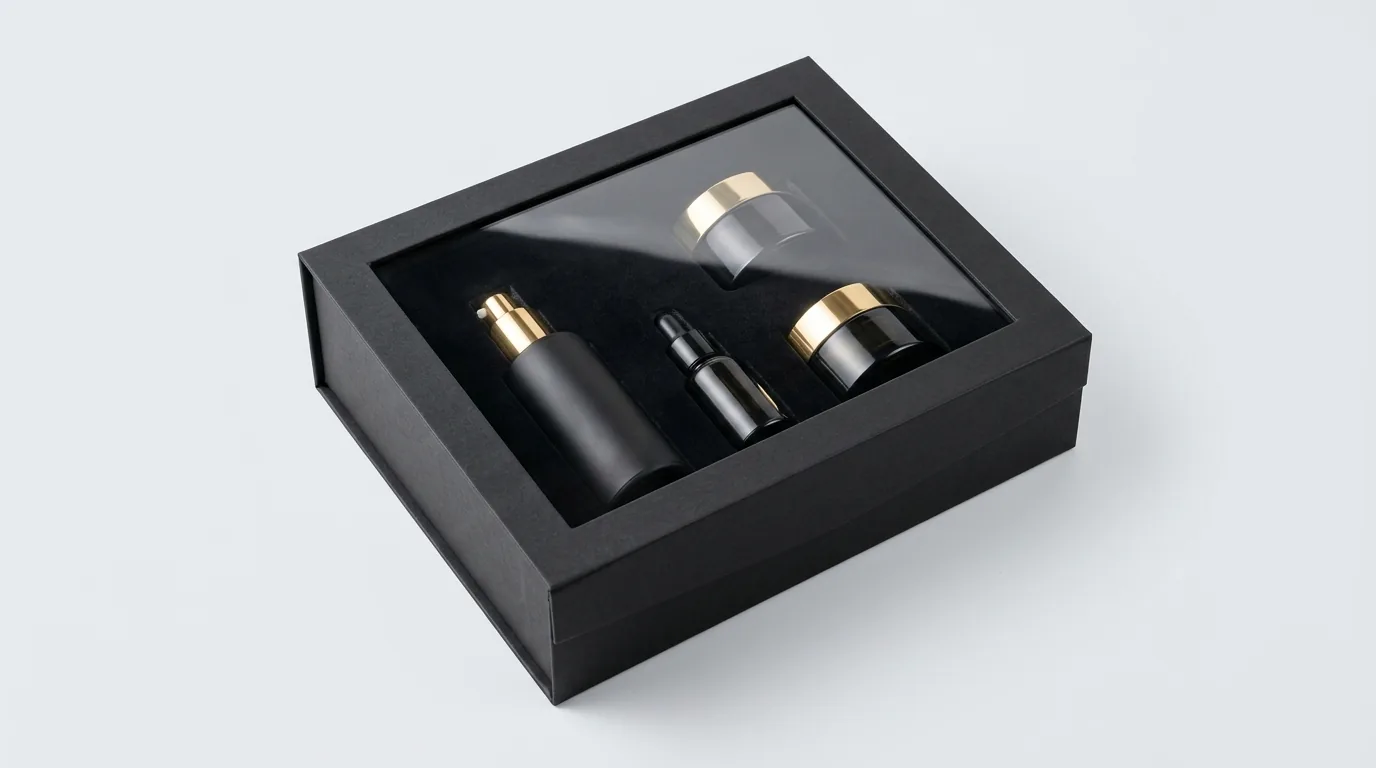
Short answer: Aligning cavity inserts beneath rigid display windows requires 0.5 mm negative tolerance cavity machining in high-density EVA foam to lock products centered. Providing 3 mm to 5 mm of vertical headspace clearance prevents product-to-window rubbing while framing items in velvet luxury.
On this page
- How does CNC laser routing achieve precision cavity fit in high-density EVA foam
- Why is 3 mm to 5 mm vertical headspace clearance vital to prevent window haze
- How does plush velvet and satin top lamination elevate cavity presentation
- What finger extraction notches facilitate effortless product retrieval
- How do stepped multi-depth cavities support irregular product profiles
- What folded paperboard insert alternatives provide plastic-free circularity
- How do twin dual-window apertures frame multi-item corporate gift sets
- What pre-production fit testing protocols guarantee zero assembly surprises
- Common mistakes
- FAQs
Request a custom quoteFree dieline & 3D mockup
Engineering custom cavity inserts for windowed rigid setup boxes requires sub-millimeter structural coordination between internal tray geometry, product physical dimensions, and the lid aperture cutout. When ordering custom rigid boxes with window, packaging designers must ensure that packaged luxury items rest dead-center beneath the clear optical PET window, perfectly framed like a museum showcase. High-density closed-cell ethylene-vinyl acetate (EVA) foam is the premier insert substrate, precision-machined using CNC laser routing to achieve negative 0.5 mm compression tolerances that grip perfume bottles, jewelry, and confectionery firmly. Crucially, CAD engineers calibrate insert depth to maintain a vertical headspace clearance of 3 mm to 5 mm between the highest point of the product and the bottom face of the clear PET window. When configuring window display boxes with inserts, our packaging specialists provide physical foam prototypes, CAD dielines, and certified fit tests.
How does CNC laser routing achieve precision cavity fit in high-density EVA foam?
Unlike standard die-punched polyurethane foam that leaves rough, angled cavity walls, high-density closed-cell EVA foam (ranging from 38 to 45 kg/m³ density) is machined using multi-axis CNC laser cutting heads or high-speed oscillating digital knife tables. Digital CAD tooling paths follow the exact three-dimensional digital scan of the packaged product, routing crisp 90-degree vertical cavity walls with smooth floor finishes. Engineers calibrate cavity perimeters 0.5 mm smaller than the physical product dimensions. This negative compression fit gently grips glass perfume flacons, watch bezels, or chocolate trays, preventing contents from sliding or rotating away from the window viewing aperture during transit.
Why is 3 mm to 5 mm vertical headspace clearance vital to prevent window haze?
Maintaining strict vertical clearance between the top of the packaged merchandise and the interior surface of the clear PET window film is critical to preserving optical clarity. During highway parcel shipping, courier sorting conveyors transmit continuous micro-vibrations across packaged boxes. If perfume bottle caps, metal cosmetic compacts, or glass candle lids touch the PET film directly, continuous friction creates unsightly cloudy scuff marks and surface abrasion within minutes. Providing 3 mm to 5 mm of vertical headspace clearance eliminates direct contact entirely, ensuring that the clear PET window remains crystal-clear and scratch-free upon arrival.
How does plush velvet and satin top lamination elevate cavity presentation?
While raw closed-cell EVA foam delivers outstanding shock-damping performance, its matte rubberized surface lacks the sensory opulence expected in luxury retail gifting. Packaging converters laminate the top surface of the EVA foam sheet with premium plush velvet fabric, synthetic microsuede, or shimmering satin cloth prior to CNC laser cavity cutting. Heat-activated acrylic adhesive films fuse the fabric permanently to the foam substrate without adhesive bleed. When the laser slices through both the fabric and foam layers, it heat-seals fabric edges, preventing fraying. When viewed through the clear lid window, the deep black, royal blue, or burgundy velvet creates rich visual contrast.
Know your size? Compare pricing across up to 3 quantities.
Request a Quote →What finger extraction notches facilitate effortless product retrieval?
Because high-density EVA foam cavities hold items with a snug friction fit, consumers can struggle to grasp and remove smooth glass bottles or jewelry compacts without gouging the foam or damaging product corners. Experienced structural packaging engineers integrate semi-circular finger extraction notches measuring 15 mm to 20 mm in diameter along opposite cavity edges. The finger notches allow consumers to pinch and lift the item effortlessly from its cradle. Designers position finger notches along horizontal or lateral axes where they remain partially concealed beneath the outer window border frame, preserving a clean aesthetic reveal.
How do stepped multi-depth cavities support irregular product profiles?
Many luxury consumer items feature asymmetrical or stepped physical geometries, such as perfume flacons with wide glass bodies and narrow atomizer spray pumps, or tiered jewelry sets featuring rings and pendant necklaces. Digital CNC routing accommodates complex contours by executing multi-depth tiered milling passes. A shallow 8 mm cavity supports the slender bottle neck, while a deeper 25 mm pocket cradles the heavy glass base. Tiered cavity milling ensures that the top face of the product sits completely parallel to the horizontal plane of the lid window, eliminating awkward product tilt and presenting an immaculate, balanced posture.
What folded paperboard insert alternatives provide plastic-free circularity?
For eco-conscious consumer brands seeking to eliminate plastic foam entirely from their luxury packaging suites, custom folded paperboard inserts provide an elegant, recyclable alternative. Fabricated from 20 pt to 28 pt virgin unbleached kraft or clay-coated recycled paperboard, paperboard inserts feature precision laser die-cut apertures and stepped platform risers. Internal friction tabs lock the platform securely inside the rigid setup base tray, holding cosmetics, gourmet tea tins, or soaps firmly in place. When paired with an open die-cut window or cellulose bio-film, the entire package achieves a unified mono-material circularity profile.
How do twin dual-window apertures frame multi-item corporate gift sets?
When packaging corporate gift sets containing two distinct items, such as an executive metal pen paired with a leather notebook, or a premium fragrance paired with scented body lotion, single large windows can compromise lid beam stiffness. Structural designers solve this challenge by engineering twin dual-window apertures separated by a central 25 mm chipboard bridge beam. The central bridge preserves structural torsional rigidity across the lid span while framing each product independently within its own dedicated viewing window. This dual-aperture architecture creates an orderly, curated presentation that elevates perceived corporate gift value.
What pre-production fit testing protocols guarantee zero assembly surprises?
To eliminate the risk of product fit errors or visual misalignment on commercial press runs, packaging converters enforce strict pre-production sampling protocols. Brand clients provide physical product production samples (such as finished perfume bottles, jewelry cases, or candle tumblers) to the converter's CAD lab. Structural engineers measure physical items using 3D laser scanners and fabricate working prototypes combining production-weight chipboard, hand-mounted PET windows, and CNC-cut velvet foam inserts. Testing verifies cavity retention, vertical headspace clearance, and optical alignment before commercial production dies are authorized.
What are common mistakes in window display insert engineering?
Engineering luxury cavity inserts requires precise coordination between foam geometry and window aperture placement. Packaging specialists highlight four frequent errors
- Failing to provide 3 mm to 5 mm vertical headspace clearance, resulting in product caps rubbing and hazing the clear PET window.
- Machining cavities with loose positive tolerances, allowing items to shift off-center during transit and obscure the window reveal.
- Omitting finger extraction notches, forcing customers to pry delicate products out of tight foam cavities with fingernails.
- Misaligning multi-item cavity layouts relative to the lid window aperture, causing outer items to be partially cut off by window borders.
Packaging for this

Ready to order rigid boxes with window? Compare up to 3 quantities with a free 3D mockup.
Request a Quote →Questions about rigid boxes with window
What foam density is recommended for luxury window box inserts?
We recommend high-density closed-cell EVA foam rated at 38 to 45 kg/m³ density. This grade provides firm structural support, clean 90-degree CNC laser routed walls, and excellent shock absorption without crumbling or off-gassing.
How do you prevent items from touching and scratching the clear PET window?
Our CAD engineers calibrate cavity routing depths so the top face of the packaged product sits 3 mm to 5 mm below the bottom surface of the PET film, eliminating vibration contact and preserving pristine optical clarity throughout transit.
Can the foam insert be wrapped in custom fabric colors to match brand guidelines?
Yes. We laminate EVA foam with premium velvet, synthetic microsuede, or woven satin fabrics in custom Pantone shades, providing opulent visual framing that complements your brand aesthetic beneath the transparent lid window.
What is the difference between CNC laser routed foam and die-cut foam?
Die-cut foam is stamped using steel rule blades, which produces concave beveled sidewalls on thick foam. CNC laser routing utilizes digital cutting heads that produce crisp, perfectly vertical 90-degree cavity walls with stepped floor depths.
Can folded paperboard inserts replace foam for a plastic-free window box?
Yes. We engineer precision die-cut 24 pt paperboard platform inserts featuring folded risers and locking tabs that hold products securely beneath display windows, creating a fully recyclable mono-material paper packaging solution.
What is the minimum order quantity for custom rigid boxes with custom cavity inserts?
Our minimum order quantity starts at 250 units for custom rigid setup boxes complete with custom CNC laser-cut cavity inserts, free 2D vector CAD dielines, digital 3D proofing, and free US ground shipping.
Still have a question? Ask a packaging specialist.
Request a Quote →Request your rigid boxes with window quote
Tell us your size and quantities, and one dedicated account manager prepares pricing for each tier.
- Free design & AI-to-print studio + 3D mockup
- No die or plate charges · 4–5 day rush available
- Free shipping to all 50 states
- 10% off your first order
Researched against Paperboard Packaging Council setup standards, ASTM D3332 mechanical shock metrics, and ISTA 3A transit testing protocols. Verified by CubitPack packaging specialists.
Sources
What changed
- November 11, 2026: Initial publication of technical engineering guide on custom cavity insert alignment for window display rigid boxes with 5 CAD SVGs.
More guides
New packaging guides by email
Sizes, materials and design tips. Unsubscribe anytime.