
What Tolerances and PET Film Specs Govern Rigid Box Window Die-Cutting?
Short answer: Die-cutting windows in rigid setup boxes requires maintaining a minimum 20 mm border margin around 1.5 mm to 2.5 mm chipboard lids to prevent warping. Optically clear 0.25 mm to 0.40 mm PET film is mounted internally with high-tack acrylic tape, shielded by mitered paper wrap turn-ins.
On this page
- How does chipboard core thickness govern window die-cutting tonnage and blade bevels
- Why is a minimum 20 mm perimeter border margin mandatory on rigid window lids
- What optical PET film calipers balance puncture resistance and clarity
- How do mitered wrap turn-in tabs conceal raw chipboard edges
- What adhesive transfer tapes prevent glue squeeze-out onto optical window film
- How does anti-static ionizer blowdown eliminate airborne dust contamination
- What hot foil stamped perimeter frames enhance luxury picture-frame aesthetics
- How do ASTM transit simulation drop tests validate window adhesion integrity
- Common mistakes
- FAQs
Request a custom quoteFree dieline & 3D mockup
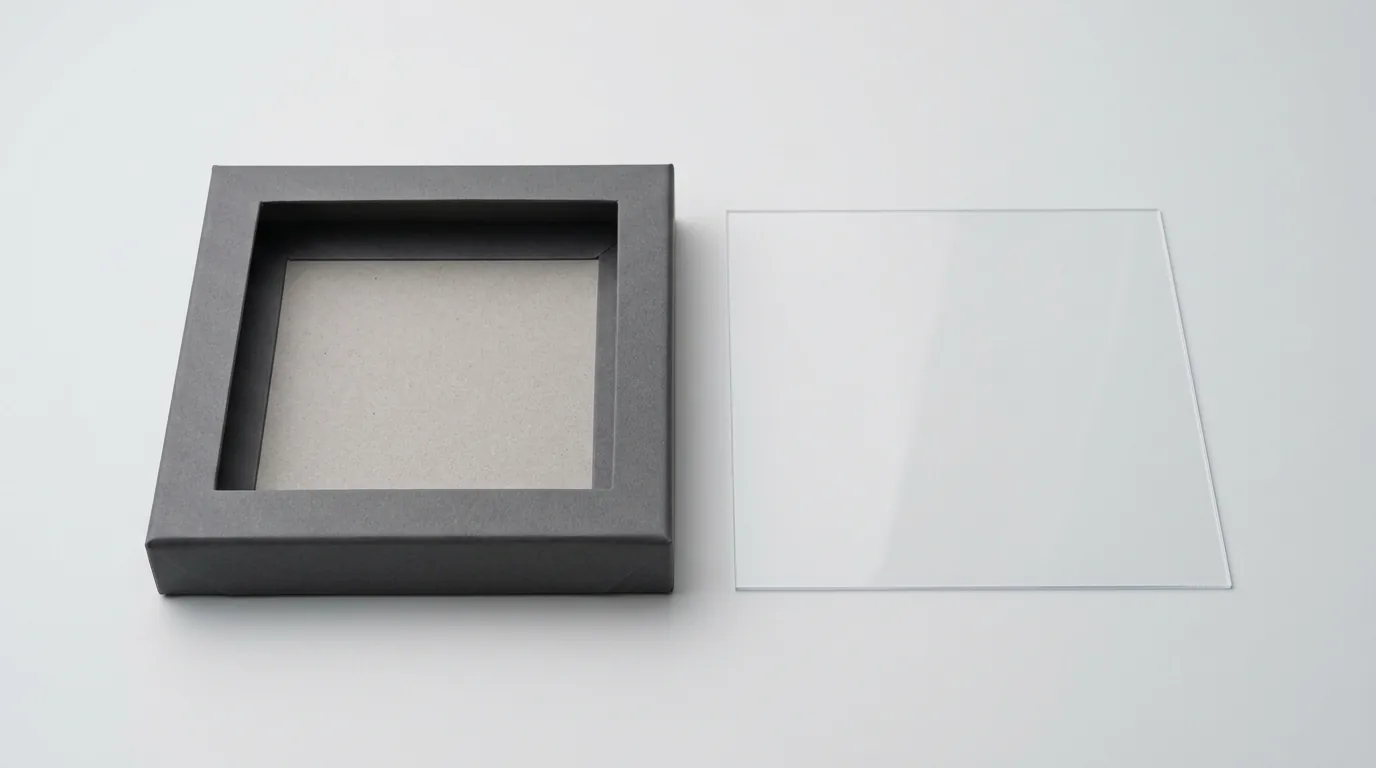
Die-cutting a transparent showcase window into the structural lid of a luxury setup box requires precise mechanical engineering to preserve lid rigidity while providing distortion-free visibility. When ordering custom rigid boxes with window, packaging converters cut apertures directly through thick 1200 gsm to 1800 gsm (1.5 mm to 2.5 mm) chipboard cores using high-tonnage laser steel rule dies. To prevent the chipboard lid from sagging or bowing across the cutout span, packaging engineers maintain a strict perimeter border margin of at least 20 mm along all four edges. The display window is crafted from virgin 0.25 mm to 0.40 mm polyethylene terephthalate (PET) film treated with anti-scratch and anti-static surface coatings. The PET film extends 8 mm to 12 mm beyond the aperture perimeter and is permanently bonded to the interior chipboard face using high-tack acrylic adhesive transfer film. When configuring windowed rigid gift boxes, our packaging specialists provide structural prototypes, certified caliper data, and free 2D vector CAD dielines before full commercial press runs.
How does chipboard core thickness govern window die-cutting tonnage and blade bevels?
Die-cutting through heavy 1.5 mm to 2.5 mm solid recycled chipboard cores requires significantly higher press tonnage than standard paperboard folding cartons. Converters utilize flatbed platen die cutters operating at 250 to 400 tons of cutting pressure to drive hardened steel rule blades cleanly through dense 1500 gsm binderboard. Standard 3 pt center-bevel cutting blades (0.042 inches thick) with a 42-degree cutting bevel are specified to slice through compacted cellulose fibers without crushing or delaminating the internal plies. Clean cut edges ensure that exterior wrapping papers lay completely flat across the aperture rim, eliminating unsightly fiber fraying or board swelling along the visible window perimeter.
Why is a minimum 20 mm perimeter border margin mandatory on rigid window lids?
Maintaining structural beam stiffness in the rigid box lid depends on the width of the solid chipboard framing surrounding the die-cut aperture. Under standardized TAPPI T489 Taber stiffness testing, cutting away a central window reduces the lid panel torsional rigidity by 40% to 60%. If the surrounding border margin is engineered under 15 mm, the remaining narrow chipboard struts flex and warp under manual handling, causing the lid to bow inward or bind against the base tray walls during opening. Specifying a conservative 20 mm to 25 mm perimeter border frame ensures that the heavy chipboard core retains sufficient beam strength to maintain perfect flatness throughout the commercial life of the package.
What optical PET film calipers balance puncture resistance and clarity?
Selecting the proper window film caliper ensures clear product presentation while guarding interior contents against external puncture hazards. Commercial converters utilize virgin polyethylene terephthalate (PET) plastic sheets ranging from 0.25 mm (0.010 in) to 0.40 mm (0.016 in) in thickness. A 0.25 mm PET film provides excellent optical transparency and flexibility for compact jewelry and macaron boxes under 6 inches in span. For larger luxury perfume chests and corporate gift hampers spanning 8 to 14 inches, upgrading to 0.35 mm or 0.40 mm PET film prevents visible surface ripple and withstands heavy retail handling pressure. Standard ASTM D1003 optical testing verifies over 92% light transmittance with less than 1.5% haze.
Know your size? Compare pricing across up to 3 quantities.
Request a Quote →How do mitered wrap turn-in tabs conceal raw chipboard edges?
In premium rigid box manufacturing, raw cut chipboard edges must never remain exposed to the consumer. The 157 gsm coated art paper outer wrap is precision die-cut with a corresponding window aperture that features extended 15 mm turn-in tabs. During automated box wrapping, mechanical folding fingers wrap these paper tabs through the chipboard window opening and adhere them smoothly to the interior face of the lid. Skilled dieline CAD designers incorporate 45-degree mitered relief slits at each internal corner, allowing the paper to wrap around sharp 90-degree corners without overlapping lumps or tearing. The finished aperture displays a smooth, picture-frame border that elevates luxury perception.
What adhesive transfer tapes prevent glue squeeze-out onto optical window film?
Mounting the clear PET film to the interior chipboard lid requires an adhesive system that delivers high shear strength without risking chemical outgassing or liquid glue contamination. While automated hot-melt adhesive dispensing is common on high-speed folding cartons, hot-melt glue beads can squeeze out beyond the chipboard rim onto visible PET window viewing zones, creating unsightly adhesive smears. High-end rigid box manufacturers instead apply structural acrylic double-sided adhesive transfer tape along an 8 mm to 12 mm perimeter flange. Acrylic transfer tape provides a calibrated 0.05 mm adhesive film that bonds instantly upon contact, guaranteeing uniform holding power across thermal cycling without adhesive bleed.
How does anti-static ionizer blowdown eliminate airborne dust contamination?
Because synthetic PET plastic films naturally accumulate static electrical charges during rotary slitting and handling, they act as powerful electrostatic magnets for airborne paper fibers and dust particles. Mounting dusty PET film into a luxury box ruins the pristine appearance of black velvet inserts and fine jewelry. Cleanroom assembly stations utilize ionized compressed air blowdown nozzles immediately prior to window lamination. Ionizing air guns flood the PET surface with positive and negative ions, neutralizing electrostatic charges and dislodging microscopic particles. Assemblies are immediately sealed with protective static-dissipative liners until final product insertion.
What hot foil stamped perimeter frames enhance luxury picture-frame aesthetics?
Applying metallic hot foil stamping directly around the perimeter of the die-cut window transforms a functional aperture into an opulent showcase frame. Prepress designers specify a 2 mm to 4 mm wide metallic foil line positioned 1.5 mm outside the window cut edge. During heated platen stamping, a custom brass die transfers genuine metallic gold, rose gold, or silver foil pigments under 130 °C heat and high hydraulic pressure. The metallic foil border serves a dual purpose: visually accentuating the interior merchandise while visually concealing the microscopic transition line where the turned-in wrap paper terminates on the interior chipboard core.
How do ASTM transit simulation drop tests validate window adhesion integrity?
Prior to approving commercial production runs for luxury direct-to-consumer distribution, windowed rigid boxes undergo rigorous ASTM D4169 transit simulation testing. Test protocols subject packaged setup boxes to random vehicle vibration profiles simulating 2,000 miles of highway transport, followed by rotational corner drops from heights of 36 inches onto solid steel plates. Testing verifies that the internal adhesive tape flange holds the PET window firmly in place without edge delamination, and confirms that internal foam-cradled perfume bottles or glass candle tumblers do not strike and crack the PET window under severe courier handling.
What are common mistakes to avoid in rigid window box design?
Engineering windowed rigid setup boxes requires balancing optical clarity with structural rigidity. Packaging specialists highlight four frequent errors
- Designing narrow window border margins under 15 mm, causing the thick chipboard lid to bow and warp during handling.
- Using low-tack adhesives that allow the clear PET film to delaminate during transit vibration and temperature swings.
- Omitting mitered corner relief slits on outer covering paper, leading to bunched, torn paper corners around window apertures.
- Allowing liquid hot-melt adhesive to bleed onto clear viewing zones during automated assembly operations.
Packaging for this


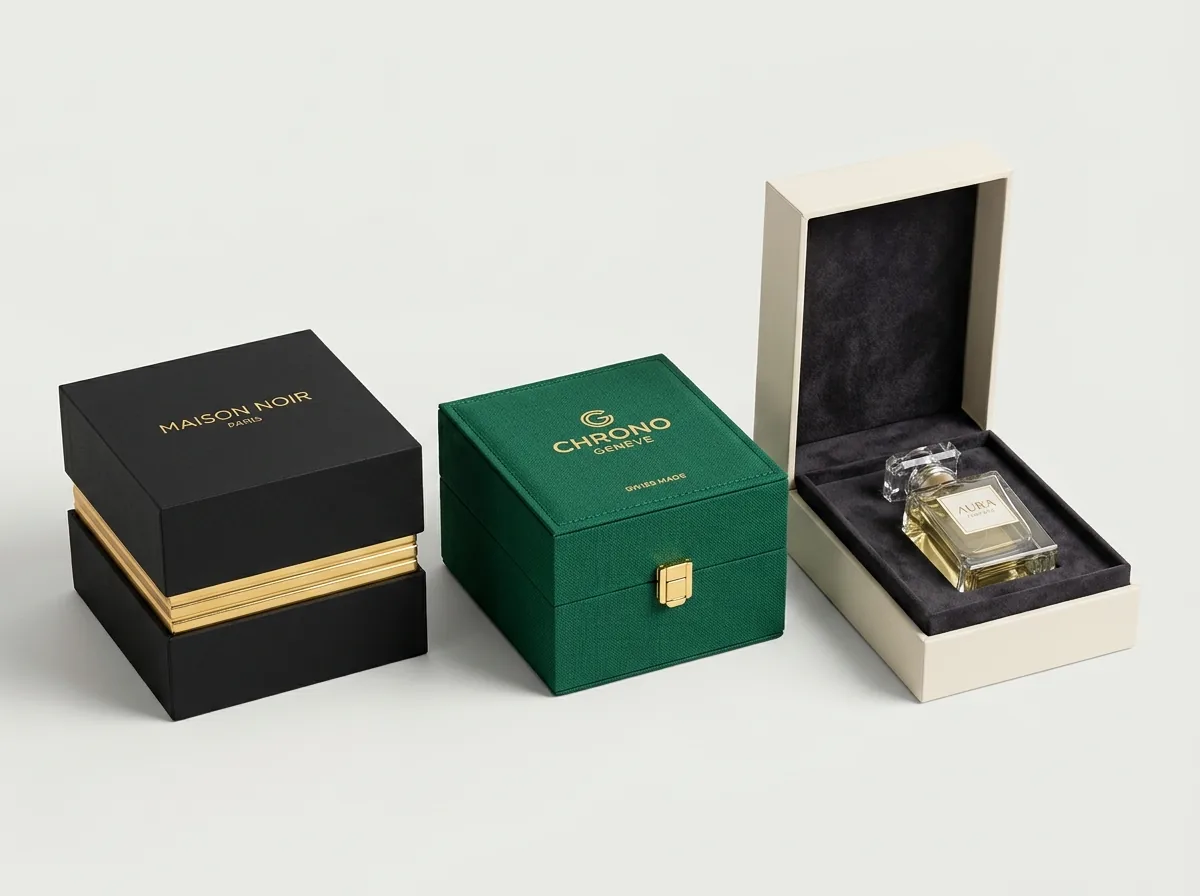
Ready to order rigid boxes with window? Compare up to 3 quantities with a free 3D mockup.
Request a Quote →Questions about rigid boxes with window
What is the standard thickness for clear PET display windows in rigid boxes?
We utilize 0.25 mm (0.010 in) to 0.40 mm (0.016 in) optically clear virgin PET plastic sheets with anti-scratch and anti-static surface treatments, providing excellent puncture resistance and distortion-free transparency.
How wide must the border margin be around a rigid box window cutout?
We recommend a minimum border frame width of 20 mm (approximately 0.8 inches) along all four perimeter edges. This border width ensures the heavy 1.5 mm to 2.5 mm chipboard lid maintains structural stiffness and does not warp during handling.
Can the window cutout be shaped into custom geometric curves or brand logos?
Yes. Using precision CNC laser cutting dies, we can engineer custom arched, oval, circular, or branded logo window apertures in the chipboard lid, provided internal corner radiuses are rounded to at least 3 mm to prevent paper wrap splitting.
Does the clear PET window scratch easily during shipping and retail handling?
Our optical PET film features a factory-applied microscopic anti-scratch barrier coating that resists scuff marks and fingerprints during handling. In addition, boxes are individually overwrapped with protective poly sleeves for transit.
What is the minimum order quantity for custom rigid boxes with a window?
Our minimum order quantity starts at 250 units for custom rigid setup boxes with window apertures, complete with zero cutting die setup charges, free custom 2D vector CAD dielines, and fast 10 to 14 business day production delivery.
How does temperature affect the adhesive bond of the clear PET window film?
We specify structural cross-linked acrylic transfer adhesive film rated for operational temperatures from -20 °C to 80 °C, ensuring the clear PET window remains permanently bonded to the chipboard lid across all courier transit seasons.
Still have a question? Ask a packaging specialist.
Request a Quote →Request your rigid boxes with window quote
Tell us your size and quantities, and one dedicated account manager prepares pricing for each tier.
- Free design & AI-to-print studio + 3D mockup
- No die or plate charges · 4–5 day rush available
- Free shipping to all 50 states
- 10% off your first order
Researched against Paperboard Packaging Council setup box standards, ASTM D1003 optical plastic metrics, and FINAT adhesive bonding protocols. Verified by CubitPack packaging specialists.
Sources
What changed
- November 11, 2026: Initial publication of technical engineering guide on rigid box window tolerances and PET patching with 5 CAD SVGs.
More guides
New packaging guides by email
Sizes, materials and design tips. Unsubscribe anytime.