
How do I measure my product and choose the right board thickness for a custom rigid box?
Short answer: To size custom rigid boxes, always enter the usable inside tray cavity in Length × Width × Height (L × W × H) order. For direct fit, add 1/8 inch (3 mm) per axis; for an EVA or EPE foam insert, add at least 0.5 inches (12 mm) per wall, then pick 1.5 mm, 2.0 mm, 2.5 mm, or 3.0 mm board.
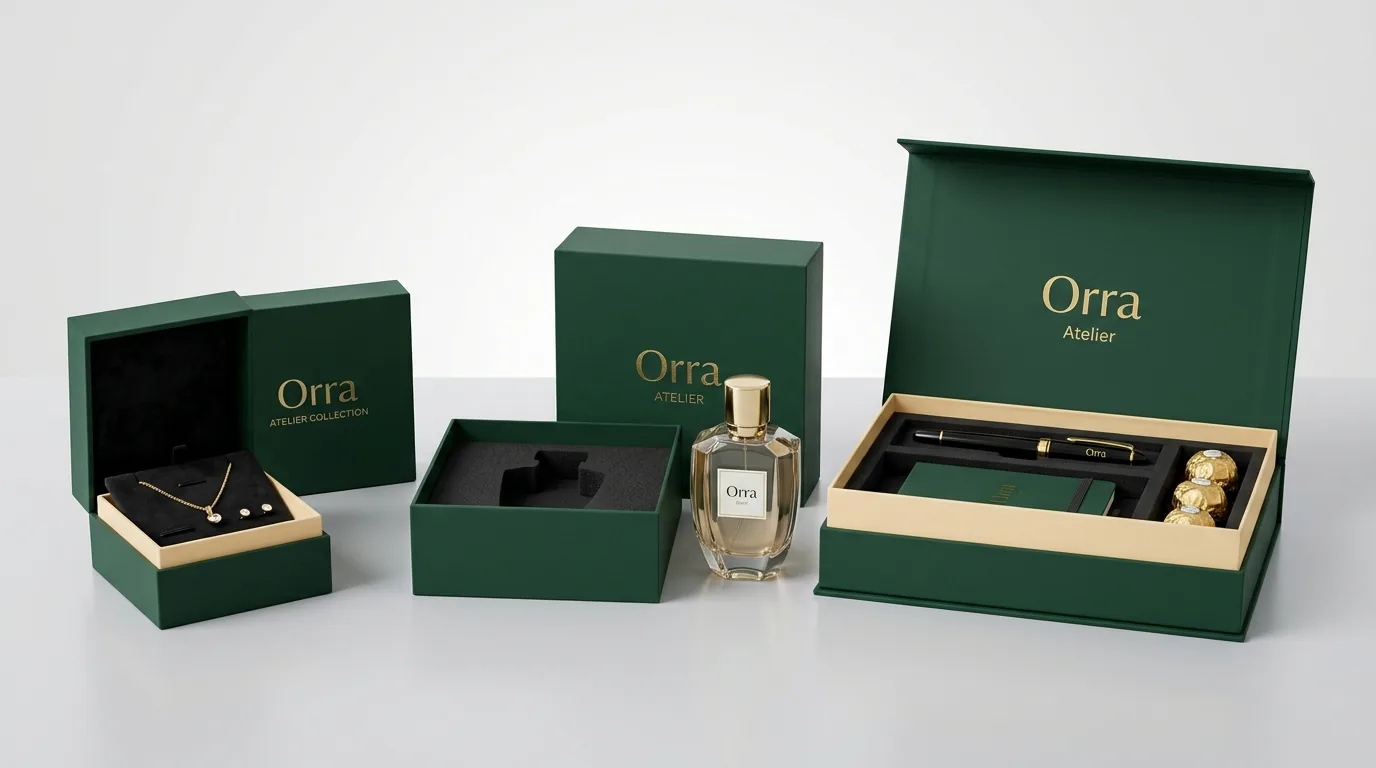
On this page
- What is the 3-step formula for calculating inside rigid tray dimensions
- How much do 2 mm walls and EVA foam borders add to my box footprint
- Should I choose 1.5 mm, 2.0 mm, 2.5 mm, or 3.0 mm chipboard for my rigid box
- What are standard rigid setup box sizes across luxury categories
- How do I verify my rigid box size and foam cutout before production
- Common mistakes
- FAQs
Request a custom quoteFree dieline & 3D mockup
Because a rigid setup box is built from thick non-bending chipboard (1.5 mm to 3.0 mm, or 60 pt to 120 pt) plus a telescoping lid or hinged outer case, the outside of the box is 0.30 to 0.45 inches wider and deeper than the inside cavity. For that reason, every dimension you enter on our quote form is the usable interior tray measurement in Length × Width × Height (L × W × H) order. Start by laying your product or multi-item kit on a flat table in the exact orientation it will face when the customer opens the lid. If your product sits directly inside the tray without foam, add 1/8 inch (3 mm) to L, W, and H. If your product sits inside a die-cut EVA or EPE foam well, add at least 0.5 inches (12 mm) of foam border on all four sides (+1.0 inch total to L and W) plus a 0.25-inch base pad and 0.125-inch top lid clearance.
What is the 3-step formula for calculating inside rigid tray dimensions?
When you request a quote on our rigid boxes page, enter the interior usable cavity of the base tray in Length × Width × Height (L × W × H) order. Follow these three steps depending on whether your item uses a direct fit or a die-cut foam insert
- Step 1, Interior Length (L, left to right across the front presentation wall): Measure your product from left to right. For a direct fit (such as shoes, folded apparel, or a boxed candle), add 1/8 inch (3 mm). For an EVA or EPE foam insert, add 0.5 inches (12 mm) of solid foam on both the left and right walls (+1.0 inch total): L = Product Width + 1.0 in.
- Step 2, Interior Width (W, front to back from front wall to back spine): Measure your product from front to back in the tray. Add 1/8 inch (3 mm) for a direct fit, or add 0.5 inches of foam on both the front and back walls (+1.0 inch total) for a foam insert: W = Product Length + 1.0 in.
- Step 3, Interior Height (H, base floor to underside of closed lid): Measure the tallest standing or lying height of your item. For a direct fit, add 1/8 inch (3 mm) of head clearance so the lid closes flat. If you place a 0.25-inch foam base pad underneath a heavy glass bottle, add both the base pad (+0.25 in) and top head space (+0.125 in): H = Product Height + 0.375 in.
- Multi-item gift kits (2 or more cavities): Leave at least 0.5 inches (12 mm) of solid foam bridge between adjacent product cutouts so the dividing wall never flexes when items are lifted out.
How much do 2 mm walls and EVA foam borders add to my box footprint?
Understanding how the structural grayboard core, paper wrap turn-ins, and foam insert fit together helps you plan both the interior presentation and your outer master shipping carton
- Why EVA foam needs a 0.5-inch (12 mm) minimum border: Closed-cell EVA and EPE foam absorb drop shock by compressing slightly against the rigid tray wall. A foam rim narrower than 0.4 inches (10 mm) can buckle during parcel transit or pull away from the wall when the customer removes a snug glass bottle.
- Finger notch cutouts (+0.5 insemicircle): For heavy bottles, candle jars, or tumblers recessed flush into EVA foam, our structural team adds two 0.5-inch semicircle thumb notches on opposite sides of the cutout or a satin lift ribbon underneath the bottle.
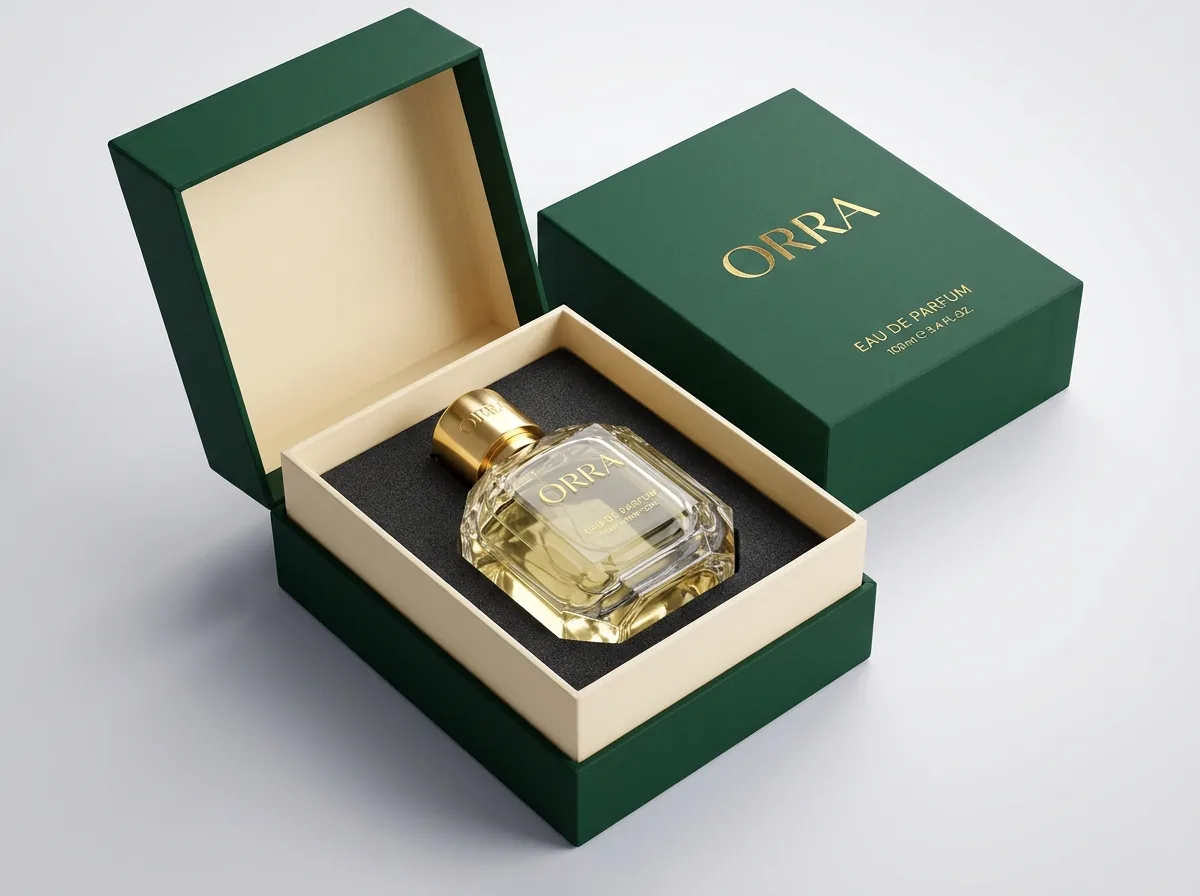
- Inside-to-outside dimension math: On a Two-Piece Telescoping Box built with 2.0 mm (0.08 in) board, the base tray adds 4.0 mm (2 walls × 2.0 mm), the telescoping clearance gap adds 1.5 mm, and the overhanging lid adds another 4.0 mm, making the outside footprint roughly 9.5 to 10 mm (0.38 inches) larger than your inside L and W.
Should I choose 1.5 mm, 2.0 mm, 2.5 mm, or 3.0 mm chipboard for my rigid box?
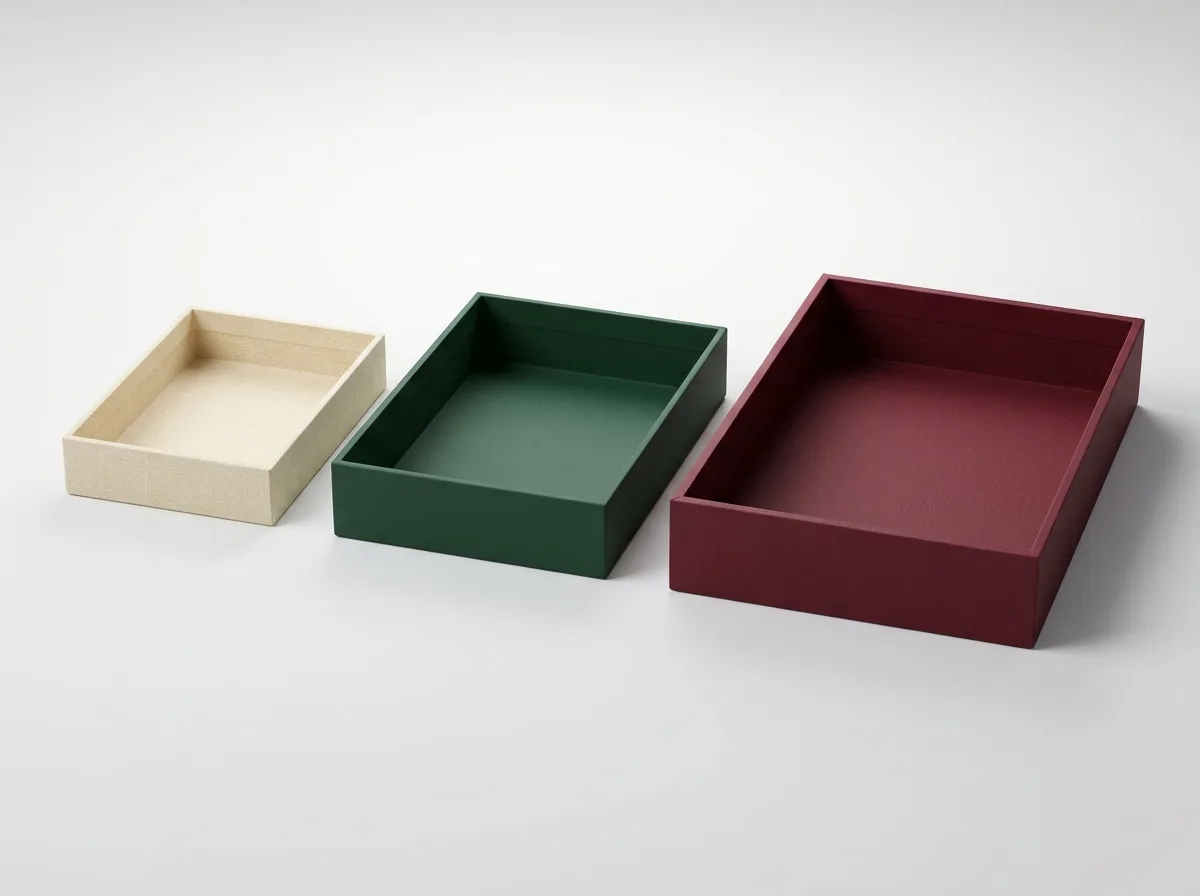
Rigid setup box thickness is measured in millimeters (mm) or points (pt), where 1.0 mm equals roughly 40 pt (~600 gsm of compressed grayboard). Use this engineering chart to match your product weight and longest box dimension to the right chipboard core
| Chipboard thickness | Point / GSM equivalent | Safe payload & box span | Best luxury packaging applications |
|---|---|---|---|
| 1.5 mm grayboard | 60 pt (0.060 in) · ~1,000 gsm | Up to 12 oz (340 g) · L under 5.5 in | Fine jewelry boxes, ring & earring boxes, gift card boxes, 15–30 ml serums |
| 2.0 mm grayboard (Standard) | 80 pt (0.080 in) · ~1,200 gsm | 8 oz to 2.5 lb (1.1 kg) · L 5.5 to 11 in | 50–100 ml perfume boxes, luxury watch boxes, 8–12 oz candles, skincare sets |
| 2.5 mm grayboard | 100 pt (0.100 in) · ~1,500 gsm | 2.0 lb to 4.5 lb (2.0 kg) · L 10 to 15 in | Footwear & shoe boxes, multi-piece corporate gift kits, apparel & board games |
| 3.0 mm grayboard | 120 pt (0.120 in) · ~1,800 gsm | 4.0 lb to 8.0 lb+ (3.6 kg+) · L 12 to 18 in+ | 750 ml glass spirits decanters, champagne sets, oversized VIP PR chests |
Know your size? Compare pricing across up to 3 quantities.
Request a Quote →What are standard rigid setup box sizes across luxury categories?
Every rigid setup box at CubitPack is built to order starting from just 50 units, with zero die or plate charges. Whether you are sizing custom perfume boxes, custom jewelry boxes, custom watch boxes, custom spirits boxes, or custom corporate gift boxes, use these benchmark interior tray dimensions as a reference
| Luxury product category | Typical item & insert setup | Recommended inside tray L × W × H (in) | Best rigid board & box style |
|---|---|---|---|
| 100 ml Eau de Parfum flacon | 3.0 × 5.0 × 1.75 in bottle in EVA foam | 4.5 × 6.5 × 2.25 in | 2.0 mm (80 pt) · Shoulder neck or magnetic |
| Bracelet, necklace, or earring set | Suede pillow or velvet card pad | 3.75 × 3.75 × 1.5 in | 1.5 mm–2.0 mm · Two-piece or slide drawer |
| Chronograph wristwatch box | Watch mounted upright on leather cuff | 4.5 × 4.5 × 3.5 in | 2.0 mm (80 pt) · Hinged watch or shoulder box |
| 750 ml spirits or whiskey bottle | 3.5 dia × 11.5 in bottle in EVA foam | 5.0 × 13.0 × 4.0 in | 2.5 mm–3.0 mm · Magnetic closure or book style |
| Executive corporate welcome kit | Tumbler + A5 notebook + pen in foam | 11.5 × 9.0 × 3.75 in | 2.5 mm (100 pt) · Magnetic or two-piece lid |
| 2-jar prestige skincare set | 50 ml jar + 30 ml serum in EVA foam | 6.5 × 5.5 × 2.5 in | 2.0 mm (80 pt) · Slide drawer or magnetic |
| 10 oz luxury ceramic candle | 3.5 dia × 4.0 in vessel + foam collar | 4.5 × 4.5 × 4.5 in | 2.0 mm (80 pt) · Two-piece telescoping lid |
| Luxury sneakers or dress shoes | Direct fit wrapped in branded tissue | 13.5 × 8.5 × 5.0 in | 2.5 mm (100 pt) · Two-piece lid w/ thumb notch |
How do I verify my rigid box size and foam cutout before production?
Once you have your target inside tray dimensions, read our structural comparison, magnetic vs two-piece vs drawer vs shoulder neck rigid boxes, and our prepress guide, rigid box dieline, paper wrap, and V-grooving explained. Every order at CubitPack starts at 50 boxes with 10–14 business day standard turnaround (4–5 day rush available), free 2D dielines and 3D digital proofs before payment, and free US shipping.
- Step 1: Measure your physical product (or full group of kit items) with digital calipers at its widest points, then add +1/8 inch (3 mm) per axis for a direct tray fit or +0.5 inches (12 mm) per wall (+1.0 inch total to Length and Width) for a die-cut EVA or EPE foam insert.
- Step 2: Match your longest box dimension and total payload weight to the appropriate grayboard caliper: 1.5 mm (60 pt) for small boxes under 5.5 inches, 2.0 mm (80 pt) for medium boxes from 5.5 to 11 inches, or 2.5 to 3.0 mm (100 to 120 pt) for boxes over 11 inches or heavy glass bottles.
- Step 3: Approve your free 2D vector dieline and interactive 3D proof showing the exact inside cavity, foam cutout bridges, finger notches, and outside master-carton dimensions before payment, or order our $50 sample kit (credited toward your box order) to feel our rigid board stocks in person.
What are the most common sizing and board mistakes on rigid boxes?
Check your rigid box dimensions against these five frequent specification errors before approving your dieline
- Entering outside box measurements instead of usable inside tray L × W × H, which shrinks the interior cavity by 0.30 to 0.45 inches once the 2 mm walls and lid overhang are built.
- Leaving less than 0.4 inches (10 mm) of EVA foam border between a heavy glass bottle and the rigid tray wall, allowing the thin foam rim to compress or tear in transit.
- Forgetting to add the thickness of a bottom foam pad (+0.25 in) and top lid clearance (+0.125 in) to the interior Height (H), which stops a magnetic or telescoping lid from closing flat.
- Specifying 1.5 mm (60 pt) board on a wide 13 × 10 inch corporate gift box, where 2.5 mm (100 pt) board is required to prevent the lid ceiling from bowing.
- Designing a snug EVA foam bottle cutout without two 0.5-inch thumb notches or a satin lift ribbon, making it hard for the customer to lift the bottle out.
Packaging for this
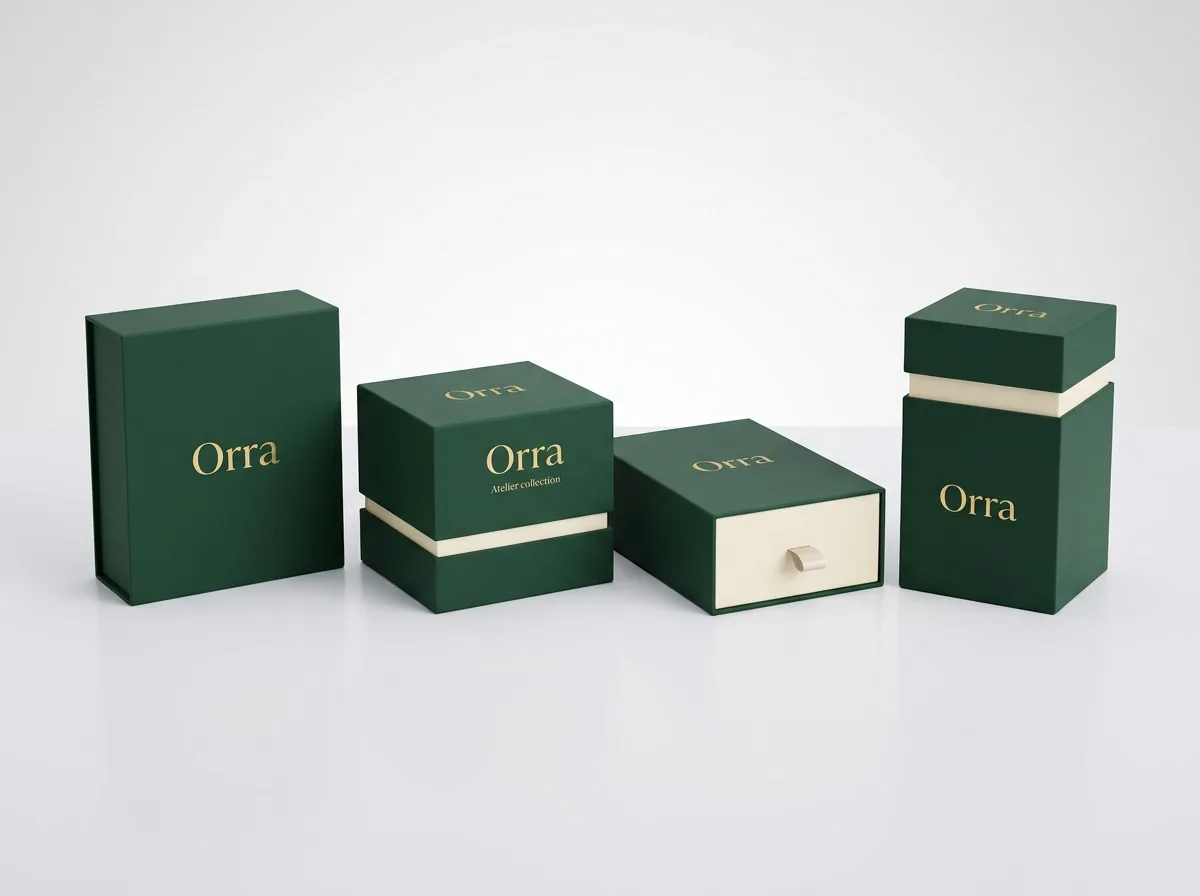

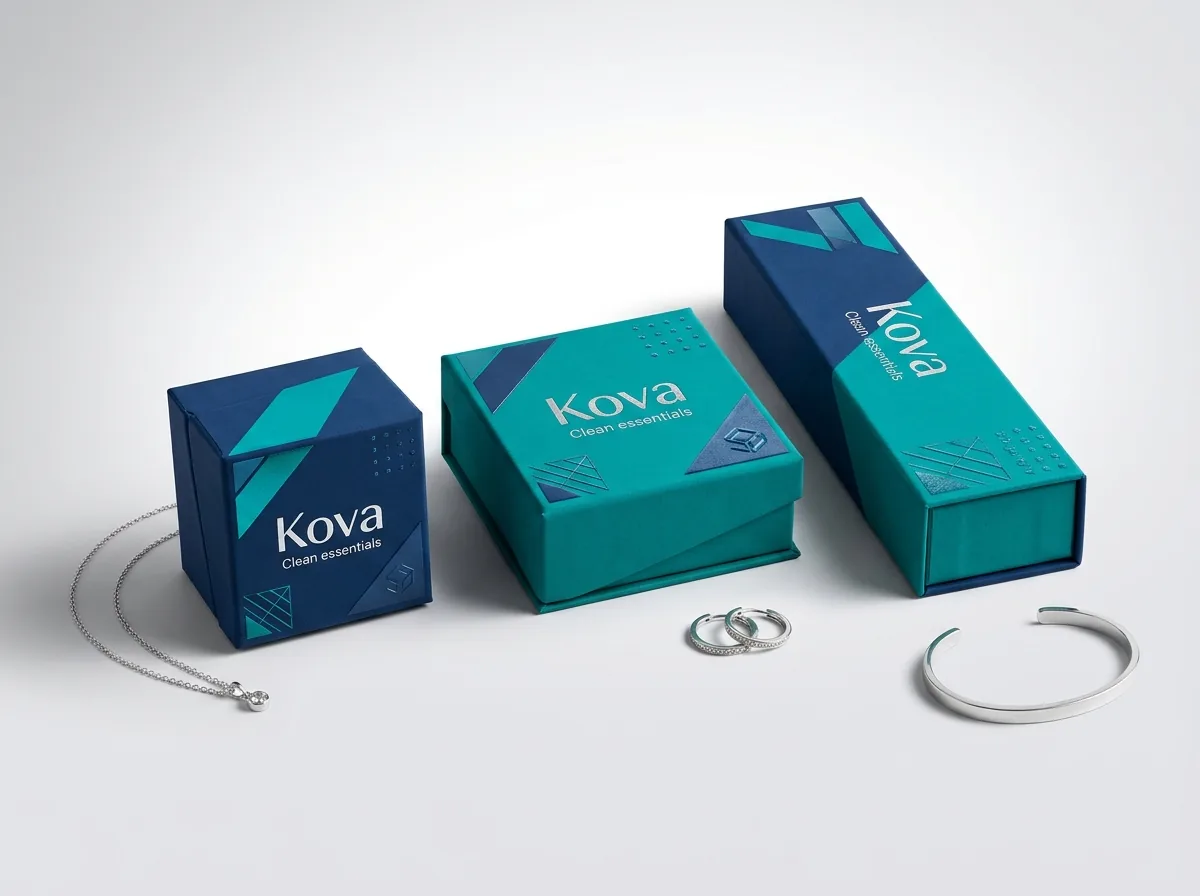


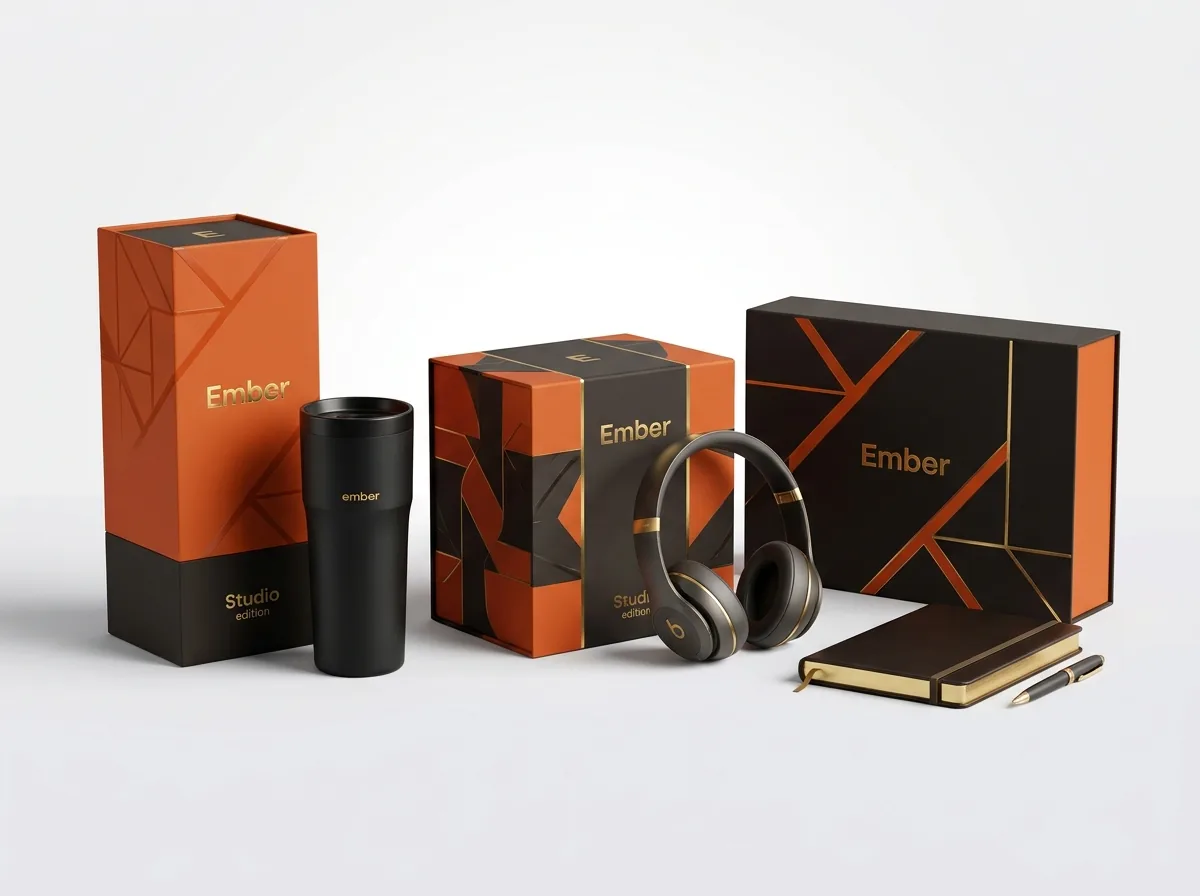
Ready to order rigid boxes? Compare up to 3 quantities with a free 3D mockup.
Request a Quote →Questions about rigid boxes
Are custom rigid box dimensions measured on the inside or the outside?
Custom rigid box dimensions are always given as the usable interior dimensions of the base tray in Length × Width × Height (L × W × H) order. Our packaging specialists automatically add the 1.5 mm to 3.0 mm chipboard wall thickness, paper wrap turn-ins, and lid overhang to the outer dieline.
How much space should I add around my product for an EVA foam insert?
Add at least 0.5 inches (12 mm) of solid EVA or EPE foam between your product cavity and each of the four rigid tray walls (+1.0 inch total to both Length and Width). If you have multiple items in the same tray, leave at least 0.5 inches of foam between adjacent cutouts.
What is the standard board thickness for a luxury rigid box?
A 2.0 mm (80 pt / ~1,200 gsm) high-density grayboard core is the industry standard for 80% of luxury rigid boxes, including perfume, watch, candle, and cosmetic gift boxes between 5 and 11 inches long. Smaller jewelry boxes often use 1.5 mm (60 pt) board, while heavy spirits and large chests use 2.5 mm to 3.0 mm (100 to 120 pt) board.
How much larger is the outside of a two-piece rigid box than the inside tray?
On a two-piece telescoping rigid box built from 2.0 mm board, the outside Length and Width are approximately 0.35 to 0.40 inches (9 to 10 mm) larger than the inside tray cavity to account for two base walls, two overhanging lid walls, paper wraps, and the air-release slide gap.
Can I send you my physical product to engineer the rigid box and foam insert?
Yes. You can either enter your product measurements in the quote form or mail a sample unit to our team so we can test-fit the EVA foam cavity and send a free 2D dieline and 3D proof before production.
Still have a question? Ask a packaging specialist.
Request a Quote →Request your rigid boxes quote
Tell us your size and quantities, and one dedicated account manager prepares pricing for each tier.
- Free design & AI-to-print studio + 3D mockup
- No die or plate charges · 4–5 day rush available
- Free shipping to all 50 states
- 10% off your first order
We verified interior tray Length × Width × Height conventions, +0.5 inch (12 mm) EVA foam perimeter allowances, and 1.5–3.0 mm (60–120 pt) grayboard caliper pairings against Paperboard Packaging Council (PPC) setup box guidelines and TAPPI T 411 caliper standards. A packaging specialist checked every formula and size row. Spot something wrong? Tell us and we fix it.
Sources
What changed
- October 24, 2026: First published with 3-step interior tray sizing formula, EVA foam border rules, 1.5–3.0 mm chipboard chart, and 8-category luxury size table.
More guides
New packaging guides by email
Sizes, materials and design tips. Unsubscribe anytime.