
How do two-piece box dielines, full vs partial lids, and shoulder necks work?
Short answer: A two-piece box dieline uses two matched blanks, a base tray cut to your usable inside dimensions and a top lid expanded by wall buildup plus +1.5 to +3.0 mm, configured in full-telescope (95–100% skirt depth with thumb notches), partial-telescope (40–65% skirt depth), or 3-piece shoulder-neck profiles.
On this page
- What are the structural parts of a matched two-blank two-piece box dieline
- How do full-telescope, partial-telescope, and shoulder-neck lid profiles compare
- What are the dieline rules for side thumb notches, top viewing windows, and interior lid printing
- How should I set up bleeds, rollover wall artwork, and safe zones on a two-piece box dieline
- How do I get a custom two-piece box dieline and 3D mockup from CubitPack
- Common mistakes
- FAQs
Request a custom quoteFree dieline & 3D mockup
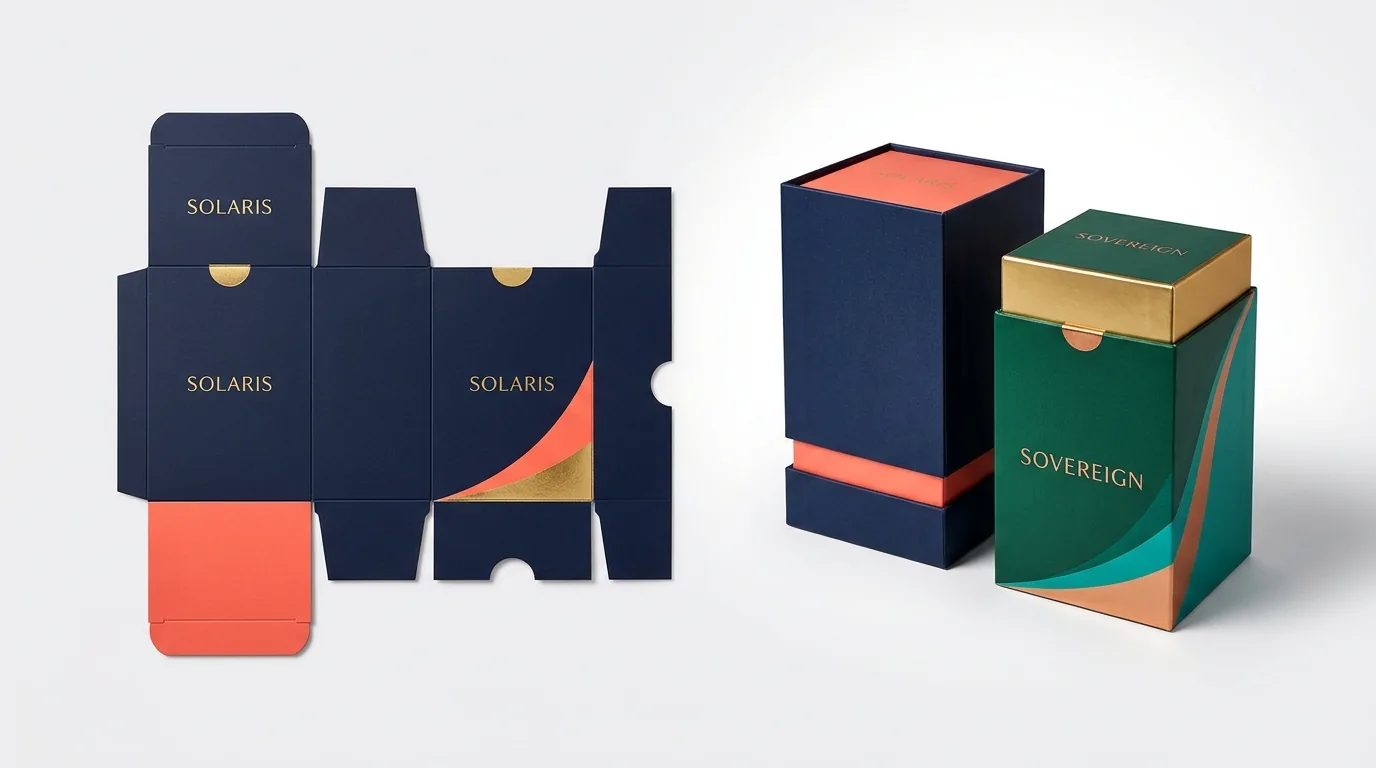
Unlike a one-piece tuck carton that folds from a single sheet, custom two-piece boxes (FEFCO 0300 / 0320 and ECMA simplex lid-and-base boxes) require two coordinated die-cut blanks, or three blanks when an inner shoulder-neck collar is added. On a flat-shipping double-wall simplex two-piece dieline, both the lid and the base feature a central rectangular panel surrounded by four extended rollover side walls, paired double crease scores at the top rim, four corner dust flaps, and self-locking bottom floor slots. Depending on how far the top lid skirt extends down the base wall, you can select three distinct unboxing profiles: a full-telescope lid (95–100% coverage with side thumb notches for maximum vertical stacking strength), a partial-telescope lid (40–65% coverage that exposes the lower base wall for two-tone contrast), or a stepped shoulder-neck collar.
What are the structural parts of a matched two-blank two-piece box dieline?
When our prepress team sends your free 2D vector dieline proof for a custom two-piece box, you will see two distinct flat layouts side by side on the artboard: Blank 1 (the Telescope Top Lid) and Blank 2 (the Load-Bearing Base Tray). On a double-wall rollover simplex or FEFCO 0320 corrugated two-piece box, every panel and score line on those two blanks works as a locked mechanical pair
- Central Lid Crown Panel & Base Floor Panel: The base floor is drawn to your exact usable Inside Length (L) × Inside Width (W), while the lid crown panel is expanded by twice the assembled base wall thickness plus +1.5 to +3.0 mm of telescope clearance.
- Four Double-Wall Rollover Side Walls: Each of the four side walls is twice as tall as the finished tray height, divided down its center by a paired double crease line (spaced 1.5 to 3.5 mm apart). During assembly, the outer half stands up at 90 degrees and the inner half folds 180 degrees down inside the tray.
- Four Corner Dust Flaps (Locking Wings): Attached to the ends of the two shorter side walls, these flaps fold 90 degrees inward at the corners and become permanently trapped inside the folded double-wall side panels so the corners cannot splay open.
- Bottom Floor Locking Tabs & Slots: Small male friction tabs along the bottom edge of the inner rollover walls snap into die-cut female slots along the perimeter of the tray floor, locking all four walls rigid without glue or tape.
- Optional Inner Shoulder-Neck Collar (Blank 3): On shoulder-neck boxes, a third narrower tray or glued collar sits inside the base wall, projecting 0.375 to 0.75 inches above the base rim to act as a precision seat for the top lid.
How do full-telescope, partial-telescope, and shoulder-neck lid profiles compare?
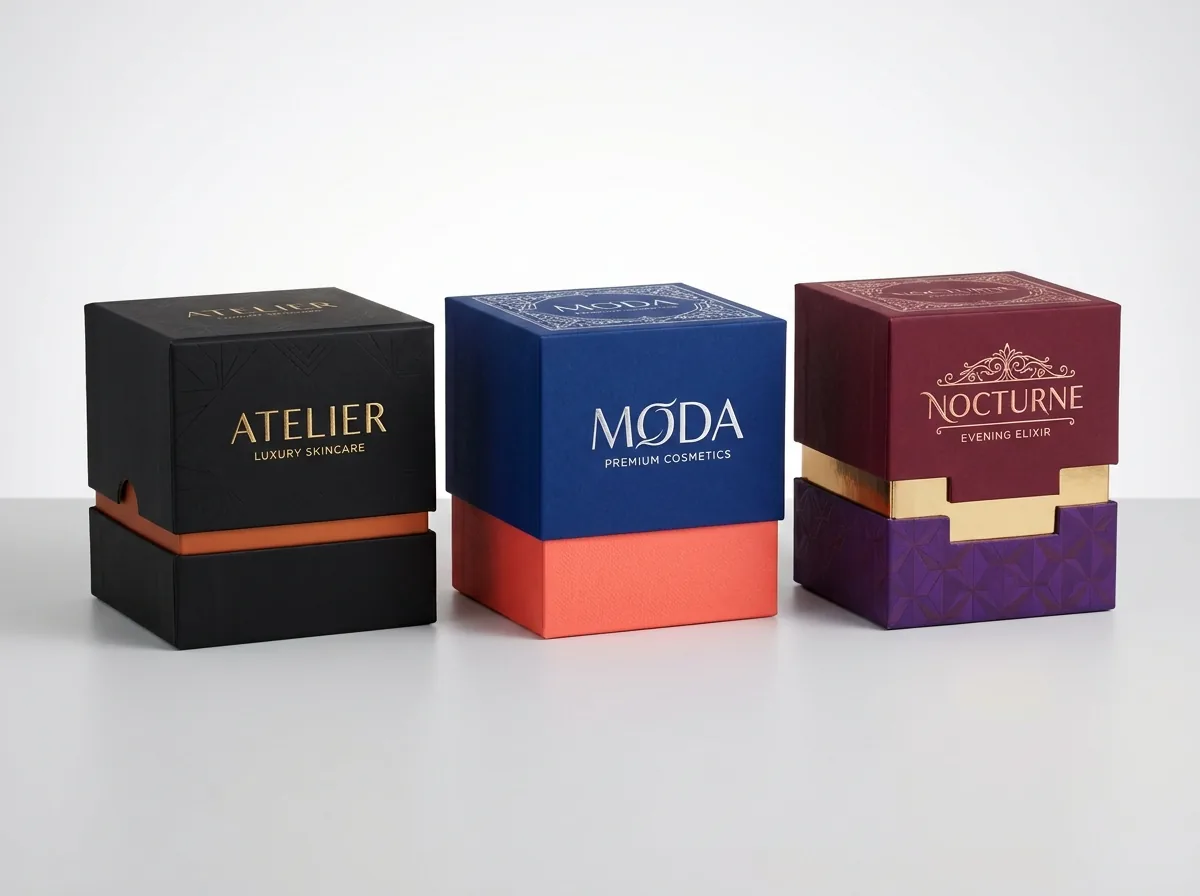
The ratio between your lid skirt depth and your base wall height changes the visual proportion of the closed box, the way a customer's fingers grip the base, and the vertical crush strength of the package. Compare the three industry-standard lid profiles before approving your dieline
| Lid profile & FEFCO code | Lid skirt depth ratio | How the customer opens it | Best retail applications |
|---|---|---|---|
| Full-Telescope Lid (FEFCO 0320) | 95% to 100% of Base Height (D) | Grips base rim through two opposite half-moon thumb notches | Chocolate ballotins, stationery sets, footwear, heavy stacked boxes |
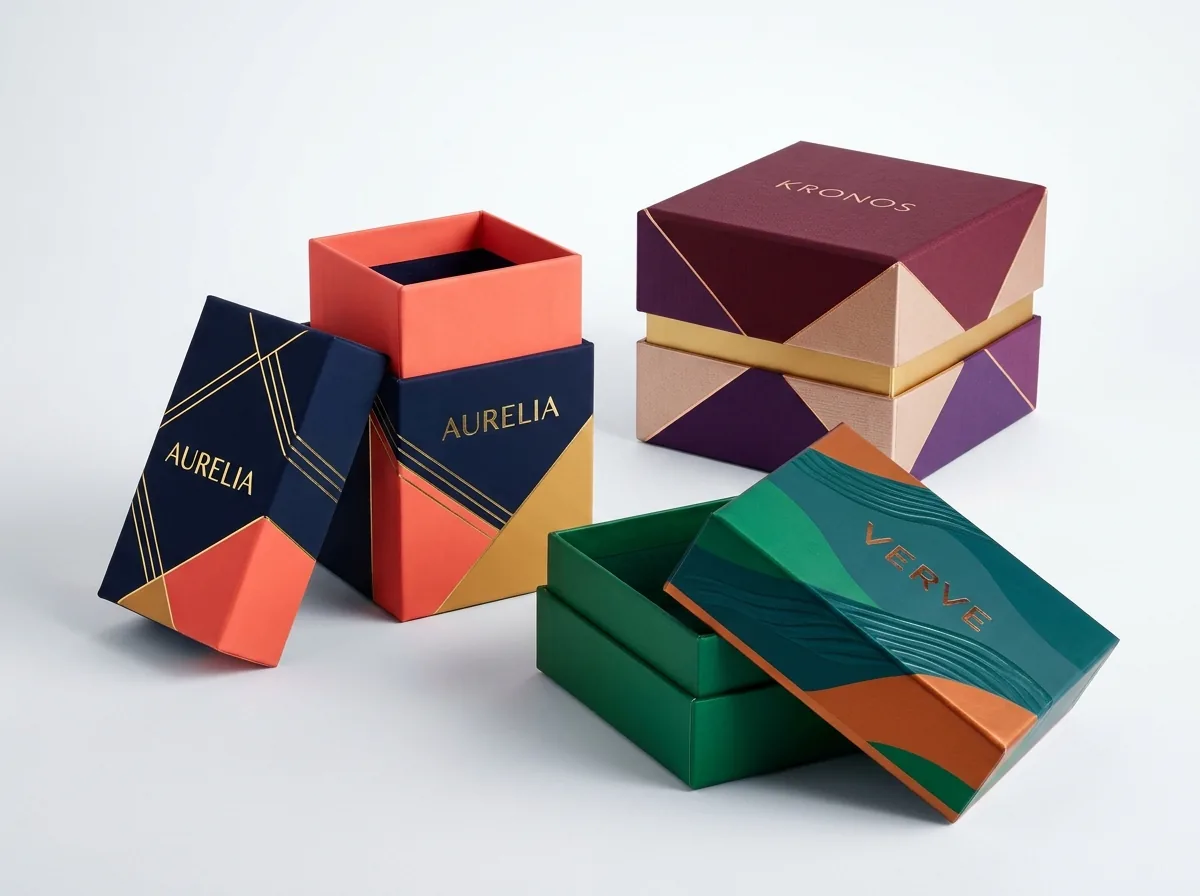
| Partial-Telescope Lid (FEFCO 0300) | 40% to 65% of Base Height (D) | Grips the exposed lower 35–60% of the base side walls directly | Department-store dress shirts, knitwear, candles, curated gift boxes |
| Flush Shoulder-Neck Box (Closed Gap) | Lid + Base = 100% D (meet flush over inner neck) | Separates top lid from bottom base along the flush horizontal seam | Fine jewelry compacts, luxury watches, collector edition keepsakes |
| Exposed Shoulder-Neck Box (Stepped Band) | Leaves a 0.25 to 0.625 in exposed center neck gap | Fingers grip the recessed metallic or color-contrasted neck band | Extrait de parfum, luxury skincare sets, bespoke confectionery |
What are the dieline rules for side thumb notches, top viewing windows, and interior lid printing?
Once your lid profile is chosen, three dieline refinements elevate the unboxing experience: ergonomic thumb notches, top lid viewing windows (similar to our custom window boxes), and interior lid ceiling graphics. Because the removable top lid of a two-piece box carries the entire visual weight of the package and is often propped upright beside the base during display, follow these structural tolerances
| Dieline feature | Standard engineering dimension | Minimum clearance rule | Functional purpose |
|---|---|---|---|
| Half-moon side thumb notches | 0.75 in (19 mm) wide × 0.375 in (9.5 mm) high | Keep lid skirt text ≥ 0.25 in (6 mm) above notch arc | Exposes base rim for finger grip and vents trapped air |
| Top lid die-cut viewing window | Open cutout or 0.15 mm clear PET film patch | Keep window cut ≥ 0.50 in (13 mm) from all 4 lid creases | Preserves top lid frame rigidity so corners never warp |
| Interior lid ceiling print zone | Full L_lid × W_lid inside ceiling surface | Orient top-to-bottom to match front lid skirt panel | Displays chocolate flavor maps or skincare rituals upright |
| Shoulder-neck step height | 0.50 to 0.875 in (13–22 mm) projection above base | Add +1.2 to +1.8 mm lid clearance over neck outer wall | Guides lid down straight and prevents lateral wobble |
Know your size? Compare pricing across up to 3 quantities.
Request a Quote →How should I set up bleeds, rollover wall artwork, and safe zones on a two-piece box dieline?
Setting up artwork on a two-piece box dieline is straightforward once you account for how the lid overlaps the base and how double-wall rollover flaps fold inward. Whether you are designing custom chocolate boxes, custom jewelry boxes, custom perfume boxes, or custom gift boxes, apply these prepress standards before uploading your PDF or AI files
- Extend background artwork 0.125 inches (3.0 mm) past all outer cut edges on both the lid blank and the base blank, and on double-wall rollover trays, carry your exterior background color at least 0.50 inches onto the inner rollover wall so no white slit shows at the top rim.
- Keep logos, foil stamping, and micro-typography at least 0.125 inches (3.0 mm) inside all crease scores, and at least 0.25 inches (6.0 mm) away from half-moon side thumb notches.
- On partial-telescope boxes (where the lid covers 40% to 65% of the base height), place any lower base wall text at least 0.25 inches below the lid's lower resting line so it is never partially covered.
- Place your scannable GS1 UPC barcode (minimum 80% magnification, black bars on a high-contrast light box) on the underside floor of the base tray so the top lid remains a clean keepsake canvas.
- Put metallic foil stamping, Spot UV, and embossing masks on separate named vector layers in 100% K (black) set to overprint.

How do I get a custom two-piece box dieline and 3D mockup from CubitPack?
After reviewing how two-blank dielines and lid profiles work, check out our companion guides on how to measure and calculate lid clearance for two-piece boxes and folding simplex vs rigid setup two-piece boxes. Every custom two-piece box order at CubitPack starts at 1,000 units and includes free structural CAD engineering, a matched lid-and-base 2D vector dieline, and an interactive 3D mockup before you pay. Follow this 5-step workflow to get started
- Step 1: Enter your usable Base Inside L × W × D, quantity (from 1,000 boxes), and preferred construction (folding simplex, corrugated, or rigid setup) in our quote form.
- Step 2: Specify your desired lid profile: full-telescope (100% depth with thumb notches), partial-telescope (40–65% depth), or stepped shoulder-neck.
- Step 3: Tell your specialist if you need a top lid viewing window, interior lid ceiling printing (such as a chocolate flavor map), or a custom divider/foam insert.
- Step 4: Place your artwork on our free matched two-blank 2D vector dieline (or ask our prepress team to position your logo and colors for free).
- Step 5: Approve your 2D dieline proof and 3D mockup; standard production ships in 10–14 business days (4–5 business days rush available) with free US delivery.
What are the most common dieline and artwork mistakes on two-piece boxes?
Check your lid and base files against these five prepress traps before sending them to press
- Orienting artwork on the inner rollover walls of a folding simplex dieline right-side up instead of rotated 180 degrees (so it appears upside-down once folded inside the tray).
- Placing a die-cut top viewing window closer than 0.50 inches (13 mm) to the four lid crease lines, which weakens the lid frame and exposes the internal rollover flaps.
- Designing a full-depth telescope lid without half-moon thumb notches, making it difficult for shoppers to grip the base tray.
- Putting important text on the upper half of the base side walls where the telescoping lid covers it when closed.
- Orienting an interior lid ceiling truffle map upside-down relative to the front lid skirt panel.
Packaging for this
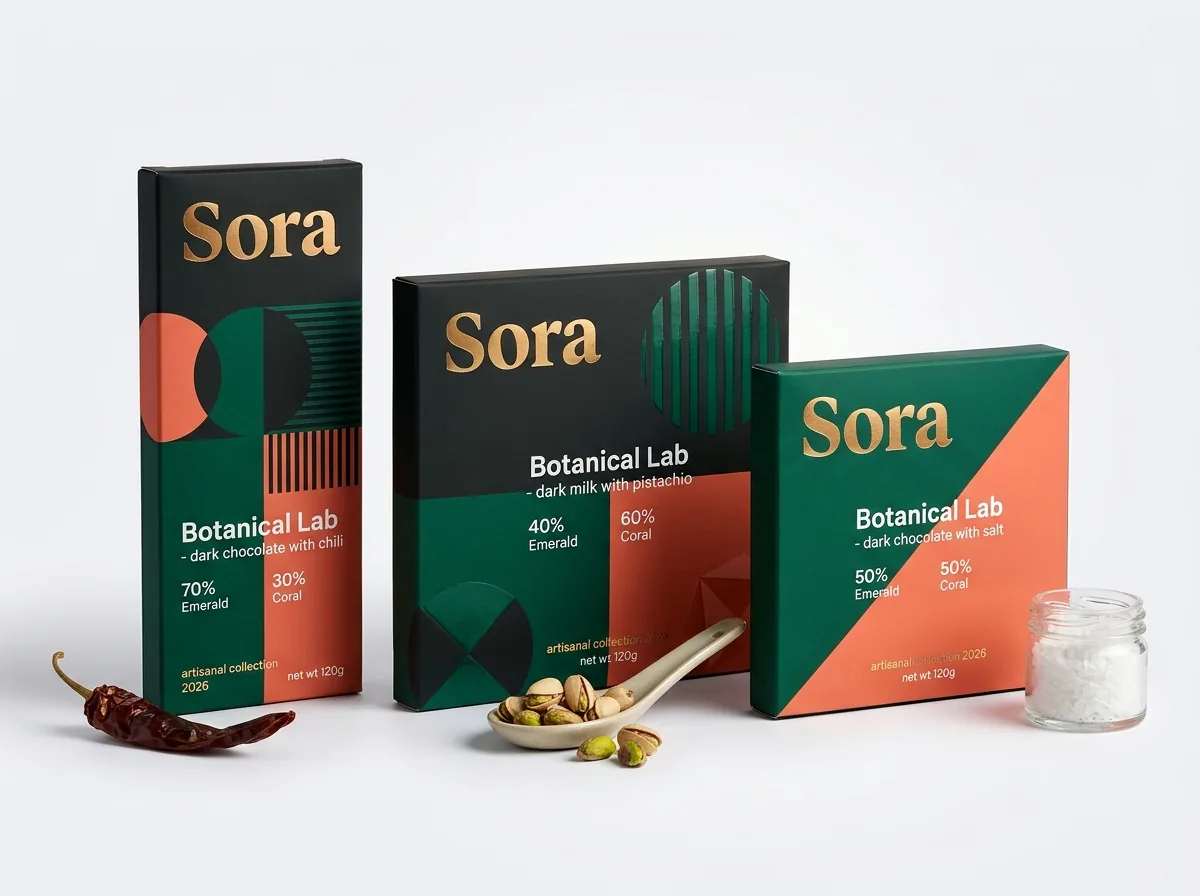
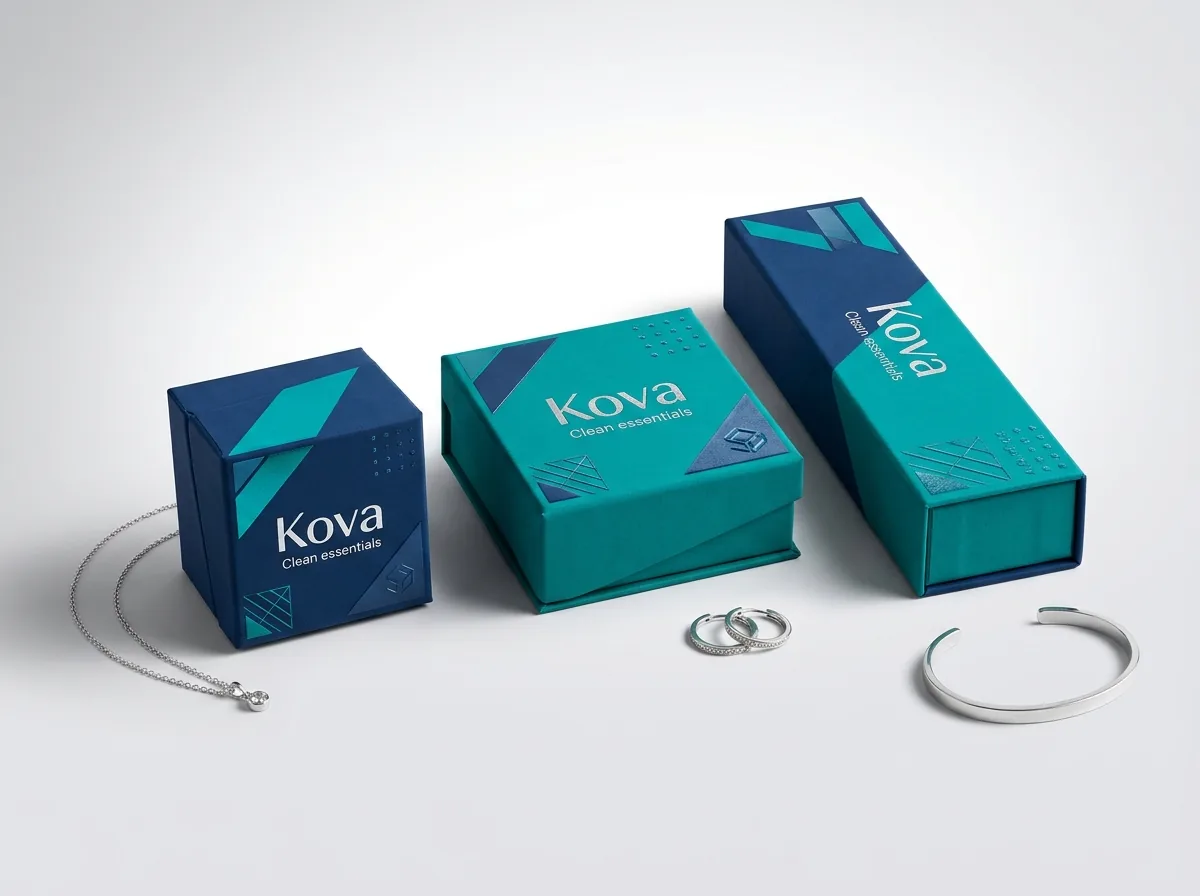
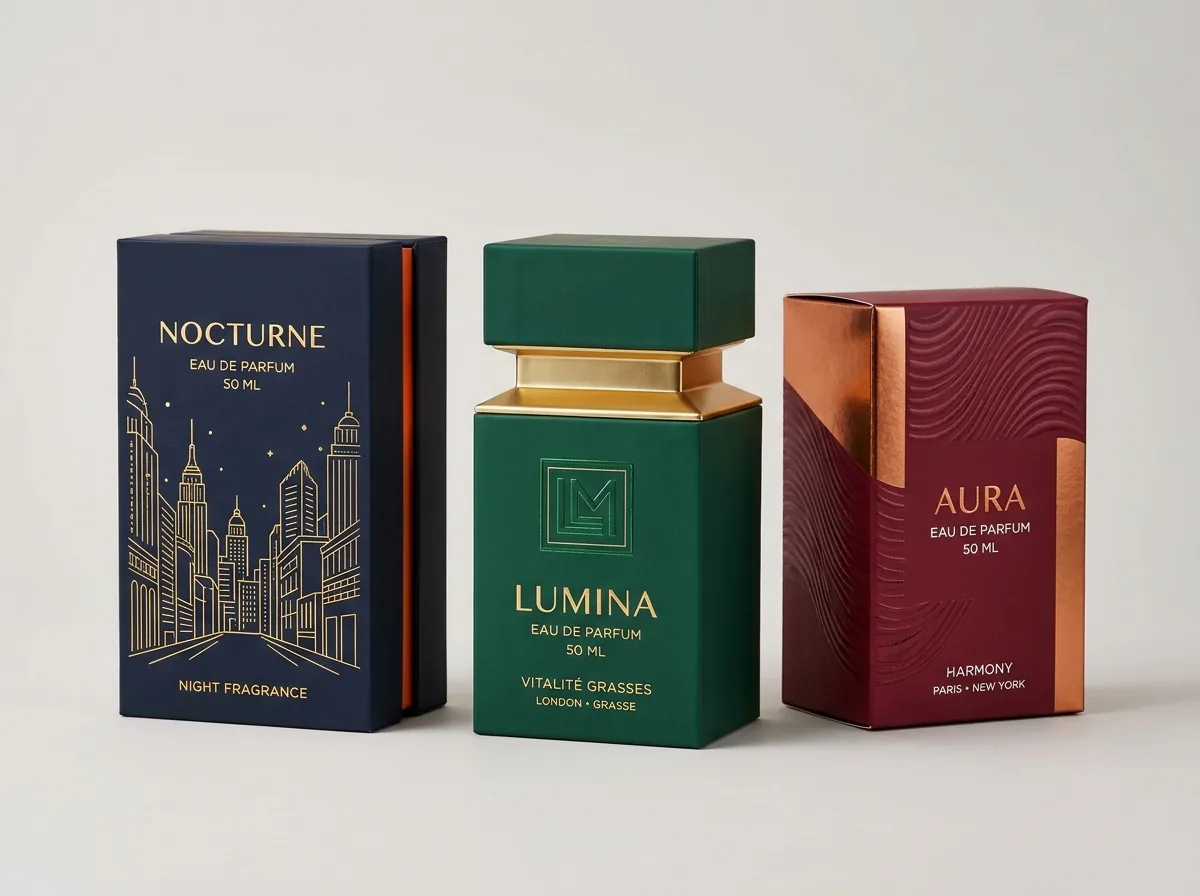
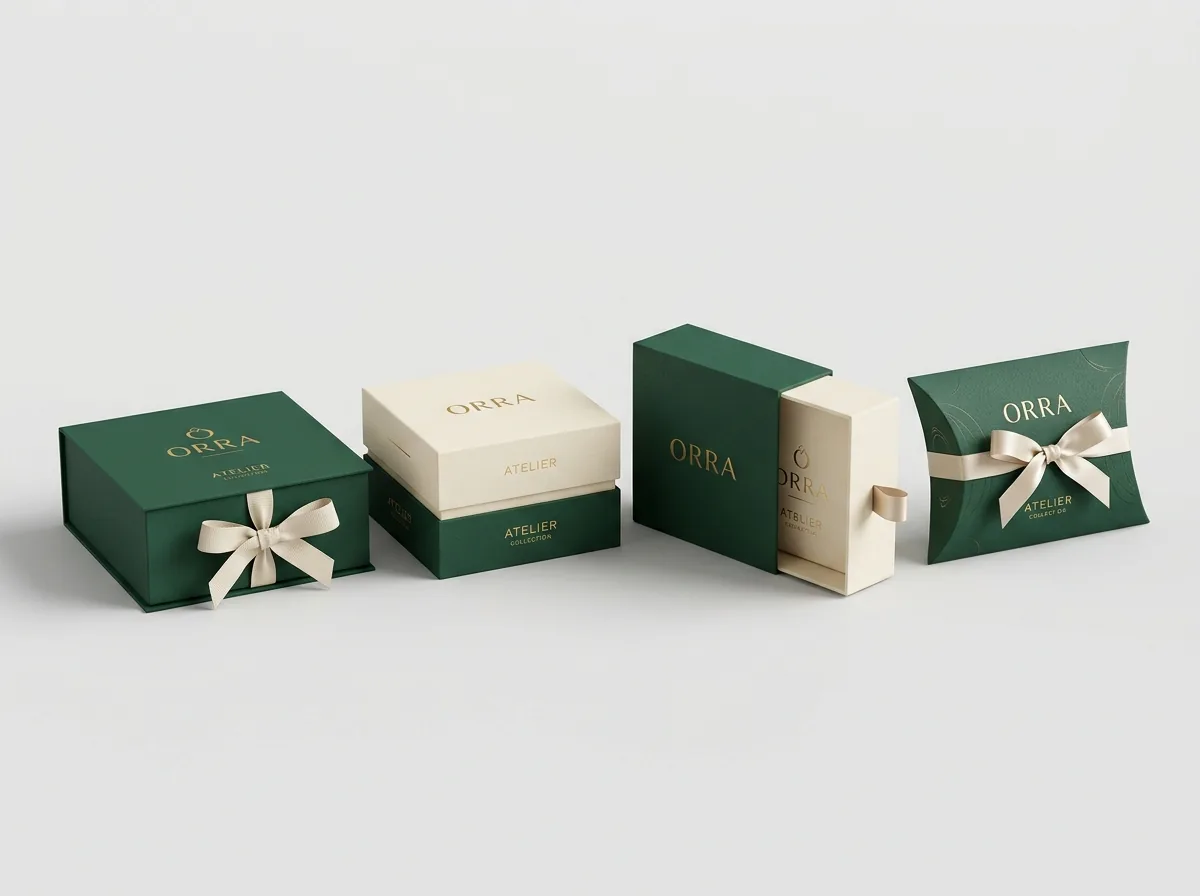
Ready to order two-piece boxes? Compare up to 3 quantities with a free 3D mockup.
Request a Quote →Questions about two-piece boxes
Why does a two-piece box dieline have two separate templates?
Because a two-piece box consists of a bottom base tray and a detachable top lid that slides over the outside of the base, the lid template must be cut slightly wider and longer (+1.5 to +3.0 mm plus wall thickness) than the base template. Supplying both matched blanks on one dieline ensures your lid and base graphics align accurately.
How do the corner dust flaps lock on a double-wall simplex two-piece dieline?
When you fold the four primary side walls up at 90 degrees, the corner dust flaps fold inward against the inner faces of the adjacent walls. You then fold the extended rollover panels 180 degrees down over those corner flaps and snap the bottom tabs into the floor slots, trapping the corner flaps permanently inside the double wall.
What is the standard size for side thumb notches on a full-telescope lid?
The industry-standard thumb notch is a semicircular cutout measuring 0.75 inches (19 mm) wide by 0.375 inches (9.5 mm) deep centered along the bottom edge of the left and right lid skirts. It gives your customer's thumb and forefinger a clean grip on the base tray rim.
How does a 3-piece shoulder-neck box dieline work?
A shoulder-neck box adds a third inner collar (the neck) glued inside the bottom base tray so it projects 0.50 to 0.875 inches above the base rim. Because the outer lid and outer base have the exact same external Length and Width, the lid slides over the inner neck until its bottom edge meets the base rim flush, or stops slightly early to reveal a contrasting metallic gold or colored neck band.
Can you add a clear window to the top lid of a two-piece box?
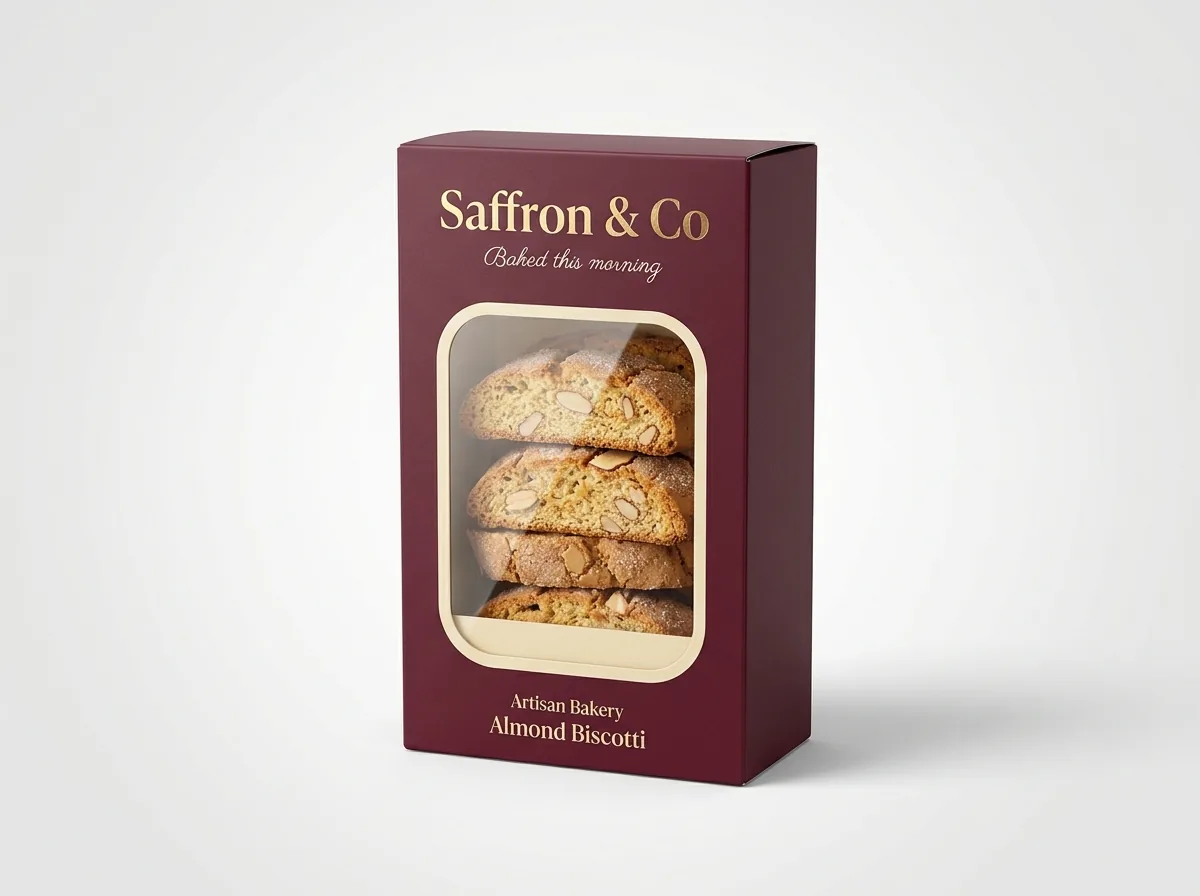
Yes! We can die-cut an open frame or patch a clear food-safe PET window onto the top lid crown panel. Simply keep the window opening at least 0.50 to 0.625 inches inside the four lid crease lines so the lid frame stays rigid and conceals the rollover side flaps.
Still have a question? Ask a packaging specialist.
Request a Quote →Request your two-piece boxes quote
Tell us your size and quantities, and one dedicated account manager prepares pricing for each tier.
- Free design & AI-to-print studio + 3D mockup
- No die or plate charges · 4–5 day rush available
- Free shipping to all 50 states
- 10% off your first order
We verified FEFCO 0300 / 0320 telescope dieline standards, ECMA double-wall simplex rollover tray geometry, shoulder-neck collar tolerances, and window bridge rules against FEFCO, European Carton Makers Association (ECMA), and Paperboard Packaging Council (PPC) technical manuals. A packaging specialist checked every specification. Spot something wrong? Tell us and we fix it.
Sources
What changed
- October 27, 2026: First published with matched two-blank simplex dieline breakdown, Full vs Partial vs Shoulder-Neck lid profile table, thumb-notch and window bridge rules, and prepress bleed checklist.
More guides
New packaging guides by email
Sizes, materials and design tips. Unsubscribe anytime.