
How do you measure custom hexagon box dimensions, flat-to-flat jar fit, and weight capacity?
Short answer: Always size custom hexagon boxes by interior Flat-to-Flat width (F, between two parallel walls) and Height (H), never by outer corner-to-corner span. In a regular hexagon, side width s = F ÷ 1.732 and corner span C = 2s. Add +0.125 in to a round jar's outer diameter for a snug six-tangent fit.
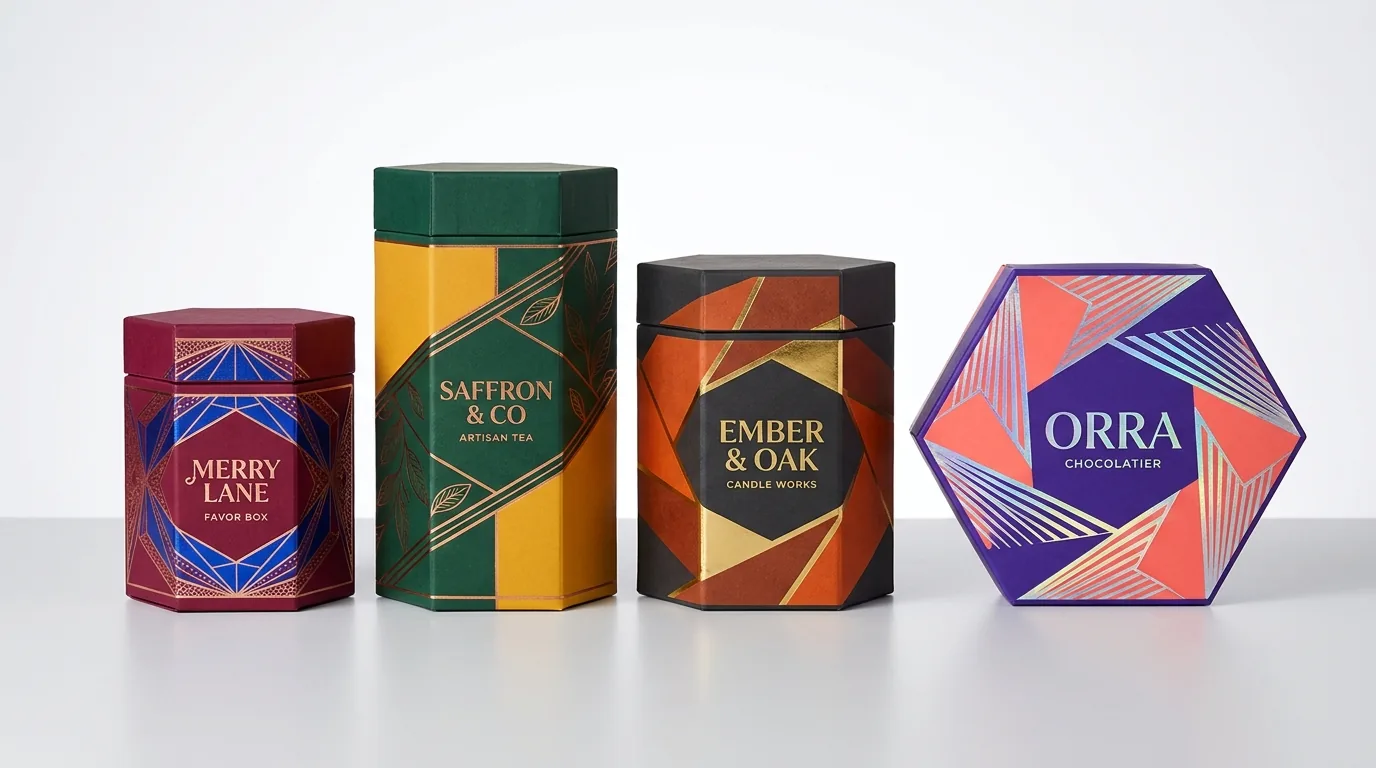
On this page
- What 6 benchmark hexagon box dimensions fit macarons, candles, tea, gift cards, and chocolates
- Why do cylindrical jars rattle less in a six-sided hexagon than in a four-sided cube
- Which paperboard or E-flute caliper matches your filled hexagon box weight
- How do you confirm your exact hexagon size in 4 steps before ordering
- Common mistakes
- FAQs
Request a custom quoteFree dieline & 3D mockup
Specifying dimensions for custom hexagon boxes trips up first-time buyers for one geometric reason: unlike a square box where every cross-measurement equals Length, a six-sided polygon has two completely different horizontal widths. Measured straight across between two opposing parallel walls, the interior Flat-to-Flat span equals 1.732 times one facet width; measured diagonally from vertex to opposite vertex, the Corner-to-Corner span equals 2.000 times one facet width (roughly 15.5% wider). Because cylindrical candle tumblers, glass honey jars, tea tins, and circular truffle trays touch the midpoints of the six flat inner walls, Flat-to-Flat width alone governs whether your vessel slides smoothly into the carton or jams at the top rim. Pairing exact Flat-to-Flat math with 18 pt, 24 pt, or E-flute caliper keeps round jars rock-steady. CubitPack engineers custom hexagon CAD dielines free starting at 1,000 units.
What 6 benchmark hexagon box dimensions fit macarons, candles, tea, gift cards, and chocolates?
Every dimension on a folding paperboard specification refers to usable interior space inside the base walls before caliper allowances and lid skirts are added. Once you lock your interior Flat-to-Flat span (F) and interior Height (H), both remaining horizontal dimensions follow fixed Euclidean trigonometry: divide F by 1.732 to get each of the six equal rectangular wall widths (s), and double s to get the outer Corner-to-Corner footprint (C) for master shipping cartons and retail shelf planograms. Keeping those three numbers straight ensures your graphic designer builds artwork to the true facet column width while your operations team orders outer corrugated shippers sized to the full diagonal vertex span. Compare how bestselling home fragrance, confectionery, tea, and gifting SKUs across custom candle boxes, custom chocolate boxes, custom macaron boxes, and custom gift card boxes map to six proven hexagonal footprints
- Direct round-vessel fit (no insert): Set interior Flat-to-Flat width F equal to widest jar or tin diameter plus +0.125 in (3 mm) so all six flat faces hug the cylinder without scraping labels.
- Round vessel + six-sided collar insert: Add +0.375 to +0.50 in to jar diameter when suspending fragile blown-glass ornaments or heavy glass candles inside a folded paperboard ring.
- Rectangular card or jewelry pad inside a hexagon: Check the item's diagonal corner-to-corner length and make sure it sits at least 0.25 in smaller than the hexagon's Flat-to-Flat width.
| Flat-to-flat ID (F × H) | Single facet (s) | Corner span (C) | Typical product fit | Recommended stock |
|---|---|---|---|---|
| 2.50 × 2.5–6.0 in | 1.44 in | 2.89 in | Vertical stack of 5 macarons, wedding favor, votive | 18 pt SBS / Kraft |
| 3.25 × 3.5–5.5 in | 1.88 in | 3.75 in | 8 oz honey jar, loose-leaf tea canister, jewelry | 20 pt Card |
| 3.75 × 4.00 in | 2.17 in | 4.33 in | 9–10 oz glass tumbler candle, 3.25 in ornament | 24 pt Laminated |
| 4.25 × 1.25 in | 2.45 in | 4.91 in | Standard 3.375 × 2.125 in gift card in hex cradle | 24 pt Two-Piece |
| 5.00 × 2.00 in | 2.89 in | 5.77 in | 7-piece or 12-piece artisan praline assortment | 24 pt Two-Piece |
| 6.00 × 5.00 in | 3.46 in | 6.93 in | Large 3-wick candle jar, multi-item tasting tower | 1.5 mm E-Flute |
Why do cylindrical jars rattle less in a six-sided hexagon than in a four-sided cube?
Drop a 3.5-inch cylindrical glass candle or honey jar into a standard 4-sided square carton and the glass touches only four tiny midpoint spots while leaving four deep 90-degree corner voids (accounting for 21.5% empty cross-sectional area). Switching that exact same round vessel into six-sided custom hexagon cartons places six flat tangent walls around the perimeter at 60-degree intervals, slicing unused corner air space down to just 9.3% of the footprint. Because the six flat faces follow the curve of a cylinder much more closely than a square box can, lighter 18 pt to 24 pt collars hold glass jars centered during fulfillment handling without thick corrugated corner blocks or wasteful plastic bubble wrap. That 56% reduction in wasted corner air delivers three practical gains across custom tea boxes and custom ornament boxes
- Natural six-point anti-rattle cradle: Six opposing parallel walls prevent cylindrical glass jars, round spice tins, and stacked macarons from shifting diagonally during boutique handling.
- Higher retail shelf & master-carton density: Because hexagonal cartons nest in staggered honeycomb rows, up to 12% more units fit inside a retail display tray than gapped round tubes.
- Six-column vertical crush strength: Six vertical score lines spaced around a narrow 2-inch facet span resist top-load bowing far better than wide unsupported rectangular carton walls.
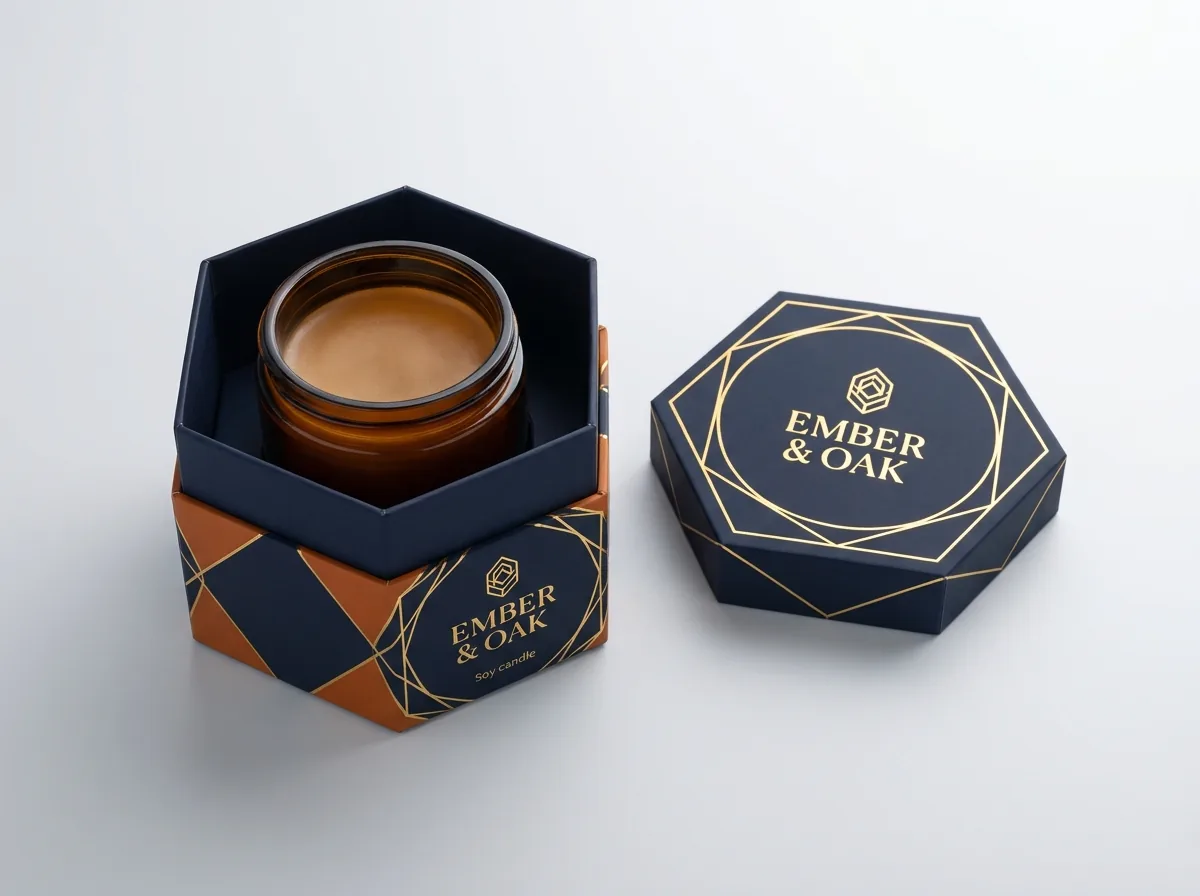
Which paperboard or E-flute caliper matches your filled hexagon box weight?
Although six vertical creases give hexagonal sleeves impressive top-to-bottom column stiffness, bottom floor rigidity and telescoping lid grip must still scale with filled product weight. A lightweight box of five French macarons or a wedding table favor needs crisp, nimble 18 pt folding stock, whereas a 22-ounce poured soy candle concentrates dense glass weight directly onto the hexagonal base panel. When a shopper lifts a heavy glass candle or gourmet honey jar off a display table, unreinforced thin paperboard bases can bow downward at the center unless paired with a heavier caliper or a drop-in hexagonal stiffener pad. Match your total filled SKU weight across custom wedding favor boxes and custom jewelry boxes to these three tested board tiers
- Partial-depth vs full-depth lid overlap: Use a 1.25 to 1.75 in lid skirt for fast table reveals on chocolate and jewelry boxes; step up to a full-height telescoping lid on heavy candles to double wall thickness.
- Chilled confectionery barrier: Add gloss or matte BOPP film lamination on macaron and chocolate hexagons moving in and out of refrigerated display cases so condensation never softens the six corners.
- Thumb-cut opening relief: On snug full-depth telescoping lids, two subtle half-circle thumb notches on opposite side panels break air suction cleanly.
| Filled weight tier | Recommended stock | Preferred hex structure | Floor & rim reinforcement |
|---|---|---|---|
| Light (up to 16 oz) | 18–20 pt SBS or brown kraft | One-piece tuck-top or 2-piece | Interlocking 6-tab bottom or glued tray |
| Medium (16 oz to 3.0 lb) | 24 pt card + BOPP lamination | Two-piece telescoping hex box | Drop-in 24 pt or E-flute hex floor pad |
| Heavy (3.0 to 5.0 lb) | 1.5 mm printed E-flute | Full-overlap 2-piece hex box | Double-wall lid overlap + fluted collar |
Know your size? Compare pricing across up to 3 quantities.
Request a Quote →How do you confirm your exact hexagon size in 4 steps before ordering?
Pair this measurement workflow with our structural comparison of two-piece hexagon boxes vs tuck-top hex cartons and cube boxes and our prepress walkthrough on hexagon box CAD dielines, 120-degree creases, and six-panel artwork, plus our food-jar breakdown on single honey jar cartons vs hexagon boxes and gift set mailers. Because artisanal glass jars, molded chocolate cavities, and handmade ornaments vary by plus or minus 1.5 millimeters across supplier glass molds, measuring three filled production pieces on your bench takes less than two minutes and prevents tight-lid or jammed-wall surprises on launch day. Walk through these four checks before locking tooling
- Step 1: Measure the widest horizontal outer diameter of your round jar, ornament, or circular tray (including any overhanging screw caps or wooden lids) with digital calipers or a rigid steel rule.
- Step 2: Add +0.125 in (direct six-wall fit) or +0.375 to +0.50 in (with a paperboard insert) to establish your interior Flat-to-Flat width F, and add +0.125 to +0.25 in above product height for H.
- Step 3: Multiply F × 0.577 to preview your single printable facet width s, and multiply s × 2 to verify outer Corner-to-Corner shelf footprint C.
- Step 4: Submit F and H in CubitPack's quote form (from 1,000 units) for a free caliper-compensated 2D vector CAD dieline and interactive 3D digital proof before payment; our $50 physical sample kit also credits toward your first production order.
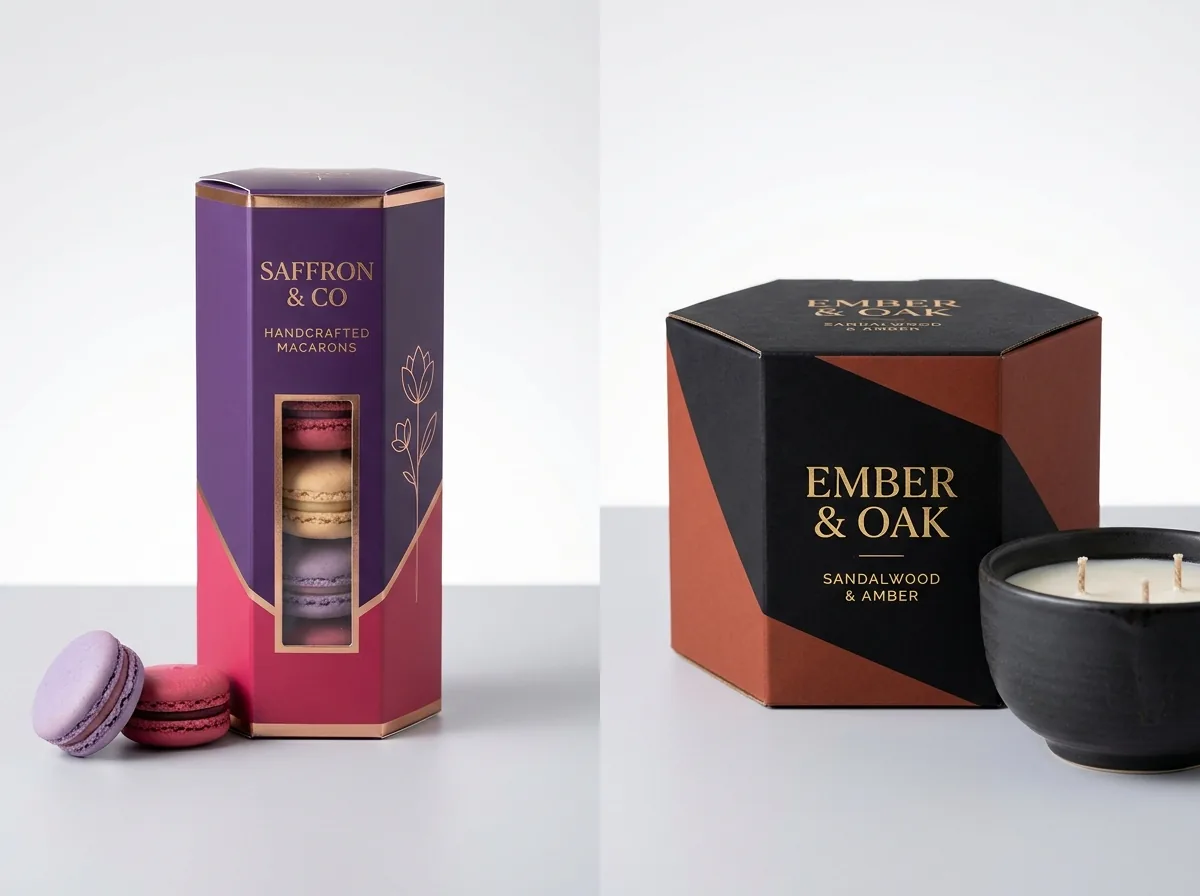
What measurement mistakes happen most often on custom hexagon boxes?
Steer clear of these five sizing errors when converting round jars or rectangular cards into a six-sided footprint
- Giving a manufacturer your jar's 3.5-inch diameter as the Corner-to-Corner width instead of Flat-to-Flat width, shrinking wall-to-wall space to 3.03 inches so the jar cannot fit.
- Measuring a glass candle tumbler's base while forgetting a wider wooden or metal overhang lid at the top rim.
- Sizing a gift-card hexagon to the card's 3.375-inch length instead of its 3.99-inch corner diagonal plus border margin.
- Packing a 24 oz glass honey or candle jar inside an unreinforced 18 pt friction-tab bottom without a 24 pt or E-flute hexagonal base pad.
- Assuming the six-sided telescoping lid and six-sided base use the exact same dieline without a +1.5 mm flat-to-flat lid clearance.
Packaging for this
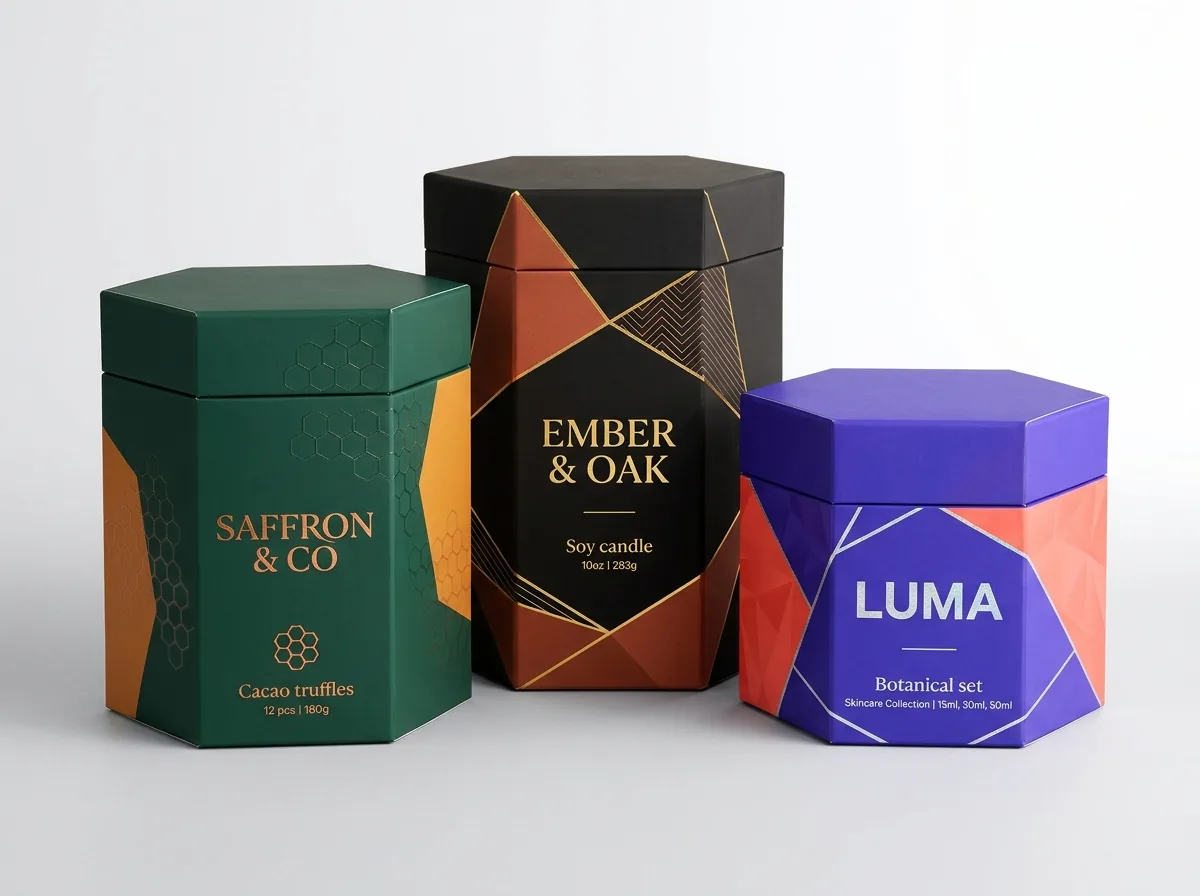
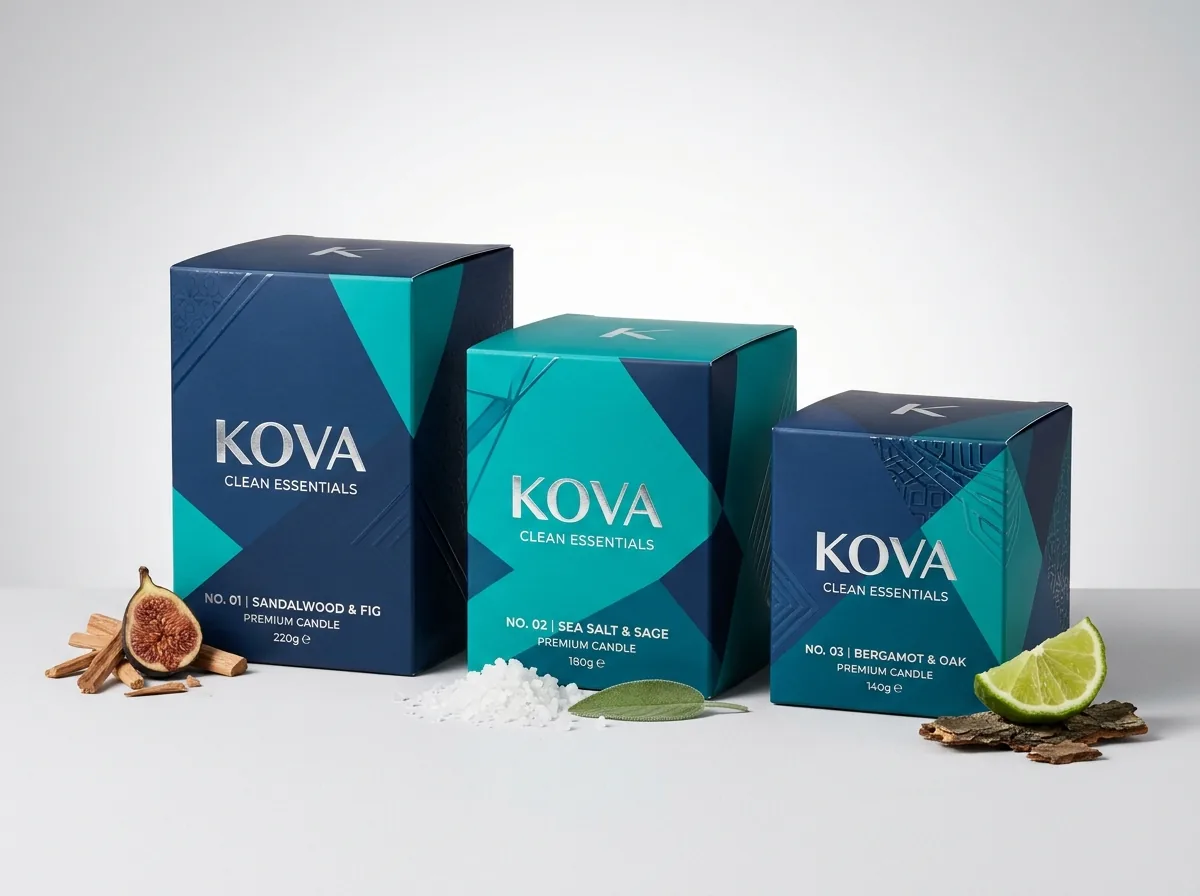

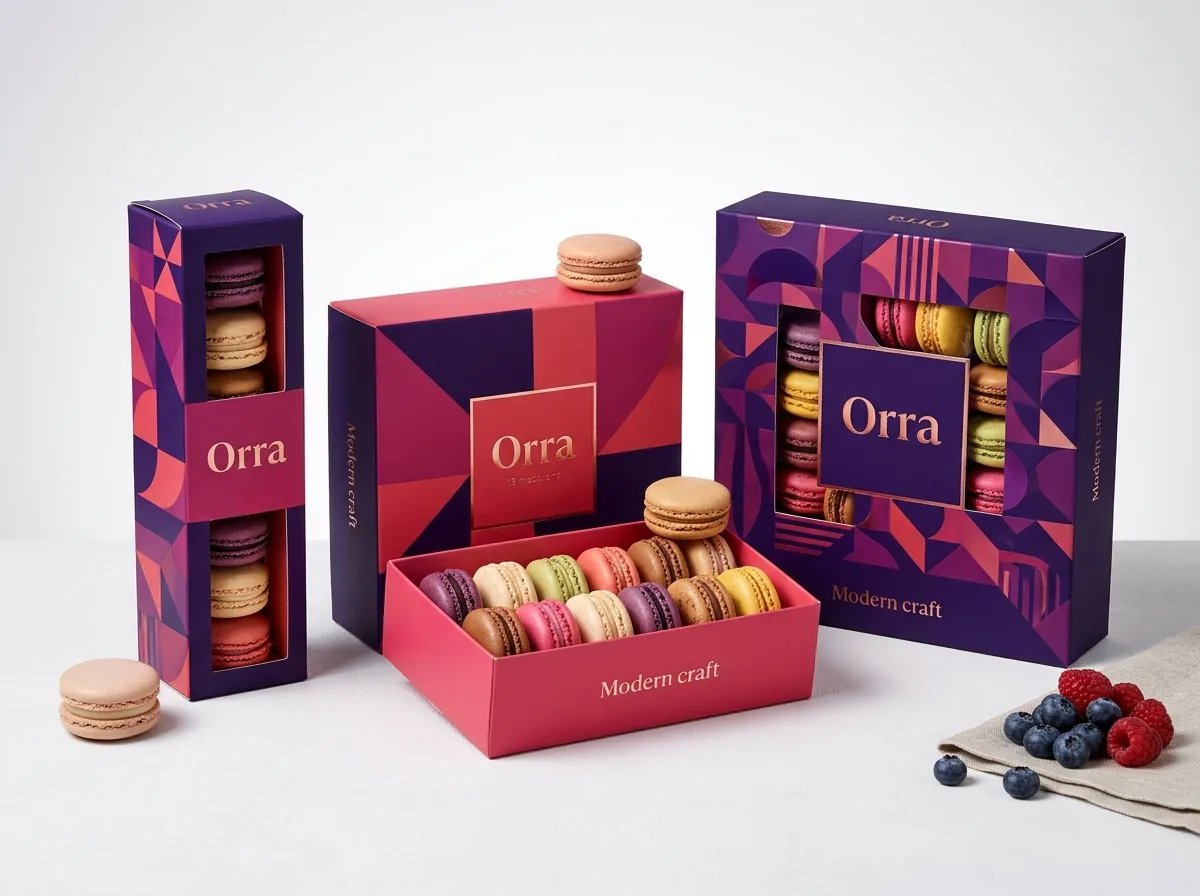
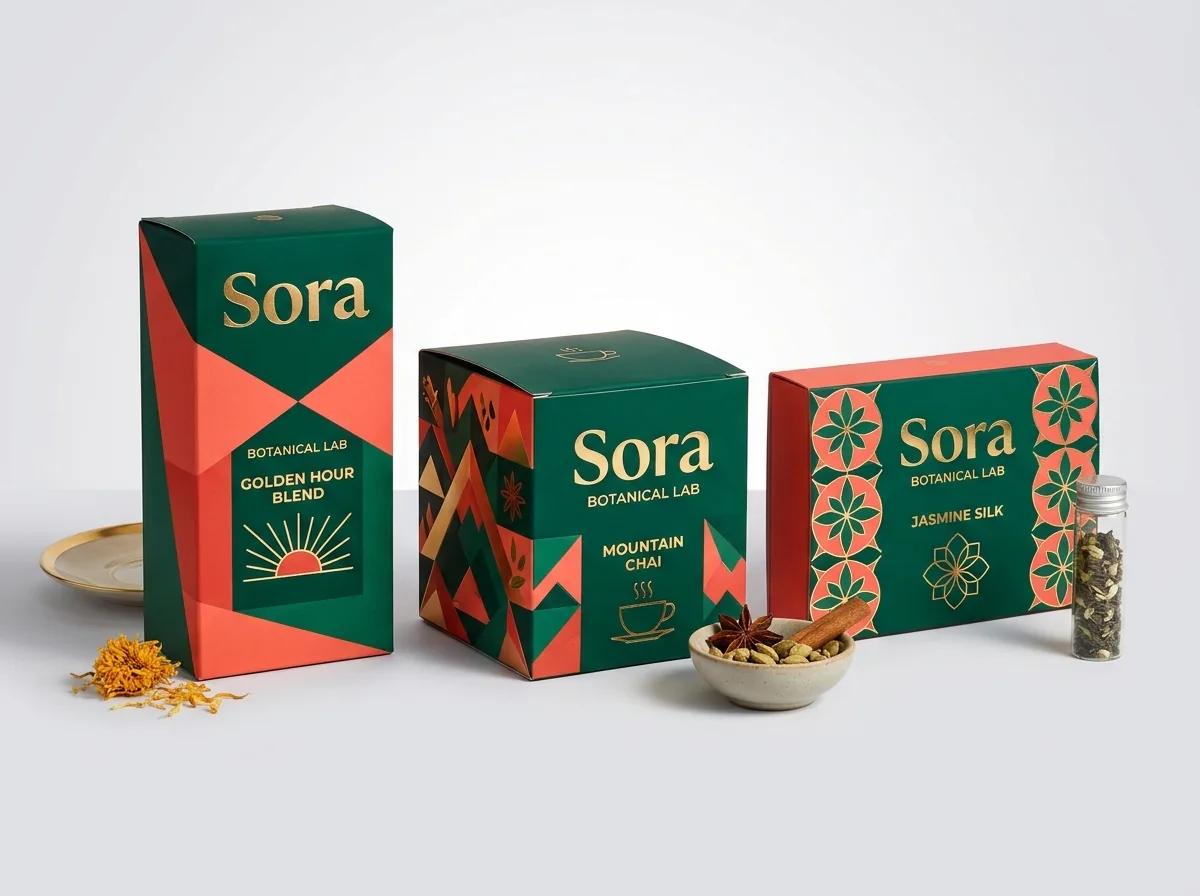
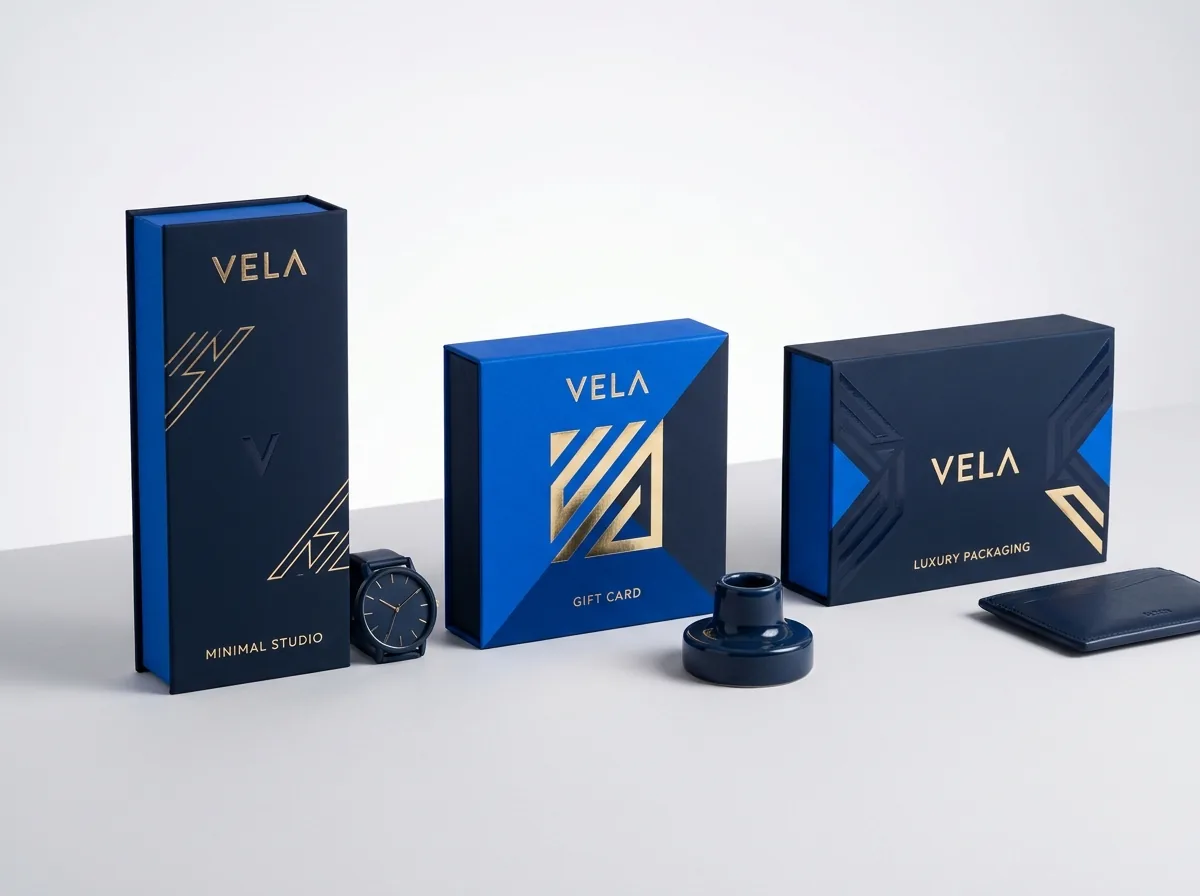
Ready to order hexagon boxes? Compare up to 3 quantities with a free 3D mockup.
Request a Quote →Questions about hexagon boxes
What is the formula for flat-to-flat vs corner-to-corner width on a hexagon box?
If each of the six equal side panels has width s, the interior Flat-to-Flat width between parallel walls is F = 1.732 × s, and the diagonal Corner-to-Corner span is C = 2.0 × s. Conversely, if you start with Flat-to-Flat width F, divide F by 1.732 to get s, and multiply F by 1.155 to get C.
What size hexagon box fits a standard 9 oz straight-sided candle jar?
A standard 9 oz glass candle jar (roughly 3.125 to 3.25 in diameter × 3.5 in tall with lid) fits snugly inside a 3.375 × 3.75 in Flat-to-Flat hexagon without an insert, or a 3.75 × 4.00 in Flat-to-Flat 24 pt hexagon paired with a paperboard collar.
How do I enter hexagon dimensions in CubitPack's 3-box L x W x H quote form?
Enter your interior Flat-to-Flat width in both the Length and Width fields and your interior Height in the Height field (for example, 4 × 4 × 4 in for a 4-inch Flat-to-Flat × 4-inch tall hexagon), and our specialists build the exact six-sided CAD dieline free.
Can a hexagon box be taller than it is wide, or shallow like a chocolate tray?
Yes. Flat-to-Flat width and vertical Height are completely independent: we produce shallow 1.25-inch tall gift-card and praline hexagons as well as tall 6-to-8-inch macaron tower and tea canister hexagons.
Are there extra steel-rule die charges for custom fractional hexagon diameters?
No. Every hexagon die is custom-built to your exact millimeter or sixteenth-inch Flat-to-Flat measurement starting at 1,000 units with zero die or plate setup charges.
Still have a question? Ask a packaging specialist.
Request a Quote →Request your hexagon boxes quote
Tell us your size and quantities, and one dedicated account manager prepares pricing for each tier.
- Free design & AI-to-print studio + 3D mockup
- No die or plate charges · 4–5 day rush available
- Free shipping to all 50 states
- 10% off your first order
We verified regular hexagonal trigonometrical ratios (F = s√3 and C = 2s), six-tangent cylindrical vessel clearances, corner void reduction vs square cartons, and 18 pt / 24 pt / E-flute weight ratings against Paperboard Packaging Council (PPC) structural manuals, ECMA Folding Carton Design Codes, and FEFCO micro-corrugated standards. Spot something wrong? Tell us and we fix it.
Sources
- Regular hexagon Flat-to-Flat (1.732s) vs Corner-to-Corner (2s) formulas and six-tangent round-jar clearance rules.
- Polygonal six-panel tube vs two-piece telescoping lid construction across 18–24 pt calipers.
- Six-crease vertical column compression strength and 1.5 mm E-flute upgrade for 3 to 5 lb candle and gourmet jars.
What changed
- November 6, 2026: First published with 6-size hexagon benchmark chart, flat-to-flat vs corner-to-corner formulas, and 3-tier weight guide.
More guides
New packaging guides by email
Sizes, materials and design tips. Unsubscribe anytime.