
Single honey jar cartons vs hexagon boxes and gift set mailers: which should you choose?
Short answer: Choose 4-panel auto-lock cartons within our custom honey boxes lineup for fast-packing retail jars and MGO manuka pots, 6-sided hexagon boxes for boutique honeycomb gift appeal, tray-and-sleeve boxes for square cut-comb cassettes, and E-flute corrugated mailers with dividers when shipping 3-jar honey tasting flights.
On this page
- How do 4-panel cartons, 6-sided hexagon boxes, comb sleeves, and 3-jar mailers compare
- 4-panel auto-lock carton with a hex window vs true 6-sided hexagon box: which is better
- Why do manuka and propolis brands choose solid cartons while floral honeys use windows
- How do cut-comb drawer sleeves and 3-jar corrugated tasting mailers work
- When should beekeepers add kraft gable carriers or checkout counter displays
- Common mistakes
- FAQs
Request a custom quoteFree dieline & 3D mockup
Selecting the right honey box architecture comes down to your container geometry, how many jars you pack per order, and how the package reaches your buyer. For everyday 8 oz, 12 oz, and 1 lb glass jars sold on grocery shelves, a 4-panel pre-glued auto-lock bottom carton pops open in two seconds, stacks tightly in master cases, and can still feature a hexagonal front window cutout. When you want the outer package itself to mimic a six-sided honeycomb cell on gift shop tables, a true 6-panel hexagon box delivers an unforgettable silhouette. For delicate 4.25 inch square slabs of raw cut comb, a shallow tray-and-sleeve drawer box slides open without squeezing the comb, and for e-commerce 3-jar flights with a wooden dipper, an E-flute corrugated mailer absorbs parcel drops. CubitPack builds all four styles from 1,000 units with free design help.
How do 4-panel cartons, 6-sided hexagon boxes, comb sleeves, and 3-jar mailers compare?
Apiaries and specialty honey brands rarely sell just one format. A single harvest often gets bottled into 8 oz and 16 oz liquid honey jars, 250 g creamed or manuka honey pots, square cut-comb cassettes, and 3-jar holiday sampler boxes. Each container places different mechanical demands on the paperboard: liquid jars concentrate dense 1.42 specific-gravity weight on the base flaps, cut-comb trays must stay horizontal so raw honey does not pool at one corner, and multi-jar flights need full glass-to-glass isolation. Use the comparison table below to evaluate the five core custom printed honey box structures across container fit, base load rating, hand-packing speed, and shipping durability.
| Box architecture | Best honey format | Primary strength |
|---|---|---|
| 4-panel auto-lock carton | 8 oz, 12 oz queenline, 1 lb jars & manuka pots | Fastest hand-packing; pre-glued crash-lock floor |
| 6-sided hexagon box | Hexagonal glass jars & reserve blossom releases | Distinctive 6-facet honeycomb gift presentation |
| Square tray and sleeve | 4.25 × 4.25 in raw cut-comb cassettes & Ross rounds | Drawer slide opening protects delicate beeswax comb |
| Corrugated 3-jar mailer | Three 8 oz or 12 oz jars + wooden dipper slot | E-flute crush buffers and cell dividers for parcel mail |
| Auto-lock gable carrier | 2-jar or 3-jar farmers market totes with handle | Built-in carry handle and front jar windows |
4-panel auto-lock carton with a hex window vs true 6-sided hexagon box: which is better?
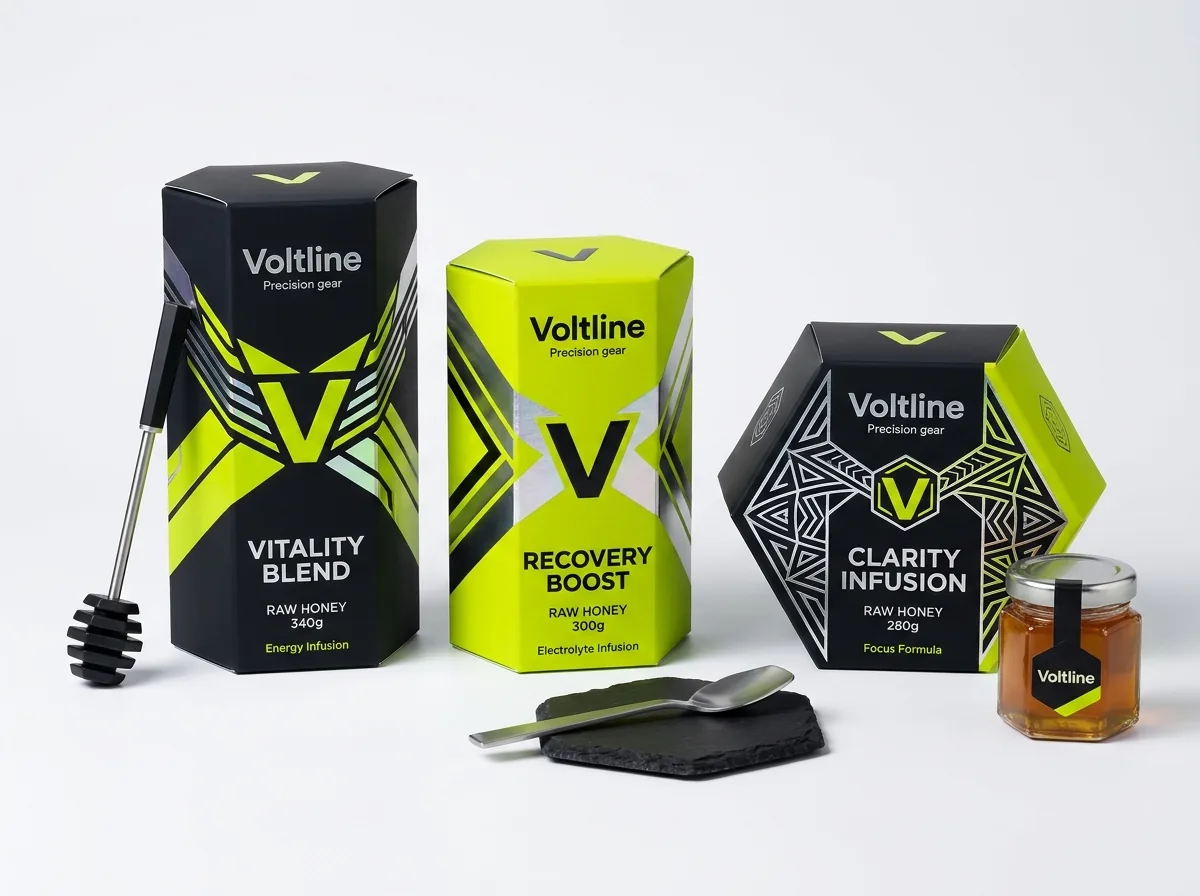
Many beekeepers love the look of six-sided hexagonal glass jars and immediately ask whether the outer box should be a 4-sided square carton or a 6-sided custom hexagon box. Both work beautifully, and the right choice depends on your bottling day workflow and shelf layout. A 4-panel custom auto lock bottom box with a six-sided hexagonal die-cut window on the front panel gives you the best of both worlds for high-volume retail: the pre-glued bottom snaps flat in one motion, the four flat walls stack with zero wasted air space inside master shipping cartons, and the hex cutout frames the golden honey inside. A true 6-sided hexagon box has six vertical fold creases and a 6-tab tuck or lock base. It takes a few extra seconds per jar to fold by hand, yet on a boutique gift table or farmers market pyramid display, six printed facets arranged side by side create a continuous geometric honeycomb mosaic that shoppers spot from across the room. Many apiaries use 4-panel auto-lock cartons for their everyday grocery 12 oz jars and reserve 6-sided hexagon boxes for limited-edition spring blossom or sourwood releases.
Why do manuka and propolis brands choose solid cartons while floral honeys use windows?
Walk down a gourmet grocery aisle and you will notice a sharp split between varietal floral honeys (like Orange Blossom, Tupelo, Sourwood, and Wildflower) and bioactive functional honeys (like New Zealand Manuka, Royal Jelly, and Propolis blends). Varietal blossom honeys sell by color and clarity - shoppers want to hold the jar up to the light and compare pale water-white clover against dark molasses-colored buckwheat. An open or film-patched custom window box lets that natural color shine while keeping the jar stable on the shelf. High-MGO and UMF manuka honeys, by contrast, are almost always packed in dark amber jars inside fully enclosed soft-touch paperboard cartons with zero windows. The enclosed carton blocks overhead UV store lighting that can degrade methylglyoxal (MGO) and natural enzymes, while providing four uninterrupted walls for laboratory grading charts, anti-counterfeit foil seals, and batch verification QR codes. Many manuka packers also add an internal top neck collar inside the folding carton so the heavy amber pot cannot shift up and down if the package is inverted during air freight.
Know your size? Compare pricing across up to 3 quantities.
Request a Quote →How do cut-comb drawer sleeves and 3-jar corrugated tasting mailers work?
Raw cut-comb honey sits flat in a shallow square cassette rather than standing upright like a jar. Stuffing a flat comb tray into a tall end-loading box forces customers to shake the comb out sideways, which can smear capped beeswax cells against the lid. A custom tray and sleeve box solves that completely: the comb cassette rests flat inside a rigid double-wall paperboard tray, and an outer printed sleeve (with an optional top honeycomb window) slides smoothly off like a matchbox so the comb stays level from hive to table. For online gift sets and holiday samplers - such as a 3-jar flight of Spring Wildflower, Summer Clover, and Autumn Buckwheat paired with a 6-inch wooden honey dipper - paperboard folding cartons are too thin to survive parcel couriers alone. An E-flute corrugated custom mailer box fitted with a die-cut partition grid and a dedicated side channel for the wooden dipper locks every glass jar in place, absorbs conveyor drops, and gives you the entire inside lid for a floral tasting wheel.
- Use 4-panel auto-lock cartons for wholesale grocery runs of 8 oz, 12 oz, and 1 lb jars.
- Use 6-sided hexagon boxes for reserve harvests, gift boutiques, and hexagonal glass jars.
- Use square tray-and-sleeve drawer boxes for 4.25 inch raw cut-comb cassettes.
- Use E-flute corrugated mailers with cell dividers and dipper slots for e-commerce 3-jar flights.
When should beekeepers add kraft gable carriers or checkout counter displays?
At weekend farmers markets, orchard stores, and harvest festivals, shoppers rarely buy two or three jars unless they have an easy way to carry them home. An auto-lock bottom custom gable box in natural brown kraft with a built-in top handle and internal divider turns two 12 oz jars or three 8 oz jars into a ready-made gift tote that customers can carry by two fingers while browsing the market. Meanwhile, if you wholesale 2 oz mini favor jars, lip balms, or flavored honey sticks to coffee shops, tea rooms, bakeries, and farm stands, packing them inside a perforated custom counter display box earns prime counter placement right next to the espresso machine or cash register without requiring any permanent store fixtures. Both gable carriers and counter display trays ship flat and assemble in seconds without tape or glue. Many regional beekeepers combine an order of 1,000 single auto-lock jar cartons with a run of 3-jar corrugated tasting mailers so their harvest is ready for grocery shelves, farm stands, and nationwide online gift orders at the same time. Because every CubitPack box is quoted with free design help and zero die or plate charges, you can compare unit costs across two or three structural formats in a single quote.
What mistakes do honey brands make when choosing a box style?
Picking the wrong structure for heavy honey jars or delicate comb trays leads to slow packing or transit damage. Check these five mistakes
- Choosing a standard reverse-tuck bottom instead of a pre-glued auto-lock base for dense 12 oz and 1 lb glass honey jars.
- Shipping a 3-jar glass honey flight in a thin paperboard window box without an E-flute corrugated mailer and partition walls.
- Packing a flat square cut-comb cassette into a deep end-tuck box instead of a flat-sliding tray-and-sleeve drawer box.
- Adding a wide open window to high-grade MGO manuka honey boxes that need full UV light shielding and tamper-seal space.
- Ordering a 6-sided hexagon box without checking across-corners jar width, causing hexagonal glass jars to bind during top loading.
Find your size
Suggested inside size: 2.0 × 2.0 × 2.375 in
A starting point. Your account manager confirms the size with you before the proof.
Quote this size →Packaging for this
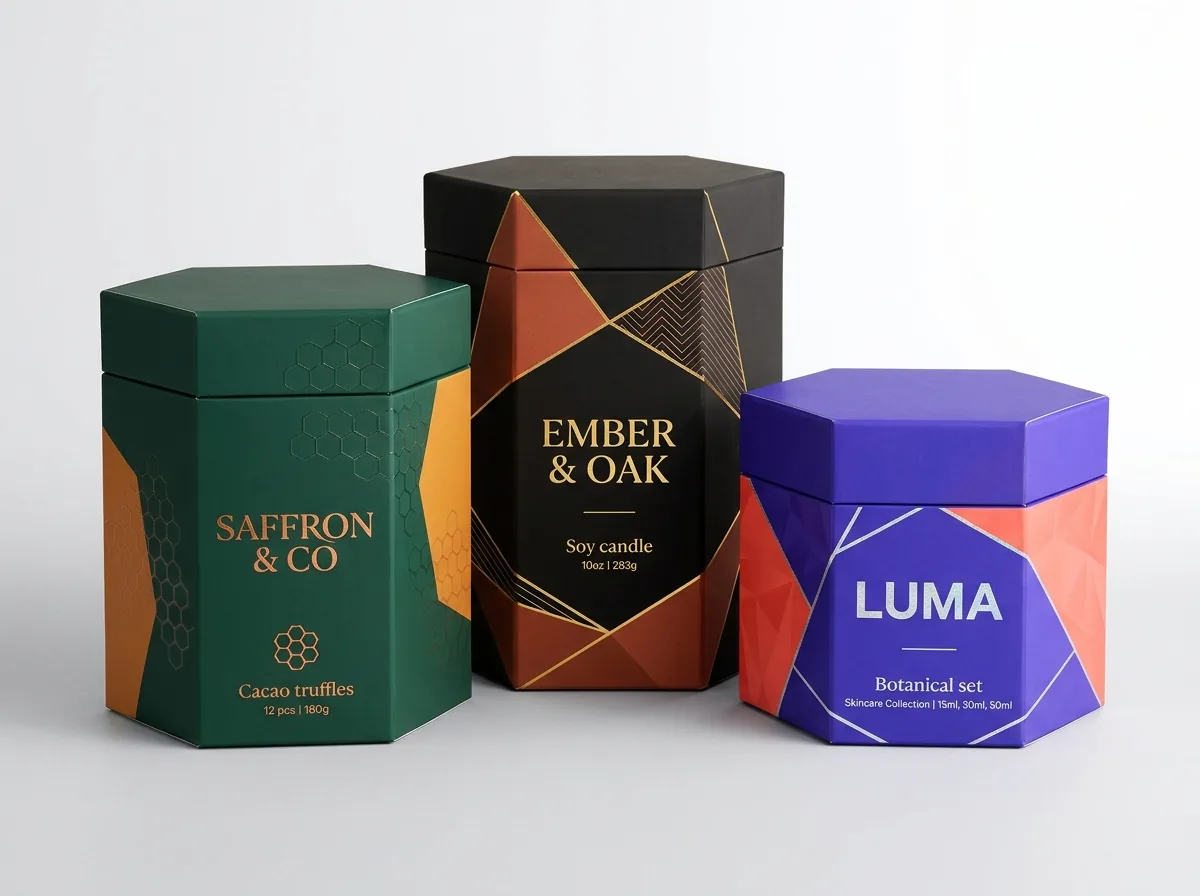
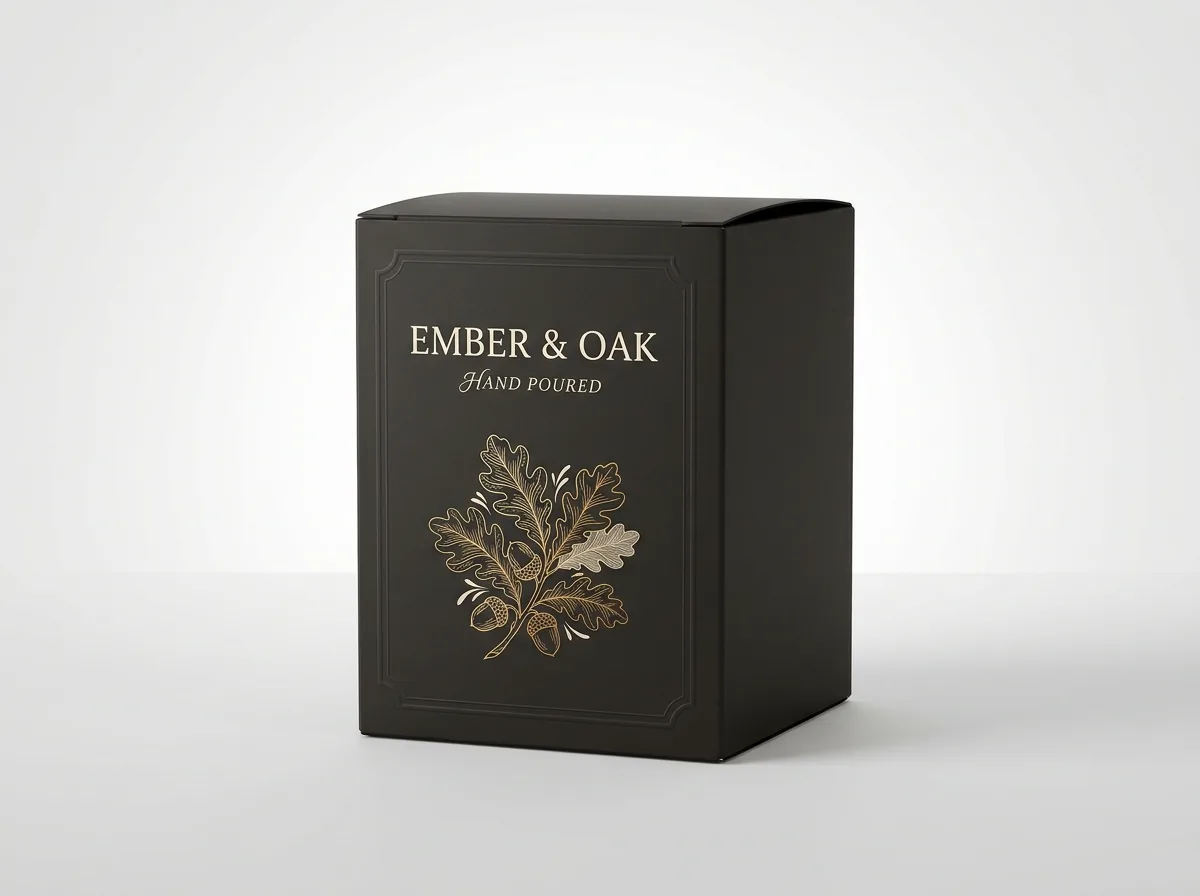
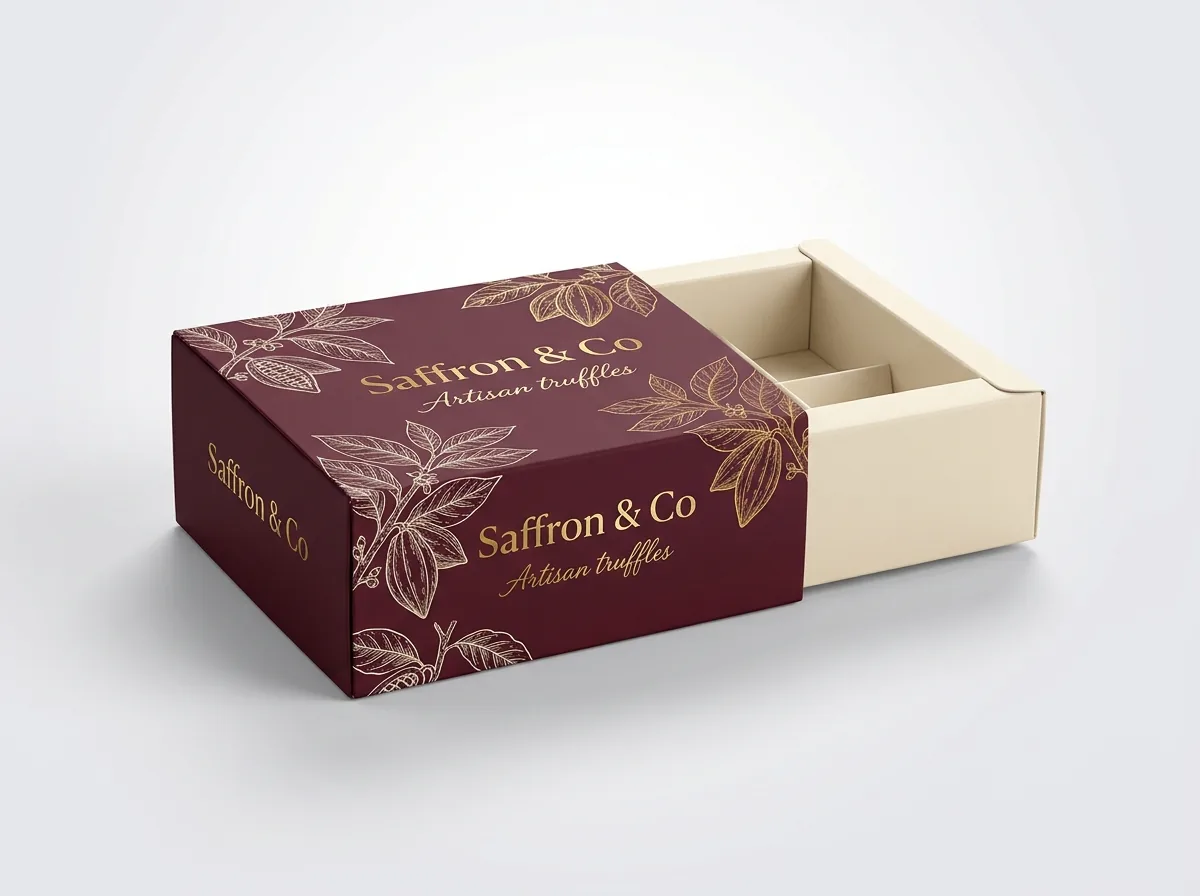
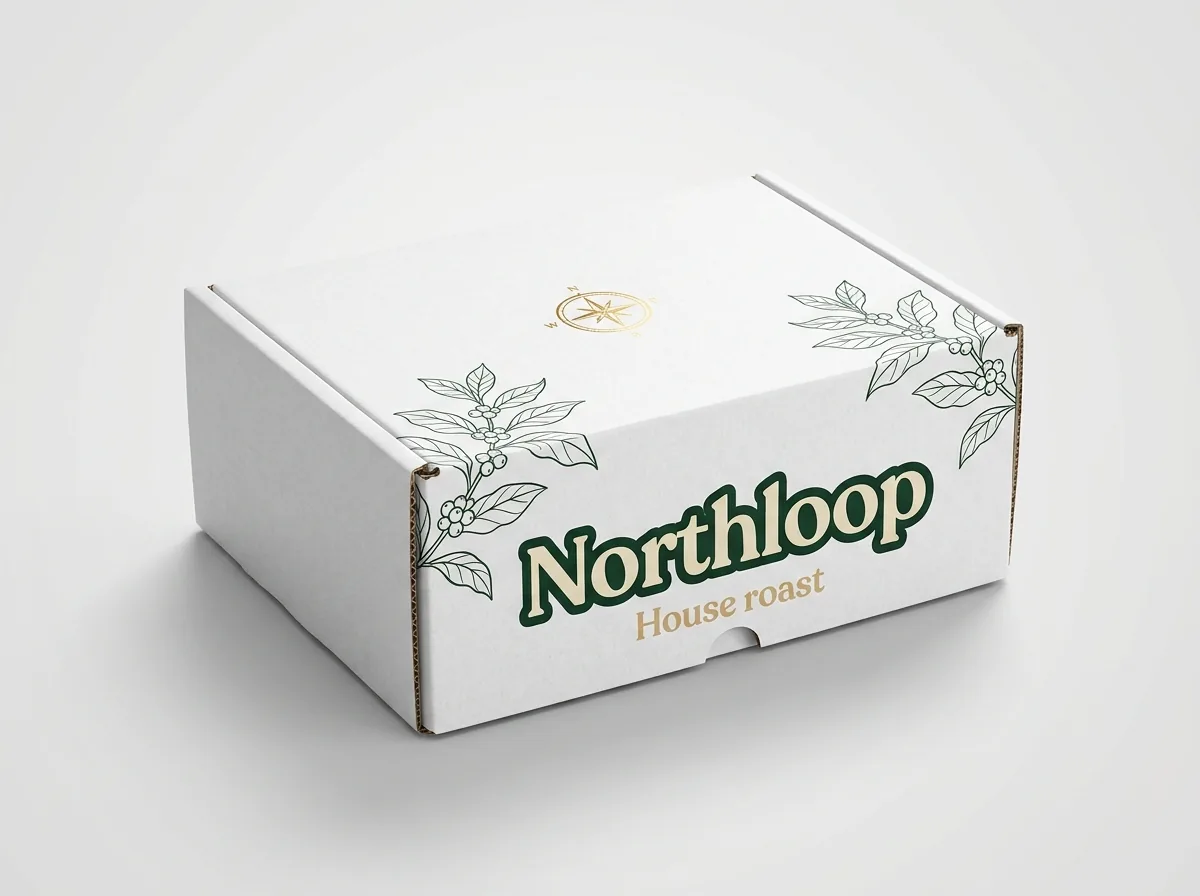
Ready to order honey boxes? Compare up to 3 quantities with a free 3D mockup.
Request a Quote →Questions about honey boxes
Does a 6-sided hexagon box cost more than a 4-panel square honey carton?
A 6-sided hexagon box uses slightly more board width and two extra fold scores compared with a 4-panel square carton, and it takes a few seconds longer to fold by hand. However, CubitPack charges zero die or plate fees on either style.
Can a 4-panel square honey box still have a hexagon-shaped window?
Yes. Many apiaries choose a fast-packing 4-panel auto-lock bottom carton and die-cut a six-sided hexagonal window on the front face. That gives you honeycomb shelf appeal with 4-panel packing speed.
What is the best box style for raw cut-comb honey?
A shallow square tray-and-sleeve box (around 4.5 × 4.5 × 1.625 inches inside) is ideal for raw cut-comb cassettes. The rigid tray supports the comb flat while the outer sleeve slides off smoothly.
How do you ship a 3-jar glass honey gift set without breakage?
Use an E-flute corrugated mailer box fitted with a full-depth corrugated partition grid that puts a board wall between every glass jar, plus a separate retaining slot for any wooden honey dipper.
Should manuka honey cartons use tamper-evident closures?
Yes. High-value MGO and UMF manuka honey cartons frequently pair an auto-lock or seal-end bottom with a custom foil tamper-evident seal sticker over the top tuck flap so buyers know the pot is untouched.
What is the minimum order quantity for custom honey boxes?
Custom honey boxes start at 1,000 units, with standard production in 10 to 14 business days (rush in 4 to 5 business days) and free delivery across all 50 US states.
Still have a question? Ask a packaging specialist.
Request a Quote →Request your honey boxes quote
Tell us your size and quantities, and one dedicated account manager prepares pricing for each tier.
- Free design & AI-to-print studio + 3D mockup
- No die or plate charges · 4–5 day rush available
- Free shipping to all 50 states
- 10% off your first order
This guide compares CubitPack structural specifications for 4-panel auto-lock cartons, 6-sided hexagon boxes, tray-and-sleeve comb drawers, and E-flute multi-jar mailers. A packaging specialist checked every comparison point. Spot an error? Let us know and we will fix it.
Sources
What changed
- October 22, 2026: First published.
- October 22, 2026: Updated specifications, terminology, and verified source links.
More guides
New packaging guides by email
Sizes, materials and design tips. Unsubscribe anytime.