
Counter PDQ jerky displays vs hang-tab cartons and sampler mailers: which should you pick?
Short answer: Choose your custom jerky boxes by retail channel: use upright 24-count counter PDQ caddies for convenience-store meat sticks, E-flute shelf-ready PDQ trays for 8 or 12 stand-up grocery pouches, hang-tab window cartons for pegboard slab jerky or biltong, and corrugated mailers for 6-bag online variety flights.
On this page
- How do the six main jerky box structures compare side by side
- Upright counter PDQ caddy vs gravity-feed dispenser: which sells more meat sticks
- Single-lane 8-bag vs dual-lane 12-bag shelf-ready PDQ trays: what do grocery buyers want
- Why pack slab jerky, biltong, or 5-stick multipacks in a hang-tab window carton
- When should you use a corrugated mailer box for jerky bundles and subscriptions
- Common mistakes
- FAQs
Request a custom quoteFree dieline & 3D mockup
Meat snacks are sold in four distinct retail environments - convenience store cash registers, supermarket snack aisles, butcher shop pegboards, and direct-to-consumer parcel mailers - and each channel demands a specific box structure. Individual 1 oz meat sticks and chomp sticks rely on compact upright counter PDQ caddies or gravity-feed dispenser towers so shoppers can grab a stick at checkout. Stand-up 2.5 to 3 oz jerky pouches need rigid E-flute shelf-ready trays with low front lips and back-riser wedges so flexible bags do not flop flat on grocery shelves. Artisan slab jerky, air-dried biltong, and 5-stick multipacks stand out on peg hooks inside folding cartons with integrated sombrero hang tabs, while online sampler bundles ship in roll-end corrugated mailers. CubitPack produces every style from 1,000 units in 10 to 14 business days with free design help, zero die or plate fees, and free US delivery.
How do the six main jerky box structures compare side by side?
When a regional distributor, convenience-store chain, or grocery buyer reviews a new meat snack line, one of their first questions is how the product arrives at the shelf. Loose flexible pouches require store clerks to hand-stack bags that immediately slide backward on wire shelving, while loose meat sticks dumped into an unbranded acrylic bin lose all brand identity. Matching your SKU to the right printed jerky display box or carton eliminates retail restocking friction and turns your shipping container into a permanent shelf billboard. Each structural format solves a specific merchandising bottleneck. Upright counter PDQ caddies compress 24 or 36 meat sticks into a footprint narrower than a paperback book right next to the cash register. E-flute shelf-ready trays hold 8 or 12 stand-up jerky bags in a rigid row so clerks can stock a supermarket aisle in five seconds without a box cutter. Use the comparison matrix below to match your meat snack format - wrapped sticks, gusseted pouches, vacuum-sealed slabs, or variety bundles - to the structure your buyers expect.
| Box style | Best jerky format | Primary retail channel | Board stock | Key merchandising advantage |
|---|---|---|---|---|
| Upright counter PDQ caddy | 24 or 36 wrapped 1 oz meat sticks | C-store & gas station registers | Stiff paperboard or E-flute | Tiny 4.5 × 3.5 in footprint + tall fold-up header |
| Gravity-feed dispenser box | 24 to 40 wrapped chomp sticks | Gym pro shops, golf bars, delis | Heavy paperboard or E-flute | Bottom pull slot feeds one stick at a time |
| Shelf-ready PDQ pouch tray | 8 or 12 stand-up 3 oz jerky bags | Grocery snack aisles & club stores | E-flute corrugated | Perforated hood tears off in 5 seconds |
| Hang-tab window carton | Single 2.5 oz slab jerky or 5-stick pack | Checkout pegboards & clip strips | Kraft or white paperboard | Rigid sombrero tab never tears off peg hooks |
| Butcher window carton | Artisan slab jerky & charcuterie kits | Specialty markets & taprooms | Natural brown kraft board | Frames real peppered beef texture & grain |
| Corrugated sampler mailer | 4- to 10-bag flavor variety flights | DTC ecommerce & subscription clubs | E-flute corrugated | Ships without outer carton; inside-lid story |
Upright counter PDQ caddy vs gravity-feed dispenser: which sells more meat sticks?
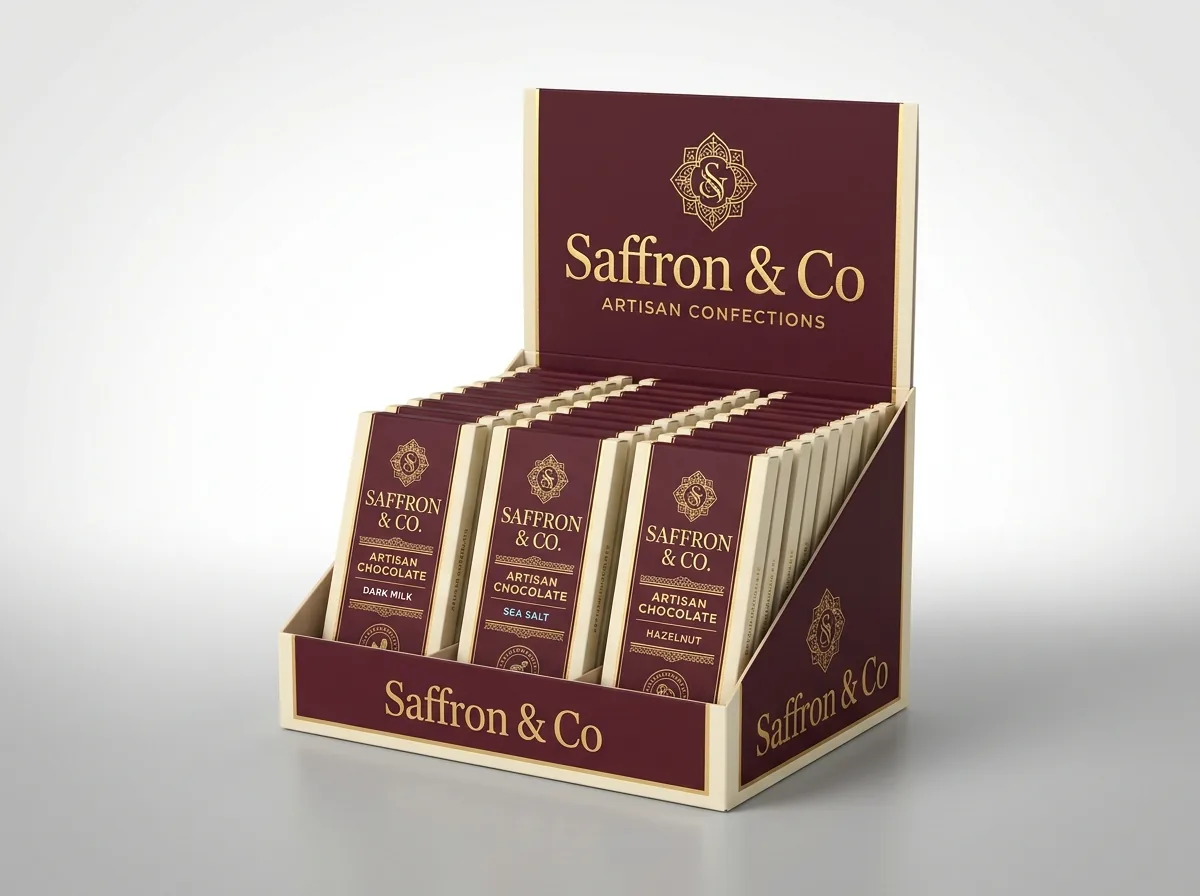
For individually wrapped 1 oz beef, venison, elk, or turkey sticks, your choice at the cash register comes down to an open-top custom counter display box (PDQ caddy) or a tall custom dispenser box with a bottom pull tray. An upright PDQ caddy ships fully enclosed; the store clerk pulls a perforated zipper strip around the front and sides, removes the hood, and folds the top panel in half to lock into an 11-inch vertical header card. Because all 24 or 36 sticks stand upright like pencils with their top halves exposed, shoppers can see the full bundle volume and grab two or three sticks at once. A gravity-feed dispenser tower works differently: the box stays closed on top and dispenses wrapped sticks horizontally through a die-cut slot at the base as gravity drops the next stick down. Gravity dispensers are ideal for horizontal-wrapped snack sticks, mini pepperoni bites, or busy self-serve coffee counters where you want customers to touch only the stick they are taking. However, upright open-top caddies remain the preferred choice for vertical 6- to 7-inch meat sticks because vertical sticks can bridge or twist inside a gravity chute if their plastic fin seals catch on one another.
- Pick an upright counter PDQ caddy for 6- to 7.5-inch vertical meat sticks, dual-flavor split packs (18 Original / 18 Jalapeno), and C-store register counters.
- Pick a gravity-feed dispenser tower for shorter 4- to 5-inch snack bites, single-serve twin packs, or counters with overhead shelf clearance under 12 inches.
Single-lane 8-bag vs dual-lane 12-bag shelf-ready PDQ trays: what do grocery buyers want?
When you pitch 2.5 oz or 3 oz stand-up jerky pouches to regional and national supermarket chains, category buyers almost always require shelf-ready custom display boxes. Instead of paying store labor to open a brown shipping box and balance individual plastic bags on a wire shelf, the clerk pulls a tear strip on your printed E-flute tray and slides the entire 8- or 12-bag display into the planogram. Most grocery snack aisles allocate a single 6.5-inch-wide shelf facing per flavor SKU, which makes the single-lane 8-bag PDQ tray (6.25 × 9.50 × 7.25 in) or single-lane 12-bag PDQ tray (6.25 × 13.50 × 7.25 in) the universal supermarket workhorse. Dual-lane trays (12.625 inches wide holding two rows of 6 or 8 bags side by side) are reserved for high-velocity club stores, endcap promotions, or flagship Original Beef Jerky SKUs that command a double facing. Regardless of single- or dual-lane width, always specify E-flute corrugated board rather than thin folding paperboard whenever the PDQ tray ships pre-filled inside a master case, so bottom corners never crush under pallet stacking weight. To keep pouches standing upright once the first four or five bags sell, include a folded triangular cardboard back-riser wedge at the rear of the tray. That 1.50-inch wedge tilts the remaining jerky bags forward against the 2-inch front lip so your brand billboard stays visible from the aisle until the very last bag is purchased.
Know your size? Compare pricing across up to 3 quantities.
Request a Quote →Why pack slab jerky, biltong, or 5-stick multipacks in a hang-tab window carton?
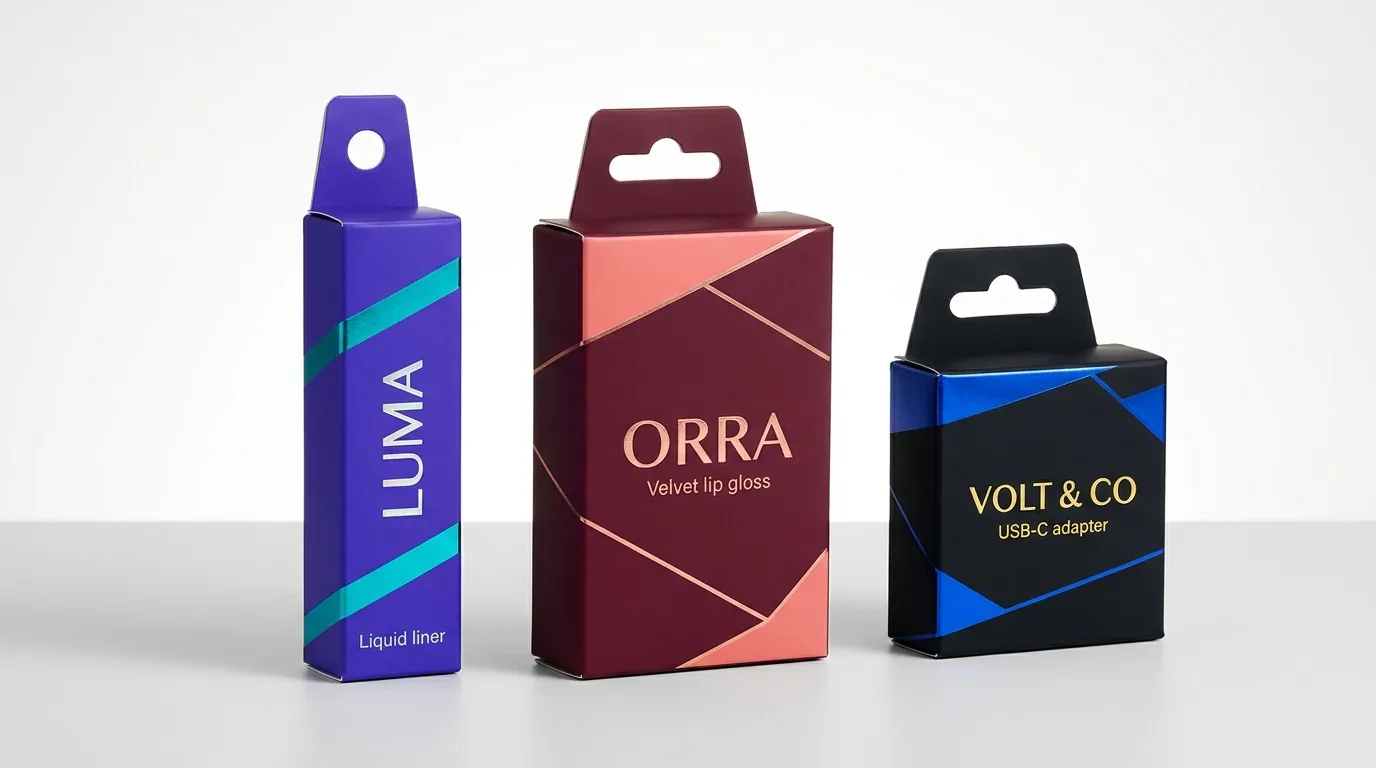
If jerky is already sealed inside a barrier pouch, why add an outer custom hang tab box or custom window box? First, vacuum-sealed slab jerky and traditional air-dried biltong pouches shrink tightly around the irregular meat slices, leaving rippled plastic surfaces that distort brand typography and glare under store lighting. Slipping that vacuum pouch into a flat, matte-laminated kraft or black paperboard sleeve with a die-cut front window gives you a rigid, wrinkle-free billboard that frames the real marbled beef texture while looking like a craft smokehouse reserve product. Second, unit economics change dramatically with 5-stick or 6-stick multipack cartons. Selling one meat stick at a time is an impulse play, whereas packing five 1 oz sticks into a 3.75 × 1.50 × 6.75 inch straight-tuck hang-tab carton creates a grocery lunchbox staple that commands a higher basket ring and hangs cleanly on checkout pegboards without tearing off the hook. If you pack butcher-wrapped slab jerky or droewors directly against the paperboard, we can also specify food-safe grease-resistant liners on request so natural meat oils never spot the outer carton.
When should you use a corrugated mailer box for jerky bundles and subscriptions?
Direct-to-consumer jerky brands rarely make money shipping a single 3 oz bag of jerky; parcel postage eats the margin unless the customer buys a 4-bag, 6-bag, or 10-bag variety flight or joins a monthly jerky subscription club. While poly mailers are cheap, shipping six gusseted jerky bags in a soft plastic bag arrives looking like a lumpy pillow and offers zero unboxing theater for gifting. A roll-end tuck-top custom mailer box in E-flute corrugated board turns a multi-bag bundle into a Father's Day gift, corporate tailgate package, or monthly club drop. By printing a smokehouse heat-scale chart, wood-smoke pairing notes, and a reorder QR code inside the lid, you transform a collection of pouches into a cohesive tasting experience that stacks flat on the customer's pantry shelf.
What mistakes do jerky brands make when choosing a box style?
Avoid these four structural mismatches when selecting packaging for meat sticks and jerky bags
- Using thin folding paperboard instead of E-flute corrugated for 8- and 12-bag shelf-ready PDQ trays that ship pre-filled inside master cartons.
- Making a convenience-store meat stick counter caddy wider than 5.5 inches, which causes clerks to move it off the register counter.
- Packing long vertical 7-inch meat sticks in a horizontal gravity-feed dispenser slot where overlapping side fin seals can bridge and jam.
- Shipping 6-bag online gift flights in soft poly bags instead of a rigid corrugated mailer that protects pouch seals and showcases inside-lid flavor guides.
Find your size
Suggested inside size: 4.5 × 3.5 × 6.5 in
A starting point. Your account manager confirms the size with you before the proof.
Quote this size →Packaging for this
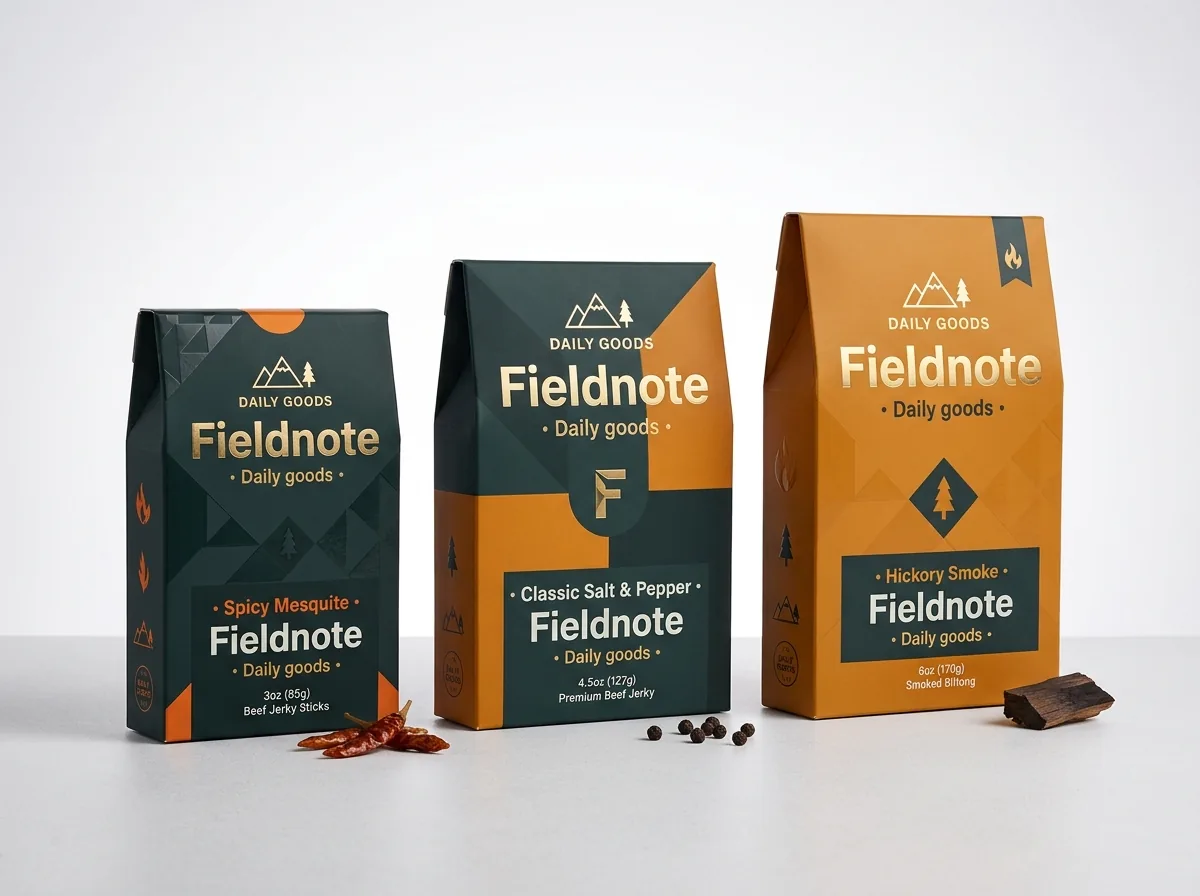

Ready to order jerky boxes? Compare up to 3 quantities with a free 3D mockup.
Request a Quote →Questions about jerky boxes
Should I use paperboard or E-flute corrugated for a jerky PDQ display box?
Use stiff folding paperboard or E-flute corrugated for compact 24-count 1 oz meat stick counter caddies, and always use E-flute corrugated for 8-bag and 12-bag 3 oz jerky pouch shelf trays so the tray walls never bow or crush during master-case shipping.
What is the difference between an upright counter caddy and a gravity-feed dispenser?
An upright counter PDQ caddy has a tear-away top hood that folds into a header card, exposing all 24 or 36 vertical meat sticks from the top. A gravity-feed dispenser stays enclosed at the top and feeds horizontal snack sticks one at a time through a bottom slot.
Why do biltong and slab jerky brands put vacuum pouches inside paperboard window cartons?
Vacuum-sealed slab jerky and biltong bags wrinkle tightly around the meat, making labels hard to read. An outer kraft or matte black window carton provides a flat, rigid billboard with a sombrero hang tab while framing the real meat texture through a front cutout.
Do supermarkets prefer 8-count or 12-count jerky PDQ shelf trays?
Both are standard depending on shelf depth: a single-lane 8-count tray (9.5 inches deep) fits shallow convenience and natural-channel shelves, while a 12-count tray (13.5 inches deep) maximizes capacity on standard supermarket gondola shelves.
Can I order both counter PDQ boxes and DTC sampler mailers in one production run?
Yes. Each structural dieline starts at 1,000 boxes with zero die or plate charges, and our team keeps your Pantone smokehouse reds, charcoals, and kraft finishes matched across your retail counter trays, hang-tab cartons, and ecommerce mailers.
How fast can CubitPack produce custom printed jerky display boxes?
Standard production takes 10 to 14 business days after you approve your free digital proof and 3D mockup, with 4 to 5 business day rush manufacturing available on request and free shipping across all 50 US states.
Still have a question? Ask a packaging specialist.
Request a Quote →Request your jerky boxes quote
Tell us your size and quantities, and one dedicated account manager prepares pricing for each tier.
- Free design & AI-to-print studio + 3D mockup
- No die or plate charges · 4–5 day rush available
- Free shipping to all 50 states
- 10% off your first order
This guide compares CubitPack structural options for 24- and 36-stick counter PDQ caddies, gravity dispensers, 8- and 12-bag E-flute shelf trays, hang-tab sleeves, and variety mailers. A packaging specialist verified every structural recommendation. Spot an error? Let us know and we will fix it.
Sources
What changed
- October 22, 2026: First published.
- October 22, 2026: Updated specifications, terminology, and verified source links.
More guides
New packaging guides by email
Sizes, materials and design tips. Unsubscribe anytime.