
How do you design custom jerky boxes that sell at checkout and stay fresh?
Short answer: Design custom jerky boxes around knife-free retail setup and three-foot impulse visibility: engineer clean-tear zipper perforations so clerks never use box cutters near pouches, place protein and grass-fed badges on the fold-up header card, color-code front lips by heat level, and request grease barriers whenever cured meat touches paperboard.
On this page
- How do you engineer PDQ tear-away hoods so store clerks never use a box cutter
- Where should protein callouts, flavor color bands, and heat ratings go on a jerky box
- When do custom jerky boxes need grease barriers versus barrier pouches
- How do window cutouts and inside-lid printing boost impulse and DTC sales
- Where do USDA inspection marks, nutrition panels, and GS1 barcodes belong
- Common mistakes
- FAQs
Request a custom quoteFree dieline & 3D mockup
Great jerky packaging solves two problems at the same time: surviving rough co-packer pallet shipping and winning a two-second impulse decision at the cash register. In convenience stores and grocery snack aisles, store clerks spend less than ten seconds opening each display tray. If your PDQ perforation bridges are too tough, clerks grab a utility knife and accidentally slice the barrier pouches inside; if the bridges are too weak, the hood bursts open in transit. Pair balanced zipper perforations with a fold-up header billboard that highlights protein grams, smoke wood, and zero-sugar badges above counter clutter, a low 2-inch front lip color-coded by flavor, and food-safe grease barriers on request for butcher-wrapped biltong or slab jerky. CubitPack includes free structural dielines, artwork help, digital proofs, and 3D mockups on every order from 1,000 boxes with free 50-state delivery.
How do you engineer PDQ tear-away hoods so store clerks never use a box cutter?
The single most expensive packaging failure in the meat snack industry happens in the retail backroom before a shopper ever sees your display. When a convenience-store or grocery clerk opens a shipping case of 3 oz jerky pouches or 1 oz meat sticks with a utility knife, a blade that penetrates even 1/4 inch too deep slices the metallized barrier film on the front row of bags. Within days, oxygen leaks into the nicked pouch and spoils the jerky on the shelf. Eliminating box cutters requires designing your custom counter display boxes and grocery custom display boxes with finger-pull zipper perforations and tuned cut-to-tie ratios. On E-flute corrugated shelf trays, a dual-score tear strip or nicked perforation line with thumb-notch starter holes on both side walls lets the clerk hook a thumb in, pull forward, and lift the entire top hood off in five seconds. On paperboard meat stick caddies, the top cover scores along the horizontal center line so the front half tucks behind the sticks to form a double-thick vertical header billboard without detaching a single scrap of loose cardboard.
- Thumb-Notch Starters: Place clear 'PUSH & PULL HERE' icons with half-moon thumb cutouts on both side walls so clerks never reach for a blade.
- Balanced Cut-to-Tie Ratios: Heavy ties on the bottom shipping corners prevent transit blowouts, while lighter ties along the front lip tear cleanly without ragged fibers.
- Fold-And-Lock Header Tabs: Use friction-lock side wings on fold-up header cards so the billboard stays upright at 90 degrees instead of flopping forward over the sticks.
Where should protein callouts, flavor color bands, and heat ratings go on a jerky box?
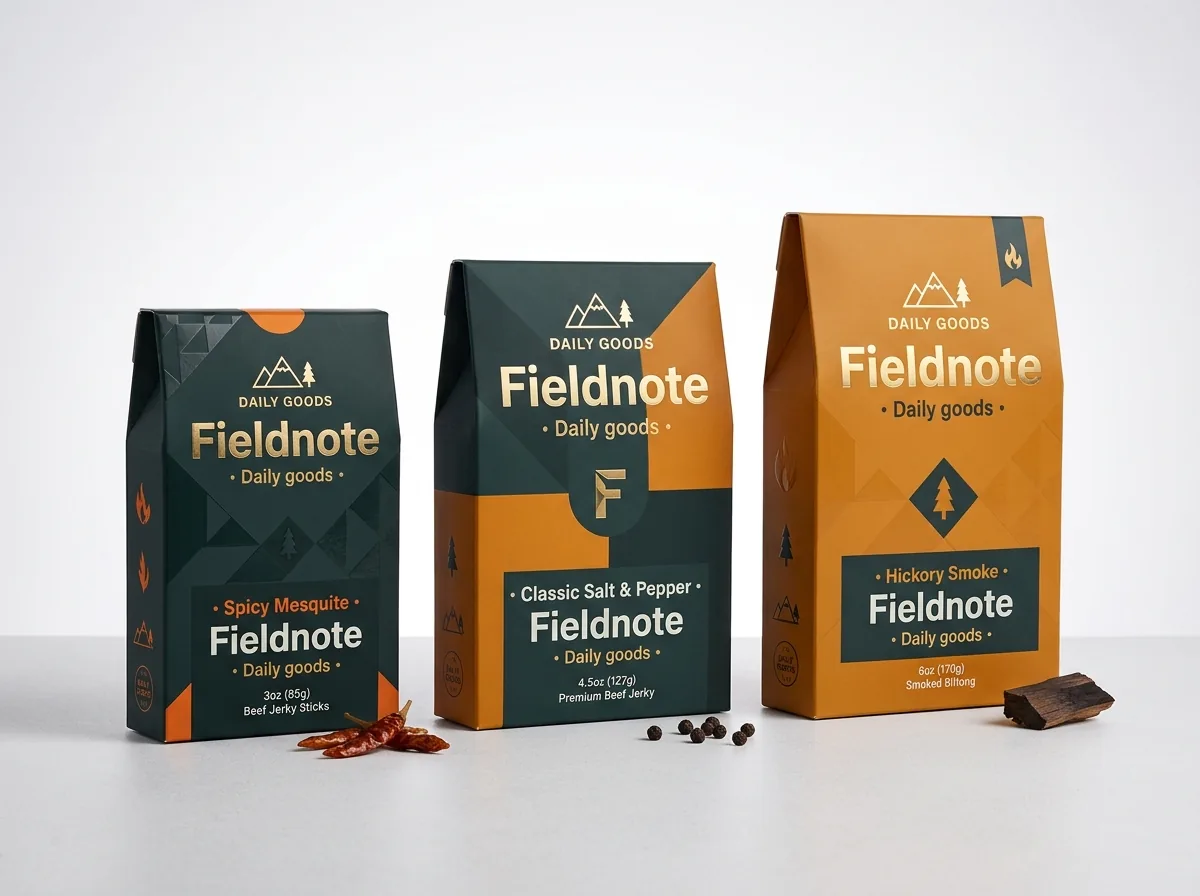
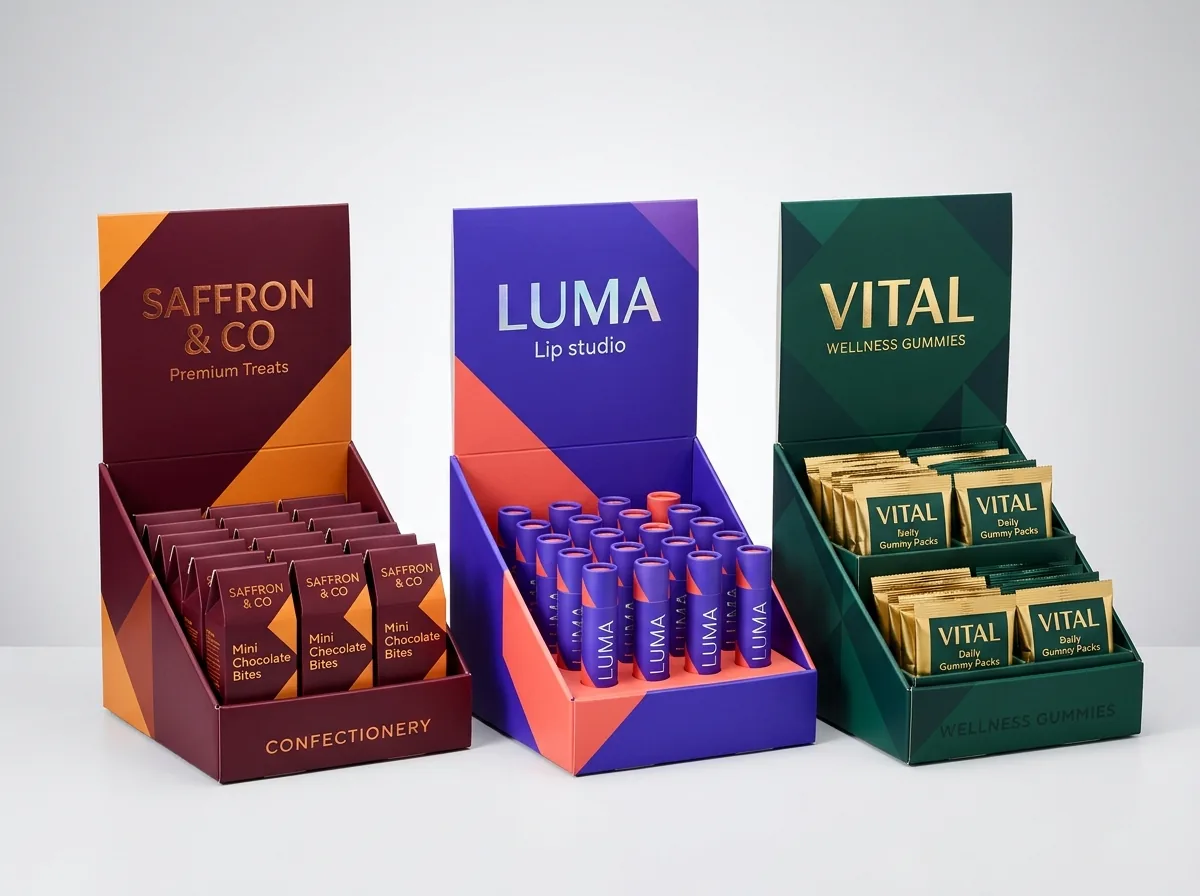
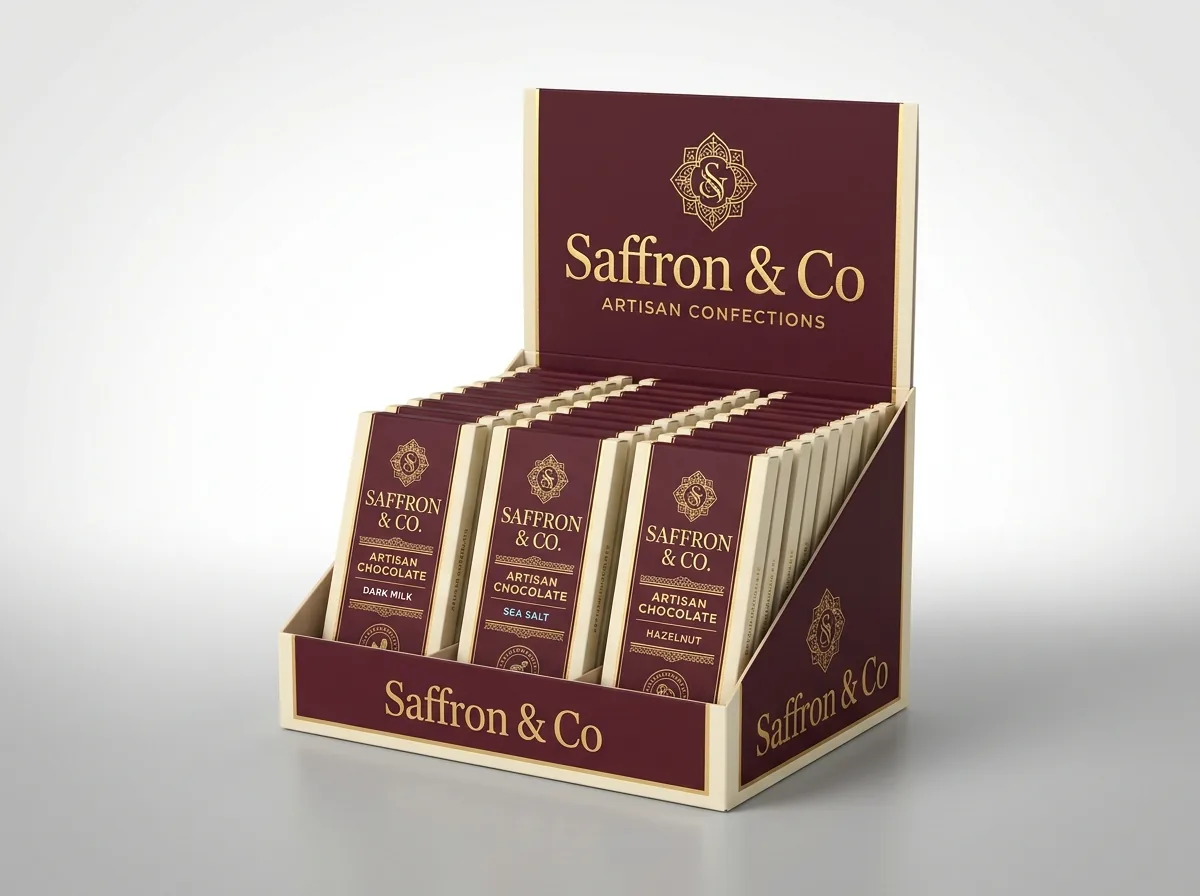
A convenience store checkout counter is a visual battlefield packed with energy shots, gum racks, lighters, and lottery tickets. When you place printed jerky display boxes next to the register, shoppers scan from the top down. The fold-up header card sits at eye level, while the 2.0- to 2.5-inch front tray lip sits at hand level below the top of the meat sticks or jerky bags. Divide your artwork hierarchy between those two zones. Use the top fold-up header card for your smokehouse brand crest, wood-smoke origin ('100% Hickory Smoked Brisket'), and high-impact nutritional hooks ('15g Protein · 0g Sugar · Grass-Fed Beef'). Use the front tray lip for instant SKU differentiation and price-lookup clarity: assign a high-contrast Pantone color bar and chili-pepper heat meter to each flavor so a repeat customer can spot Peppered vs Teriyaki vs Habanero in half a second, and leave a clean 1.5 × 1.0 inch white zone on the side or back panel for the retail unit and case barcodes.
| Jerky flavor / SKU family | Recommended board & color palette | Finish & add-on pairing | Header & front-lip callout focus |
|---|---|---|---|
| Original & Hickory Smoked Beef | Natural brown kraft + deep smokehouse red & charcoal | Matte lamination + embossed cattle brand | Real hardwood smoke, 14g–16g protein, classic cut |
| Cracked Black Pepper & Garlic | Matte black on white card + stark white & silver ink | Spot UV peppercorn texture + window cutout | Coarse butcher grind, bold savory spice, low sugar |
| Teriyaki, Sweet BBQ & Maple Bacon | Warm amber, burnt orange, or glossy crimson on white card | Gloss lamination + gold foil badge | Sweet-savory glaze, tender brisket slice, family pack |
| Jalapeno, Habanero & Ghost Pepper | Charcoal black + electric lime green or fiery orange band | Matte lamination + gloss flame Spot UV | Chili heat-scale meter (1–5 peppers), real cheddar or pepper |
| Biltong, Wagyu & Wild Venison | Uncoated kraft or forest green + copper/gold accents | Soft-touch lamination + copper foil + window | Air-dried heritage recipe, zero sugar, grass-fed / wild game |
When do custom jerky boxes need grease barriers versus barrier pouches?
Dried meat snacks have low water activity (typically below 0.85 aw), which makes them shelf-stable at room temperature, but they remain highly sensitive to oxygen, UV light, and natural fat migration. How you engineer the box depends on whether your jerky is sealed inside a high-barrier plastic pouch first or packed directly into paperboard as butcher-style slab jerky. If you pack 1 oz vacuum-wrapped meat sticks or 3 oz nitrogen-flushed / oxygen-absorbed stand-up pouches into a counter caddy, shelf tray, or custom hang tab box, the plastic film provides the primary oxygen and moisture barrier. In that case, your outer paperboard or E-flute carton does not touch the food directly and can use standard kraft, white card, or recycled board with a scuff-resistant matte or gloss exterior lamination. However, if you sell artisan slab jerky, South African biltong, droewors, or charcuterie gift assortments wrapped in butcher paper or placed directly inside a custom window box, beef tallow and seasoning oils will wick into untreated paperboard within 24 hours and leave dark translucent grease spots on the outside of the box. For direct or semi-direct meat contact, always specify food-safe interior liners and grease-resistant barrier coatings on request.
Know your size? Compare pricing across up to 3 quantities.
Request a Quote →How do window cutouts and inside-lid printing boost impulse and DTC sales?
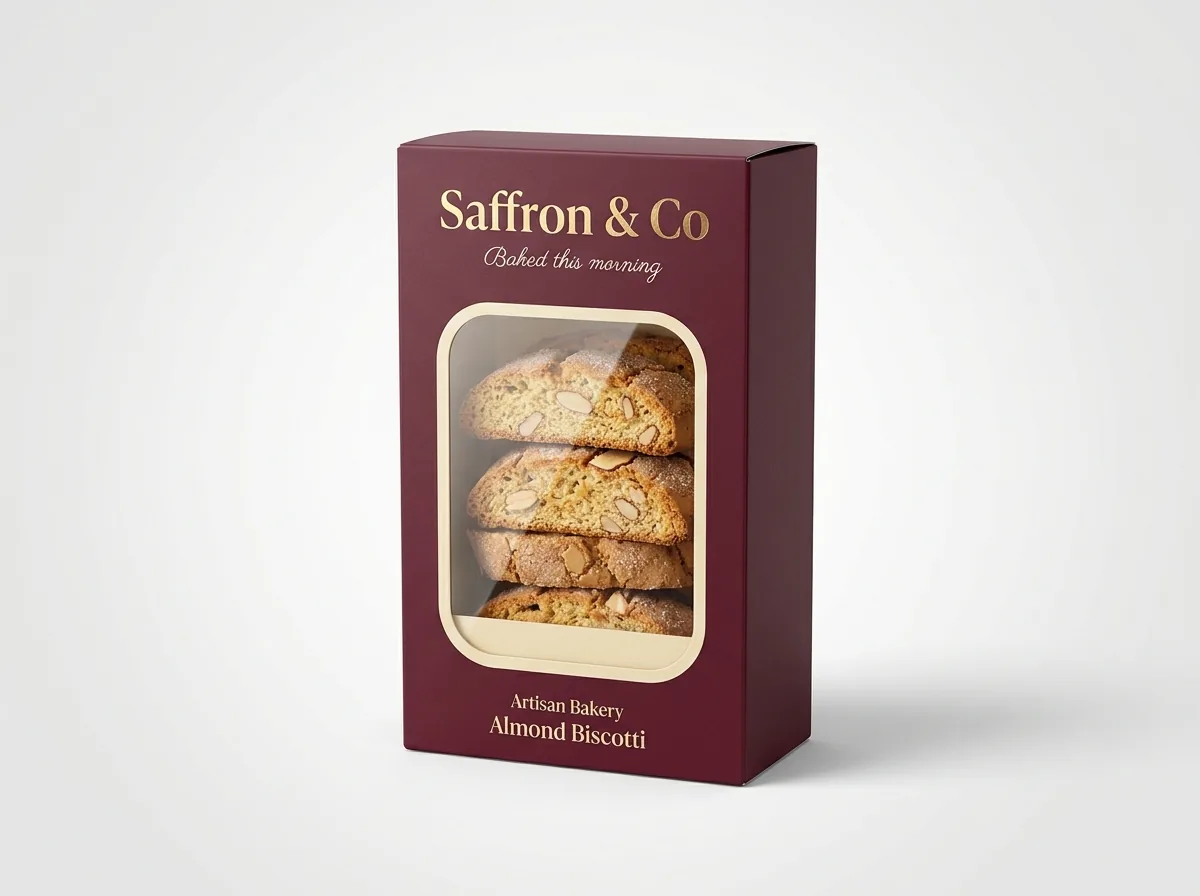
Shoppers buying craft biltong, thick-cut cowboy slab jerky, or 5-count meat stick multipacks want to see the real coarsely cracked black pepper, chili flakes, and ruby meat grain before paying a premium price. Adding window patching - or an open die-cut window when the jerky sits inside a clear vacuum pouch - lets the actual meat texture act as the centerpiece of your front panel. You can even die-cut the window into a custom silhouette such as a state outline, a bull horn crest, or a flame icon. On direct-to-consumer 6-bag and 8-bag custom mailer boxes, the most valuable design surface is the inside of the top lid. Because E-flute mailers open like a treasure chest, printing the interior in full CMYK or Pantone colors turns unboxing into a smokehouse tour: feature a heat-to-sweet flavor matrix across all your jerky varieties, pair each bag with a craft beer or bourbon style, and place a prominent QR code that gives subscribers one-click reordering when their stash runs low.
Where do USDA inspection marks, nutrition panels, and GS1 barcodes belong?
When you sell individual jerky pouches or meat sticks out of an open counter caddy, each individual wrapper carries the mandatory USDA FSIS inspection legend, Nutrition Facts panel, ingredient statement, and individual unit UPC barcode. However, if you sell a sealed 5-count meat stick multipack carton, a closed single-pouch hang-tab sleeve, or a shrink-wrapped club-store PDQ tray that can be purchased as a whole unit, all mandatory retail labeling must also appear clearly on the outside of the carton. Even on open C-store counter caddies and grocery shelf-ready PDQ trays where individual sticks are sold one by one, wholesale distributors (such as McLane, Core-Mark, UNFI, and KeHE) require a distinct Case/Display GTIN barcode on the outside of the caddy so warehouse scanners and cashiers never confuse the price of a single 1 oz meat stick with the price of a full 24-count caddy. Place the display-unit barcode on the bottom or lower back panel of the caddy, and ensure individual stick barcodes below the front lip cannot be accidentally scanned while the caddy is still sealed.
What design mistakes hurt custom jerky box performance?
Check your artwork and dieline proof against these four preventable jerky packaging mistakes
- Leaving the tear-away PDQ hood blank instead of printing a 3-step 'No Knife Needed' opening icon, which leads store clerks to slash inner pouches with box cutters.
- Putting identical unit and case barcodes on a 24-stick counter caddy, causing wholesale clubs or convenience stores to ring up a full 24-count box at the single-stick price.
- Packing butcher-wrapped biltong or slab jerky directly into unlined kraft board without requesting a grease barrier, resulting in oil stains on the carton.
- Placing key flavor names or heat badges in the bottom 2 inches of a pouch where the PDQ tray front lip covers them on the shelf.
Find your size
Suggested inside size: 4.5 × 3.5 × 6.5 in
A starting point. Your account manager confirms the size with you before the proof.
Quote this size →Packaging for this
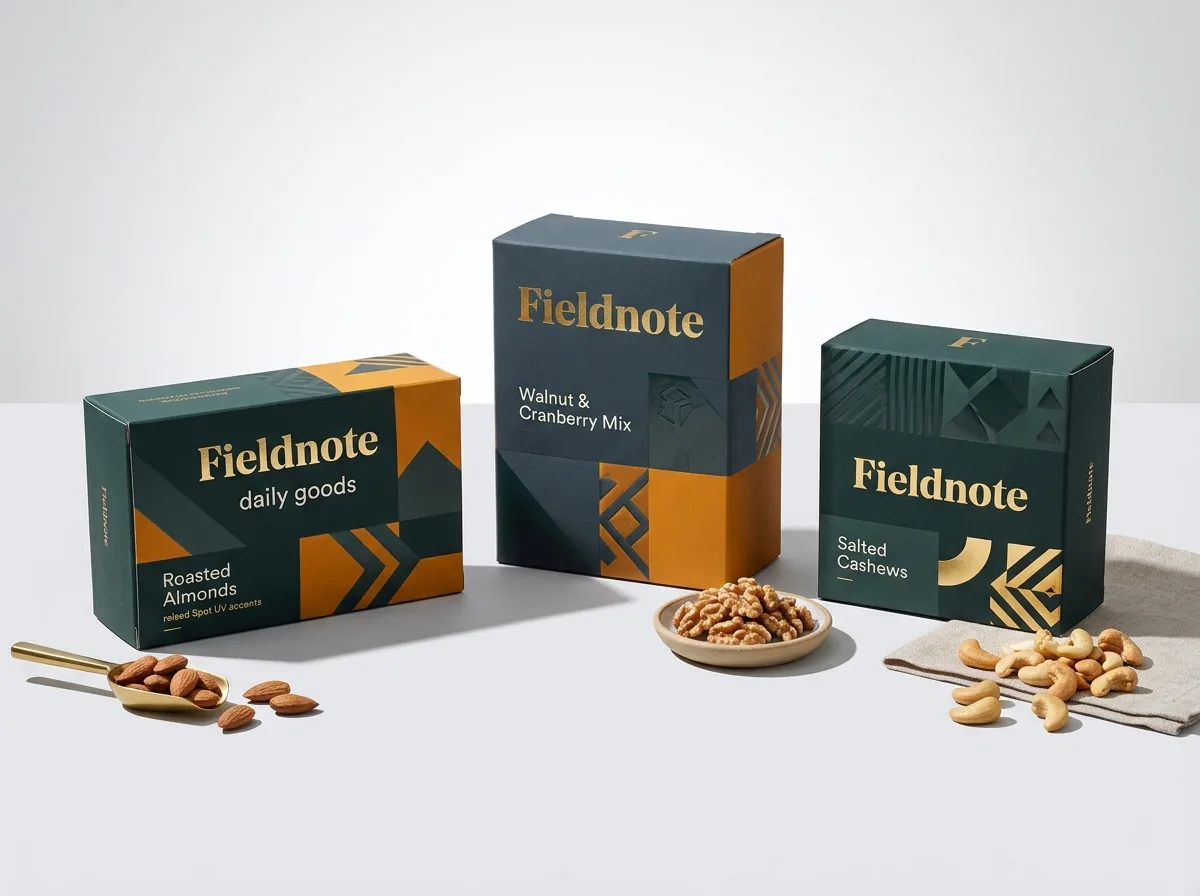
Ready to order jerky boxes? Compare up to 3 quantities with a free 3D mockup.
Request a Quote →Questions about jerky boxes
How do you prevent store clerks from slicing jerky pouches when opening a display box?
We engineer PDQ display trays and counter caddies with finger-hole thumb starters and tuned zipper perforations that tear cleanly by hand in five seconds, paired with bold 'Do Not Cut - Pull Tab Here' icons printed directly on the removable hood.
Do custom jerky boxes need food-safe liners or grease barriers?
If your jerky or meat sticks are sealed inside plastic barrier pouches, standard paperboard or E-flute corrugated works great. If cured meat, biltong, or butcher-wrapped slabs touch the board, request our food-safe liners and grease barriers.
Should a 24-count meat stick caddy have a separate barcode from the individual sticks?
Yes. Individual meat sticks carry the single-unit UPC barcode, while the outer 24-count counter caddy should carry a separate inner-pack or display-unit barcode on the bottom or back panel for wholesale distributor scanning.
What finish holds up best on convenience-store meat stick counter displays?
Scuff-resistant matte lamination (often paired with gloss Spot UV on flames, bull crests, or protein callouts) protects dark smokehouse blacks and reds from fingerprints, counter moisture, and shipping rub.
Can I print different artwork for 5 jerky flavors in one order?
Yes. When your flavors share the exact same box dieline and dimensions, our team can quote multi-SKU runs starting from 1,000 units per design with zero die or plate charges and guaranteed Pantone color matching.
Will your design team help set up my PDQ fold-up header and perforation lines?
Yes. Free design help is included with every order. Send us your logo, pouch artwork, or stick dimensions and our design team will build the custom PDQ dieline, perforation lines, digital proof, and 3D mockup before you pay.
Still have a question? Ask a packaging specialist.
Request a Quote →Request your jerky boxes quote
Tell us your size and quantities, and one dedicated account manager prepares pricing for each tier.
- Free design & AI-to-print studio + 3D mockup
- No die or plate charges · 4–5 day rush available
- Free shipping to all 50 states
- 10% off your first order
This guide compiles retail PDQ perforation engineering, C-store counter hierarchy rules, USDA FSIS meat snack outer-carton labeling requirements, and grease-barrier specifications. A CubitPack packaging specialist reviewed every section. Spot an error? Tell us and we will fix it.
Sources
What changed
- October 22, 2026: First published.
- October 22, 2026: Updated specifications, terminology, and verified source links.
More guides
New packaging guides by email
Sizes, materials and design tips. Unsubscribe anytime.