
How do I design custom granola boxes that protect clusters and win shelf space?
Short answer: Design custom granola boxes with a front cluster window positioned in the middle third of the carton, a bold top-third brand and macro band, an opaque white ink underbase when printing on kraft board, and clear FDA gluten-free and tree-nut disclosures. Orders start at 1,000 boxes with free design help.
On this page
- Where should I position a front cluster window on a custom granola box
- How do I choose between natural kraft and white card for multi-flavor granola lines
- How do you keep berry, vanilla, and chocolate flavor bands distinct on kraft board
- What FDA gluten-free, whole-grain, and tree nut allergen rules apply to granola boxes
- What drives the cost of custom granola boxes and how can I group flavors
- Common mistakes
- FAQs
Request a custom quoteFree dieline & 3D mockup
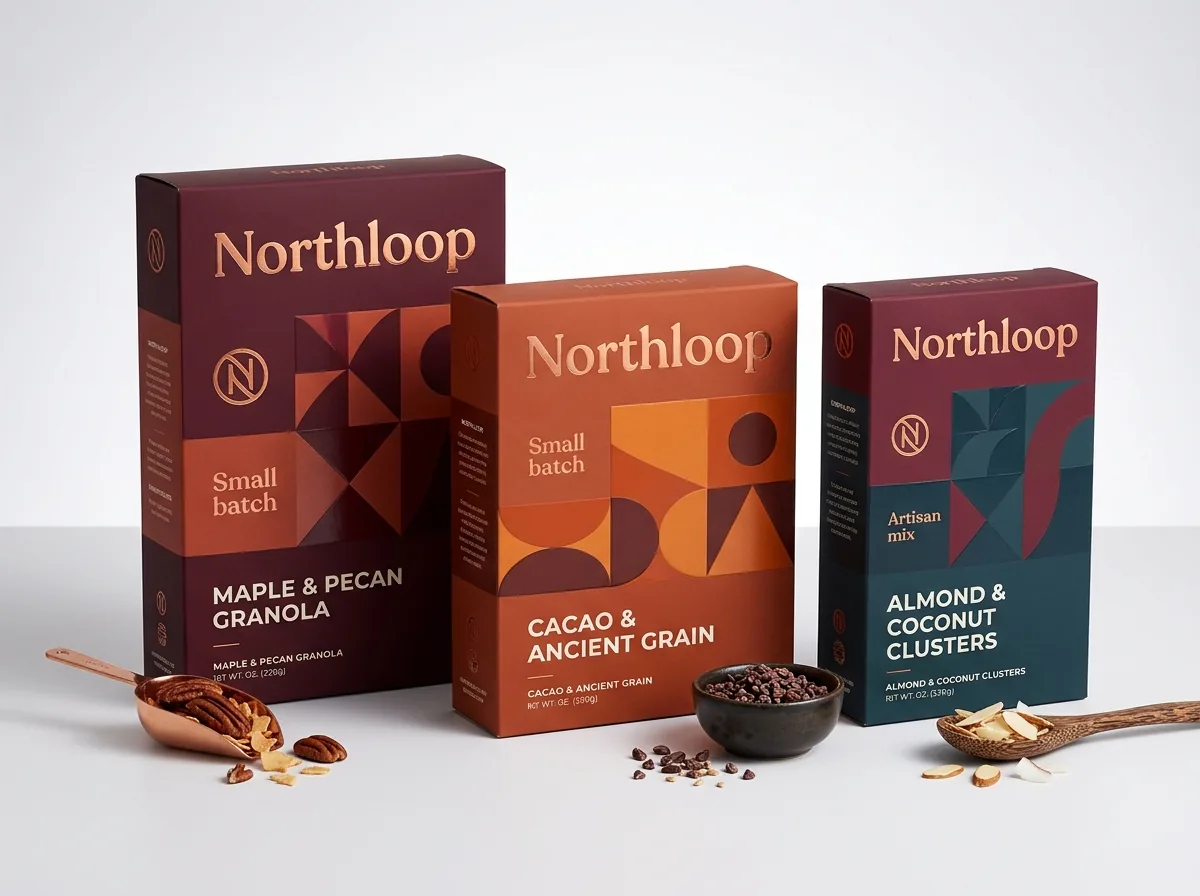
Shoppers in the breakfast aisle scan dozens of cartons in under five seconds, looking for three immediate signals: whole chunky oat clusters, clear flavor color-coding, and dietary callouts like certified gluten-free, grain-free keto, or low sugar. To turn browsers into buyers, divide the front panel of your custom granola box into three distinct visual zones: the upper third for your brand wordmark and dietary badges, the middle third for a patched clear window (or high-contrast overhead bowl photo) that showcases whole golden clusters, and the lower third for a bold Pantone flavor band and net weight statement. By keeping the window at least 2 inches above the bottom crease, settled oat dust stays completely out of sight. At CubitPack, our designers build your dieline, digital proof, and 3D mockup for free on orders from 1,000 boxes.
Where should I position a front cluster window on a custom granola box?
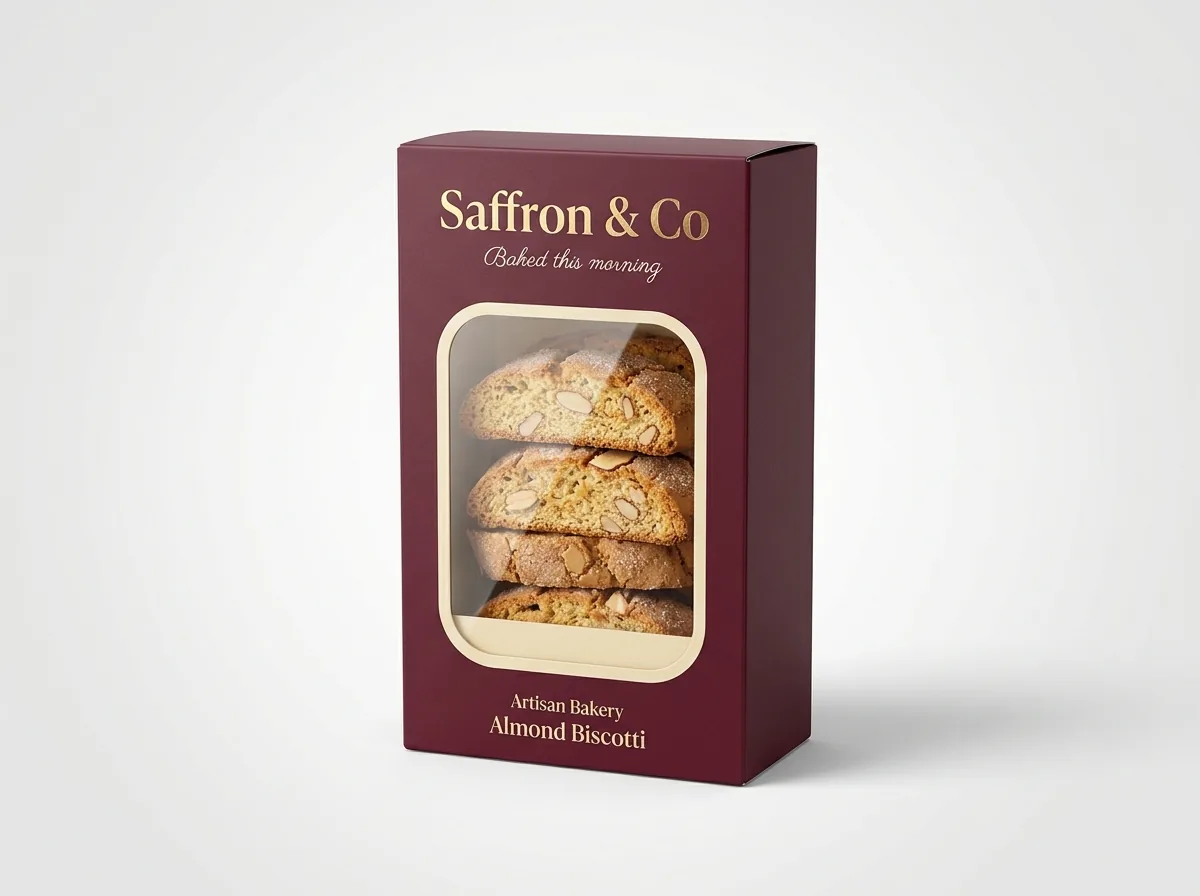
Nothing sells small-batch honey-oat or keto nut granola faster than letting the shopper see real, golden-brown clusters, whole pecans, pumpkin seeds, and freeze-dried raspberries through the front of the carton. However, window placement can make or break how full and fresh your product looks on the shelf. In every bag-in-box granola package, the top 1.5 to 2.25 inches of the carton contains the crimped top heat seal and empty headspace of the inner pillow bag, while the bottom 1.5 to 2.0 inches collects small oat flakes and cinnamon dust shaken loose during truck transit. Always place the die-cut window in the middle third of your custom printed granola boxes - starting at least 2.0 inches up from the bottom fold and stopping at least 2.25 inches below the top score - so the window frames only prime, unbroken clusters.
- Bottom clearance: keep the bottom edge of the window at least 2.0 inches above the base crease to hide settled oat fines.
- Top clearance: keep the top edge at least 2.25 inches below the top crease so shoppers never see the empty top of the inner bag.
- Side margin: leave at least 5/8 inch (0.625 in) between the window cutout and the left/right vertical fold scores to preserve box crush strength.
- Custom window outlines: die-cut the window into a cereal bowl silhouette, wooden scoop, or leaf shape at zero die cost.
How do I choose between natural kraft and white card for multi-flavor granola lines?
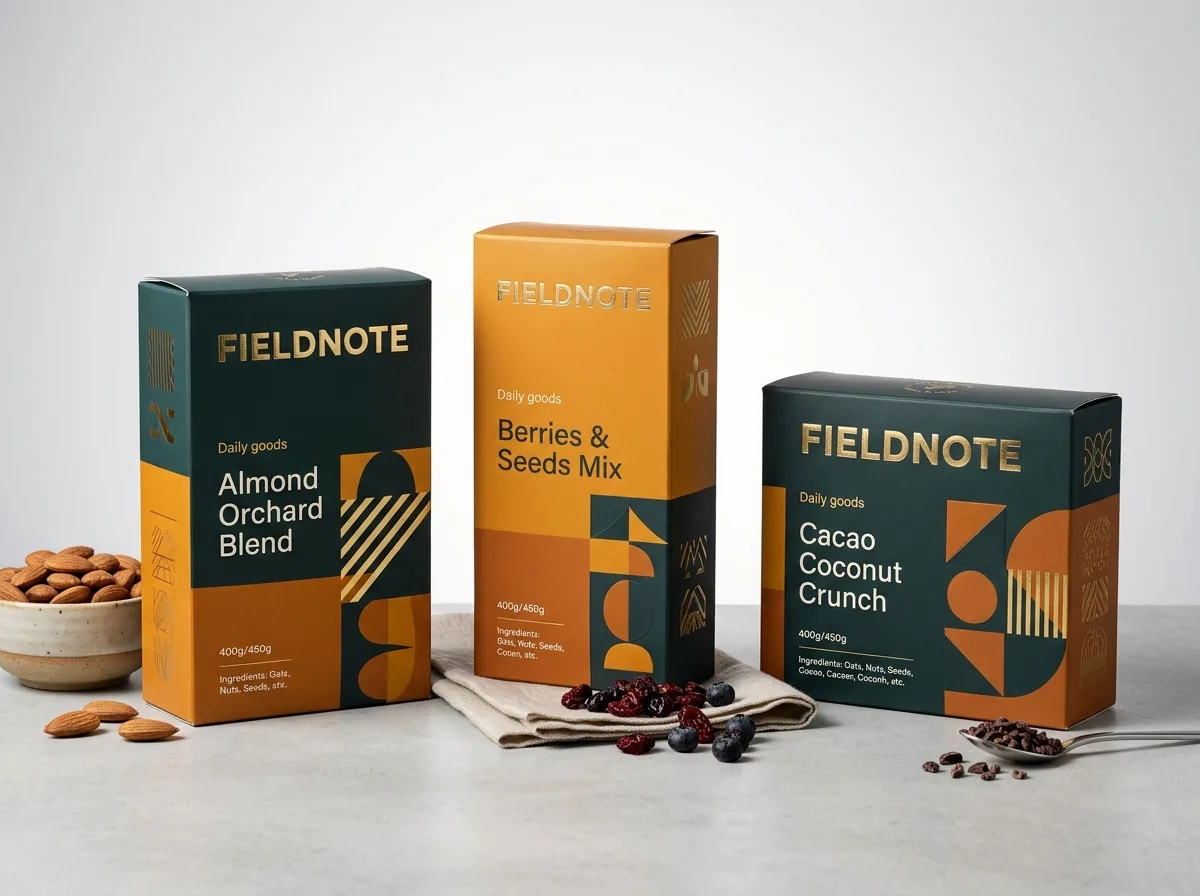
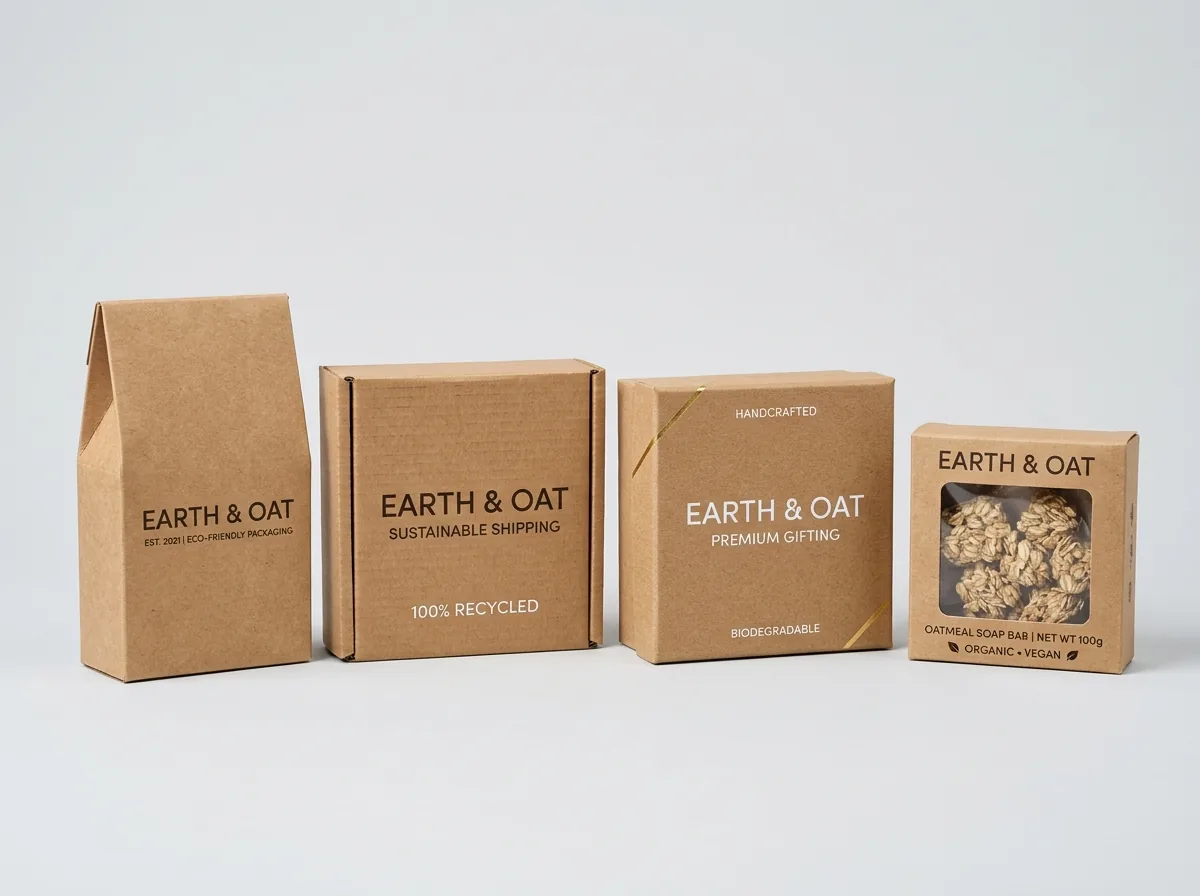
Your choice of paperboard sets the personality of your breakfast brand from six feet away. Natural brown kraft communicates hearth-baked, organic, non-GMO simplicity, while coated white paperboard delivers crisp color contrast for fruit-forward, chocolate, and functional protein granolas. Both board families can be finished with protective coatings or tactile embossing so your cartons stay scuff-free from the co-packer's line to the customer's pantry table. Compare how different granola positioning strategies pair board stocks, ink setups, and surface finishes in the table below.
| Granola brand positioning | Best board & ink setup | Recommended finish & window |
|---|---|---|
| Organic farmstead honey-oat & maple pecan | Natural brown kraft + opaque white ink + 2 Pantone colors | Unlaminated natural feel + bowl-shaped cluster window |
| Multi-flavor supermarket line (berry, cocoa, vanilla) | 18 pt–20 pt white card + full-color CMYK + Pantone bands | Matte lamination + spot UV on cluster photo or window |
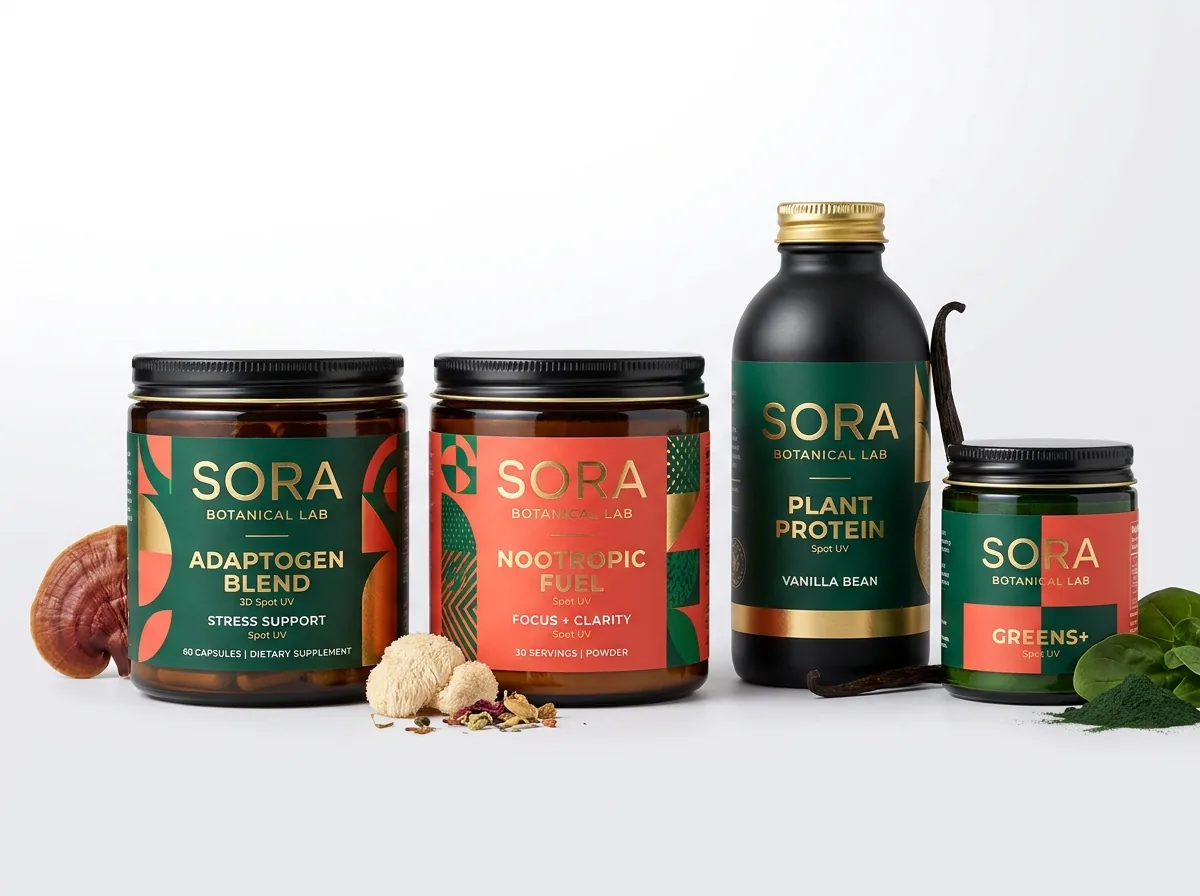
| Grain-free keto, paleo & adaptogenic blends | Heavy white card with deep forest, charcoal, or terracotta | Soft-touch lamination + gold foil macro callouts |
| Bag-in-box eco-focused muesli & ancient grains | 100% recycled paperboard with soy/vegetable-style palette | Aqueous satin coat + curbside recycling instructions |
| Holiday limited editions (pumpkin spice, gingerbread) | Shared base carton dieline with seasonal artwork swap | Copper or gold foil stamping on flavor banner |
How do you keep berry, vanilla, and chocolate flavor bands distinct on kraft board?
When a customer loves your Honey Almond granola and comes back to try your Wild Blueberry or Dark Chocolate Sea Salt flavor, they rely on color-coded horizontal bands or upper headers to grab the right box without misreading the shelf. On coated white paperboard, CMYK and Pantone inks print true to swatch. On unbleached custom kraft boxes, transparent printing inks absorb into the warm brown fibers, turning bright raspberry red into muddy brick and making light vanilla or coconut cream virtually disappear. To keep flavor bands vivid on natural kraft, our prepress team prints a solid base hit of opaque white ink directly beneath your flavor banners, dietary badges, and barcode block, leaving the raw brown kraft exposed around the background for an authentic artisan look.
- Opaque white underbase: lay down solid white ink beneath bright fruit reds, sky blues, and yellow honey badges on kraft.
- Consistent flavor band position: keep the flavor banner in the exact same lower-third zone across every SKU in your line.
- High-contrast macro callouts: print protein grams, net carbs, or whole-grain stamps inside a clean pill badge near the top.
- Inside-flap storytelling: print a yogurt parfait recipe or founder note on the top inner dust flaps.
Know your size? Compare pricing across up to 3 quantities.
Request a Quote →What FDA gluten-free, whole-grain, and tree nut allergen rules apply to granola boxes?
Granola packaging carries more dietary and allergen scrutiny than almost any other dry grocery category. First, if your brand prints a 'Gluten-Free' claim on the front panel of an oat granola carton, the product must meet the FDA 21 CFR 101.91 threshold of less than 20 parts per million (ppm) of gluten using purity-protocol or mechanically/optically sorted gluten-free oats. Second, because almost every granola kitchen handles tree nuts, peanuts, coconut, soy lecithin, milk (butter or whey), or sesame seeds, your side Nutrition Facts panel must include a clear FDA FALCPA 'Contains' statement. Remember that under FDA labeling law, you must name the exact tree nut species - such as almond, Brazil nut, cashew, hazelnut, macadamia, pecan, pistachio, walnut, or coconut - rather than writing 'Contains tree nuts.' In addition, if you pack baked granola directly inside a single-serve carton without an inner plastic bag, request food-safe and coconut-oil grease barriers on your quote so baking oils never stain the nutrition panel.
What drives the cost of custom granola boxes and how can I group flavors?
The unit price of custom granola boxes is driven by four main variables: the flat sheet dimensions and caliper of the board, whether the carton includes a patched clear film window, the total run quantity (unit price drops sharply at 2,500 and 5,000 boxes vs 1,000), and special finishes like spot UV, foil stamping, or grease-resistant liners. To get the lowest per-box cost across a 3-flavor or 5-flavor granola lineup, engineer one identical carton dieline (for example, 6.0 × 2.5 × 8.25 inches with the same middle-third window cutout) for every SKU. Because the cutting die and window patch setup stay identical across all flavors, our production team can gang-run your flavors together to help you reach higher quantity price breaks while keeping master shipping cases identical in your warehouse. Every order includes free artwork help, no die or plate charges, a digital proof, and a 3D mockup before payment.
What are the most common granola box design and prepress mistakes?
Window placement errors, muddy kraft inks, and incomplete nut disclosures delay many breakfast launches. Check these five points before approving your proof
- Cutting a front window all the way to the bottom crease of the carton, where shoppers see settled oat dust instead of whole clusters.
- Cutting a window less than 5/8 inch from the vertical side fold scores, which weakens the front panel and causes the box to buckle.
- Printing light berry, yellow, or pastel flavor banners directly on brown kraft board without an opaque white ink underbase.
- Writing a generic 'Contains tree nuts' warning instead of naming each specific FDA-mandated nut species (almond, pecan, walnut, coconut).
- Forgetting a reclosable top tuck tab on a seal-end granola box so the top flaps stand open in the customer's pantry.
Find your size
Suggested inside size: 3.25 × 1.5 × 4.5 in
A starting point. Your account manager confirms the size with you before the proof.
Quote this size →Packaging for this
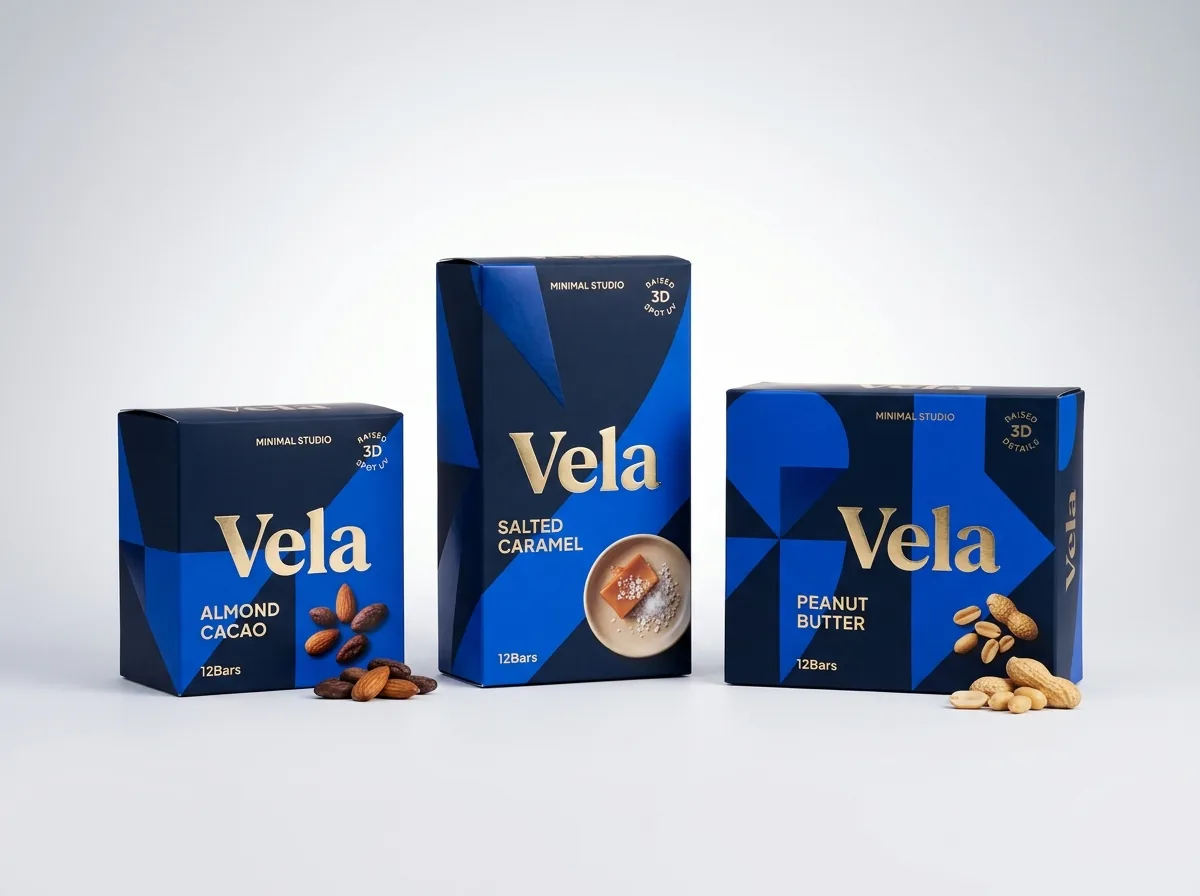
Ready to order granola boxes? Compare up to 3 quantities with a free 3D mockup.
Request a Quote →Questions about granola boxes
How far from the fold lines should a clear window sit on a granola box?
Keep any die-cut window at least 5/8 inch (0.625 in) inside the left and right vertical fold scores, at least 2.0 inches above the bottom crease, and at least 2.25 inches below the top crease so the carton stays rigid and frames only whole clusters.
Can I print bright white text and vivid fruit colors on a brown kraft granola box?
Yes. We print an opaque white ink layer on natural kraft board either as a standalone design element or as an underbase beneath CMYK and Pantone colors so berry reds, yellows, and nutrition panels stay bright and legible.
What bleed and safe margin do I need on a custom granola box dieline?
Extend background colors and patterns 1/8 inch (0.125 in) past all outer cut lines for bleed, and keep all logos, nutrition tables, allergen text, and barcodes at least 1/8 inch inside all cut lines and fold scores.
Does FDA law require naming coconut and almonds separately on a granola box?
Yes. Under the FDA Food Allergen Labeling and Consumer Protection Act (FALCPA), tree nut declarations must state the specific nut name - including almond, pecan, walnut, cashew, hazelnut, and coconut - on the information panel.
Can I print a brand story or recipe on the inside flaps of my granola carton?
Yes. Printing a brief baking story, yogurt parfait recipe, or reorder QR code on the top inner dust flaps or inside lid is a great way to surprise customers every morning when they pour a bowl.
Do you charge extra die or plate fees if I order three granola flavors in the same box size?
No. CubitPack charges zero die or plate fees on any order, and sharing the same carton dieline across your flavors lets you pool your run volume for a lower unit cost.
Still have a question? Ask a packaging specialist.
Request a Quote →Request your granola boxes quote
Tell us your size and quantities, and one dedicated account manager prepares pricing for each tier.
- Free design & AI-to-print studio + 3D mockup
- No die or plate charges · 4–5 day rush available
- Free shipping to all 50 states
- 10% off your first order
This design guide combines CubitPack prepress specifications (window margin rules, white-on-kraft ink layering, and 1/8 inch bleed zones) with FDA 21 CFR 101.91 gluten-free and FALCPA allergen labeling standards. A packaging specialist reviewed every section. Spot an error? Let us know and we will fix it.
Sources
What changed
- October 22, 2026: First published.
- October 22, 2026: Updated specifications, terminology, and verified source links.
More guides
New packaging guides by email
Sizes, materials and design tips. Unsubscribe anytime.