
Custom granola boxes vs stand-up granola pouches: which should you choose?
Short answer: Choose custom granola boxes (with a sealed inner liner) when you want unbroken honey-baked oat clusters, a flat vertical billboard that never slumps on supermarket shelves, and curbside paperboard recyclability. Choose stand-up pouches for loose muesli or trail-style granolas that need a press-to-close zipper.
On this page
- How do custom bag-in-box granola cartons compare with stand-up pouches
- Why do rigid granola boxes keep chunky honey-baked clusters intact during shipping
- Seal-end vs auto-lock bottom vs tuck-end granola boxes: which closure fits your line
- When does a stand-up pouch or a hybrid pouch-in-display-box setup make sense
- How do grocery buyers and eco-conscious shoppers view granola boxes vs pouches
- Common mistakes
- FAQs
Request a custom quoteFree dieline & 3D mockup
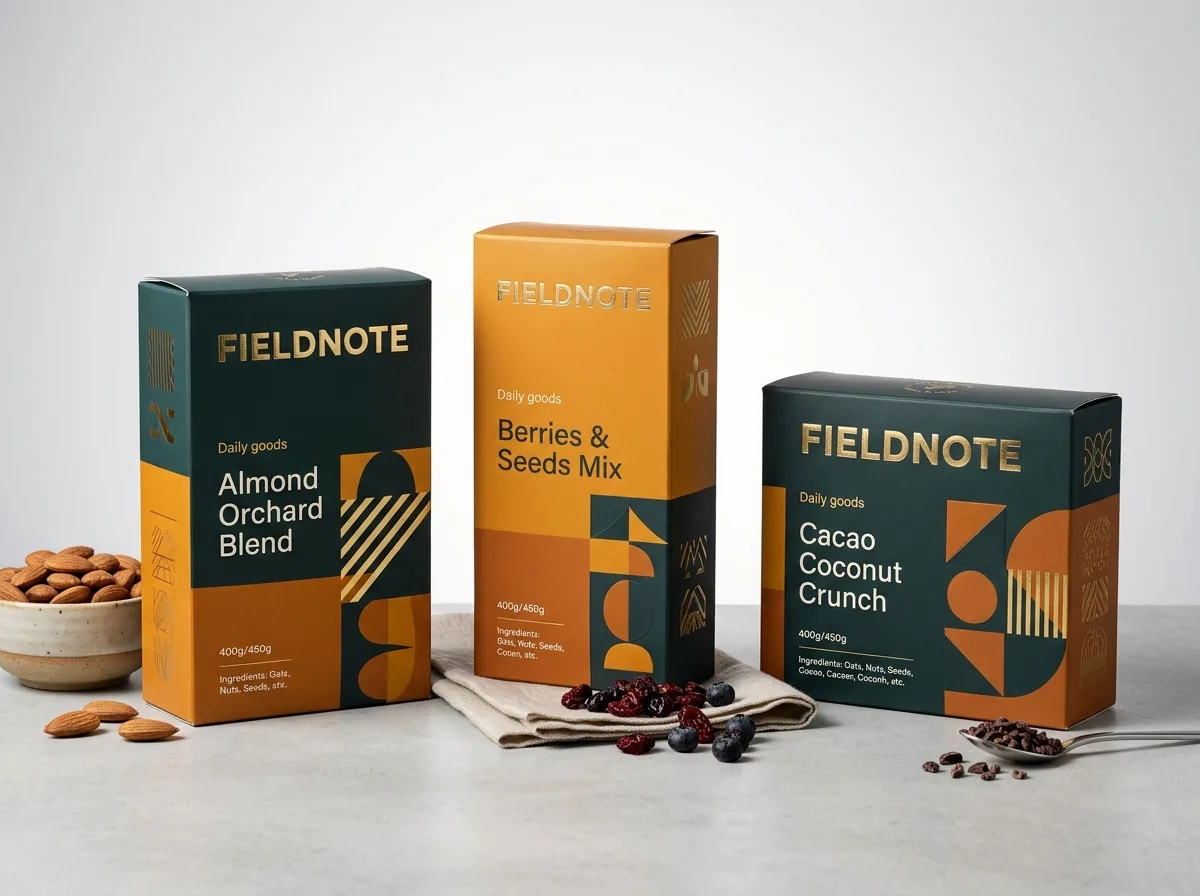
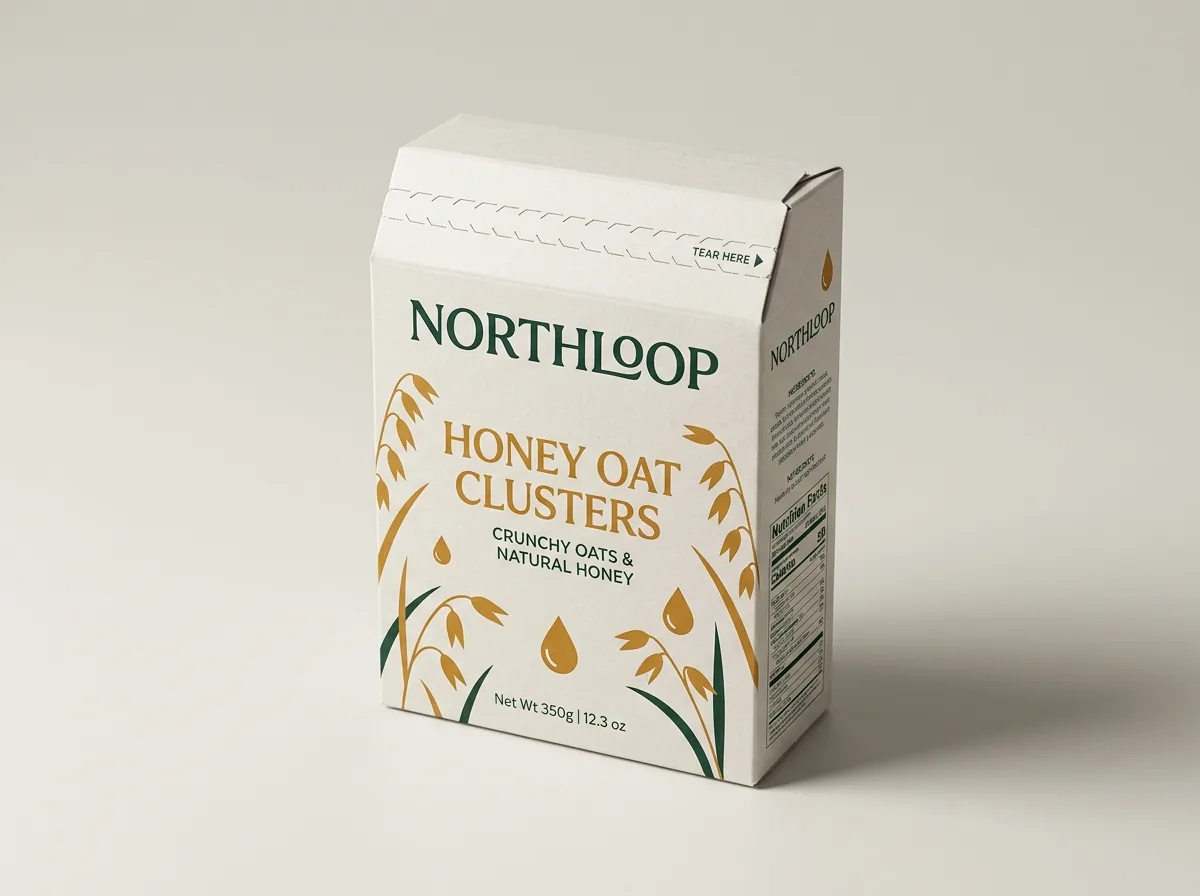
Granola brands face a foundational structural choice between rigid bag-in-box folding cartons and flexible stand-up gusset pouches. Stand-up pouches offer a built-in press-to-close zipper and work well for loose, small-grain muesli or seed blends, but flexible film walls offer zero crush protection when master shipping cases are stacked on pallets or squeezed into e-commerce mailers - turning large, artisanal honey-baked clusters into fine oat dust at the bottom of the bag. A custom printed granola box surrounding a sealed inner barrier bag acts as a rigid structural shell that absorbs top-to-bottom compression, keeps large clusters intact, stands 100% upright on grocery shelves even when only two units remain in the facing, and gives shoppers a curbside-recyclable paperboard carton. At CubitPack, we make both custom granola boxes and custom stand-up pouches so you can match each SKU to its best format.
How do custom bag-in-box granola cartons compare with stand-up pouches?
Both formats are widely used across natural food co-ops, national grocery chains, and direct-to-consumer breakfast subscriptions, but they solve different problems. When evaluating printed bag-in-box granola cartons against custom stand up pouches, look closely at how fragile your clusters are, how supermarket stock clerks merchandise your category, and whether your customers buy multi-packs online. In high-volume grocery chains, rigid cartons stack cleanly in display-ready master cases without leaning or creasing under top-shelf weight, whereas flexible pouches require careful shelf conditioning so the upper seal area does not fold backward. Compare the two formats across six practical criteria in the table below.
| Comparison factor | Custom granola box (bag-in-box) | Stand-up granola pouch |
|---|---|---|
| Cluster crush protection | High (rigid paperboard walls absorb case & parcel pressure) | Low (flexible walls transfer squeeze force directly to clusters) |
| Grocery shelf billboard | Flat, crease-free vertical face that stands tall to the last unit | Curved lower belly; upper film can crease or slump forward |
| Window presentation | Die-cut window in middle third hides top seals and bottom fines | Clear window or bottom gusset often shows settled oat dust |
| Reclosure method | Fold-down inner liner + slotted reclosable carton tuck tab | Built-in press-to-close plastic zipper track |
| End-of-life disposal | Outer paperboard carton is curbside recyclable across the US | Multi-layer laminated film requires store drop-off or trash |
| DTC multi-pack shipping | Rectangular cartonsbrick-stack cleanly in 3- or 4-pack mailers | Tapered bottom-heavy pouches shift and require larger mailers |
Why do rigid granola boxes keep chunky honey-baked clusters intact during shipping?
If your brand's signature selling point is big, hand-turned clusters of rolled oats bound with honey, maple syrup, coconut oil, and nut butter, cluster breakage is the fastest way to lose repeat buyers. When flexible pouches are packed into master cases or tossed into parcel mailers alongside heavier grocery items, lateral squeezing fractures brittle sugar-and-oat bridges into loose flakes and powder. In a bag-in-box granola carton, the outer 18 pt to 22 pt folding paperboard walls carry the vertical stacking load of the master case, while the sealed inner pillow bag floats with a 1/8 inch buffer inside the rigid walls. Even if an online order tumbles through parcel sortation, the rectangular box corners absorb the impact so the customer opens a bag full of whole, golden clusters ready to pour or snack on straight from the box.
- Rigid carton corners carry top-load pallet weight instead of transferring pressure to the granola.
- Rectangular boxes pack tightly like bricks inside 3-box and 6-box DTC subscription mailers.
- Inner barrier film can be thinner and simpler because the outer carton provides all structural stiffness.
- Front die-cut windows frame only the middle zone of whole clusters, hiding any minor settling at the bottom.
Seal-end vs auto-lock bottom vs tuck-end granola boxes: which closure fits your line?
Once you choose a folding carton, you have three main bottom and top closure styles depending on whether you pack by hand or run an automated cartoner. A custom seal end box glues both the top and bottom flaps shut on high-speed packaging lines and includes a perforated zip-pull tear strip with a reclosable tuck tab on the top lid. It is the standard choice for 11 oz to 16 oz national supermarket brands. For small-to-midsize bakeries and co-packers loading filled inner bags by hand or semi-automatically, a custom auto lock bottom box (crash-lock base) is the fastest structure: the bottom is pre-glued during production so it pops flat in one second when squeezed open, while the top closes with a clean tuck flap. For lighter 2 oz single-serve packs or 8 oz specialty cartons, a custom straight tuck end box with slit locks delivers clean front edges at the lowest unit cost.
- Seal end with tear strip: glued top and bottom flaps for tamper evidence and high-speed automated cartoning lines.
- Auto lock bottom (crash-lock): pre-glued bottom pops flat by hand in 1 second; supports heavy 12 oz–24 oz granola bags.
- Straight tuck end with slit locks: clean crease-free front panel for 2 oz single-serve and 8 oz specialty keto cartons.
- Reclosable pantry tab: a die-cut tongue on the top flap that locks into a front slot between breakfasts.
Know your size? Compare pricing across up to 3 quantities.
Request a Quote →When does a stand-up pouch or a hybrid pouch-in-display-box setup make sense?
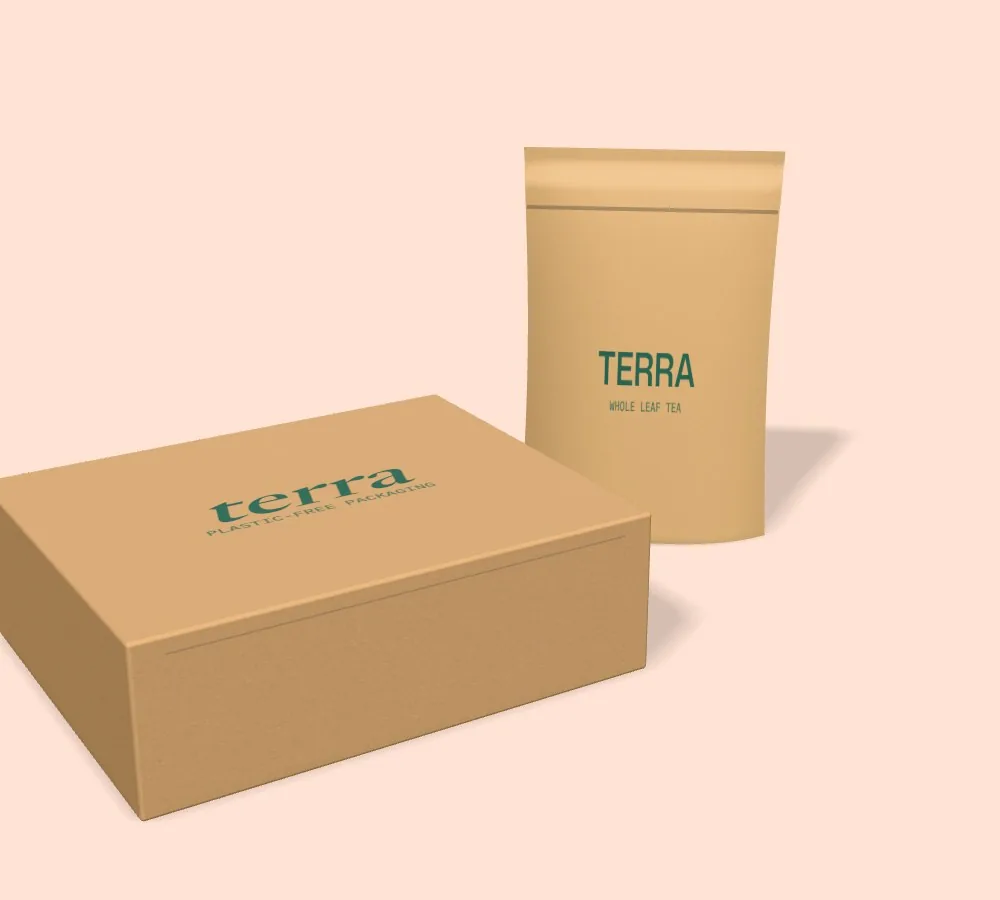
Stand-up pouches shine in two specific scenarios: loose, non-clustered muesli or trail-ready seed mixes carried in backpacks (where a waterproof resealable zipper matters more than cluster protection), and 1.5 oz to 2.5 oz single-serve grab-and-go snack portions. Many successful breakfast brands run a hybrid architecture across their lineup: they pack their 11 oz and 16 oz pantry sizes in rigid bag-in-box cartons for the grocery cereal aisle, and pack their 2 oz single-serve custom snack pouches inside a printed 12-count custom counter display box for coffee shop checkout counters, university bookstores, and airport kiosks. That way, the counter display box provides the rigid shipping shell and upright checkout billboard, while the individual single-serve packets stay compact enough to toss into a gym bag or lunchbox. Because CubitPack produces both folding cartons and flexible pouches, our team can match your Pantone colors across both formats.
How do grocery buyers and eco-conscious shoppers view granola boxes vs pouches?
Category buyers at natural and conventional grocery chains evaluate packaging on two practical metrics: how cleanly the shelf stays faced throughout the day, and how shoppers dispose of the empty package. Flexible stand-up pouches have a wide bottom gusset and a narrow top seal, so as shoppers pull bags from the front of the shelf, the remaining pouches often tip backward or curl at the top corners. A rectangular granola carton stands plumb from edge to edge, giving your brand a flat 48-square-inch front billboard and two wide side panels for your baking story and nutrition facts. Even when only one or two cartons remain in the retail row, a flat-bottomed carton stays upright and readable from the aisle. And when the granola is finished, the customer slides out the thin inner liner and flattens the paperboard or custom kraft box straight into their household recycling bin. Every CubitPack granola box comes with free artwork setup, a digital proof, and a 3D mockup before payment.
What are the most common mistakes when choosing between granola boxes and pouches?
Picking a package format without testing cluster fragility, inner-bag settling, or master-case stacking leads to preventable product damage on grocery shelves. Avoid these five mistakes before ordering
- Packing large, brittle honey-baked oat clusters in a flexible pouch without a rigid carton shell, resulting in crushed oat dust.
- Putting a clear window at the very bottom of a granola pouch or carton where settled oat fines collect during transit.
- Using a weak friction-fit reverse tuck bottom on a 16 oz family-size granola box instead of an auto-lock or seal-end base.
- Shipping tapered stand-up pouches loose in an oversized e-commerce box where they shift and puncture each other.
- Printing different brand colors on your grocery cartons and your single-serve pouches instead of matching Pantone inks across both.
Find your size
Suggested inside size: 3.25 × 1.5 × 4.5 in
A starting point. Your account manager confirms the size with you before the proof.
Quote this size →Packaging for this
Ready to order granola boxes? Compare up to 3 quantities with a free 3D mockup.
Request a Quote →Questions about granola boxes
Why do most supermarket granola brands use a box with an inner bag?
A bag-in-box carton gives you the best of both worlds: the sealed inner barrier liner blocks moisture and oxygen to keep baked oats crispy, while the rigid outer paperboard carton prevents large clusters from crushing and stands flat on grocery shelves.
Should I choose a seal-end or auto-lock bottom box for 12 oz granola?
Choose a pre-glued auto-lock bottom with a tuck top if your team or co-packer loads inner bags by hand or semi-automatically, and choose a glued seal-end carton with a perforated tear strip if you run high-speed automated glue cartoners.
Can CubitPack make both my outer granola boxes and my single-serve pouches?
Yes. CubitPack produces custom folding cartons, counter display trays, and custom stand-up or flat snack pouches, ensuring your Pantone brand colors and typography match across every retail format.
Are custom paperboard granola boxes recyclable at the curb?
Unlaminated kraft, white card, and recycled paperboard granola cartons are widely recyclable in household curbside bins across the US once the inner plastic liner is removed. Avoid heavy film laminations if curbside recyclability is a key brand claim.
Can I pack granola directly into a custom box without an inner plastic bag?
For short-shelf-life bakery counter sales or single-serve boxes, you can request food-safe and grease-resistant interior liners on your quote. For multi-month grocery shelf life, a sealed inner moisture-barrier bag is recommended to keep oats crunchy.
What is the minimum order quantity for custom granola boxes?
The minimum order for custom granola boxes is 1,000 units, with 10 to 14 business day turnaround (4 to 5 business day rush available), free design help, no die or plate charges, and free shipping across all 50 US states.
Still have a question? Ask a packaging specialist.
Request a Quote →Request your granola boxes quote
Tell us your size and quantities, and one dedicated account manager prepares pricing for each tier.
- Free design & AI-to-print studio + 3D mockup
- No die or plate charges · 4–5 day rush available
- Free shipping to all 50 states
- 10% off your first order
This comparison evaluates structural compression resistance, shelf facing behavior, and co-packing closure options across bag-in-box folding cartons and flexible gusset pouches. A CubitPack packaging specialist checked every specification. Spot an error? Let us know and we will fix it.
Sources
What changed
- October 22, 2026: First published.
- October 22, 2026: Updated specifications, terminology, and verified source links.
More guides
New packaging guides by email
Sizes, materials and design tips. Unsubscribe anytime.