
What size meal kit box do I need for grocery kits, trays, and DTC mailers?
Short answer: Group your filled jars, dry pouches, and recipe card together before measuring inside Length × Width × Height. Typical custom meal kit boxes measure 7.5 × 5.5 × 1.75 in for chilled tray sleeves, 8.5 × 3.5 × 9.5 in for 4-serving grocery kits, and 9.5 × 6.0 × 3.25 in for recipe caddies.
On this page
- How do you measure multi-component recipe ingredients to size a meal kit carton
- What is the standard meal kit box size chart by format and serving count
- How do you measure a tapered refrigerated meal-prep tray for a paperboard sleeve
- How do per-recipe caddies fit inside a weekly DTC meal subscription box
- How do you size internal dividers for sauce jars, spice tins, and dry pouches
- Common mistakes
- FAQs
Request a custom quoteFree dieline & 3D mockup
Unlike a single-product carton that wraps around one bottle or one pouch, a meal kit box has to house three to six different component shapes at the same time: a rigid glass simmer-sauce jar or liquid broth pouch, a bulky dry pasta or grain bag, small spice or garnish sachets, and a printed recipe card. Meal kit dimensions are always specified as inside Length × Width × Height in inches. To find your exact carton size, arrange your heaviest container and your widest dry pouch side by side on a table, add 1/8 inch of wall clearance for each folded paperboard divider cell, and set the carton height to match the tallest component plus 1/4 inch of top flap clearance. At CubitPack, every carton, tapered tray sleeve, and corrugated mailer is cut to order with no die or plate charges.
How do you measure multi-component recipe ingredients to size a meal kit carton?
The biggest mistake food brands make when sizing a retail dinner kit or restaurant take-home box is adding up component weights in ounces instead of staging the physical packages together on a table. An 8 oz glass jar of tikka masala sauce is dense and cylindrical (roughly 2.5 inches in diameter and 4.75 inches tall), whereas an 8 oz pillow pouch of dried ramen noodles or tortilla chips is wide, light, and easily crushed. Before requesting a dieline for printed meal kit packaging, gather filled production samples of every item in the recipe. Stand the heavy jar or liquid retort pouch next to the dry carbohydrate pouch with a single wall of paperboard between them. That side-by-side footprint sets your inside Length (L) and Width (W), while the tallest upright pouch or jar sets your inside Height (H).
- Step 1 (Stage all components): place your filled sauce jar or broth pouch, dry grain bag, spice sachets, and recipe card on a flat table in their packing arrangement.
- Step 2 (Add divider thickness): allow 1/8 inch on paperboard cartons or 3/16 inch on E-flute corrugated mailers for the internal partition wall separating the jar from the dry pouch.
- Step 3 (Record inside Length and Width): measure across the front face from left to right (L) and front to back across the side gusset (W), adding 1/4 inch of breathing room.
- Step 4 (Record inside Height): measure the tallest standing item and add 1/4 inch so the top flaps close flat without pinching pouch heat seals.
What is the standard meal kit box size chart by format and serving count?
While CubitPack cuts every order to your exact inside dimensions with zero die or plate charges, most supermarket dinner kits, chilled grab-and-go trays, subscription recipe caddies, and weekly DTC shippers fall into seven standard footprint tiers. Use the chart below as a starting benchmark. Notice how shelf-stable grocery dinner kits use a tall, vertical billboard profile (7.0 × 2.75 × 8.5 in or 8.5 × 3.5 × 9.5 in) to maximize eye-level facings in the center store aisle, whereas refrigerated meal-prep sleeves and DTC recipe caddies use a low, wide horizontal footprint that stacks cleanly on deli shelves and over flat gel packs.
| Meal kit format & serving size | Typical inside size (L × W × H) | Recommended structure & use |
|---|---|---|
| Single-serve chilled meal tray (12–16 oz) | 7.5 × 5.5 × 1.75 in | Tapered wrap-around sleeve · heat-and-eat CPET/PP tray |
| 2-serving chilled entrée tray (20–28 oz) | 9.0 × 6.5 × 2.25 in | Laminated wrap-around sleeve · supermarket deli cooler |
| 2-serving shelf-stable grocery dinner kit | 7.0 × 2.75 × 8.5 in | Auto-lock bottom carton · dry noodles + sauce pouch |
| 4-serving family grocery dinner kit (with jar) | 8.5 × 3.5 × 9.5 in | Auto-lock bottom + jar cell · 8 oz glass jar + dry pasta/shells |
| Per-recipe DTC ingredient organizer caddy | 9.5 × 6.0 × 3.25 in | Straight tuck or open-top caddy · holds 1 meal inside cooler box |
| Deli grab-and-go or restaurant kit for 2 | 10.0 × 7.0 × 4.5 in | Gable handle box or E-flute mailer · multi-course dinner |
| Weekly 3-recipe DTC outer subscription box | 13.5 × 10.5 × 7.5 in | Corrugated shipper · holds 3 recipe caddies + liner + ice packs |
How do you measure a tapered refrigerated meal-prep tray for a paperboard sleeve?
Thermoformed plastic (CPET and PP) and molded-fiber meal-prep trays are never straight-sided rectangles; their walls angle outward from a narrower base to a wider heat-sealed top flange so empty trays can nest in stacks before filling. If you order a straight-walled rectangular tray and sleeve box sized only to the top rim of the tray, the bottom of the sleeve will hang loose and the tray will slide right out the side when a shopper picks it up. To draft a non-slip tapered sleeve dieline, our design team need four measurements from your sealed tray: the top Length and Width (including the heat-seal rim flange), the bottom base Length and Width where the tray rests on the table, and the exact vertical Height from table to lid film. Adding a 1/2 inch thumb notch or locking bottom tabs against the tray lip keeps the sleeve anchored in 38 °F grab-and-go cases.
Know your size? Compare pricing across up to 3 quantities.
Request a Quote →How do per-recipe caddies fit inside a weekly DTC meal subscription box?
Direct-to-consumer meal subscription services and specialty grocers ship two, three, or four complete dinners inside one insulated master shipping carton. If packers toss 20 loose garlic cloves, soy-sauce packets, herb bunches, and grain bags directly onto the insulated liner, fragile produce bruises and customers spend ten minutes sorting ingredients on the kitchen counter. By packing each individual recipe into a modular 9.5 × 6.0 × 3.25 inch paperboard caddy or custom mailer box, three recipes stack cleanly in the upper dry/chilled zone of a 13.5 × 10.5 × 7.5 inch outer shipper while meats and gel ice packs sit below a corrugated divider pad. When sizing your per-recipe caddy, match its Length and Width to the interior footprint of your insulated liner (typically 1.0 to 1.5 inches narrower than the outer corrugated shipper on each side to account for foam or lofty cotton insulation).
- Account for insulation wall thickness: subtract 1.0 to 1.5 inches from your outer shipper Length and Width for thermal liners.
- Standardize caddy footprint: keep Length × Width identical across all recipes and vary only the caddy Height (e.g., 2.75 in vs 3.5 in) if needed.
- Add ventilation or view holes: die-cut side air slots let cold air from the gel packs circulate around fresh produce inside the caddy.
- Use a corrugated separator pad: place an E-flute or B-flute pad between the bottom gel-pack/protein layer and the upper recipe caddies.
How do you size internal dividers for sauce jars, spice tins, and dry pouches?
Whenever a shelf-stable grocery dinner kit or a restaurant take-home box combines a rigid heavy item (such as an 8 oz glass pasta-sauce jar, a canned coconut milk tin, or a cold-brewed broth bottle) with a crushable dry item (like taco shells, dried ramen nests, or panko rice crackers), the internal partition determines the true inside dimensions of the box. In an 8.5 × 3.5 × 9.5 inch family dinner carton, we typically divide the 8.5 inch Length into a 3.0 × 3.5 inch corner cell for the glass jar and a 5.375 × 3.5 inch main lane for the dry pouch and recipe card. Our custom cardboard inserts fold from a single flat die-cut sheet and lock into the auto-lock bottom of the carton so the jar cannot tip or slide laterally during case-pack vibration.
- Corner U-partition: isolates one cylindrical jar or bottle against two outer walls of the carton using minimal board.
- Full-height center divider: splits a grocery carton into left and right lanes for wet sauce pouches vs dry noodles.
- Low-profile tray grid: holds 4 to 6 small spice tins, oil vials, and garnish cups upright inside a shallow restaurant mailer.
- Top hold-down flap: a folded upper tab on the divider that stops a shorter glass jar from bouncing upward in transit.
What are the most common meal kit box sizing mistakes?
Avoid these five frequent measurement errors before approving your meal kit carton, sleeve, or mailer dieline
- Measuring only the top rim of a tapered CPET or PP meal-prep tray, causing a straight-sided sleeve to slip off the narrower tray base.
- Sizing a grocery dinner carton without adding 1/8 to 3/16 inch for the internal paperboard divider wall between the sauce jar and dry pouch.
- Matching per-recipe caddy dimensions to the outside of a DTC shipping box and forgetting that thermal insulation liners take up 1.0 to 1.5 inches inside.
- Setting carton height to the settled level of a dry pasta or grain bag without leaving 1/2 inch for the stiff top heat-seal fin.
- Using different carton footprints for each recipe flavor instead of sharing one master Length × Width × Height dieline across your menu.
Find your size
Suggested inside size: 7.5 × 5.5 × 1.75 in
A starting point. Your account manager confirms the size with you before the proof.
Quote this size →Packaging for this
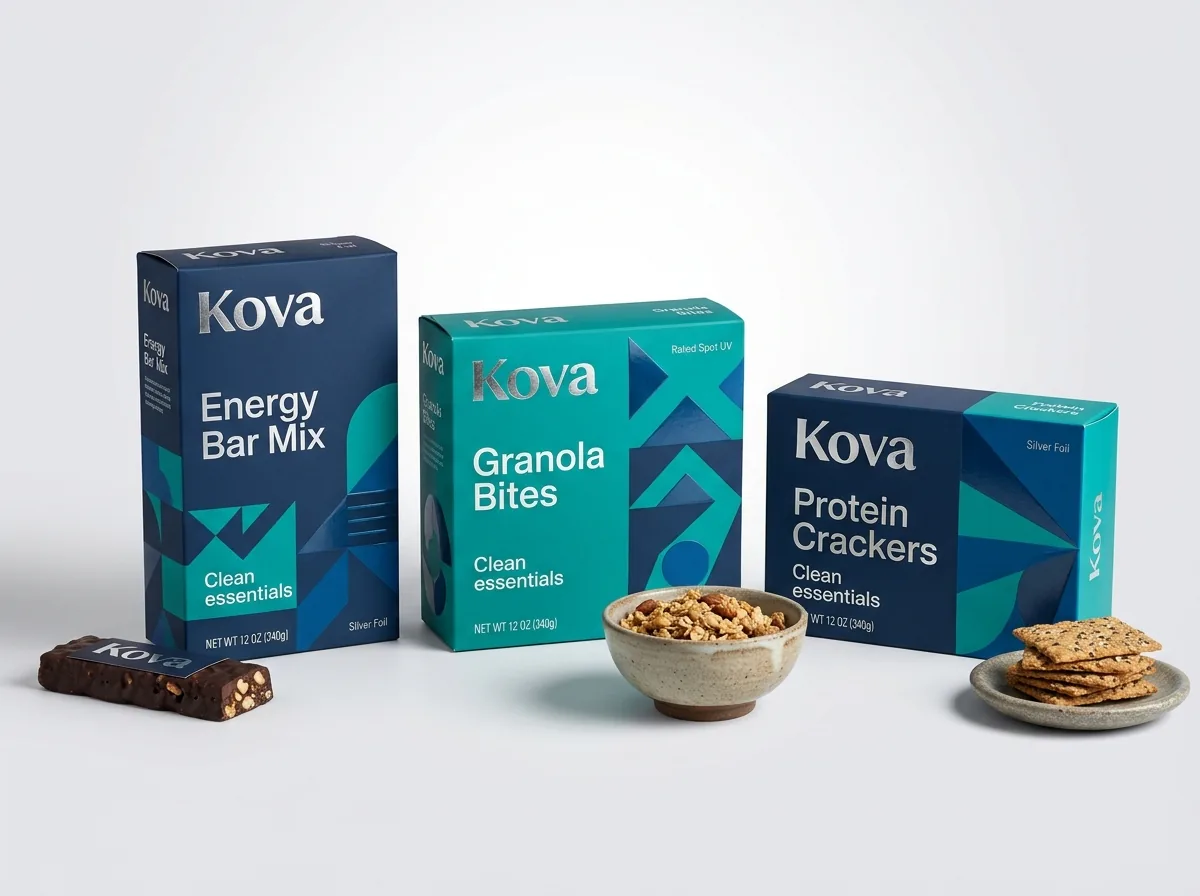
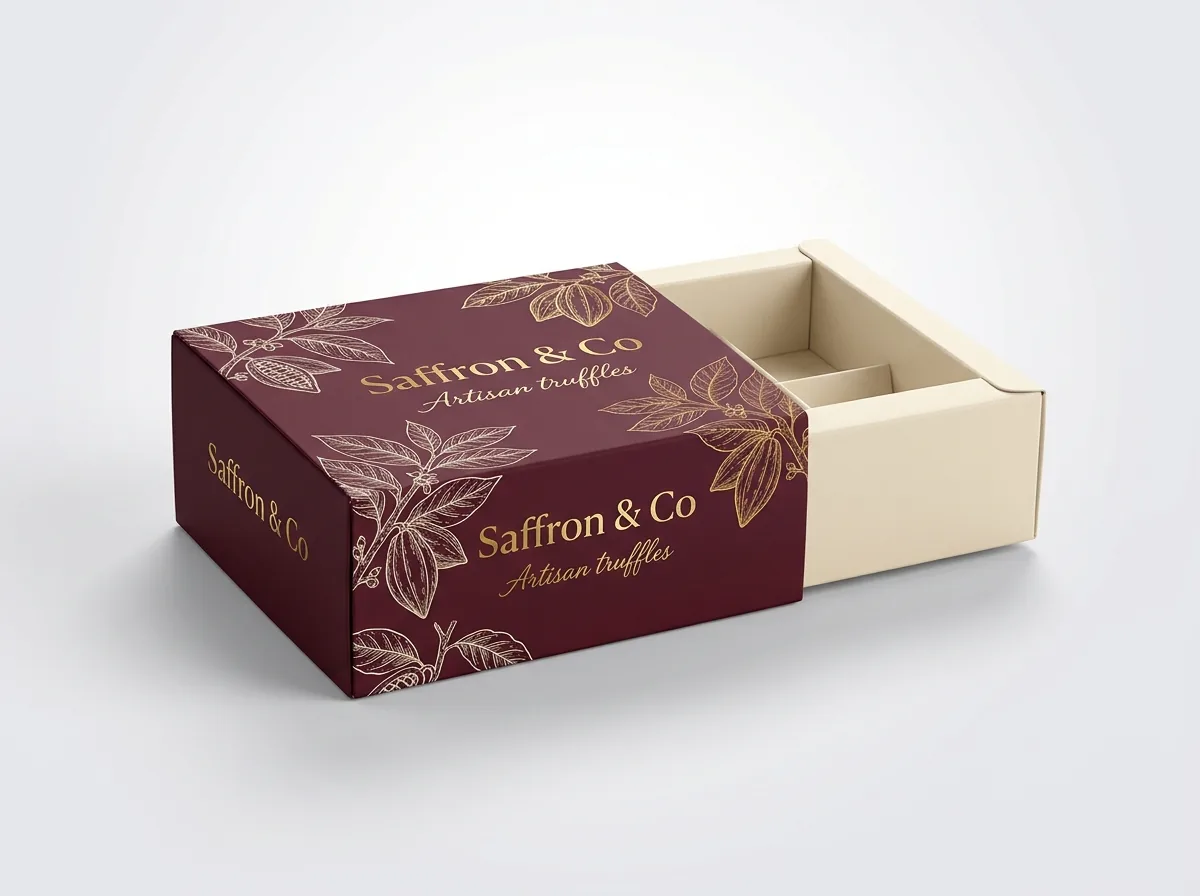
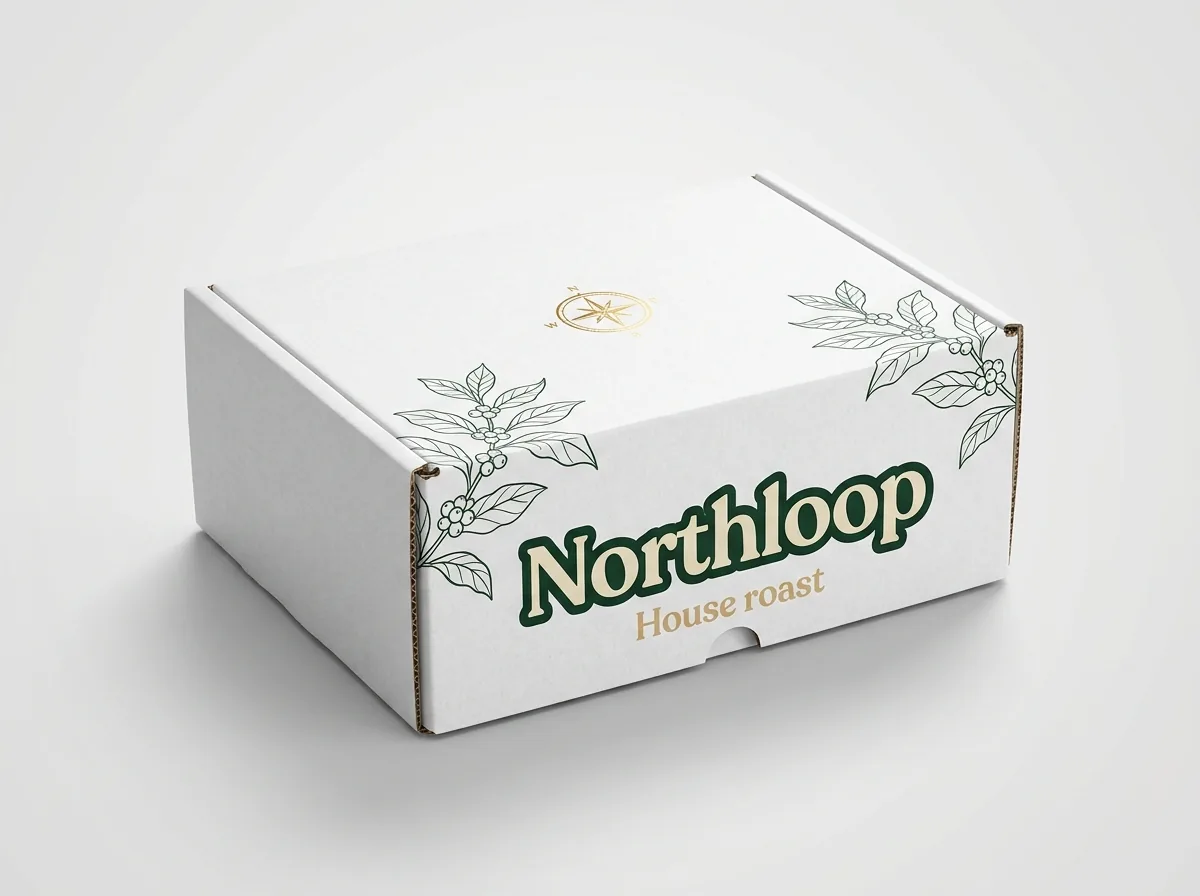


Ready to order meal kit boxes? Compare up to 3 quantities with a free 3D mockup.
Request a Quote →Questions about meal kit boxes
What are the standard dimensions of a 4-serving supermarket dinner kit box?
A 4-serving shelf-stable grocery dinner kit that holds an 8 oz sauce jar or retort pouch alongside dry pasta, rice, or taco shells typically measures 8.5 × 3.5 × 9.5 inches (inside Length × Width × Height). Two-serving kits without a glass jar usually measure around 7.0 × 2.75 × 8.5 inches.
What size sleeve fits a standard single-serve refrigerated meal-prep tray?
Most 12 oz to 16 oz single-serve chilled CPET, PP, and molded-fiber meal trays take a wrap-around sleeve measuring roughly 7.5 × 5.5 × 1.75 inches. Always send us both the top rim width and bottom base width so we can angle the sleeve walls to match the tray taper.
What size per-recipe caddy works best inside a weekly DTC meal kit box?
A 9.5 × 6.0 × 3.25 inch paperboard caddy comfortably holds the produce, grain pouch, spice sachets, and sauce cups for one 2-serving dinner. Three of these caddies stack neatly inside a 13.5 × 10.5 × 7.5 inch insulated weekly shipping box.
How much clearance should I add around a glass sauce jar inside a meal kit divider?
Add 1/16 to 1/8 inch of clearance around the diameter of the glass jar inside its paperboard divider cell. That keeps the jar snug enough that it cannot rattle against the outer carton walls while still sliding in smoothly on the packing line.
Are meal kit box dimensions measured on the inside or the outside?
Inside. Folding cartons, recipe caddies, and corrugated mailers are always quoted by inside Length × Width × Height from crease score to crease score. If your caddies also have to fit inside a specific insulated cooler liner, share that interior cooler dimension with us too.
Can I order a custom meal kit box and matching divider with no die charges?
Yes. CubitPack cuts both your outer meal kit box and its matching internal paperboard divider to your exact dimensions with zero die or plate charges. You also receive a free digital proof and 3D mockup before payment.
Still have a question? Ask a packaging specialist.
Request a Quote →Request your meal kit boxes quote
Tell us your size and quantities, and one dedicated account manager prepares pricing for each tier.
- Free design & AI-to-print studio + 3D mockup
- No die or plate charges · 4–5 day rush available
- Free shipping to all 50 states
- 10% off your first order
The carton, tray-sleeve, and recipe-caddy dimensions in this guide are based on standard retail shelf heights, CPET/PP meal-tray footprints, and insulated DTC shipper tolerances. A CubitPack packaging specialist checked every dimension row. Spot an error? Tell us and we will fix it.
Sources
What changed
- October 22, 2026: First published.
- October 22, 2026: Updated specifications, terminology, and verified source links.
More guides
New packaging guides by email
Sizes, materials and design tips. Unsubscribe anytime.