
Meal kit folding cartons vs tray sleeves vs corrugated mailers: which fits your recipe?
Short answer: Match your packaging structure to how the recipe is stored, packed, and sold. Choose auto-lock bottom custom meal kit boxes for shelf-stable grocery dinner kits, laminated wrap-around sleeves for refrigerated heat-and-eat trays, and E-flute corrugated mailers for heavy restaurant kits and DTC subscriptions.
On this page
- How do folding cartons, tray sleeves, and corrugated mailers compare side by side
- When should you choose an auto-lock bottom folding carton for a grocery dinner kit
- Why do refrigerated grab-and-go meals use wrap-around paperboard sleeves
- When do you need an E-flute corrugated mailer or a per-recipe caddy
- How do supermarket deli gable boxes bridge retail display and easy carry-out
- Common mistakes
- FAQs
Request a custom quoteFree dieline & 3D mockup
Choosing between a folding carton, a wrap-around tray sleeve, and an E-flute corrugated mailer comes down to three practical engineering factors: where the meal is sold (ambient grocery shelf, 38 °F refrigerated grab-and-go case, or parcel delivery to the customer's porch), whether the food already sits inside a rigid plastic or molded-fiber tray, and the total kit weight in pounds. A paperboard folding carton with a pre-glued auto-lock bottom encloses loose dry pouches, spice sachets, and glass sauce jars inside a standing six-sided billboard for supermarket center aisles. A wrap-around tray sleeve skips the left and right end flaps to slide over an already-sealed CPET or PP meal tray, cutting board usage by 25% while showing the food at the ends. An E-flute corrugated mailer provides fluted crush protection for heavy multi-jar restaurant kits and DTC subscription caddies.
How do folding cartons, tray sleeves, and corrugated mailers compare side by side?
Before choosing a dieline for your printed meal kit cartons, compare how each of the five core structures handles weight, moisture, packing speed, and shelf visibility. Many food brands actually use two of these structures across their lineup - for example, a laminated sleeve on single-serve commissary trays in the deli cooler and an E-flute mailer for 4-person holiday feast kits shipped nationwide. Use the comparison matrix below to match your recipe's weight, temperature zone, and fulfillment method to the right box architecture.
| Structure | Best meal kit application | Weight & temperature profile |
|---|---|---|
| Auto-lock bottom carton | Shelf-stable grocery pasta, taco, curry & noodle kits | Up to 2.5 lb · ambient dry aisle (add divider for jars) |
| Wrap-around tray sleeve | Heat-and-eat chilled or frozen CPET/PP meal trays | 10 to 32 oz tray · 34–40 °F cooler or 0 °F freezer (laminated) |
| Gable handle box | Supermarket deli dinner-for-two grab-and-go packs | 1.5 to 3.5 lb · chilled deli case · built-in carry handle |
| Per-recipe tuck caddy | Individual meal organizer inside a weekly DTC cooler | 1 to 2 lb per meal · sits above ice packs inside insulated shipper |
| E-flute corrugated mailer | Restaurant take-home kits & 2-person DTC dinner boxes | 2 to 6 lb · parcel transit or chilled delivery with divider insert |
When should you choose an auto-lock bottom folding carton for a grocery dinner kit?
In the dry grocery aisle, taco dinner kits, ramen bowls, paella mixes, and mac-and-cheese boxes contain two to five separate flexible pouches - and often a heavy glass jar or foil retort pouch of simmer sauce - that have no rigid structure of their own. A six-sided paperboard folding carton gathers those loose items into a neat rectangular block that stands upright on standard gondola shelving. While light 6 oz seasoning-and-noodle kits can use a standard reverse tuck end, any dinner kit weighing more than 12 ounces or containing a sauce jar should use an auto-lock bottom box. Its bottom flaps are pre-glued at the factory so the floor snaps flat automatically when a packer squeezes the sides, preventing heavy sauce pouches from pushing the bottom open when a shopper lifts the box.
Why do refrigerated grab-and-go meals use wrap-around paperboard sleeves?
When a commissary or prepared-foods brand seals cooked proteins, roasted vegetables, and grains inside a rigid thermoformed CPET, PP, or molded-fiber tray with clear top lidding film, the tray itself already provides the structural floor and airtight food barrier. Wrapping that tray inside a fully enclosed six-panel box wastes paperboard on end flaps and hides the fresh food that shoppers in the refrigerated deli aisle want to inspect. A four-sided tray and sleeve band slides over the sealed tray and glues along the bottom, leaving the left and right ends open so customers can see the real portions through the top film edge while giving your brand a wide flat top panel for appetizing photography, macro callouts, and heating instructions. Because refrigerated cases run at 34 to 40 °F and cycle through humid defrost periods, pairing virgin white paperboard with matte or gloss film lamination keeps the sleeve crisp without softening. To prevent a tapered meal tray from sliding out of the open ends when a shopper lifts the package from a multi-deck cooler, we angle the side score lines to match the exact draft angle of your tray walls and die-cut small bottom retention tabs or side notches that catch the heat-sealed rim flange.
- Lower board usage: eliminates left and right end flaps, reducing paperboard area by 20% to 30% compared with a full carton.
- Fast commissary packing: pre-glued sleeves ship flat, pop open into a tube, and slide directly over sealed trays by hand or sleeve applicator.
- Tapered sidewall grip: angled crease scores match the sloped walls of the plastic or fiber tray so the sleeve stays centered.
- Easy tear strip: a perforated pull strip on the bottom panel lets diners zip the sleeve off in one second before microwaving.

Know your size? Compare pricing across up to 3 quantities.
Request a Quote →When do you need an E-flute corrugated mailer or a per-recipe caddy?
As soon as a meal kit leaves the grocery store shelf and enters parcel shipping, local courier delivery, or a multi-meal insulated cooler box, single-wall folding paperboard needs reinforcement. Restaurant chef kits, gourmet pizza-making sets, and 2-person date-night boxes that combine glass jars of sauce, olive oil bottles, and dry ingredients weigh between 2.5 and 6 pounds. Packing them in an E-flute custom mailer box with double-folded side walls and a die-cut cardboard partition absorbs drop impacts and stacking pressure. For weekly DTC subscription services that ship three or four dinners together inside one large insulated master shipper, individual per-recipe caddies solve the chaotic unboxing problem. Each meal's produce, spice sachets, and grain pouches sit inside a color-coded paperboard or E-flute caddy stacked above the ice packs, so subscribers transfer three neat boxes straight into their refrigerator. Adding a custom cardboard insert inside a restaurant or DTC mailer also lets you separate heavy glass sauce jars from fresh pasta nests or artisan bread rolls without plastic bubble wrap.
How do supermarket deli gable boxes bridge retail display and easy carry-out?
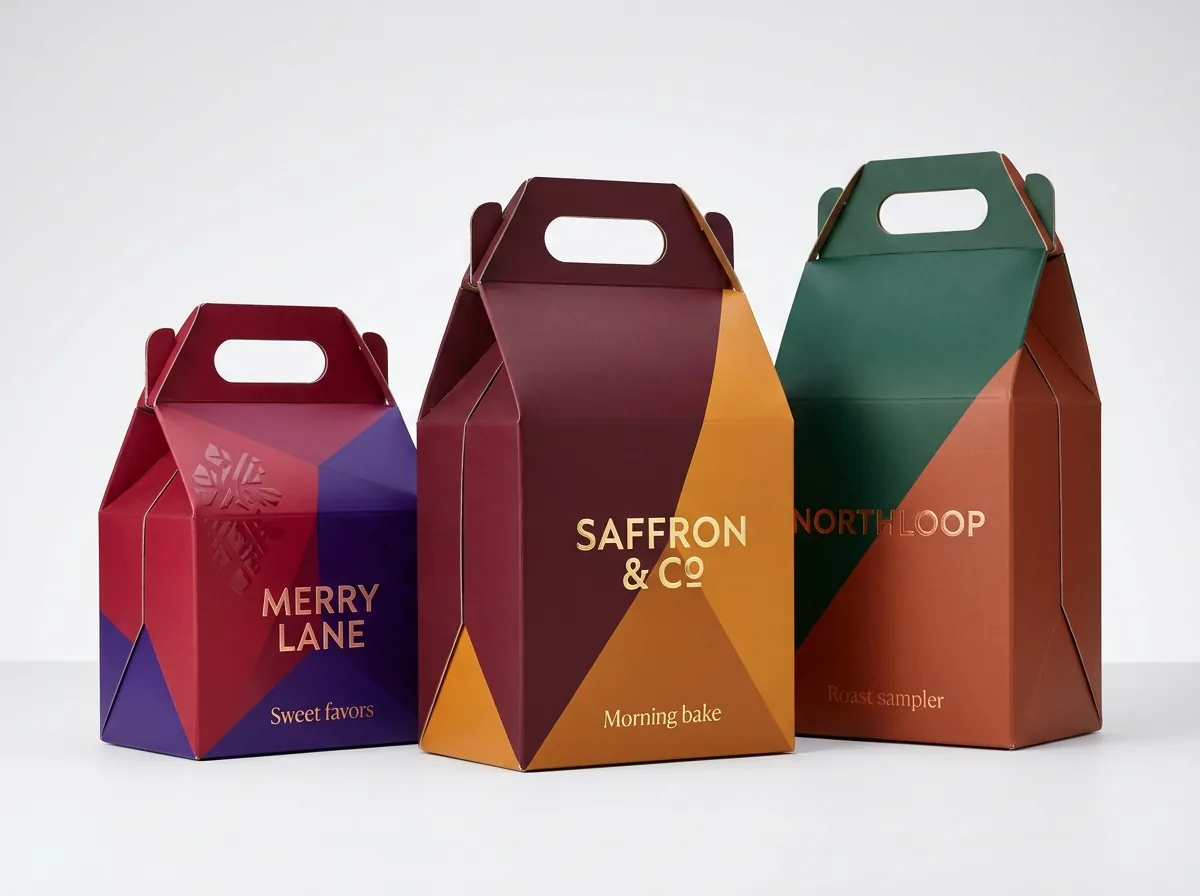
Supermarket prepared-food departments, butcher shops, and specialty grocers increasingly sell bundled 'Dinner for Two' or 'Family Taco Night' kits right from open multi-deck deli cases - combining a chilled tub of carnitas, a tub of salsa, fresh tortillas, and limes in one grab-and-go package. A standard rectangular carton has no handle, making a 3-pound chilled dinner bundle awkward for shoppers carrying a basket. A heavy-duty gable box built with an auto-lock bottom and an integrated top carry handle solves both merchandising and transport. The wide rectangular base sits flat on the refrigerated deli shelf with a front window showing the sealed deli tubs inside, while the reinforced top handle lets shoppers lift the entire meal kit with two fingers. Because the gable roof slopes upward toward the handle crease, you also gain angled upper panels that catch the eye of shoppers walking down the perimeter deli aisle.
- Auto-lock gable base: supports 2 to 3.5 pounds of chilled deli tubs without bowing at the floor.
- Reinforced two-ply handle: double-layer top tabs lock together to carry heavy wet and dry components.
- Front window cutout: reveals the fresh containers inside while keeping the bundle unified under one barcode.
- Ships and stores flat: folds down flat in cramped grocery backrooms until commissary staff pop it open to pack.
What are the most common mistakes when choosing a meal kit box style?
Avoid these five structural mismatches when selecting between folding cartons, tray sleeves, and corrugated mailers
- Using a standard reverse-tuck bottom instead of an auto-lock bottom on a grocery dinner carton that holds a heavy glass sauce jar.
- Ordering a fully enclosed six-panel box for a heat-sealed meal-prep tray when a wrap-around sleeve costs less and packs faster.
- Choosing unlaminated recycled paperboard for a 38 °F refrigerated cooler case where humidity and defrost cycles soften raw fibers.
- Shipping heavy multi-jar restaurant meal kits through parcel carriers in thin paperboard instead of crush-resistant E-flute corrugated.
- Packing loose glass jars and fragile dry noodles into an open mailer without a folded paperboard divider insert.
Find your size
Suggested inside size: 7.5 × 5.5 × 1.75 in
A starting point. Your account manager confirms the size with you before the proof.
Quote this size →Packaging for this


Ready to order meal kit boxes? Compare up to 3 quantities with a free 3D mockup.
Request a Quote →Questions about meal kit boxes
Should I use a folding carton or a corrugated mailer for a shelf-stable dinner kit?
Use a paperboard folding carton with an auto-lock bottom if your dinner kit is sold on grocery store shelves and ships to stores inside master case packs. Use an E-flute corrugated mailer if the kit ships individually to customers via UPS, FedEx, or USPS, or if it holds multiple heavy glass jars.
Why is a wrap-around sleeve better than a full box for chilled meal-prep trays?
A sealed CPET or PP meal-prep tray already provides rigid walls and a leak-proof barrier. A four-sided wrap-around sleeve uses less paperboard than a six-sided carton, slides on faster on the packing line, and leaves the ends open so shoppers can see the real tray inside.
Can a paperboard tray sleeve go into the freezer as well as the refrigerator?
Yes, when paired with the right board and finish. Virgin white paperboard finished with matte or gloss lamination resists moisture from frost and condensation during freezer-to-room temperature transitions, and we use cold-temperature glue on the bottom seam.
When does a grocery meal kit box need an internal paperboard divider?
Any time a meal kit combines a hard, heavy item (like a glass simmer-sauce jar or a metal spice tin) with a crushable dry item (like taco shells, dried ramen nests, or pasta). A folded paperboard partition keeps the heavy jar locked in its own cell.
What is the minimum order quantity for custom meal kit cartons, sleeves, and mailers?
The minimum order is 1,000 units across folding cartons, tray sleeves, gable boxes, or corrugated mailers. Standard production takes 10 to 14 business days after proof approval, with 4 to 5 business day rush available and free shipping to all 50 states.
Can I test the board stiffness and lamination before ordering 1,000 meal kit boxes?
Yes. Every order includes a free digital dieline proof and 3D mockup before payment. You can also order our $50 sample kit (credited toward your first order) to feel our paperboard, kraft, E-flute corrugated, and laminated finishes in person.
Still have a question? Ask a packaging specialist.
Request a Quote →Request your meal kit boxes quote
Tell us your size and quantities, and one dedicated account manager prepares pricing for each tier.
- Free design & AI-to-print studio + 3D mockup
- No die or plate charges · 4–5 day rush available
- Free shipping to all 50 states
- 10% off your first order
This structural comparison was compiled from grocery dry-aisle carton standards, refrigerated commissary sleeve requirements, and parcel mailer transit rules. A CubitPack packaging specialist reviewed each structure table. Spot an error? Let us know and we will fix it.
Sources
What changed
- October 22, 2026: First published.
- October 22, 2026: Updated specifications, terminology, and verified source links.
More guides
New packaging guides by email
Sizes, materials and design tips. Unsubscribe anytime.