
How do you design custom gift basket boxes, risers, and jar dividers?
Short answer: Stage your assortment in two tiers using a folded paperboard riser in the back row and die-cut divider cells for every glass jar. When ordering custom gift basket boxes, pair one year-round neutral hamper base with seasonal slide-on sleeves to cut costs.
On this page
- What are the five structural and visual zones of a gourmet gift hamper box
- How do stepped paperboard risers replace loose crinkle paper shred
- How do you engineer divider cells for mixed glass jars, bottles, and cracker boxes
- How do you lay out inside-lid greetings, tasting notes, and multi-item FDA panels
- How can you use one master hamper box across four seasons to lower your unit cost
- Common mistakes
- FAQs
Request a custom quoteFree dieline & 3D mockup
Designing a high-converting gourmet gift basket box combines visual theater with fast warehouse assembly. In traditional gift basket fulfillment, workers spend several minutes per basket stuffing handfuls of crinkle-cut paper shred into the base to prop up short jam jars and keep glass bottles from clinking - only for that shred to compress during shipping so items sink out of sight. By engineering a folded two-step paperboard riser and a multi-cell partition insert inside your hamper dieline, packers drop the insert in flat, place each jar and tin into its dedicated slot in seconds, and frame every label at eye level behind a panoramic window or inside a printed mailer lid. At CubitPack, our design team draft your outer hamper box, stepped riser, and jar divider dielines for free before you pay, with zero die or plate charges on any order from 1,000 boxes.
What are the five structural and visual zones of a gourmet gift hamper box?
Whether you are designing an open-top farmstand market tray, a retail window hamper, or a hinged-lid corporate gift mailer, five distinct zones work together to stage and protect your products. Planning all five zones before artwork layout ensures your front window frames the products cleanly instead of exposing raw cardboard partition edges or letting shorter jars drop below the lower window sill. Use the planning table below when briefing your custom printed gift hamper boxes with our structural and prepress team so your outer box, stepped riser, and jar dividers work as a single system. Every zone is checked on a flat dieline proof and a 3D mockup before production begins.
| Hamper design zone | Structural & visual role | Engineering tip |
|---|---|---|
| 1. Front wall & window frame | Frames front-row labels while holding the brand crest & foil title | Keep front lip <= 3.0 in below jar labels; round window corners |
| 2. Back-row stepped riser | Elevates shorter jars, tins, and pouches 1.5 to 2.0 in higher | Fold from 1 flat piece of kraft or white card with support legs |
| 3. Multi-cell jar & bottle grid | Isolates heavy glass containers from fragile crackers and chocolates | Allow 1/8 in cell clearance; print partition to match box interior |
| 4. Inside lid or back panel | Carries holiday greeting, tasting flight notes & corporate logo | Include a QR link to pairing recipes or a personalized gift note |
| 5. Bottom compliance panel | Lists multi-item FDA ingredients, allergens, net weight & barcode | Leave an unlaminated patch for pack-date and lot stamping |
How do stepped paperboard risers replace loose crinkle paper shred?
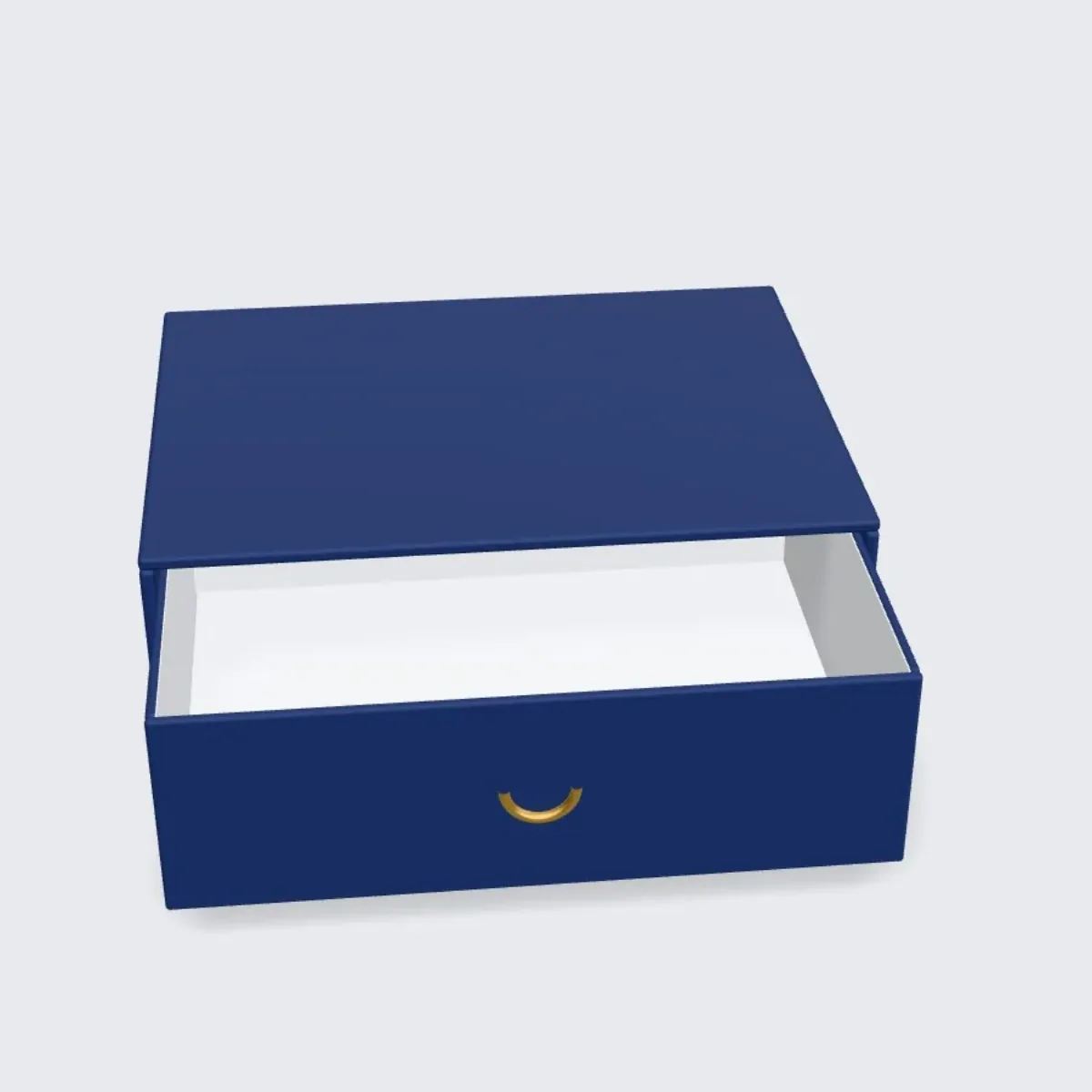
Crinkle-cut paper shred is surprisingly expensive in bulk, dusty on the packing line, and unreliable as a structural support. When a gift basket holds a 6-inch-tall box of artisan crackers in the front and a 3.5-inch-tall jar of fig jam in the back, packers try to build a mound of paper shred under the jam jar. After twenty miles on a delivery truck, the heavy glass jar crushes the paper shred and disappears behind the crackers. A die-cut paperboard or E-flute stepped riser folds into a rigid 1.5-inch or 2.0-inch platform across the rear half of the hamper floor. You can either rest the back-row jars directly on top of the platform or die-cut circular socket holes into the riser deck so the base of each jar drops 3/4 inch into the platform, locking it upright at stadium height with zero loose shred required.
- Stadium-level label visibility: raises back-row jam, honey, and mustard jars 1.5 to 2.0 inches so front items never block them.
- Fold-flat support legs: internal gusset tabs fold underneath the riser deck to support 2 to 4 pounds of glass jars without sagging.
- Die-cut jar sockets: circular or square cutouts in the top deck prevent round jars from sliding sideways along the step.
- Cuts packing labor by 60%: packers fold one scored sheet into place in five seconds instead of fluffing and weighing loose shred.
How do you engineer divider cells for mixed glass jars, bottles, and cracker boxes?
A gourmet food basket almost always mixes incompatible weights and fragilities: a heavy 12 oz glass honey jar or a 750 ml wine bottle packed right beside delicate water crackers, chocolate truffles, or shortbread cookies. Without positive mechanical separation, a single parcel drop drives the glass bottle straight into the cracker carton. Our structural team builds custom cardboard inserts that combine two styles of protection in one flat die-cut sheet: double-walled E-flute cradles around the glass bottle and jars, and wider rectangular lanes for lightweight cartons and pouches. Printing or flood-coating the top face of the insert in the same forest green, burgundy, charcoal, or natural kraft as the outer box makes the divider look like a custom-tailored presentation tray.
- Die-cut socket cutouts: round or oval holes that grip the lower third of cylindrical jam, honey, and mustard jars.
- Hinged neck locks: a folded collar with a U-shaped cutout that supports the narrow neck of a 750 ml wine or olive oil bottle.
- Height-equalizing false floors: raises shallow chocolate tins so their lids sit flush with taller neighboring boxes.
- Finger lift notches: half-moon thumb cutouts alongside tight cells so recipients can lift heavy jars out effortlessly.
Know your size? Compare pricing across up to 3 quantities.
Request a Quote →How do you lay out inside-lid greetings, tasting notes, and multi-item FDA panels?
When a recipient lifts the lid of a corporate holiday hamper or a charcuterie mailer, the wide inside lid panel is the very first surface they read. Instead of dropping a loose flyer into the box that slides under the jars, print your seasonal greeting, farm origin story, and a 'How to Build Your Charcuterie Board' diagram right inside the lid, or pair it with a matching custom thank you card. On the outside bottom or back panel of an enclosed gift hamper, pay close attention to multi-unit food labeling rules. When an outer gift box encloses several individually labeled jars and pouches so shoppers cannot read the inner labels before purchase, retail buyers require a master declaration on the outer box listing each component's name, net weight, ingredient sub-list, and combined major FDA allergens.
How can you use one master hamper box across four seasons to lower your unit cost?
Gourmet grocers, orchards, and chocolate brands sell gift baskets for Autumn Harvest, Thanksgiving, December Holidays, Valentine's Day, Mother's Day, and year-round corporate thank-yous. Printing separate 1,000-unit runs of a large E-flute hamper box for six different holidays splits your purchasing volume and leaves you with leftover December snowman boxes in January. The smartest cost strategy is to order one consolidated 2,500- or 5,000-unit run of your core hamper box and internal divider grid in an evergreen palette - such as unbleached kraft with gold foil, or soft-touch charcoal with your embossed emblem - and then order inexpensive printed paperboard sleeve boxes (belly bands) for each specific holiday or corporate client.
- One evergreen master hamper: consolidate your annual volume into one 2,500- or 5,000-box run for the lowest per-box price.
- Interchangeable holiday belly bands: slide on a harvest, winter holiday, or spring floral paperboard sleeve in seconds.
- Zero leftover seasonal box waste: any unused hampers in January simply receive a Valentine's or everyday sleeve next.
- Custom B2B corporate co-branding: offer corporate buyers their own logo on a custom sleeve without re-tooling the hamper box.
What are the most common gift basket box design and insert mistakes?
Avoid these five frequent design and prepress errors before finalizing your gourmet hamper box and divider dieline
- Relying on loose crinkle paper shred instead of a stepped paperboard riser, letting back-row jars sink below the front window.
- Leaving raw, unprinted white or gray cardboard edges visible through the front window when the outer hamper is dark green or black.
- Placing a front window cutout too close to the corner fold scores, which weakens the front wall when stacking filled hampers.
- Forgetting to print a combined master ingredient and allergen summary on the outer box when inner jar labels are hidden from view.
- Printing holiday-specific graphics directly onto the expensive outer corrugated hamper instead of using interchangeable seasonal belly bands.
Find your size
Suggested inside size: 8.0 × 6.0 × 3.5 in
A starting point. Your account manager confirms the size with you before the proof.
Quote this size →Packaging for this

Ready to order gift basket boxes? Compare up to 3 quantities with a free 3D mockup.
Request a Quote →Questions about gift basket boxes
How does a stepped paperboard riser work inside a gift basket box?
A stepped riser is a die-cut paperboard or E-flute platform that folds into a 1.5- to 2-inch step across the back row of the tray. It elevates rear jars and tins above the front row so every label is visible through the window without using deep piles of paper shred.
Can you print the internal divider insert to match the color of my gift hamper box?
Yes. Since the internal divider or stepped riser is visible through a panoramic window or when the mailer lid opens, we can make it from matching natural kraft or flood-coat it in your exact Pantone color so no raw board shows.
How far should a front window cutout stay from the corner fold lines of a hamper?
Keep any die-cut window at least 3/4 inch to 1 inch away from the vertical corner fold scores and bottom crease of a gift hamper box. That border preserves the vertical stacking strength of the carton walls.
Do I need a master Nutrition Facts and allergen panel on the outside of a gift basket box?
If the outer hamper encloses multiple pre-packaged foods so shoppers cannot read the individual jar and pouch labels at the point of sale, FDA rules require the outer box to display the required ingredient, allergen, and net weight information.
How do seasonal belly bands work on a year-round gift basket box?
You order one larger run of your core hamper box in a timeless year-round design, then order flat printed paperboard bands that slide around the closed box for Thanksgiving, December Holidays, Valentine's Day, or custom corporate logos.
Will your engineers design the jar divider and riser dieline for free?
Yes. Send us the measurements or physical samples of the jars, bottles, tins, and boxes in your assortment. We engineer the hamper box, stepped riser, and divider cells for free, and you approve a digital proof and 3D mockup before paying.
Still have a question? Ask a packaging specialist.
Request a Quote →Request your gift basket boxes quote
Tell us your size and quantities, and one dedicated account manager prepares pricing for each tier.
- Free design & AI-to-print studio + 3D mockup
- No die or plate charges · 4–5 day rush available
- Free shipping to all 50 states
- 10% off your first order
The stepped-riser geometry, window border clearances, and multi-unit FDA food-labeling rules in this guide come from structural dieline standards and 21 CFR 101 retail gift-pack rules. A CubitPack packaging specialist reviewed every section. Spot an error? Let us know and we will fix it.
Sources
What changed
- October 22, 2026: First published.
- October 22, 2026: Updated specifications, terminology, and verified source links.
More guides
New packaging guides by email
Sizes, materials and design tips. Unsubscribe anytime.