
Paperboard berry punnets vs corrugated fruit shipping boxes: which fits your fruit?
Short answer: Choose 18 pt to 24 pt solid paperboard punnets and window cartons for 1-pint and 1-quart retail berries, figs, Medjool dates, and freeze-dried fruit under 2 pounds. Choose E-flute or B-flute corrugated mailers with cell dividers for heavy orchard pears, apples, and citrus. Compare both on our custom fruit boxes page.
On this page
- How do paperboard punnets, E-flute mailers and B-flute orchard shippers compare
- Why are berry and fig growers replacing PET plastic clamshells with paperboard punnets
- E-flute vs B-flute corrugated: which flute grade protects mail-order pears and citrus
- Tray-and-sleeve drawers vs tuck-top window cartons: which works best for dates and dried fruit
- How do orchards combine paperboard and corrugated in multi-tier gift towers
- Common mistakes
- FAQs
Request a custom quoteFree dieline & 3D mockup
Selecting between solid paperboard folding cartons and fluted corrugated boxes comes down to unit weight, cold-chain condensation, and how the fruit travels from the packing shed to the buyer. Solid 18 pt to 24 pt kraft or bleached paperboard folds into crisp, thin-walled 1-pint and 1-quart berry punnets, handled farm-stand baskets, Medjool date drawers, and upright cartons for freeze-dried fruit pouches sold on grocery shelves. Once pack weight climbs above 2 pounds - or whenever fresh pears, Honeycrisp apples, peaches, or navel oranges ship individually through UPS, FedEx, or USPS - fluted corrugated board becomes essential. E-flute corrugated (1/16 inch thick) handles 6-cell gift mailers and 2- to 4-pound farmers-market flats, while thicker B-flute corrugated (1/8 inch thick) provides the vertical edge-crush strength and puncture resistance needed for 12-cell orchard fruit club shippers. Both formats start at 1,000 boxes with free custom dielines and free US shipping.
How do paperboard punnets, E-flute mailers and B-flute orchard shippers compare?
When growers, orchards, and specialty food brands request quotes for custom printed fruit boxes, the first structural decision is matching the board architecture to the crop and sales channel. A fragile pint of raspberries displayed on a refrigerated supermarket table faces completely different physical stresses than six pounds of Comice pears riding across four parcel sorting hubs. Solid paperboard (available in unbleached natural brown kraft, bleached white SBS, or recycled CCNB) is a single dense sheet of wood-fiber card ranging from 16 pt to 24 pt thick. It die-cuts into intricate berry ventilation slots, integrated gable carry handles, and smooth sliding drawers for dates and dipped strawberries, and it ships flat in tight cases that take up minimal space in a farm packing shed. Corrugated board sandwiches a wave-shaped fluted medium between two flat linerboards. Those microscopic air columns act as both thermal insulation against temperature swings and mechanical shock absorbers when parcel handlers drop a box. Use the comparison table below to match your fruit variety and weight to the right board.
| Feature | 18–24 pt Paperboard Punnet / Carton | E-Flute / B-Flute Corrugated Fruit Box |
|---|---|---|
| Best fruit formats | 1-pint/1-quart berries, figs, dates, freeze-dried snacks | 6- & 12-cell pears, apples, peaches, citrus, 4 lb flats |
| Safe pack weight | 6 oz up to 2 lb (retail shelf & farm-stand carry) | 2 lb up to 15+ lb (parcel shipping & stacked flats) |
| Wall thickness | 0.018–0.024 in (thin, crisp retail edges) | 1/16 in (E-flute) or 1/8 in (B-flute) cushioned walls |
| Bruise & drop cushioning | Low alone; relies on cavity insert for dates/berries | High; fluted air channels absorb parcel impacts |
| Print surface quality | Direct offset litho CMYK + Pantone, foil, spot UV | Litho-laminated or high-res print on E/B-flute |
| Storage footprint (flat) | Very compact; 1,000 punnets fit in a few small cases | Moderate; fluted blanks require more pallet height |
| CubitPack minimum | 1,000 boxes | 1,000 boxes |
Why are berry and fig growers replacing PET plastic clamshells with paperboard punnets?
For decades, clear thermoformed PET plastic clamshells were the default container for supermarket strawberries, blueberries, blackberries, and cherry tomatoes. Today, regional berry farms, greenhouse tomato growers, and specialty grocery chains are rapidly switching to 18 pt to 24 pt custom kraft boxes and paperboard punnets for three practical reasons. First, branding real estate: a clear plastic clamshell only leaves room for a tiny top pressure-sensitive label, whereas a four-sided paperboard punnet or custom gable boxes carrier prints your farm crest, growing region, organic certification badges, and UPC barcode directly onto the basket walls. Second, acoustic and tactile quality: unbleached brown kraft and matte-laminated white board give shoppers an immediate farmers-market look that commands higher retail shelf attention than noisy, brittle plastic. Third, gentle surface contact: stiff plastic ribs at the base of a clamshell can leave pressure flats on ripe figs and peaches. Smooth paperboard walls paired with custom die-cut side ventilation slots let forced-air chillers pull field heat out of the berries just as fast without sharp plastic edges.
- Open-top nested or flat-fold punnets: Ideal for 6 oz raspberries, 1-pint blueberries, and cherry tomatoes overwrapped with cellulose film or sold open at farm stands.
- Handled gable berry baskets: Built-in top handle lets shoppers carry 1 quart (1 lb) or 2 lb of strawberries and sweet cherries home without a plastic bag.
- Window-lid berry cartons: A tuck-top paperboard carton with a clear film window or open die-cut grid protects berries during grocery stacking while showing fruit ripeness.
- Moisture-shedding finishes: Adding a thin matte lamination or requesting wet-strength kraft prevents punnet walls from softening in 34°F high-humidity coolers.
E-flute vs B-flute corrugated: which flute grade protects mail-order pears and citrus?
When shipping fresh tree fruit or citrus directly to consumers or corporate gift recipients, choosing the right corrugated flute profile prevents crushed corners and bruised skins. Corrugated board is graded by flute height and the number of flutes per linear foot. E-flute corrugated measures roughly 1/16 inch (1.6 mm) thick with 90 flutes per foot. Because those closely spaced flutes create a very flat, smooth outer linerboard, E-flute takes fine typography, botanical illustrations, and metallic foil stamping almost as cleanly as solid paperboard. It is the standard choice for 4-cell and 6-cell custom mailer boxes holding 3 to 5 pounds of Comice pears, Honeycrisp apples, or stone fruit. B-flute corrugated measures roughly 1/8 inch (3.2 mm) thick with 47 taller flutes per foot. That extra wall thickness doubles the puncture resistance and increases vertical stacking strength for 9-cell and 12-cell fruit club shippers holding 6 to 12 pounds of heavy navel oranges, grapefruit, or mixed orchard fruit. Even in a 6-cell E-flute outer mailer, many orchards specify B-flute for the internal interlocking custom cardboard inserts so the cell walls act as rigid vertical shock absorbers.
Know your size? Compare pricing across up to 3 quantities.
Request a Quote →Tray-and-sleeve drawers vs tuck-top window cartons: which works best for dates and dried fruit?
Dried orchard fruits, stuffed Medjool dates, candied citrus slices, and chocolate-covered strawberries sit at the intersection of produce and confectionery packaging. Here, brands typically choose between two paperboard structures: a sliding custom tray and sleeve boxes drawer or a one-piece custom window boxes carton. A tray-and-sleeve box pairs a double-wall paperboard base tray (fitted with a 6-, 12-, or 24-cavity thermoformed or folded paperboard insert) with a separate outer sleeve that slides off horizontally. Because the double-wall tray has folded side ledges, it feels nearly as substantial as a luxury rigid box while still shipping flat and starting at our standard 1,000-box minimum. It is the preferred structure for Ramadan and holiday Medjool date assortments and artisan chocolate-dipped berries. A one-piece window carton - either an auto-lock bottom upright box for 5 oz bags of freeze-dried strawberries or a shallow pastry-style tuck box for dried mango and fig cakes - folds from a single sheet of 18 pt to 20 pt paperboard, keeping unit cost lower for everyday grocery aisle distribution.
How do orchards combine paperboard and corrugated in multi-tier gift towers?
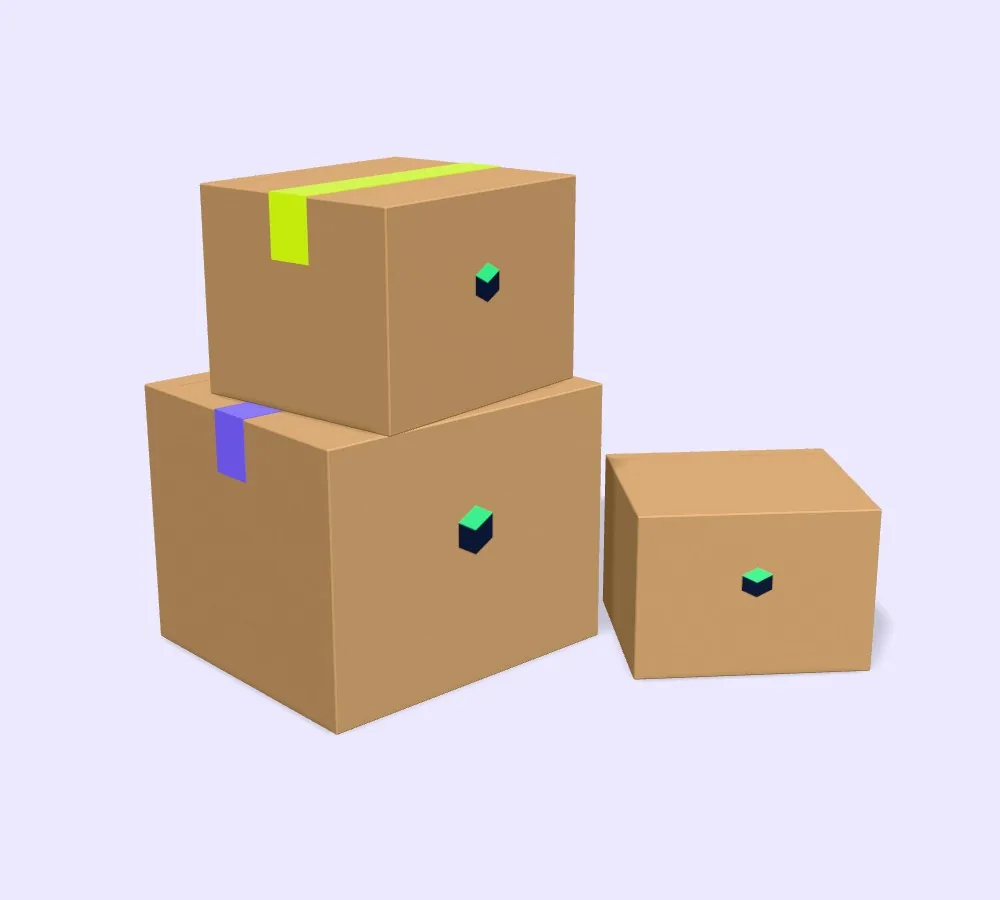
Many successful orchard gifting brands do not choose just one material - they combine corrugated and paperboard by role. For example, a holiday fruit-and-gourmet gift tower might use a B-flute corrugated 6-cell base box for heavy Comice pears, a middle 20 pt paperboard box for roasted almonds and artisan crackers, and a top 18 pt foil-stamped tray-and-sleeve box for stuffed Medjool dates or chocolate-covered cherries, all tied together with a satin ribbon and shipped inside a master corrugated outer carton. Need exact inside measurements for each of those tiers? Check our complete fruit box size chart for berries, orchard trays and dates, and learn where to place airflow vents and moisture barriers in our guide on how to design custom fruit boxes for cold-chain storage and gifting.
What are the most common mistakes when choosing between paperboard and corrugated fruit boxes?
Avoid these five material mismatches before locking in your fruit packaging specs
- Shipping heavy pears, apples, or citrus through parcel carriers in thin 18 pt folding paperboard instead of E-flute or B-flute corrugated board with cell dividers.
- Using thick, bulky B-flute corrugated for small 1-pint retail berry punnets where crisp 18 pt to 20 pt wet-strength kraft paperboard looks cleaner and costs less.
- Packing chilled berries into unlaminated recycled chipboard without a moisture-resistant coat, causing condensation marks when moved out of 34°F coolers.
- Choosing an open undivided tray for chocolate-dipped strawberries or stuffed dates instead of a multi-cavity insert inside a tray-and-sleeve or window box.
- Ordering separate outer shippers when a printed E-flute or B-flute self-locking mailer box with full-height cell partitions can ship directly with a mailing label.
Find your size
Suggested inside size: 4.25 × 4.25 × 2.75 in
A starting point. Your account manager confirms the size with you before the proof.
Quote this size →Packaging for this

Ready to order fruit boxes? Compare up to 3 quantities with a free 3D mockup.
Request a Quote →Questions about fruit boxes
When should I switch from solid paperboard to corrugated board for fruit boxes?
Use solid 18 pt to 24 pt paperboard for retail berry punnets, date drawers, and dried-fruit cartons under 2 pounds that travel in master cases to stores. Switch to E-flute or B-flute corrugated board whenever pack weight exceeds 2 pounds or when the box ships individually via parcel carriers.
Do paperboard berry punnets get soggy in refrigerated produce cases?
Not when specified properly. Pairing virgin unbleached kraft or SBS paperboard with a thin matte lamination or moisture-resistant coating - plus side ventilation holes that prevent trapped humidity - keeps punnets crisp from 34°F forced-air coolers to grocery tables.
What is the difference between E-flute and B-flute for orchard gift mailers?
E-flute is 1/16 inch thick with 90 fine flutes per foot, giving 6-cell pear and peach gift boxes a smooth, retail-grade print surface. B-flute is 1/8 inch thick with taller flutes that provide extra cushioning and vertical stacking strength for heavier 12-cell citrus and apple shippers.
Is a tray-and-sleeve box cheaper than a rigid box for Medjool dates?
Yes. A double-wall paperboard tray-and-sleeve box ships flat, requires no rigid-box set-up labor, and starts at 1,000 units, yet its folded double sidewalls and sliding drawer action deliver a luxury gift feel very close to a rigid setup box.
Can I combine E-flute mailers with B-flute internal cell dividers?
Yes. Many orchards use an E-flute outer mailer for sharp exterior and inside-lid printing, then drop in a thicker B-flute interlocking 6-cell or 9-cell partition grid for maximum fruit separation and top-load compression resistance.
Can I feel both paperboard and corrugated samples before ordering?
Yes. You can order our $50 sample kit (credited in full toward your order) to compare kraft paperboard, white card, and corrugated flutes in your hands, and every order includes a free digital proof and 3D mockup before payment.
Still have a question? Ask a packaging specialist.
Request a Quote →Request your fruit boxes quote
Tell us your size and quantities, and one dedicated account manager prepares pricing for each tier.
- Free design & AI-to-print studio + 3D mockup
- No die or plate charges · 4–5 day rush available
- Free shipping to all 50 states
- 10% off your first order
This comparison draws on TAPPI paperboard caliper standards, E-flute and B-flute corrugated flute specifications, and cold-chain produce packaging practices. Checked by a CubitPack packaging specialist. Spot an error? Tell us and we will fix it.
Sources
What changed
- October 22, 2026: First published.
- October 22, 2026: Updated specifications, terminology, and verified source links.
More guides
New packaging guides by email
Sizes, materials and design tips. Unsubscribe anytime.