
How do telescoping and shoulder-neck tube boxes compare with hexagon boxes and two-piece cartons?
Short answer: Choose a cylindrical tube box (2-piece slip cap or 3-piece flush shoulder-neck) when you want a zero-void circular hug around round bottles, high multi-ply hoop crush strength, and continuous 360-degree graphics. Choose a six-sided hexagon box or rectangular two-piece carton when flat-folded warehouse storage, inline clear windows, or honeycomb shelf tiling matter more.
On this page
- How do 2-piece tubes, 3-piece shoulder-neck tubes, hexagon boxes, and two-piece cartons compare
- What changes mechanically between a 2-piece telescoping cap tube and a 3-piece shoulder-neck cylinder
- How do wound cylinders compare with folding hexagons and cube boxes on crush resistance and shipping
- Which structure fits candles, tea, cosmetics, apparel, and spirits best
- Common mistakes
- FAQs
Request a custom quoteFree dieline & 3D mockup
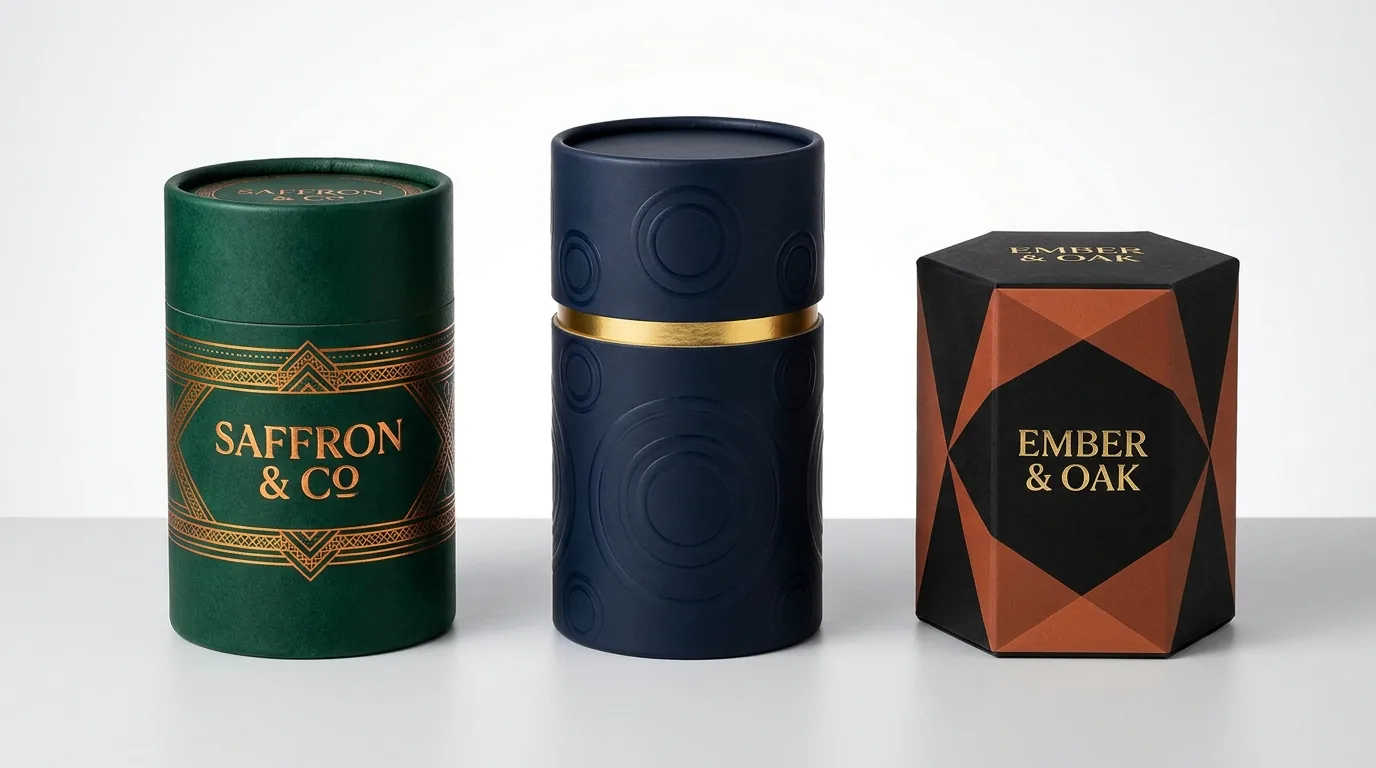
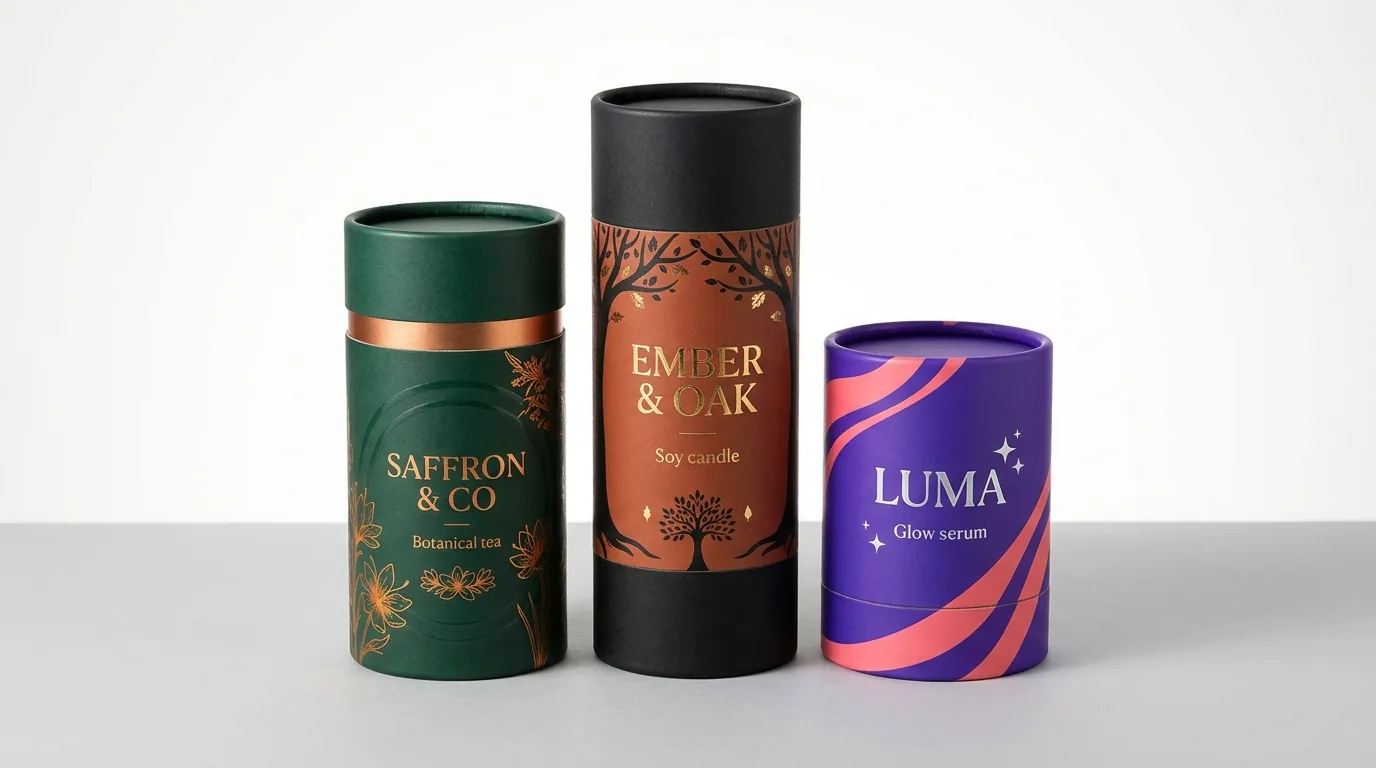
Brands packaging cylindrical candle tumblers, loose-leaf tea, glass serum droppers, spirits bottles, or rolled apparel usually narrow their shortlist to four structural candidates: a two-piece slip-cap tube box, a three-piece flush shoulder-neck tube box, a six-sided [custom hexagon box](/custom-hexagon-boxes), or a four-sided [custom two-piece box](/custom-two-piece-boxes). While all four use a lift-off lid reveal rather than a hinged tuck flap, they behave very differently on the press sheet, in the warehouse, and in the customer's hands. Wound paperboard custom tube boxes wrap 360 degrees around circular vessels with 0.8–1.5 mm rigid hoop walls and zero vertical fold creases, whereas hexagon and rectangular two-piece folding cartons ship flat in master cases and accept flat inline window patches. CubitPack produces all four structures starting at 1,000 units with free 2D vector CAD dielines and interactive 3D proofs before payment.
How do 2-piece tubes, 3-piece shoulder-neck tubes, hexagon boxes, and two-piece cartons compare?
Before choosing between a cylindrical canister and a polygonal or rectangular carton, your operations and creative teams need to weigh six trade-offs: how closely the inner walls follow a round bottle, whether the outer cap meets the body at a step or flush seam, whether artwork flows unbroken around 360 degrees, how much radial squeeze the walls withstand, whether you need a front film window, and how much warehouse pallet space empty boxes occupy. Compare all four options across custom candle boxes, custom tea boxes, custom cosmetic boxes, and custom spirits boxes
- When 2-piece slip-cap tubes win: Everyday tea canisters, rolled t-shirts, crew socks, coffee beans, and standard candle tumblers where clean two-part winding and fast top-capping keep unit cost streamlined.
- When 3-piece flush shoulder-neck tubes win: Prestige skincare serums, luxury candles, and reserve spirits where you want the cap and body to align in a single unbroken cylinder - or expose a gleaming 4 mm metallic gold neck band.
- When 6-sided hexagon or 4-sided two-piece cartons win: Brands with tight warehouse pallet space, front window-patching requirements, or multi-SKU honeycomb display trays.
| Feature | 2-Piece Slip-Cap Tube | 3-Piece Shoulder-Neck Tube | Hexagon Box (6-Sided) | Two-Piece Carton (4-Sided) |
|---|---|---|---|---|
| Wall & lid geometry | Wider cap slides over cylindrical base (+1.0 mm ID) | Cap & base share exact OD over inner neck ring | 6 flat facets at 120° with 6-sided lid or tuck top | 4 flat walls at 90° with rectangular lid & base |
| Fit around round jars | 360° circular contact; zero corner air void | 360° circular contact; zero corner air void | 6 tangent contact points; cuts corner void 56% | 4 tangent contact points; needs insert for round jars |
| Artwork continuity | Continuous 360° wrap; slight step at cap rim | Continuous 360° wrap; flush seam or neck reveal | 6 flat vertical columns separated by 60° creases | 4 flat vertical walls separated by 90° creases |
| Wall stiffness | 0.8–1.5 mm wound core (high radial hoop strength) | 1.0–1.5 mm double-layered at inner neck joint | 18–24 pt card or 1.5 mm E-flute (6 corner creases) | 18–24 pt card or E-flute (double-wall when nested) |
| Front display windows | Rare on curved rigid walls (top cap disc only) | Accent neck reveal band replaces front window | Easy flat PET window on any facet or hex crown | Easy flat PET window on lid top or front wall |
| Warehouse freight volume | Ships pre-formed at 3D cylindrical volume | Ships pre-formed at 3D cylindrical volume | Folding hex blanks ship flat in master cartons | Folding lid & base blanks ship flat in master cartons |
What changes mechanically between a 2-piece telescoping cap tube and a 3-piece shoulder-neck cylinder?
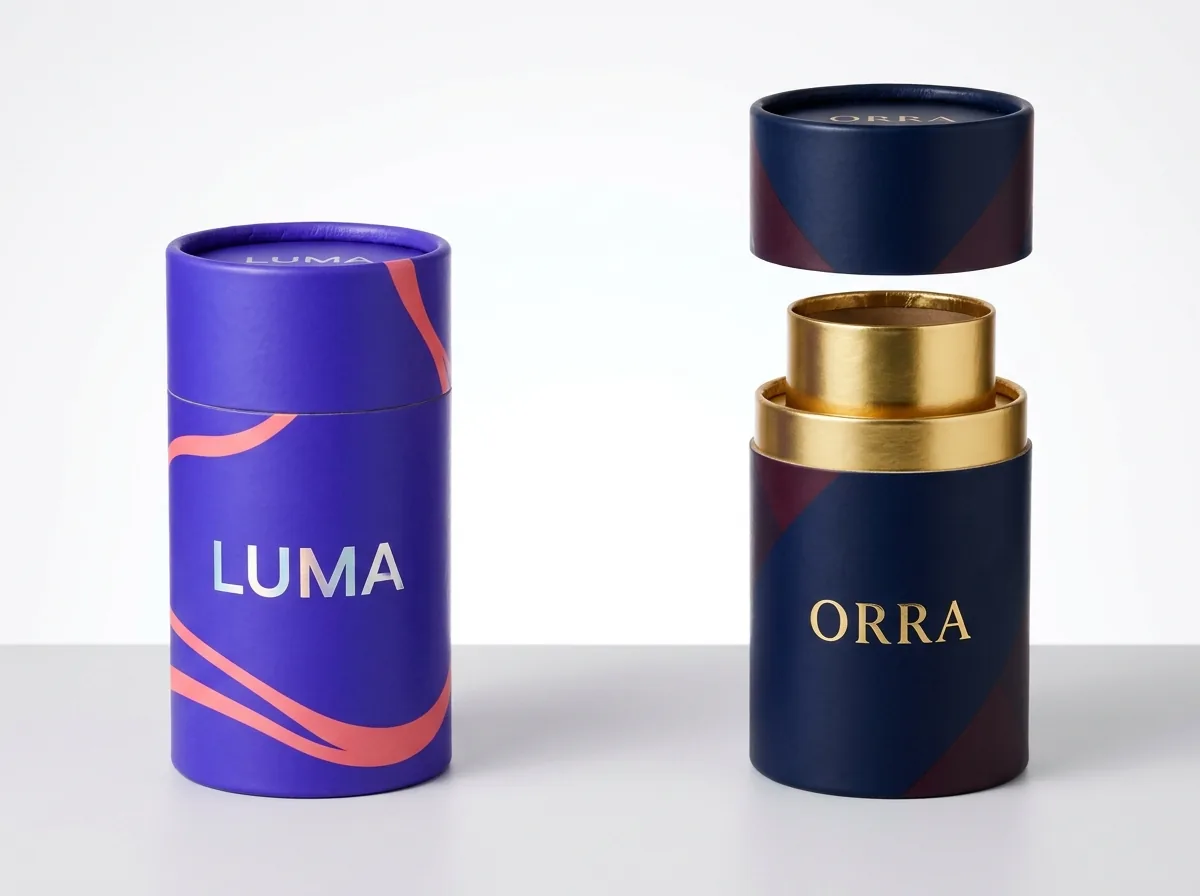
At first glance, both cylindrical styles open the same way - the customer grasps the round top cap and lifts straight up. Look closer at the horizontal seam where the lid meets the base, however, and you will spot the structural distinction that separates standard retail canisters from luxury vanity keepsakes across custom essential oil boxes and custom coffee boxes
- Two-piece telescoping slip-cap construction: The lower base cylinder is wound on mandrel diameter ID, and the separate cap lid is wound on a slightly larger mandrel so its internal diameter clears the base's outer diameter by +0.8 to +1.2 mm. Because the cap slides over the outside of the base, there is a visible 1.0 to 1.5 mm outer rim step where the cap skirt ends.
- Three-piece flush shoulder-neck construction: Both the outer cap lid and the lower base tube are wound on the exact same mandrel so their Outer Diameters match to the tenth of a millimeter. A third narrower inner cylinder (the shoulder neck collar) is bonded inside the base tube, rising 15 to 30 mm above the base rim for the cap to slide over.
- Closed flush vs stepped neck-band reveal: If the inner shoulder neck matches the inside height of the cap skirt, the outer cap and base meet in a hairline flush joint; if the neck is left 3 to 6 mm taller, a contrasting gold-foil or jewel-toned neck band stays visible even when closed.
How do wound cylinders compare with folding hexagons and cube boxes on crush resistance and shipping?
When a glass dropper bottle, ceramic candle vessel, or 750 ml liquor bottle travels through fulfillment centers, packaging engineers evaluate two mechanical loads: top-to-bottom vertical stacking compression and side-to-side radial squeeze. Because a circular arch has no flat spans that can buckle inward, a multi-ply wound cylinder acts like a structural column. At the same time, because rigid cylinders cannot fold flat along score lines, operations teams must plan for 3D inbound freight cartons. Compare how cylindrical paperboard tube canisters, custom hexagon boxes, and custom cube boxes balance protection against storage: Understanding how wall geometry governs both shipping carton volume and radial bottle protection helps you pick the structure that fits your fulfillment line and retail display goals
- Zero-fold packing line speed: Although pre-formed tubes take more warehouse shelf space than flat folding cartons, your fulfillment team saves 8 to 15 seconds per unit because there are zero bottom flaps or dust tabs to fold.
- Nested multi-SKU packing trick: Brands ordering two or three graduated tube diameters (for example, a 2.5 in serum tube and a 4.0 in candle or apparel tube) can sometimes nest smaller cylinders inside larger ones during freight.
- Reusable vanity & pantry keepsake value: Shoppers rarely flatten or discard a rigid paperboard canister - tea, coffee, candle, and sock tubes stay on desks and shelves as pen holders and storage jars.
| Performance factor | Wound Paperboard Tube | 6-Sided Hexagon Carton | 4-Sided Cube / Two-Piece |
|---|---|---|---|
| Radial side-squeeze resistance | Highest (1.0–1.5 mm multi-ply circular arch) | High (6 narrow facets at 120° angles) | Moderate (4 wide flat walls flex inward) |
| Vertical stacking load | 360° continuous rim transfers load to base | 6 vertical creases share top-load compression | 4 vertical corner creases carry top load |
| Inbound pallet density | Pre-formed 3D cylinders in cellular master cases | Ships flat; 5–7× more units per pallet | Ships flat; 6–8× more units per pallet |
| Packing line assembly speed | Fastest (0 folds: drop product in + press cap on) | Moderate (pop 6-panel body + snap floor + lid) | Fast (pop square body + tuck or drop lid) |
Know your size? Compare pricing across up to 3 quantities.
Request a Quote →Which structure fits candles, tea, cosmetics, apparel, and spirits best?
Pair this comparison with our measurement guide on paperboard tube box dimensions, internal diameter, and bottle fit and our artwork walkthrough on paperboard tube wrap dielines, 360-degree seams, and cap setup, plus our polygonal comparison of two-piece hexagon boxes vs tuck-top hex cartons and cube boxes. Use these four product rules across custom t-shirt boxes and custom sock boxes to lock your specification: Matching your bottle, jar, or garment to the right perimeter geometry keeps unit costs predictable while giving shoppers a tactile package they love to keep on display
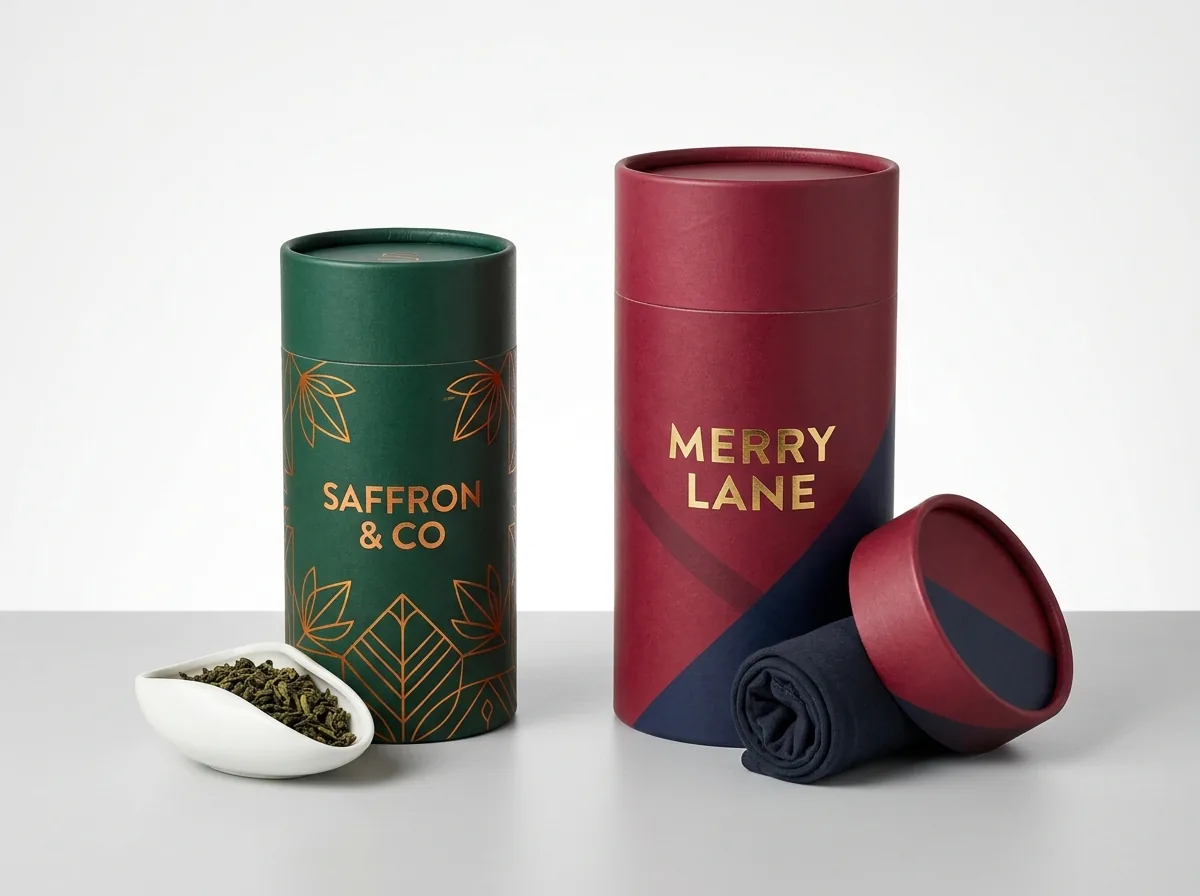
- Loose-leaf tea, matcha & specialty coffee: Choose a 2-piece slip-cap tube (with optional interior foil barrier) when you want a reclosable pantry canister, or a 6-sided hexagon box when tiling multi-flavor gift sets into honeycomb clusters.
- 30 ml–100 ml cosmetic serums & essential oils: Choose a 3-piece flush shoulder-neck tube with a die-cut EVA foam base well for luxury glass dropper protection.
- Poured glass candles & 750 ml spirits bottles: Choose a heavy-wall (1.2–1.5 mm) cylinder tube with EVA foam rings for maximum radial impact protection, or a 24 pt / E-flute hexagon when you need a front display window.
- Rolled t-shirts, socks & athletic apparel: Choose a 2-piece kraft or matte-laminated paperboard tube for stand-up retail displays and event merch tables.
What mistakes happen when choosing between tube boxes, hexagon boxes, and two-piece cartons?
Avoid mismatched seam graphics, unexpected warehouse pallet counts, and rattling bottles by steering clear of these five selection errors
- Ordering a 2-piece slip-cap tube when your artwork requires vertical stripes to meet flush across the cap-to-body seam (which requires a 3-piece shoulder-neck cylinder).
- Assuming rigid wound paperboard tubes ship flat like folding hexagon or cube cartons without budgeting warehouse racking for pre-formed 3D master cartons.
- Specifying a flat inline PET window patch on the curved side wall of a thick spiral-wound tube instead of switching to a six-sided hexagon or two-piece window carton.
- Packing a round glass bottle inside a 4-sided rectangular two-piece box without an insert when a cylindrical tube hugs the vessel around 360 degrees naturally.
- Choosing metal screw-top tins when your sustainability brief calls for an all-paperboard cylinder with rolled paper rims.
Packaging for this
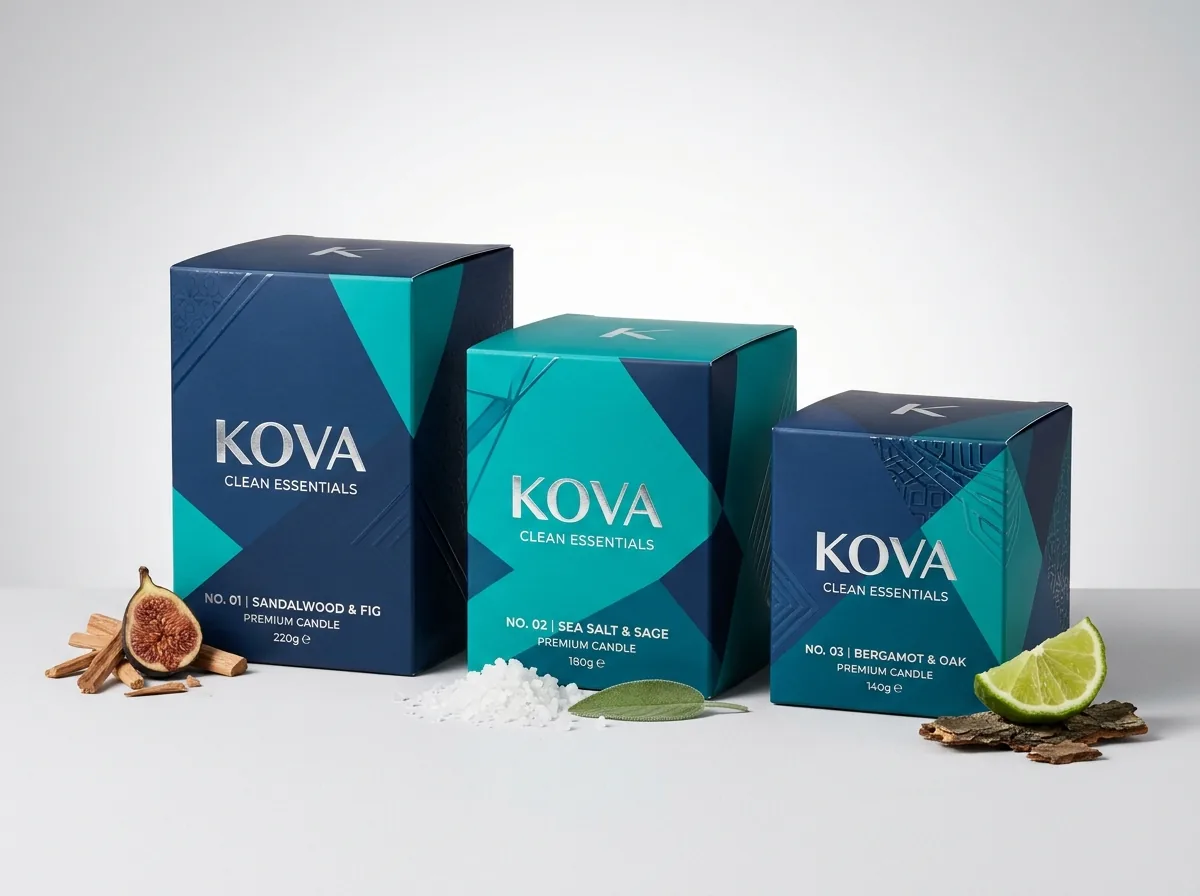
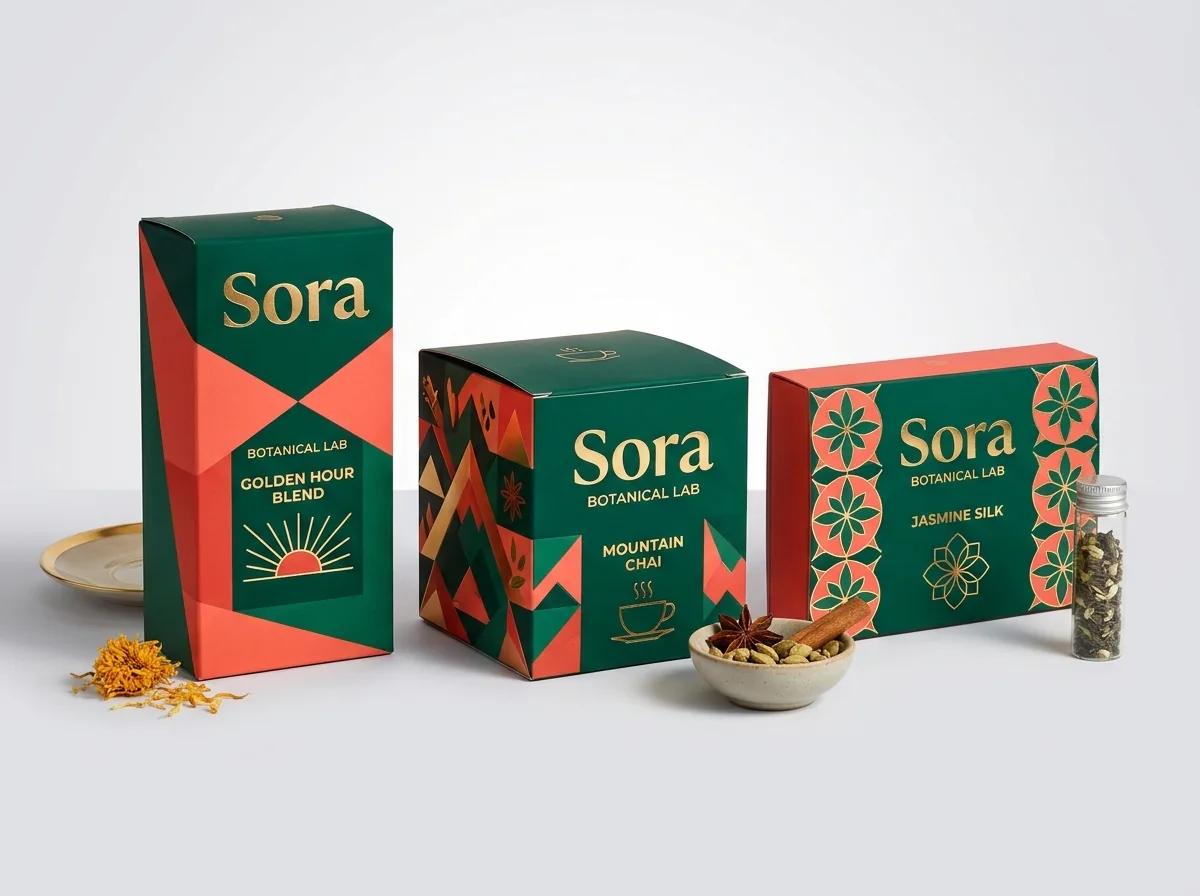
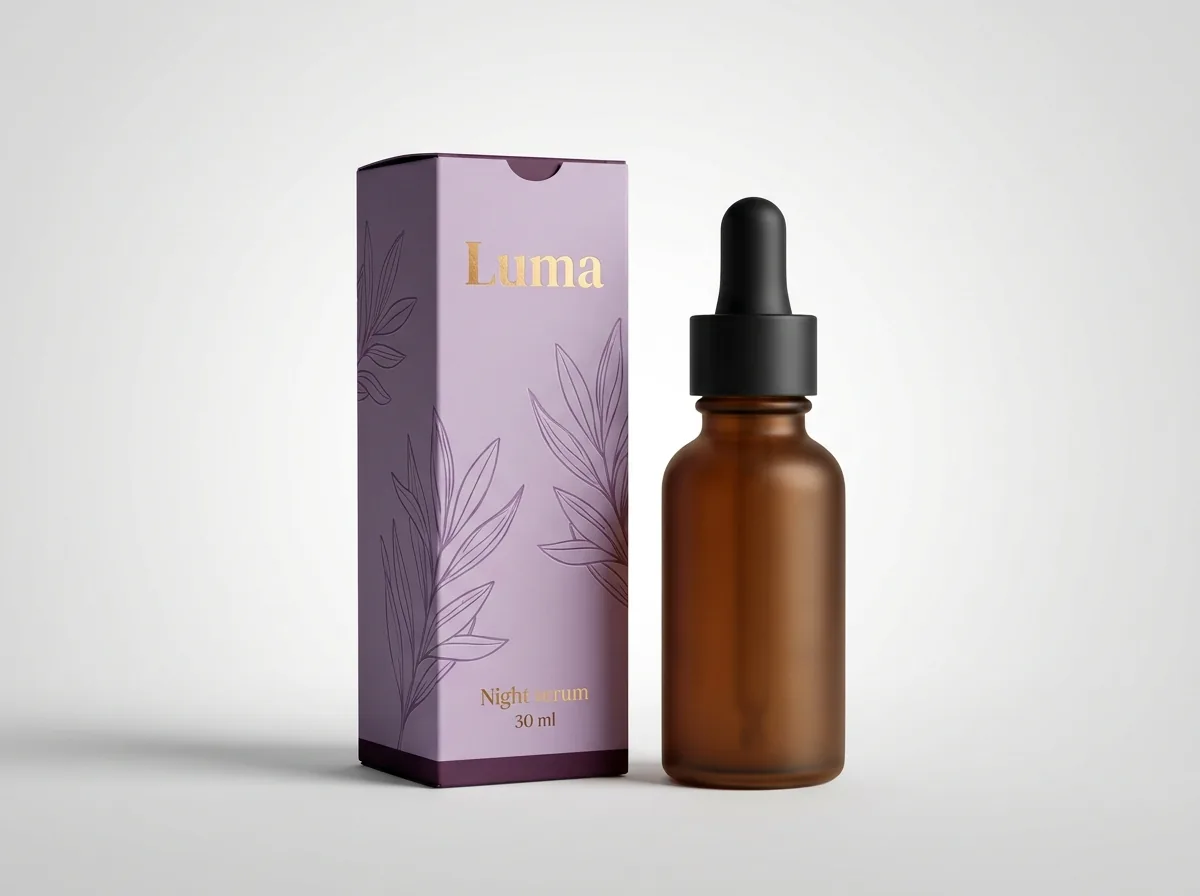
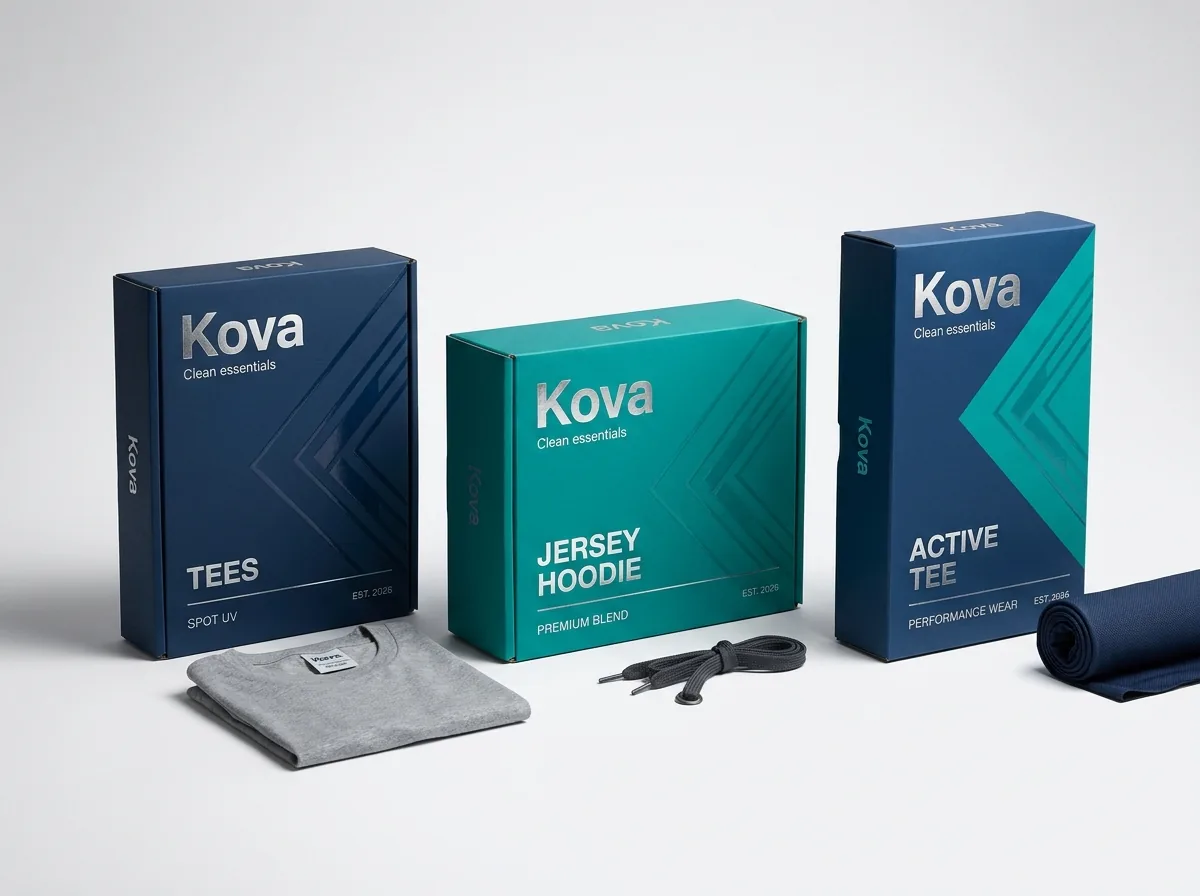
Ready to order tube boxes? Compare up to 3 quantities with a free 3D mockup.
Request a Quote →Questions about tube boxes
Does a 3-piece shoulder-neck tube hold its lid more securely than a 2-piece slip-cap tube?
Both hold securely when wound to a +0.8 to +1.2 mm friction tolerance, but a 3-piece shoulder-neck tube offers a longer internal collar engagement (typically 15 to 25 mm) and prevents the outer cap edge from catching on adjacent packages during shipping.
Can I order both cylindrical tube boxes and six-sided hexagon boxes from CubitPack?
Yes. Both custom tube boxes and custom hexagon boxes start at 1,000 units per style with zero die or mandrel charges, allowing brands to use cylindrical tubes for hero bottles and flat-shipping hexagon cartons for windowed gift sets.
Which packs faster on a fulfillment line: a pre-formed tube box or a folding carton?
A pre-formed paperboard tube box packs significantly faster because the cylindrical body and bottom disc arrive completely assembled - your team simply drops the bottle or rolled garment inside and slides the round cap lid on.
Can a 3-piece shoulder-neck tube show a metallic gold or colored band in the middle?
Yes. By making the inner neck collar 3 to 6 mm taller than the inside depth of the top cap lid, the cap stops cleanly on a lower step and leaves a permanent metallic foil or contrasting color band visible around the middle of the cylinder.
How can I compare physical samples of tube boxes and folding cartons before ordering?
You can order CubitPack's $50 physical sample kit (which is credited in full toward your first production order of 1,000+ units) and review a free 2D CAD dieline and 3D digital proof before payment.
Still have a question? Ask a packaging specialist.
Request a Quote →Request your tube boxes quote
Tell us your size and quantities, and one dedicated account manager prepares pricing for each tier.
- Free design & AI-to-print studio + 3D mockup
- No die or plate charges · 4–5 day rush available
- Free shipping to all 50 states
- 10% off your first order
We compared 2-piece slip-cap and 3-piece flush shoulder-neck paperboard cylinders against 6-sided hexagonal cartons and 4-sided two-piece cartons using Composite Can and Tube Institute (CCTI) structural standards, Paperboard Packaging Council (PPC) design manuals, and ECMA folding carton classifications. Spot something wrong? Tell us and we fix it.
Sources
- Mechanical comparison of 2-piece telescoping slip-cap cylinders vs 3-piece flush shoulder-neck canisters and radial hoop crush strength.
- Comparison of 360-degree cylindrical bottle contact vs 6-sided hexagonal and 4-sided rectangular folding cartons.
- Inbound freight volume vs packing-line speed trade-offs between pre-formed rigid cylinders and flat-shipped folding cartons.
What changed
- November 9, 2026: First published with 4-way comparison matrix (2-piece tube vs 3-piece shoulder-neck tube vs hexagon box vs two-piece carton) and crush vs freight trade-off table.
More guides
New packaging guides by email
Sizes, materials and design tips. Unsubscribe anytime.