
How do I measure my product and choose the right board for a custom shipping box?
Short answer: To size custom shipping boxes, always enter the usable interior cavity in Length × Width × Height (L × W × H) order. Add 1/8 to 1/4 inch clearance for boxed goods or 1 to 2 inches per side for cushioned items, then select 32 ECT, 44 ECT, or 48+ ECT double-wall board.
On this page
- What is the 3-step formula for measuring usable interior L × W × H on a shipping box
- How do interior dimensions convert to outside carrier DIM weight dimensions
- Should I choose 32 ECT, 44 ECT, or 48 ECT double-wall corrugated board
- What are standard custom shipping box sizes across major product categories
- How do I verify my shipping box size and board strength before ordering
- Common mistakes
- FAQs
Request a custom quoteFree dieline & 3D mockup
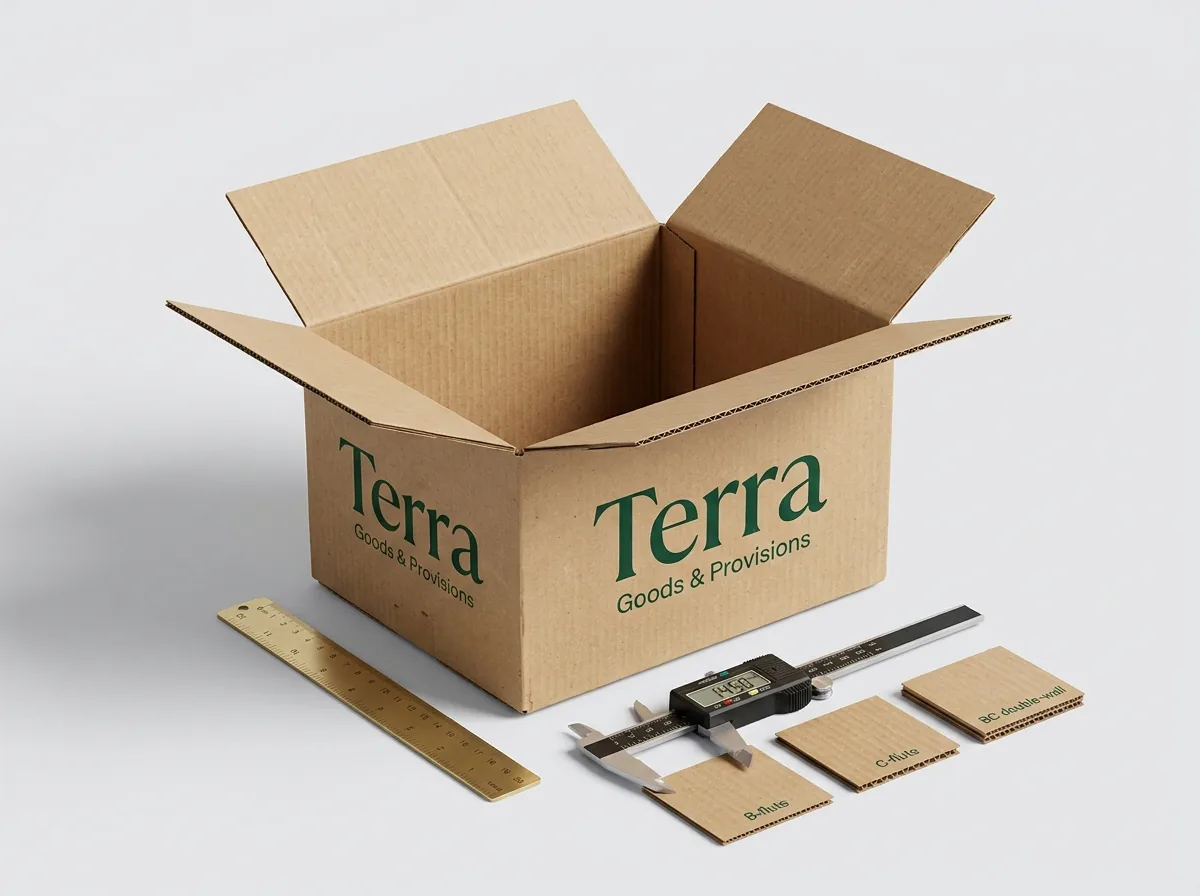
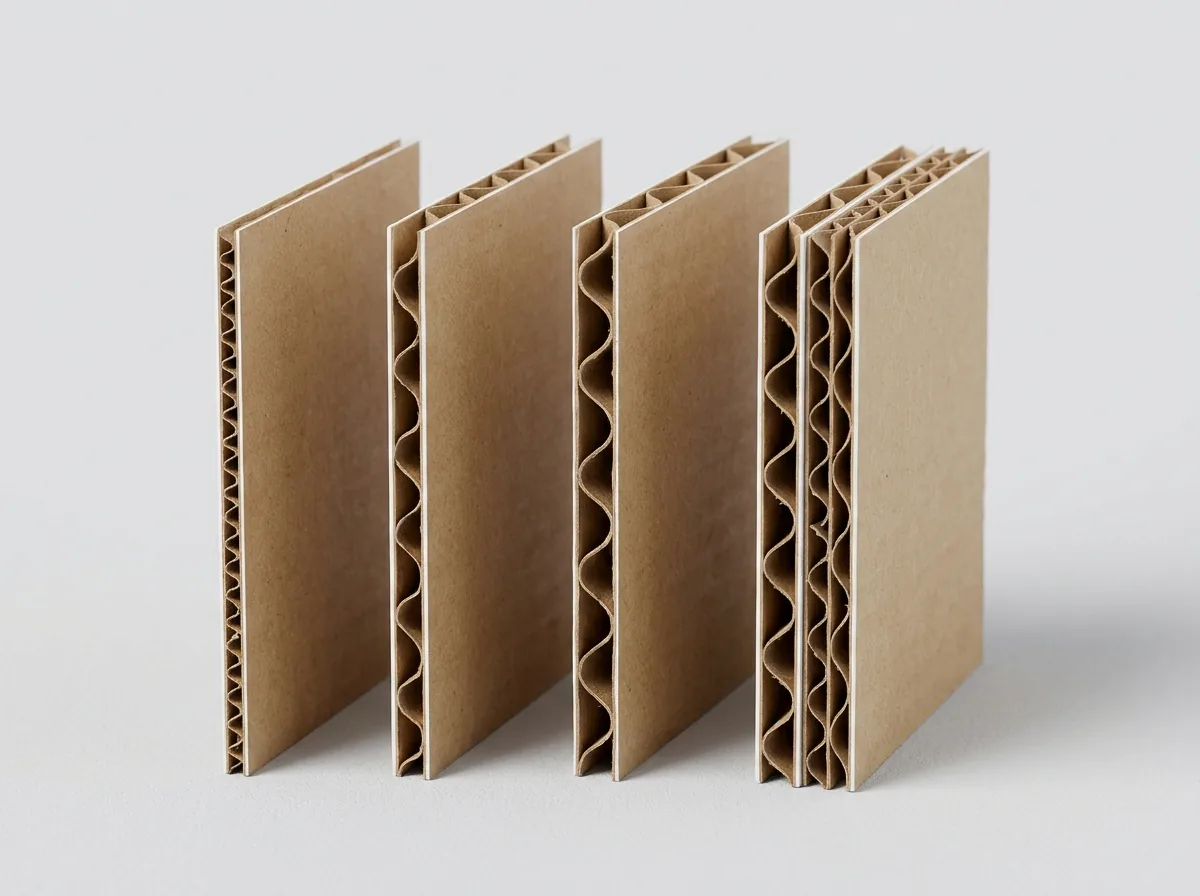
Because corrugated shipping walls range from 1/8 inch (3.2 mm B-flute) to 9/32 inch (7.1 mm BC double-wall) and fold into four flap layers at the top and bottom, the outside of a Regular Slotted Container (RSC, FEFCO 0201) is 0.25 to 1.12 inches larger than the inside cavity. For that reason, every dimension you enter on our quote form is the usable interior measurement in Length × Width × Height (L × W × H) order. Start by arranging your single item, multi-pack bundle, or master case grid on a flat table in its upright shipping orientation. Measure the longer horizontal opening side as Length (L), the shorter horizontal opening side as Width (W), and the vertical depth from the floor to the top flap score as Height (H). Add 1/8 to 1/4 inch for rigid cartons, or 1 to 2 inches per wall when wrapping fragile glass or hardware in honeycomb pads, corrugated dividers, or EPE foam.
What is the 3-step formula for measuring usable interior L × W × H on a shipping box?
When you request a quote on our shipping boxes page or our corrugated boxes page, enter the usable interior cavity in Length × Width × Height (L × W × H) order as standardized by the Fibre Box Association (FBA) and FEFCO code 0201
- Step 1, Interior Length (L, longer horizontal opening side): Arrange your pack-out on a flat bench in its upright transit orientation (caps on bottles and jars must always point toward the top flaps). Measure the longest horizontal opening dimension from left to right. The two outer major flaps, which fold inward to meet at the center tape seam, always hinge off the two Length walls. For pre-boxed retail cartons or folded apparel, add 1/8 to 1/4 inch (3 to 6 mm) of loading clearance. For fragile items cushioned in honeycomb wrap or EPE foam end-caps, add 1.0 to 2.0 inches per wall (+2.0 to +4.0 inches total to L).
- Step 2, Interior Width (W, shorter horizontal opening side): Measure the narrower horizontal opening dimension from front to back across the top opening. The two inner minor flaps (dust flaps) hinge off the two Width walls. Add 1/8 to 1/4 inch for rigid cartons or +2.0 to +4.0 inches total when using perimeter foam or cushioning pads.
- Step 3, Interior Height (H, vertical depth from bottom flaps to top score): Measure the vertical height of your stacked product assembly from the inside floor to the top flap crease. Include any bottom corrugated pad (+0.125 to +0.25 in), top foam pad, or branded tissue layer so the top major flaps fold flat at 90 degrees without bulging upward or caving inward.
- Multi-jar corrugated cell dividers (4-, 6-, or 12-cell partitions): When packing glass jars or bottles inside interlocking corrugated dividers, add the thickness of every internal partition wall (for example, three internal B-flute cross walls add 3 × 0.125 in = 0.375 in) plus 1/16 inch per cell so bottles slide in smoothly on the packing line.
How do interior dimensions convert to outside carrier DIM weight dimensions?
While packaging manufacturers build boxes to your usable interior L × W × H, parcel carriers (UPS, FedEx, and USPS) calculate dimensional (DIM) weight from the outside L × W × H of the sealed box. Here is how flute thickness and DIM billing work together on custom ecommerce boxes and custom mailer boxes
- Why Outside Height (H) grows by 4 wall thicknesses: On a Regular Slotted Container (RSC), two side walls add 2 wall thicknesses to outside Length and Width. At both the top and the bottom, however, the two inner minor flaps fold in first and the two outer major flaps fold directly on top of them, adding 4 full wall thicknesses to the outside Height.
- Outside wall adders by flute profile: For B-flute (1/8 in wall), add +1/4 inch to interior L and W and +3/8 to +1/2 inch to H. For C-flute (5/32 in wall), add +3/8 inch to interior L and W and +5/8 inch to H. For BC double-wall (9/32 in wall), add +5/8 inch to interior L and W and +1.0 to +1.125 inches to H.
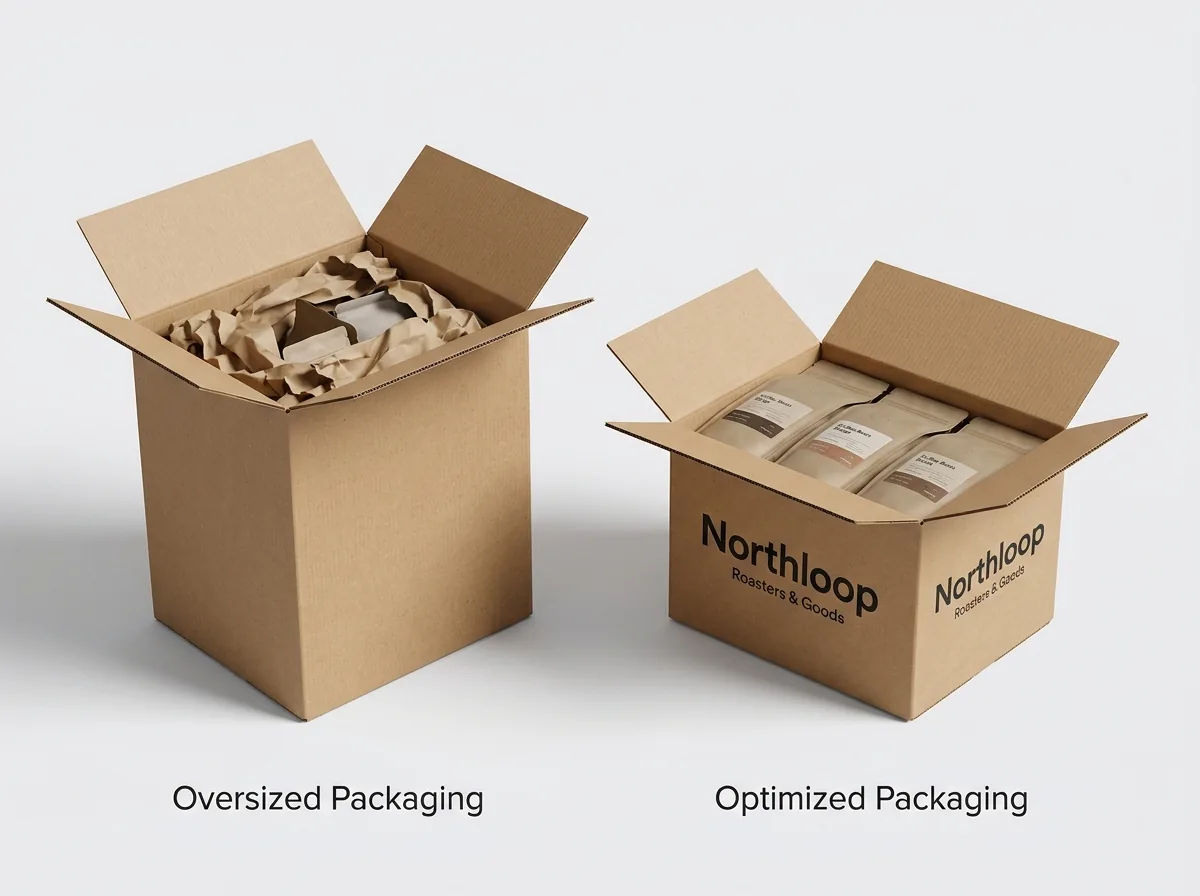
- Carrier DIM Weight formula (Exterior L × W × H ÷ 139): UPS and FedEx commercial rates divide your exterior cubic inches by 139 (USPS divides parcels over 1,728 cubic inches by 166) and bill whichever is higher: actual scale weight or DIM weight. Right-sizing a 3 lb order from a stock 14 × 12 × 10 in box (1,680 cu in = 13 lb DIM weight) down to a custom 12 × 10 × 6 in box (720 cu in = 6 lb DIM weight) cuts 7 billable pounds on every single shipment.
- Staying under the 1-cubic-foot (1,728 cu in) threshold: If you want a C-flute RSC to measure strictly 12.0 × 12.0 × 12.0 inches on the outside for carrier laser scanners, order an interior size of 11.5 × 11.5 × 11.25 inches.
Should I choose 32 ECT, 44 ECT, or 48 ECT double-wall corrugated board?
Corrugated shipping board is graded by its flute arch height (E, B, C, or BC) and its Edge Crush Test (ECT, in lb per linear inch of vertical stacking resistance) or Mullen Burst rating (in psi of puncture pressure). Use this engineering table to select the right board grade for your gross parcel weight
| Board grade & flute profile | Wall caliper & arch count | Safe gross weight & united inches | Best shipping & fulfillment applications |
|---|---|---|---|
| 32 ECT E-flute (Single-wall) | 1/16 in (1.6 mm) · ~90 flutes/ft | Up to 15 lb · Max 50 united in | Compact subscription mailers, cosmetics kits, flat apparel, small parts |
| 32 ECT B-flute (Single-wall) | 1/8 in (3.2 mm) · ~47 flutes/ft | Up to 30 lb · Max 65 united in | Branded DTC e-commerce RSCs, canned beverages, high-coverage print |
| 32 ECT C-flute (Standard single) | 5/32 in (4.0 mm) · ~39 flutes/ft | Up to 35–40 lb · Max 75 united in | Workhorse e-commerce shipping cartons, dry pantry food, multi-item orders |
| 44 ECT / 275# C-flute (Heavy single) | 5/32 in (4.0 mm) · Heavy kraft liners | 40 to 65 lb · Max 95 united in | Wholesale retail master cases, tall 5-layer pallets, cold-chain humidity |
| 48–51 ECT BC-flute (Double-wall) | 9/32 in (7.1 mm) · B + C 5-ply wall | 65 to 100+ lb · Max 110+ united in | Cast-iron cookware, 6–12 glass bottles, metal auto parts, moving cartons |
Know your size? Compare pricing across up to 3 quantities.
Request a Quote →What are standard custom shipping box sizes across major product categories?
Every shipping box at CubitPack is cut and scored to your exact interior dimensions so you never pay to ship empty air. Whether you are ordering custom subscription boxes, custom food boxes, custom apparel boxes, custom moving boxes, custom kitchenware boxes, custom sports equipment boxes, or custom auto parts boxes, use these benchmark interior specs as a starting point
| Shipping application | Typical pack-out & insert setup | Recommended inside L × W × H (in) | Recommended flute & ECT grade |
|---|---|---|---|
| DTC apparel & footwear bundle | Hoodie + 2 tees + shoe box in tissue | 14.0 × 10.0 × 6.0 in | 32 ECT B-flute or C-flute single-wall |
| Monthly pantry subscription box | 4 glass artisan jars in corrugated divider | 11.0 × 9.0 × 5.5 in | 32 ECT B-flute w/ 4-cell partition |
| Chilled meal-prep food shipper | 6 meal trays inside honeycomb thermal liner | 13.5 × 11.5 × 9.5 in | 44 ECT C-flute (humidity-resistant kraft) |
| 6-bottle wine or olive oil case | Six 750 ml glass bottles standing upright | 11.5 × 8.0 × 13.5 in | 48 ECT BC double-wall + 6-cell divider |
| Enameled cast-iron Dutch oven | 7-qt pot suspended in corrugated buffers | 15.5 × 13.5 × 8.5 in | 48 ECT BC double-wall + die-cut buffers |
| Pickleball or racket gear kit | 2 carbon paddles + 4 balls in card tray | 17.5 × 11.0 × 3.5 in | 32 ECT B-flute single-wall |
| Machined automotive brake or pump part | Heavy metal assembly in EPE foam end-caps | 12.0 × 12.0 × 10.0 in | 51 ECT BC double-wall + EPE foam |
| Medium household moving & storage carton | Books, kitchenware, and home organization | 18.0 × 14.0 × 12.0 in | 44 ECT C-flute or 48 ECT BC w/ handles |
How do I verify my shipping box size and board strength before ordering?
After calculating your interior L × W × H, read our structural comparison, RSC shipping boxes vs die-cut mailers and double-wall boxes, and our prepress engineering guide, shipping box dieline, flutes, and ECT ratings explained. Standard production at CubitPack takes 10–14 business days (4–5 day rush available), with free 2D dielines and 3D digital mockups before payment and free shipping across all 50 US states.
- Step 1: Measure your packed product group (plus any corrugated divider, honeycomb pad, or EPE foam cushion) and record the usable interior Length × Width × Height to the nearest 1/8 inch.
- Step 2: Add the wall thickness allowance (+1/4 in to +5/8 in for L/W and +3/8 in to +1.0 in for H) to check your outside carrier DIM weight (Exterior L × W × H ÷ 139).
- Step 3: Select 32 ECT single-wall up to 35 lb, 44 ECT single-wall from 35 to 65 lb, or 48–51 ECT custom double-wall boxes for heavy or fragile goods, then review your free 2D vector dieline and 3D proof before payment.
What are the most common sizing and board mistakes on custom shipping boxes?
Check your shipping carton specifications against these five costly fulfillment mistakes before approving your dieline
- Measuring the outside of an existing corrugated box instead of the usable interior L × W × H, which shrinks your new inside cavity by 1/4 inch to more than 1 inch once the fluted walls and four flap layers fold in.
- Ordering a 12 × 12 × 12 inch interior box expecting it to qualify as a 1-cubic-foot parcel, when the exterior walls push it to 12.38 × 12.38 × 12.63 inches (1,936 cu in) and trigger a higher DIM weight bracket.
- Leaving 2 to 4 inches of empty vertical headspace above the product, allowing the top RSC flaps to cave in when heavy parcels are stacked on top in a carrier trailer.
- Packing 45 lb of glass bottles or cast-iron cookware into a standard 32 ECT single-wall box instead of upgrading to 44 ECT single-wall or 48 ECT BC double-wall board with internal dividers.
- Forgetting to add the thickness of internal corrugated partition walls (+1/8 in per B-flute cross wall) when sizing a 6-cell or 12-cell bottle shipper.
Packaging for this

Ready to order shipping boxes? Compare up to 3 quantities with a free 3D mockup.
Request a Quote →Questions about shipping boxes
Are shipping box dimensions always listed as inside or outside measurements?
Shipping box dimensions are always listed as usable interior measurements in Length × Width × Height (L × W × H) order. Only carrier dimensional weight calculators use outside dimensions, which are 1/4 to 1 inch larger depending on the flute caliper.
Which dimension is Length and which is Width on a rectangular shipping box?
Look straight down into the open top of the box: Length (L) is always the longer horizontal side of the opening (where the outer major flaps hinge), and Width (W) is the shorter horizontal side (where the inner minor flaps hinge).
Can I list the vertical height first if my shipping box is taller than it is wide?
No. Even on a tall tower box, the third number (Height / H) is always the dimension perpendicular to the opening flaps. If the flaps open at the top, list the two horizontal opening sides as L × W first and the vertical depth as H third.
Does 32 ECT or 44 ECT hold up better in humid cold-chain storage?
High humidity softens paper fibers and can reduce corrugated stacking compression strength by 30% to 50% over several days. For refrigerated food or humid summer warehouses, upgrade from 32 ECT to 44 ECT single-wall or 48 ECT double-wall with virgin kraft liners.
How can I check my shipping box size before paying for a full production run?
Every order includes a free 2D vector dieline proof and 3D digital mockup before payment, and you can also order our $50 sample kit (credited toward your production order) to inspect corrugated board grades and print finishes in person.
Still have a question? Ask a packaging specialist.
Request a Quote →Request your shipping boxes quote
Tell us your size and quantities, and one dedicated account manager prepares pricing for each tier.
- Free design & AI-to-print studio + 3D mockup
- No die or plate charges · 4–5 day rush available
- Free shipping to all 50 states
- 10% off your first order
We verified interior Length × Width × Height measurement rules, B/C/E/BC flute wall allowances, carrier dimensional weight divisors, and 32–51 ECT load tables against Fibre Box Association (FBA) handbooks, FEFCO 0201 specifications, and ISTA 3A parcel testing protocols. A packaging specialist checked every formula and size row. Spot something wrong? Tell us and we fix it.
Sources
What changed
- October 25, 2026: First published with 3-step interior L × W × H formula, interior-to-exterior DIM weight math, 32–51 ECT board chart, and 8-category shipping box size table.
More guides
New packaging guides by email
Sizes, materials and design tips. Unsubscribe anytime.