
How Do 32 ECT, 44 ECT, and Double-Wall Corrugated Moving Boxes Compare?
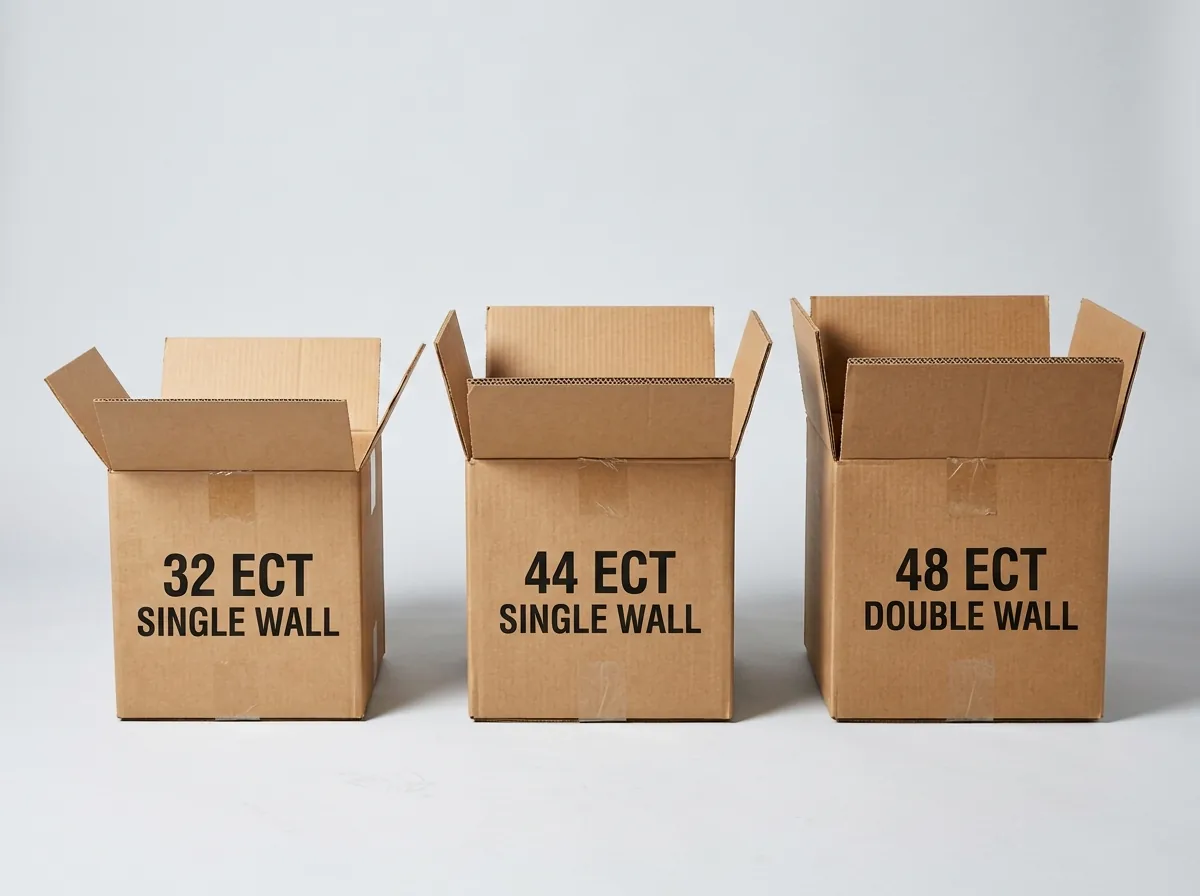
Short answer: 32 ECT single-wall moving boxes handle lightweight linens and clothing up to 35 pounds. Upgrading to 44 ECT single-wall supports heavy books and pantry items up to 65 pounds, while 48 ECT double-wall delivers extreme crush defense for fragile china and electronics up to 100 pounds.
On this page
- What laboratory testing procedures define the Edge Crush Test (ECT)
- How does 32 ECT single-wall C-flute board perform for general household moving
- Why is 44 ECT single-wall corrugated board essential for books and pantry goods
- What structural layers distinguish 48 ECT BC-flute double-wall corrugated board
- How do environmental humidity cycles degrade corrugated box stacking strength
- What top-load pallet stacking limits apply to each ECT corrugated grade
- How do corrugated cell divider inserts safeguard fragile dishware
- What carrier weight limits and Box Maker Certificates govern parcel shipping
- Common mistakes
- FAQs
Request a custom quoteFree dieline & 3D mockup
Choosing the correct corrugated board strength rating for residential and corporate relocations prevents catastrophic box collapse, bottom blowouts, and damaged household cargo. When configuring custom moving boxes, packaging engineers evaluate corrugated fiberboard using the standardized Edge Crush Test (ECT). Under ASTM D2808 testing, ECT measures the top-to-bottom compressive force in pounds per linear inch that a vertical corrugated sample withstands before buckling. Standard 32 ECT single-wall C-flute board provides an economical solution for lightweight items like apparel, pillows, and bedding weighing under 35 pounds. For dense, heavy items such as books, hand tools, kitchen pots, and canned goods, upgrading to heavy-duty 44 ECT single-wall board prevents carton bulging under dynamic transit vibrations. For fragile porcelain dishware, glassware, and computer monitors, heavy 48 ECT to 51 ECT BC-flute double-wall board delivers unmatched crush protection. When ordering corrugated moving cartons, our packaging specialists provide certified lab test data, dielines, and volume bundle pricing.
What laboratory testing procedures define the Edge Crush Test (ECT)?
The Edge Crush Test, standardized under TAPPI T811 and ASTM D2808, evaluates the true top-to-bottom compressive strength of corrugated fiberboard. Laboratory technicians place a precision-cut rectangular corrugated specimen with flutes oriented vertically between two parallel rigid platen steel plates. A motorized compression drive applies increasing downward force at a constant rate until the fluted structure buckles. The maximum force recorded in pounds per linear inch represents the ECT value. A 32 ECT rating indicates the specimen withstood 32 pounds per linear inch, whereas 44 ECT withstands 44 pounds. This metric directly predicts the vertical stacking strength of finished shipping boxes inside delivery vans and warehouse storage racks.
How does 32 ECT single-wall C-flute board perform for general household moving?
Standard 32 ECT corrugated board is constructed in a single-wall architecture comprising an unbleached outer kraft liner, an inner kraft liner, and a central fluted wave medium. In North American moving logistics, C-flute is the industry standard profile, measuring approximately 4.0 mm (5/32 inches) in thickness with 39 fluting arches per linear foot. The arches act as miniature structural columns that absorb transit shocks and provide balanced vertical rigidity. While 32 ECT board handles bulky, lightweight household items such as folded clothing, pillows, winter blankets, and lampshades up to 35 pounds, packing dense books or canned food in 32 ECT boxes risks bottom seam bursting.
Why is 44 ECT single-wall corrugated board essential for books and pantry goods?
When packing dense consumer goods like hardcover book libraries, vinyl record collections, kitchen canned goods, and metal hand tools, box payloads quickly reach 50 to 65 pounds. Subjected to these heavy internal forces, standard 32 ECT boxes bow along their sidewalls, losing over 40% of their stacking strength and sagging under transit vibrations. Heavy-duty 44 ECT single-wall corrugated board utilizes heavier basis weight linerboards, typically upgrading from standard 35 lb liners to rugged 42 lb or 69 lb virgin kraft linerboards. The heavier liners increase puncture resistance by 35% and provide the beam stiffness required to transport dense payloads safely.
Know your size? Compare pricing across up to 3 quantities.
Request a Quote →What structural layers distinguish 48 ECT BC-flute double-wall corrugated board?
Double-wall corrugated fiberboard, rated at 48 ECT to 51 ECT, features a rugged 5-ply laminated architecture consisting of three flat kraft linerboards sandwiching two distinct fluted mediums. Packaging converters combine a dense B-flute outer layer (3.0 mm thick, 47 flutes per foot) with a tall C-flute inner layer (4.0 mm thick, 39 flutes per foot), creating a combined BC-flute wall thickness of 6.5 mm (1/4 inch). The outer B-flute layer provides high puncture resistance against external impacts, while the inner C-flute layer cushions internal cargo. Under standardized compression testing, double-wall boxes withstand static top loads exceeding 1,100 pounds, making them ideal for heavy dish packs.
How do environmental humidity cycles degrade corrugated box stacking strength?
Because cellulose wood fibers naturally absorb ambient moisture vapor, corrugated cardboard experiences significant compression strength loss in humid environments. In commercial moving logistics, moving vans and self-storage warehouses frequently experience relative humidity levels exceeding 80%. Laboratory testing confirms that corrugated board conditioned from standard 50% relative humidity to 85% relative humidity loses approximately 40% to 50% of its initial ECT compressive strength. Packaging engineers compensate for this humidity degradation by applying environmental safety factors, recommending 44 ECT board for moves involving overnight van transit or extended storage in humid climates.
What top-load pallet stacking limits apply to each ECT corrugated grade?
Determining safe stacking heights inside moving trucks requires applying McKee formula compression calculations. A standard 32 ECT medium moving box achieves a laboratory compressive failure load of approximately 400 pounds. After applying dynamic transport safety factors (typically 4:1 for moving trucks to account for road vibration, pallet overhang, and humidity), the safe working stack load drops to roughly 100 pounds, allowing boxes to stack 3 tiers high. A 44 ECT box delivers a failure load of 650 pounds, supporting 5 stacked tiers safely. A double-wall 48 ECT box withstands over 1,100 pounds, enabling full-height truck ceiling stacking without crushing lower cartons.
How do corrugated cell divider inserts safeguard fragile dishware?
While heavy-duty double-wall outer cartons prevent external crushing, interior items can still sustain impact damage if allowed to strike against each other during transit. Moving packaging specialists configure dish pack cartons with interlocking corrugated cell partition grids. Manufactured from 32 ECT B-flute board, the partition grids assemble into 12 to 24 isolated square compartments that separate delicate porcelain plates, wine glasses, and ceramic mugs. Layer pads placed between tiers provide horizontal shock absorption, ensuring fragile stemware arrives intact without expensive bubble wrap or foam peanuts.
What carrier weight limits and Box Maker Certificates govern parcel shipping?
Every commercial corrugated moving carton features a circular Box Maker Certificate (BMC) printed on a bottom flap that certifies adherence to National Motor Freight Traffic Association (NMFTA) Item 222 and carrier shipping standards. A 32 ECT single-wall certificate authorizes a maximum gross payload weight of 65 pounds and a maximum combined outside dimension (L + W + H) of 75 inches. A 44 ECT certificate authorizes up to 80 pounds and 85 inches, while a 48 ECT double-wall certificate authorizes up to 100 pounds and 95 inches. Exceeding certified BMC limits risks carrier surcharge penalties and cargo damage.
What are common mistakes when selecting moving box ECT ratings?
Choosing incorrect corrugated board strengths leads to damaged cargo and packing failures. Packaging specialists highlight four frequent errors
- Packing dense hardcover books in lightweight 32 ECT boxes, causing bottom flap seams to split and burst open during carrying.
- Using single-wall cartons for fragile glassware and dish sets instead of heavy double-wall dish packs with corrugated partitions.
- Ignoring humidity degradation factors during summer relocations, resulting in crushed lower cartons inside storage units.
- Overloading large 4.5 cubic foot boxes with heavy tools, creating unsafe lifting conditions that exceed certified carrier weight limits.
Packaging for this


Ready to order moving boxes? Compare up to 3 quantities with a free 3D mockup.
Request a Quote →Questions about moving boxes
What is the weight limit for a 32 ECT corrugated moving box?
A 32 ECT single-wall moving box is rated for a maximum gross weight of 65 pounds under freight classification rules. For safe manual handling and stack stability, we recommend packing payloads under 35 pounds for lightweight household items.
When should I choose 44 ECT instead of 32 ECT for moving?
Choose 44 ECT single-wall corrugated board when packing dense, heavy household items like hardcover books, canned pantry foods, power tools, or kitchen cookware, as 44 ECT board provides roughly 40% higher vertical stack strength.
Are double-wall moving boxes necessary for ordinary household items?
No. Double-wall boxes are generally unnecessary for soft goods or general decor. They are specifically engineered for heavy, fragile items such as porcelain dinner sets, glassware, flat-screen monitors, and valuable antiques.
How does C-flute single-wall compare to BC-flute double-wall thickness?
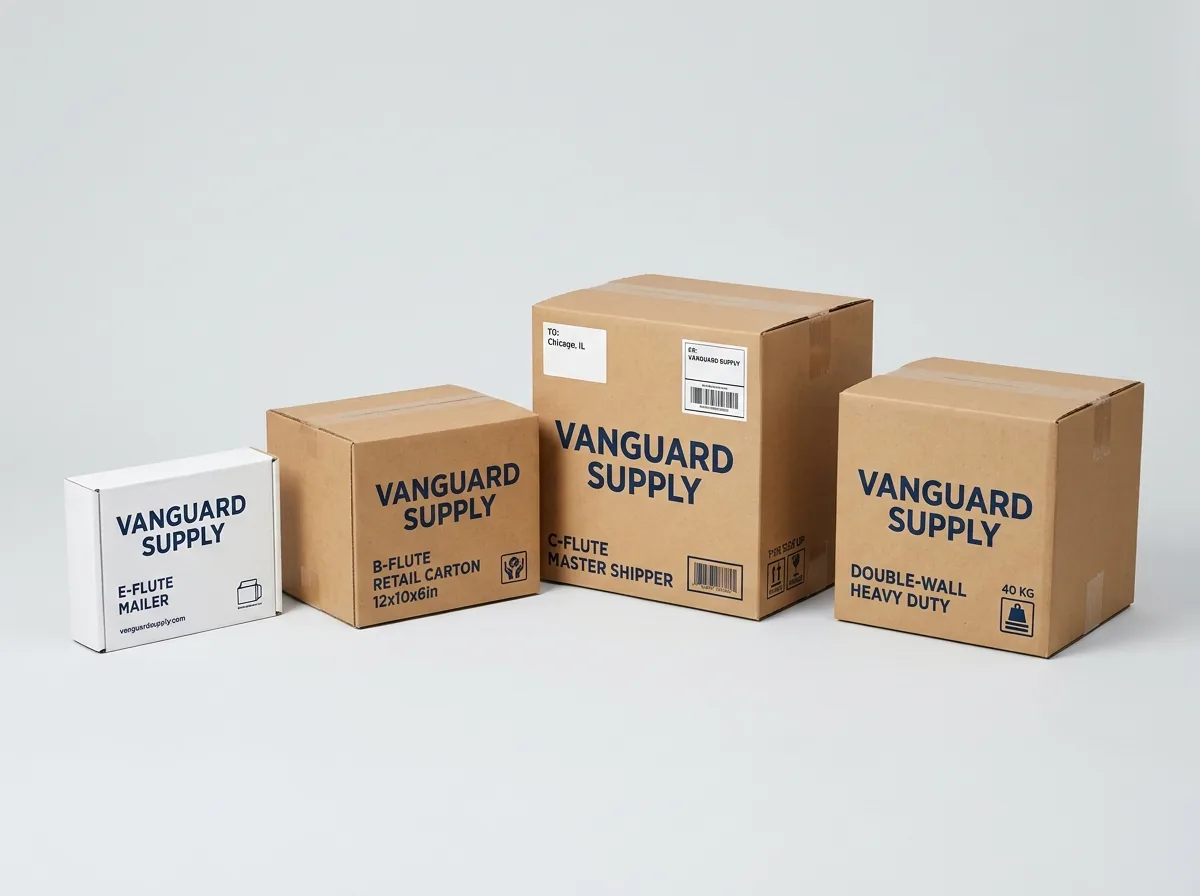
C-flute single-wall board measures approximately 4.0 mm (5/32 in) thick with 39 flutes per foot. BC-flute double-wall board combines a B-flute layer and C-flute layer, measuring approximately 6.5 mm (1/4 in) thick with dual shock-absorbing arches.
Can custom moving boxes with different ECT ratings be printed with our company logo?
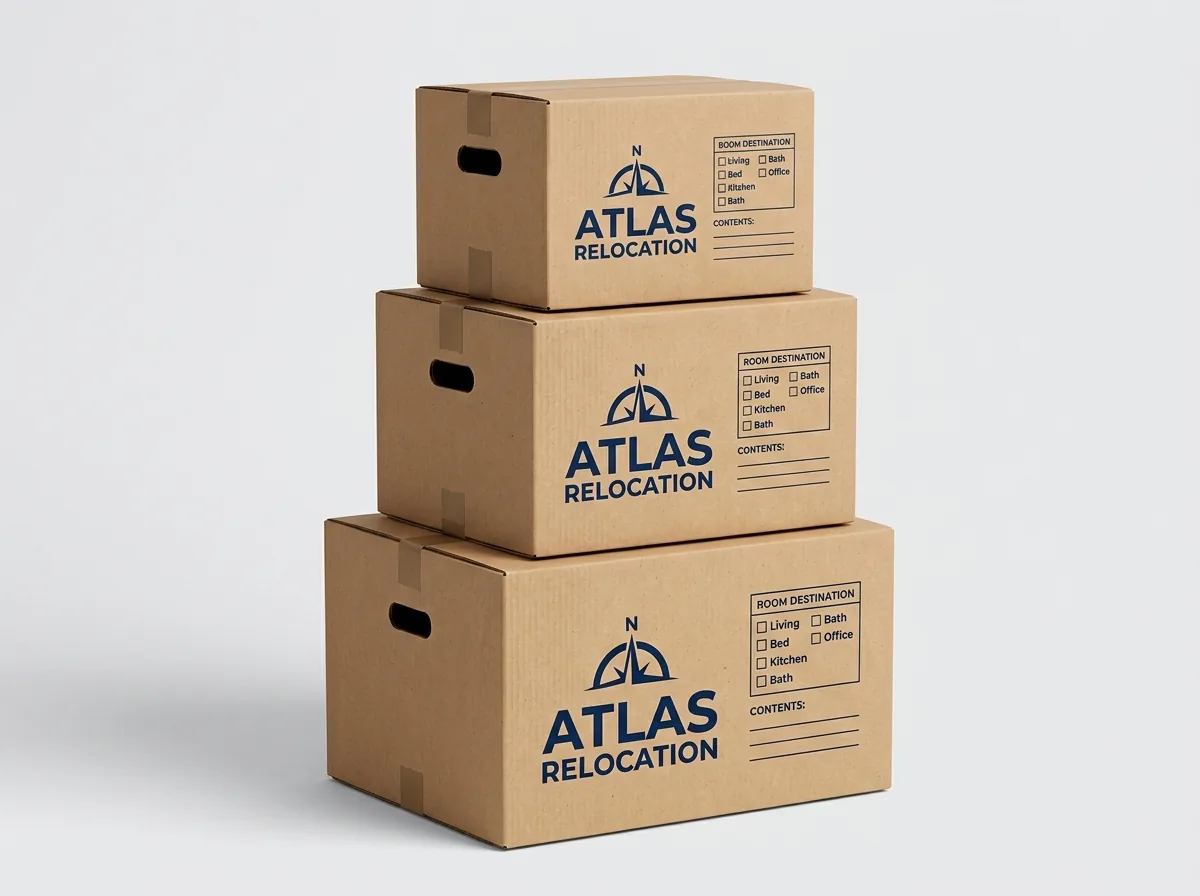
Yes. We print your moving company branding, contact details, and standardized room checklists in 1 or 2 durable flexographic colors across 32 ECT, 44 ECT, and double-wall boxes with zero printing plate tooling charges.
What is the minimum order quantity for custom printed ECT moving boxes?
Our minimum order quantity starts at 100 units flat-packed in strapped bundles of 25 boxes, featuring free 2D vector CAD dielines, digital proofing, and free standard freight delivery across commercial US addresses.
Still have a question? Ask a packaging specialist.
Request a Quote →Request your moving boxes quote
Tell us your size and quantities, and one dedicated account manager prepares pricing for each tier.
- Free design & AI-to-print studio + 3D mockup
- No die or plate charges · 4–5 day rush available
- Free shipping to all 50 states
- 10% off your first order
Researched against Fibre Box Association corrugated standards, ASTM D2808 Edge Crush Test metrics, and TAPPI T811 compressive protocols. Verified by CubitPack packaging specialists.
Sources
What changed
- November 11, 2026: Initial publication of technical engineering guide on 32 ECT vs 44 ECT vs double-wall corrugated moving boxes with 5 CAD SVGs.
More guides
New packaging guides by email
Sizes, materials and design tips. Unsubscribe anytime.