
How Do You Optimize Custom Folding Cartons for Flat Storage and Fast Packing?
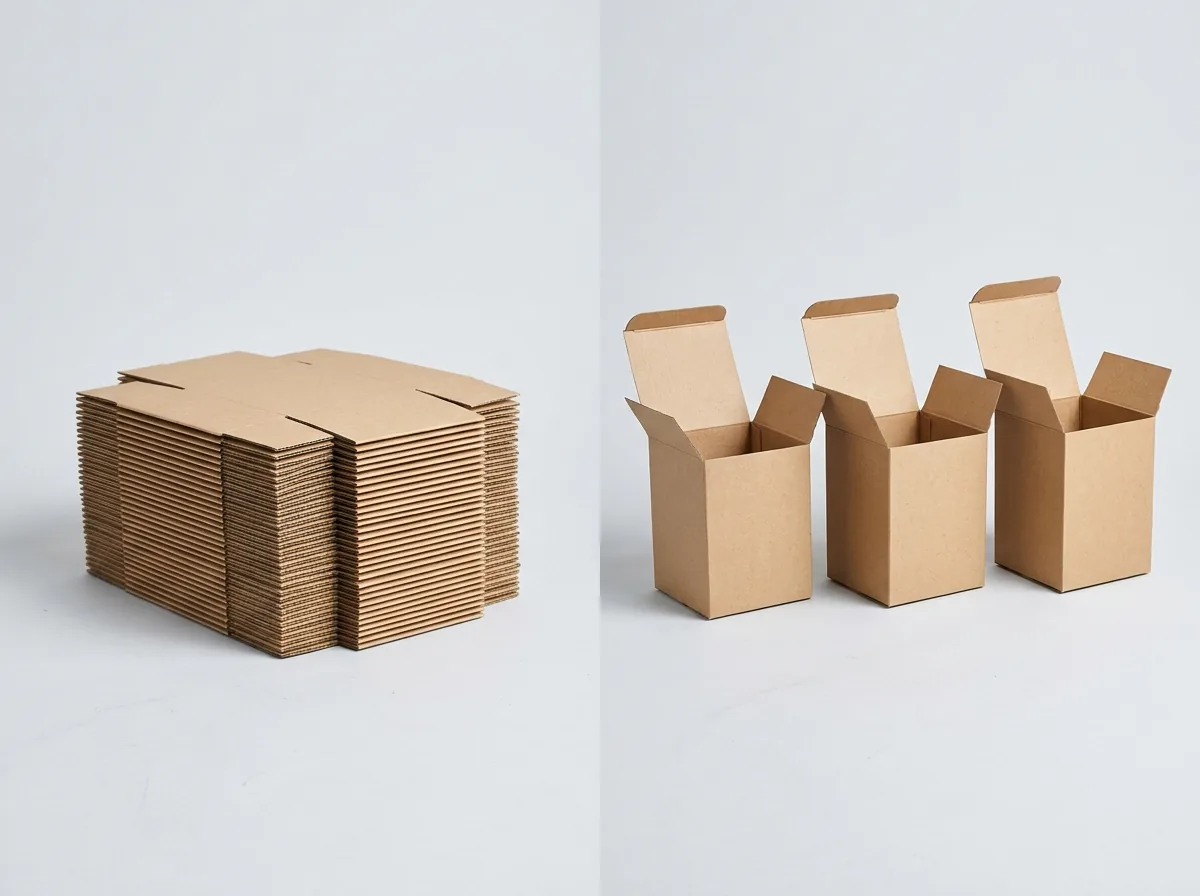
Short answer: Folding cartons ship flat in high-density corrugated master cases to minimize incoming shipping freight and warehouse storage footprint. Hand-filled lines save significant labor using pre-glued auto-lock bottoms that pop open instantly, while high-speed automated cartoning equipment utilizes flat-tuck carton blanks fed smoothly through rotary suction cup magazines.
On this page
- Why does flat-packed carton delivery reduce freight and storage costs
- How do pre-glued auto-lock bottoms accelerate manual packing lines
- What automated cartoning machine tolerances ensure jam-free operation
- How should flat cartons be stored in warehouses to prevent warping
- What are the best bundle packing and palletizing practices
- How do tamper-evident wafer seals and tear strips integrate into packing
- How do automated carton erectors handle flat magazine feeding
- What are the best warehouse inventory management practices for cartons
- Common mistakes
- FAQs
Request a custom quoteFree dieline & 3D mockup
Optimizing packaging fulfillment efficiency requires balancing flat pallet storage density with rapid carton erection speeds on manual or automated pack lines. When ordering custom folding cartons, choosing between pre-glued auto-lock bottoms, straight tuck ends, and reverse tuck closures dictates warehouse labor hours and overall operational throughput. Flat-packed folding cartons ship collapsed at five hundred to one thousand units per master corrugated carton, reducing incoming freight expenses and warehouse rack footprints by up to sixty percent compared to rigid setup boxes. On manual packing benches, auto-lock cartons pop open in under two seconds to support heavy glass jars up to three pounds without bottom tape. When configuring high speed retail folding cartons, our packaging specialists test scoreline stiffness, grain direction, and friction tuck tolerances to guarantee smooth feeding across rotary magazines and manual packing stations.
Why does flat-packed carton delivery reduce freight and storage costs?
Warehouse storage economics depend heavily on carton flat-pack density. Because paperboard folding cartons ship completely flat after side-seam gluing, a single 40x48-inch wooden shipping pallet can comfortably hold between 15,000 and 30,000 collapsed folding cartons. In contrast, rigid setup boxes or pre-assembled containers ship empty with internal air pockets, consuming up to ten times more cubic warehouse rack space. For fast-growing consumer packaged goods brands with limited warehouse floor area, stocking flat paperboard cartons dramatically reduces storage costs. Standard corrugated master cases of flat cartons stack cleanly up to five tiers high on pallet racks without corner crush or bundle bowing.
How do pre-glued auto-lock bottoms accelerate manual packing lines?
Fulfillment assembly speed varies considerably depending on the chosen bottom closure engineering. On manual fulfillment lines where warehouse workers erect and pack cartons by hand, auto-lock crash bottom cartons offer unmatched assembly speed. A packer simply presses opposing side edges, and the bottom flaps snap into place in approximately two seconds. Straight tuck end and reverse tuck end cartons require manual folding of top and bottom dust flaps and closure tabs, averaging four to six seconds per box. When processing five thousand orders per week, auto-lock bottoms save dozens of fulfillment labor hours. Workstation ergonomic studies demonstrate that eliminating repetitive base-tuck motions reduces operator wrist fatigue during eight-hour fulfillment shifts.
What automated cartoning machine tolerances ensure jam-free operation?
High-speed automated packaging lines require carton blanks engineered to strict dimensional tolerances. Rotary continuous-motion and intermittent-motion cartoners rely on vacuum suction cups to pull flat cartons from a vertical feed magazine and erect the tubular body at speeds ranging from 60 to over 300 cartons per minute. Proper paperboard score line creasing is essential: score bend resistance must remain within specified milliNewton ranges to prevent machine jams or incomplete flap seating. Carton blanks with excessive spring-back force can overload mechanical tuck fingers, causing micro-stops on the automated conveyor line. Dynamic stroboscopic monitoring verifies that score bend force remains under 110 milliNewtons across both machine direction and cross direction fibers.
Know your size? Compare pricing across up to 3 quantities.
Request a Quote →How should flat cartons be stored in warehouses to prevent warping?
Paperboard is an organic cellulose material that naturally absorbs and releases environmental moisture based on ambient atmospheric conditions. When flat folding cartons are stored in non-climate-controlled warehouse facilities, fluctuating relative humidity can cause paperboard edges to absorb moisture faster than the core, resulting in edge curl or carton warping. Warped cartons can cause mechanical misfeeds on automated packaging equipment. For optimal carton stability, store flat bundled cartons at 68 to 72 degrees Fahrenheit (20 to 22 degrees Celsius) with relative humidity maintained between 45% and 55%, and keep cartons sealed in stretch-wrapped master cases until ready for line loading. Careful attention to scoreline creasing depth prevents unsightly paperboard surface cracking along 180-degree folds, preserving crisp high-resolution full-color exterior lithographic printing. Careful attention to scoreline creasing depth prevents unsightly paperboard surface cracking along 180-degree folds, preserving crisp high-resolution full-color exterior lithographic printing.
What are the best bundle packing and palletizing practices?
Proper pallet stacking protocols prevent carton damage during transit from manufacturing plant to distribution center. Folding cartons are packed into heavy-duty corrugated master cartons in counts of 250, 500, or 1,000 units, banded with plastic strapping to prevent shifting. Master cartons are palletized in interlocking column stacks on standard GMA 40 × 48 inch wooden pallets, with heavy cornerboard edge protectors reinforcing vertical pallet corners. Stretch film is applied with uniform tension across the entire pallet load, securing cartons against pallet shifting while preventing dust contamination during long-term warehouse storage. Rigorous prepress file preparation ensures that vector dielines maintain exact 0.125-inch artwork bleeds and safe margins, preventing critical logos from getting trimmed off during rotary die-cutting. Rigorous prepress file preparation ensures that vector dielines maintain exact 0.125-inch artwork bleeds and safe margins, preventing critical logos from getting trimmed off during rotary die-cutting.
How do tamper-evident wafer seals and tear strips integrate into packing?
Ensuring that retail products arrive uncompromised on store shelves is a critical brand protection requirement. Folding cartons integrate tamper-evident security features efficiently into standard packaging workflows. Perforated zipper tear strips can be die-cut directly into the top closure panel, requiring consumers to tear the paperboard strip to access the product. Alternatively, automated labeling equipment can apply clear round wafer seals or holographic security labels over the top tuck seam. These visible tamper-evident cues reassure retail consumers that the product has not been opened or adulterated since leaving the packaging facility. Operating within standard converting guidelines guarantees consistent tuck flap friction tension, allowing end consumers to easily open and reclose cartons without tearing outer paperboard panels. Operating within standard converting guidelines guarantees consistent tuck flap friction tension, allowing end consumers to easily open and reclose cartons without tearing outer paperboard panels.
How do automated carton erectors handle flat magazine feeding?
High-speed automated packaging machinery relies on consistent carton blank flatness and friction characteristics during magazine feeding. Flat pre-glued cartons are stacked vertically or horizontally inside an adjustable feed magazine. Rotary mechanical feeder arms equipped with industrial vacuum suction cups pull individual carton blanks from the bottom of the stack at cycle rates exceeding 250 units per minute. If carton blanks exhibit static cling or excessive edge burrs from dull die-cutting blades, multiple cartons can feed simultaneously, triggering optical sensor faults that halt the line. Our manufacturing facilities utilize sharp laser-cut steel rule dies and anti-static ionizing blowers during high-speed folder-gluing, ensuring clean single-carton separation and flawless mechanical feeding into automated cartoning equipment. Incorporating proper finger access thumb notches along dust flaps speeds up manual pack times while ensuring clean presentation on retail shelves. Incorporating proper finger access thumb notches along dust flaps speeds up manual pack times while ensuring clean presentation on retail shelves.
What are the best warehouse inventory management practices for cartons?
Managing large inventories of custom folding cartons requires structured warehouse controls to ensure stock freshness and production readiness. Adopt a First-In, First-Out (FIFO) inventory protocol, utilizing clear lot-numbered pallet tags that record manufacturing dates and substrate batches. Keep palletized master cartons wrapped in protective stretch film until the day of packaging to shield paperboard edges from warehouse dust and humidity swings. Never double-stack heavy pallets of folding cartons without intermediate wooden slip-sheets, as excessive vertical tonnage can compress carton scorelines and weaken pre-applied side-seam adhesives. Maintaining clean, climate-managed inventory protocols guarantees that cartons run smoothly on packaging lines even after six to twelve months of storage. Maintaining consistent humidity and temperature conditions in storage warehouses ensures paperboard retains proper moisture levels, preventing warp or brittle scorelines during automated filling. Maintaining consistent humidity and temperature conditions in storage warehouses ensures paperboard retains proper moisture levels, preventing warp or brittle scorelines during automated filling.
What mistakes happen with high speed filling and flat storage guide for folding cartons?
Our packaging specialists review every folding carton dieline to prevent these common packaging pitfalls
- Storing flat paperboard cartons in high-humidity warehouse environments, leading to moisture absorption and carton panel warping.
- Attempting high-speed automated cartoning with cartons whose scoreline opening resistance exceeds machine vacuum cup capacity.
- Stacking unstrapped carton bundles too high on pallets, crushing bottom cartons and weakening pre-glued side seams.
- Using manual tuck bottom cartons on high-volume fulfillment runs where auto-lock bottoms would cut labor time by half.
- Failing to calibrate automated cartoning push-rods to product dimensions, causing internal product scuffing during insertion.
Packaging for this






Ready to order folding cartons? Compare up to 3 quantities with a free 3D mockup.
Request a Quote →Questions about folding cartons
How many flat folding cartons fit on a standard warehouse pallet?
Depending on carton size and paperboard caliper, a standard 40 × 48 inch pallet stacked 60 inches high holds between 20,000 and 35,000 flat-packed folding cartons. Our structural specialists verify board calipers, score line depths, and folding tolerances during digital prepress review to ensure flawless operation.
Can custom folding cartons be used with automated packaging machinery?
Yes. Our folding cartons are manufactured with high-precision steel-rule rotary dies and controlled scorelines, ensuring reliable feeding on automated continuous and intermittent cartoning equipment operating at high packaging speeds.
What is the fastest folding carton style for manual hand assembly?
Auto-lock bottom (crash bottom) cartons are the fastest for hand packing. Pushing opposite folded corners snaps the bottom into a locked floor in one second with zero taping required.
How should paperboard cartons be stored to prevent warping?
Store cartons indoors at 68 to 72 degrees Fahrenheit and 45% to 55% relative humidity. Keep cartons inside sealed master shipping boxes until needed on the packing line to prevent environmental moisture absorption.
What is the difference between a pre-glued carton and an unglued flat blank?
Pre-glued cartons have their longitudinal side seam already bonded by automated folder-gluers, ready to pop open into a tube. Unglued flat blanks require on-site folding and gluing equipment.
Are master shipping cartons included with folding carton orders?
Yes. Custom folding cartons ship flat-packed in heavy-duty corrugated master cartons, strapped in bundles and palletized for safe freight delivery across all 50 US states.
Still have a question? Ask a packaging specialist.
Request a Quote →Request your folding cartons quote
Tell us your size and quantities, and one dedicated account manager prepares pricing for each tier.
- Free design & AI-to-print studio + 3D mockup
- No die or plate charges · 4–5 day rush available
- Free shipping to all 50 states
- 10% off your first order
Researched across Paperboard Packaging Council (PPC) manufacturing standards, European Carton Makers Association (ECMA) design codes, and TAPPI official test methods. Production facts verified with manufacturing specialists.
What changed
- November 11, 2026: Published technical engineering guide covering folding carton closures, paperboard calipers, and high-speed filling line optimization.
More guides
New packaging guides by email
Sizes, materials and design tips. Unsubscribe anytime.