
How Do You Select the Right Paperboard Grade and Caliper for Folding Cartons?
Short answer: Solid Bleached Sulfate (SBS) is ultra-smooth virgin white board for cosmetics; Coated Unbleached Kraft (CUK) provides maximum tear strength for heavy jars; Clay-Coated Newsback (CCNB) offers economical recycled board for dry foods. Choose 16–18 pt for lightweight items and 20–24 pt for heavy goods.
On this page
- What is Solid Bleached Sulfate (SBS) paperboard and when is it best
- How does Coated Unbleached Kraft (CUK) deliver superior tear strength
- What are the sustainability and cost benefits of Clay-Coated Newsback (CCNB)
- How do you determine the correct caliper from 14 pt to 24 pt
- What is the difference between C1S and C2S paperboard coatings
- How does wood pulp fiber grain direction affect box rigidity
- How do humidity and atmospheric conditions impact paperboard stiffness
- What laboratory test methods verify paperboard caliper and compression
- Common mistakes
- FAQs
Request a custom quoteFree dieline & 3D mockup
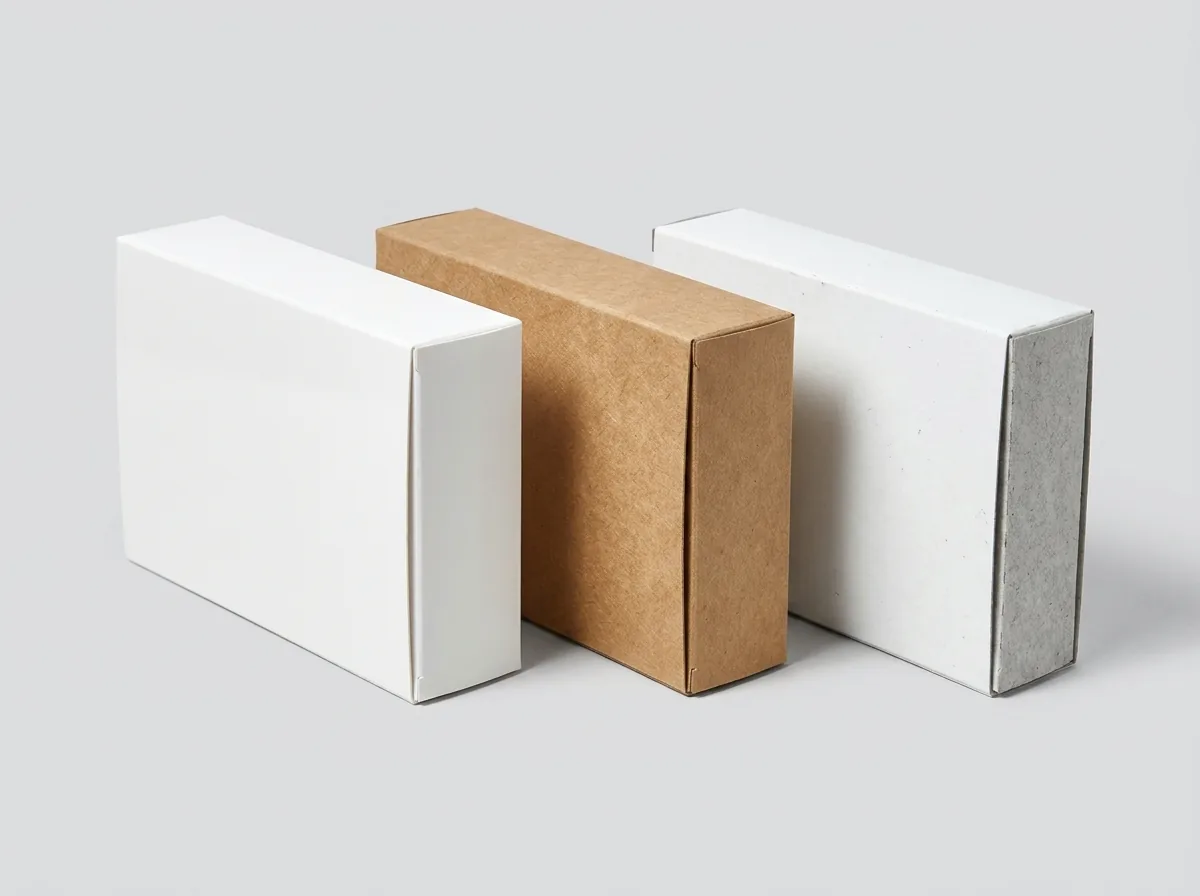
Paperboard substrate selection directly impacts structural rigidity, print brilliance, and unit packaging costs for commercial retail products. When specifying custom folding cartons, packaging buyers evaluate three primary commercial grades: solid bleached sulfate (SBS), coated one-side virgin board (C1S), and clay-coated news back (CCNB). SBS offers ultra-pure white virgin fibers throughout, providing a pristine canvas for cosmetics and premium food. C1S features a coated white clay exterior with a smooth kraft interior, delivering superior tensile tear strength for medium-weight consumer goods. CCNB incorporates up to eighty-five percent recycled post-consumer waste with a gray interior back, delivering maximum raw material economy for high-volume dry goods. When configuring printed paperboard folding cartons, our packaging specialists specify 14 pt to 24 pt calipers matched to your product weight, supported by free 2D CAD dielines and 3D digital proofs.
What is Solid Bleached Sulfate (SBS) paperboard and when is it best?
Solid Bleached Sulfate (SBS) is widely recognized as the premier paperboard grade for retail consumer packaging. Manufactured from 100% bleached chemical virgin wood pulp, SBS features an ultra-smooth, high-brightness surface clay-coated on one or both sides. Because virgin chemical fibers are uniform and free of recycled impurities, SBS exhibits exceptional brightness (typically 88 to 92 on the GE scale) and ink holdout. Fine halftone dots and delicate gradient rosettes reproduce with pin-sharp clarity without ink bleeding or dot gain. SBS is FDA compliant for direct food contact and serves as the standard choice for luxury cosmetics, fragrances, pharmaceuticals, and gourmet confections. Standard production standards maintain precise dimensional repeatability across long press runs, ensuring that each folded carton satisfies strict retail shelf specifications and mechanical packing requirements.
How does Coated Unbleached Kraft (CUK) deliver superior tear strength?
Coated Unbleached Kraft (CUK), frequently referred to in North America as Solid Unbleached Sulfate (SUS), is manufactured from virgin unbleached softwood fibers. Long softwood fibers interlock naturally during paper formation, endowing CUK with the highest tear resistance, tensile strength, and puncture resistance of any bending paperboard grade. CUK is coated on the exterior face with a smooth white clay coating, providing a pristine printing surface for full-color CMYK graphics while retaining its natural brown kraft interior. CUK is the premier substrate for heavy multi-packs, bottled beverages, hardware components, and frozen food cartons subjected to moisture and condensation. In addition, commercial folding carton converting equipment applies automated quality monitoring cameras along the folding belt to verify glue flap adhesion and squareness prior to high-speed bundle packing.
What are the sustainability and cost benefits of Clay-Coated Newsback (CCNB)?
Clay-Coated Newsback (CCNB) is an economical multi-ply paperboard grade fabricated from 100% recycled paper fibers, including old newspapers, corrugated offcuts, and post-consumer office paper. The top surface layer is composed of bleached recycled fibers coated with a mineral clay slurry to create a smooth, printable white face. The interior core and back plies retain their natural gray recycled appearance. CCNB is highly cost-effective for dry grocery cereals, bakery mixes, board games, and retail hardware where interior brightness is non-essential and high recycled content supports environmental initiatives. Packaging specialists evaluate substrate caliper, stiffness values, and fiber tear resistance to guarantee that finished cartons withstand cross-country freight vibration without seam splitting.
Know your size? Compare pricing across up to 3 quantities.
Request a Quote →How do you determine the correct caliper from 14 pt to 24 pt?
Paperboard thickness is measured in points, where 1 point (pt) equals 0.001 inch (1 mil). Selecting the appropriate caliper depends directly on internal product volume and weight. Lightweight items under 6 ounces (such as lipsticks, serums, eye creams, and individual tea envelopes) perform reliably in 14 pt to 16 pt board. Medium-weight retail goods between 6 ounces and 16 ounces (including 50 ml cosmetic jars, vitamins, and perfume bottles) require 18 pt to 20 pt board to prevent panel bowing. Heavyweight items between 1 and 3 pounds require 22 pt to 24 pt SBS or CUK to maintain structural squareness during retail stacking. Careful attention to scoreline creasing depth prevents unsightly paperboard surface cracking along 180-degree folds, preserving crisp high-resolution full-color exterior lithographic printing.
What is the difference between C1S and C2S paperboard coatings?
Paperboard can be specified as Coated One Side (C1S) or Coated Two Sides (C2S). C1S paperboard features a smooth clay coating on the exterior face with an uncoated, absorbent backside, making it the standard choice for cartons that only require exterior printing. C2S paperboard features clay coatings on both the front and back faces, allowing vibrant full-color printing on the interior carton walls. If your packaging design features unboxing greetings, branded patterns, or instructional diagrams printed inside the lid, specifying C2S board ensures crisp ink reproduction on both surfaces. Rigorous prepress file preparation ensures that vector dielines maintain exact 0.125-inch artwork bleeds and safe margins, preventing critical logos from getting trimmed off during rotary die-cutting.
How does wood pulp fiber grain direction affect box rigidity?
During the paperboard manufacturing process on fourdrinier machines, wood fibers align predominantly parallel to the moving screen, establishing the sheet grain direction. In structural packaging design, grain direction must run perpendicular to the primary carton scorelines. When vertical carton panels have grain running vertically from top to bottom, vertical compression stiffness is maximized by up to 40%, preventing cartons from crushing when stacked on retail shelves or packed into shipping cases. Our packaging specialists verifies grain orientation across every CAD dieline layout. Operating within standard converting guidelines guarantees consistent tuck flap friction tension, allowing end consumers to easily open and reclose cartons without tearing outer paperboard panels.
How do humidity and atmospheric conditions impact paperboard stiffness?
Paperboard is an organic cellulose fiber matrix that naturally exchanges moisture with surrounding atmospheric air until reaching hygroscopic equilibrium. Standard paperboard maintains an internal moisture content between 5% and 7% under controlled factory conditions. In high-humidity retail or warehouse environments exceeding 70% relative humidity, paperboard fibers absorb ambient water vapor, causing a reduction in internal fiber bonding strength and a loss of up to 30% in Taber stiffness. Conversely, in dry winter environments under 25% relative humidity, paperboard can become brittle, leading to micro-cracking along 90-degree fold scorelines. Applying water-resistant barrier coatings or protective soft-touch laminations shields paper fibers from humidity swings, preserving carton squareness and structural integrity across diverse regional retail climates. Incorporating proper finger access thumb notches along dust flaps speeds up manual pack times while ensuring clean presentation on retail shelves.
What laboratory test methods verify paperboard caliper and compression?
Commercial paperboard quality is rigorously evaluated using standardized testing protocols established by TAPPI and ASTM International. Paperboard caliper is verified under TAPPI T 411 using a dead-weight micrometer applying 50 kilopascals of pressure. Bending stiffness is measured under TAPPI T 489 using a Taber V-5 stiffness tester that records the force required to deflect a standardized sample through a 15-degree arc. Top-to-bottom carton compression strength is tested under ASTM D642, placing erected cartons between mechanical compression platens to measure peak crush resistance before panel buckling occurs. These empirical test metrics guarantee that custom folding cartons withstand vertical case stacking during warehouse transit and retail display. Maintaining consistent humidity and temperature conditions in storage warehouses ensures paperboard retains proper moisture levels, preventing warp or brittle scorelines during automated filling.
What mistakes happen with sbs vs c1s vs ccnb paperboard calipers for folding cartons?
Our packaging specialists review every folding carton dieline to prevent these common packaging pitfalls
- Specifying lightweight 14 pt paperboard for heavy glass jars, causing noticeable carton panel bulging and poor shelf presentation.
- Attempting interior printing on C1S paperboard without realizing the uncoated backside absorbs ink heavily, causing muted, muddy colors.
- Aligning paperboard grain parallel to primary carton folds, resulting in cracked board fibers along scorelines during machine erection.
- Failing to account for score bend stiffness variations between recycled CCNB and virgin SBS paperboard grades.
- Using non-food-grade recycled board for direct food contact applications without an internal barrier pouch.
Packaging for this
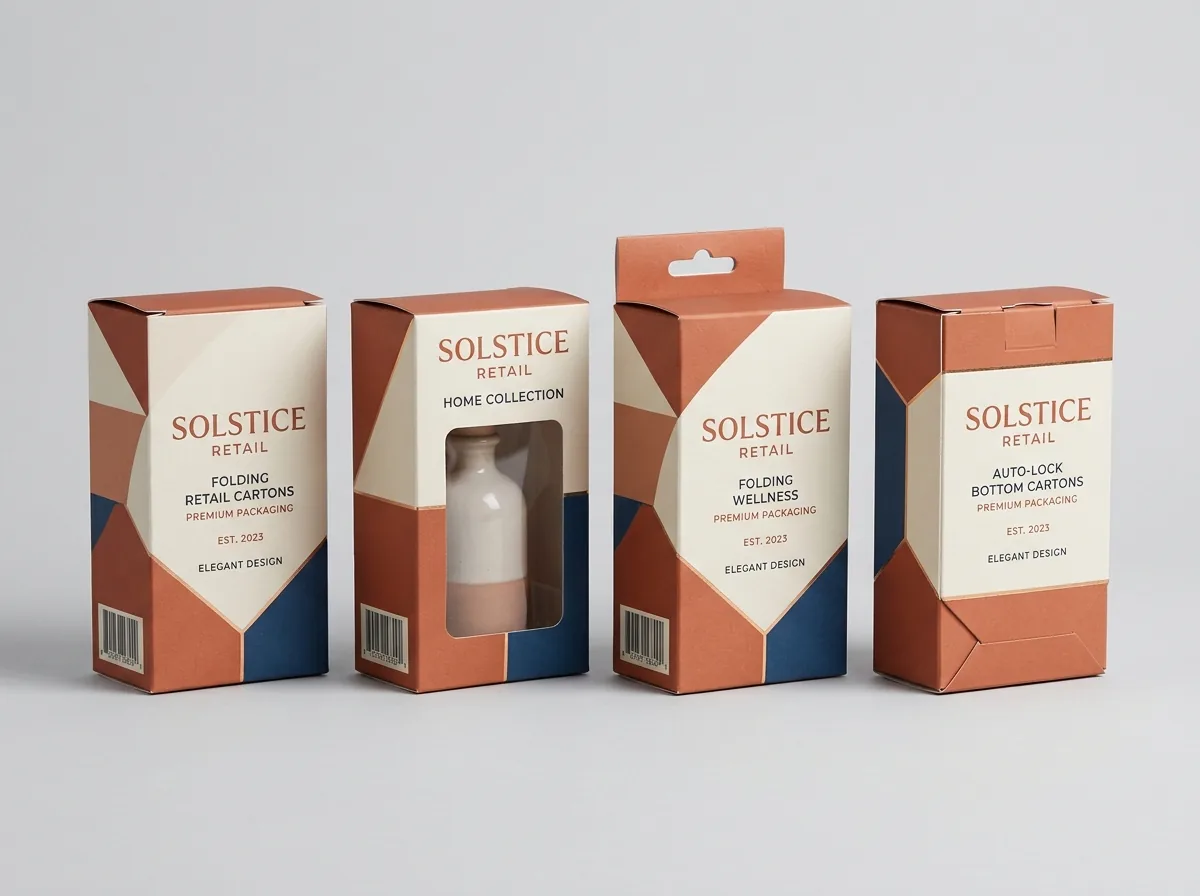
Ready to order folding cartons? Compare up to 3 quantities with a free 3D mockup.
Request a Quote →Questions about folding cartons
What does paperboard point (pt) caliper mean?
Point caliper measures paperboard thickness in thousandths of an inch. An 18 pt board measures 0.018 inch (0.457 mm) in thickness, while a 24 pt board measures 0.024 inch (0.610 mm), providing approximately 35% greater bending stiffness. Our structural specialists verify board calipers, score line depths, and folding tolerances during digital prepress review to ensure flawless operation.
Is Solid Bleached Sulfate (SBS) recyclable?
Yes. SBS paperboard is made from renewable natural wood fibers and is fully curbside recyclable in municipal paper streams when finished with standard water-based aqueous coatings and vegetable-based litho inks.
What is the smoothest paperboard for cosmetic printing?
Solid Bleached Sulfate (SBS) with a clay-coated C1S or C2S surface is the smoothest packaging substrate, delivering optimal ink holdout and crisp halftone dot reproduction.
Can I print on the inside of a folding carton?
Yes. By selecting Coated Two Sides (C2S) paperboard, you can print full-color CMYK graphics, greeting messages, and contrast flood coats on both the exterior and interior carton surfaces.
Why is paperboard grain direction important?
Running paperboard grain vertically from top to bottom gives the carton maximum vertical compression strength, preventing shelf bowing and carton collapse when stacked inside shipping master cases.
How does Coated Kraft (CUK) compare to SBS in strength?
Coated Unbleached Kraft (CUK) provides approximately 20% to 30% higher tear resistance and puncture stiffness than SBS of the same caliper, making it ideal for heavy bottles and cans.
Still have a question? Ask a packaging specialist.
Request a Quote →Request your folding cartons quote
Tell us your size and quantities, and one dedicated account manager prepares pricing for each tier.
- Free design & AI-to-print studio + 3D mockup
- No die or plate charges · 4–5 day rush available
- Free shipping to all 50 states
- 10% off your first order
Researched across Paperboard Packaging Council (PPC) manufacturing standards, European Carton Makers Association (ECMA) design codes, and TAPPI official test methods. Production facts verified with manufacturing specialists.
What changed
- November 11, 2026: Published technical engineering guide covering folding carton closures, paperboard calipers, and high-speed filling line optimization.
More guides
New packaging guides by email
Sizes, materials and design tips. Unsubscribe anytime.