
How do you measure your product and choose the right board caliper for custom packaging boxes?
Short answer: Always measure your product envelope in the order Length (left-to-right front width) × Width (front-to-back depth) × Height (bottom-to-top vertical depth), add +1.5 to 2 mm clearance for paperboard cartons or +3 to 5 mm for corrugated mailers, and specify the result as usable Inside Dimensions.
On this page
- How do you measure Length × Width × Height and add the right loading clearance
- How do you match your product's weight to pt, ECT, or gsm board ratings
- How does changing L × W × H orientation affect sheet layout and unboxing
- How do you request a custom-sized packaging box dieline and 3D proof
- Common mistakes
- FAQs
Request a custom quoteFree dieline & 3D mockup
Accurate sizing for custom packaging boxes follows one universal industry standard across FEFCO, PPC, and NPA CAD systems: every box is engineered from usable Inside Dimensions expressed in the strict sequence Length (L) × Width (W) × Height (H). Looking at the front of the box facing you, Length is the left-to-right span across the opening, Width is the front-to-back depth from the front wall to the rear hinge wall, and Height is the vertical depth from the floor to the top lid. Once you measure your physical product (or bundled kit + insert), adding the proper loading clearance (+1.5–2 mm for paperboard cartons, +3–5 mm for corrugated mailers, or -0.5 mm friction fit inside EVA foam) ensures effortless packing without transit rattle. Every order includes a free 2D vector CAD dieline and interactive 3D proof before payment.
How do you measure Length × Width × Height and add the right loading clearance?
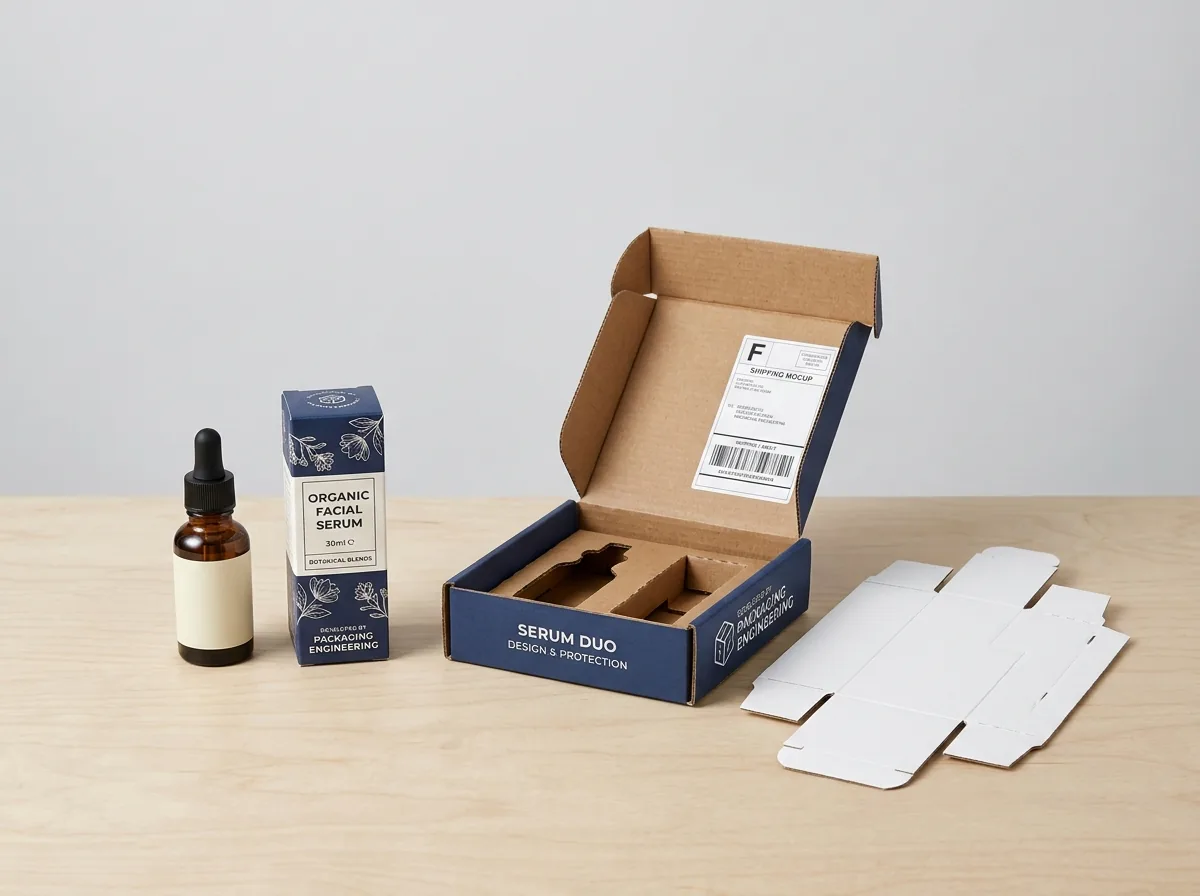
Whether you are sizing a tall vertical custom product box for a 50 mL serum bottle or a wide horizontal custom mailer box for an apparel kit, swapping Length and Width or forgetting loading clearance changes how the lid opens and how artwork sits on the front face. Use this step-by-step clearance table to convert your raw product measurements into usable Inside Dimensions (L × W × H) on our custom packaging boxes line: Why must you always specify Inside Dimensions rather than measuring the outside of a sample box with a ruler? On a FEFCO 0427 corrugated mailer box, the left and right side walls fold 180 degrees over locking tabs to form double-thick walls. In 1.6 mm E-flute, those double walls consume 6.5 mm (0.25 in) of width; in 3.0 mm B-flute, they consume 12 mm (0.47 in). Specifying Inside Dimensions guarantees our CAD software adds the exact board caliper and roll-over allowances outward so your interior cavity never shrinks. When sizing a box for a multi-item bundle (such as a jar, a tube, and an instruction booklet), arrange the items on your table in the exact layout you want the customer to see upon opening, measure the outer bounding box of the group (plus any divider walls), and enter that combined envelope into our box size calculator. When planning inventory across seasonal drops, retail wholesale rollouts, and recurring subscription shipments, matching your box structure to your fulfillment center workflow saves both packing labor and freight expenditure. Our structural specialists evaluate your product fragility, carton stacking requirements, and unboxing presentation goals to recommend the optimal board caliper and closure mechanism.
- Length (L) is always the left-to-right width across the front opening panel.
- Width (W) is always the front-to-back depth from the front panel to the rear spine.
- Height (H) is always the vertical distance from the bottom floor to the top closure lid.
| Packaging structure | Add to Length (L) | Add to Width (W) | Add to Height (H) | Why this clearance is required |
|---|---|---|---|---|
| Paperboard Folding Carton (14–24 pt) | +1.5 to 2.0 mm (+1/16 in) | +1.5 to 2.0 mm (+1/16 in) | +2.0 to 3.0 mm (+3/32 in) | Allows bottles/tubes to clear top side dust flaps smoothly |
| E-Flute Mailer Box (FEFCO 0427) | +3.0 to 4.0 mm (+1/8 in) | +3.0 to 4.0 mm (+1/8 in) | +3.0 to 5.0 mm (+3/16 in) | Clears internal locking ears and front lid cherry locks |
| B/C-Flute Shipping Box (FEFCO 0201) | +5.0 to 6.0 mm (+1/4 in) | +5.0 to 6.0 mm (+1/4 in) | +6.0 to 8.0 mm (+5/16 in) | Allows easy hand loading and inner flap fold-down |
| Rigid Box with Velvet EVA Insert | Product L + 24 mm foam border | Product W + 24 mm foam border | 5 mm floor + Product H + 3 mm | Cavity itself is cut -0.5 mm tighter for friction grip |
How do you match your product's weight to pt, ECT, or gsm board ratings?
Each packaging material family uses its own industry thickness and strength unit: paperboard folding cartons use points (pt) where 1 pt = 0.001 inch; corrugated boxes use flute profile (F, E, B, C) plus Edge Crush Test (ECT) in pounds per linear inch; and rigid setup boxes use grams per square meter (gsm). Match your unit weight to the right structural caliper: Our packaging specialists verify every dieline fold line and board caliper before sending your interactive 3D digital proof so you can confirm the exact fit. When testing a new bottle, jar, or multi-piece kit, always measure with digital calipers across the widest shoulder, cap, or pump actuator rather than relying solely on nominal bottle volume. A 50 mL heavy-wall glass dropper bottle from one glass mold can measure 8 mm wider and 12 mm taller than a standard 50 mL cylinder from another supplier. Adding the proper +1.5 mm to +4.0 mm internal clearance allowance ensures fast hand loading on your fulfillment line without binding.
- 14 pt to 18 pt Paperboard (0.35–0.46 mm / 280–350 gsm): Ideal for lightweight retail cartons under 8–12 oz such as 30 mL dropper serums, cosmetics, soap bars, tea boxes, and pharmaceuticals.
- 20 pt to 24 pt Paperboard (0.50–0.60 mm / 400–450 gsm): Built for heavier retail items from 12 oz to 2.5 lb (candles, beverage cans, glass jars) paired with a pre-glued auto-lock bottom.
- 32 ECT E-Flute (1.6 mm) & B-Flute (3.0 mm) Corrugated: E-flute supports D2C mailers up to 5 lb with crisp printing; B-flute supports heavier subscription kits and multi-jar mailers up to 15 lb.
- 1200 gsm to 1800 gsm V-Grooved Rigid Board (2.0–2.5 mm): Non-bending luxury binderboard for perfumes, watches, spirits, and VIP hampers from 1 lb to 12+ lb.
How does changing L × W × H orientation affect sheet layout and unboxing?
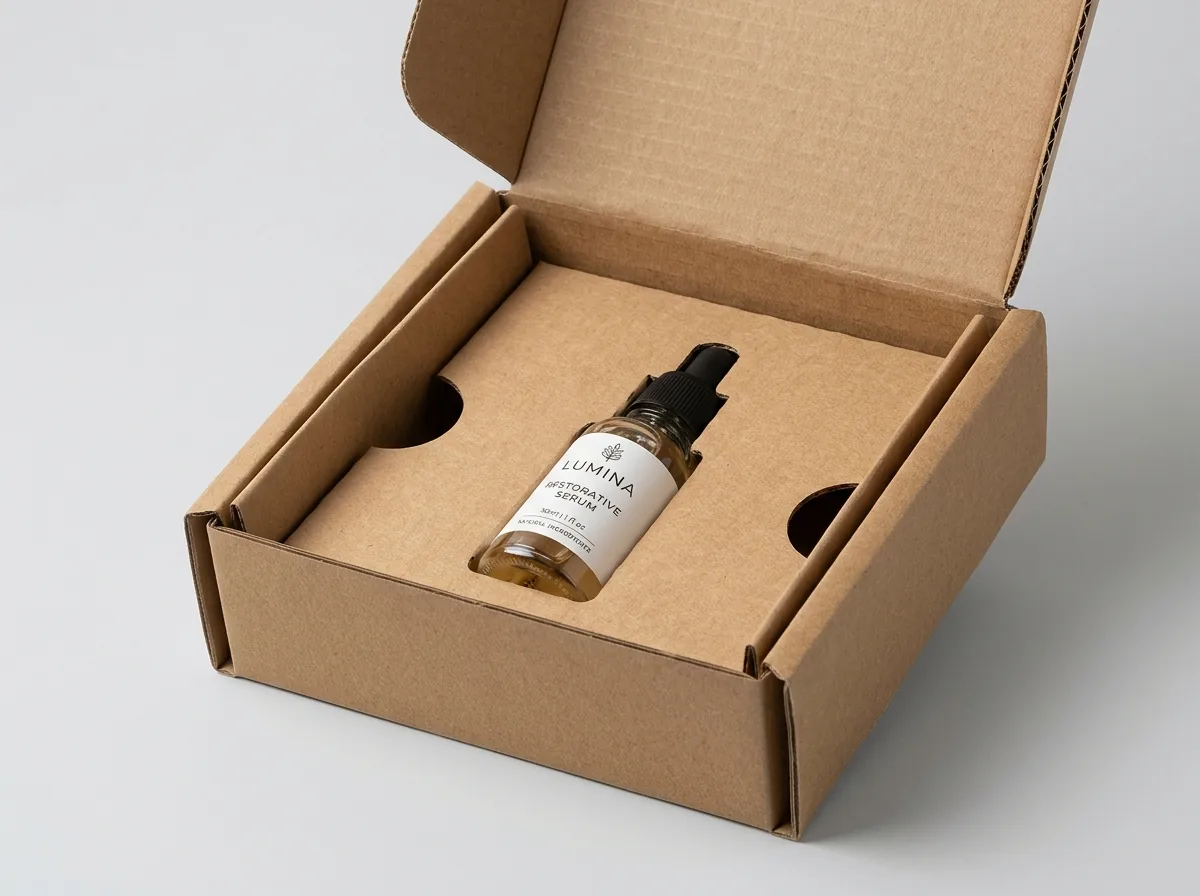
The same 6 × 4 × 2 in product can be housed in a tall vertical carton (4 × 2 × 6 in, opening at the narrow top) or a wide horizontal chest (6 × 4 × 2 in, opening across the wide face). Comparing both orientations before locking your CAD dieline optimizes both packing speed and unboxing impact: In addition to unboxing ergonomics, box orientation affects how many flat blanks fit onto a parent press sheet and how many assembled units fit into a master shipping carton. Our CAD specialists evaluate both vertical and horizontal layouts during your free prepress check so your box maximizes sheet yield and minimizes freight volume. Every production order is backed by our zero-die-fee policy, free 2D vector CAD dieline engineering, and an interactive 3D digital proof so your team can inspect outside panels, interior print zones, and insert tolerances before production begins.
- Test your product measurements in our interactive box size calculator to get instant recommended inside dimensions.
- Pair this sizing guide with our paperboard vs corrugated vs rigid custom packaging boxes comparison.
- Review finishing and insert options in our custom packaging box finishes, inserts, and MOQ tier pricing guide.
| Orientation style | Dimension ratio (L : W : H) | Best closure & unboxing benefit |
|---|---|---|
| Tall Vertical Retail Carton | Height (H) is the longest dimension (e.g., 2.5 × 2.5 × 5.5 in) | Maximizes front eye-level retail shelf billboard; uses STE, RTE, or Auto-Lock Bottom |
| Wide Horizontal Presentation Mailer | Length (L) & Width (W) exceed Height (e.g., 10 × 8 × 3.5 in) | Opens like a book or treasure chest; displays all items face-up inside an insert |
| Cube Jar / Candle Box | Equal L, W, and H (e.g., 4.25 × 4.25 × 4.5 in) | Distributes vertical stacking loads evenly around cylindrical glass jars |
Know your size? Compare pricing across up to 3 quantities.
Request a Quote →How do you request a custom-sized packaging box dieline and 3D proof?
Follow these four steps to get a custom 2D vector CAD dieline and 3D proof engineered to your exact Inside Dimensions: Every order includes zero die or plate setup fees, free US ground shipping, and an optional $50 sample kit credited toward production. Once we generate your custom 2D vector CAD dieline, your graphic designer can place artwork directly onto the locked panel layers and preview every fold on our interactive 3D digital proof.
- Step 1: Enter your usable Inside Dimensions (L × W × H) in inches or millimeters in CubitPack's 3-step quote form.
- Step 2: Select your box style, board grade, and 1, 2, or 3 quantity tiers to compare unit pricing.
- Step 3: Receive your free custom 2D vector CAD dieline template and interactive 3D digital proof before payment.
- Step 4: Approve for 10–14 business day production (4–5 day rush) with free US delivery.

What 5 measurement and caliper mistakes cause misfitting custom boxes?
Our CAD specialists double-check every customer dimension before releasing dielines, preventing these five common errors
- Measuring the outside of an existing corrugated mailer box instead of its usable Inside Dimensions, losing 6–12 mm of internal width to the double-rolled side walls.
- Entering exact bottle caliper dimensions with 0.0 mm clearance, causing labels to scuff against the top dust flaps during loading.
- Swapping Length (L) and Height (H) on a tuck-end carton, turning a tall standing bottle box into a wide horizontal tray.
- Forgetting to add the thickness of an internal corrugated or EVA foam insert (10–24 mm) to the box's internal Length, Width, and Height.
- Specifying lightweight 14 pt paperboard for a heavy 20 oz glass candle jar without an auto-lock bottom or inner fluted collar.
Packaging for this
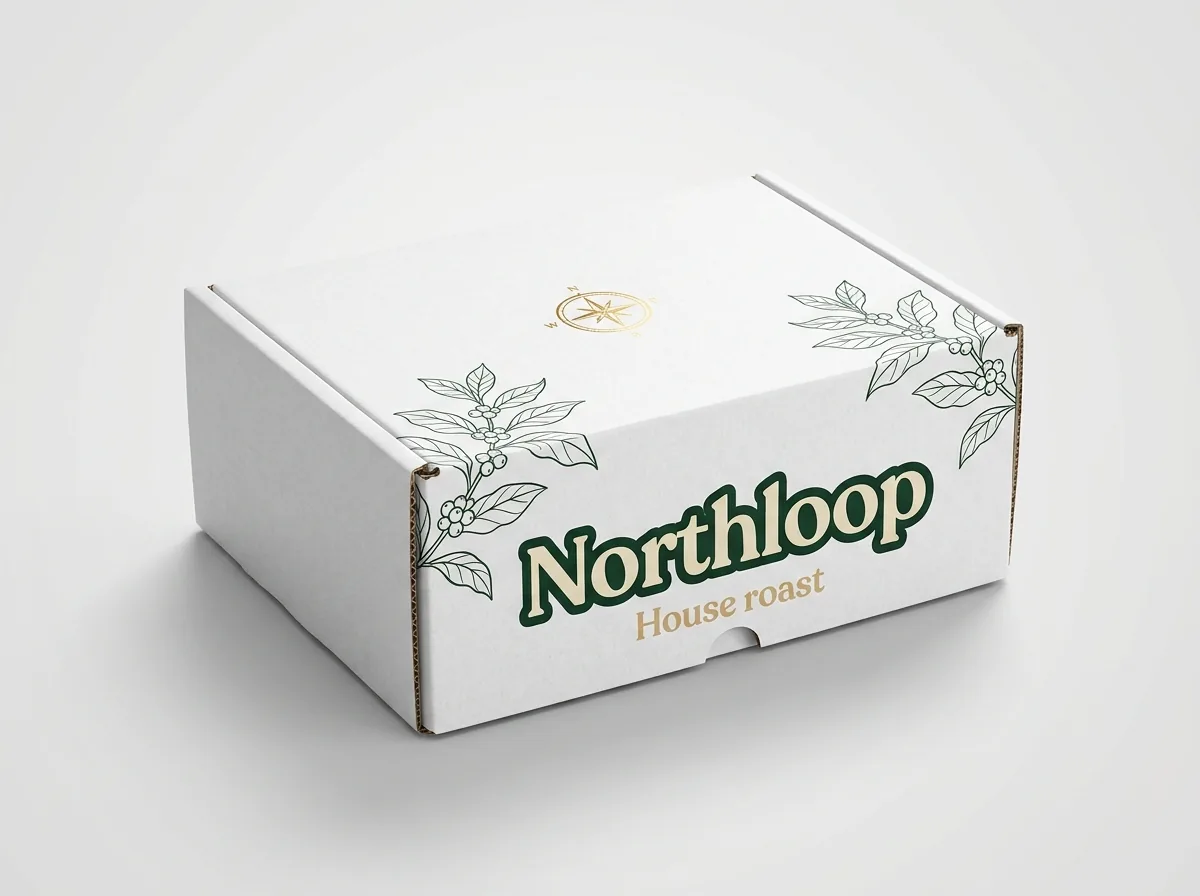
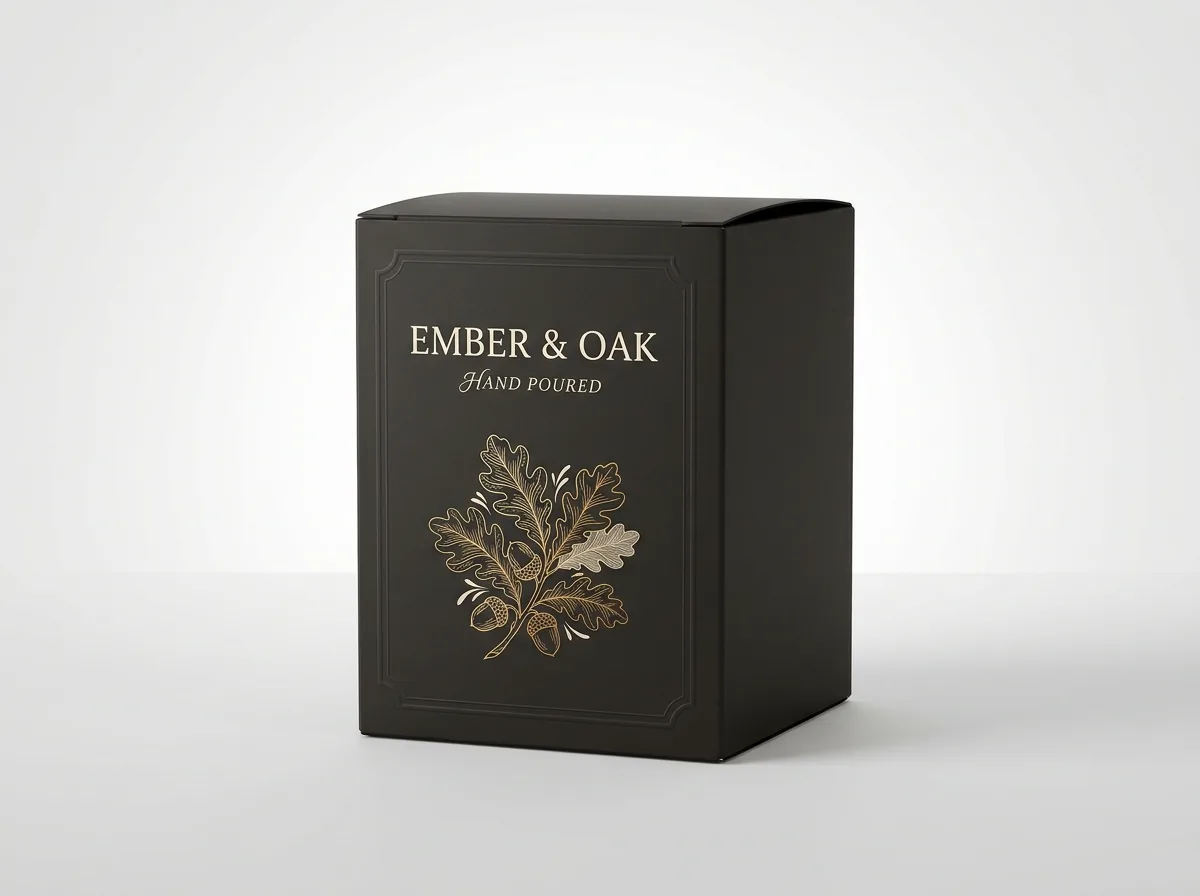
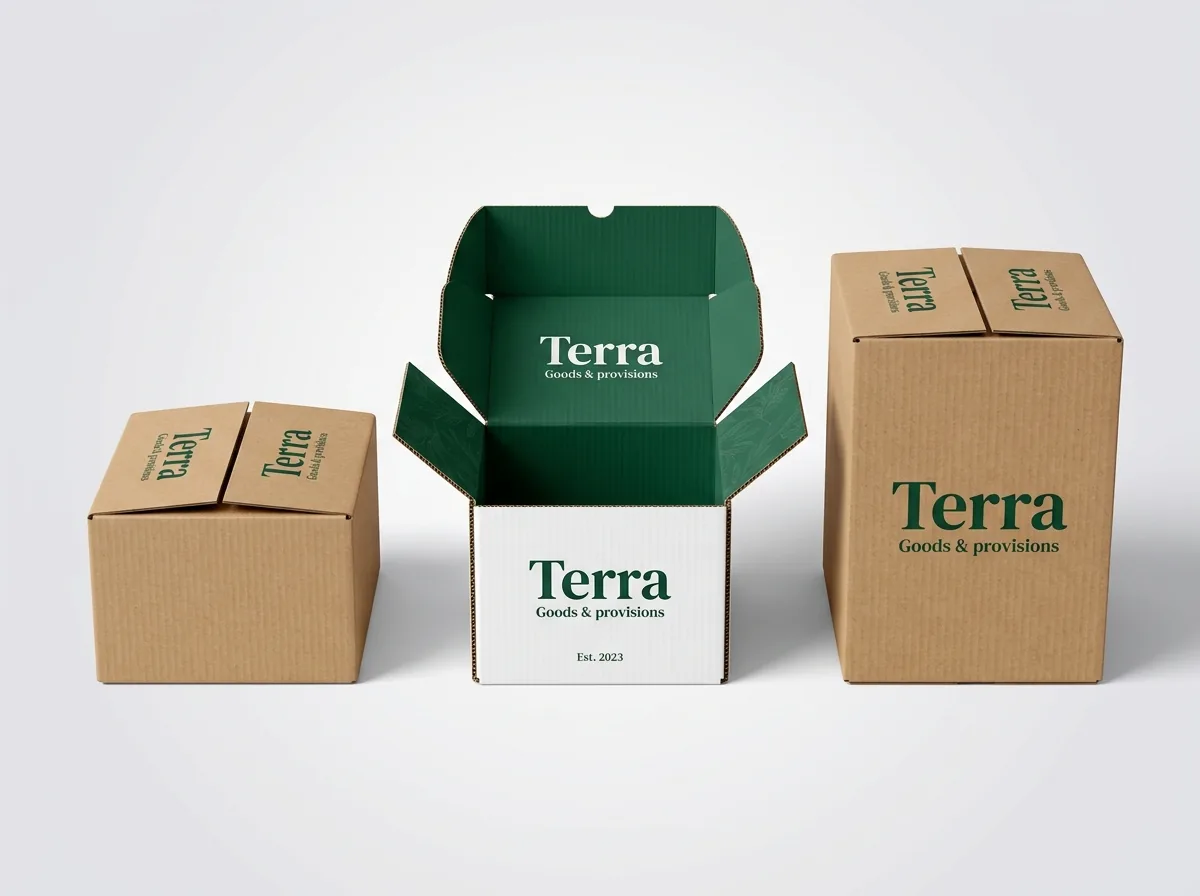
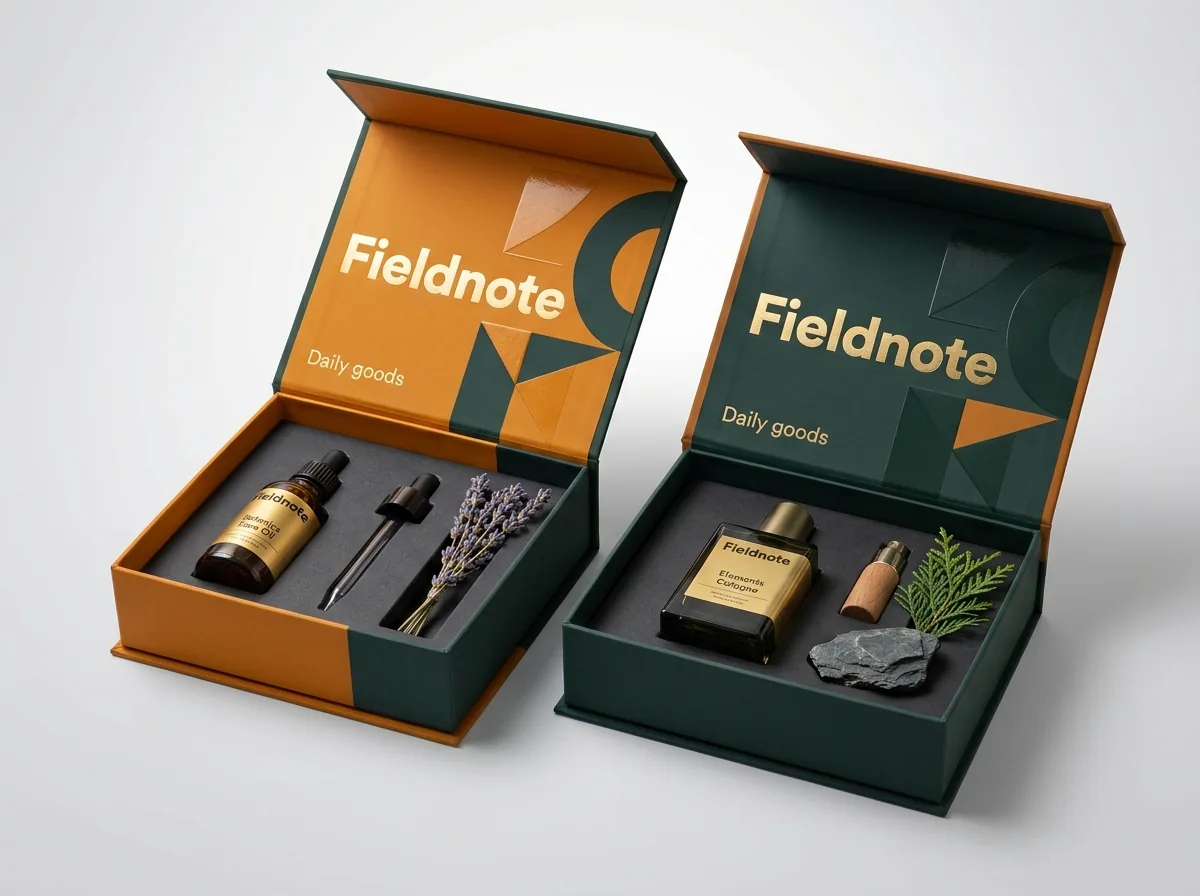
Ready to order packaging boxes? Compare up to 3 quantities with a free 3D mockup.
Request a Quote →Questions about packaging boxes
What is the correct Length × Width × Height (L × W × H) order when measuring for custom packaging boxes?
Facing the front of the box, Length (L) is always the left-to-right width across the opening, Width (W) is the front-to-back depth, and Height (H) is the vertical depth from the bottom floor to the top lid. Every order includes a free 2D vector CAD dieline and interactive 3D proof before payment.
Why do custom packaging manufacturers always build from Inside Dimensions instead of Outside Dimensions?
Because paperboard, corrugated flutes, and rigid binderboard range from 0.4 mm to 2.5 mm thick (and mailer side walls fold double), building from Inside Dimensions guarantees your product and insert fit inside the usable cavity regardless of board caliper. Every order includes a free 2D vector CAD dieline and interactive 3D proof before payment.
How much clearance allowance (+1.5 mm to +5 mm) should I add around my product?
Add +1.5 to 2.0 mm (1/16 in) to Length and Width and +2.0 to 3.0 mm to Height for paperboard folding cartons; add +3.0 to 5.0 mm (1/8 to 3/16 in) for E-flute corrugated mailers; and add +5.0 to 8.0 mm for RSC shipping boxes. Every order includes a free 2D vector CAD dieline and interactive 3D proof before payment.
How do I match my product's weight to the right paperboard point (pt), corrugated ECT, or rigid gsm rating?
Use 16–18 pt paperboard for items under 12 oz, 20–24 pt auto-lock paperboard for 12 oz to 2.5 lb retail jars, 32 ECT E-flute or B-flute corrugated for 1 to 15 lb parcel mailers, and 1200–1800 gsm V-grooved rigid board for luxury sets. Every order includes a free 2D vector CAD dieline and interactive 3D proof before payment.
Can I send my physical product to CubitPack to have your team engineer the exact box and insert size?
Yes. You can ship a physical product sample to our team (or use our online Box Size Calculator) and our specialists will engineer a custom 2D CAD dieline and 3D proof with zero die fees. Every order includes a free 2D vector CAD dieline and interactive 3D proof before payment.
Still have a question? Ask a packaging specialist.
Request a Quote →Request your packaging boxes quote
Tell us your size and quantities, and one dedicated account manager prepares pricing for each tier.
- Free design & AI-to-print studio + 3D mockup
- No die or plate charges · 4–5 day rush available
- Free shipping to all 50 states
- 10% off your first order
We verified Inside Dimension (L × W × H) measurement conventions, folding carton dust-flap clearance allowances (+1.5–3 mm), FEFCO 0427 double-wall roll-over deductions, and caliper-to-weight tables against FEFCO and Paperboard Packaging Council (PPC) CAD standards. Spot something wrong? Tell us and we fix it.
Sources
What changed
- November 11, 2026: First published with L × W × H clearance matrix, pt/ECT/gsm weight chart, and Inside vs Outside dimension diagrams.
More guides
New packaging guides by email
Sizes, materials and design tips. Unsubscribe anytime.