
How do you combine finishes, custom inserts, and MOQ quantity tiers on custom packaging boxes?
Short answer: Pair protective lamination (matte, gloss, or velvet soft-touch) with focal-point accents like hot foil stamping or Spot UV, add a custom-fitted card, corrugated, molded pulp, or EVA foam insert, and request 2 or 3 quantity tiers (plus multi-SKU design splits) in your quote to unlock offset volume economies.
On this page
- How do laminations, coatings, hot foil, embossing, and Spot UV compare
- Which custom insert locks your product in place without inflating box cost
- How do 3-quantity quotes and multi-SKU design splits reduce your unit cost
- How do you request a custom packaging box quote with finishes and inserts
- Common mistakes
- FAQs
Request a custom quoteFree dieline & 3D mockup
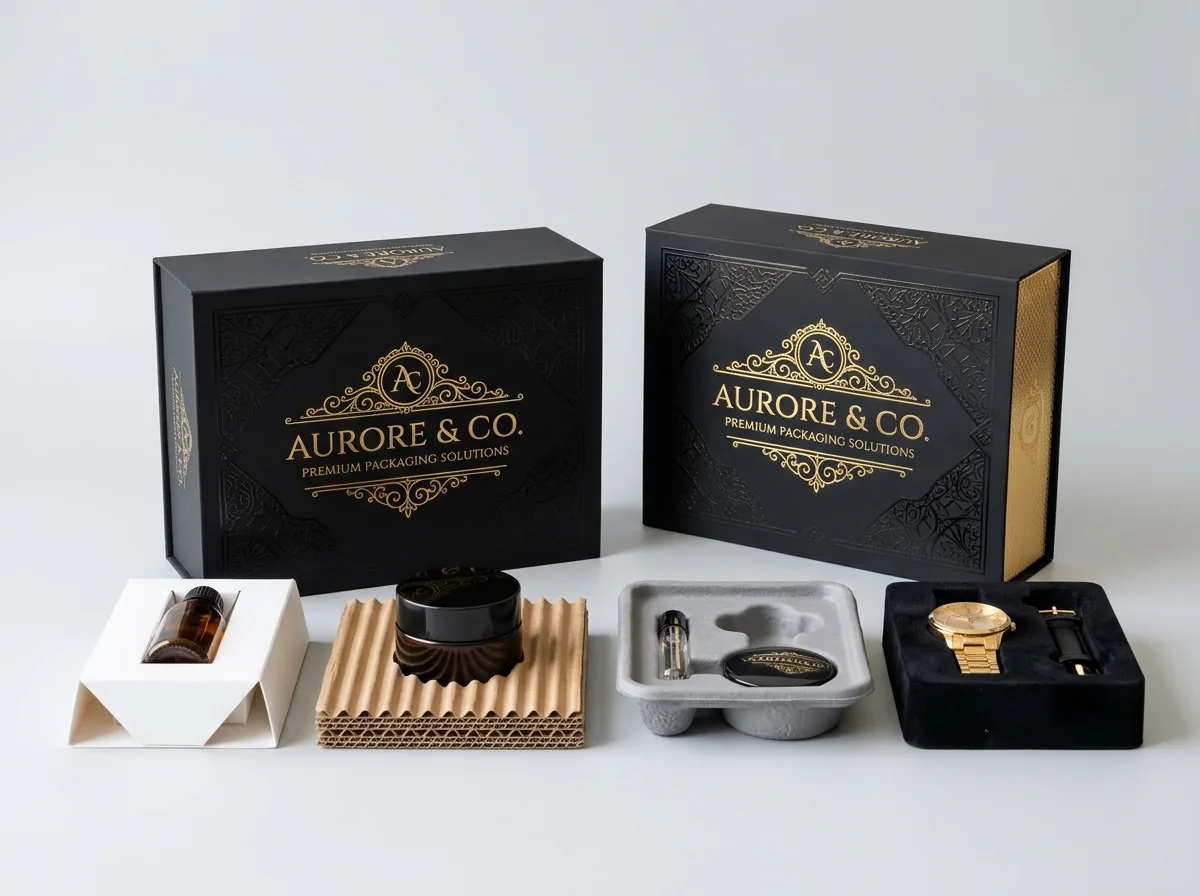
Configuring custom packaging boxes for maximum shelf conversion and lowest landed unit cost comes down to three levers: surface finishing, interior insert engineering, and smart production batching. On the exterior, combining a protective film lamination (matte, gloss, or velvet soft-touch) with a single high-contrast accent such as metallic hot foil stamping, embossing, or gloss Spot UV prevents corner cracking and elevates perceived product value. Inside the cavity, a die-cut paperboard, corrugated, molded fiber, or closed-cell EVA foam insert locks fragile goods in place without loose plastic void fill. Finally, requesting three quantity tiers (such as 250, 500, and 1,000 units) and combining multiple flavors or scents that share one box size lets you capture major press setup economies. Every order includes zero die/plate fees, a free 2D CAD dieline, and a 3D proof before payment.
How do laminations, coatings, hot foil, embossing, and Spot UV compare?
When configuring custom product boxes, custom mailer boxes, or custom rigid boxes on our custom packaging boxes line, distinguish between base protective coatings/laminations (which seal the entire sheet against scuffing and score-line cracking) and spot embellishments (which highlight your logo or pattern). Compare the six primary finish options side by side: Whenever your box artwork features a dark solid background (such as rich black, midnight navy, forest green, or deep burgundy) folded across 90-degree crease scores, polypropylene or urethane film lamination (Matte, Gloss, or Soft-Touch) is essential. Unlike liquid aqueous varnish, a laminated film bridges the paper fibers across the fold line so dark ink never cracks open to expose white board underneath. If your sustainability mandate calls for a 100% film-free, curbside-recyclable box, pair uncoated natural brown kraft or bleached white board with a water-based Satin Aqueous Coating and keep heavy ink coverage light along the score lines, or use blind embossing/debossing for plastic-free texture. When planning inventory across seasonal drops, retail wholesale rollouts, and recurring subscription shipments, matching your box structure to your fulfillment center workflow saves both packing labor and freight expenditure. Our structural specialists evaluate your product fragility, carton stacking requirements, and unboxing presentation goals to recommend the optimal board caliper and closure mechanism.
- Pair Velvet Soft-Touch Lamination + Gold Hot Foil or Spot UV for the highest-converting luxury shelf and unboxing contrast.
- Specify Matte Lamination on dark flood-coated corrugated mailers and folding cartons to prevent scuffing in transit.
- Remember that CubitPack charges zero printing plate or foil/emboss die fees on custom packaging boxes.
| Finish layer | Visual & tactile feel | Fold-crack protection | Best box family pairing | Ideal brand positioning |
|---|---|---|---|---|
| Velvet Soft-Touch Lamination | Ultra-matte, peach-skin suede feel | Maximum (elastic urethane film) | Folding cartons, rigid boxes, litho mailers | Prestige skincare, fragrance, wellness, tech |
| Matte Film Lamination | Smooth, non-glare satin-matte surface | High (prevents dark ink score cracks) | Cartons, colored mailers, rigid boxes | Modern minimalist D2C and retail brands |
| Gloss Film Lamination | High-shine mirror reflection, deep color | High (moisture & oil resistant) | Food/snack cartons, toy boxes, mailers | Vibrant CPG, confectionery, kids & retail |
| Satin Aqueous Coating | Clean water-based protective seal | Moderate (plastic-film-free) | Kraft/white mailers, recyclable cartons | High-volume eco-conscious e-commerce |
| Metallic Hot Foil Stamping | Mirror gold, silver, rose-gold, copper leaf | Applied flat clear of fold lines | Cartons, rigid boxes, luxury mailers | Hero logos, crests, borders, award seals |
| Spot UV + Embossing / Debossing | Raised gloss polymer & 3D relief (+0.4 mm) | Keep ≥5 mm clear of fold creases | Soft-touch cartons, mailers & rigid lids | Tone-on-tone monograms & tactile patterns |
Which custom insert locks your product in place without inflating box cost?
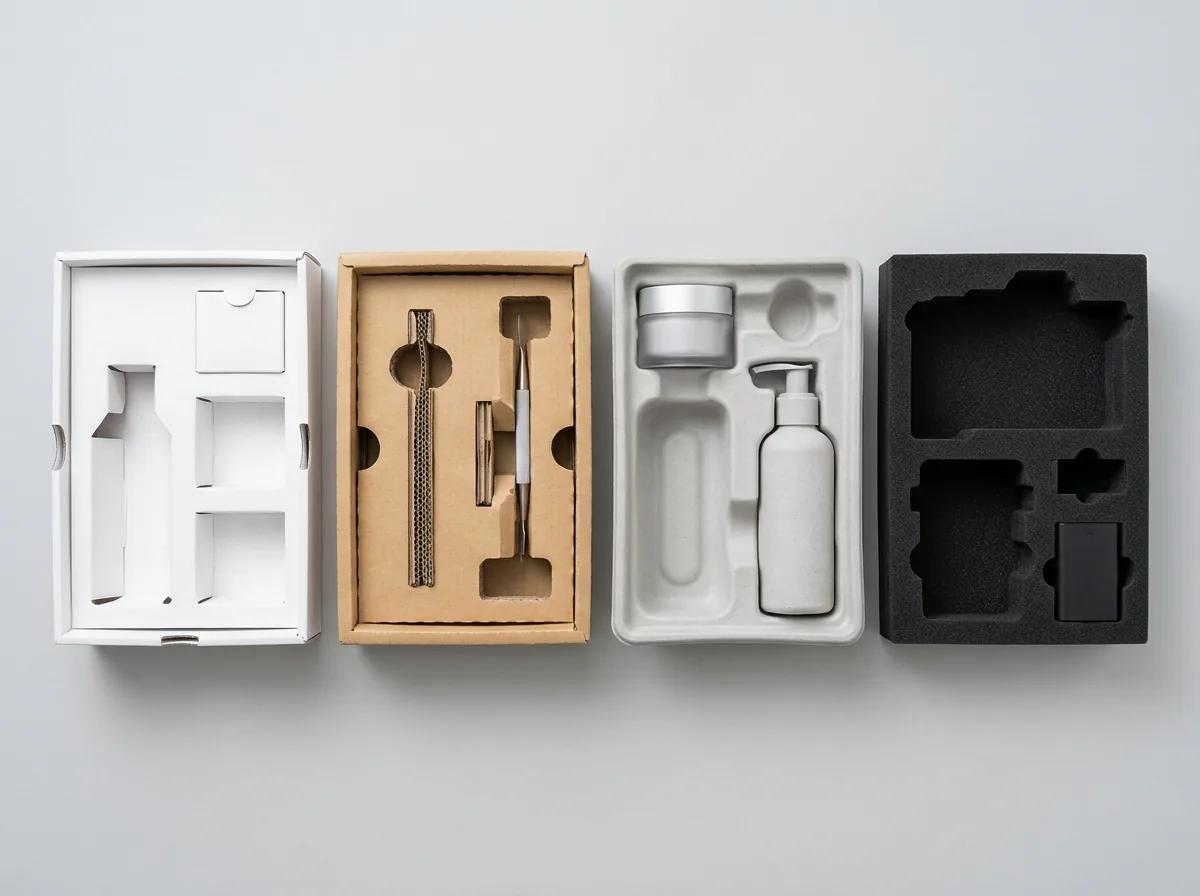
Adding a custom-engineered insert inside your custom packaging box eliminates loose bubble wrap, centers your product for a camera-ready reveal, and prevents glass-on-glass breakage. Match your product weight and fragility to one of four insert substrates: Our packaging specialists engineer the outer box and the interior insert on one coordinated CAD file and render both together on your free interactive 3D digital proof. When selecting an interior insert for multi-item kits or fragile glass vessels, consider both packing-bench assembly time and drop-test performance. A pre-glued or quick-fold 20 pt paperboard insert ships 100% flat alongside your folding cartons, whereas a die-cut 38 to 45 kg/m3 closed-cell EVA foam tray arrives ready to drop directly into a rigid base with zero folding required.
- 1. Die-Cut Paperboard Inserts (16–24 pt SBS or Kraft): Ships flat and folds into a recessed platform or neck collar; ideal for lightweight cosmetics, dropper bottles, tubes, and blisters inside folding cartons.
- 2. Fluted Corrugated Inserts & Partitions (32 ECT E-Flute): Adds structural crush buffers and multi-cell dividers for heavy glass candle jars, beverage bottles, ceramic mugs, and multi-item D2C mailer kits.
- 3. Molded Pulp / Bamboo Fiber Trays: curbside-recyclable, paper-based contoured cradles engineered for electronics, clean beauty sets, and sustainable refill systems.
- 4. Closed-Cell EVA Foam (38–45 kg/m3 Velvet or Card-Topped): Precision-cut non-scratch shock cushioning for luxury perfume flacons, watches, spirits decanters, and executive rigid gift chests.
How do 3-quantity quotes and multi-SKU design splits reduce your unit cost?
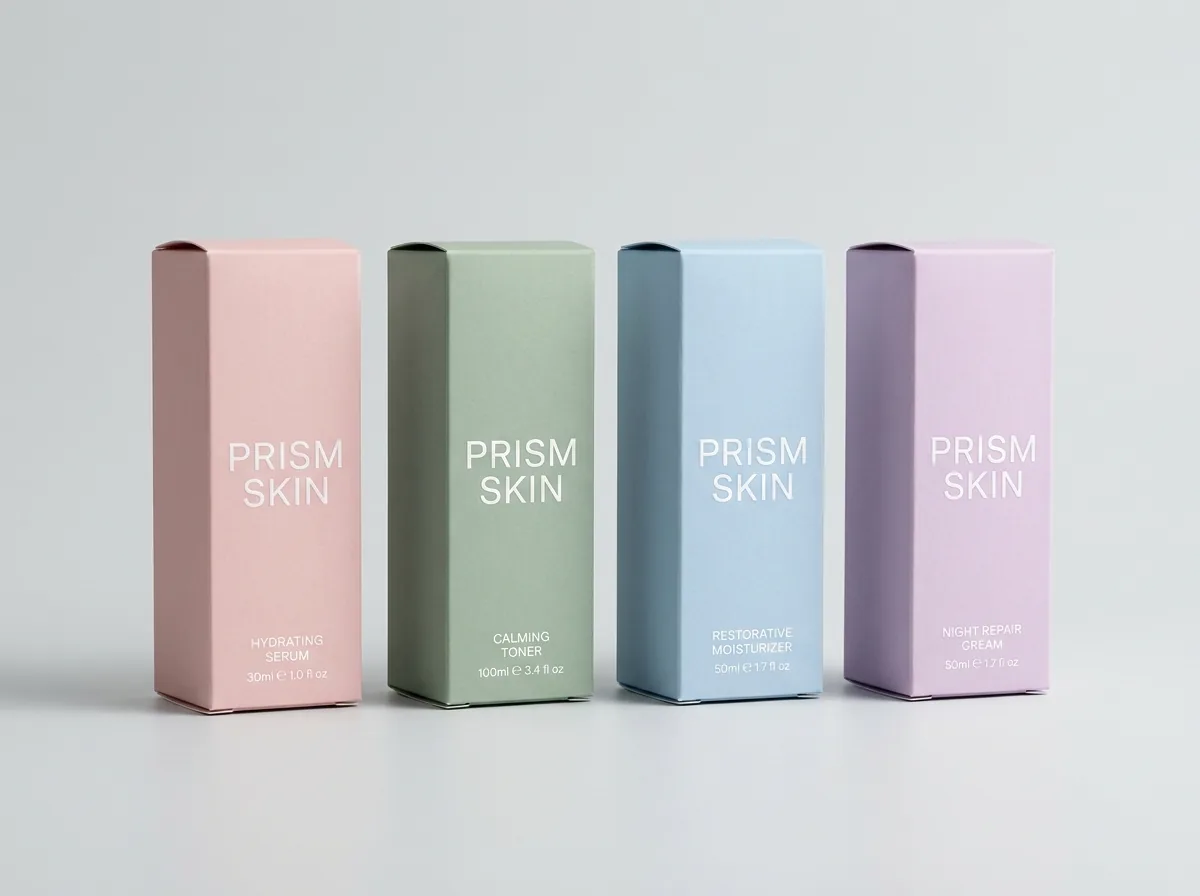
In commercial offset and litho-laminated box manufacturing, press make-ready, sheet setup, and finishing alignment happen once per run. Once the press is running at speed, printing 1,000 or 2,500 sheets takes only minutes longer than printing 250 sheets. Use these two procurement strategies in CubitPack's 3-step quote form to maximize your packaging budget: For growing brands launching 3, 4, or 6 variations of the same core product (such as skincare serums, candle scents, tea blends, or supplement flavors), standardizing on one shared box dimension is the single highest-ROI packaging decision you can make. Because all SKU variations share the exact same steel-rule cutting die and press sheet geometry, you unlock higher total volume tier pricing while keeping distinct CMYK artwork for each SKU. Every production order is backed by our zero-die-fee policy, free 2D vector CAD dieline engineering, and an interactive 3D digital proof so your team can inspect outside panels, interior print zones, and insert tolerances before production begins.
- Always enter three quantity tiers in Step 1 of the quote form so you can compare unit economics before deciding on your order size.
- Pair this guide with our paperboard vs corrugated vs rigid custom packaging boxes comparison.
- Check our walkthrough on how to measure products and choose board caliper for custom packaging boxes.
| Ordering strategy | How to configure in the RFQ | Why it lowers your per-box cost |
|---|---|---|
| Compare 3 Quantity Tiers | Enter 3 quantities in Step 1 (e.g., 250, 500, and 1,000 boxes) | Reveals the exact volume inflection point where press setup amortizes across more units |
| Multi-SKU Shared Dieline Split | Keep one identical L × W × H across flavors/scents & pick '2 designs' or '3+ designs' | Gangs multiple artwork versions onto one shared cutting die and sheet run |
| Universal Outer Box + SKU Labels | Order one high-volume branded box + custom printed flavor/scent labels | Captures 2,500+ box tier pricing while keeping flexible inventory for small-batch SKUs |
Know your size? Compare pricing across up to 3 quantities.
Request a Quote →How do you request a custom packaging box quote with finishes and inserts?
Size your product in our box size calculator and launch your custom packaging order in four simple steps: Every order includes zero die or plate charges, a free 2D vector CAD dieline, an interactive 3D digital proof before payment, and free US ground shipping. You can also upload an existing competitor quote with identical box dimensions, board stock, finishes, and quantity through our Price-Beat program so our estimating team can work to beat your current landed cost. Whether you are launching your first 500 retail cartons or scaling to 10,000+ custom mailers and rigid boxes, our team supports every step.
- Step 1: Select your box style, enter your Inside Dimensions (L × W × H), and input up to 3 quantity tiers in the quote form.
- Step 2: Pick your board material, lamination, special finishes (foil, emboss, Spot UV), and insert type.
- Step 3: Review your side-by-side tier quote, free 2D CAD dieline, and interactive 3D digital proof before payment.
- Step 4: Approve for 10–14 business day production (4–5 day rush) with free US delivery.
What 5 finish, insert, and ordering mistakes inflate packaging costs?
Our packaging specialists review every specification before production, helping brands avoid these five common pitfalls
- Requesting only a single minimum quantity in your quote instead of comparing 3 quantity tiers (e.g., 250, 500, and 1,000 units) to see where unit cost drops.
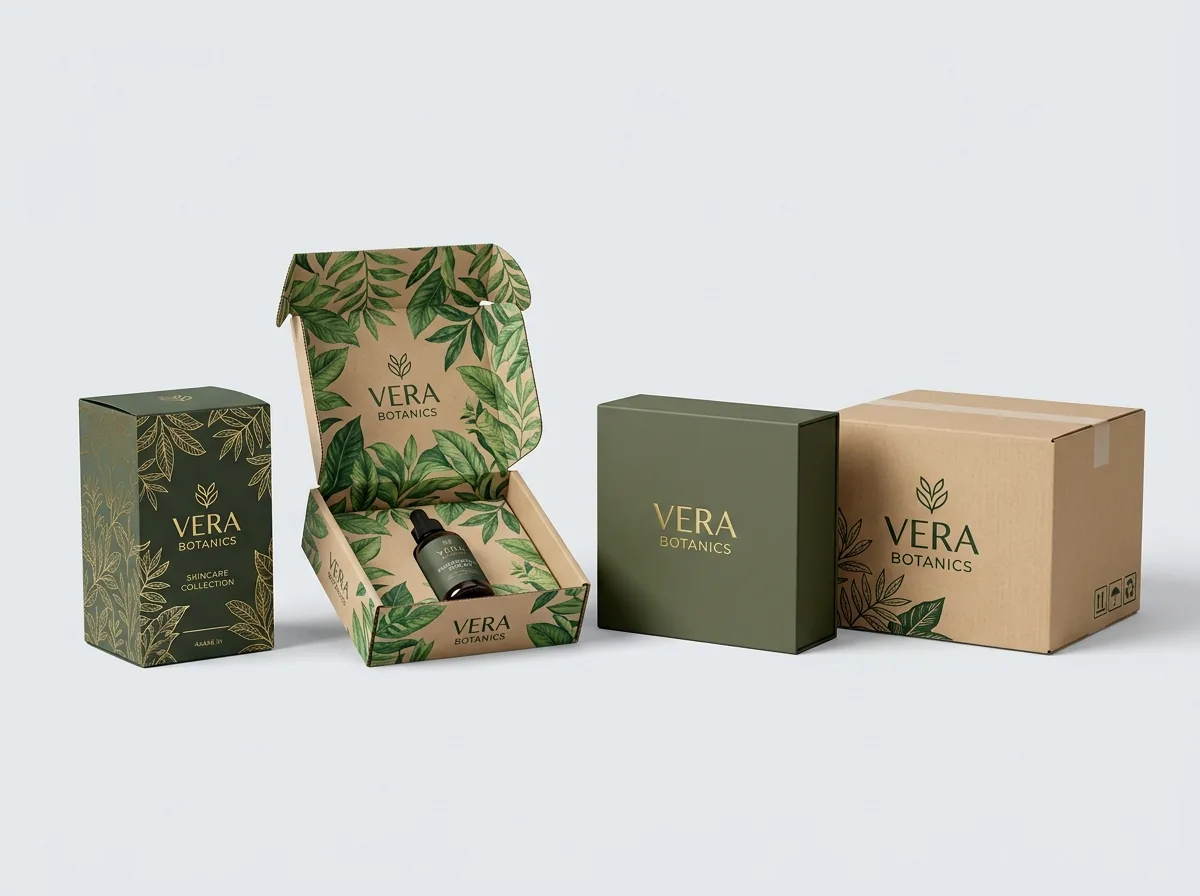
- Creating slightly different box dimensions (by 2–3 mm) for five flavors of the exact same bottle instead of standardizing on one shared dieline.
- Stacking three competing surface finishes on the same panel when a clean soft-touch lamination + single metallic foil logo creates stronger shelf focus.
- Ordering a heavy EVA foam insert for a lightweight retail tube where a flat-shipping 18 pt folded card insert protects the item at a fraction of the cost.
- Skipping protective lamination on dark flood-coated boxes, leading to scuffed panels and cracked crease lines during fulfillment.
Packaging for this
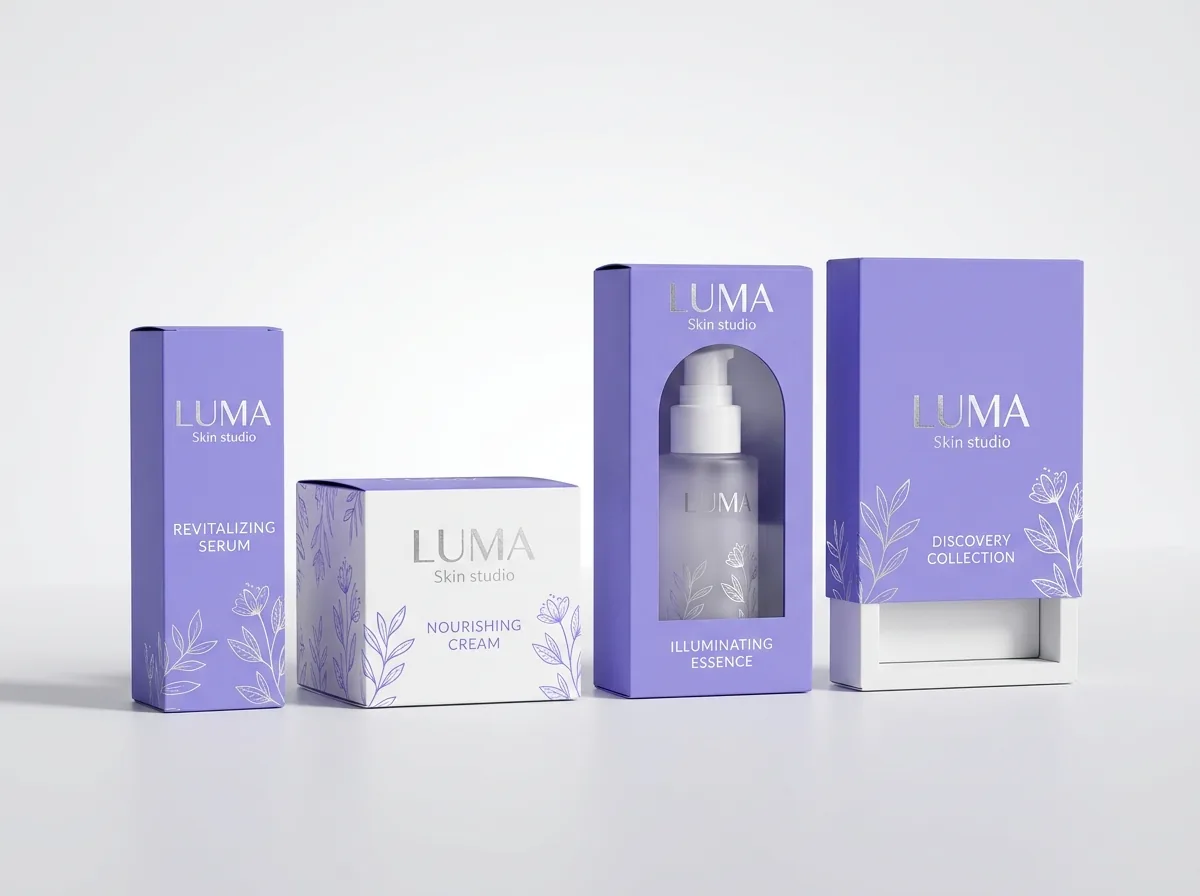
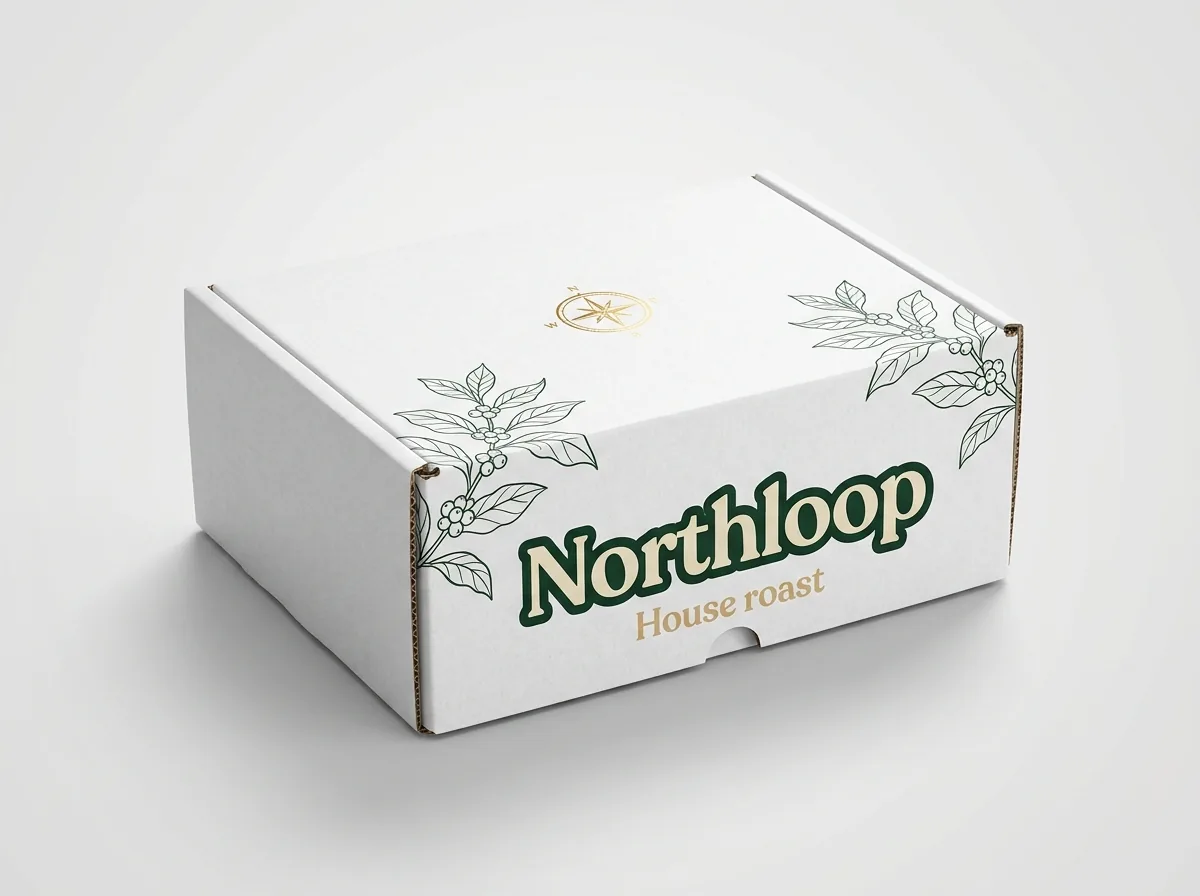
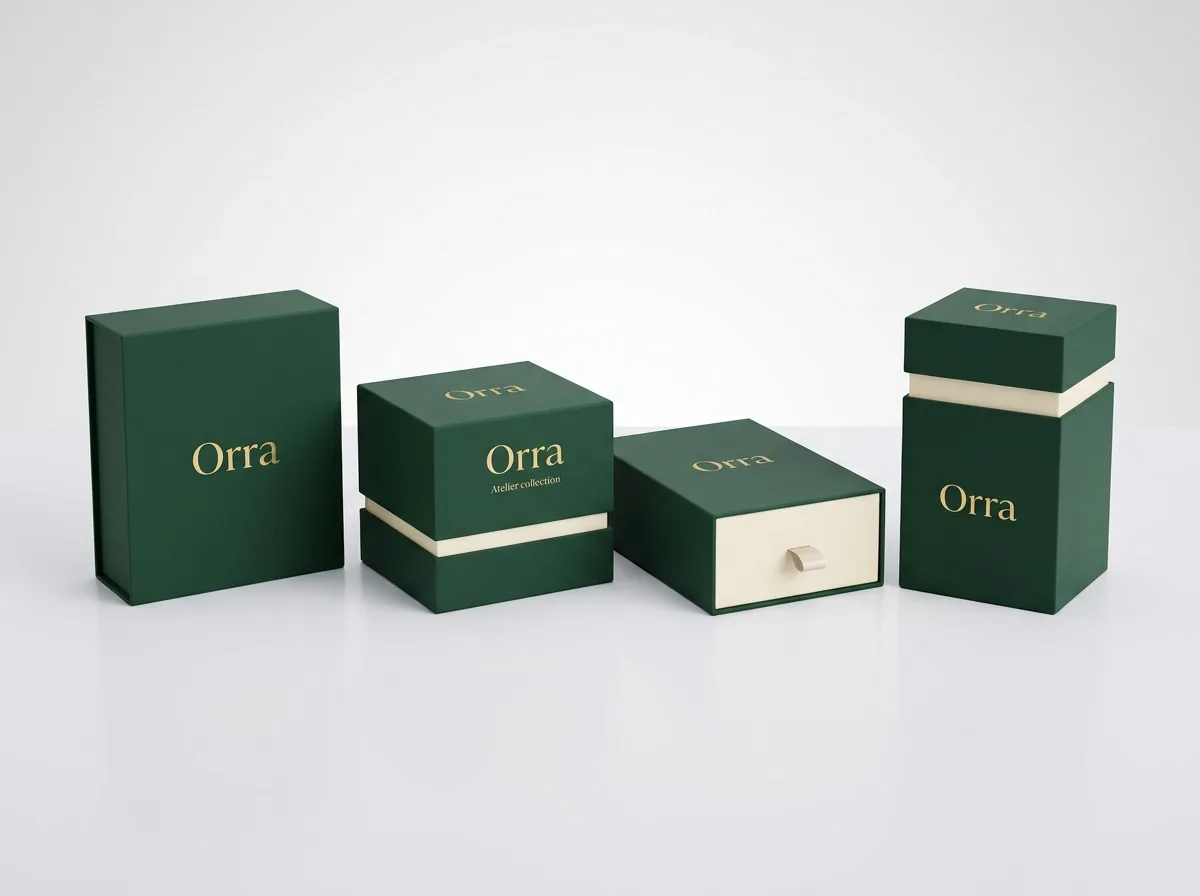
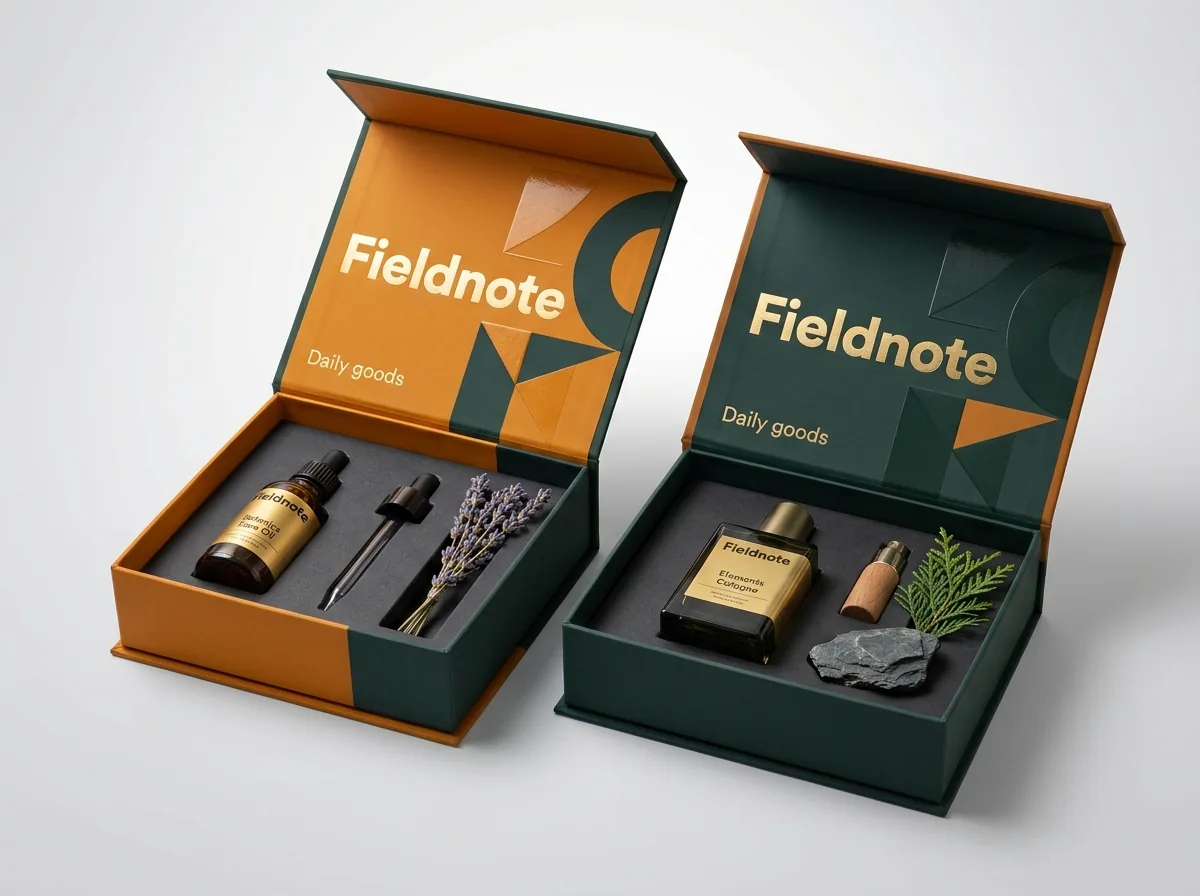
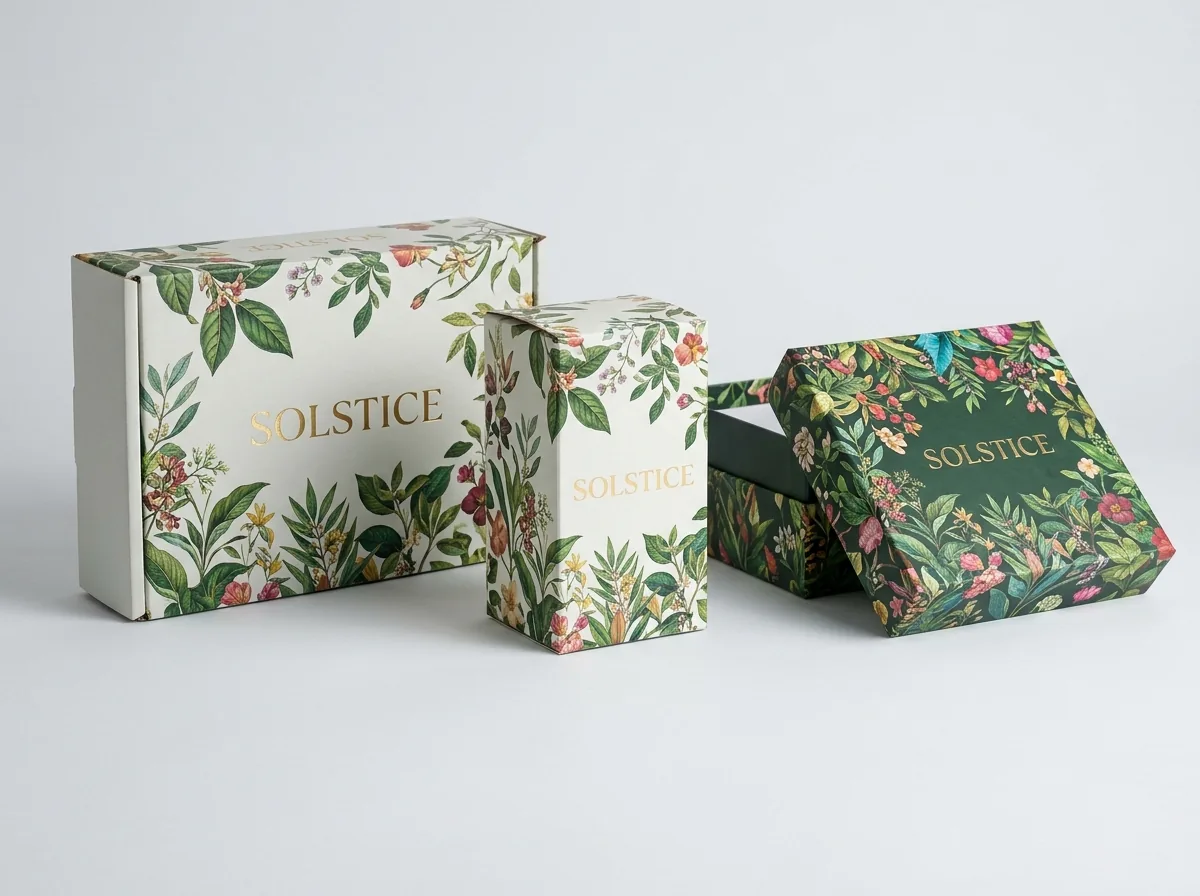
Ready to order packaging boxes? Compare up to 3 quantities with a free 3D mockup.
Request a Quote →Questions about packaging boxes
How do matte, gloss, velvet soft-touch lamination, hot foil, and Spot UV compare on custom packaging boxes?
Matte, gloss, and velvet soft-touch laminations are full-surface protective films that prevent fold cracking and scuffing; hot foil stamping, embossing, and Spot UV are focal-point accents applied over the lamination to make logos and patterns pop. Every order includes a free 2D vector CAD dieline and interactive 3D proof before payment.
Which interior insert (folded card, corrugated, molded fiber, or EVA foam) fits my product best?
Choose 16–24 pt folded paperboard inserts for lightweight retail bottles and tubes; 32 ECT corrugated inserts for heavy candles, jars, and D2C mailers; molded fiber trays for plastic-free sustainability; and 38–45 kg/m3 velvet or card-topped EVA foam for luxury rigid boxes. Every order includes a free 2D vector CAD dieline and interactive 3D proof before payment.
How does requesting 1, 2, or 3 quantity tiers (e.g., 250, 500, and 1,000 units) lower per-box cost?
Because press make-ready and setup happen once at the start of a run, scaling from 250 to 500 or 1,000+ boxes spreads that setup across more units, significantly lowering your per-box cost. Enter up to 3 quantities in Step 1 of our quote form to compare tiers side by side. Every order includes a free 2D vector CAD dieline and interactive 3D proof before payment.
Can I split a single custom packaging box order across multiple SKU designs that share the same size?
Yes. If your SKUs (such as 3 scents of a candle or 4 flavors of a supplement) use the exact same box dimensions and board stock, select '2 designs' or '3+ designs' in Step 2 of our quote form to combine your print run. Every order includes a free 2D vector CAD dieline and interactive 3D proof before payment.
Are there extra tooling or plate fees when adding foil stamping, embossing, or custom inserts?
No. CubitPack charges zero cutting die fees and zero printing plate setup charges across custom packaging boxes and custom inserts, and includes free US ground shipping. Every order includes a free 2D vector CAD dieline and interactive 3D proof before payment.
Still have a question? Ask a packaging specialist.
Request a Quote →Request your packaging boxes quote
Tell us your size and quantities, and one dedicated account manager prepares pricing for each tier.
- Free design & AI-to-print studio + 3D mockup
- No die or plate charges · 4–5 day rush available
- Free shipping to all 50 states
- 10% off your first order
We verified film lamination fold-endurance performance, hot foil and Spot UV clearance rules, insert substrate load ratings, and multi-SKU offset sheet gang-run mechanics against Foil & Specialty Effects Association (FSEA) and Paperboard Packaging Council (PPC) guidelines. Spot something wrong? Tell us and we fix it.
Sources
What changed
- November 11, 2026: First published with 6-finish comparison table, 4-insert selection matrix, and MOQ tier optimization strategies.
More guides
New packaging guides by email
Sizes, materials and design tips. Unsubscribe anytime.