
What Are Standard Moving Box Dimensions, Volumes, and Weight Capacities?
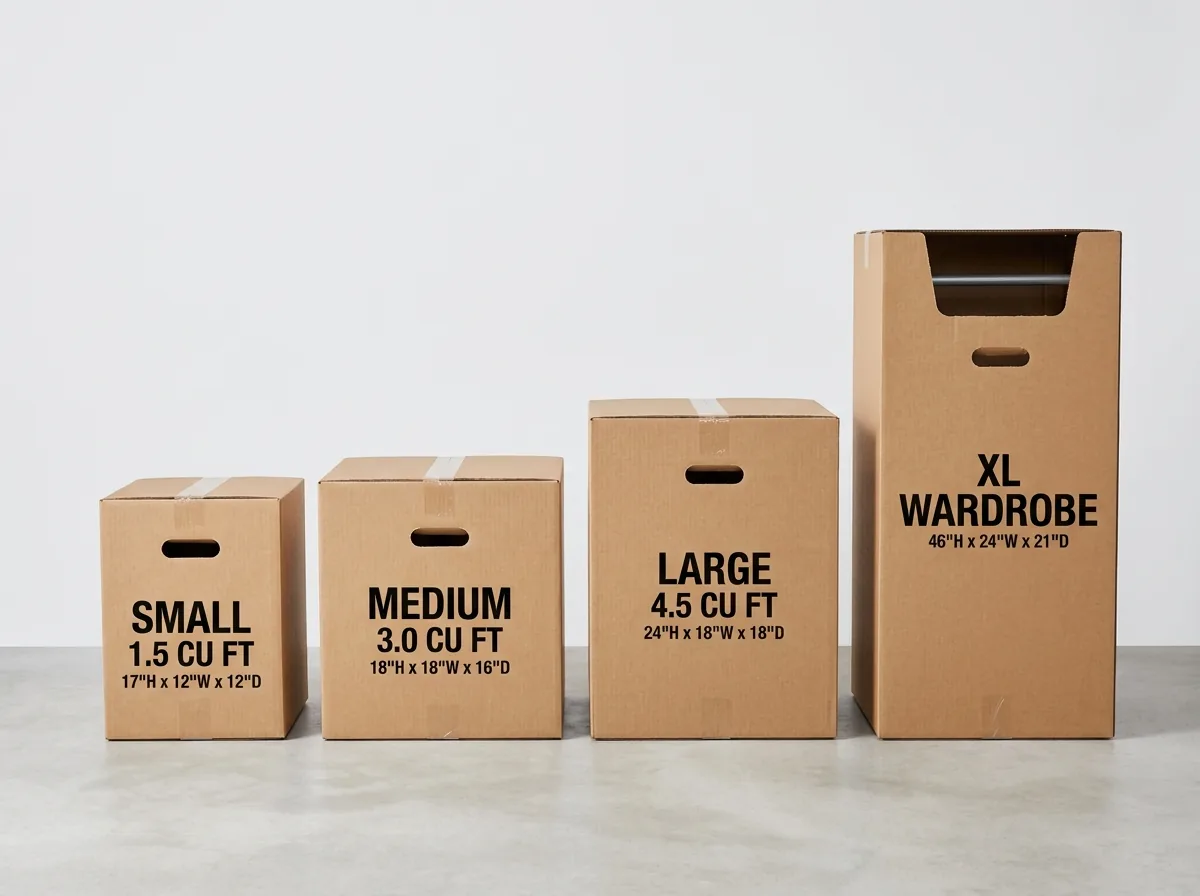
Short answer: Standard moving box dimensions span Small (1.5 cu ft, 16x12x12 in, 40 lbs max) for books, Medium (3.0 cu ft, 18x18x16 in, 55 lbs max) for kitchenware, Large (4.5 cu ft, 18x18x24 in, 65 lbs max) for bedding, and heavy double-wall Dish Packs for fragile stemware.
On this page
- How is cubic foot volume calculated from inside box dimensions
- What makes Small 1.5 cubic foot boxes ideal for heavy books and tools
- Why is the Medium 3.0 cubic foot carton the most versatile household mover
- What items belong in Large 4.5 cubic foot and Extra-Large cartons
- How are double-wall dish pack boxes engineered for fragile kitchenware
- What wardrobe box features protect hanging clothing during transit
- How do modular box dimensions maximize moving van pack density
- What packing weight distribution rules prevent carton tipping and crush
- Common mistakes
- FAQs
Request a custom quoteFree dieline & 3D mockup
Standardizing moving box dimensions and cubic capacities is essential for organizing efficient household packing, preventing worker lifting injuries, and maximizing cargo space in moving vans. When ordering custom moving boxes, relocation companies utilize modular cubic sizes established by the moving industry. A Small box (1.5 cu ft, 16 × 12 × 12 in) is reserved for dense items like books and tools under 40 pounds. A Medium box (3.0 cu ft, 18 × 18 × 16 in) serves as the all-purpose workhorse for pots and small appliances up to 55 pounds. A Large box (4.5 cu ft, 18 × 18 × 24 in) holds bulky linens and bedding up to 65 pounds. Specialty cartons like heavy double-wall Dish Packs (5.2 cu ft) and tall hanging Wardrobe boxes complete relocation suites. When procuring standard relocation boxes, our packaging specialists provide custom CAD dielines, bundle packaging, and volume delivery.
How is cubic foot volume calculated from inside box dimensions?
In commercial moving logistics, box capacity is expressed in cubic feet, which dictates how cargo fills moving vans and storage vaults. Cubic volume is calculated strictly from inside usable dimensions: length multiplied by width multiplied by depth in inches, divided by 1,728 (the number of cubic inches in one cubic foot). For example, a Medium moving carton measuring 18 × 18 × 16 inches yields 5,184 cubic inches, which divided by 1,728 equals exactly 3.0 cubic feet. Calculating accurate cubic volume ensures that relocation estimators can accurately predict total truck space requirements based on a client's room inventory count. Standard ISO container logistics models confirm that standardizing on cubic foot increments reduces trailer loading miscalculations by over 20% across commercial transport fleets.
What makes Small 1.5 cubic foot boxes ideal for heavy books and tools?
A frequent mistake made by amateur packers is packing dense items like books or canned pantry goods into large boxes, creating back-breaking containers weighing over 80 pounds that rupture along bottom tape seams. Professional moving companies enforce the golden rule of packing: the heavier the item, the smaller the box. Measuring 16 × 12 × 12 inches (1.5 cu ft), a Small moving box packed completely full of hardcover books or metal hand tools naturally tops out at a manageable 35 to 40 pounds, allowing solo movers to carry cartons safely up staircases without muscular injury or box failure. Testing under ASTM D4169 demonstrates that keeping book cartons under 40 pounds prevents corner seam tearing during rapid stairwell carries.
Why is the Medium 3.0 cubic foot carton the most versatile household mover?
Representing over 50% of all moving cartons sold nationwide, the Medium 3.0 cubic foot box (18 × 18 × 16 inches) is the universal all-purpose container for residential relocations. Its wide, balanced footprint accommodates kitchen blenders, toaster ovens, stainless steel pots, decorative ceramics, children's toys, and small desktop electronics. When loaded with mixed household goods interspersed with kraft wrapping paper, the Medium box naturally achieves an ideal carrying weight of 45 to 55 pounds. In addition, its 18 × 18 inch base allows Medium boxes to stack perfectly alongside Large 18 × 18 inch boxes on moving dollies.
Know your size? Compare pricing across up to 3 quantities.
Request a Quote →What items belong in Large 4.5 cubic foot and Extra-Large cartons?
Large moving cartons measuring 18 × 18 × 24 inches (4.5 cu ft) and Extra-Large cartons measuring 24 × 18 × 24 inches (6.0 cu ft) provide massive interior volume designed exclusively for lightweight, bulky household cargo. Items such as queen-size pillows, down comforters, bath towel sets, winter parkas, fabric lampshades, and large stuffed toys consume substantial space without adding significant weight. When packed with linens, a Large 4.5 cu ft box weighs roughly 40 to 50 pounds. Packing heavy items into Large cartons is strictly prohibited, as the box bottom will sag and blow out during handling.
How are double-wall dish pack boxes engineered for fragile kitchenware?
Transporting delicate porcelain china, crystal wine stems, and ceramic bowls requires specialized heavy-duty protection. Dish Pack moving boxes measure 18 × 18 × 28 inches (5.2 cu ft) and are manufactured from heavy 48 ECT to 51 ECT BC-flute double-wall corrugated board. The double-wall construction provides superior puncture defense and vertical crush resistance exceeding 1,100 pounds. Inside, multi-tier corrugated cell partition grids isolate individual plates, cups, and glasses in independent cushioned compartments, preventing glass-on-glass collision when the moving van navigates rough road bumps.
What wardrobe box features protect hanging clothing during transit?
Wardrobe moving cartons measuring 24 × 24 × 34 inches or 24 × 24 × 40 inches provide a portable closet that allows hanging garments to transfer directly from bedroom closets into the moving van. The box features an integrated steel hanging bar supported by reinforced die-cut shoulder notches in the top sidewalls. Hanging suits, cocktail dresses, winter coats, and silk shirts remain on their original hangers, eliminating the time-consuming labor of folding clothes into suitcases and preventing deep wrinkles that require expensive post-move dry cleaning.
How do modular box dimensions maximize moving van pack density?
Professional moving truck loading relies on modular packaging geometry that interlocks like building blocks. Because Small (16 × 12 in base), Medium (18 × 18 in base), and Large (18 × 18 in base) cartons share mathematically compatible dimensional footprints, movers can build tight, interlocking tiers from the truck floor to the ceiling. Tight column stacking aligns carton vertical corners directly above one another, maximizing the natural Edge Crush Test strength of the boxes and eliminating empty void spaces that allow shifting or load collapse during transit acceleration.
What packing weight distribution rules prevent carton tipping and crush?
Maintaining balanced weight distribution inside individual moving boxes ensures crew safety and cargo stability. Packers follow a three-tier vertical rule: heavy items (such as cast-iron skillets or hardbound books) are placed flat at the bottom of the carton to anchor the center of gravity; medium-weight goods occupy the center; and lightweight soft items (or crumpled kraft paper void fill) pack tightly at the top. Filling void space firmly up to the top flap crease line prevents top flaps from dishing inward when another heavy box is stacked above it.
What are common mistakes in moving box sizing and loading?
Improper sizing and weight overloading cause severe transit damage. Packaging specialists highlight four frequent errors
- Packing dense hardcover books into Large 4.5 cubic foot boxes, resulting in unmanageable weights exceeding 80 pounds that tear seams.
- Under-filling cartons, leaving empty headspace that caves inward under the weight of stacked boxes inside moving vans.
- Mixing fragile glassware with heavy metal pots in the same carton without protective corrugated dividing partitions.
- Using worn, water-damaged used grocery boxes with degraded ECT strength that buckle under light stacking pressure.
Packaging for this
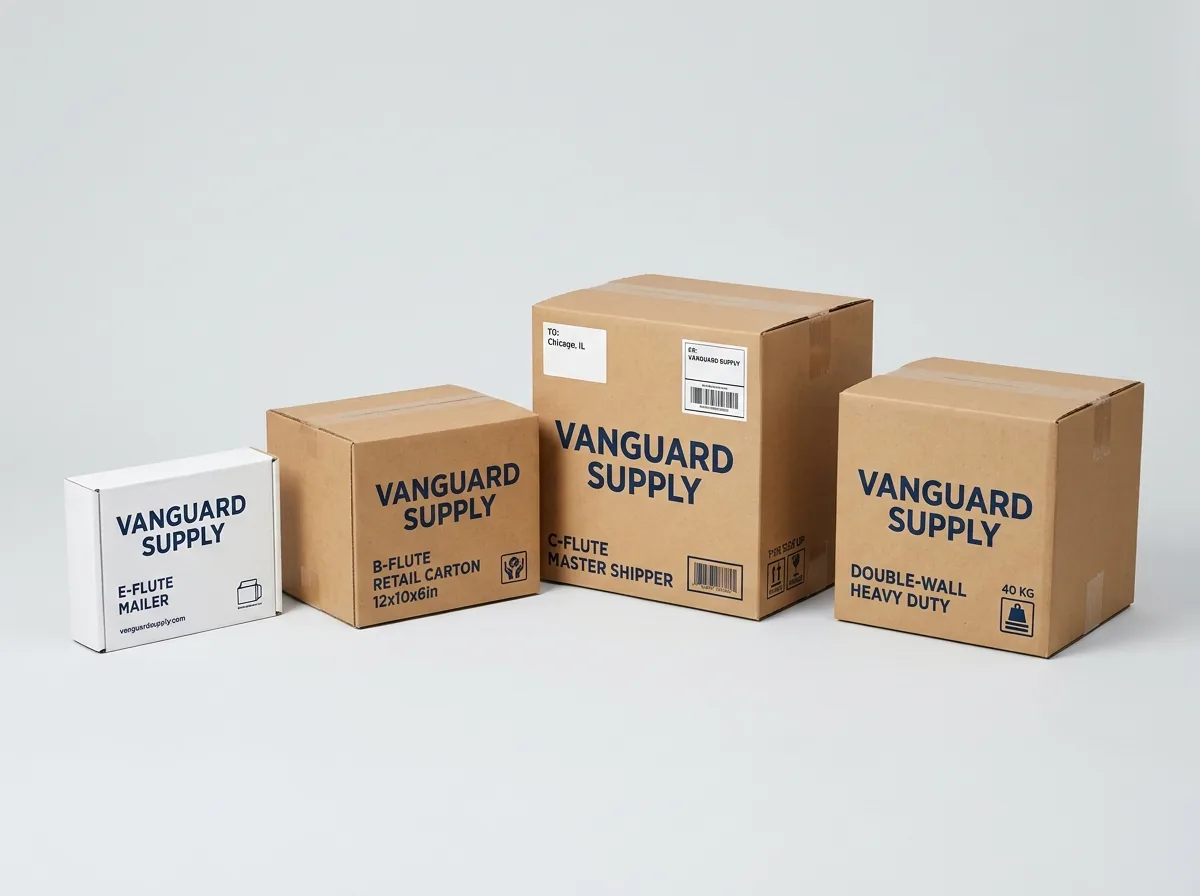

Ready to order moving boxes? Compare up to 3 quantities with a free 3D mockup.
Request a Quote →Questions about moving boxes
What are the standard dimensions for Small, Medium, and Large moving boxes?
Standard sizes are Small (1.5 cu ft, 16 × 12 × 12 in), Medium (3.0 cu ft, 18 × 18 × 16 in), Large (4.5 cu ft, 18 × 18 × 24 in), and Extra-Large (6.0 cu ft, 24 × 18 × 24 in), designed for modular stacking inside moving vans.
What is the maximum weight you should pack in a Large moving box?
We recommend keeping total payload weight under 65 pounds for a Large 4.5 cu ft moving box. Large boxes are intended for bulky lightweight items like pillows, blankets, and coats rather than dense books or cookware.
How many boxes are needed on average to move a two-bedroom apartment?
A typical two-bedroom apartment requires approximately 15 Small boxes, 20 Medium boxes, 10 Large boxes, 4 Dish Packs, and 3 Wardrobe boxes, totaling approximately 50 to 55 moving cartons.
Why do moving companies use 18x18 inch bases for Medium and Large boxes?
An 18 × 18 inch square footprint allows Medium (16 in high) and Large (24 in high) boxes to stack interchangeably in vertical columns inside moving vans, building stable cube tiers that do not shift during transport.
Can custom moving box kits include different sizes on one pallet?
Yes. We can assemble mixed-size moving kit pallets combining specified ratios of Small, Medium, Large, and Dish Pack boxes, delivered flat in strapped bundles of 25 units directly to your facility.
What is the minimum order quantity for custom printed moving box kits?
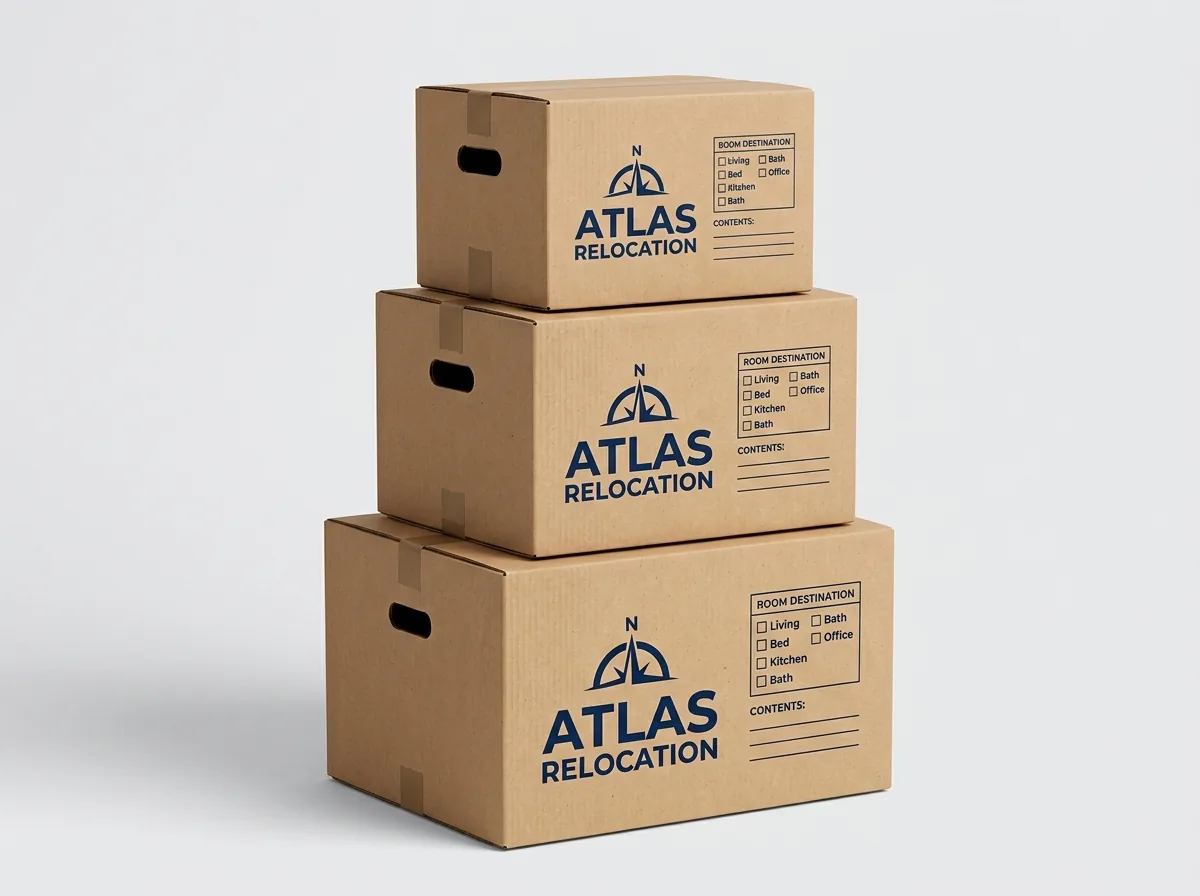
Our minimum order quantity starts at 100 boxes across specified sizes, complete with custom 1 or 2 color flexographic logo printing, room checklists, zero plate setup fees, and free commercial US shipping.
Still have a question? Ask a packaging specialist.
Request a Quote →Request your moving boxes quote
Tell us your size and quantities, and one dedicated account manager prepares pricing for each tier.
- Free design & AI-to-print studio + 3D mockup
- No die or plate charges · 4–5 day rush available
- Free shipping to all 50 states
- 10% off your first order
Researched against AMSA standard cubic volume benchmarks, NMFTA Item 222 carrier regulations, and OSHA manual lifting safety thresholds. Verified by CubitPack packaging specialists.
Sources
What changed
- November 11, 2026: Initial publication of technical engineering guide on standard moving box dimensions and weight capacities with 5 CAD SVGs.
More guides
New packaging guides by email
Sizes, materials and design tips. Unsubscribe anytime.