
How do you design custom wine labels for TTB rules, foil and ice buckets?
Short answer: Place your brand name, class or varietal, appellation and alcohol percentage on the front wine label, and group the mandatory TTB GOVERNMENT WARNING statement, sulfite notice, bottler address, 750 mL net contents and barcode on the back panel when ordering custom wine labels with foil and matte or gloss finishes.
On this page
- What does the TTB require on front and back US wine bottle labels
- How do you format the TTB GOVERNMENT WARNING statement so it passes COLA
- How do you prepare artwork for hot foil stamping and spot UV on wine crests
- How do you keep white, rose and sparkling wine labels intact in an ice bucket
- What bleed, safe zone and roll unwind specs does a bottling line need
- Common mistakes
- FAQs
Request a custom quoteFree dieline & 3D mockup
Designing a commercial or private-label wine bottle label blends estate storytelling with strict federal prepress rules. On the front panel, restraint wins: a clear focal crest, varietal title, appellation of origin and vintage year surrounded by generous margin reads across a restaurant dining room. On the back panel, US Alcohol and Tobacco Tax and Trade Bureau (TTB) rules under 27 CFR Part 4 require exact wording, bold formatting and minimum millimeter type heights for the health warning statement, sulfite declaration, alcohol by volume and bottler address. Adding hot gold foil stamping or spot UV on a separate vector layer elevates the front crest, while labeling clean, dry bottles at room temperature 24 hours before cellaring keeps chilled bottles crisp. At CubitPack, printed wine labels start at 500 pieces with free prepress checks and zero die fees.
What does the TTB require on front and back US wine bottle labels?
Every commercial wine sold in the United States requires a Certificate of Label Approval (COLA) from the TTB before bottling. While TTB regulations allow several mandatory items to sit on either the front or back label, modern wineries group the brand story on the front and the technical disclosures on the back so the front label stays uncluttered. Use the reference table below to verify that your front and back artwork files include every mandatory 750 ml disclosure at its required minimum type height.
| Mandatory TTB item | Usual placement | Key formatting & height rule (750 mL) |
|---|---|---|
| Brand name | Front label (prominent) | 2 mm minimum height on bottles over 187 mL |
| Class, type or varietal (e.g., Pinot Noir) | Front label | 2 mm minimum height; if varietal is listed, appellation must appear |
| Appellation of origin (e.g., Napa Valley) | Front label (same view as varietal) | Required whenever a grape varietal or vintage year is stated |
| Alcohol content (e.g., Alc. 13.5% by Vol.) | Front or back label | 1 mm to 3 mm height (or 'Table Wine' if 7% to 14% ABV) |
| Health warning ('GOVERNMENT WARNING:') | Back label | 2 mm minimum; 'GOVERNMENT WARNING:' must be bold and all caps |
| Sulfite declaration ('Contains Sulfites') | Back label | 2 mm minimum height whenever sulfur dioxide is 10 ppm or more |
| Bottler / importer name & city, state | Back label | 2 mm minimum ('Bottled by...' or 'Produced and Bottled by...') |
| Net contents ('750 mL') | Back or front label (or blown in glass) | 2 mm minimum height; use capital 'L' for milliliters (750 mL) |
How do you format the TTB GOVERNMENT WARNING statement so it passes COLA?
The single most common reason a wine label proof gets rejected during TTB COLA review is a tiny formatting error in the Alcoholic Beverage Health Warning Statement. The first two words and colon - GOVERNMENT WARNING: - must appear in capital letters and bold type, while the remainder of paragraphs (1) and (2) must appear in regular (non-bold) type so the header stands out clearly. On a standard 750 ml bottle (over 237 ml up to 3 liters), the minimum character height for the warning text is 2 millimeters (about 6 to 7 point type depending on the font's x-height), set on a high-contrast background with no more than 25 characters per inch. Our prepress team checks your back label text contrast and margin clearance on your free digital proof before printing.
- Set 'GOVERNMENT WARNING:' in ALL CAPS and bold weight; set the body sentences in regular non-bold weight.
- Keep character height at 2 mm or taller on 375 mL, 750 mL and 1.5 L wine bottles.
- Print dark text on a solid white or light cream background panel (never over busy photos or metallic foil).
- Double-check exact punctuation and spelling of both warning paragraphs against 27 CFR Part 16.
How do you prepare artwork for hot foil stamping and spot UV on wine crests?
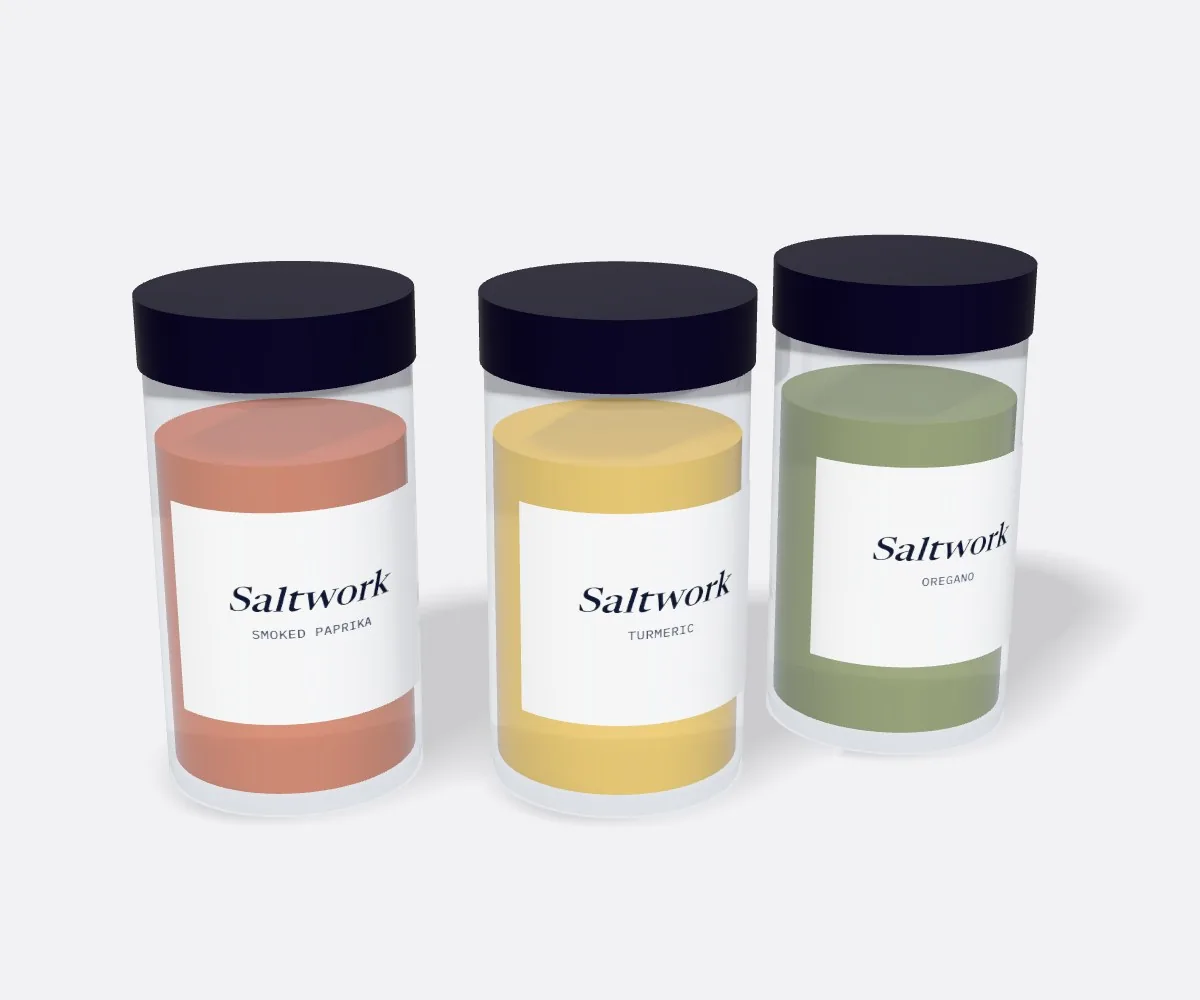
Hot foil stamping and raised spot UV turn a minimalist wine label into a tactile keepsake on the dining table. To prepare your Illustrator or PDF file, create a separate top layer named Foil or Spot UV and set all elements on that layer as 100 percent solid vector K (black) shapes with no gradients or soft drop shadows. Leave at least 0.5 pt (about 0.007 inch) of stroke thickness on metallic foil lines and at least 1 pt of clearance between adjacent foil shapes so the heated metal die stamps cleanly without bridging. Keep metallic foil stamping focused on hero elements: your vineyard crest, vintage year, varietal border frame or winemaker signature. Avoid putting tiny 6-point back-panel text or thin barcode bars in hot foil, because metallic glare can confuse grocery and tasting-room barcode scanners. If you designed your vineyard illustration with an AI tool, upload it through our print your AI design service and our designers will build the vector foil mask, cut line and ⅛ inch bleed for free.
- Separate vector mask layer: place all foil or spot UV shapes on a dedicated vector layer in 100% solid K.
- Minimum line weight (0.5 pt): keeps delicate botanical linework and serif crests crisp under heat and pressure.
- Knockout vs overprint check: our prepress team sets proper trapping so ink never peeks out around foil edges.
- Keep barcodes and 2 mm TTB text in flat ink: ensures instant COLA readability and retail scanner accuracy.
Know your size? Compare pricing across up to 3 quantities.
Request a Quote →How do you keep white, rose and sparkling wine labels intact in an ice bucket?
A red Cabernet usually moves from a dry cellar shelf to a dining table, but a Sauvignon Blanc, Chardonnay, Rosé or Brut sparkling bottle is plunged straight into a bucket of ice and water for two hours. Surviving an ice bucket depends half on the label stock and finish you select, and half on how the bottle was handled on bottling day. Choosing a moisture-resistant film stock or adding a protective matte or gloss lamination shields the printed ink from melting ice cubes and wet restaurant napkins. Whenever wine is bottled cold (around 45°F to 55°F), moisture from the tasting room or winery air condenses on the outside of the glass. Sticking a pressure-sensitive label over even a microscopic film of condensation prevents the adhesive from wetting out onto the glass surface. Pass cold-filled bottles through an air-knife dryer and let the outer glass warm above the room dew point before the labeling head, apply firm even wiper-roller pressure from the center outward, and allow labeled cases to cure in dry cartons for 24 hours before refrigeration.
What bleed, safe zone and roll unwind specs does a bottling line need?
Extend any background color, dark estate fill or border pattern ⅛ inch (0.125 in) outside the cut line on all sides for bleed, and keep all typography, TTB warnings and thin inner frames at least ⅛ inch inside the cut line. On a 2.75 × 3.5 inch back label, place your UPC barcode with at least ⅛ inch of white quiet space around the bars so curved glass reflections never interfere with point-of-sale scanners. Before approving your proof for custom roll labels, confirm with your winemaker or mobile bottling truck whether the applicator uses two separate rolls (Head 1 for Front, Head 2 for Back) or a single alternating roll (Front, Back, Front, Back on one web), along with the required cardboard core diameter and unwind direction.
- Bleed (+⅛ in outside cut line): required on all dark, colored or full-bleed artwork.
- Safe margin (−⅛ in inside cut line): protects thin decorative borders and TTB text from edge shifts.
- Separate vs alternating rolls: confirm whether your bottling line uses one labeling head or two.
- Pantone carton match: match your bottle label Pantone code to your custom wine boxes for tasting-room gift sets.
What are the most common custom wine label design and prepress mistakes?
A small oversight on a wine label can hold up a TTB COLA filing or stall a mobile bottling truck. Check these five details before printing
- Setting the entire TTB health warning paragraph in bold type instead of bolding only 'GOVERNMENT WARNING:' and leaving the body text regular.
- Listing a grape varietal or vintage year on the front wine label without including the required appellation of origin in the same field of view.
- Applying pressure-sensitive wine labels onto cold, damp bottles covered in cellar condensation instead of dry glass above the dew point.
- Placing a thin metallic foil frame right on the cut line with zero inner safe margin, where a 1/64 inch blade tolerance looks uneven.
- Ordering separate front and back rolls when your single-head tabletop wine roller was set up for an alternating Front-Back roll.
Find your label size
Suggested label size: 9⅛ × 2¾ in (width × height)
A typical starting point. Your account manager confirms the size on the proof.
Quote this size →Packaging for this
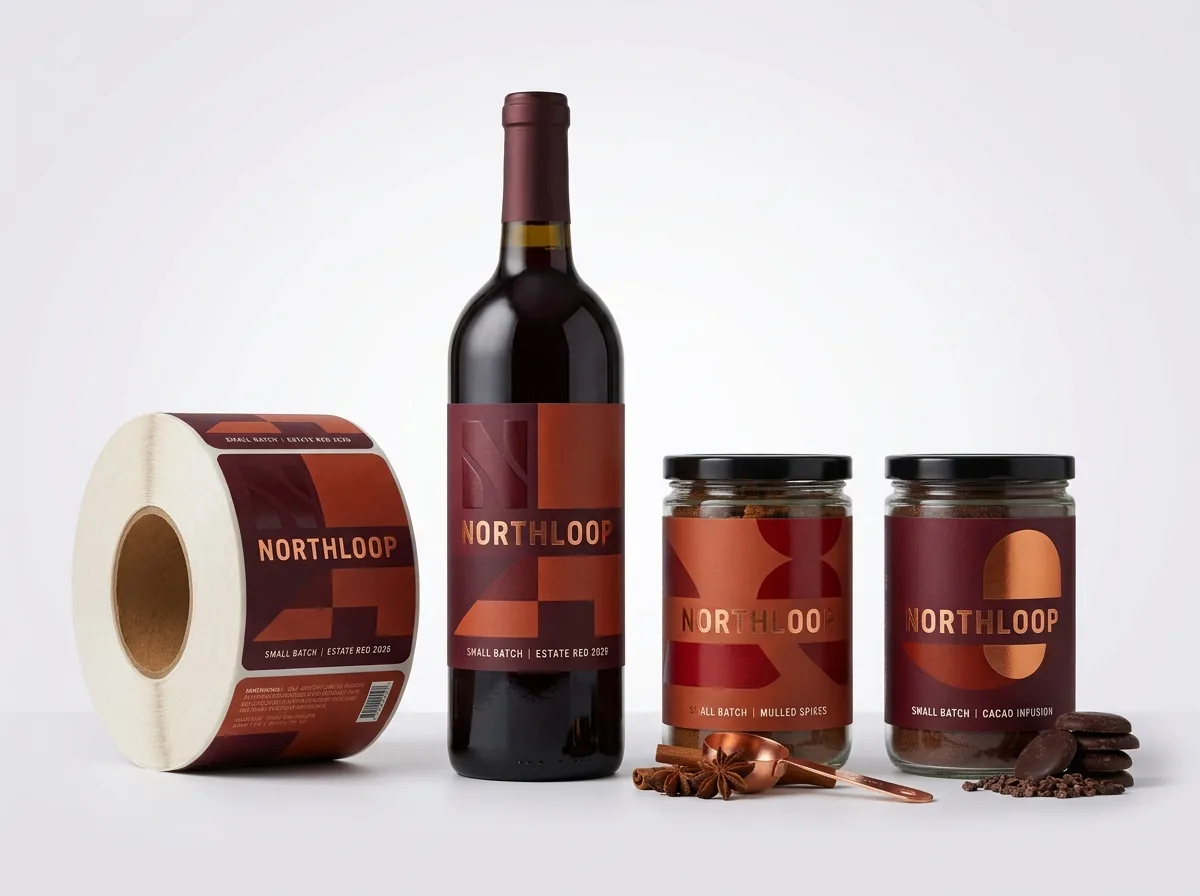
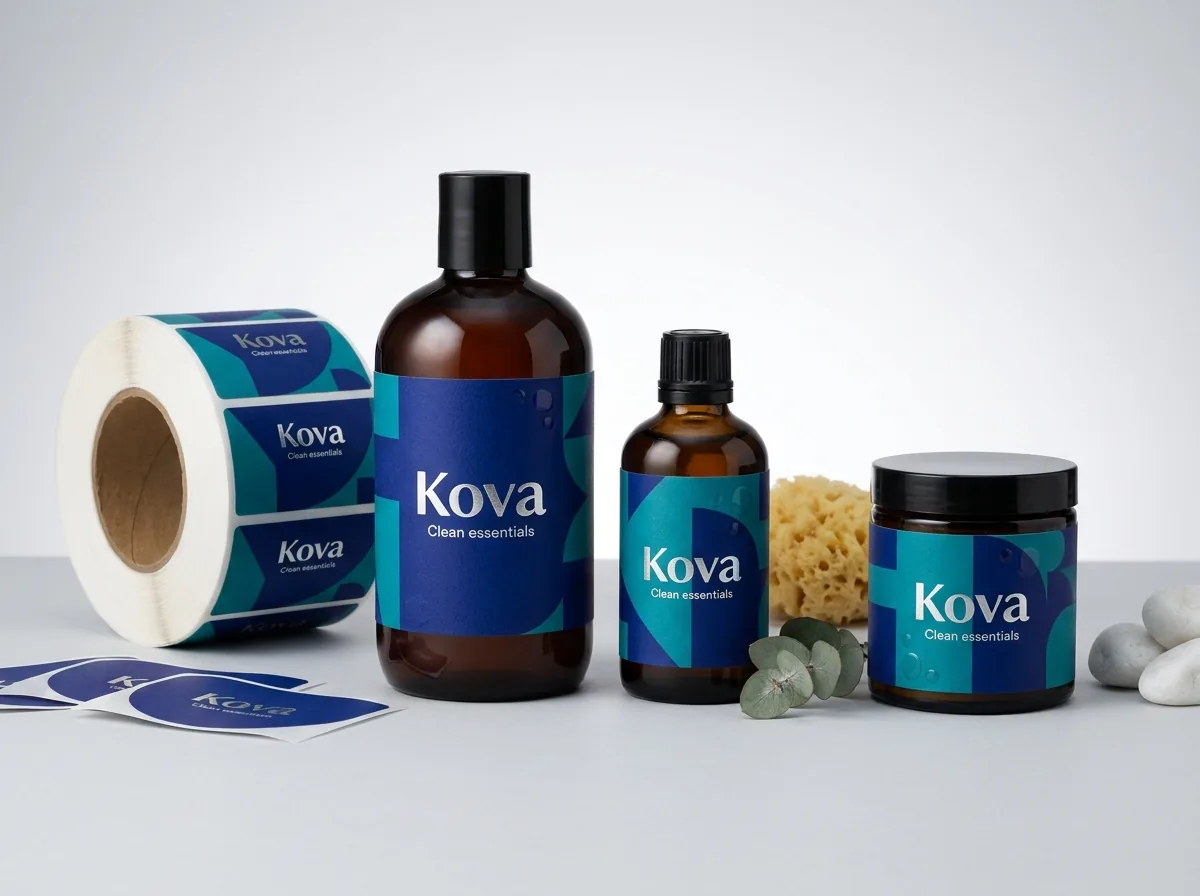
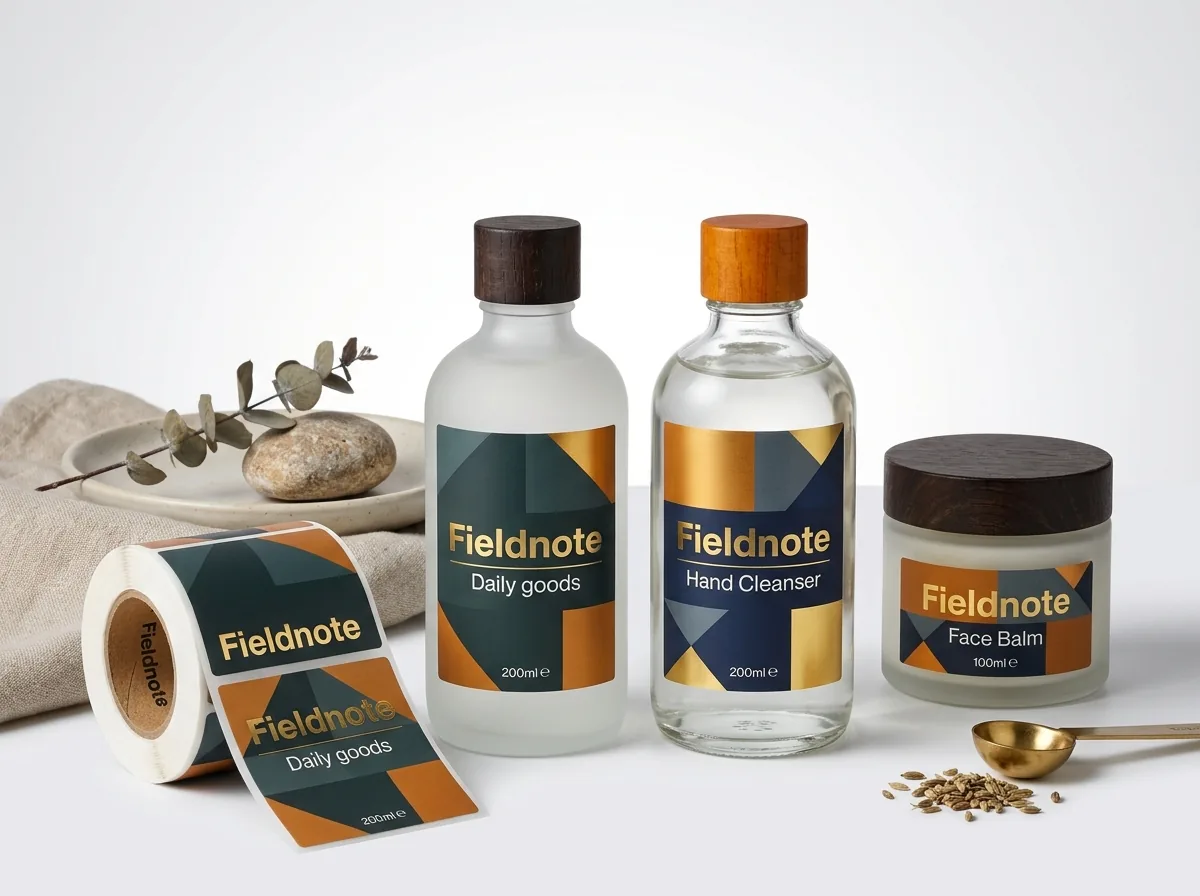
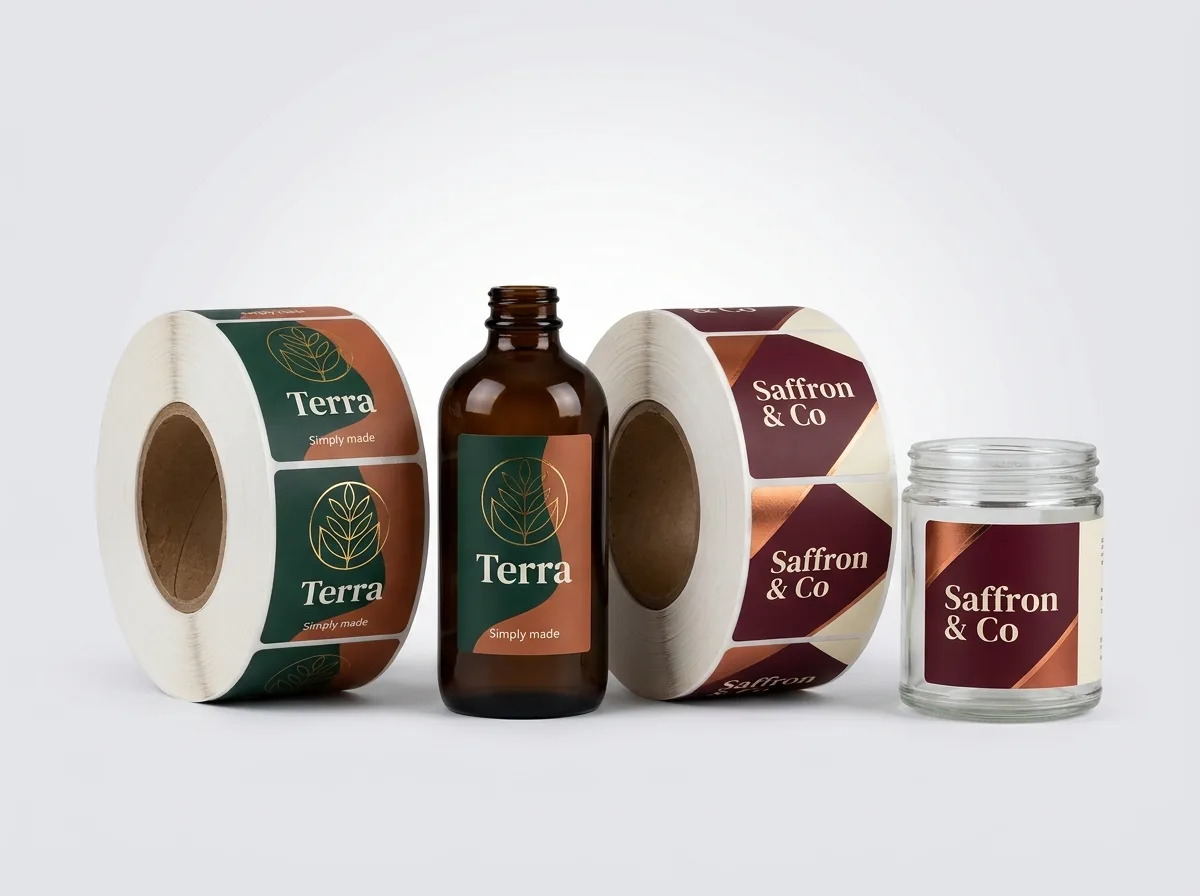
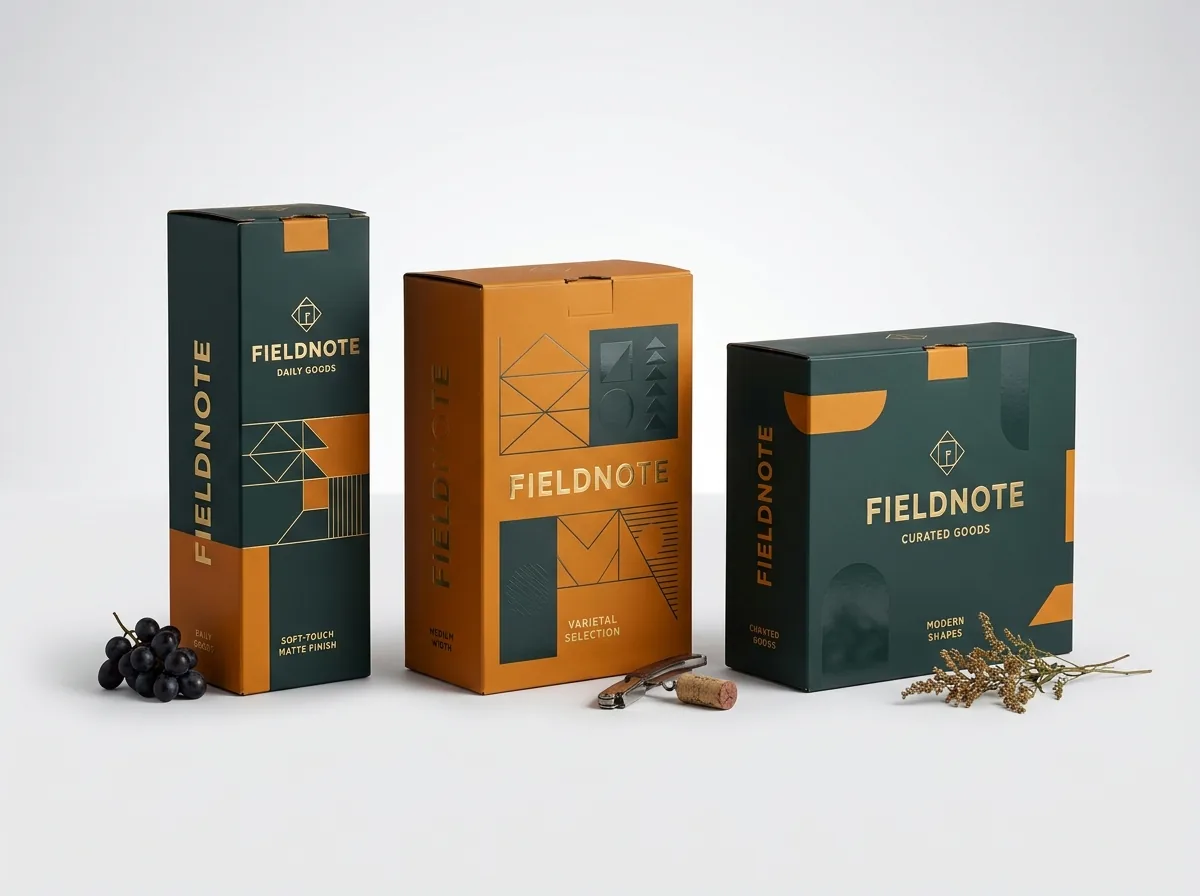
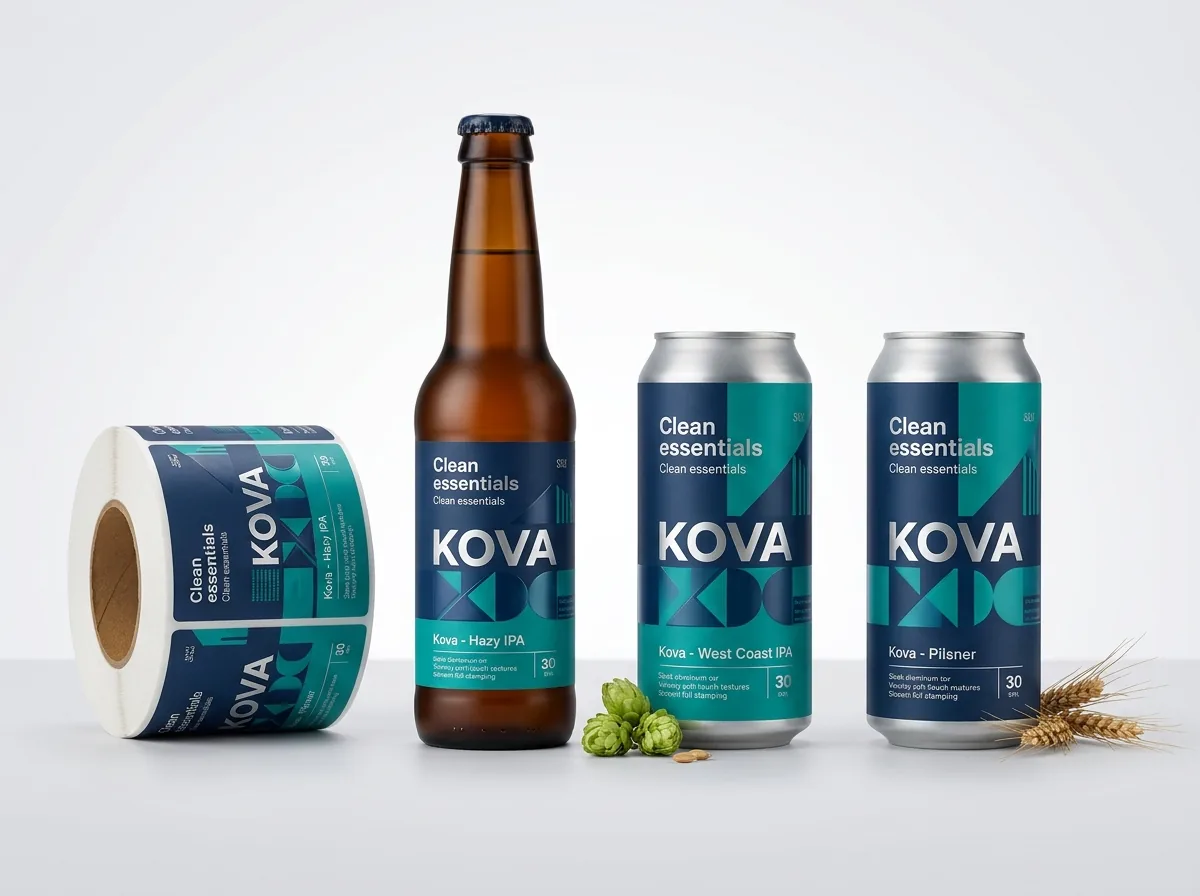
Ready to order wine labels? Compare up to 3 quantities with a free 3D mockup.
Request a Quote →Questions about wine labels
Do private-label wedding or corporate gift wine labels need TTB approval?
If you buy already-bottled, tax-paid commercial wine where the winery's back label (carrying the TTB government warning, sulfites, ABV and bottler info) remains untouched on the bottle, you can add a custom front event or wedding sticker for personal gifting. Commercial resale always requires an approved TTB COLA.
How many wine labels should I order for a 40-case or 80-case vintage run?
Forty cases of 12 bottles equals 480 bottles, so our 500-label minimum gives you 480 labels plus 20 extra pieces for bottling-line setup and tasting samples. Eighty cases equals 960 bottles (order 1,000 labels).
Can I print 4 different varietals in a single custom wine label order?
Yes. Select 3+ designs in Step 2 of the quote form and list your varietal counts in the notes. Keeping the exact same front and back dimensions across all four varietals lets us run them together efficiently.
Do I need vector files to add gold foil stamping to my wine crest?
Vector paths produce the sharpest hot-foil stamping edge, but if you only have a high-resolution image or AI artwork, our free design team will trace and set up the vector foil mask for you on your digital proof.
Where should the UPC barcode go on a wine bottle?
Place your UPC barcode on the back wine label with dark black bars against a solid white rectangular box and at least ⅛ inch of white quiet margin on all sides so retail and restaurant scanners read it cleanly.
Can you match my wine bottle label to a 1-bottle or 2-bottle custom gift box?
Yes. Because CubitPack produces both custom wine labels and custom wine boxes under one roof with guaranteed Pantone color matching, we print your bottle label and gift carton to the exact same Pantone code.
Still have a question? Ask a packaging specialist.
Request a Quote →Request your wine labels quote
Tell us your size and quantities, and one dedicated account manager prepares pricing for each tier.
- Free design & AI-to-print studio + 3D mockup
- No die or plate charges · 4–5 day rush available
- Free shipping to all 50 states
- 10% off your first order
This guide synthesizes US TTB 27 CFR Part 4 and Part 16 wine labeling regulations, bottling-line condensation practices, and CubitPack's decided foil, finish and prepress specifications. Checked by a packaging specialist. Spot something wrong? Tell us and we will fix it.
Sources
What changed
- October 22, 2026: First published.
- October 22, 2026: Updated specifications, terminology, and verified source links.
More guides
New packaging guides by email
Sizes, materials and design tips. Unsubscribe anytime.