
How do I design custom flat pouches and single-serve sachet dielines?
Short answer: Extend background artwork 0.125 inches past the cut line, keep all text at least 0.375 inches inside the side and bottom heat welds, and leave 0.75 inches (tear-open) or 1.5 inches (zipper) clear at the top. Every order of custom flat pouches includes a free dieline and 3D mockup.
On this page
- What are the heat-seal, tear-notch and hang-hole margins on a flat pouch dieline
- How do I keep small ingredient and dosing text sharp on miniature sachets
- How do clear windows, metallic foil knockouts and kraft paper work on flat pouches
- What drives the unit cost of custom flat pouches across multiple flavors
- How do I get a free flat pouch dieline or print an AI design concept
- Common mistakes
- FAQs
Request a custom quoteFree dieline & 3D mockup
Designing a custom flat pouch or single-serve sachet requires careful attention to perimeter heat-seal borders and small-scale typography. Because a 3-side-seal or 4-side-seal packet has no bottom gusset, the flat dieline consists simply of the front panel and the back panel joined along a bottom fold (or welded on all four sides). While background colors, gradients and patterns print edge to edge across the entire packet including the heated crimp seams, any text, logos, barcodes or clear windows placed inside the ¼ to ⅜ inch perimeter seal zone will be embossed by the sealing jaws. Even more critical is the tear-open zone: when a customer rips the packet open across the V-cut tear notches, the top 0.5 to 0.75 inches of the pouch tears away completely, so your brand headline and mixing directions must sit below the tear line.
What are the heat-seal, tear-notch and hang-hole margins on a flat pouch dieline?
When you request a free custom dieline for printed flat pouches, our prepress team maps out the exact mechanical zones for your packet size and closure choice. Around the left, right and bottom edges sits the permanent heat-weld border (0.25 inches wide on small sachets under 4 inches, and 0.3125 to 0.375 inches wide on larger flat pouches). Along the open filling end sits the top closure zone, which you will heat-seal shut after filling. On a tear-open single-serve sachet, the V-cut tear notches sit about 0.375 to 0.5 inches below the top edge. Add a subtle dashed line and a small scissor or arrow icon across that tear path so customers see immediately where to rip, and keep your logo at least 0.25 inches below the tear line. On a resealable flat pouch with a press-to-close zipper and a euro hang hole, the top header extends 1.25 to 1.5 inches tall to hold the hang hole, top seal, tear notches and zipper track.
| Flat pouch dieline zone | Measurement on template | Prepress artwork rule |
|---|---|---|
| Outer bleed border | +0.125 in (⅛ in) outside cut | Extend background flood color and patterns to bleed |
| Left & right side welds | 0.25 in (small) to 0.375 in (large) | Background ink only; keep live text 0.125 in inside weld |
| Bottom fold or bottom weld | Fold crease or 0.25–0.375 in seal | Keep text 0.375 in above bottom edge |
| Tear-open top header (no zipper) | Top 0.625 to 0.75 in of height | Tears off when opened; keep headlines below 0.75 in |
| Zipper + hang-hole top header | Top 1.25 to 1.5 in of height | Keep text and windows below the zipper track |
| Lot / date crimp emboss zone | 0.25 in band in top or bottom seal | Leave un-cluttered if your sealer stamps a lot code |
How do I keep small ingredient and dosing text sharp on miniature sachets?
A 2.5 × 3.5 inch cosmetic serum sachet or a 3 × 4.5 inch supplement packet has less than 6 square inches of usable back-panel space after subtracting the perimeter heat seals. Fitting a Supplement Facts box, ingredient list, allergen statement, directions, distributor address and lot-code box into that tight space requires clean prepress typography rules so fine letters never fill in with ink on press. Set small body text on sachets at 5.5-point to 6-point minimum in a clean sans-serif typeface, and print dark text as 100 percent single-color black (K=100) or a single dark Pantone ink over a light opaque background rather than building tiny letters out of four overlapping CMYK plates. If your sachet has a dark forest green, burgundy or black background with white reversed-out text, use at least 6-point medium or semi-bold weight so surrounding background ink does not pinch thin letter strokes.
- Dark text on light background: use 100% K (black) or a single spot Pantone at 5.5 pt minimum for razor-sharp edges.
- White reversed text on dark background: use 6 pt minimum in medium/semi-bold weight and avoid thin serif hairlines.
- Metallic or clear sachets: always place a 100% opaque White Ink Underbase block behind nutrition panels and barcodes.
- QR codes for extended directions: print a 0.6 × 0.6 inch high-contrast QR code linking to full multi-language instructions.
How do clear windows, metallic foil knockouts and kraft paper work on flat pouches?
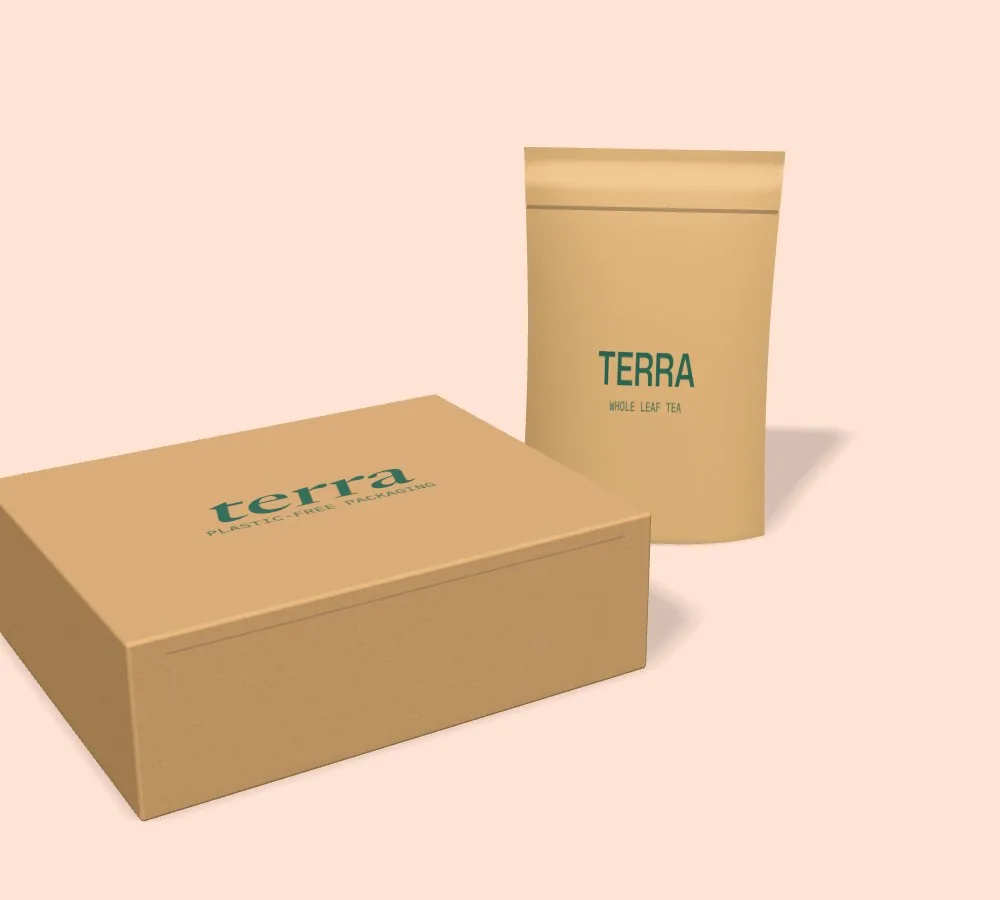
Even on a slim flat packet, surface finish and material layering make a dramatic difference in how customers perceive your brand. For facial sheet masks, eye patches and botanical bath soaks, a velvety soft-touch matte lamination paired with metallic gold or silver accents makes a single-use packet feel like a luxury spa treatment. On metallized barrier film, you can create shimmering metallic borders, flavor badges or trading-card holographic effects at zero extra cost simply by knocking out the white ink underbase layer. If you pack colorful spices, heirloom garden seeds, bath salts or artisanal jerky in custom zipper pouches or kraft flat pouches, we can register a clear unprinted window in any custom oval or rectangle shape right into the front panel. Just keep the window outline at least 0.375 inches away from the side heat welds and zipper track so the seal strength stays uniform around the entire perimeter of the packet.
Know your size? Compare pricing across up to 3 quantities.
Request a Quote →What drives the unit cost of custom flat pouches across multiple flavors?
Because flat pouches have no bottom gusset web and fewer folding stations on the converting line, they have a lower base material cost per packet than stand-up pouches of the same width and height. The main cost drivers are outer Width × Height, whether the packet is tear-open only or includes a press-to-close zipper, barrier film structure (standard metallized vs heavy liquid-grade aluminum foil or kraft), and total run quantity. When launching a variety pack of five drink flavors or four sheet mask formulas, keep the exact same outer Width × Height, barrier film stack and tear-notch position across every SKU. Grouping identical-size sachets together in one quote lets us run your entire line efficiently with zero die or plate charges, 10% off your first order, and our written US competitor price-beat guarantee. That makes it easy to test limited-edition seasonal flavors or regional sampler packs without tying up budget in setup tooling.
How do I get a free flat pouch dieline or print an AI design concept?
Tell us your target Width × Height (or what you are packing) in the quote form and our team will generate a custom flat pouch dieline template with all weld seams, bleed lines and tear notches marked. If you already have artwork in Illustrator (.ai), PDF or EPS format, upload it for a free prepress check. If you only have a logo or an AI-generated packaging mockup, our free design help and print your AI design service turn your concept into a press-ready vector file with a free 2D proof and 3D mockup before payment. During prepress review, our specialists check your minimum font sizes, verify that your UPC barcode has a 100% opaque white underbase on metallic or clear films, and confirm that no headlines or critical directions fall inside the top tear-off header or perimeter crimp seams.
What are the most common flat pouch and sachet artwork mistakes?
Check these five prepress details before approving your flat pouch digital proof
- Placing brand logos or mixing instructions in the top 0.625 inch tear-off header where the customer rips the strip away upon opening.
- Running small ingredient text within 0.25 to 0.375 inches of the left, right or bottom edges where the heated sealing jaws crimp the film.
- Building tiny 5-point back-panel text out of four-color rich black (CMYK) instead of crisp 100% single-color black (K=100).
- Forgetting to add a solid white ink underbase rectangle behind nutrition facts and UPC barcodes on metallic or kraft flat pouches.
- Designing a retail hang hole on the front dieline without leaving 1.25 to 1.5 inches of top header space above the zipper track.
Packaging for this
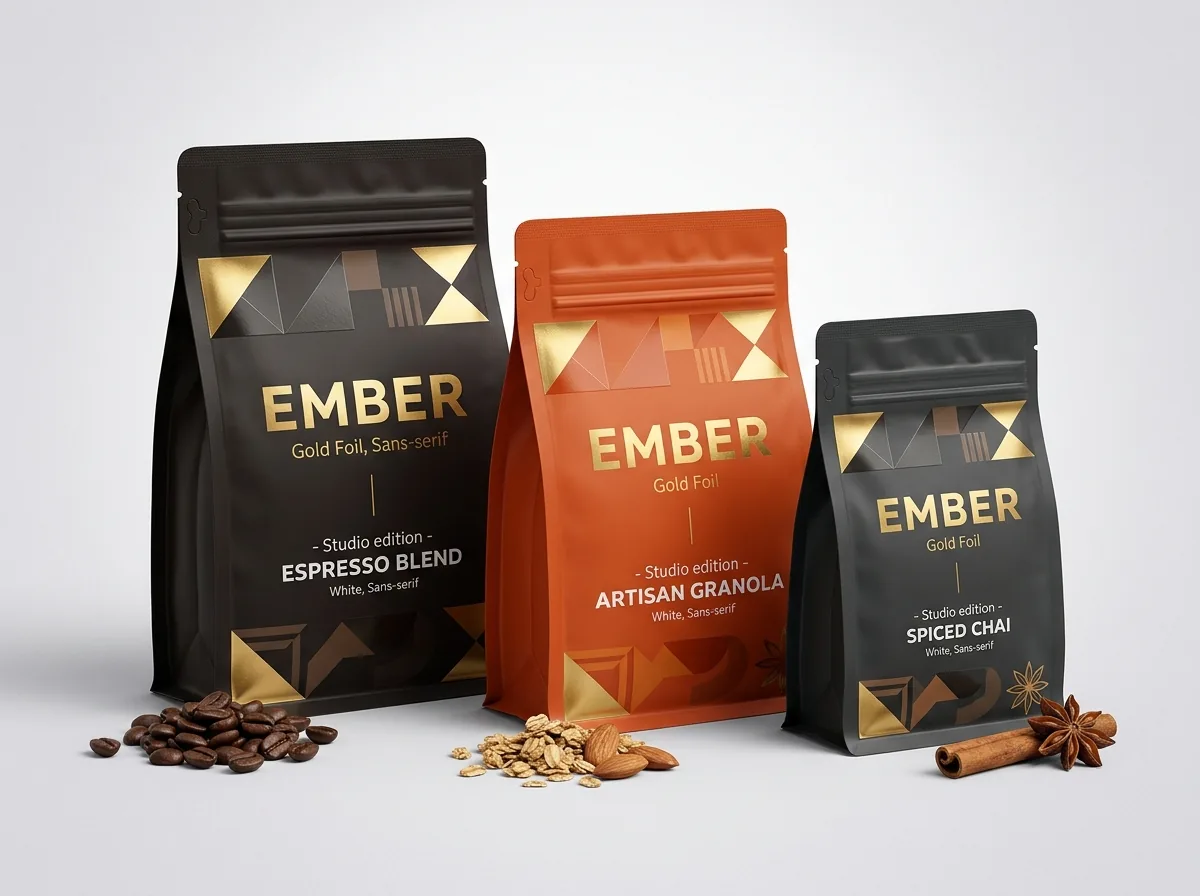
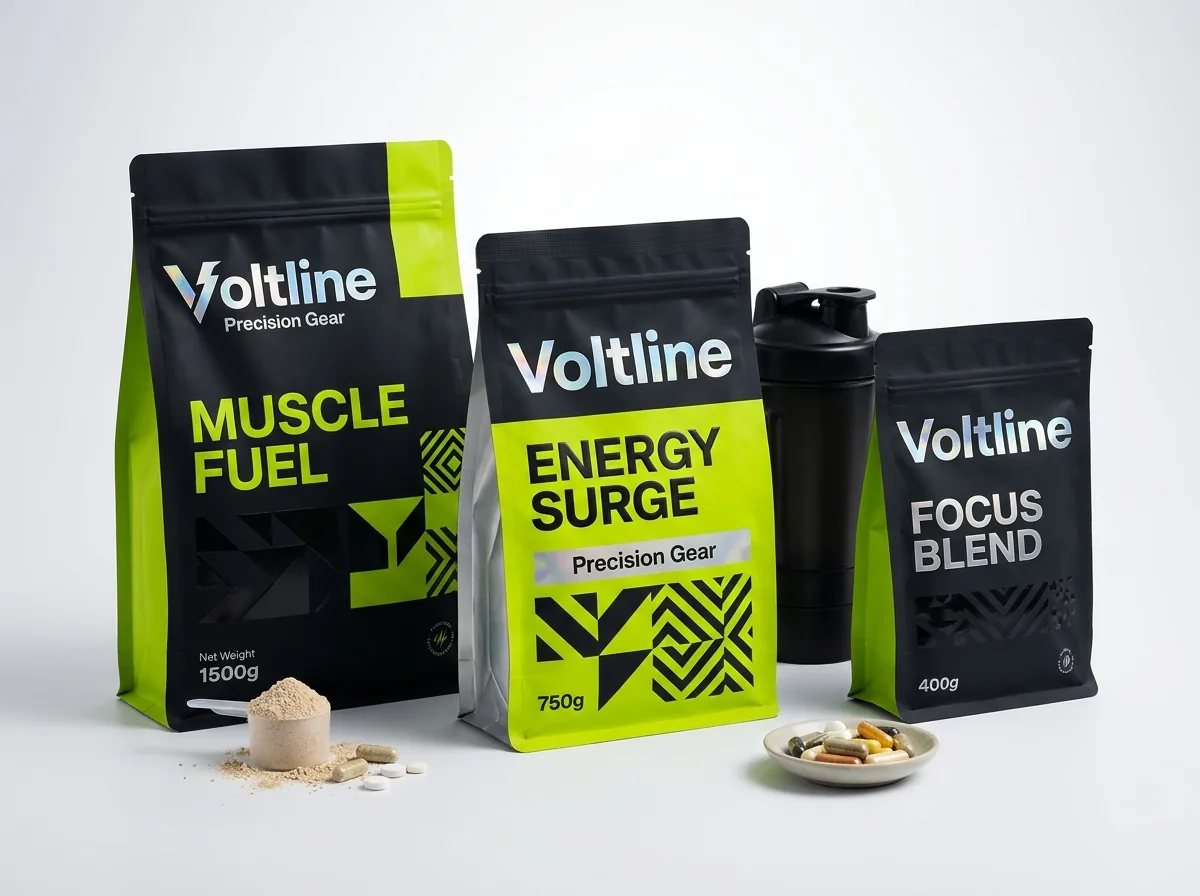
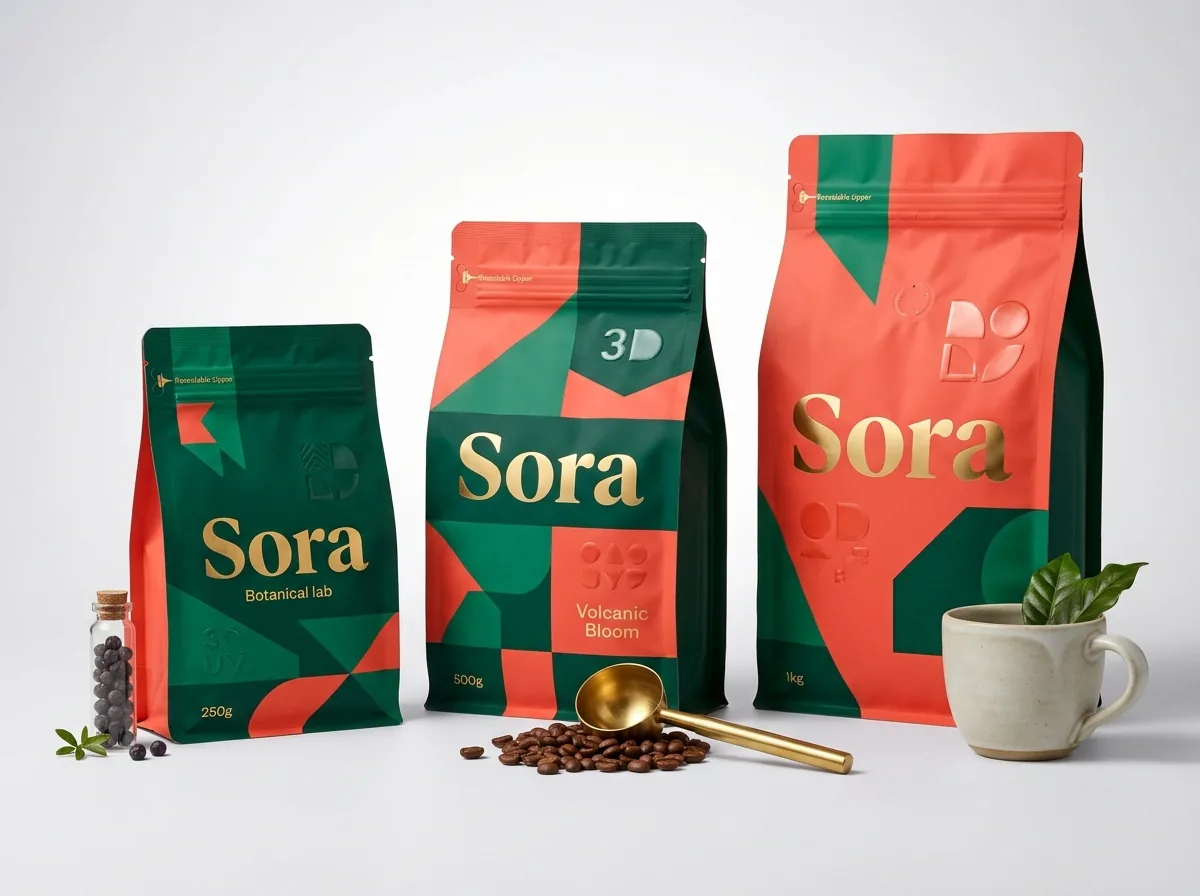
Ready to order flat pouches? Compare up to 3 quantities with a free 3D mockup.
Request a Quote →Questions about flat pouches
Should a 3-side-seal flat pouch arrive open at the top or open at the bottom?
If your flat pouch has no zipper, we can supply it open at the top (most common for hand or funnel filling) or open at the bottom (useful when the top header has a pre-punched hang hole). Zipper flat pouches arrive open at the top above the zipper.
Do I pay plate or die charges when ordering multiple sachet flavors?
No. CubitPack never charges cutting die or printing plate fees. You can order multiple flavors sharing one sachet dieline and receive free prepress checks, 2D digital proofs and 3D mockups for every SKU.
Can I add rounded corners to custom flat pouches and sachets?
Yes. Standard 3-side-seal and 4-side-seal sachets can be finished with smooth rounded corners at no extra die cost, which prevents sharp 90-degree film corners from poking neighboring packets inside a box.
What is a laser-scored tear line on a flat sachet?
A laser score is a microscopic line etched into the outer structural film layer (without piercing the inner barrier core) between the two side V-notches. It guides the tear straight across the top of the sachet so the packet never rips diagonally.
Can I print a barcode on a small 3 × 4.5 inch single-serve sachet?
Yes, if you sell sachets individually at checkout, place a truncated UPC barcode (at least 1.0 × 0.5 inches) in pure black on a solid white rectangle inside the flat center of the back panel, clear of the crimp seams.
How do you guarantee Pantone colors match between our sachets and our outer carton?
Provide your Pantone (PMS) color codes when requesting your quote. Because CubitPack produces both your flat sachets and your custom folding cartons or display boxes, we guarantee your Pantone match across both.
Still have a question? Ask a packaging specialist.
Request a Quote →Request your flat pouches quote
Tell us your size and quantities, and one dedicated account manager prepares pricing for each tier.
- Free design & AI-to-print studio + 3D mockup
- No die or plate charges · 4–5 day rush available
- Free shipping to all 50 states
- 10% off your first order
The seal margins (0.25 to 0.375 in), tear-notch clearances (0.5 to 0.75 in) and micro-type rules (5.5 to 6 pt K=100) in this guide reflect standard flexible sachet prepress practices and CubitPack's decided capabilities. Spot an error? Tell us and we will fix it.
Sources
What changed
- October 22, 2026: First published.
- October 22, 2026: Updated specifications, terminology, and verified source links.
More guides
New packaging guides by email
Sizes, materials and design tips. Unsubscribe anytime.