
Direct-contact vs inner-bag food boxes: which barrier do you need?
Short answer: If your food is sealed inside a pouch, flow-wrap, tray, or jar, the outer carton is secondary packaging and needs no direct-contact liner. If unwrapped food touches the board directly, request food-safe materials on your custom food boxes quote so we produce them in a certified partner facility.
On this page
- How do direct-contact food cartons compare with inner-bag cartons
- Why do most grocery brands use an inner bag or pouch inside the box
- When do you need food-safe partner board or grease barriers
- How do freezer and refrigerator food boxes resist condensation
- What should you tell your account manager when quoting food boxes
- Common mistakes
- FAQs
Request a custom quoteFree dieline & 3D mockup
Every food carton falls into one of two categories: secondary packaging (where an inner bag, wrapper, cup, or jar touches the food) or primary direct-contact packaging (where unwrapped food sits straight against the inside of the paperboard). That single distinction decides your board choices, barrier coatings, and unit cost. When crackers, cereal, tea bags, frozen entrees, or sauces are sealed inside an inner barrier pouch or container, the outer paperboard box never contacts the food; its job is structural protection, stacking strength, and retail shelf appeal, so standard white card, unbleached kraft, or recycled board works cleanly. When unwrapped dry pasta, fried carryout items, or pastries sit directly on the board, we route your order on request to a certified partner facility using food-contact board, inner liners, or grease barriers.
How do direct-contact food cartons compare with inner-bag cartons?
Choosing between a direct-contact carton and a bag-in-box setup depends on three factors: shelf-life requirements, oil or moisture content, and how your filling line packs the product. Dry crackers or cereal exposed to air inside an unsealed cardboard box go stale in days, which is why supermarket brands pair an airtight inner pillow pouch with a standard printed outer carton. Use the table below to compare the four main barrier setups available when ordering custom printed food cartons, from dry pantry shelves to hot restaurant takeout and supermarket freezers.
| Packaging setup | Touches food directly? | Best food match & board setup |
|---|---|---|
| Bag-in-box / secondary carton | No (sealed inner pouch, wrap, or jar) | Crackers, cereal, tea, spice jars · Standard white, kraft, or recycled card |
| Direct-contact dry food carton | Yes (dry, low-fat solids only) | Dry short-cut pasta, rice, sugar cubes · Partner food-safe virgin board |
| Direct-contact + inner butter paper | Wrap touches food inside box | Sandwiches, cookies, charcuterie · Unbleached kraft or white card + food wrap |
| Direct-contact + grease barrier | Yes (warm or buttery/oily foods) | Takeout entrees, fried sides, pastries · Partner facility barrier board |
| Cold-chain laminated outer carton | No (sealed tray or pouch inside) | Frozen entrees, chilled meals · Virgin card + exterior gloss/matte lamination |
Why do most grocery brands use an inner bag or pouch inside the box?
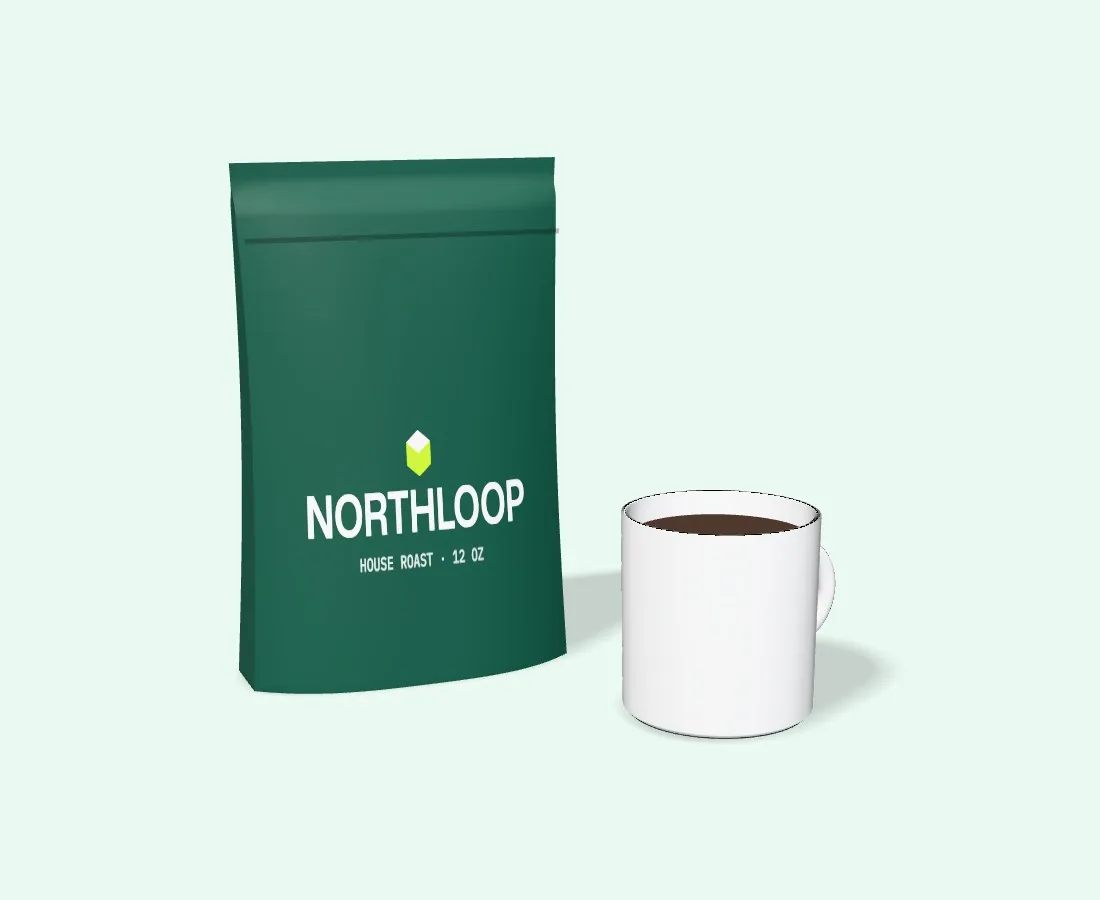
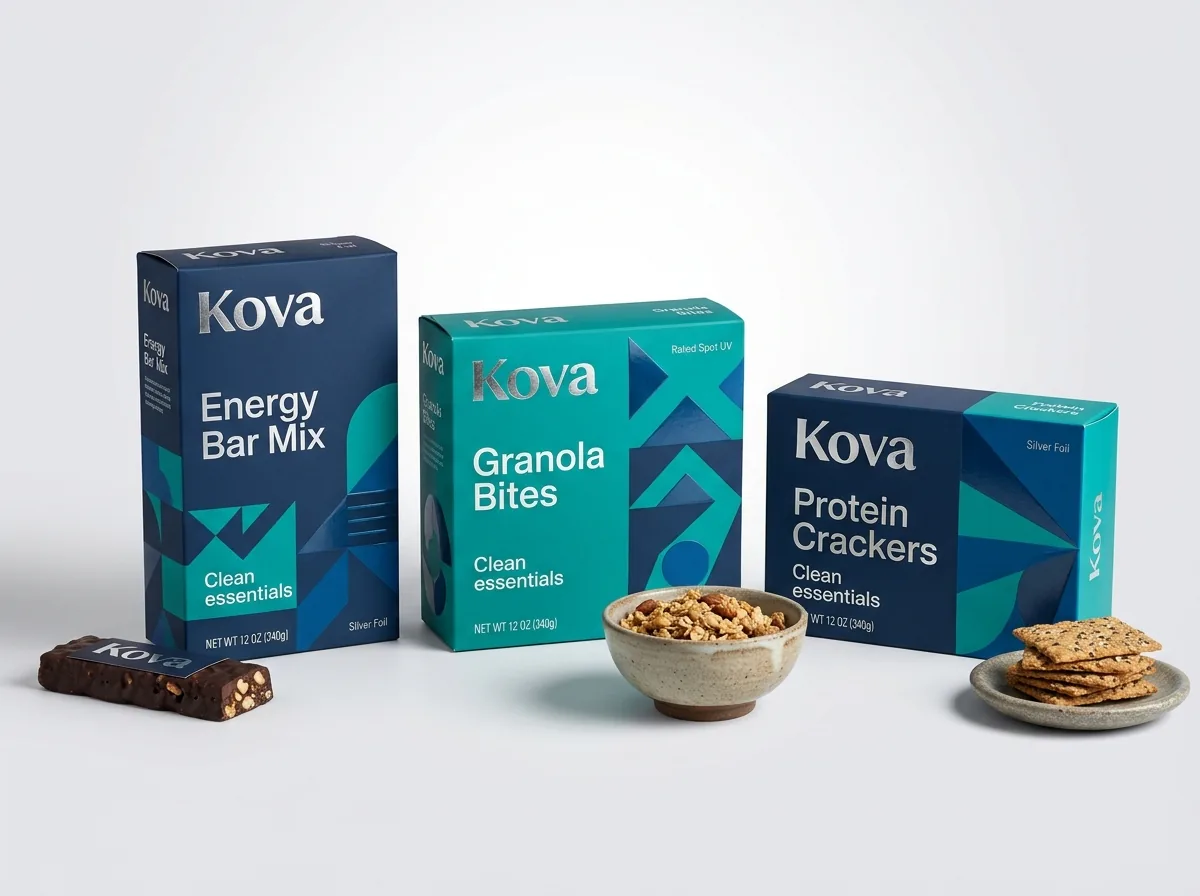
Walk down the center aisles of any grocery store and open a box of crackers, cereal, pancake mix, mac and cheese, or herbal tea: inside almost every paperboard carton sits a heat-sealed flexible pouch or foil sachet. Paperboard is rigid, easy to stack on pallets, and prints razor-sharp graphics and Nutrition Facts tables, but folded carton flaps always have tiny pinhole gaps at the corners where air and humidity can enter. By sealing the food inside a primary pillow bag or custom flat pouch first, the inner film handles moisture, oxygen, and aroma locking while the outer carton protects the fragile food from crushing and stands upright like a billboard on the shelf. Because the carton is strictly secondary packaging, you can choose any exterior finish - such as soft-touch lamination, metallic foil stamping, or Spot UV - and even use recycled paperboard without worrying about direct food migration.
When do you need food-safe partner board or grease barriers?
When unwrapped food touches the inside of the carton directly - such as dry short-cut pasta poured straight into a window box, a restaurant burger or sandwich placed into a carryout clamshell, or cookies arranged in a gift box - the interior surface of the box must be suited for direct food contact. For dry, non-fatty foods like uncooked pasta or rice, virgin paperboard produced under food-contact protocols in a certified partner facility keeps the interior clean without needing a heavy plastic coating. For buttery, fried, or dressed foods sold in custom burger boxes, custom sandwich boxes, or bakery cartons, raw paperboard will absorb oil within minutes and leave translucent grease blotches on the outside. You can prevent grease bleed either by lining the inside of a standard box with a sheet of custom butter paper, or by requesting a partner-facility grease-resistant interior barrier on your quote.
- Dry direct contact (pasta, rice): virgin food-safe partner board; no grease liner required.
- Warm or oily takeout (sandwiches, fries, sliders): partner grease-resistant liner or inner butter paper sheet.
- Moist chilled foods (sushi, cut fruit, deli salads): sealed primary tray inside a laminated outer sleeve or box.
- Certificates and lab reports: available on request when your order is produced in our certified partner facility.
Know your size? Compare pricing across up to 3 quantities.
Request a Quote →How do freezer and refrigerator food boxes resist condensation?
Frozen and refrigerated food cartons face a physical challenge that dry pantry boxes never see: freeze-thaw condensation. When a shopper pulls a frozen entree or chilled dessert box out of a 0°F (-18°C) freezer case or a 38°F (3°C) deli cooler and places it in a shopping cart in a humid 72°F (22°C) supermarket aisle, moisture from the air condenses into water droplets across the cold outer surface of the carton. On an unlaminated recycled board, that surface moisture wicks into the paper fibers along the fold scores within 10 to 15 minutes, causing the corners to soften and the side glue seam to peel open. For cold-chain food cartons holding 8 oz, 12 oz, or 24 oz trays, specify virgin Solid Bleached Sulfate (SBS) paperboard or unbleached kraft paired with exterior gloss or matte lamination. The film lamination seals the printed CMYK and Pantone ink layer so water droplets bead up on the outside without softening the structural board.
- Blast freezer storage (-20°F to 0°F): use virgin paperboard with exterior gloss or matte film lamination and cold-temperature glue.
- Refrigerated deli & grab-and-go (34°F to 40°F): pair a sealed CPET or PP inner tray with a laminated paperboard outer sleeve.
- Ambient dry grocery (60°F to 75°F): standard white card, unbleached kraft, or recycled board over a sealed pillow pouch.
- Warm restaurant carryout (140°F to 180°F): unbleached kraft or white gable box with steam vents and inner butter paper or partner grease barrier.
What should you tell your account manager when quoting food boxes?
Because not every food carton needs the extra cost of a direct-contact grease liner, giving your account manager three quick details on your quote ensures you only pay for the barrier your product actually requires. First, state what the food is and its net weight (for example, 6 oz dry rosemary crackers, 10 oz frozen lasagna tray, three 8 oz glass salsa jars, or hot takeout sliders). Second, specify whether the food is sealed inside a primary bag, tray, wrap, or jar under US FDA 21 CFR Part 176 guidelines, or whether it touches the inside of the paperboard directly. Third, note the storage temperature across your supply chain: 70°F room-temperature pantry shelf, 38°F refrigerator, 0°F blast freezer, or 160°F warm carryout counter. With those three facts, our CubitPack team matches the board, adhesive, and certified partner facility to your exact application before preparing your free digital proof and 3D mockup in 10 to 14 business days (or 4 to 5 days rush).
What are the most common food box barrier and material mistakes?
Mismatching the board or barrier to how the food is packed leads to either stale product, grease stains, or paying for coatings you do not need. Avoid these five mistakes
- Pouring moisture-sensitive crackers or cereal directly into a folding carton without a sealed inner pillow pouch to block humidity.
- Packing warm or buttery takeout foods directly into unlined kraft or white card without an inner butter paper sheet or grease barrier.
- Using unlaminated recycled board for frozen entrees, where condensation in the grocery cart softens the carton corners.
- Forgetting to mention direct food contact on your quote when unwrapped pasta, cookies, or candies touch the inner board wall.
- Paying for a patched plastic window film when your product is already sealed inside a clear inner bag that can show through an open cutout.
Find your size
Suggested inside size: 5.5 × 2.0 × 5.75 in
A starting point. Your account manager confirms the size with you before the proof.
Quote this size →Packaging for this
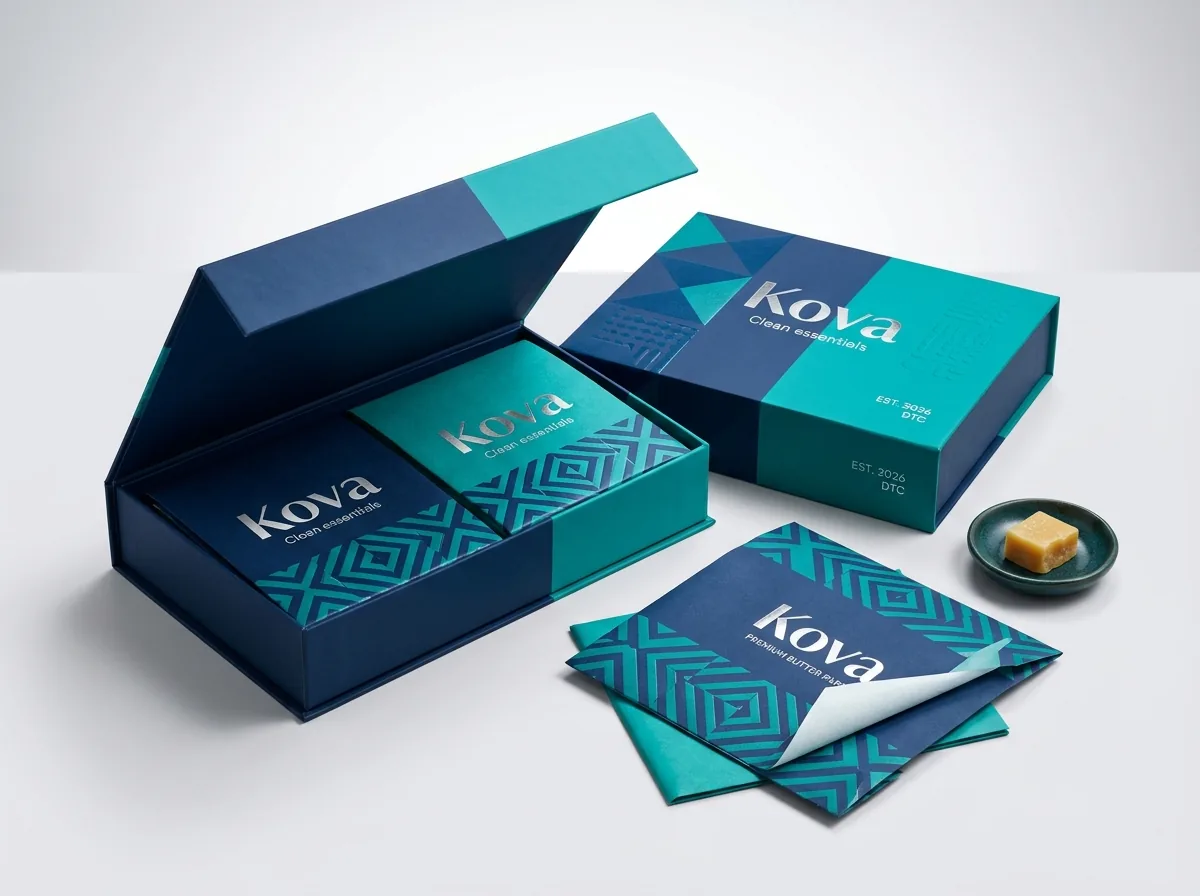
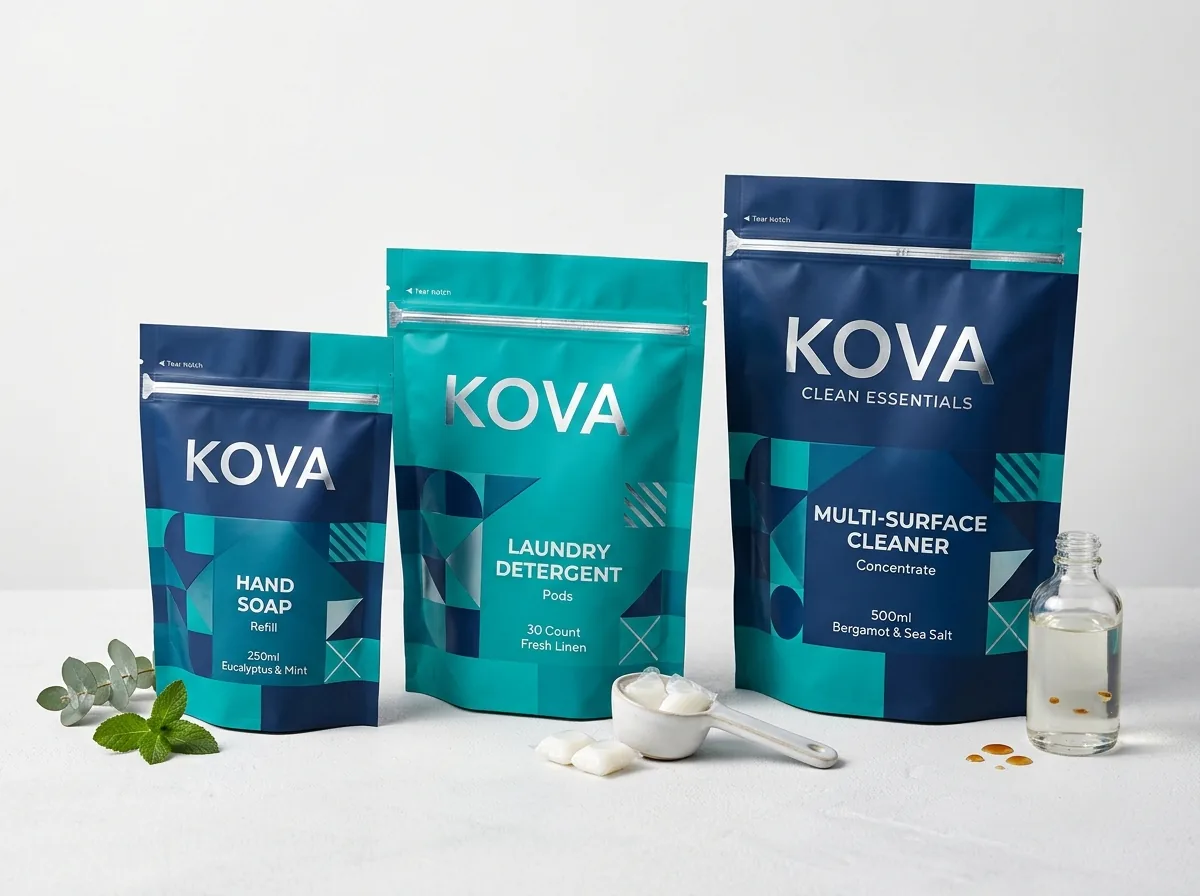
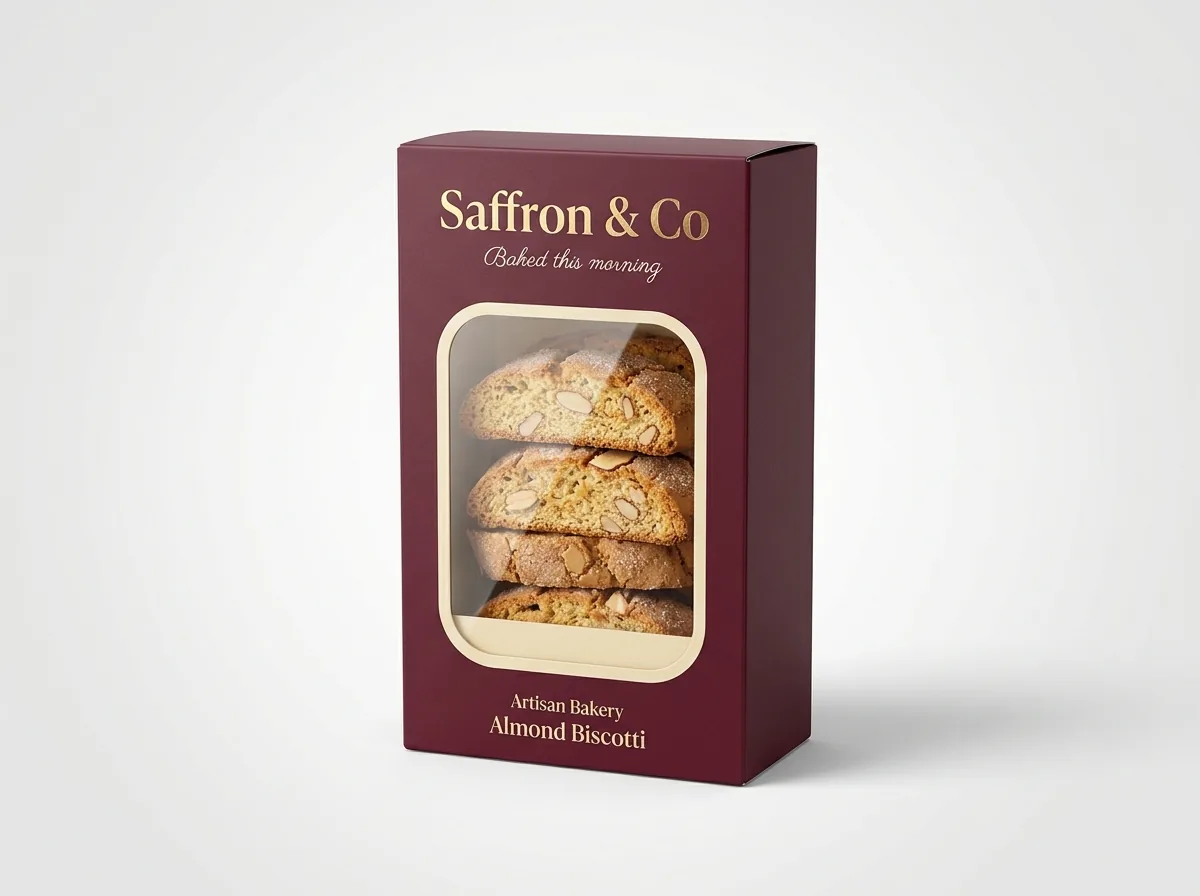
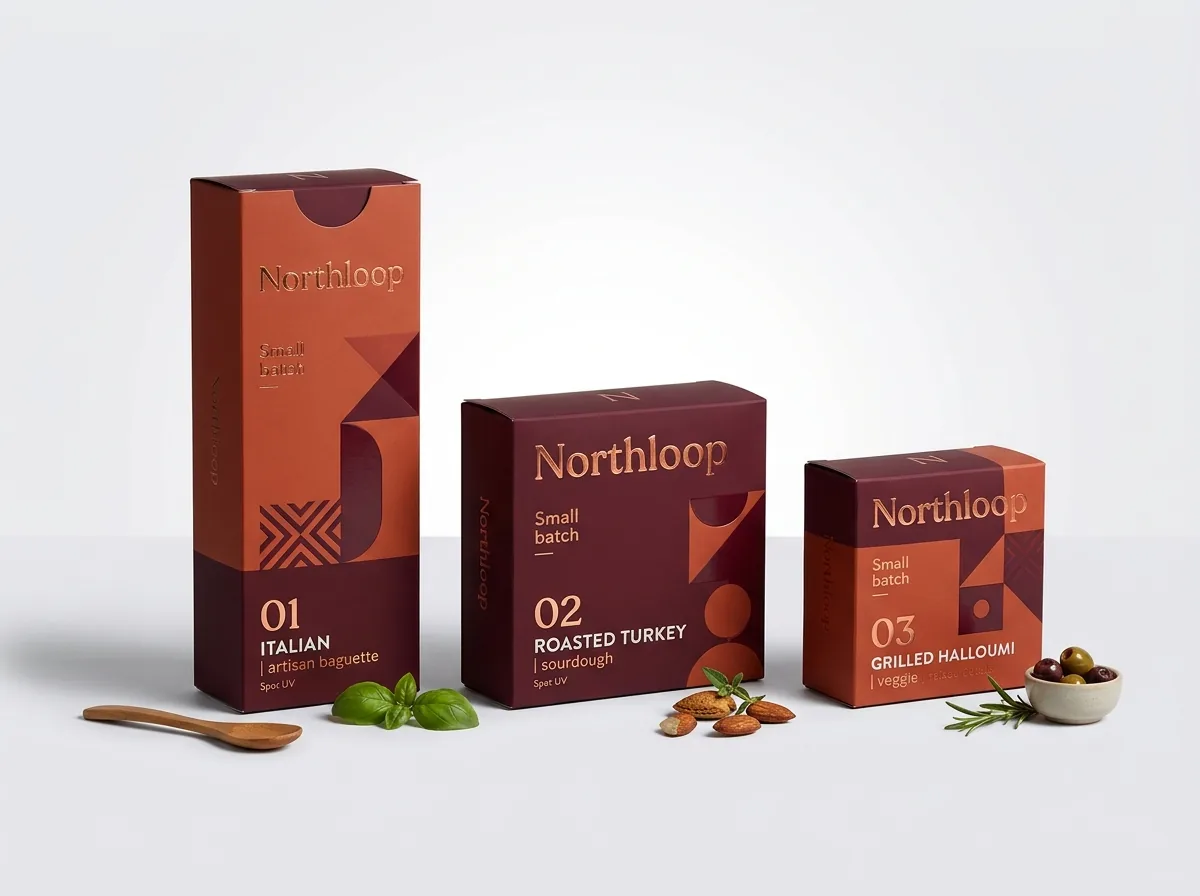
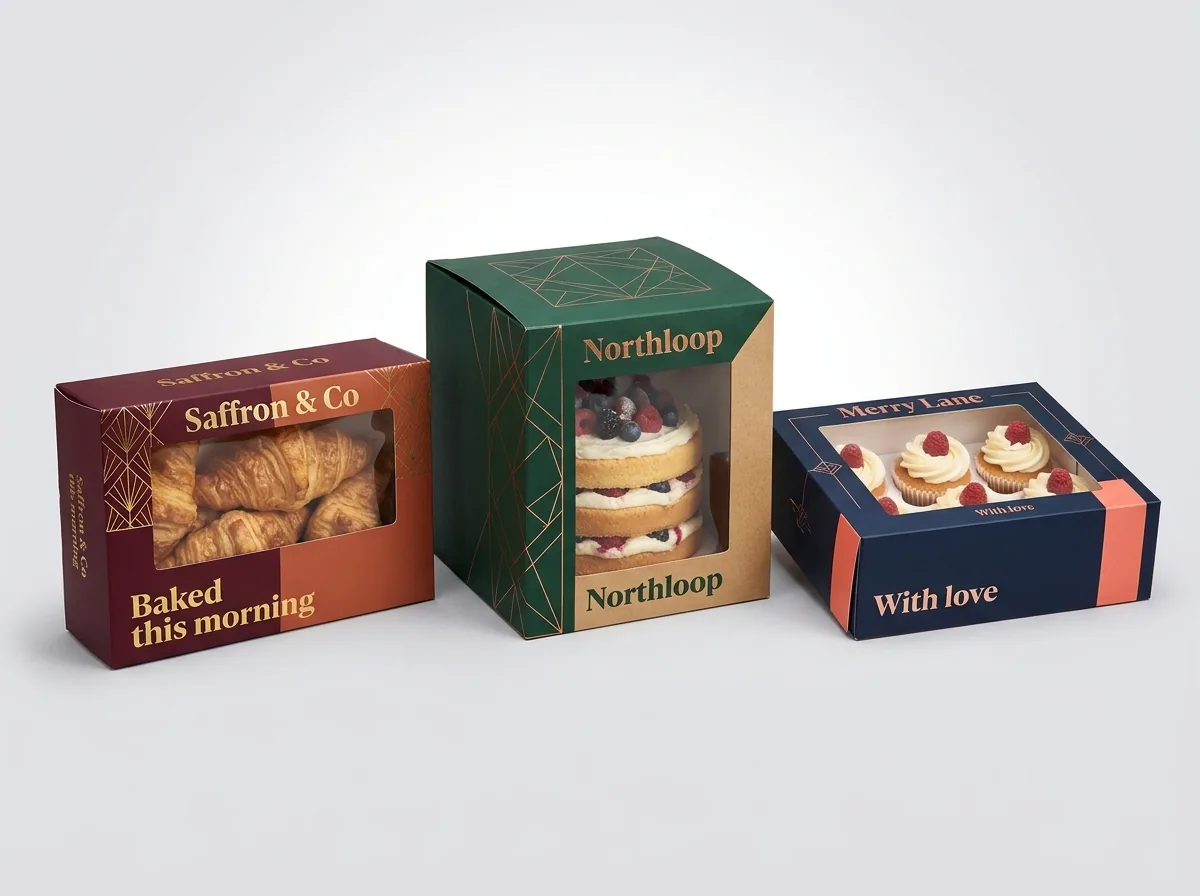
Ready to order food boxes? Compare up to 3 quantities with a free 3D mockup.
Request a Quote →Questions about food boxes
Can I use recycled paperboard for custom food boxes?
Yes, for secondary packaging where the food is sealed inside an inner pouch, wrapper, tray, or glass jar so it never touches the carton wall. When unwrapped food touches the board directly, we recommend virgin food-safe board produced in a certified partner facility.
How do I get certificates or test reports for direct-contact food boxes?
Tell your account manager on your quote that the food touches the carton directly and note whether it is dry, moist, or oily. We route direct-contact orders to a certified partner facility and can share the partner facility's certificates and test documentation on request.
Does exterior gloss or matte lamination make the inside of a box greaseproof?
No. Exterior lamination sits on the printed outside of the carton to protect the ink from scuffs, fingerprints, and freezer condensation. If oily or buttery food sits on the inside wall, you need either an inner sheet of butter paper or an interior grease-resistant barrier.
Can I print on the inside of a custom food box?
Yes, interior printing is a great way to share brand stories, preparation tips, or QR codes on secondary cartons where the food is sealed inside a pouch, tray, or jar, or when a sheet of butter paper separates the food from the printed inner panel.
What is the most economical way to package buttery or oily foods in a custom box?
Many bakeries, cafes, and specialty food brands pair a standard printed kraft or white folding carton with a sheet of custom butter paper folded around the food. That blocks grease transfer onto the box while adding a branded unwrap layer.
Can I see and feel the different food box boards before placing an order?
Yes. Our $50 sample kit (credited toward your first order) includes real examples of our white card, unbleached kraft, corrugated board, and laminations so you can test them in your hands before approving your digital proof and 3D mockup.
Still have a question? Ask a packaging specialist.
Request a Quote →Request your food boxes quote
Tell us your size and quantities, and one dedicated account manager prepares pricing for each tier.
- Free design & AI-to-print studio + 3D mockup
- No die or plate charges · 4–5 day rush available
- Free shipping to all 50 states
- 10% off your first order
The barrier and secondary-vs-direct packaging distinctions in this guide follow standard CPG food packaging engineering practices and CubitPack's decided partner production rules. A packaging specialist reviewed every section. Spot something wrong? Let us know and we will fix it.
Sources
What changed
- October 22, 2026: First published.
- October 22, 2026: Updated specifications, terminology, and verified source links.
More guides
New packaging guides by email
Sizes, materials and design tips. Unsubscribe anytime.