
Window tuck boxes vs tray-and-sleeve cookie boxes: which should you choose?
Short answer: Choose a one-piece window tuck box for single royal-iced favors and everyday counter stacks where low unit cost and fast end-loading matter most. Upgrade to a drawer-style tray-and-sleeve or hinged clamshell for gourmet assortments and gifts in custom cookie boxes.
On this page
- How do window tuck boxes and tray-and-sleeve cookie boxes differ structurally
- How do the four main custom cookie box styles compare side by side
- Where do hinged 4-pack and 6-pack clamshell cookie boxes fit in
- Should I choose a clear film window patch or an open die-cut window
- How can tray-and-sleeve boxes cut my cost on seasonal holiday cookie sets
- Common mistakes
- FAQs
Request a custom quoteFree dieline & 3D mockup
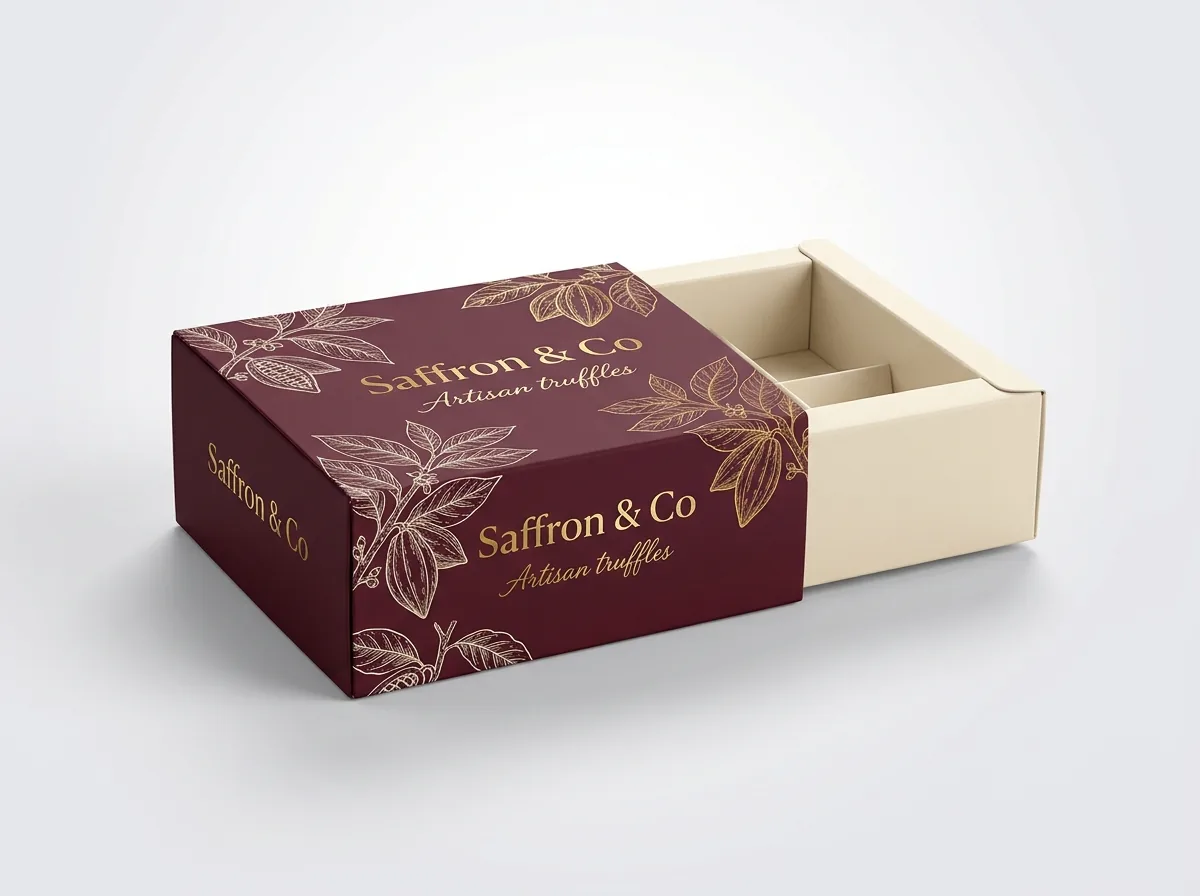
Window tuck boxes and tray-and-sleeve boxes are the two most popular structures for retail and gift cookies, but they create very different unboxing experiences and counter workflows. A window tuck box is a single-piece paperboard carton that ships flat with pre-glued side seams; you squeeze the sides to pop it open, slide a bagged cookie or stack in through the end flap, and tuck the tab shut. Because it uses one sheet of board, it delivers the lowest unit price for single favors, two-packs, and retail shelf cartons. A tray-and-sleeve box pairs a double-wall folding tray with a separate wrap-around outer sleeve that slides off like a matchbox drawer. It gives customers immediate access to an entire row of cookies without reaching through a narrow end flap, making it a favorite for gourmet assortments and holiday gifts in printed cookie boxes.
How do window tuck boxes and tray-and-sleeve cookie boxes differ structurally?
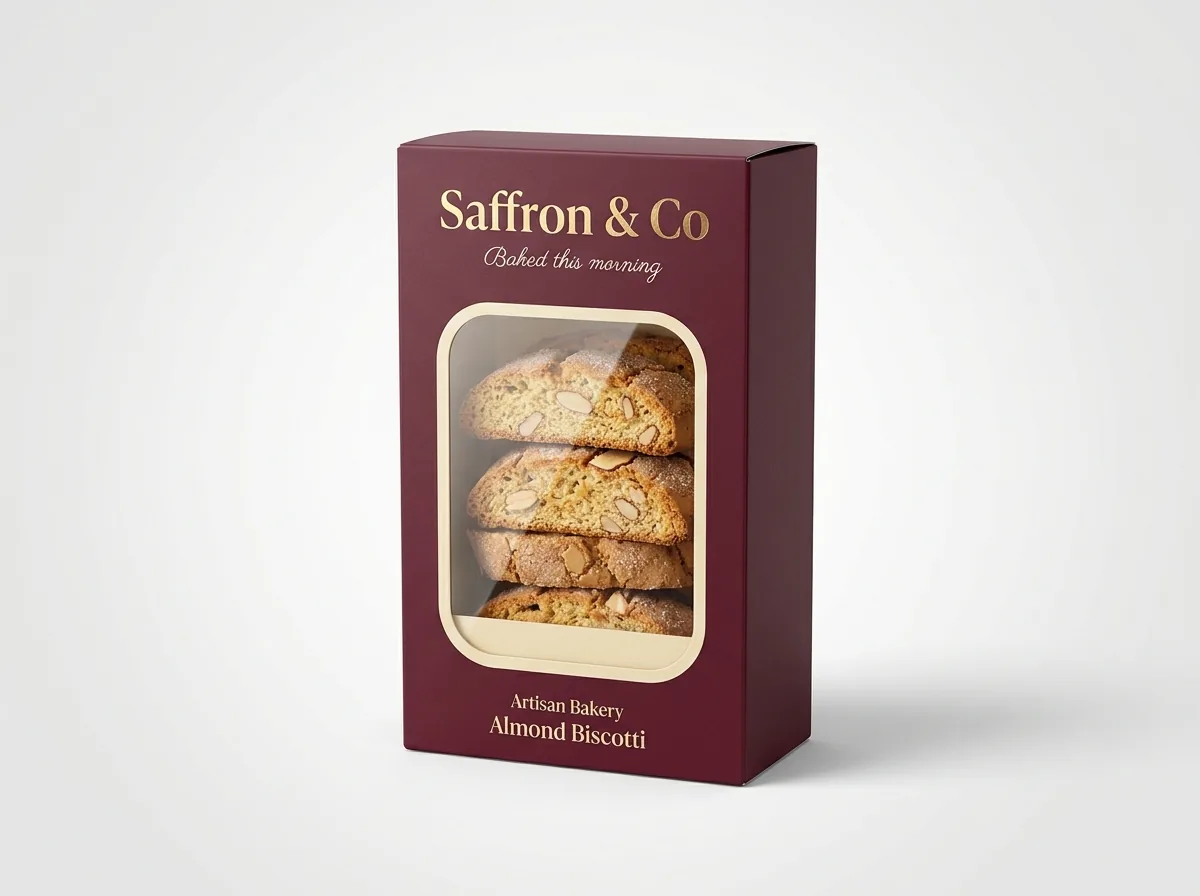
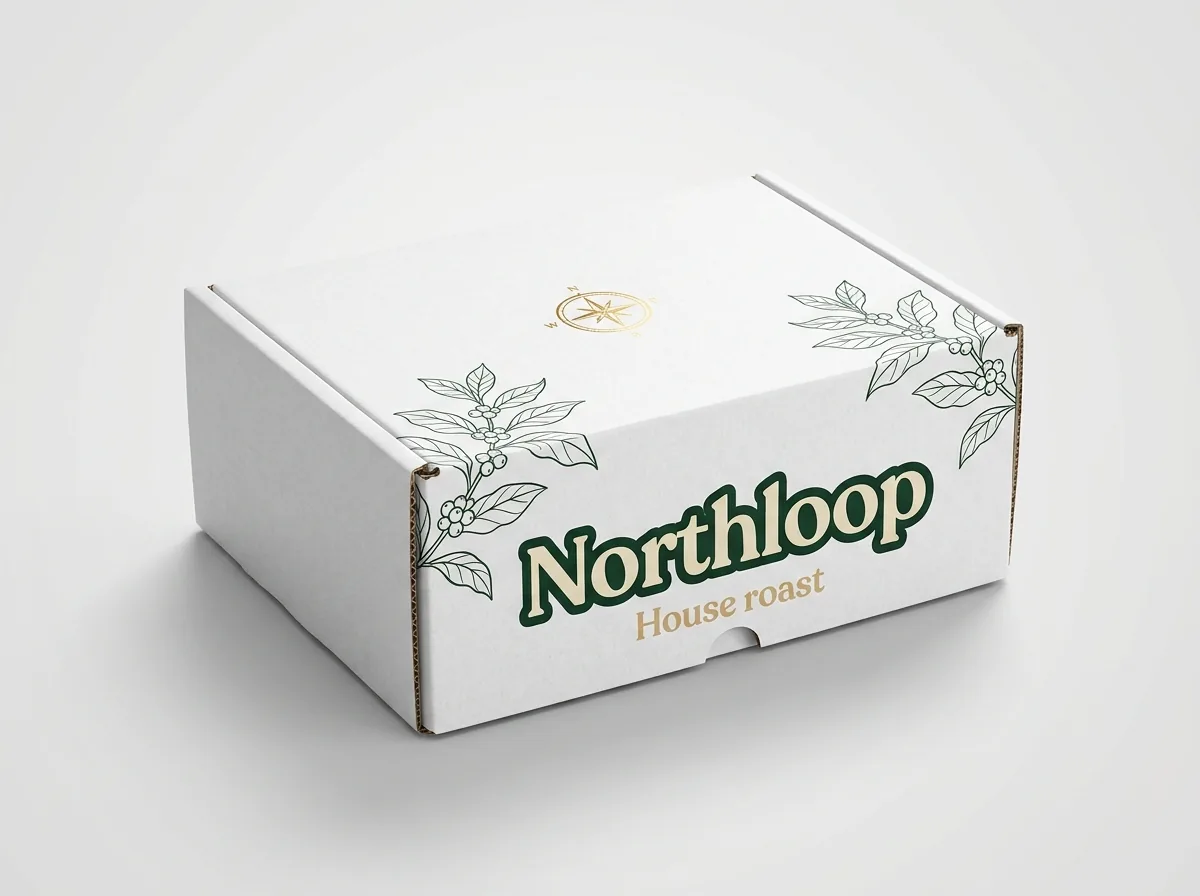
A straight tuck end box with a window is built from a single die-cut blank of paperboard or natural kraft. During manufacturing, the long side seam is pre-glued and the window cutout is patched with clear film (or left open for bagged cookies) so the finished cartons arrive flat in your kitchen. To pack a cookie, you press the two creased edges to form the rectangular tube, close the bottom flap, slide the cookie in from the top end, and tuck the closure flap into the front slot. A tray and sleeve box uses two separate pieces: an open-top tray whose four walls fold over themselves to create sturdy double-thick rims, and a tubular outer sleeve that glides horizontally over the tray. Because the top of the tray is completely open once the sleeve slides off, customers can lift out delicate frosted cookies, thumbprint jam cookies, or edge-standing shortbread without tilting the box or scraping icing against a tuck flap.
- Window tuck box: 1-piece pre-glued flat blank, end-loaded or top-loaded, lowest board area per unit.
- Tray and sleeve box: 2-piece construction (inner double-wall tray + outer slide sleeve), drawer-style reveal.
- Hinged oblong clamshell: 1-piece roll-end or lock-corner tray with an attached flip-open top lid for warm 4-packs.
- Two-piece lid and tray: telescope lift-off lid over a compartmented base tray for dozen holiday cookie tins.
How do the four main custom cookie box styles compare side by side?
Most bakeries end up using two structures: a low-cost everyday box for single favors or counter multi-packs, and a gift-ready structure for assortments, corporate orders, or nationwide drops. Use the comparison table below to weigh board usage, assembly speed, edge protection, and best cookie types across all four styles. Because CubitPack charges zero die or plate fees, you can order both a single-cookie window tuck box and a multi-pack tray-and-sleeve or clamshell box without paying separate tooling setup charges.
| Feature | Window tuck box | Tray and sleeve box |
|---|---|---|
| Number of pieces | 1 pre-glued piece | 2 pieces (inner tray + outer sleeve) |
| Best cookie types | Single iced favors, bagged pairs, firm stacks | Assorted rows, edge-standing cookies, soft icing |
| Loading & unboxing | Slides in through end flap or top tuck | Drawer tray slides out completely flat |
| Edge crush protection | Single-wall paperboard or kraft | Double-wall folded tray rims + outer sleeve |
| Counter folding speed | Very fast (pop open & tuck) | Moderate (fold tray walls + slide sleeve on) |
| Relative board usage | Lowest board area per box | Higher (two components per unit) |
Where do hinged 4-pack and 6-pack clamshell cookie boxes fit in?
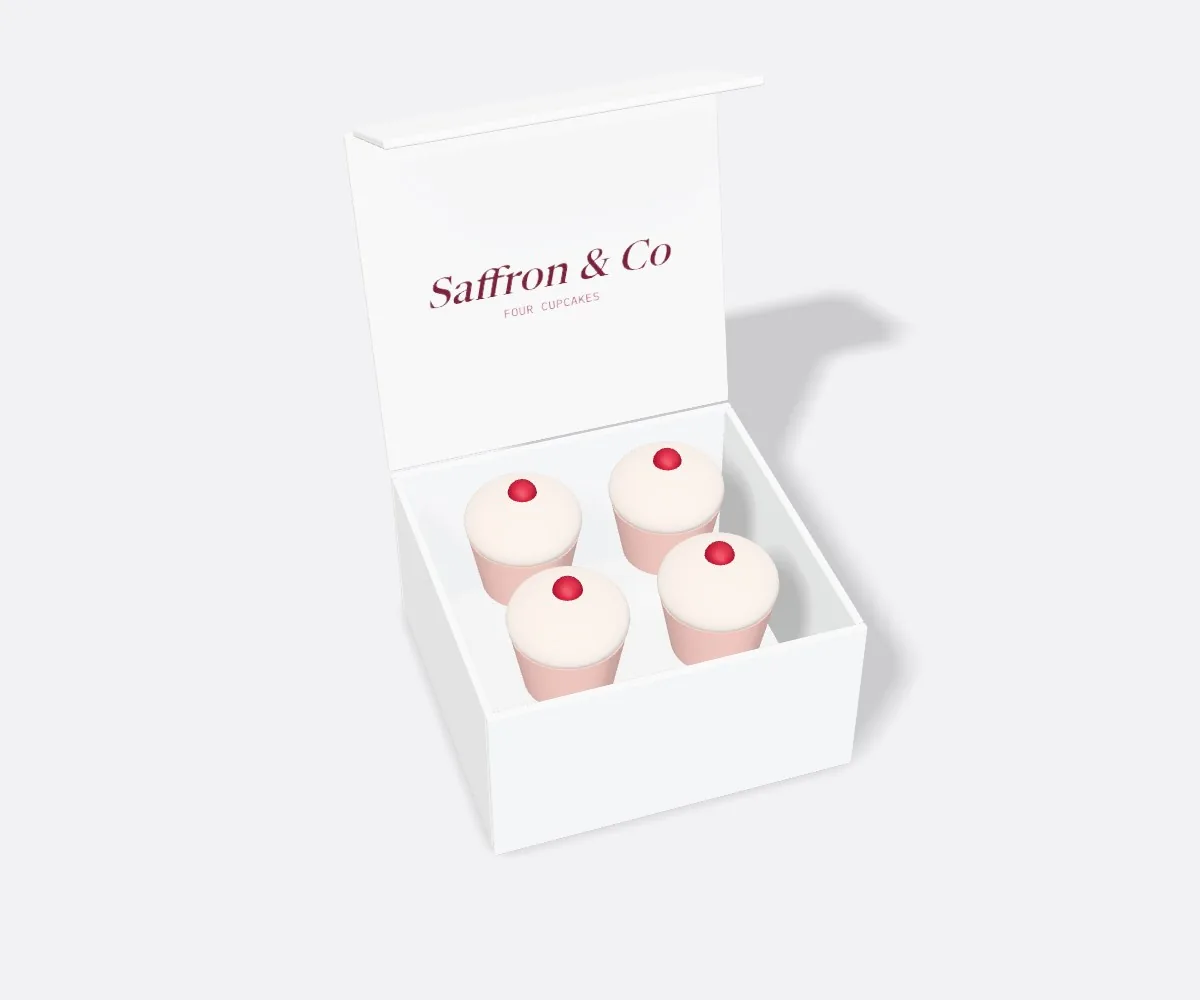
If your bakery specializes in warm, oversized 5-ounce to 6-ounce stuffed cookies sold in four-packs and six-packs at the counter or through local delivery apps, neither an end-loading tuck box nor a slide sleeve is as fast as a one-piece hinged clamshell. In a hinged clamshell (built either as a lock-corner bakery carton or a roll-end custom mailer box in E-flute corrugated or heavy card), the lid is hinged along the back wall and flips open 180 degrees. Counter staff can line the open tray with a sheet of branded custom butter paper, set four warm cookies side by side with a spatula in five seconds, fold the front lid flap down, and secure it with a custom flavor sticker. When the customer flips the lid open at home, the full inside surface of the lid acts as a billboard for your logo, flavor chart, and reheating tips.
Know your size? Compare pricing across up to 3 quantities.
Request a Quote →Should I choose a clear film window patch or an open die-cut window?
On both window tuck boxes and tray-and-sleeve boxes, you can choose between a patched window (where a clear film sheet is bonded across the inside of the cutout) and an open die-cut window (an unpatched cutout hole). The right choice comes down to whether your cookies are individually bagged or bare. If you place bare cookies directly onto the tray or butter paper, you must use a patched film window on your custom window boxes to keep dust out and prevent the cookies from drying out. However, if you already heat-seal every royal-iced sugar cookie or gourmet drop cookie inside a crystal-clear cellophane bag, the cello bag already provides the moisture and hygiene barrier. Using an open die-cut window (or a half-length paperboard belly band over a tray) eliminates double-plastic glare in customer photos and lowers your per-box manufacturing cost.

How can tray-and-sleeve boxes cut my cost on seasonal holiday cookie sets?
One hidden advantage of the tray-and-sleeve structure is how easily it adapts to Valentine's Day, Mother's Day, Halloween, and December holiday gifting without forcing you to store four separate custom box runs. Instead of printing holiday graphics on the entire box, many smart cookie brands order a larger run of one standard inner tray in neutral white, kraft, or a solid brand color. Then they pair that universal base tray with different custom-printed outer sleeves for each season, or dress the everyday box with custom seal stickers and satin ribbons. Because a flat sleeve uses less board than a full carton, swapping sleeves gives you a fresh limited-edition gift box for every holiday while keeping your base tray inventory unified. When deciding between a window tuck box and a tray-and-sleeve box for your bakery, start by looking at how your customer eats or gifts the cookies. If a shopper grabs a single iced sugar cookie at a coffee counter or hands out wedding favors at a reception table, a one-piece shallow window tuck box keeps your packaging budget lean and pops open in seconds. If the box is meant to sit in the middle of a family table or arrive as a corporate thank-you gift, a sliding tray-and-sleeve or hinged clamshell turns the reveal into an event.
- Everyday single favors and 2-packs: use a one-piece window tuck box for fast assembly and low unit cost.
- Warm 4-pack and 6-pack jumbo cookies: use an oblong hinged clamshell lined with custom butter paper.
- Edge-standing cookie rows and gourmet gifts: use a double-wall sliding tray-and-sleeve box.
- Seasonal holiday flexibility: pair one universal inner tray with interchangeable holiday-printed outer sleeves.
What are the most common mistakes when choosing a cookie box style?
Matching the wrong box closure to your icing type or counter workflow slows down staff and damages cookies. Avoid these five mistakes
- Sliding unbagged soft-iced or ganache-drizzled cookies through the narrow end flap of a tuck box, which scrapes the topping off on the way in.
- Using a tray-and-sleeve box with an open cutout window for bare unwrapped cookies, leaving the cookies exposed to air and counter handling.
- Ordering a single-wall folding carton instead of a double-wall tray or E-flute corrugated clamshell for heavy 24-ounce four-packs of jumbo cookies.
- Making the outer sleeve on a drawer box too tight when cookies sit inside crinkled cello bags whose top fins press upward against the sleeve.
- Sealing steaming-hot cookies inside a non-vented film-window box, where trapped condensation turns crisp edges soggy.
Find your size
Suggested inside size: 4.5 × 4.5 × 1.0 in
A starting point. Your account manager confirms the size with you before the proof.
Quote this size →Packaging for this
Ready to order cookie boxes? Compare up to 3 quantities with a free 3D mockup.
Request a Quote →Questions about cookie boxes
Which is less expensive per unit: a window tuck box or a tray-and-sleeve cookie box?
A one-piece window tuck box costs less per unit because it is die-cut and pre-glued from a single flat sheet of paperboard. A tray-and-sleeve box requires two separate die-cut pieces (the double-wall inner tray and the outer sleeve), which uses more board.
Can a tray-and-sleeve cookie box include internal dividers?
Yes. We can build interlocking paperboard partitions or a folded multi-cell divider insert right inside the sliding tray so each cookie flavor or stack has its own compartment.
Can I get a clear plastic sleeve that slides over a printed paperboard cookie tray?
Ask your account manager on your quote if you want a full clear sleeve, or choose our standard paperboard sleeve with a large patched or open viewing window across the top face.
Do tray-and-sleeve cookie boxes ship flat?
Yes. Both the outer sleeve (pre-glued along its seam) and the inner roll-end tray ship completely flat so 1,000 sets store easily on a single bakery shelf until you fold them.
Are food-safe and grease-resistant materials available for both styles?
Yes, food-safe boards and grease-resistant barriers are available on request through our certified partner facilities for window tuck boxes, tray-and-sleeve boxes, and hinged clamshells.
Can I compare quotes for both styles before deciding?
Yes. Tell your account manager the cookie count and dimensions on your quote, and we can price both a one-piece window tuck box and a two-piece tray-and-sleeve box side by side in 5-7 minutes.
Still have a question? Ask a packaging specialist.
Request a Quote →Request your cookie boxes quote
Tell us your size and quantities, and one dedicated account manager prepares pricing for each tier.
- Free design & AI-to-print studio + 3D mockup
- No die or plate charges · 4–5 day rush available
- Free shipping to all 50 states
- 10% off your first order
This comparison draws on structural dieline layouts, board usage, and counter loading workflows for one-piece tuck cartons, two-piece slide trays, and hinged clamshells. A CubitPack packaging specialist reviewed every section. Spot an error? Tell us and we will fix it.
Sources
What changed
- October 22, 2026: First published.
- October 22, 2026: Updated specifications, terminology, and verified source links.
More guides
New packaging guides by email
Sizes, materials and design tips. Unsubscribe anytime.