
How do I pack and ship cookies in custom cookie boxes without grease stains or crumbs?
Short answer: Stop grease spots by pairing food-safe barrier board or custom butter paper with completely cooled cookies, and stop parcel breakage by sealing cookies in tight bags inside an E-flute corrugated mailer with cell dividers and under 1/4 inch of top play in custom cookie boxes.
On this page
- How do I stop butter and oils from staining custom cookie boxes
- How should packing layers change for counter carryout vs nationwide parcel shipping
- How do I ship cookies by mail so brittle edges never snap
- How do I stop crisp and soft cookies from swapping moisture or flavors
- Where should allergen warnings, storage tips, and warm-up instructions go
- Common mistakes
- FAQs
Request a custom quoteFree dieline & 3D mockup
Packing cookies so they look bakery-fresh at the customer's kitchen table requires controlling three enemies: butter migration, moisture transfer, and vertical vibration. Even cooled shortbread, peanut butter, and chocolate chip cookies release natural fats that wick into uncoated paperboard within hours, leaving dark translucent spots on the outside of your carton. Meanwhile, parcel conveyors subject mail-order boxes to repeated drops that snap crisp cookie rims whenever stacks have room to rattle around. Commercial bakeries solve both problems by combining grease-resistant barrier boards or custom printed butter paper for counter carryout with heat-sealed cello bags, interlocking cardboard cell dividers, and rigid E-flute corrugated mailers for nationwide shipping. When you order custom printed cookie boxes at CubitPack, our packaging specialists size the outer carton and internal partitions together with zero die fees so your cookies travel with zero rattle.
How do I stop butter and oils from staining custom cookie boxes?
Cookies owe their tender crumb to butter, coconut oil, egg yolks, and chocolate chunks. When a bare cookie rests directly against standard unlined paperboard or natural kraft, capillary action draws those fats into the paper fibers, creating a dark grease ring that shows right through to the printed exterior. You can block oil migration in three ways depending on how your cookies are sold. First, for warm counter clamshells and unwrapped bakery assortments, request food-safe, grease-resistant barrier board on your quote so we produce your cartons in a certified partner facility. Second, line the floor and interleave stacked layers with sheets of custom butter paper, which acts as a replaceable grease shield while adding a second layer of branding. Third, for retail shelf cartons and mail-order drops, heat-seal each cookie or two-cookie stack inside a clear food-contact cello or poly bag before placing it in the box.
- Food-safe barrier board: available on request via partner facilities for direct contact with unwrapped cookies.
- Custom butter paper sheets: line the bottom tray and separate stacked layers of frosted or chocolate-chunk cookies.
- Heat-sealed cello bags: lock in moisture and block 100% of butter migration for retail shelves and parcel shipping.
- Cool before boxing: let baked cookies cool completely to room temperature (unless sold as a vented warm carryout pack) so steam does not condense into oil spots.
How should packing layers change for counter carryout vs nationwide parcel shipping?
A box carried upright for ten minutes from your bakery counter to a car seat faces almost no drop shock, whereas a box shipped via USPS, UPS, or FedEx will be tumbled down sorting chutes and stacked under heavier parcels. Use the table below to match your board stock, inner wrap, and cushioning setup to how the box travels. Notice how the goal in parcel shipping is to immobilize every individual cookie so it cannot accelerate against its neighbor or the lid when the box is flipped upside down.
| Delivery channel | Recommended box & board | Inner protection & cushioning |
|---|---|---|
| Warm counter carryout (4 or 6 pack) | Oblong hinged box in heavy card or E-flute | Custom butter paper liner + steam vents |
| Cold case or retail bakery shelf | Window tuck box or tray & sleeve in white/kraft card | Grease barrier board or heat-sealed cello bag |
| Local courier & catering delivery | Auto lock bottom or two-piece box with cell divider | Butter paper between stacks + tamper seal sticker |
| Mail-order drop cookies (nationwide) | E-flute corrugated mailer + interlocking cell grid | Individually bagged cookies + snug top pad |
| Mail-order royal-iced sugar cookies | Shallow window box inside an outer corrugated shipper | Heat-sealed cello bag + bubble/shred bed per cell |
| Mixed-flavor holiday gift assortment | Two-piece or sleeve box with 6 to 12 cell partitions | Airtight bags on mint, citrus, and spiced flavors |
How do I ship cookies by mail so brittle edges never snap?
Cookies break in the mail for one primary reason: internal momentum. When a stack of cookies has even 0.75 inches of loose space around its sides or above the top cookie, every drop in a delivery truck launches the cookies against the box wall like tiny plates. Start with a crush-resistant E-flute corrugated custom mailer box rather than a thin folding carton. Inside the mailer, divide the floor with a custom cardboard insert grid so each stack of two or three bagged cookies sits in its own 3.75 × 3.75 inch or 4.25 × 4.25 inch cell. Keep the vertical height of the box within 0.25 inches of the top of the stack, and place a flat corrugated pad, folded tissue sheet, or crinkle-paper cushion between the top cookie and the lid so the stack cannot move up or down when you shake the closed box.
Know your size? Compare pricing across up to 3 quantities.
Request a Quote →How do I stop crisp and soft cookies from swapping moisture or flavors?
If you pack crisp buttery shortbread or snappy gingersnaps in the same open box as soft, chewy brown-sugar chocolate chip cookies, moisture will migrate through the air from the soft cookies into the crisp ones overnight. By morning, the chewy cookies turn hard and the crisp shortbread turns limp. The same thing happens with volatile flavor oils: a single peppermint, lemon, or espresso cookie will perfume every plain sugar cookie in an unsealed box. Whenever an assortment mixes textures (crisp plus chewy) or strong aromatics (peppermint, citrus, anise, or cinnamon), heat-seal each flavor family inside its own clear bag before setting the stacks into your compartment divider. You can finish each bag or the outer box flap with custom seal stickers printed with the flavor name and allergen icons.
Where should allergen warnings, storage tips, and warm-up instructions go?
Whether a customer buys your cookies at a farmers market or receives a corporate gift box in the mail, two pieces of information belong on the package: clear allergen callouts and simple serving instructions. Under FDA food labeling guidelines, packaged cookies sold for retail or mail order should list ingredients and declare major food allergens (wheat, milk, eggs, soy, peanuts, and specific tree nuts such as almonds, pecans, or walnuts) on the bottom or side information panel, or on an applied custom food label. Reserve the inside of the top lid for the fun part of the unboxing: a friendly note showing how to warm thick cookies in a 300°F oven for three minutes or how to store royal-iced cookies at room temperature away from direct sunlight. When shipping corporate or holiday gift boxes, you can also print a QR code or gift-message panel right inside the lid so the recipient knows who sent the treats without digging for a loose packing slip.
- Bottom or side information panel: print your ingredient list, net weight, and bold FDA major allergen statement.
- Individual cello bag labels: apply flavor and allergen stickers to each bag in mixed-flavor gift assortments.
- Interior lid billboard: print oven reheating steps, freezing instructions, and your bakery's social handle inside the lid.
- Exterior tamper seal: bridge a custom seal sticker across the front tuck flap so recipients see the box arrived unopened.
What are the most common mistakes when packing and shipping cookies?
Even the best recipe loses repeat buyers if cookies arrive stained or crumbled. Check these five packing mistakes before you ship
- Boxing cookies while they are still slightly warm for mail order, which traps condensation inside cello bags and turns crisp edges soggy.
- Placing bare butter cookies directly on unlined paperboard without a grease barrier or butter paper sheet, causing exterior oil stains.
- Shipping cookies through USPS, UPS, or FedEx in a single-wall folding carton without an E-flute corrugated mailer or outer shipping box.
- Leaving empty vertical headspace above cookie stacks without a top pad or crinkle fill, allowing cookies to bounce and crack.
- Packing unwrapped peppermint or citrus cookies next to vanilla or chocolate cookies, which transfers flavor aromas across the entire box.
Find your size
Suggested inside size: 4.5 × 4.5 × 1.0 in
A starting point. Your account manager confirms the size with you before the proof.
Quote this size →Packaging for this
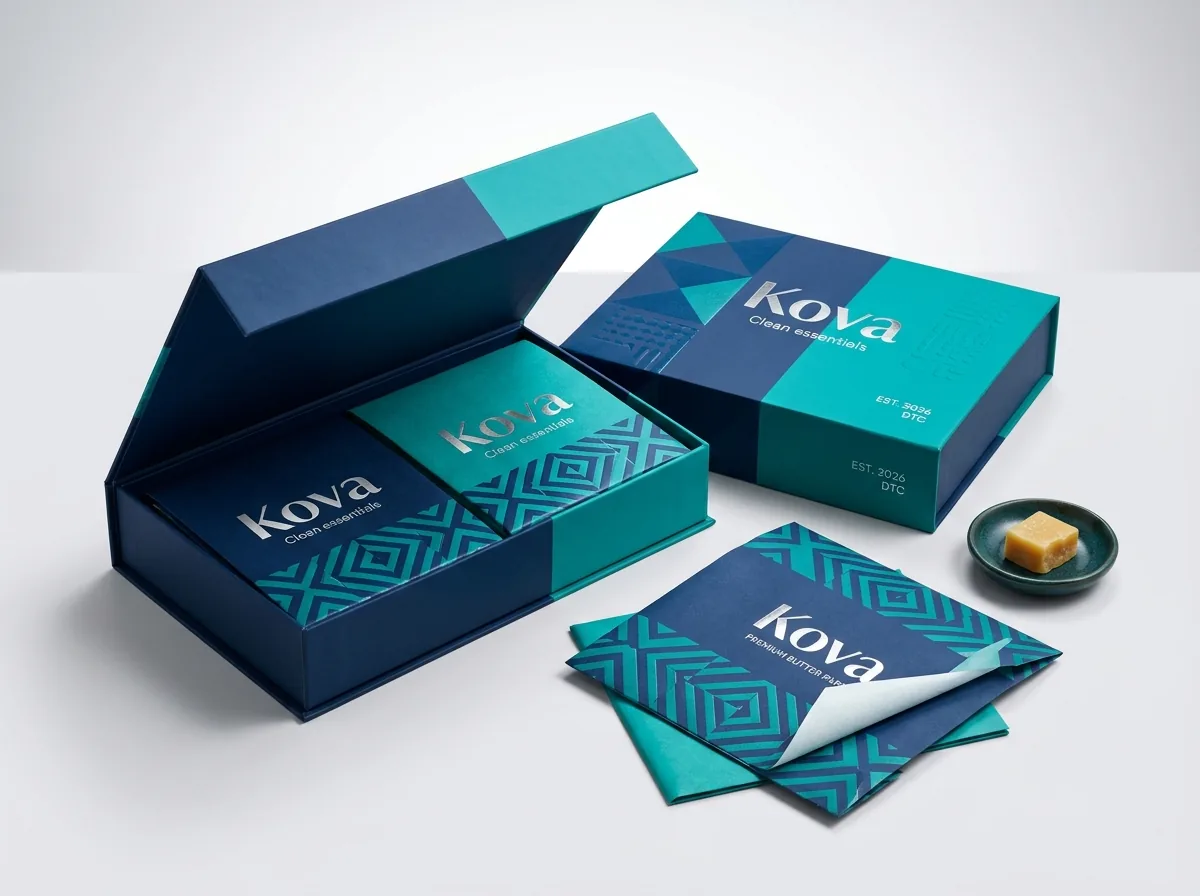
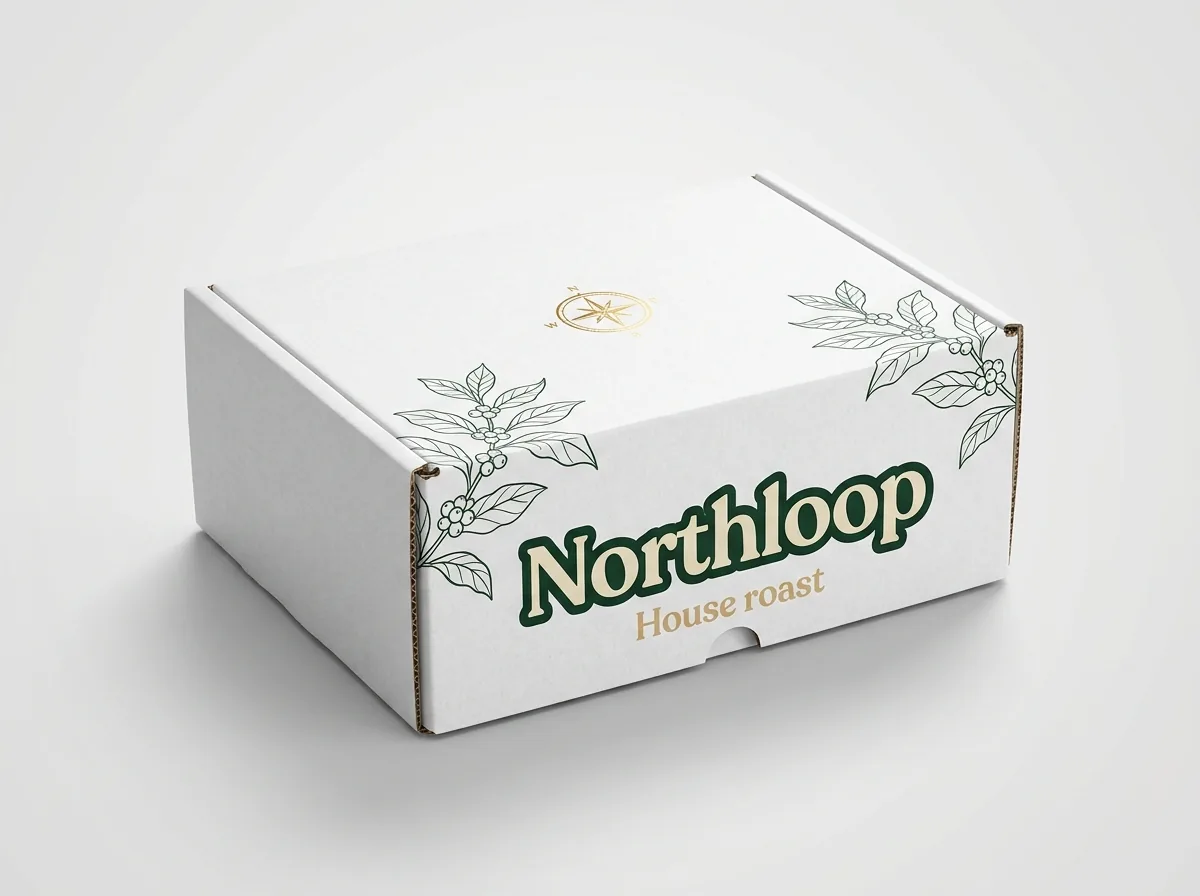


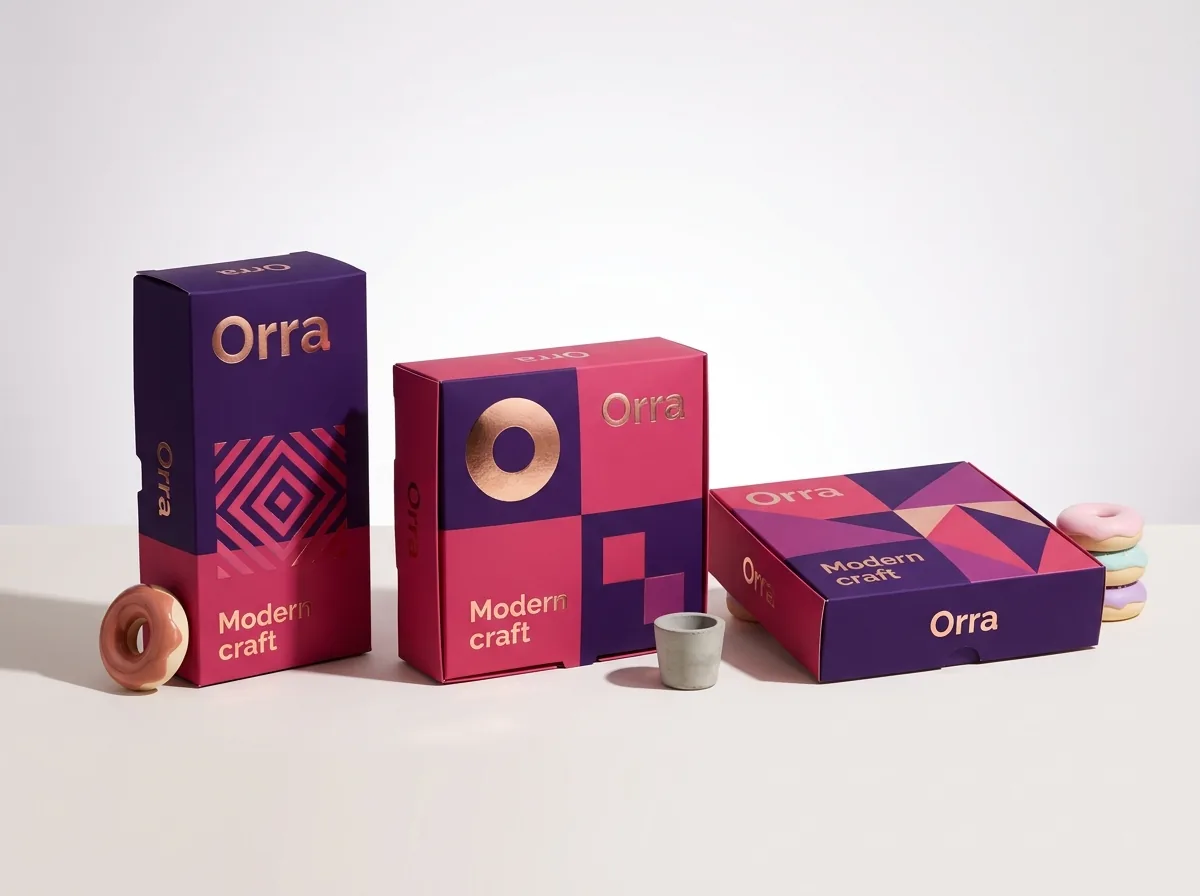
Ready to order cookie boxes? Compare up to 3 quantities with a free 3D mockup.
Request a Quote →Questions about cookie boxes
Can I ship cookies in a folding carton window box if I put it inside a corrugated mailer?
Yes. That box-in-box setup is how most royal-iced cookie decorators ship nationwide: each bagged cookie sits inside its own shallow display window box, and those display boxes are packed snugly inside an E-flute corrugated mailer box.
Are food-safe and grease-resistant cookie boxes available from CubitPack?
Yes, food-safe materials and grease-resistant liners are available on request through our certified partner facilities. You can also order matching custom printed butter paper sheets and seal stickers.
Should I freeze royal-iced sugar cookies before shipping them?
No, cookies do not need to be shipped frozen, and condensation from thawing can spot royal icing colors. Instead, let the royal icing dry completely for 12 to 24 hours, heat-seal each cookie in a flat cello bag, and pack it snugly at room temperature.
Can CubitPack make custom cardboard dividers to fit inside my cookie boxes?
Yes. We engineer interlocking paperboard or E-flute corrugated cell partitions with 2, 4, 6, 8, 9, or 12 compartments sized to your exact cookie stack width and outer box dimensions with no die charges.
What is the minimum order quantity for custom cookie boxes and mailers?
Folding carton and corrugated cookie boxes start at 1,000 units, while custom mailer boxes start at 250 units. Ask your account manager on your quote if you want to pair inner display boxes with outer mailers.
How long does it take to receive custom printed cookie boxes?
Standard production takes 10 to 14 business days after you approve your free digital dieline proof and 3D mockup and complete payment. Rush production in 4 to 5 business days is available, and shipping is free to all 50 US states.
Still have a question? Ask a packaging specialist.
Request a Quote →Request your cookie boxes quote
Tell us your size and quantities, and one dedicated account manager prepares pricing for each tier.
- Free design & AI-to-print studio + 3D mockup
- No die or plate charges · 4–5 day rush available
- Free shipping to all 50 states
- 10% off your first order
This guide combines commercial bakery grease-barrier practices, moisture/aroma separation rules, and parcel drop-protection methods for fragile baked goods. A CubitPack packaging specialist reviewed every step. Spot something wrong? Tell us and we will fix it.
Sources
What changed
- October 22, 2026: First published.
- October 22, 2026: Updated specifications, terminology, and verified source links.
More guides
New packaging guides by email
Sizes, materials and design tips. Unsubscribe anytime.