
3-side-seal sachets vs 4-side-seal packets vs stick packs: which format fits your single-dose product?
Short answer: When choosing custom sachets, pick 4-side-seal packets for liquid serums, oils, sauces, and wet wipes needing uniform perimeter welds; pick 3-side-seal sachets for wider 10 g to 35 g powder scoops, capsules, or tea bags; and pick narrow center-fin stick packs for 2 g to 8 g drink powders poured into water bottles.
On this page
- How do 3-side-seal sachets, 4-side-seal packets, and stick packs compare side by side
- Why do skincare serums, sauces, and wet wipes rely on 4-side-seal sachets
- When does a 3-side-seal sachet beat a 4-side-seal packet for powders and solids
- Why do hydration drink mixes and gels switch to center-fin stick packs
- Can emerging brands fill pre-made sachets without Vertical Form-Fill-Seal machinery
- Common mistakes
- FAQs
Request a custom quoteFree dieline & 3D mockup
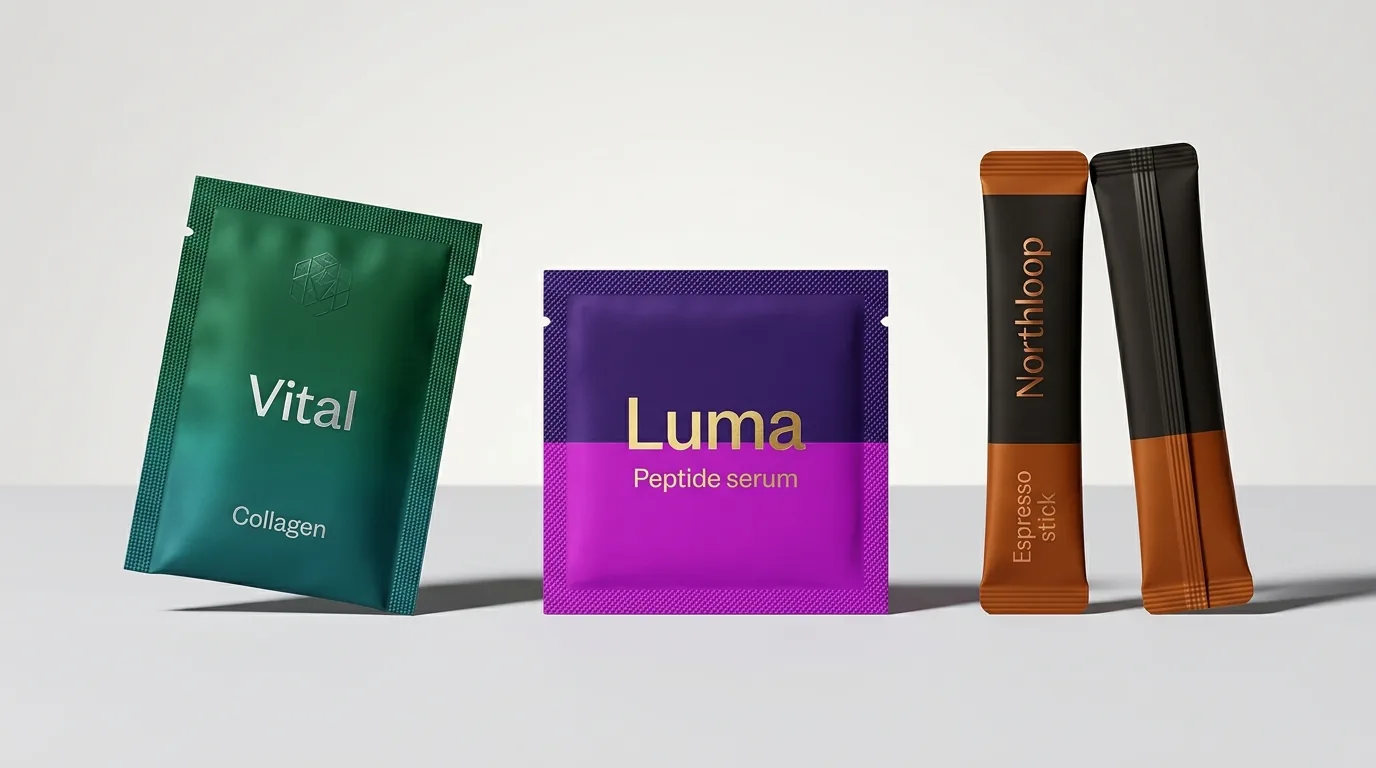
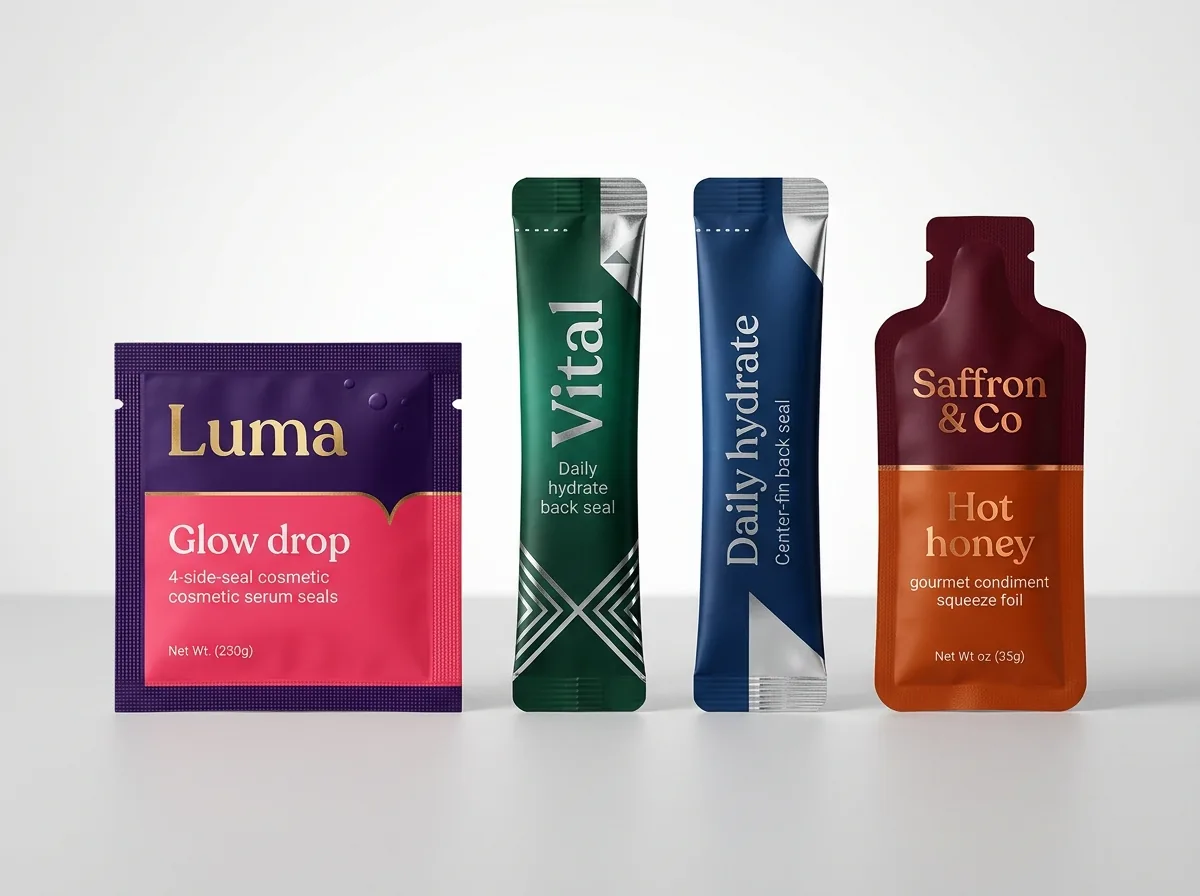
Although shoppers call all three single-serve portion packs, 3-side-seal sachets, 4-side-seal packets, and center-fin stick packs are engineered from distinct film-folding geometries that change burst strength, material cost, customer pouring accuracy, and co-packing equipment. A 3-side-seal sachet folds one continuous web in half along the bottom or side edge and welds the remaining three sides, maximizing interior volume for bulky scoops or tablets. A 4-side-seal packet brings two separate flat webs together and crimps all four margins evenly, creating a balanced, lie-flat hermetic frame for facial serums, alcohol wipes, and condiments. A stick pack wraps a narrow strip into a slender cylinder with a vertical back fin seal, cutting laminate consumption by roughly 25% to 35% while funneling powders cleanly into narrow bottle necks. At CubitPack, custom printed sachets start at 500 units with 10 to 14 business day standard production, free design help, zero plate or die charges, and free 50-state US shipping.
How do 3-side-seal sachets, 4-side-seal packets, and stick packs compare side by side?
Before locking in your dieline or booking time with a contract co-packer, evaluate how each seam configuration behaves on the press, on the filling line, and in your customer's hand. You can cross-check exact milliliter and gram cavities in our single-serve sachet and stick-pack size chart while comparing printed single-dose sachets across these structural benchmarks
- Web construction and visual symmetry: A 3-side-seal sachet has one smooth folded crease and three crimped borders, giving it a slightly asymmetric silhouette. A 4-side-seal packet frames all four edges with identical waffle or smooth crimp borders, while a stick pack hides a vertical fin weld down the center of the back panel.
- Laminate efficiency per thousand doses: Because a tubular stick pack eliminates wide left and right side crimps in favor of a narrow 4 to 6 mm back fin seam, it uses roughly 25% to 35% less barrier film per serving than a wide flat packet holding the same 5-gram hydration dose.
- Billboard print area for compliance text: Flat 3-side-seal and 4-side-seal sachets give designers two broad rectangular faces for Drug Facts, cosmetic INCI ingredient lists, and multi-step illustrations, whereas a 1.25-inch wide stick pack requires concise vertical typography.
| Structural factor | 3-side-seal sachet | 4-side-seal packet | Center-fin stick pack |
|---|---|---|---|
| Film web setup | 1 web folded on bottom/side | 2 separate front & back webs | 1 narrow web formed into tube |
| Heat-welded seams | 2 side welds + 1 top weld | All 4 outer perimeter borders | 1 vertical back fin + 2 end crimps |
| Film usage per dose | Baseline flat film footprint | Slightly higher (4 weld margins) | 25% to 35% less film per unit |
| Liquid & wipe integrity | Good for gels & thick pastes | Preferred hermetic flat seal | Great for honey & energy gels |
| Water-bottle pouring | Wide tear suits mugs & shakers | Squeeze-out corner or dab tear | Funnels into 28 mm bottle necks |
| Small-batch benchtop fill | Easy (ships pre-made, 1 open end) | Easy (ships 3-welded, 1 open end) | Usually VFFS; pre-made narrow sticks on request |
Why do skincare serums, sauces, and wet wipes rely on 4-side-seal sachets?
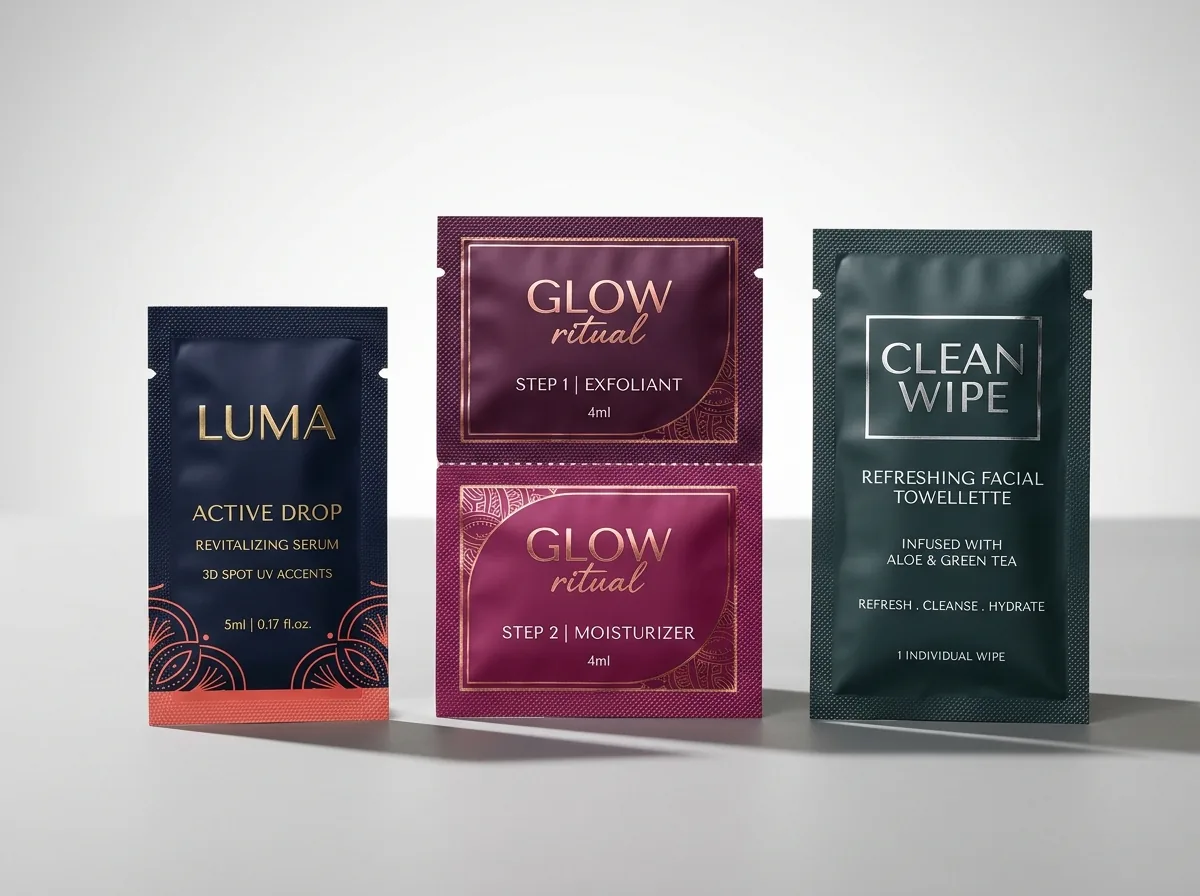
Walk down any prestige beauty counter in the cosmetics and beauty industry or inspect a medical alcohol prep pad, and nearly every flat sample is a 4-side-seal packet rather than a folded 3-side bag. Welding all four perimeter borders solves four engineering challenges unique to liquids, oils, and saturated wipes
- Equalized hydraulic burst distribution: When a parcel carton lands flat during courier transit, internal fluid pressure pushes outward equally in all four directions. Four identical 6 to 9.5 mm perimeter heat welds distribute compression evenly without stressing a sharp folded film crease.
- Zero-curl flat presentation inside mailers and magazines: Heating and crimping all four edges balances film tension between the front and back webs so the sachet lies dead-flat when tipped onto a postcard, tucked into custom cosmetic boxes, or stacked in shade-sampler folders.
- Dissimilar front and back web combinations: Because 4-side-seal equipment marries two independent webs, brands can pair a clear high-barrier front film with a metallic foil back web, or print different surface coatings, and even rotary-cut bottle silhouettes or perforated twin-chamber duos.
- Controlled corner tear spouts for viscous creams and condiments: Aligning V-cut tear notches with a narrowed upper pour channel lets users squeeze 10 ml of foundation, hair mask, or hot sauce onto fingertips or food without messy side ribbon drips.
When does a 3-side-seal sachet beat a 4-side-seal packet for powders and solids?
Eliminating the fourth weld seam by folding a single web along the bottom or left edge unlocks extra usable volume inside the exact same outer footprint. For larger dry doses and flat solid items in the health and supplements market, 3-side-seal construction offers clear practical advantages over 4-side-seal packets and custom flat pouches
- 10% to 15% wider or taller interior cavity at the same outer size: Skipping one 0.31-inch weld border hands that width or height directly back to the product pocket, helping 15 g pre-workout scoops, 30 g whey servings, herbal tea bags, and bath salt samples settle lower below the top sealer jaws.
- Wrap-around continuous graphics across the folded edge: Because one continuous sheet wraps from front to back, background patterns fold smoothly around the bottom crease without a ribbed crimp interrupting the edge.
- Wide mouth opening for capsules, gummies, and chunky inclusions: Two-capsule vitamin packs, electrolyte chewables, freeze-dried fruit bits, and ceremonial cacao chunks drop swiftly through a 3.0 to 4.5 inch open top mouth without bridging in filling funnels.
Know your size? Compare pricing across up to 3 quantities.
Request a Quote →Why do hydration drink mixes and gels switch to center-fin stick packs?
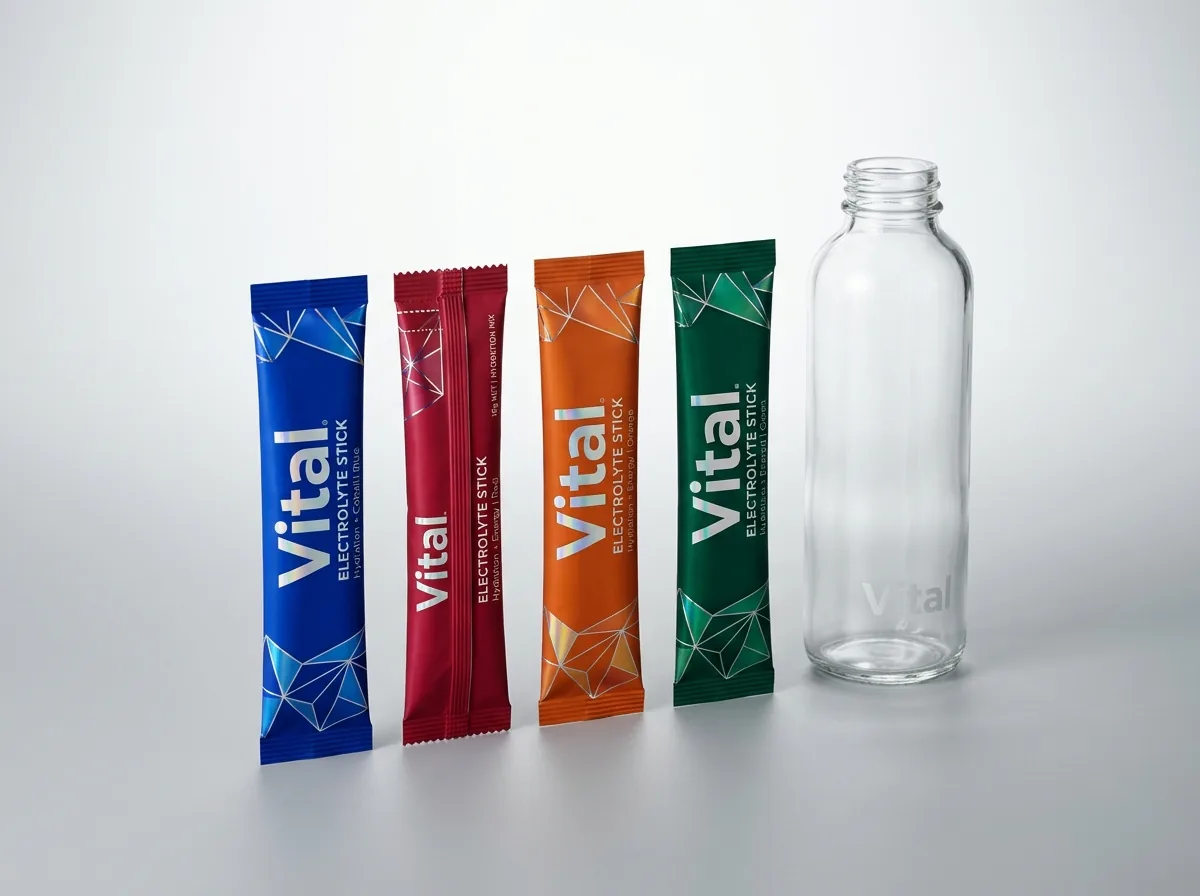
Try pouring a 3.5-inch wide rectangular sachet of electrolyte powder into a 1-inch disposable water bottle in an airplane seat or gym locker room, and half the powder misses the rim. Center-fin stick packs solve that ergonomic bottleneck while improving retail shelf density inside custom dispenser boxes
- Spill-free 28 mm bottle-neck dosing: At 0.9 to 1.38 inches (23 to 35 mm) wide, a torn stick pack tucks directly inside a standard water bottle opening like a miniature funnel.
- One-handed squeeze dispensing for gels and honey: Marathon carbohydrate gels, elderberry syrups, and raw honey sticks extrude smoothly upward when pinched from the bottom crimp.
- Compact 14-count and 30-count retail carton footprints: Thirty tubular stick packs pack upright into a trim custom supplement box that takes roughly 30% less shelf frontage than 30 wide rectangular sachets.
- Artwork note on the back fin seal: The vertical center fin folds inward flat against the back panel, so your dieline splits back-panel nutrition text into clean left and right columns flanking the fin margin.
Can emerging brands fill pre-made sachets without Vertical Form-Fill-Seal machinery?
High-volume co-packers form sachets and multi-lane stick packs inline from printed rollstock on Vertical or Horizontal Form-Fill-Seal (VFFS / HFFS) machines, whereas clinical trial runs, startup launches, and seasonal gift sets often fill in-house or on semi-automatic rotary baggers. Review barrier layer specs in liquid and powder sachet barrier films and seal margins and benchmark quotes with our Price Beat guarantee
- Pre-made open-top 3-side-seal and 4-side-seal sachets (from 500 units): CubitPack delivers finished packets sealed on three sides with one clean open mouth. Your team or co-packer doses liquid via a benchtop piston pump or powder via an auger filler and closes the top seam with a constant-heat or impulse band sealer.
- Pre-made narrow stick-style sachets vs VFFS rollstock: Traditional back-fin stick packs run on multi-lane VFFS machines from printed film rolls, while small-batch brands can also order narrow 1.25 × 5.5 inch pre-made 3-side-seal stick sachets left open at the short top end for manual or semi-auto filling.
- Fast 10 to 14 business day turnaround with zero plate fees: Whether you order 500 pre-made trial sachets or scale across five flavor SKUs, CubitPack includes free design help, a 2D proof and 3D mockup before payment, 4 to 5 business day rush options, and free delivery across all 50 US states.
What are the five most common mistakes when choosing between sachets and stick packs?
Avoid these five format-selection errors before locking your single-serve tooling and co-packing schedule
- Specifying a wide 3.5-inch rectangular sachet for hydration or energy powders that customers pour into narrow 1-inch water bottles.
- Using a folded 3-side-seal bag instead of a symmetric 4-side-seal packet for thin essential-oil serums or magazine-insert beauty cards that must lie completely flat.
- Centering fine ingredient text right down the middle of a stick pack's back panel where the vertical center-fin weld folds over it.
- Ordering printed rollstock when your fulfillment team or co-packer only operates pre-made pouch rotary or benchtop band sealers (or vice versa).
- Paying separate die and printing plate fees per flavor instead of standardizing one sachet footprint across all SKUs.
Packaging for this
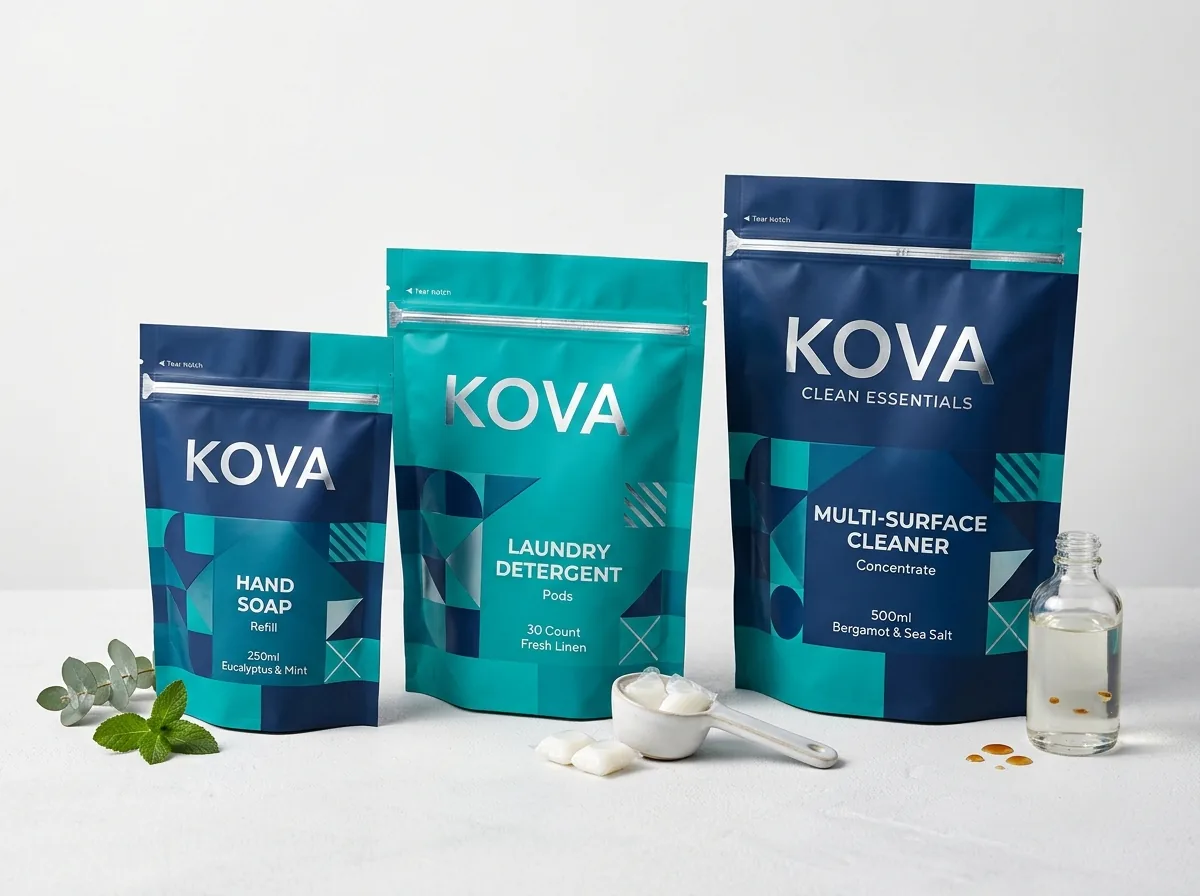
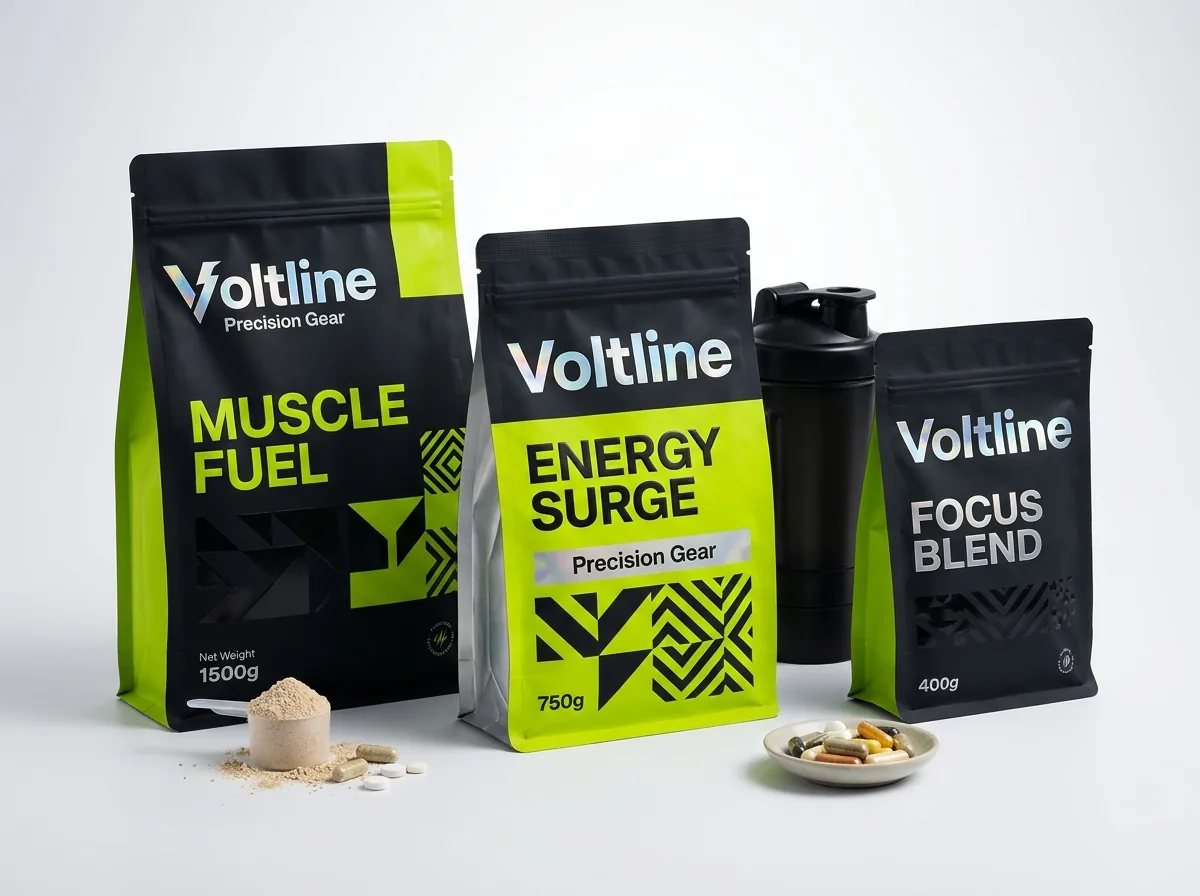
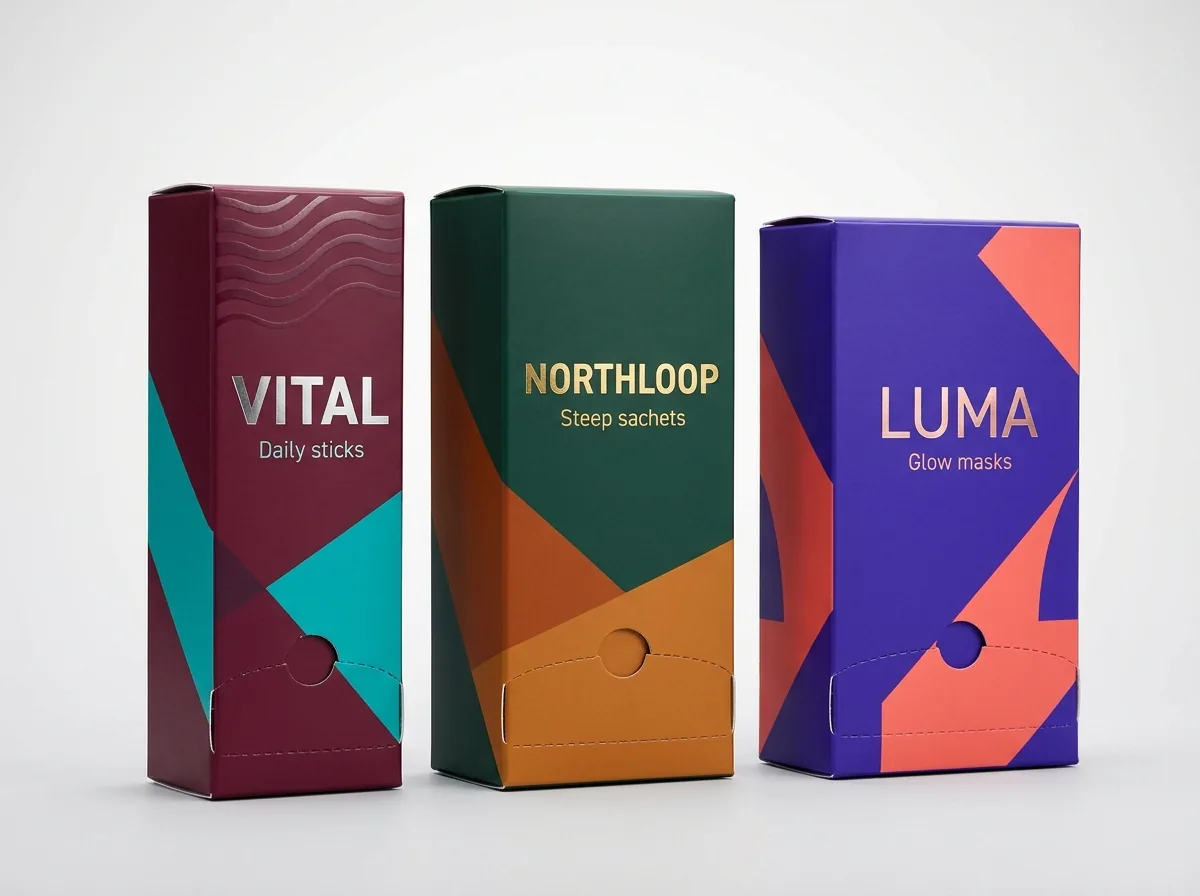
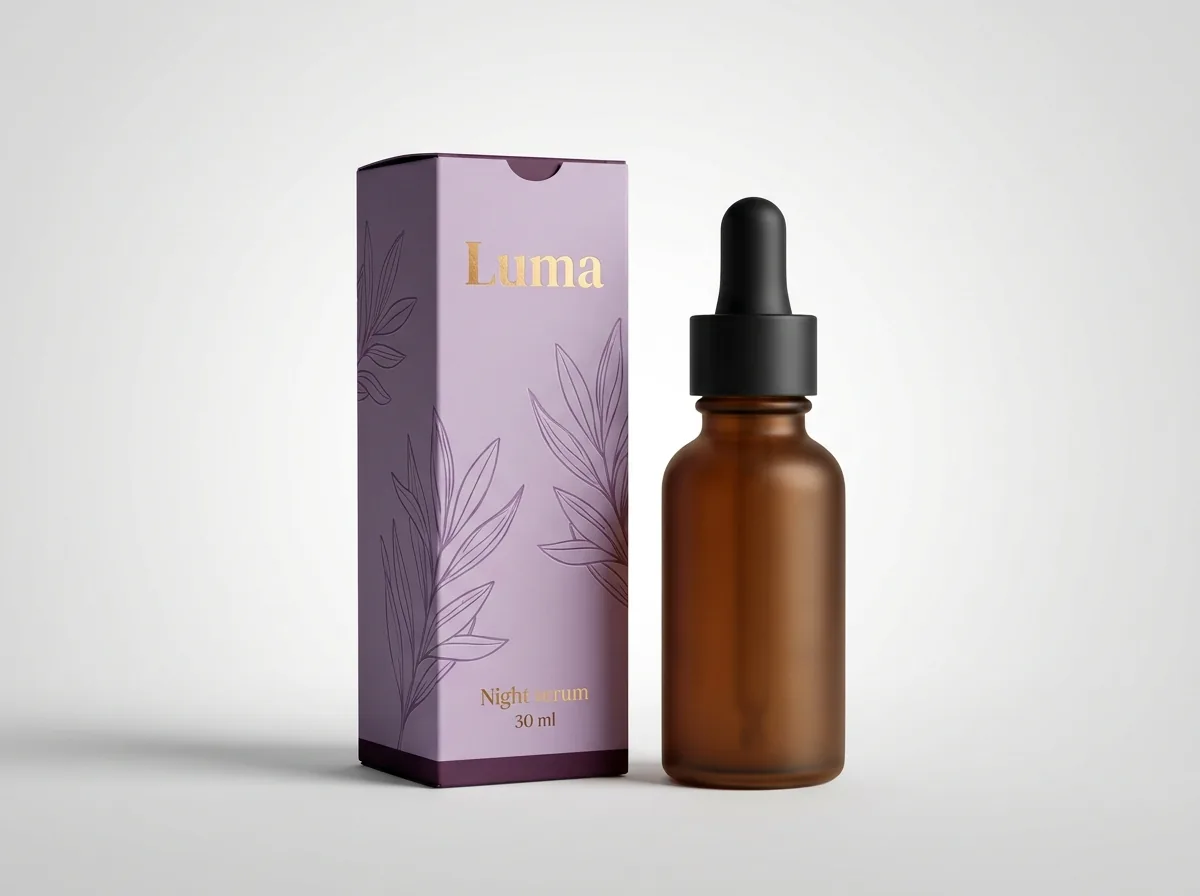
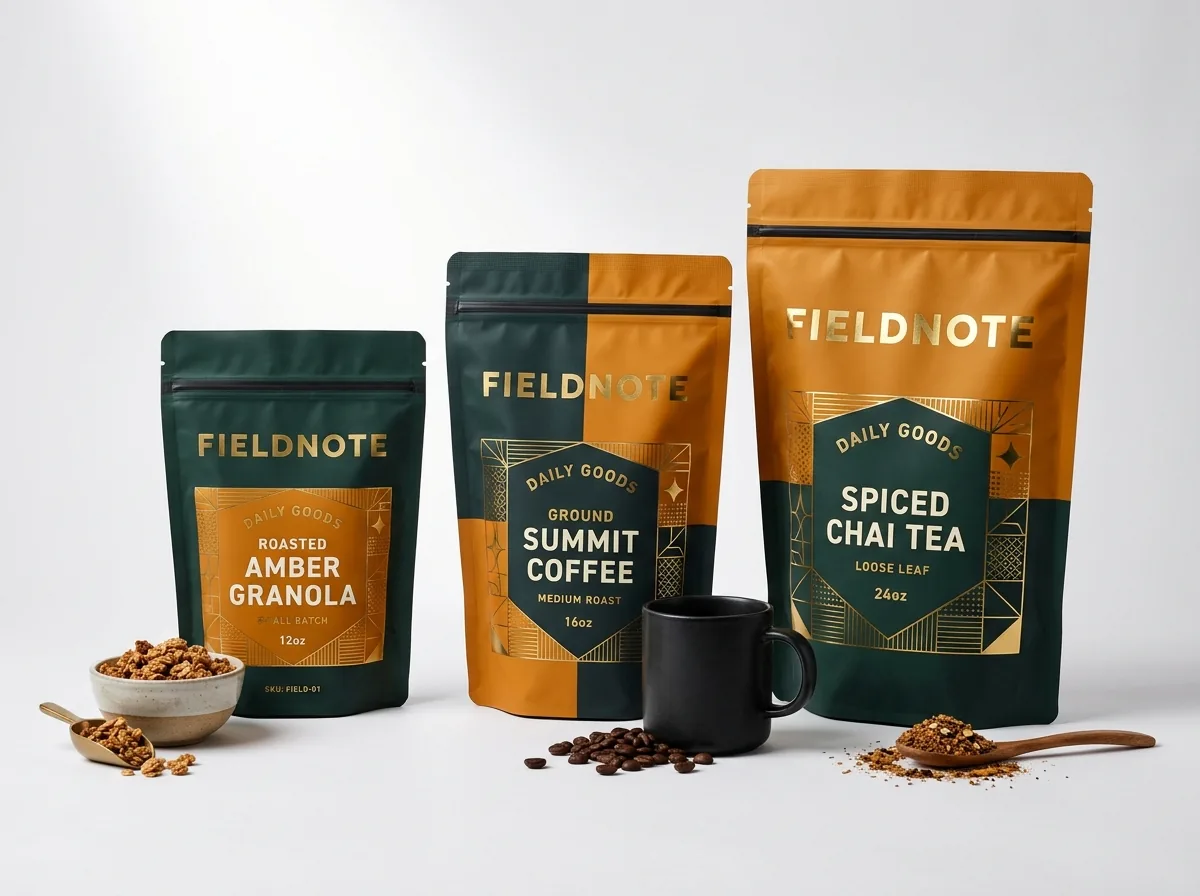
Ready to order sachets? Compare up to 3 quantities with a free 3D mockup.
Request a Quote →Questions about sachets
What is the main structural difference between a 3-side-seal and a 4-side-seal sachet?
A 3-side-seal sachet folds a single sheet of film along one edge and heat-welds the other three sides, leaving one smooth fold. A 4-side-seal packet welds two separate sheets around all four outer edges for uniform burst resistance and lie-flat symmetry.
Do stick packs cost less per unit than flat 4-side-seal sachets?
At equal dose weights, narrow center-fin stick packs consume roughly 25% to 35% less flexible barrier laminate than wide 4-side-seal packets, lowering material usage on large hydration, coffee, and sweetener runs.
Can stick packs hold liquids, honey, and cosmetic gels?
Yes. When paired with a liquid-grade foil barrier laminate and leak-tight end crimps, tubular stick packs work well for raw honey, marathon energy gels, liquid supplements, and squeeze-out hair serums.
Can I order just 500 pre-made sachets to test a new product launch?
Yes. CubitPack's minimum order starts at 500 sachets (with smaller trial runs reviewed case by case), delivered with three edges sealed and one mouth open so you can fill and impulse-seal test batches easily.
Which sachet format works best for alcohol wipes and makeup-remover towelettes?
A 4-side-seal foil-lined packet is the standard choice for wet wipes and alcohol pads because its four wide perimeter heat welds lock in volatile solvents evenly and keep the folded wipe flat in pockets.
Can CubitPack produce both our single-serve sachets and the retail dispenser box?
Yes. We manufacture your custom printed sachets or stick packs alongside matching paperboard gravity dispenser boxes or counter display trays under one dedicated account manager, with guaranteed Pantone matching across both.
Still have a question? Ask a packaging specialist.
Request a Quote →Request your sachets quote
Tell us your size and quantities, and one dedicated account manager prepares pricing for each tier.
- Free design & AI-to-print studio + 3D mockup
- No die or plate charges · 4–5 day rush available
- Free shipping to all 50 states
- 10% off your first order
We compared 3-side-seal, 4-side-seal, and center-fin stick-pack web folding, laminate consumption, and burst mechanics against Flexible Packaging Association technical guides and ASTM F88 / D3078 flexible seal and leak testing standards. A packaging specialist reviewed every structural row. Spot something off? Tell us and we will fix it.
Sources
What changed
- November 16, 2026: First published with side-by-side 3-side-seal, 4-side-seal, and center-fin stick-pack comparison matrix, seam geometry diagram, and pre-made vs VFFS filling guide.
More guides
New packaging guides by email
Sizes, materials and design tips. Unsubscribe anytime.