
What size rectangle label fits bottles, jars, cans and pouches?
Short answer: Always write Width first and Height second (W × H in inches). For a full-wrap landscape rectangle, Width equals π (3.14) × diameter minus ¼ inch and Height equals the straight wall minus ¼ inch. Popular custom rectangle labels are 3.75 × 1.75 in for 1 oz droppers and 3 × 4 in for pouches.
On this page
- Why does Width always come before Height (W × H) on rectangular labels
- What are the most common custom rectangle label sizes by container
- How do I size full-wrap rectangles for dropper bottles, jars and cans
- What size portrait rectangle fits coffee bags, wine bottles and boxes
- What size small rectangle works for nutrition panels, barcodes and over-stickers
- Common mistakes
- FAQs
Request a custom quoteFree dieline & 3D mockup
Sizing a rectangular label starts with locking in the industry-standard coordinate rule: the first number is always horizontal Width from left to right as you look at the container on a shelf, and the second number is always vertical Height from top to bottom. That distinction separates rectangular decals into two structural families: wide landscape wraps (where Width is larger than Height, such as a 6 × 2.5 inch jar band) and tall portrait panels (where Width is smaller than Height, such as a 3 × 4 inch coffee bag card). On cylindrical bottles, jars and cans, measure only the flat vertical wall between the top shoulder curve and the bottom base heel, and leave a ¼ inch gap between the ends of a full wrap. When you order printed rectangle labels from CubitPack, we cut any exact Width × Height from 500 pieces with no die charge.
Why does Width always come before Height (W × H) on rectangular labels?
On a circle or a 1:1 square, swapping the two numbers changes nothing because both axes are identical. On a rectangle, reversing the two numbers turns a horizontal bottle wrap into a vertical tower. In packaging prepress, Width (W) is always the horizontal span across the container from left to right, and Height (H) is always the vertical span from bottom to top. Following the W × H convention prevents two expensive mistakes. First, it tells our prepress team which way your text and barcode read when the container stands upright on a retail shelf. Second, when you order custom roll labels for a tabletop dispenser or inline wrap-around machine, the relationship between Width and Height determines which edge of the rectangle feeds off the roll first. Entering 3.75 × 1.75 inches tells us your 1 oz dropper wrap is 3.75 inches wide around the vial and 1.75 inches tall vertically.
- Landscape rectangle (W > H): wider than it is tall (for example, 6 × 2 in), used for 360-degree cylinder wraps.
- Portrait rectangle (W < H): taller than it is wide (for example, 3 × 4 in), used for front panels on pouches, wine bottles and boxes.
- Full-wrap Width formula: π (3.14) × container diameter − 0.25 in seam gap.
- Front-only Width formula: container circumference ÷ 3 (roughly equal to 1.05 × container diameter).
- Maximum Height formula: straight vertical wall between shoulder and heel − 0.25 in.
What are the most common custom rectangle label sizes by container?
While CubitPack cuts every rectangular order to your exact sixteenth-of-an-inch measurement with zero cutting die fees, ten proven Width × Height combinations cover the vast majority of glass dropper bottles, spice jars, mason jars, beverage cans, wine bottles and stand-up pouches. Use the reference table below to benchmark your container before testing a paper strip on your physical vessel. Notice how each row specifies whether the dimensions describe a landscape wrap (W > H) or a portrait front panel (W < H).
| Container or package | Typical size (W × H) | Orientation & layout |
|---|---|---|
| Lip balm tube (0.15 oz) | 2.125 × 1.75 in | Landscape full wrap |
| 1 oz (30 ml) Boston round dropper | 3.75 × 1.75 in | Landscape full wrap |
| 2 oz (60 ml) spray or dropper bottle | 4.5 × 2 in | Landscape full wrap |
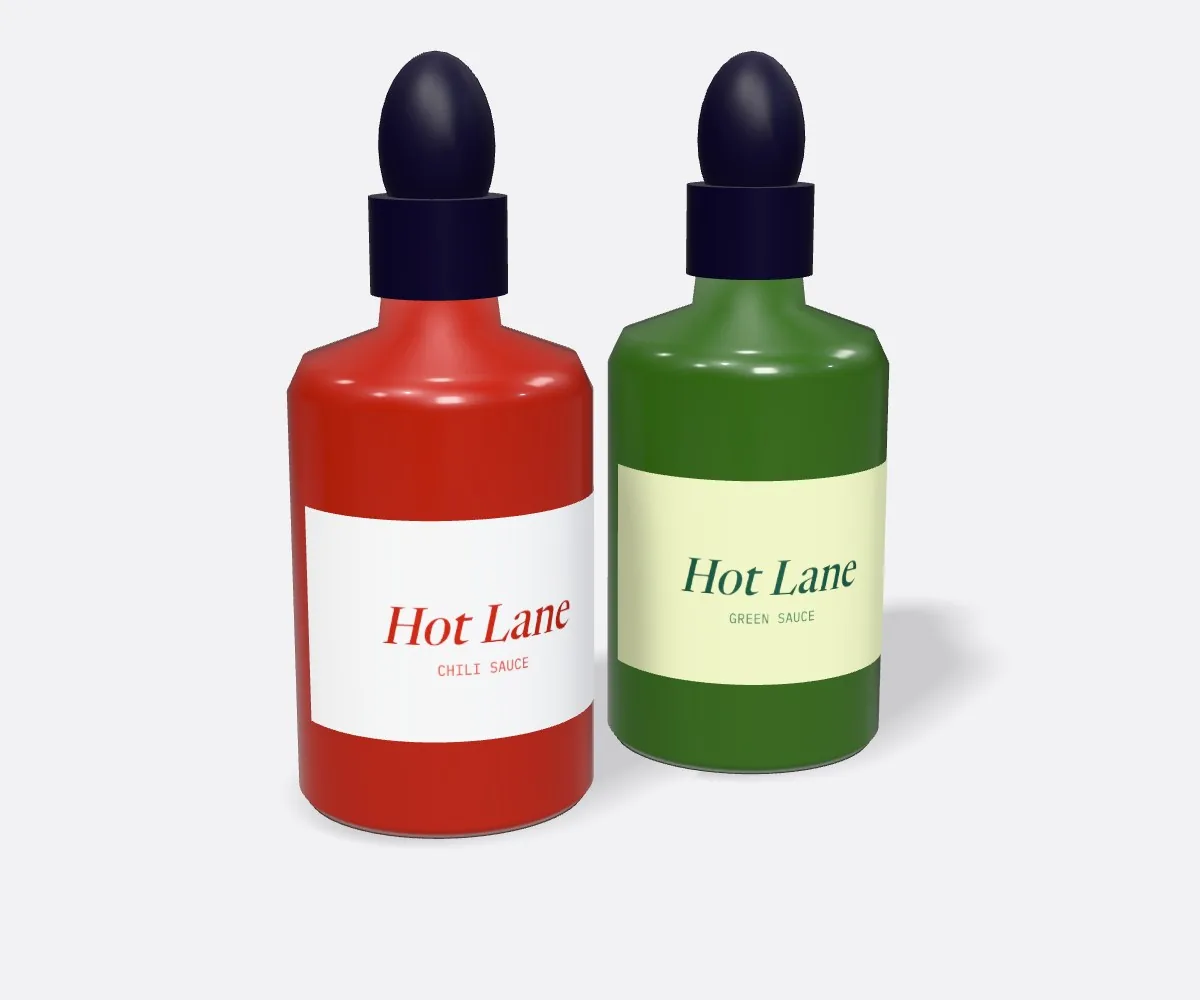
| 4 oz spice jar or hot sauce bottle | 5 × 1.75 in (wrap) or 1.75 × 3 in (front) | Landscape wrap or portrait front |
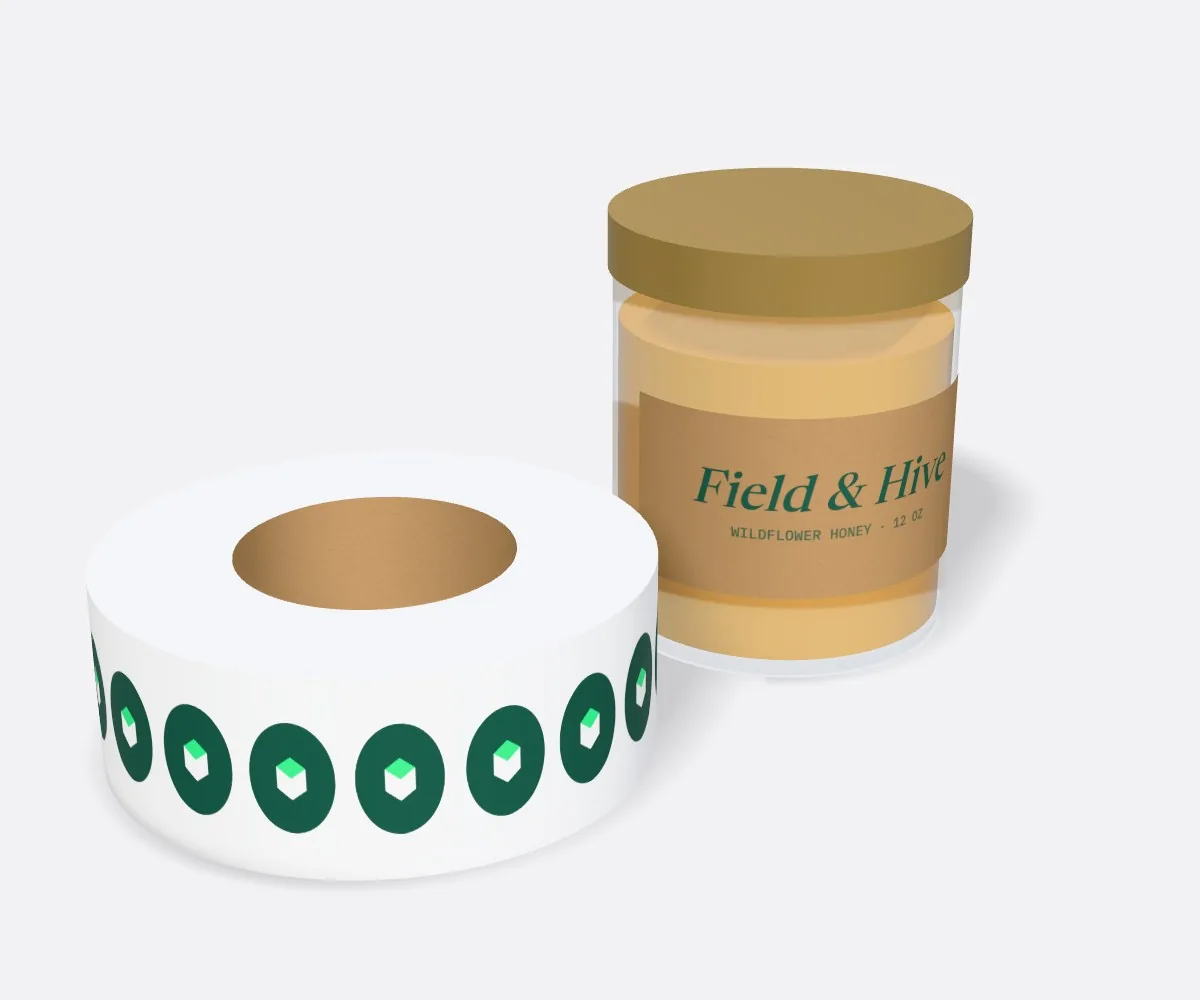
| 8 oz mason jar, honey jar or vitamin bottle | 6 × 2.5 in (wrap) or 2.25 × 3 in (front) | Landscape wrap or portrait front |
| 16 oz pint jar or 12 oz beverage bottle | 7.5 × 3 in (wrap) or 2.5 × 3.5 in (front) | Landscape wrap or portrait front |
| 12 oz standard aluminum beverage can | 8 × 4.5 in | Landscape full wrap |
| 12 oz sleek aluminum craft can | 7 × 5.25 in | Landscape full wrap |
| 750 ml wine bottle or 12 oz coffee pouch | 3 × 4 in or 3.5 × 4 in | Portrait front & back panels |
| 1 lb pouch, gallon jug or shipping carton | 4 × 6 in | Portrait front plaque |
How do I size full-wrap rectangles for dropper bottles, jars and cans?
Small apothecary vials, supplement packers and aluminum beverage cans almost always use a single landscape wrap because there is not enough room on the front face alone for mandatory ingredient lists, directions and UPC barcodes. On a standard 1 oz (30 ml) Boston round glass dropper bottle (which measures 1.3 inches in diameter with a 2 inch straight wall below the curved glass shoulder), multiplying 1.3 inches by 3.14 gives a 4.08 inch circumference. Subtracting a ¼ inch gap to prevent overlap yields a 3.75 inch or 3.8125 inch wrap width paired with a 1.75 inch vertical height. On 12 oz aluminum beer, energy drink and sparkling water cans, measure between the top neck taper and the bottom base chime. A standard 12 oz 211-diameter can takes an 8 × 4.5 inch landscape wrap, whereas a slimmer 12 oz sleek can takes a narrower, taller 7 × 5.25 inch wrap. See our dedicated custom bottle labels and custom jar labels pages for more container calculators.
Know your size? Compare pricing across up to 3 quantities.
Request a Quote →What size portrait rectangle fits coffee bags, wine bottles and boxes?
When you move to flat stand-up pouches, high-shoulder 750 ml Bordeaux wine bottles and corrugated shipping cartons, portrait rectangles (where Height is larger than Width) take over. On an 8 oz to 12 oz coffee bag or stand-up pouch, measure inside the left and right heat-sealed seams and between the top zipper track and bottom gusset crease. A 3 × 4 inch portrait rectangle on the front and a matching 3 × 4 inch rectangle on the back fit almost every 12 oz bag cleanly, while 1 lb to 2 lb bags step up to a 3.5 × 4.5 inch or 4 × 6 inch rectangle. On a standard 750 ml straight-walled wine or olive oil bottle (roughly 3 inches in diameter), a 3 × 4 inch or 3.25 × 4.5 inch front portrait label covers the front arc without wrapping out of sight, paired with a slightly narrower 2.5 × 3.5 inch back rectangle for the government warning and barcode. On custom shipping boxes and kraft mailers, a 4 × 6 inch rectangle is the universal standard for outer branding and carton identification.
What size small rectangle works for nutrition panels, barcodes and over-stickers?
Not every rectangular label is a primary brand face. Importers, bakeries and multi-channel brands frequently order small utility custom rectangular labels on rolls or flat sheets to add nutrition facts, localized ingredient translations, batch lot dates or retail UPC barcodes to pre-printed boxes and pouches. For a standalone retail UPC-A barcode sticker with a short product title above the bars, a 1.5 × 1 inch or 1.75 × 1.25 inch landscape rectangle gives laser and camera scanners a crisp white quiet zone. For a full FDA-style vertical Nutrition Facts or Supplement Facts panel with an ingredient paragraph underneath, a 1.75 × 3 inch or 2 × 3.5 inch portrait rectangle fits the back of a pouch or tuck carton without crowding.
- 1.5 × 1 in or 1.75 × 1.25 in landscape: standalone retail UPC-A barcode, SKU title and price or batch tag.
- 2 × 1 in landscape: tamper-evident fold-over box flap seal or roast-date strip on coffee bags.
- 1.75 × 3 in or 2 × 3.5 in portrait: back-panel Nutrition Facts, Supplement Facts and ingredient translations.
- 3 × 5 in or 4 × 6 in portrait: master case identification, pallet carton labels and large mailer box plaques.
What are the most common rectangle label sizing mistakes?
Almost every rectangular sizing hiccup comes from reversing Width and Height, measuring over a curved bottle neck, or forgetting the ¼ inch seam gap. Check these five points before ordering
- Writing Height × Width instead of Width × Height (entering 1.75 × 3.75 in when you want a 3.75 in wide horizontal wrap), which turns the artwork and roll feed 90 degrees.
- Measuring total bottle height from cap to table instead of only the straight vertical cylinder wall between the shoulder curve and bottom heel.
- Ordering a full-wrap rectangle to the exact mathematical circumference with zero gap, so slight glass mold variations cause the ends to overlap and lift.
- Making a front-only portrait rectangle wider than one-third of a round bottle's circumference, forcing shoppers to rotate the bottle to read the brand name.
- Sizing a 3 × 4 inch coffee bag label on an empty flat pouch without checking where the bottom gusset bends the lower third of the bag once filled.
Find your label size
Suggested label size: 9⅛ × 2¾ in (width × height)
A typical starting point. Your account manager confirms the size on the proof.
Quote this size →Packaging for this
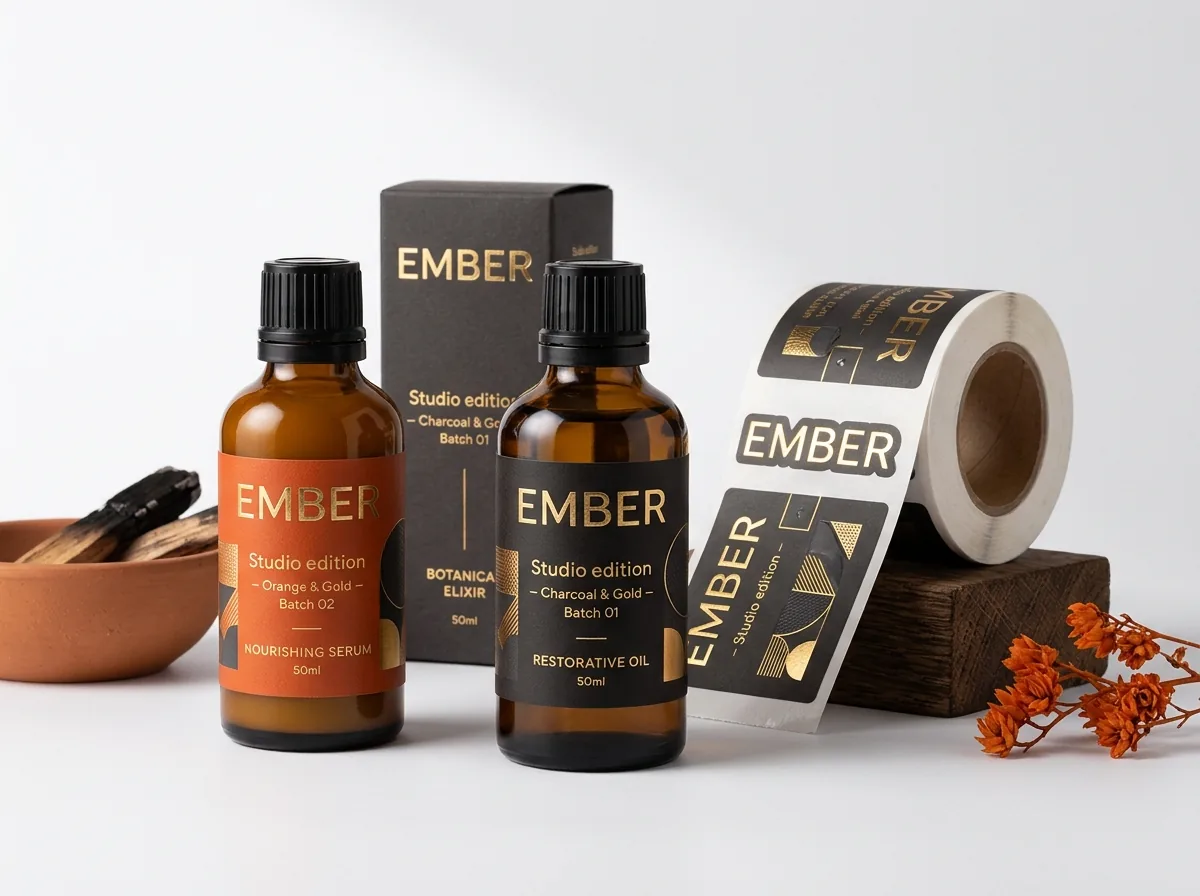
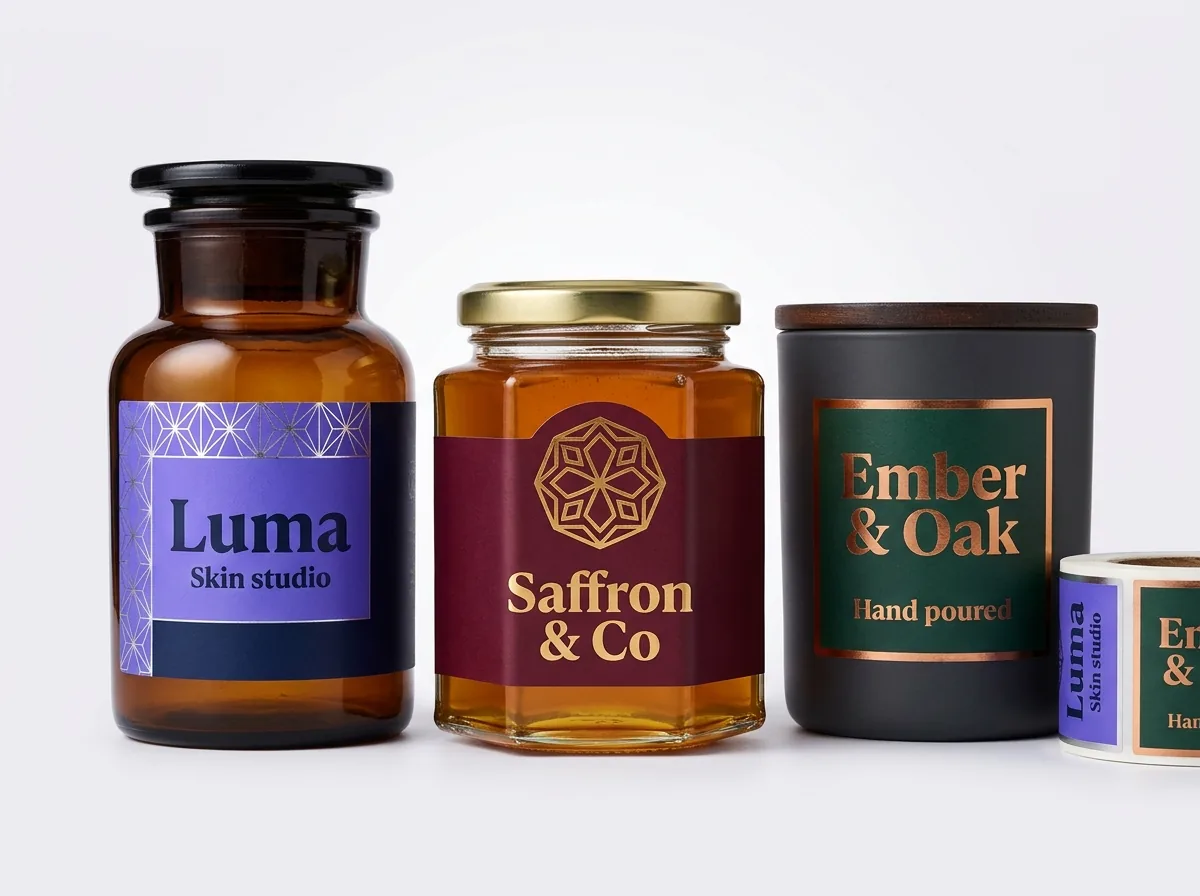
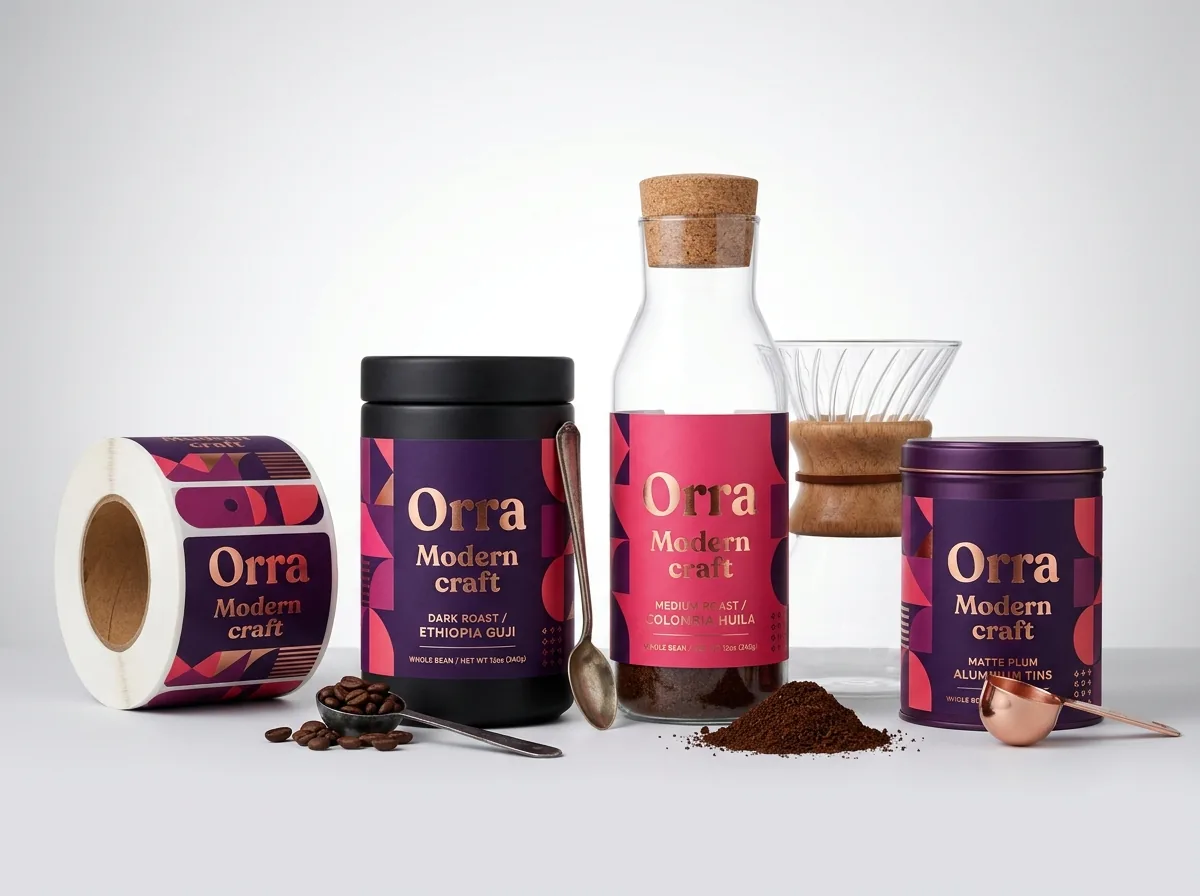
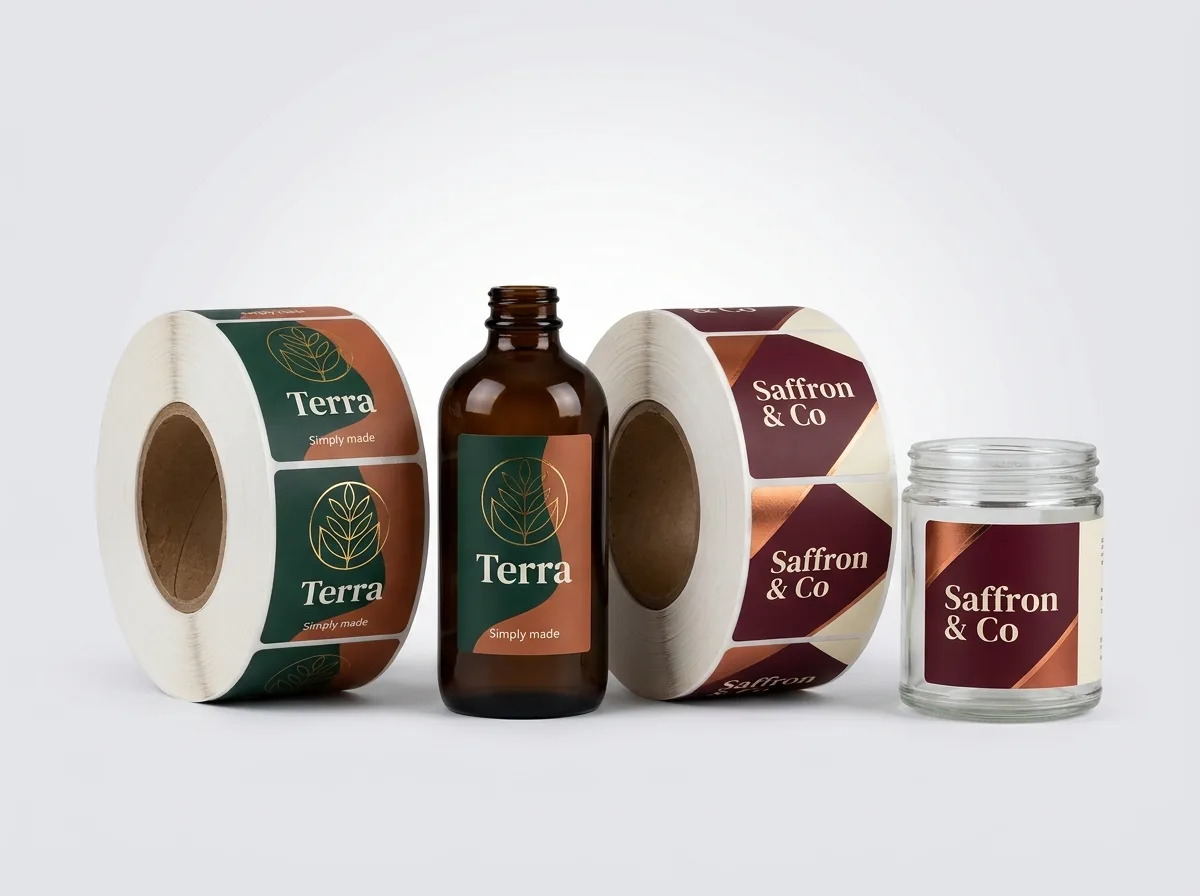
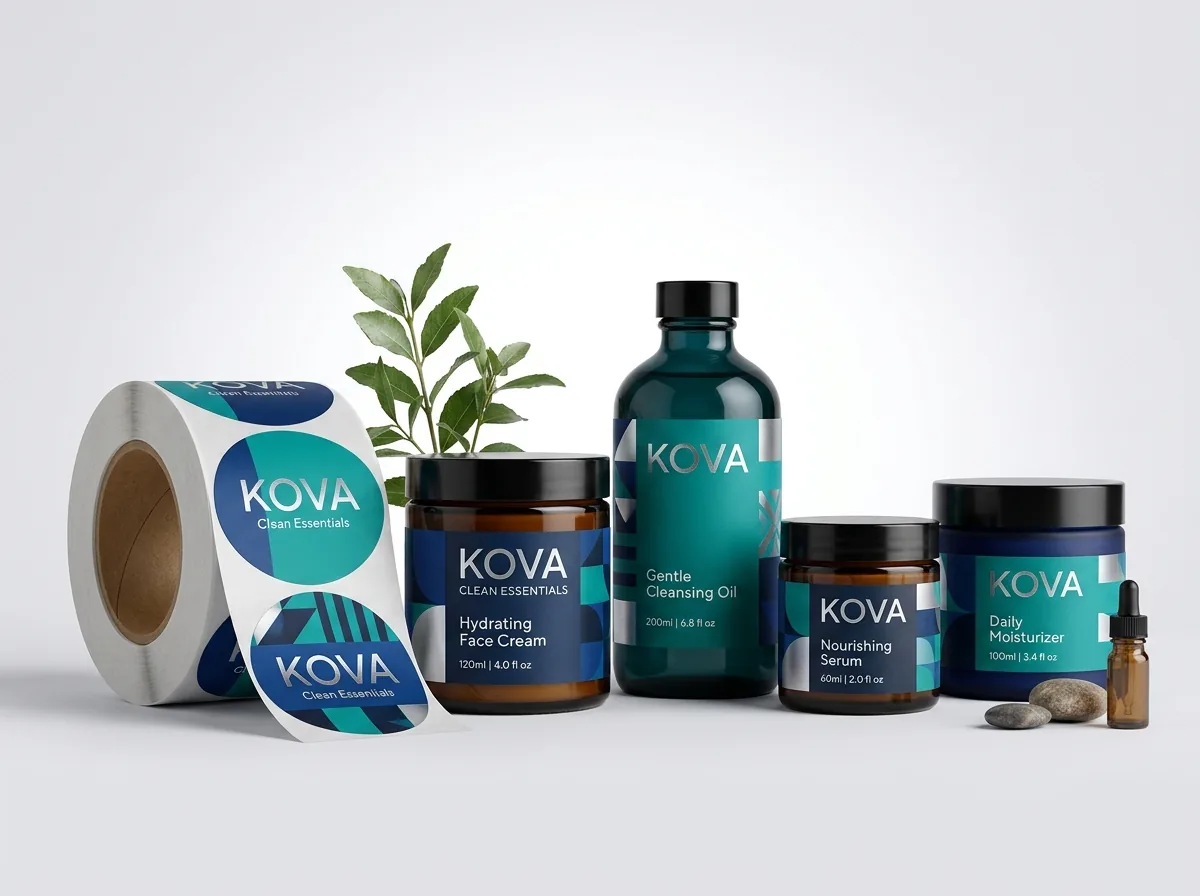
Ready to order rectangle labels? Compare up to 3 quantities with a free 3D mockup.
Request a Quote →Questions about rectangle labels
Is a 4 × 2 inch label the same as a 2 × 4 inch label?
They have the same 8 square inches of area, but their orientation is rotated 90 degrees. A 4 × 2 inch label is 4 inches wide horizontally and 2 inches tall vertically (a landscape wrap), whereas a 2 × 4 inch label is 2 inches wide and 4 inches tall (a portrait panel).
How much gap should I leave between the ends of a full-wrap bottle label?
Subtract ¼ inch (0.25 in) from the total circumference of your bottle or jar. That ¼ inch breathing gap prevents the two ends from riding up over each other if container diameters vary slightly from batch to batch.
Can I design a full-wrap rectangle to overlap itself on purpose?
Yes, on beverage cans and thin film wraps some brands add a ¼ inch overlap tab where one end sticks over the other. If you want an overlap seam instead of a gap, leave the under-lapping strip unvarnished or tell your account manager on the quote.
What size rectangle label fits a standard 1 oz (30 ml) dropper bottle?
Most 1 oz (30 ml) glass Boston round dropper bottles take a 3.75 × 1.75 inch landscape wrap label. Always measure your specific bottle batch's straight vertical wall before finalizing artwork.
Do non-standard rectangle sizes like 5.625 × 2.125 inches cost extra?
No. CubitPack cuts every order to your exact fractional inch dimensions with zero cutting die or plate charges. Custom wrap lengths and heights cost the same as standard sizes.
Can I order a front portrait rectangle and a narrower back rectangle in one order?
Yes. Select 2 designs or 3+ designs in Step 2 of the quote form and note your front and back Width × Height dimensions in the project notes so we quote both rolls together.
Still have a question? Ask a packaging specialist.
Request a Quote →Request your rectangle labels quote
Tell us your size and quantities, and one dedicated account manager prepares pricing for each tier.
- Free design & AI-to-print studio + 3D mockup
- No die or plate charges · 4–5 day rush available
- Free shipping to all 50 states
- 10% off your first order
The rectangular sizing formulas in this guide use standard cylinder circumference math (W = π × D − 0.25 in) and industry W × H prepress conventions tested across glass droppers, canning jars, aluminum cans and flexible pouches. Checked by a CubitPack packaging specialist. Spot something wrong? Tell us and we will fix it.
Sources
What changed
- October 22, 2026: First published.
- October 22, 2026: Updated specifications, terminology, and verified source links.
More guides
New packaging guides by email
Sizes, materials and design tips. Unsubscribe anytime.