
Horizontal wrap vs vertical panel rectangle labels: which should you choose?
Short answer: Choose a horizontal landscape wrap when labeling cylindrical bottles, droppers or cans that need maximum room for nutrition facts and fast single-peel application. Choose vertical portrait custom rectangle labels when labeling stand-up pouches, flat-sided bottles or clear jars where you want the product visible along the sides.
On this page
- How do horizontal wrap and vertical panel rectangles compare
- Is a single horizontal wrap faster to apply than front-and-back panels
- When do vertical portrait rectangles work better on bottles, jars and pouches
- How does landscape vs portrait orientation change roll unwind direction
- How do single wraps vs front-and-back rectangles compare on order cost
- Common mistakes
- FAQs
Request a custom quoteFree dieline & 3D mockup
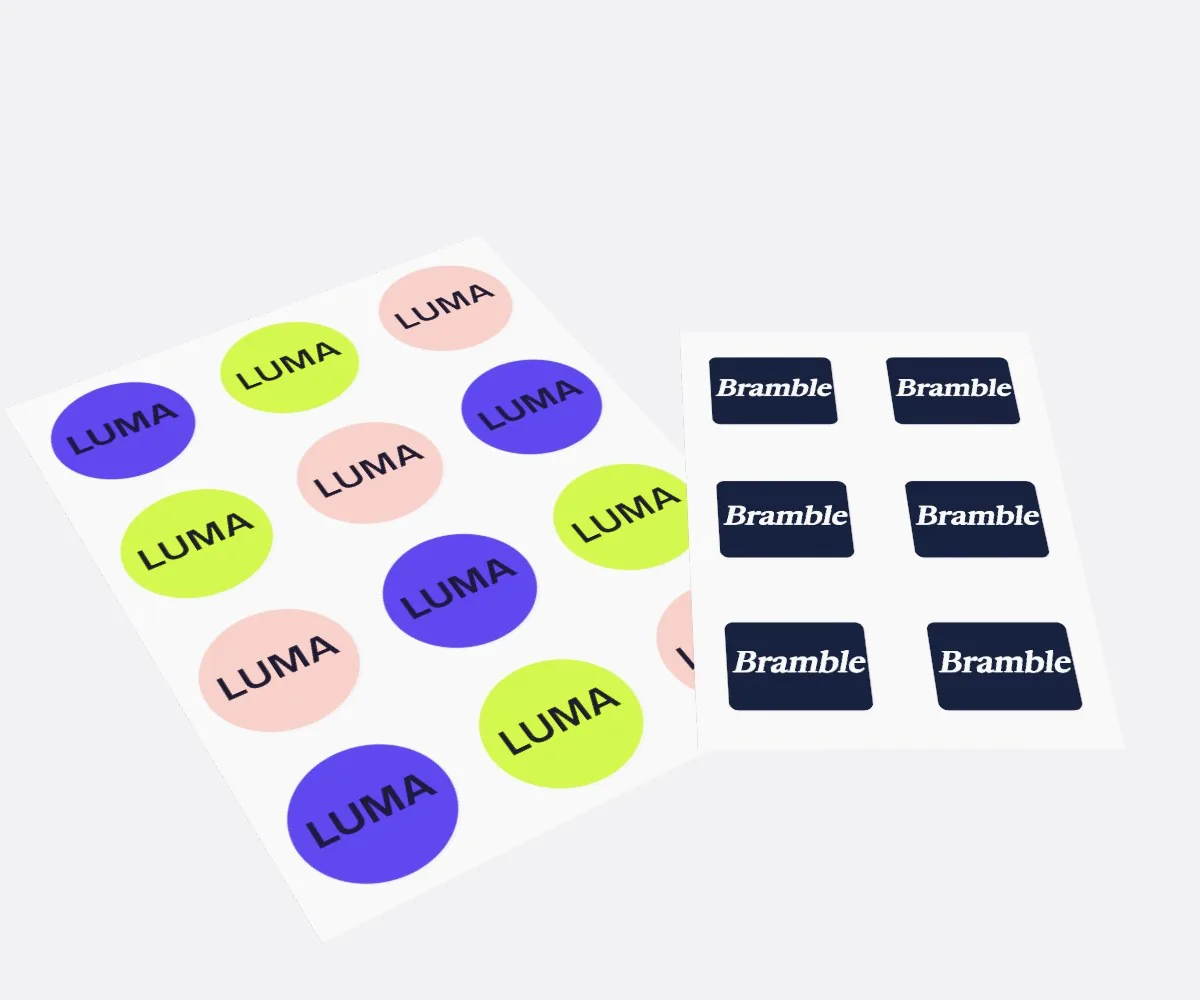
Every rectangular label falls into one of two structural orientations: a horizontal landscape wrap (where Width is wider than Height, such as 6 × 2.5 inches) or a vertical portrait panel (where Height is taller than Width, such as 2.5 × 4 inches). On round bottles and jars, that choice determines whether your team applies one continuous band around the cylinder or sticks separate front and back panels on opposite sides of the glass. A single horizontal wrap cuts hand and machine labeling time in half and gives you continuous real estate for supplement facts, ingredient lists and barcodes, whereas separate vertical panels frame the product inside clear glass and forgive slight rotational tilt during hand placement. At CubitPack, both orientations of printed rectangle labels start at 500 pieces with zero cutting die fees and free US shipping.
How do horizontal wrap and vertical panel rectangles compare?
Deciding between a single horizontal wraparound band and a vertical front-and-back panel pair affects your packing speed, container visibility, artwork layout and roll applicator setup. Use the side-by-side table below to compare how landscape wraps (W > H) and portrait panels (W < H) perform across round bottles, tapered jars, flat pouches and automatic labeling machines.
| Factor | Horizontal landscape wrap (W > H) | Vertical portrait panel (W < H) |
|---|---|---|
| Aspect ratio | Wider than tall (e.g., 3.75 × 1.75 in or 6 × 2.5 in) | Taller than wide (e.g., 2 × 3.5 in or 3 × 4 in) |
| Peels per container | 1 peel covers front, nutrition panel and barcode | 1 peel (front only) or 2 peels (separate front and back) |
| Glass & product visibility | Covers 95% of cylinder circumference (except ¼ in gap) | Leaves 50%–65% of clear glass or pouch visible on sides |
| Hand alignment forgiveness | Needs a level start or long wrap can spiral slightly | Short horizontal span is very easy to stick without bubbles |
| Tapered container walls | Wrinkles if wrapped around a tapered jar or cup | Narrow vertical strip sits flatter on gently tapered walls |
| Best containers | Dropper vials, vitamin bottles, cans, spice & honey jars | Stand-up pouches, wine & spirit bottles, lotion pumps, boxes |
Is a single horizontal wrap faster to apply than front-and-back panels?
In a fulfillment or co-packing line, every separate sticker you peel and press onto a container doubles labor time. When a product requires a front brand panel, a Nutrition Facts or Supplement Facts box, an ingredient list and a UPC barcode, combining all three zones onto a single horizontal landscape wrap means your worker or tabletop roller applies one piece per bottle instead of flipping the bottle 180 degrees to align a second back label. The one trade-off with a long horizontal wrap is helical skew (often called barber-poling). If a worker starts the left end of a 7 inch wrap even two degrees off vertical on a glass jar, the right end will climb or drop by nearly ¼ inch by the time it travels around the cylinder. Using a simple tabletop bottle cradle, or indexing the bottom straight edge of the rectangle against the raised glass heel at the base of the jar, keeps horizontal wraps dead level.
When do vertical portrait rectangles work better on bottles, jars and pouches?
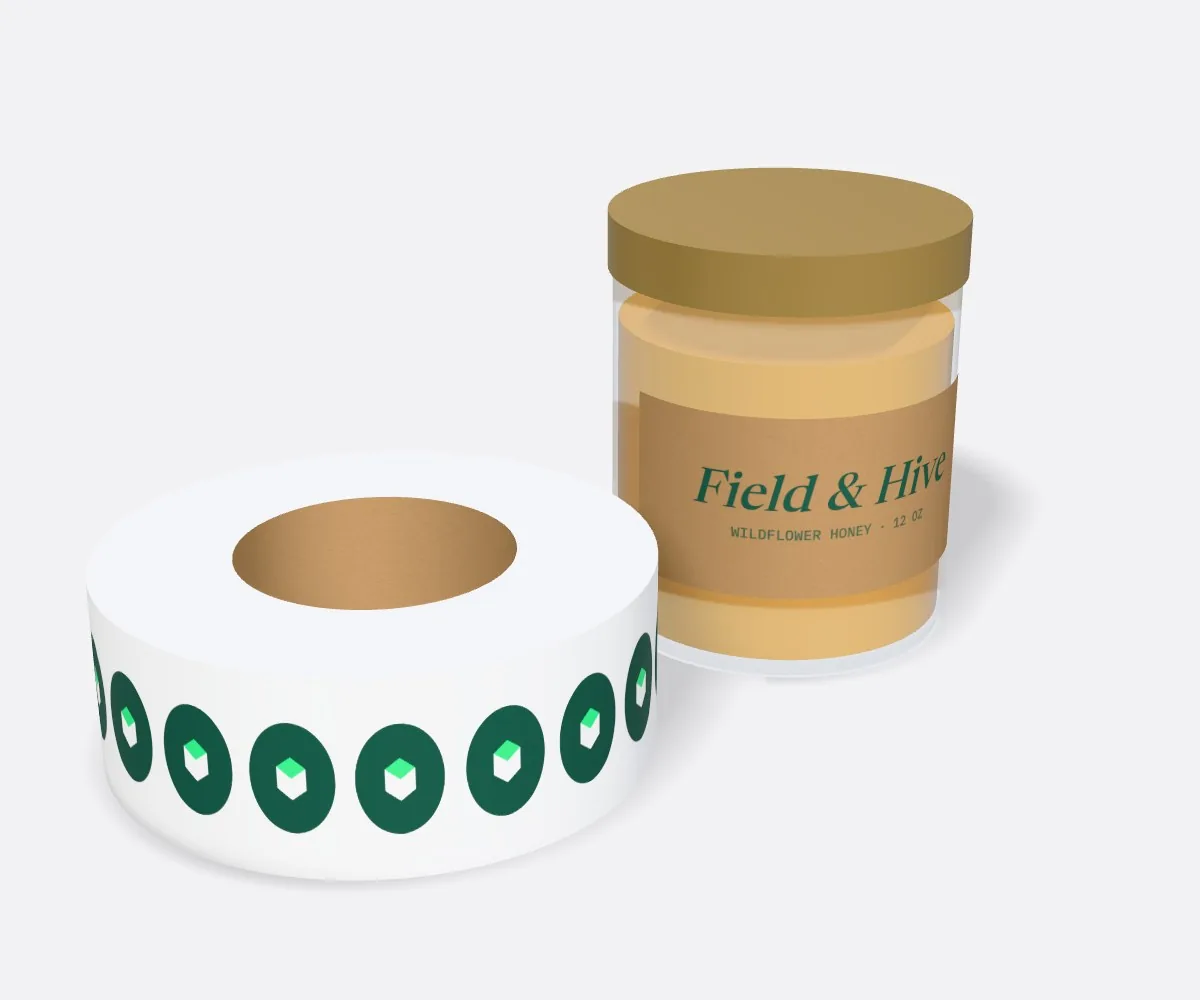
There are three packaging situations where a tall vertical portrait rectangle beats a wide horizontal wrap every time. First, on flat-faced containers (such as custom coffee bag labels on stand-up pouches, flat flask bottles, rectangular olive oil tins and corrugated cartons), the label cannot wrap around a cylinder; it sits inside a tall vertical frame bounded by side seams or box creases. Second, on high-end glass containers where the color and texture of the contents sell the product (such as cold-pressed juices, artisan pasta sauces, honey, bath salts and colored glass wine bottles), covering the entire cylinder with opaque paper hides the product. Placing a 2.5 × 3.5 inch or 3 × 4 inch portrait rectangle on the front and a matching portrait panel on the back leaves wide windows of clear glass along both sides. Third, on jars with a slight vertical taper, a narrow portrait panel avoids the upward arc distortion that makes long horizontal wraps wrinkle.
- Stand-up pouches and coffee bags: portrait 3 × 4 in or 4 × 5 in cards match the vertical bag silhouette.
- Wine, spirits and olive oil bottles: tall portrait plaques accentuate bottle height and leave glass shoulders open.
- Flat-sided rectangular bottles and cartons: portrait panels align parallel to the left and right vertical edges.
- Clear glass food jars: front-and-back portrait pairs show off fruit preserves, salsa texture or pickled vegetables.
Know your size? Compare pricing across up to 3 quantities.
Request a Quote →How does landscape vs portrait orientation change roll unwind direction?
When you order custom roll labels, the orientation of your rectangle on the paper web determines both how many labels fit across the press and how the roll feeds through a labeling machine. In industry terminology, unwind direction (numbered Position 1 through Position 8) describes which edge of the artwork comes off the roll first: Top Out (Position 1), Bottom Out (Position 2), Right Out (Position 3) or Left Out (Position 4). On cylindrical wrap-around labeling machines, the bottle rotates on rollers while the label feeds horizontally around its equator. That means a landscape wrap (such as 6 × 2.5 inches) almost always feeds Left-edge or Right-edge first (Position 3 or Position 4) so the narrow 2.5 inch vertical height spans across the roll web and the 6 inch wrap length unspools along the length of the roll. Conversely, when a flat-panel applicator stamps a portrait 3 × 4 inch rectangle onto the top of a moving pouch or box, it often feeds Top-edge or Bottom-edge first (Position 1 or Position 2).
- Position 1 (Top edge out first): vertical portrait labels feeding from the top edge onto flat boxes or pouches.
- Position 2 (Bottom edge out first): vertical portrait labels feeding base-first for bottom-indexed alignment.
- Position 3 (Right edge out first): standard horizontal bottle wraps feeding right-to-left around rotating cylinders.
- Position 4 (Left edge out first): horizontal bottle wraps feeding left-to-right on counter-rotating roller beds.
How do single wraps vs front-and-back rectangles compare on order cost?
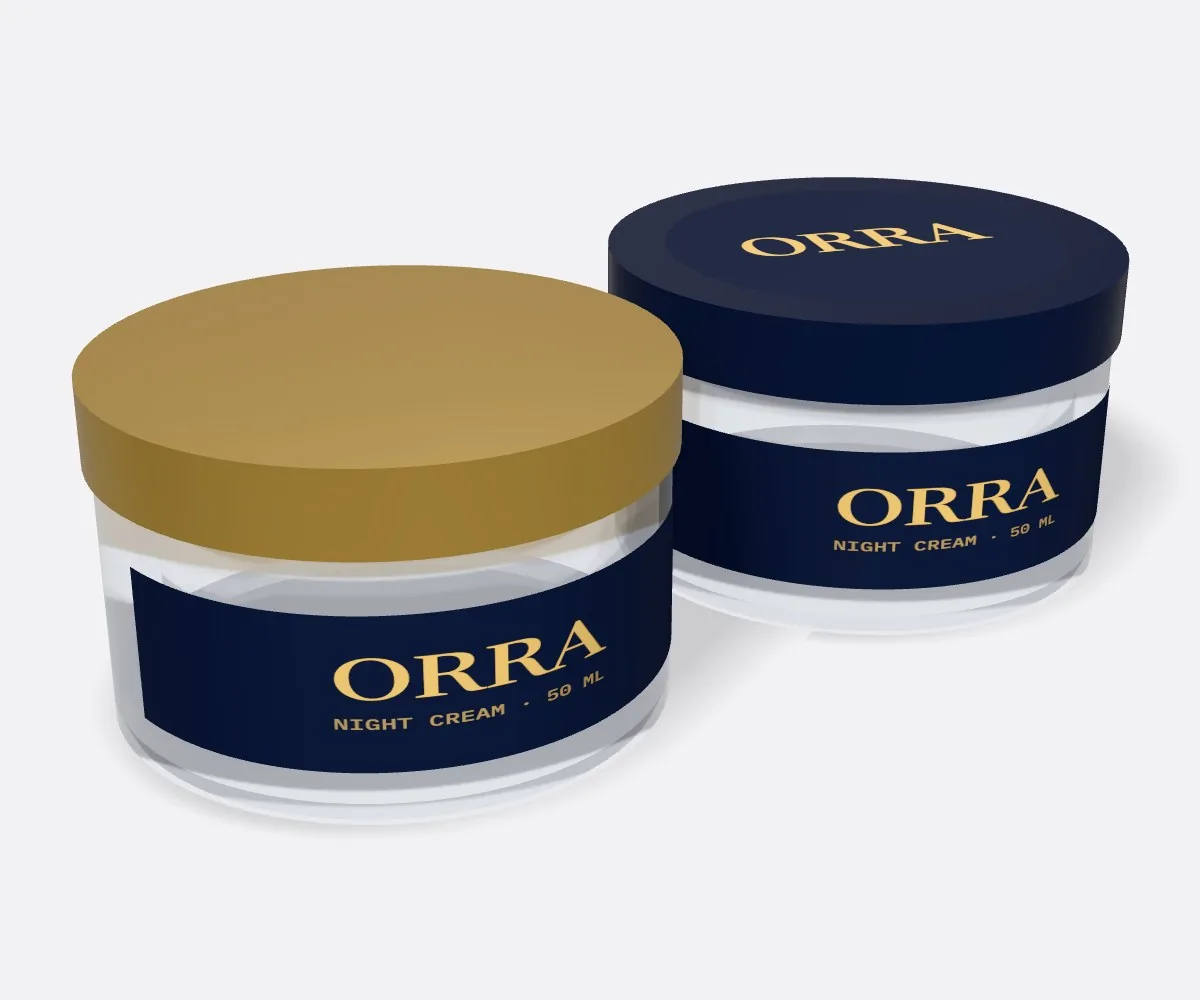
From a unit-cost standpoint, printing one 6 × 3 inch full-wrap label (18 sq in) uses roughly the same amount of label stock as printing a 2.5 × 3 inch front label plus a 2.5 × 3 inch back label (15 sq in total), but requires only one design setup and one application pass. However, if you sell ten scents or flavors that all share the exact same back warning or corporate address panel, splitting into two portrait rectangles unlocks a clever multi-SKU shortcut: you can order one large bulk run of the shared back rectangle and smaller runs of the front flavor rectangles. Whether you pick a single landscape wrap or a front-and-back portrait set, you can quote both options on our custom rectangle labels page by entering up to three quantity tiers and selecting multiple designs in Step 2. We never charge cutting die or plate fees on either layout.
- Single landscape wrap: one roll inventory item per SKU and one peel-and-stick motion per bottle.
- Shared back + variable front panels: lets multi-SKU brands print one universal back compliance label in bulk.
- Clear wrap hybrid: combines front and back panels onto one transparent strip for single-pass application.
What are the most common mistakes when choosing between wrap and panel rectangles?
Most orientation errors happen when a brand orders rolls for a machine without checking unwind direction or wraps a long rectangle onto a tapered jar. Avoid these five mistakes
- Entering 2.5 × 6 inches (portrait) when you actually want a 6 × 2.5 inch horizontal bottle wrap, rotating the print 90 degrees on the roll.
- Attempting to wrap a 7 inch horizontal rectangle around a tapered yogurt tub or bail-wire canning jar where the top diameter is wider than the base.
- Ordering separate front and back labels with different vertical heights (such as 3 in tall front and 3.5 in tall back), creating a stepped look from the side.
- Using an opaque full-wrap rectangle on a clear jar when customers need to see the fill level or color of the food inside.
- Forgetting to note your labeling machine's core diameter and unwind direction (Position 1 to Position 4) in the quote notes when ordering roll-fed wraps.
Find your label size
Suggested label size: 9⅛ × 2¾ in (width × height)
A typical starting point. Your account manager confirms the size on the proof.
Quote this size →Packaging for this
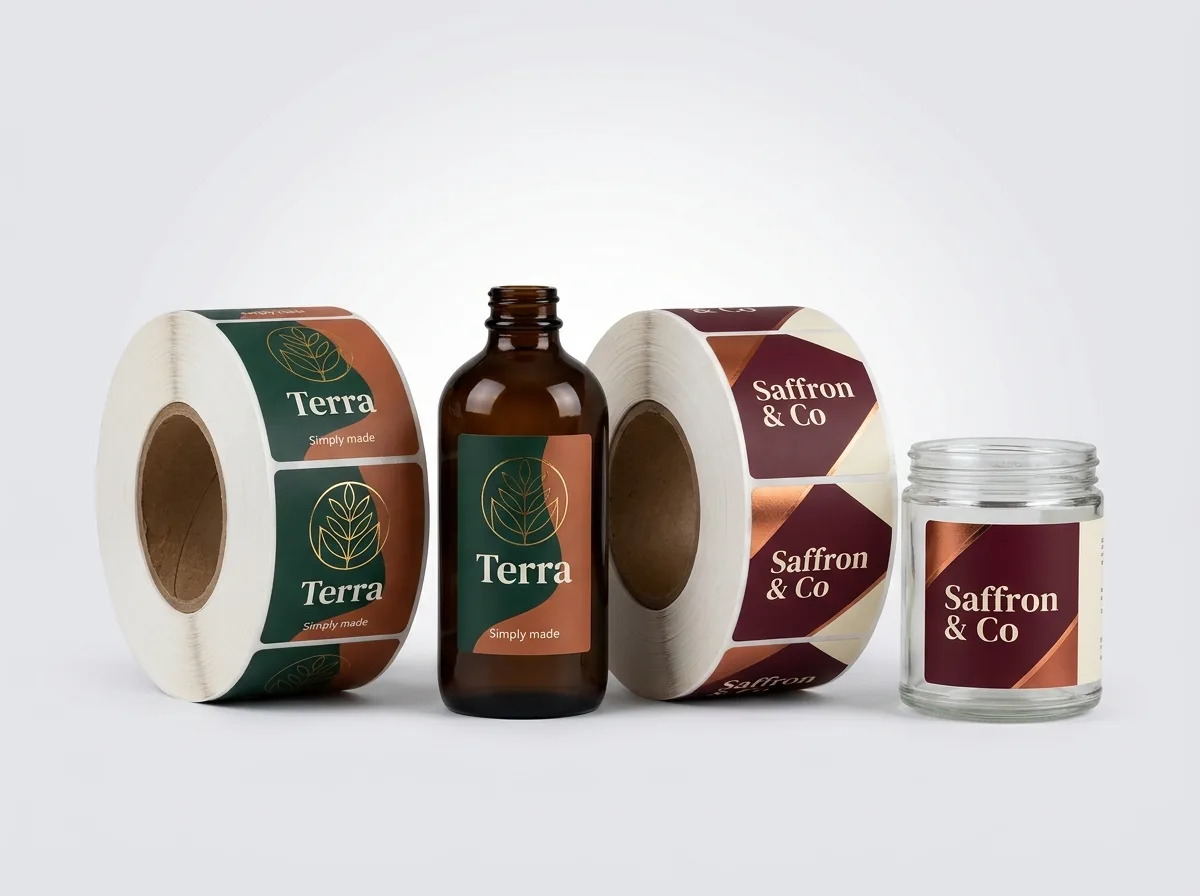
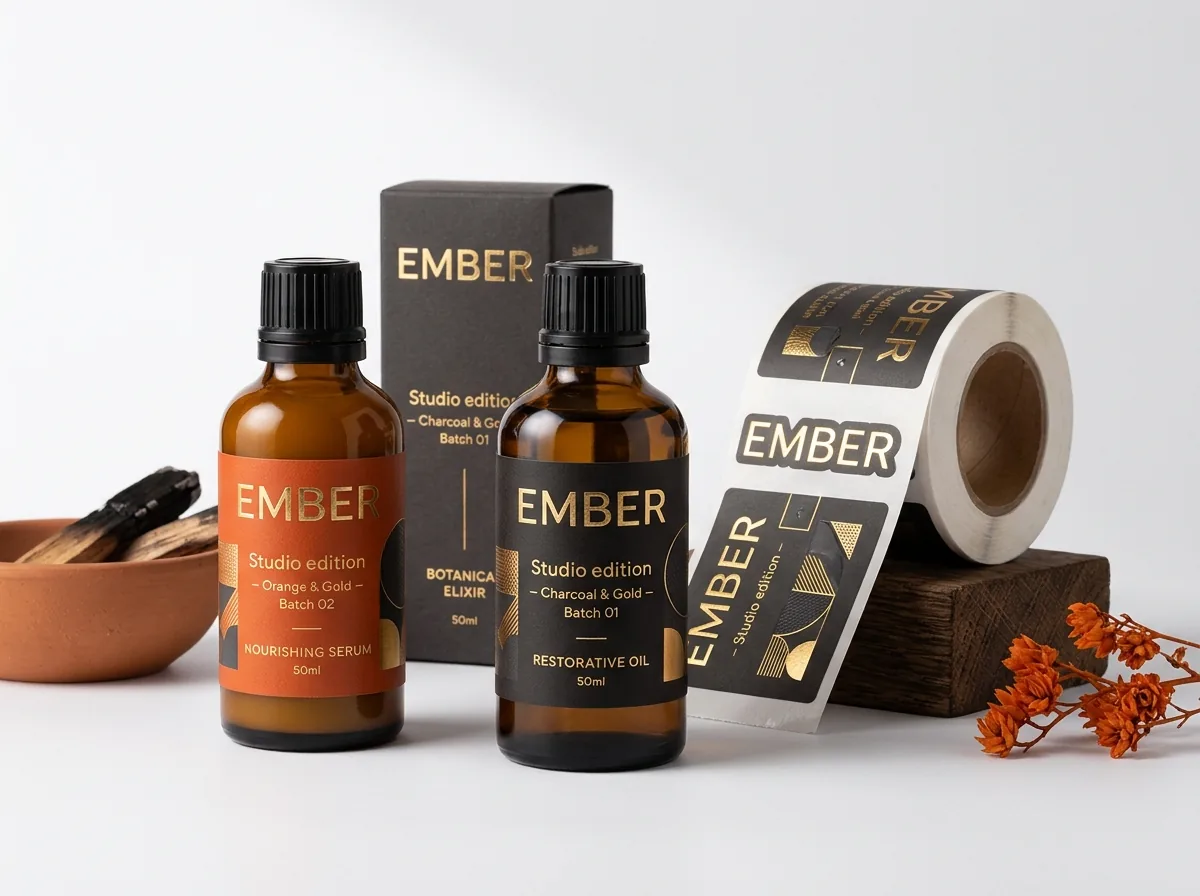
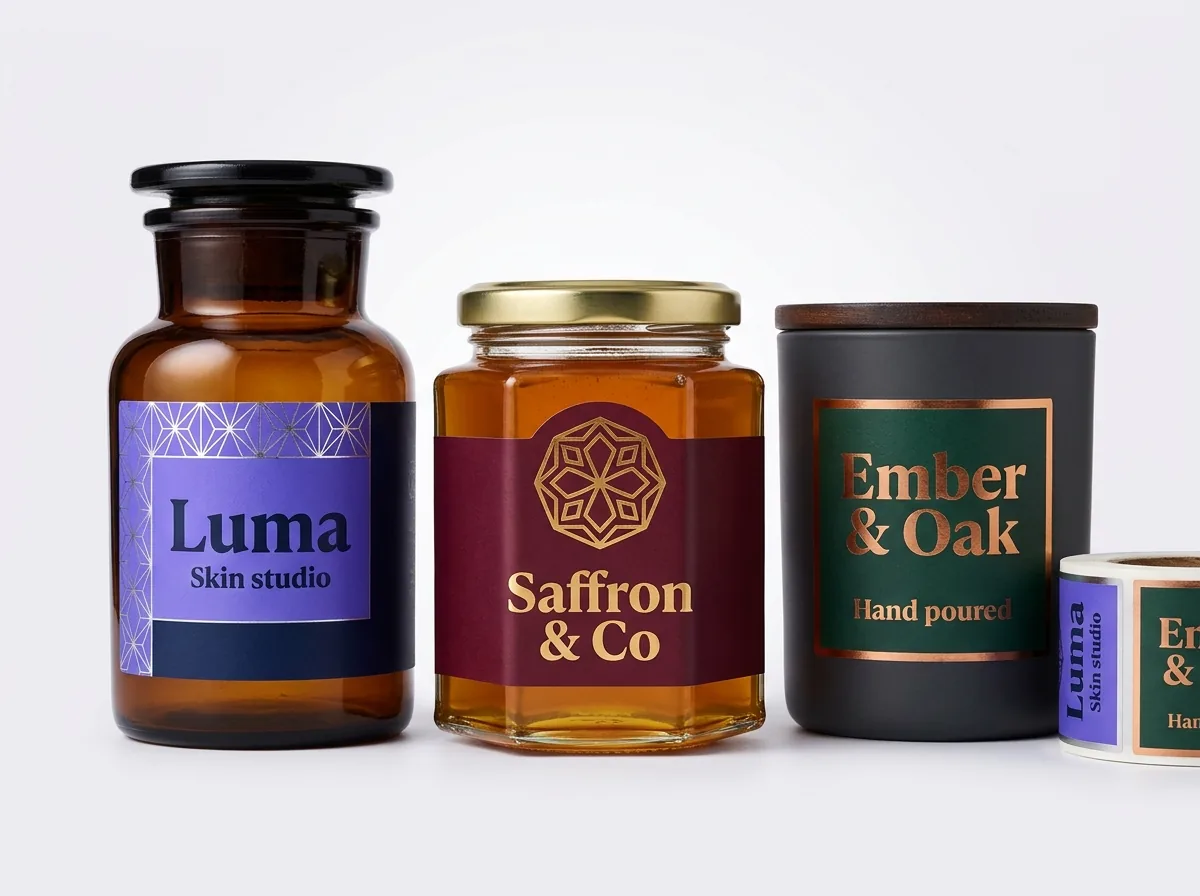
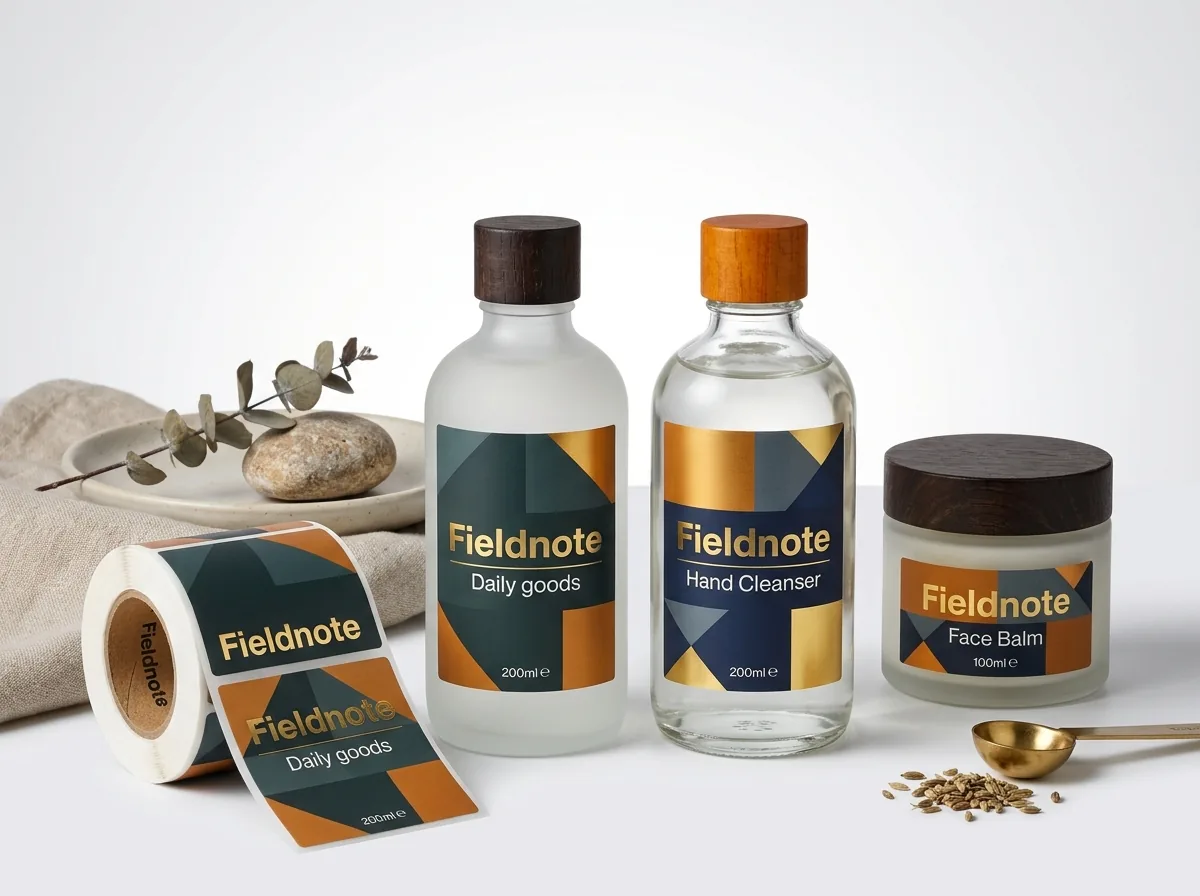
Ready to order rectangle labels? Compare up to 3 quantities with a free 3D mockup.
Request a Quote →Questions about rectangle labels
How do I know whether my rectangle label is landscape or portrait?
Look at the Width × Height numbers as the label sits upright on your container. If the first number (Width) is larger than the second number (Height), such as 6 × 2.5 inches, it is a landscape label. If Width is smaller than Height, such as 3 × 4 inches, it is a portrait label.
Can I get the look of separate front and back labels with a single wrap?
Yes. Print a single full-wrap landscape rectangle on Clear label stock with opaque white ink behind your front logo and back text. Once applied to glass, the clear bridge between the front and back disappears.
Which unwind direction do most bottle wrap labeling machines use?
Most horizontal roller wrap machines use Unwind Position 3 (Right edge out first) or Position 4 (Left edge out first) on a 3 inch core so the wrap length unspools around the spinning bottle. Always check your applicator manual and note it on your quote.
Do separate front and back labels come on the same roll or two separate rolls?
If you apply labels by hand or with a single-head applicator, front and back labels are usually supplied on separate rolls (or alternating on one roll if requested for specific two-step jigs). Tell your account manager how you apply them so we wind them to match.
Why does a long horizontal wrap label spiral upward if started slightly crooked?
Because a cylinder wall is curved, any slight angle at the starting edge projects in a helix around the circumference. Resting the bottom edge of the rectangle against the container's bottom heel or a tabletop guide stops spiraling.
Does CubitPack charge extra for custom wrap lengths or multi-design front/back sets?
No. We never charge cutting die or printing plate fees. You can order any exact fractional wrap length or combine front and back designs in the same quote.
Still have a question? Ask a packaging specialist.
Request a Quote →Request your rectangle labels quote
Tell us your size and quantities, and one dedicated account manager prepares pricing for each tier.
- Free design & AI-to-print studio + 3D mockup
- No die or plate charges · 4–5 day rush available
- Free shipping to all 50 states
- 10% off your first order
The comparison between horizontal cylinder wraps and vertical portrait panels in this guide follows standard flexographic and digital roll unwind conventions (Positions 1 through 8) and cylindrical geometry. Checked by a CubitPack packaging specialist. Spot something wrong? Tell us and we will fix it.
Sources
What changed
- October 22, 2026: First published.
- October 22, 2026: Updated specifications, terminology, and verified source links.
More guides
New packaging guides by email
Sizes, materials and design tips. Unsubscribe anytime.