
What size electronics box do I need for devices, cables and manuals?
Short answer: Start with your device's length, width and thickness, add 0.25 to 0.5 inch per side for the insert rim, and add 0.5 to 0.75 inch to the height for a lower cable and manual pocket. Common custom electronics boxes are 4.0 × 4.0 × 2.0 in for earbuds and 3.25 × 1.25 × 4.5 in for GaN chargers.

On this page
- How do I calculate inside box dimensions for a device plus its accessories
- What are standard inside sizes for common consumer electronics boxes
- How do you size a two-level box that hides the cable under the device
- How much perimeter wall buffer do EVA foam and paperboard inserts need
- Does a retail Euro hang tab change the inside dimensions of an electronics box
- Common mistakes
- FAQs
Request a custom quoteFree dieline & 3D mockup
Unlike a bottle or a bar of soap that sits alone in an open carton, an electronic product almost always ships as a multi-part kit: the primary hardware device, a coiled USB-C or HDMI cord, a wall power adapter or mounting bracket, and a folded quick-start manual. That means your inside box dimensions (Length × Width × Height in inches) are determined by your internal insert layout rather than the bare device alone. In a stacked two-level layout, Length and Width equal the device footprint plus a 0.25-inch to 0.5-inch perimeter shoulder for the paperboard or EVA foam cradle, while Height equals the device thickness plus 0.5 to 0.75 inch underneath for the hidden cable and manual well. In a side-by-side layout, the accessory pocket adds 1.0 to 1.5 inches to the Length instead. Every order of printed electronics boxes from CubitPack is cut to your exact inside dimensions with zero die charges.
How do I calculate inside box dimensions for a device plus its accessories?
Before picking an outer box size, decide whether your accessories will stack underneath the hardware (a two-tier vertical layout) or sit beside the hardware in a multi-cavity grid (a horizontal layout). Stacking the coiled charging cable and folded manual underneath the device cradle keeps the front footprint compact, which saves retail shelf space and works well for earbuds, smart watches, trackers and portable SSDs. Placing the power brick and cable in a side compartment keeps the box shallower and wider, which creates a larger unboxing reveal for smart home hubs, streaming players, routers and gaming controllers. Once you pick the layout, measure the physical components or export their bounding-box dimensions from your 3D CAD assembly, then add the insert wall buffers below so our structural team can draft your custom electronics boxes and inner tray dielines together.
- Device footprint (L × W): measure the longest and widest points of the hardware, including any protruding camera bump, antenna or knob.
- Insert rim buffer: add 0.25 in per side (0.5 in total to L and W) for a folded paperboard tray, or 0.375 to 0.5 in per side (0.75 to 1.0 in total) for die-cut EVA foam.
- Stacked cable well (+H): add 0.5 in to Height for a coiled USB-C cord and booklet, or 1.0 to 1.25 in if a wall power adapter sits underneath.
- Side-by-side accessory pocket (+L): add 1.25 to 1.75 in to Length (plus a 0.25 in divider wall) when the adapter and cable sit beside the device.
- Thumb-notch clearance: we die-cut two 0.6-inch half-moon finger cutouts on opposite sides of the device cavity so fingers can lift the hardware out effortlessly.
What are standard inside sizes for common consumer electronics boxes?
While CubitPack cuts every carton and insert to your exact millimeter or sixteenth of an inch with no die fees, most mobile accessories, audio products, chargers and smart home devices fall into nine proven size brackets. Use the chart below as a starting benchmark before measuring your actual hardware and cable bundle. Notice how peg-hook retail cartons (for cables, dongles, chargers and phone cases) are taller than they are wide and stay under 1.5 inches deep so 6 to 8 units fit on a single store pegboard hook. Countertop and DTC unboxing cartons (for earbuds, smart watches, hubs and headphones) use a squarer footprint with a two-level or multi-cavity tray inside.
| Electronics product & kit contents | Typical inside size (L × W × H) | Usual carton & insert setup |
|---|---|---|
| Braided USB-C / HDMI cable or audio dongle | 3.0 × 1.0 × 4.25 in | Straight tuck + Euro hang tab |
| 30W-65W GaN wall charger + folded manual | 3.25 × 1.5 × 4.5 in | Straight tuck or auto-lock + card cradle |
| Smartphone protective case or screen protector | 4.25 × 0.75 × 7.25 in | Hang tab box + front window or tray |
| TWS wireless earbuds + lower cable & ear-tip well | 4.0 × 4.0 × 2.0 in | Tray and sleeve or two-piece + 2-tier tray |
| Smart watch or fitness band (curled strap + charger) | 4.25 × 4.25 × 2.5 in | Two-piece cube or long 11.0 × 2.5 × 1.25 in flat box |
| 10,000-20,000 mAh power bank or portable SSD + cord | 3.75 × 1.5 × 6.5 in | Auto-lock bottom + side or bottom cable pocket |
| Smart home hub, streaming box or Wi-Fi mesh node | 5.5 × 5.5 × 3.25 in | E-flute mailer or sleeve box + 3-cavity divider |
| 4K webcam, studio microphone or action camera kit | 6.0 × 4.5 × 3.0 in | Auto-lock or rigid box + die-cut EVA foam |
| Over-ear wireless headphones or gaming controller | 7.5 × 6.0 × 3.5 in | Two-piece or auto-lock carton + contoured insert |
How do you size a two-level box that hides the cable under the device?
The cleanest unboxing in consumer electronics is the two-level (false-bottom) stack: the customer slides off the sleeve or lifts the lid and sees only the hardware sitting flush in a clean paperboard or foam frame, with zero plastic bags or tangled wires in sight. Lifting the upper tray by its finger notch reveals the lower basement holding the charging cable, ear tips and warranty card. To calculate the inside Height (H) of a two-level carton, add three numbers together: the thickness of the lower accessory pocket (typically 0.50 to 0.625 inch for a flat-coiled cable and manual), the thickness of the upper tray deck plus any part of the device that recesses below the deck, and 0.125 inch of top headspace so the outer lid closes flush without pressing down on buttons or joysticks. If your device is 1.25 inches thick and your cable pocket is 0.625 inch deep, a 2.0-inch inside carton height fits the entire stack cleanly. See our dedicated custom earbud boxes and custom smart watch boxes pages for category-specific examples.
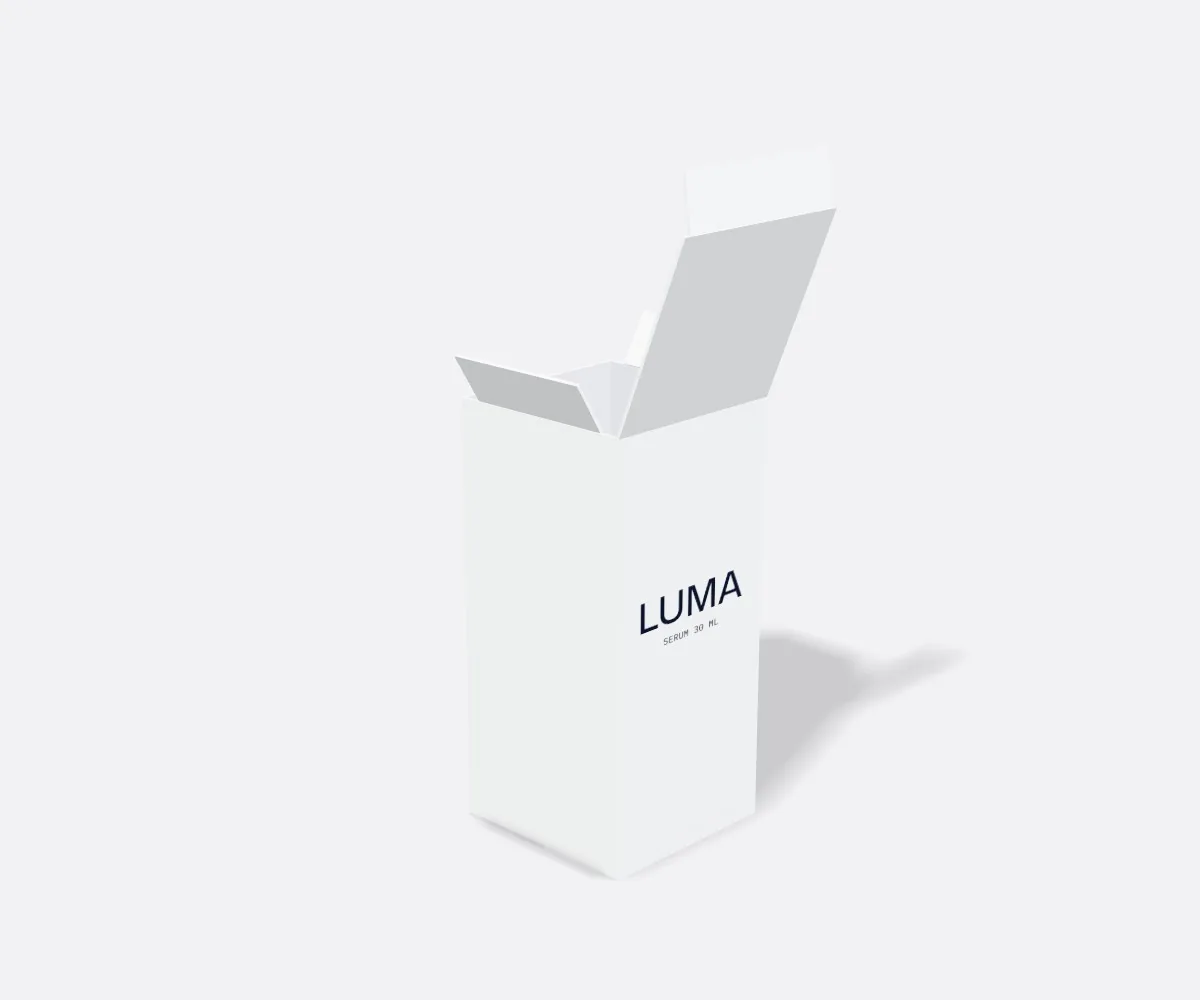
Know your size? Compare pricing across up to 3 quantities.
Request a Quote →How much perimeter wall buffer do EVA foam and paperboard inserts need?
Your choice of internal insert material directly changes the Length and Width of the outer carton. A folded paperboard tray uses creasing and narrow side flanges to suspend the device away from the outer walls; a 0.25-inch border on all four sides (adding 0.50 inch to the device's Length and Width) is usually plenty for lightweight accessories, cables and custom phone case boxes. When you step up to a die-cut EVA foam insert or EPE foam insert for heavier metal devices, lenses or audio hardware, the foam wall around the perimeter needs to be at least 0.375 to 0.50 inch thick on every side (and at least 0.375 inch between two adjacent cavities) so the foam web stays rigid and absorbs corner drop impacts without tearing. That means a 4.0 × 2.5 inch portable SSD in a die-cut EVA foam cradle needs an inside box footprint of at least 4.75 × 3.25 inches.

Does a retail Euro hang tab change the inside dimensions of an electronics box?
No. An integral Euro or delta hang tab extends upward from the back panel above the top score line (or folds flat against the back panel during shipping and flips up in the store), so it never reduces the usable inside Length × Width × Height of the carton. What a hang tab does affect is the overall outside height of the package on a retail planogram and the weight distribution on the peg hook. A standard Euro hang tab adds 1.125 to 1.25 inches above the top crease of the box. When sizing custom charger boxes, custom cable boxes or custom power bank boxes for peg-hook display, keep the front-to-back depth (Width W) slim (typically 0.75 to 1.75 inches) so the center of gravity stays close to the back wall and the box hangs vertically instead of tilting forward on the hook.
What are the most common electronics box sizing mistakes?
Most hardware sizing issues happen when the outer box is locked in before the charging cord, power brick and insert walls are measured. Avoid these five mistakes
- Measuring the bare device CAD model and forgetting to add 0.5 to 0.75 inch of vertical depth for the lower USB cable and manual well.
- Leaving less than 0.375 inch of perimeter wall thickness on a die-cut EVA foam insert, which makes thin foam borders bow inward.
- Sizing the device cavity to the exact millimeter without adding two 0.6-inch finger notches so the user can lift the product out.
- Making a peg-hook hang-tab box too deep front-to-back (over 2.25 inches), causing the top of the box to lean forward on the retail hook.
- Printing a quick-start booklet to the exact inside Length × Width of the box instead of 1/4 inch smaller, so the booklet edges jam in the corners.
Find your size
Suggested inside size: 3.25 × 1.25 × 4.5 in
A starting point. Your account manager confirms the size with you before the proof.
Quote this size →Packaging for this


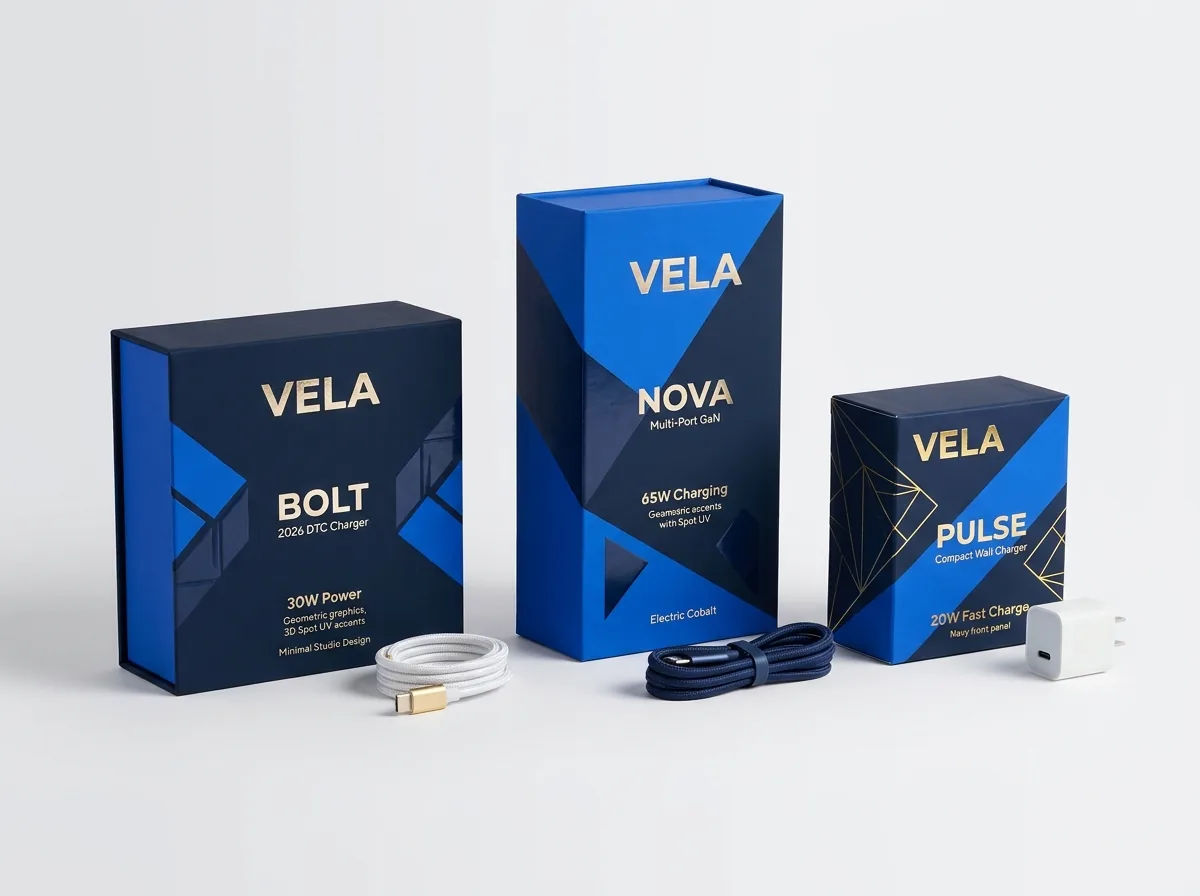
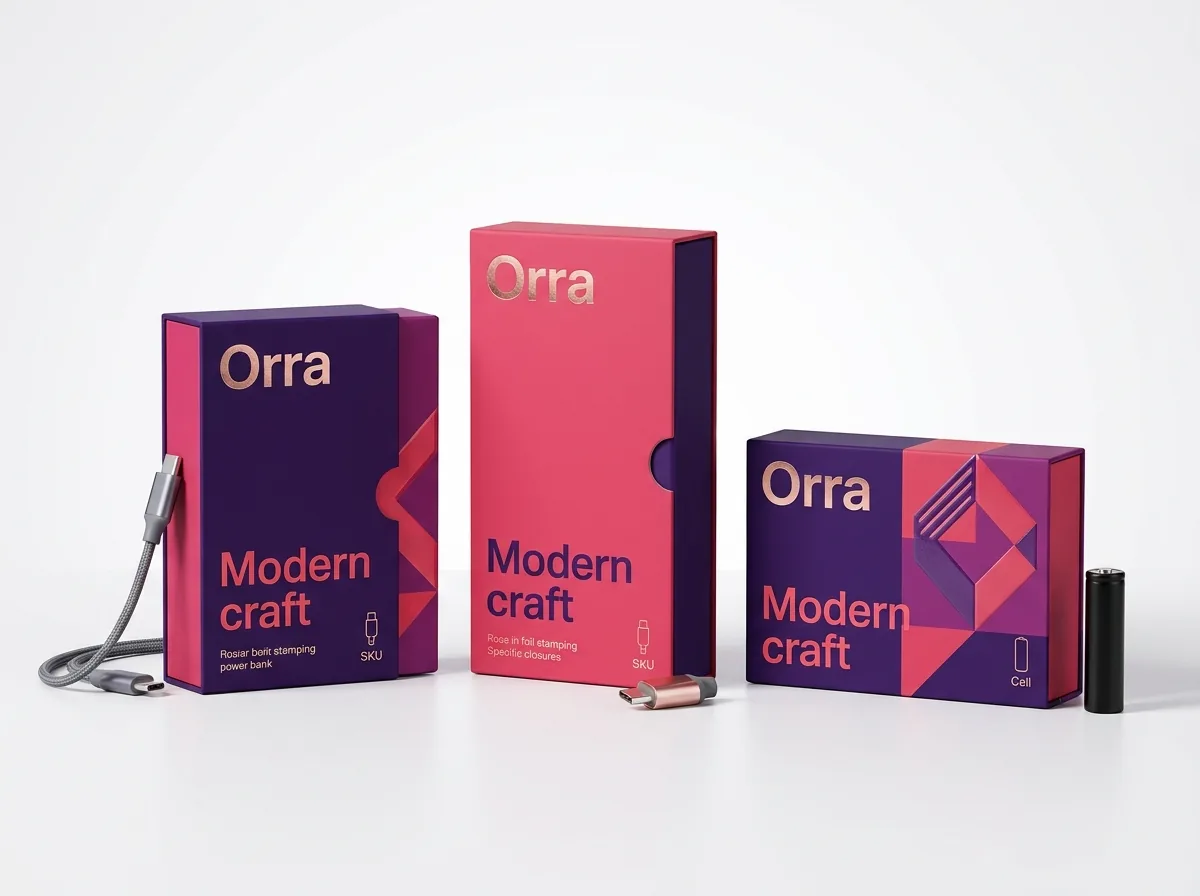
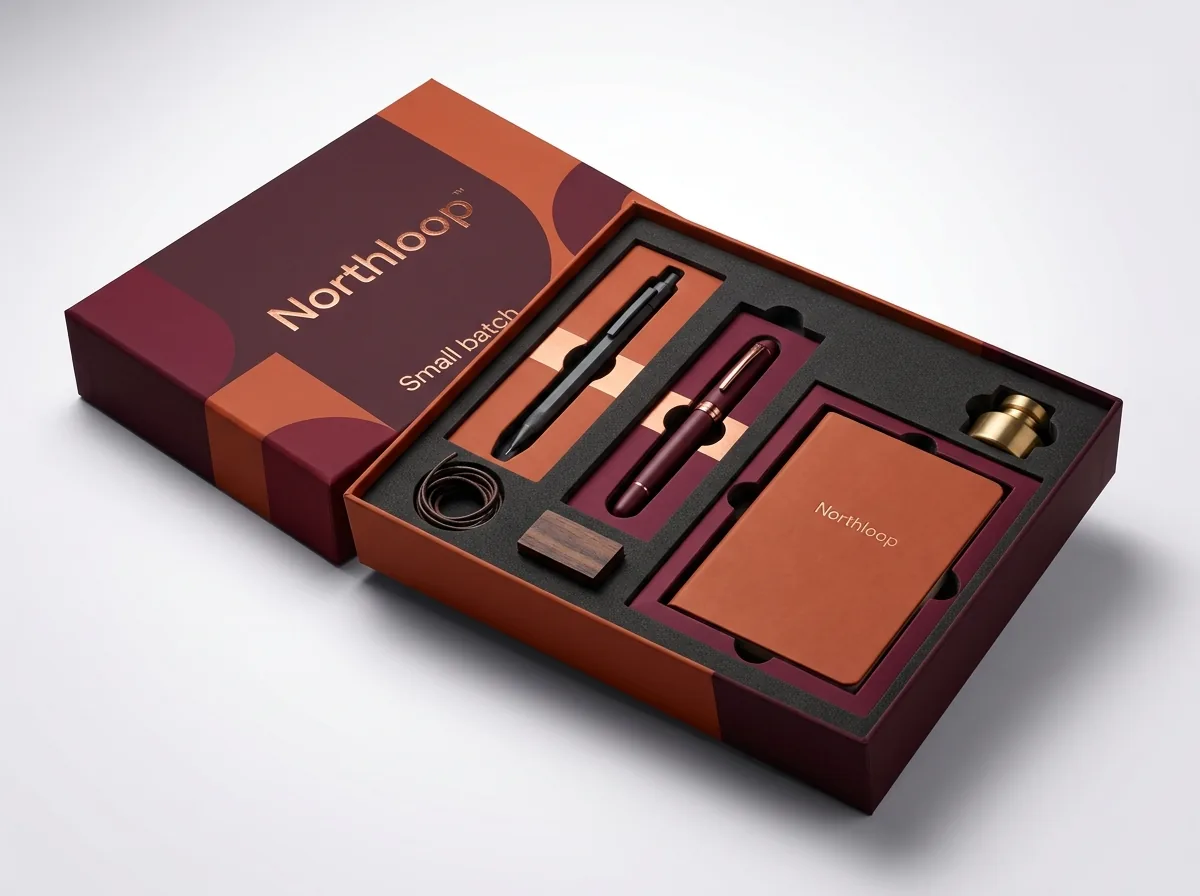
Ready to order electronics boxes? Compare up to 3 quantities with a free 3D mockup.
Request a Quote →Questions about electronics boxes
Can I send my 3D CAD file (STEP/IGES) or physical device so you can size the box and insert?
Yes. You can share your hardware dimensions or 3D bounding measurements with your quote request, and our design team will size both the outer carton and the internal paperboard or foam insert for free.
How much clearance should a paperboard or foam insert leave around a device?
A folded paperboard cradle is typically cut 1/32 inch (0.8 mm) larger than the device so it slides in smoothly without scratching anodized aluminum or gloss plastic. Die-cut EVA foam is cut 1/64 inch tighter for a gentle friction grip.
What size box fits a standard pair of wireless earbuds in a charging case?
Most TWS wireless earbud charging cases measure around 2.4 × 1.8 × 1.0 inches and pack cleanly into a 3.75 × 3.75 × 1.75 inch or 4.0 × 4.0 × 2.0 inch box with a lower compartment for the charging cable and ear tips.
Are electronics box dimensions always written as inside Length × Width × Height?
Yes. Looking at the front face of the package, Length is left-to-right width, Width is front-to-back depth, and Height is bottom-to-top height measured inside the carton walls.
Do you charge extra die fees for a custom insert tray or Euro hang tab?
No. CubitPack never charges die or plate fees. Your custom outer carton dieline, Euro hang tab, window cutout and internal paperboard or foam insert dieline are all engineered with zero tooling charges.
Can I test my device and cable inside a physical prototype before running 1,000 boxes?
Yes. Every order includes a free vector dieline, digital proof and 3D mockup before payment, and you can request a physical prototype of your box and insert to test-fit your hardware and drop performance.
Still have a question? Ask a packaging specialist.
Request a Quote →Request your electronics boxes quote
Tell us your size and quantities, and one dedicated account manager prepares pricing for each tier.
- Free design & AI-to-print studio + 3D mockup
- No die or plate charges · 4–5 day rush available
- Free shipping to all 50 states
- 10% off your first order
The sizing formulas and category dimensions in this guide are based on standard consumer electronics form factors (TWS earbuds, 30W-100W GaN chargers, 10,000-20,000 mAh power banks, smart home hubs and over-ear headphones) plus standard paperboard tray and EVA foam wall tolerances. A CubitPack packaging specialist checked every row. Spot an error? Tell us and we will fix it.
Sources
What changed
- October 22, 2026: First published.
- October 22, 2026: Updated specifications, terminology, and verified source links.
More guides
New packaging guides by email
Sizes, materials and design tips. Unsubscribe anytime.