
Folding carton vs corrugated mailer vs rigid electronics boxes: which suits your device?
Short answer: Use a paperboard folding carton (from 1,000 units) for retail peg-hook accessories, cables and chargers under 12 ounces; an E-flute corrugated mailer (from 250 units) for heavy hubs, routers and direct parcel shipping; or a rigid setup box (from 50 units) when your custom electronics boxes frame a flagship device.
On this page
- How do folding cartons, E-flute corrugated and rigid electronics boxes compare
- When is a paperboard folding carton the smartest choice for electronics
- When should you step up to an E-flute corrugated mailer or carton
- When is a two-piece or magnetic rigid box worth choosing for flagship tech
- How do established electronics brands combine all three box types across a product line
- Common mistakes
- FAQs
Request a custom quoteFree dieline & 3D mockup
Every consumer tech product sits on a spectrum of weight, fragility, sales channel and target retail price, which is why hardware brands use three distinct box constructions rather than a single board type. Paperboard folding cartons (straight tuck, auto-lock bottom, Euro hang-tab and tray-and-sleeve) fold from a thin, smooth 16 pt to 24 pt card sheet, ship flat to your assembly plant, and give you the lowest unit cost at scale starting at 1,000 boxes. E-flute corrugated mailers and retail cartons sandwich a fine fluted wave between two liners, adding crush resistance for heavy power banks, Wi-Fi routers and multi-piece smart home kits starting at 250 boxes. Rigid setup boxes wrap printed paper over dense chipboard (gray board) (chipboard) that never folds flat, delivering the slow-sliding telescoping lid lift used on flagship smartphones, earbuds and wearables starting at 50 boxes. At CubitPack, you can quote all three constructions for your printed electronics packaging with free dielines and zero die fees.
How do folding cartons, E-flute corrugated and rigid electronics boxes compare?
Choosing the right structure early saves you from over-engineering an everyday cable accessory or under-protecting a flagship hardware device in parcel transit. Use the comparison table below to evaluate all three board families side by side across minimum order quantity, device weight capacity, warehouse storage and unboxing feel. All three structures accept full-color CMYK and Pantone printing, matte or soft-touch lamination, Spot UV device renders and metallic foil stamping, and all three can be fitted with custom paperboard or die-cut EVA foam inserts.
| Feature | Paperboard folding carton | E-flute corrugated mailer / box |
|---|---|---|
| CubitPack minimum order | 1,000 boxes | 250 boxes (mailer) / 1,000 (shipping) |
| Rigid setup box comparison | Rigid minimum is 50 boxes (ships pre-assembled) | Folding & E-flute ship flat to save freight |
| Ideal hardware weight | Under 12 oz (cables, cases, dongles, earbuds) | 8 oz to 5+ lbs (hubs, routers, power banks, kits) |
| Retail peg-hook display | Ideal (integral Euro or delta hang tab) | Good for heavier battery packs with reinforced tab |
| Parcel crush protection | Needs outer shipping mailer or bubble pouch | High crush strength; can ship in a poly bag or directly |
| Best structural styles | Straight tuck, hang tab, auto-lock, tray & sleeve | Tuck-top mailer, auto-lock carton, briefcase box |
When is a paperboard folding carton the smartest choice for electronics?
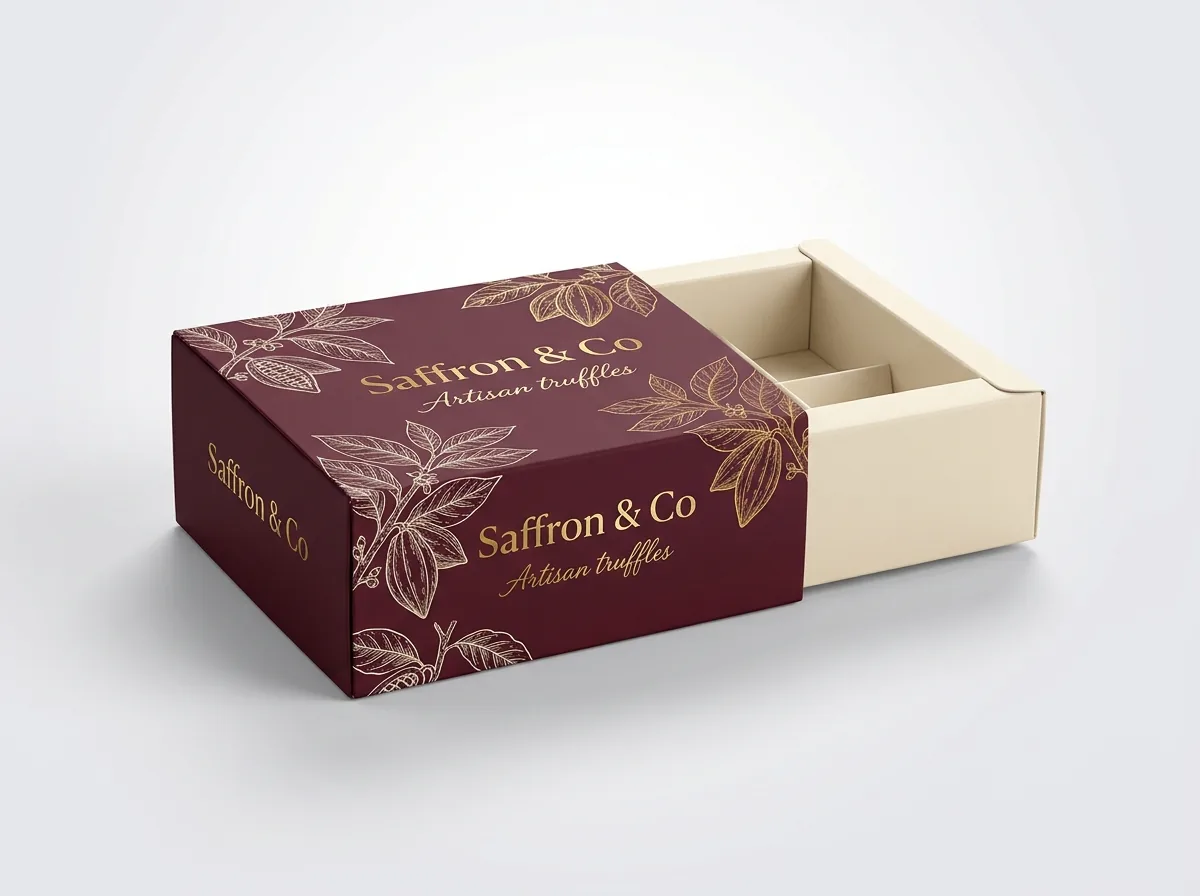
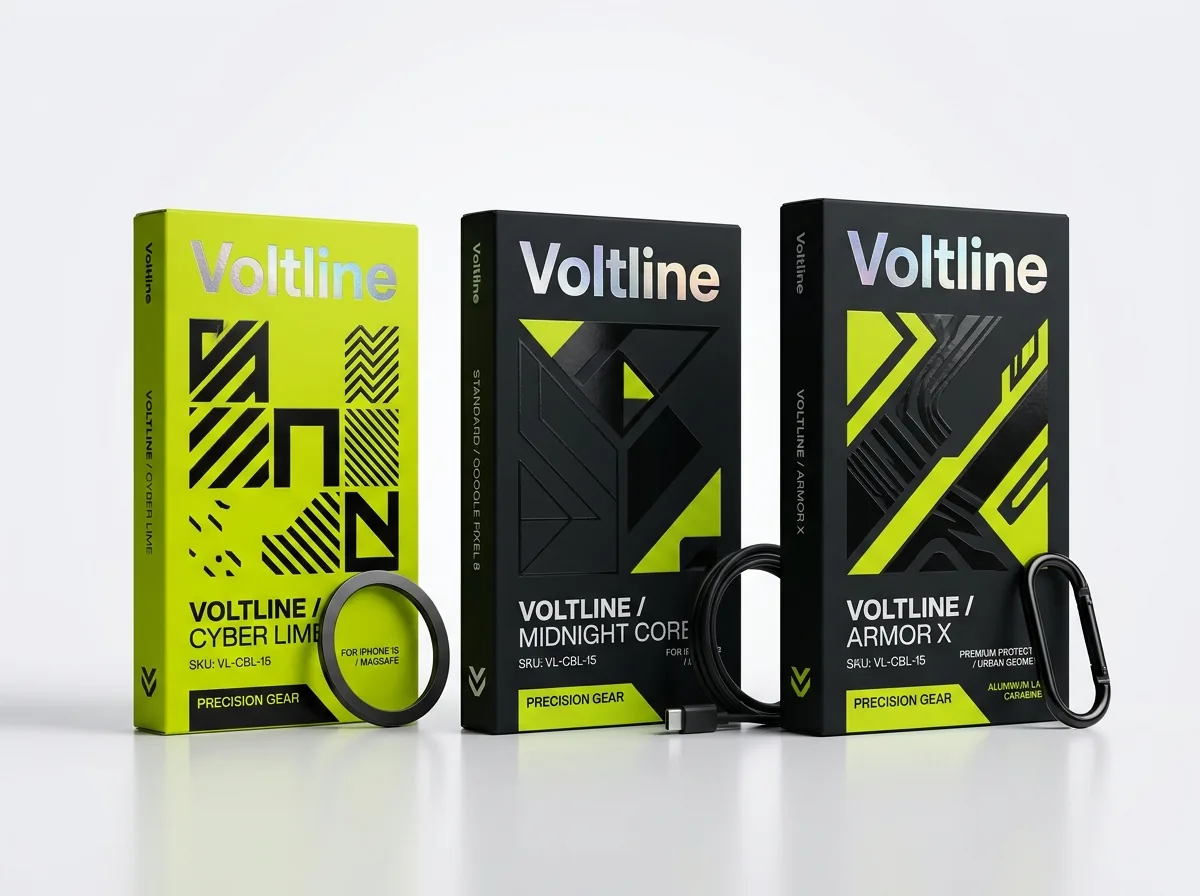
If your product hangs on a retail pegboard hook at an electronics store or ships inside an Amazon FBA master overbox, a paperboard folding carton gives you the sharpest print detail, the smallest warehouse footprint and the lowest unit cost once you order 1,000 units or more. Smooth coated white paperboard holds tiny 6-point technical specifications, pinout diagrams and registered Spot UV product renders without any underlying flute lines showing through. For lightweight cables, audio adapters and phone cases, a straight tuck end box with an integral hang tab is the industry workhorse. If your device is a compact charging case or portable SSD that deserves a slower, gift-like reveal without the freight volume of a rigid box, a paperboard tray and sleeve box with a double-wall folded rim and a two-tier paperboard insert delivers 80% of the visual presence of a rigid box at a fraction of the unit and shipping cost.
When should you step up to an E-flute corrugated mailer or carton?
Once a tech product passes 12 to 16 ounces, or includes multiple separate components like a smart home bridge, a wall power brick, an Ethernet cable and mounting hardware, single-layer paperboard walls can flex or crease when stacked in master cartons or dropped by parcel couriers. Stepping up to E-flute corrugated board (~1/16 inch thick with 90 flutes per foot) solves that crush problem while keeping a smooth exterior clay-coated liner that prints almost as sharply as a folding carton. E-flute custom mailer boxes also have two big advantages for growing hardware startups: they start at just 250 units (compared with 1,000 for folding cartons), and their double-layered side walls lock together without glue so they survive direct parcel fulfillment. We frequently pair E-flute mailers with custom corrugated dividers or cardboard inserts that give the main device, power supply and cords their own crush-resistant cells.
- High-capacity power banks (20,000+ mAh): use an E-flute auto-lock bottom carton or tuck mailer to support heavy battery cell density.
- Smart home & Wi-Fi mesh kits: use an E-flute tuck-top mailer with inside lid printing for the 3-step app setup guide.
- PC peripherals & mechanical keyboards: use a long E-flute mailer with end-cap foam or folded card bumpers to protect switches and ports.
- Pilot hardware runs (250 to 500 units): use custom mailer boxes before scaling up to 1,000+ folding cartons.
Know your size? Compare pricing across up to 3 quantities.
Request a Quote →When is a two-piece or magnetic rigid box worth choosing for flagship tech?
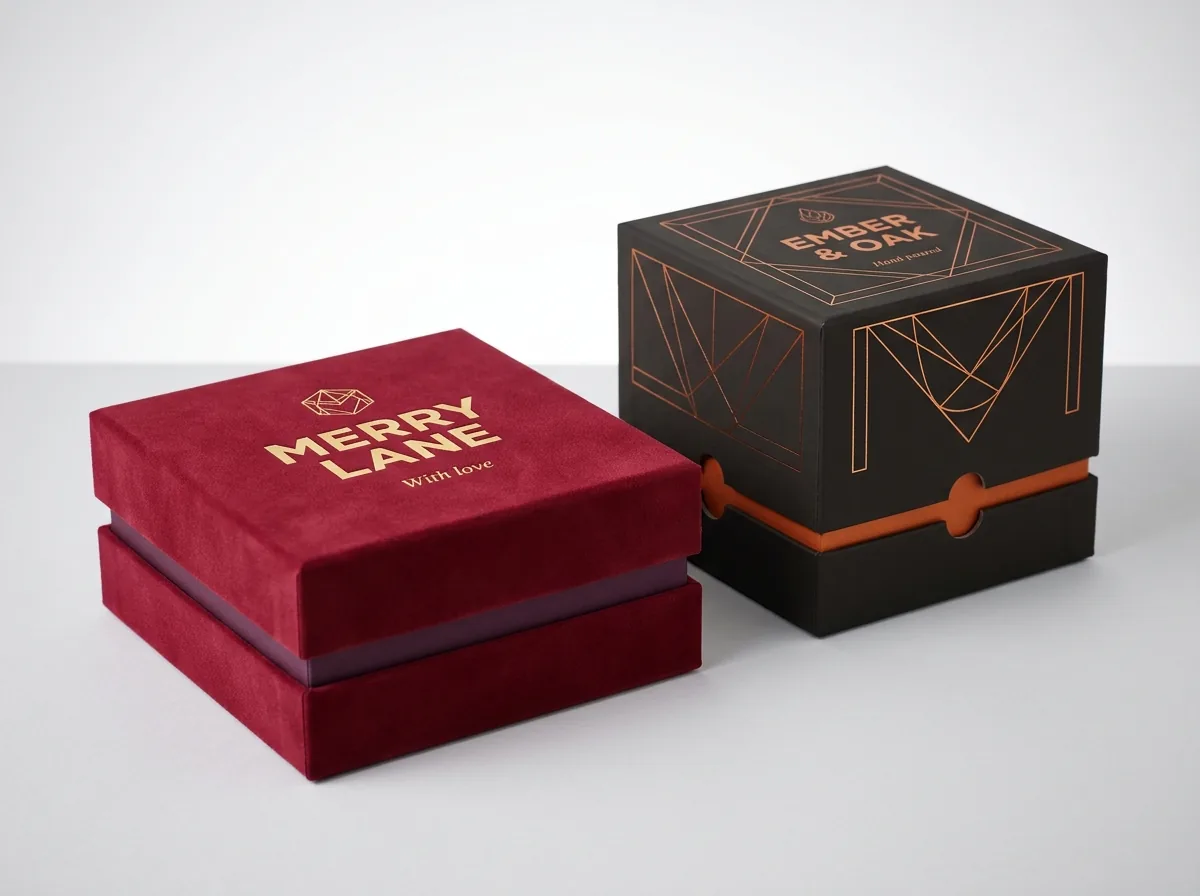
When a customer unboxes a flagship smart watch, audiophile headphones, a handheld gaming console or a smart ring, the weight and slow air-cushioned slide of a two-piece rigid box or magnetic closure rigid box sets the tone before they ever power on the screen. Rigid boxes are built from thick 1.5 mm to 2.5 mm solid chipboard (gray board) wrapped in printed, soft-touch laminated paper. Because rigid boxes do not fold flat (unless you choose a collapsible rigid box), they take more space to ship and store, and cost more per unit than folding cartons. However, rigid boxes have a minimum order of just 50 units at CubitPack, making them accessible for high-margin hardware launches, Kickstarter collector editions, enterprise demo kits and influencer PR units paired with precision die-cut EVA foam inserts. On a two-piece telescope rigid box, we calibrate the air clearance between the base walls and the lid skirt so the top cover glides down over 2 to 3 seconds when lifted by one hand. You can also add a shoulder neck step between the base and lid to show a contrasting Pantone accent stripe around the middle of the closed box.
How do established electronics brands combine all three box types across a product line?
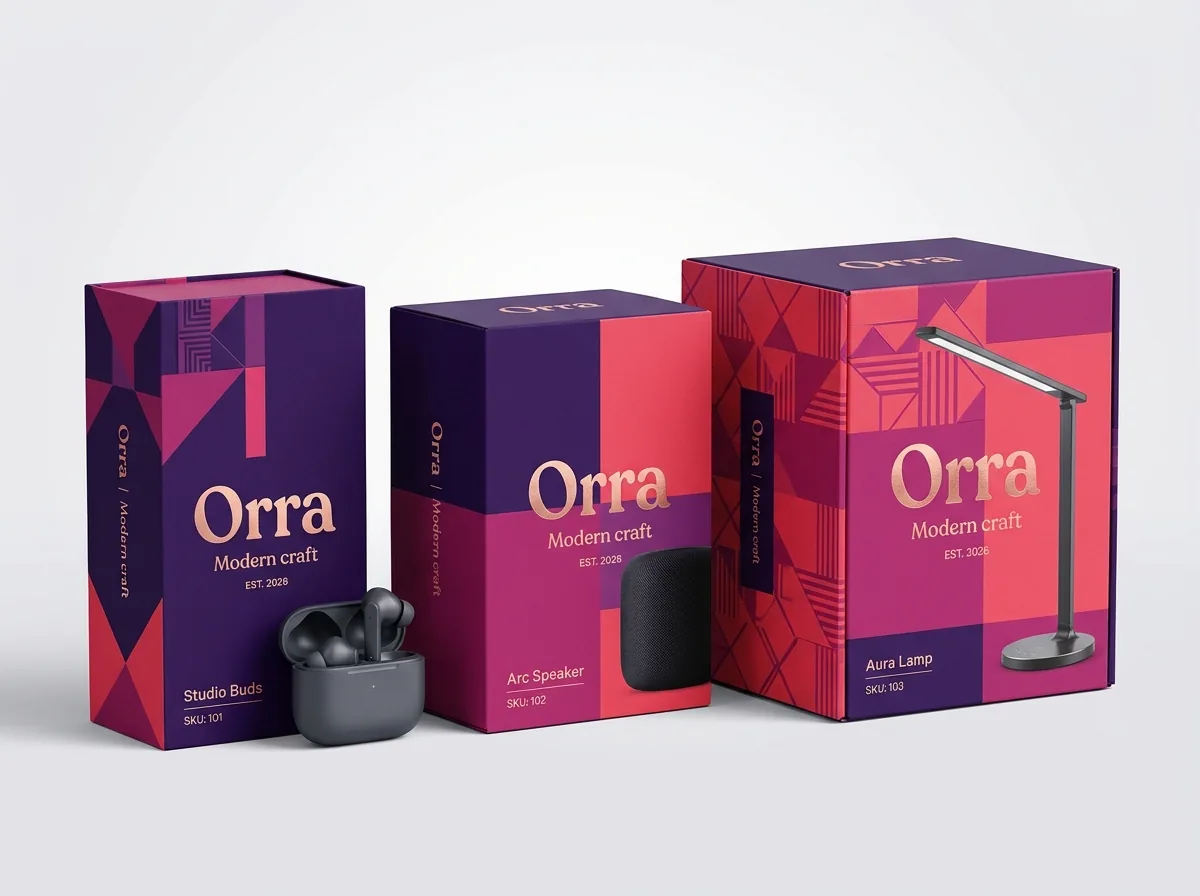
You do not have to lock your entire brand into a single box construction. Most multi-SKU consumer electronics companies match the box structure to the role of each SKU while keeping a unified visual system (identical matte charcoal or white background, Pantone accent stripe and Spot UV product photography). Use a rigid two-piece or tray-and-sleeve box with an EVA foam cradle for your flagship hero device, an E-flute corrugated mailer for multi-piece starter bundles and hubs, and economical reverse or straight tuck paperboard cartons with Euro hang tabs for high-volume replacement cables, chargers and cases. Because CubitPack produces all three families under one roof with guaranteed Pantone color matching, your entire retail and DTC lineup looks cohesive on the shelf. When you request a quote, you can also mix structures on a single project sheet so your account manager aligns the outer master carton pallet pattern, inner tray dimensions, Spot UV placement and retail hang-tab heights across your entire hardware family before production starts, keeping every SKU visually consistent on store shelves.
- Flagship devices & wearables (50+ units): two-piece or magnetic rigid box with soft-touch wrap, Spot UV render and die-cut EVA foam cradle.
- Smart home kits, routers & hubs (250+ units): E-flute corrugated mailer or sleeve box with multi-cavity corrugated partitions and inside quick-start print.
- Mid-tier audio, SSDs & trackers (1,000+ units): paperboard tray-and-sleeve folding carton with a rolled-edge double-wall tray and two-tier cable compartment.
- Cables, chargers, dongles & cases (1,000+ units): straight tuck end or auto-lock paperboard carton with an integral Euro hang tab and front window.
What are the most common mistakes when choosing an electronics box structure?
Picking the wrong board family can either blow your unit budget on a low-price cable or leave a heavy battery pack vulnerable to crushed corners. Watch out for these five mistakes
- Packing a heavy 1-pound power bank or smart hub in a thin single-wall tuck carton without an auto-lock bottom or E-flute corrugated board.
- Shipping a thin paperboard retail folding carton in an unpadded poly mailer; use an E-flute corrugated mailer if you ship without an outer box.
- Ordering non-collapsible rigid boxes when you have very limited warehouse pallet storage; consider tray-and-sleeve folding cartons or collapsible rigid boxes.
- Using rough B-flute shipping corrugated for a small retail shelf box instead of fine E-flute or smooth paperboard that prints 6 pt spec text cleanly.
- Mismatching colors between rigid hero boxes and paperboard accessory cartons; specify a shared Pantone spot ink so both boards match.
Find your size
Suggested inside size: 3.25 × 1.25 × 4.5 in
A starting point. Your account manager confirms the size with you before the proof.
Quote this size →Packaging for this

Ready to order electronics boxes? Compare up to 3 quantities with a free 3D mockup.
Request a Quote →Questions about electronics boxes
Can I get a quote comparing a folding carton and an E-flute mailer for the same device?
Yes. Tell your account manager your device dimensions and weight, and we will quote both a paperboard folding carton (from 1,000 units) and an E-flute corrugated mailer (from 250 units) so you can compare unit costs in 5-7 minutes.
Which box type is best if I only need 100 to 300 boxes for a hardware beta launch?
For runs under 1,000 units, custom rigid setup boxes start at 50 units and custom E-flute mailer boxes start at 250 units. Small trial runs on folding cartons are also reviewed case by case with your account manager.
Does E-flute corrugated print smoothly enough for product photos and Spot UV?
Yes. E-flute is the thinnest standard corrugated profile (~1/16 inch thick), and we litho-laminate a smooth printed sheet onto the outer liner so your 1:1 product render, matte lamination and Spot UV look crisp.
Can a tray-and-sleeve folding carton hold a die-cut EVA foam insert?
Yes. Pairing a flat-shipping paperboard sleeve and double-wall tray with a die-cut EVA foam insert is a favorite way to get a plush, shock-absorbing cradle at a much lower unit cost than a rigid setup box.
How do I test whether my electronics box can survive parcel drop testing?
CubitPack offers structural prototyping as well as drop and crush testing on request. We can build a sample of your carton and insert so you can verify corner-drop and vibration protection with your actual hardware inside.
Are die and plate charges still free across folding cartons, mailers and rigid boxes?
Yes. Every CubitPack order includes free custom dielines, free design assistance, zero die or plate charges, a digital proof and 3D mockup before payment, and free standard shipping to all 50 US states.
Still have a question? Ask a packaging specialist.
Request a Quote →Request your electronics boxes quote
Tell us your size and quantities, and one dedicated account manager prepares pricing for each tier.
- Free design & AI-to-print studio + 3D mockup
- No die or plate charges · 4–5 day rush available
- Free shipping to all 50 states
- 10% off your first order
This comparison is built from CubitPack's decided minimums and specifications (our published product specifications: 1,000 folding cartons, 250 mailer boxes, 50 rigid boxes) along with standard paperboard, E-flute corrugated and chipboard (gray board) structural performance guidelines for consumer electronics. A CubitPack packaging specialist reviewed every section. Spot an error? Tell us and we will fix it.
Sources
What changed
- October 22, 2026: First published.
- October 22, 2026: Updated specifications, terminology, and verified source links.
More guides
New packaging guides by email
Sizes, materials and design tips. Unsubscribe anytime.