
Window box vs tray-and-sleeve vs book-style phone case boxes: which sells better?
Short answer: Choose a hang-tab window box for self-serve retail peg hooks where shoppers need to see the exact color, a tray-and-sleeve drawer box for online orders and boutique unboxing, and a book-style flip box for rugged or folio cases in carrier stores. All three custom phone case boxes start at 1,000 units.
On this page
- How do the six main phone case box styles compare side by side
- Clear film window vs open thumb-feel cutout: which works better on retail hooks
- Why do DTC and MagSafe brands love tray-and-sleeve drawer boxes
- When should you step up to a book-style flip cover or two-piece rigid box
- How do you make one phone case box work for both retail peg hooks and online orders
- Common mistakes
- FAQs
Request a custom quoteFree dieline & 3D mockup
The right phone case carton structure depends on whether your customer first meets your case on a crowded telecom pegboard wall or on their doorstep after ordering online. On retail peg hooks, shoppers make a decision in seconds: they want to verify the true case shade, check the MagSafe ring or camera lip, and feel the grip texture without ripping open a sealed box. Hang-tab window boxes (with either a clear film window or an open thumb cutout) and book-style hinged flip cartons solve that retail test while keeping the package neat after dozens of shoppers handle it. For direct-to-consumer brands where the buyer already chose the artwork on your website, a slide-out tray-and-sleeve drawer carton or a printed E-flute mailer shifts the focus from shelf inspection to a smooth, plastic-free unboxing reveal. At CubitPack, every style of printed phone case boxes includes free structural dielines and zero die fees.
How do the six main phone case box styles compare side by side?
Before committing to a dieline, match your sales channel and case price tier against the structural behavior of each carton style. A straight tuck or hang-tab window box uses a single glued seam and ships flat in tight bundles, making it the most economical workhorse for high-volume everyday cases and tempered glass protectors. Stepping up to a two-part tray-and-sleeve drawer box or a book-style flip-cover box adds double-wall rigidity and a tactile reveal that supports higher retail price points for MagSafe, aramid fiber, rugged armor and designer collaboration shells. Review the comparison table below to see how each option handles shopper inspection, peg-hook hanging and assembly speed.
| Box style | Shopper inspection & unboxing | Best channel & case tier |
|---|---|---|
| Hang tab window box | Front window or feel cutout shows color & finish on the hook | Carrier stores, big-box retail, everyday TPU & MagSafe cases |
| Straight tuck end | Full printed front face with 1:1 Spot UV render; tamper seal at ends | Online fulfillment, screen protectors, slim graphic shells |
| Tray and sleeve (drawer) | Outer sleeve slides off smoothly; ribbon or thumb notch pulls tray | DTC brands, boutique retail, MagSafe & artist edition cases |
| Book-style flip box | Hinged front cover opens to full window + inside spec story | Telecom stores, rugged drop-tested armor & kickstand cases |
| E-flute corrugated mailer | Crush-resistant flip lid with full-color inside welcome print | Multi-case creator bundles, case + glass combo kits |
| Two-piece rigid setup box | Dense telescoping lid lift over EVA foam or velvet-lined recess | Full-grain leather folios, luxury & influencer PR kits |
Clear film window vs open thumb-feel cutout: which works better on retail hooks?
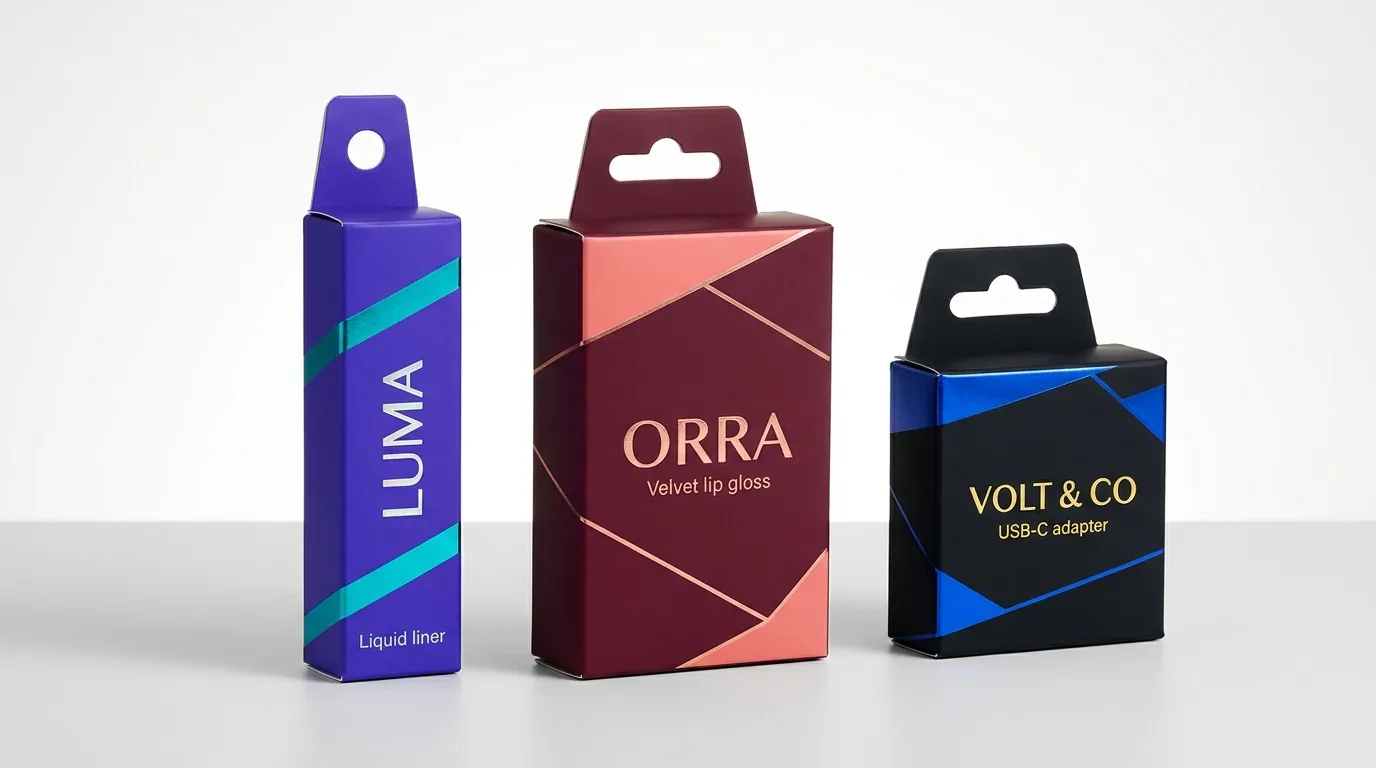
When you choose a window carton for retail peg hooks, you have two ways to finish the front opening: patch a clear film sheet behind the die-cut window, or leave an open windowless cutout so shoppers can touch the case directly. Clear window boxes keep store dust off light-colored silicone and transparent polycarbonate cases, and let you print a registered white or Spot UV MagSafe alignment ring right across the clear film. An open thumb-feel cutout (typically a 1.75-inch circle or a 2.25 × 3.50 inch rounded window centered over the back of the case) removes all plastic film so the entire carton and stepped inner frame go straight into curbside paper recycling. Even better, shoppers can run their thumb across liquid silicone, ribbed TPU grip bumpers, woven aramid fiber or pebbled vegan leather while the stepped inner frame prevents the case from being pulled out through the hole.
Why do DTC and MagSafe brands love tray-and-sleeve drawer boxes?
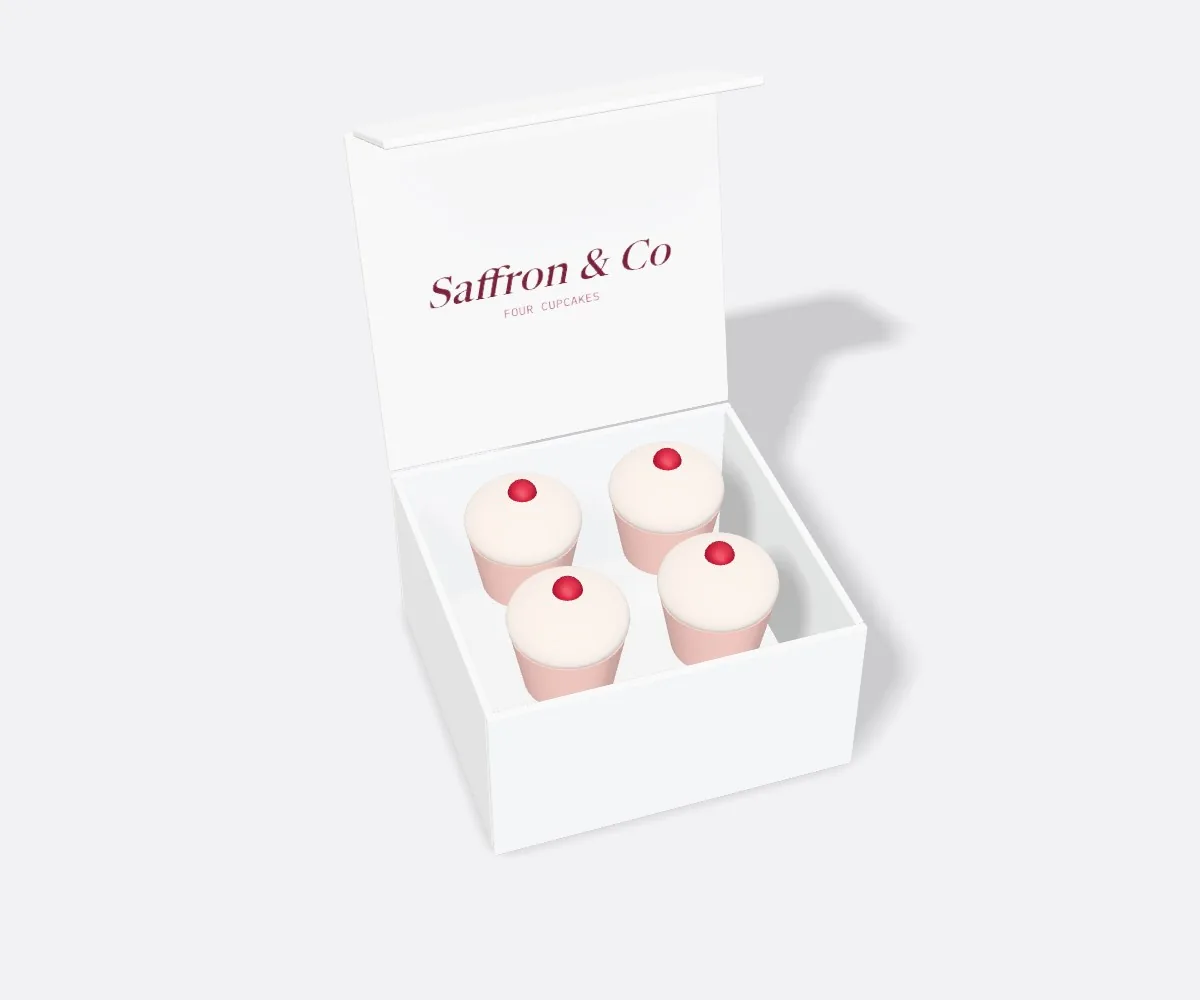
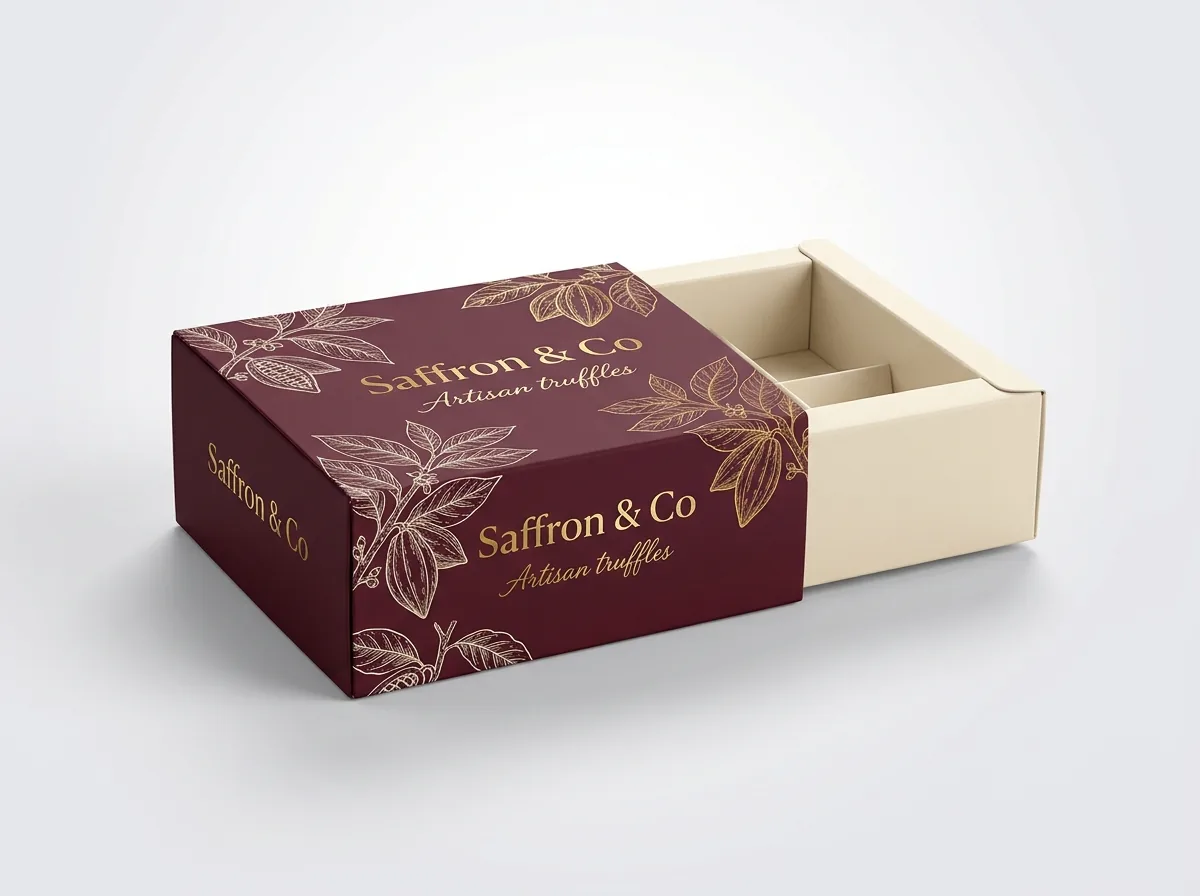
When a customer buys a phone case on your website or social shop, they already know what color they ordered; what they remember is how the package feels in their hands when they open it. A tray and sleeve box replaces ordinary top tuck flaps with an outer paperboard sleeve and a sliding inner drawer tray. Because the inner tray has folded double sidewalls all around, the package feels twice as rigid as a standard folding carton at a fraction of the cost and storage volume of a rigid setup box. You can die-cut a half-moon thumb notch on the top edge of the sleeve or attach a short grosgrain ribbon pull tab to the bottom of the tray. We can even combine both worlds by adding a front window or MagSafe ring cutout to the outer sleeve while keeping a fold-down Euro hang tab on the back panel.
- Double sidewall stiffness: the inner tray walls plus the outer sleeve resist parcel crushing in poly mailers.
- Flat warehouse storage: both the outer sleeve and inner tray ship flat and fold in seconds without glue pots.
- Reusable drawer tray: customers often keep the slide-out tray to store spare screen protectors, SIM tools and lenses.
- Easy colorway swaps: use one printed outer sleeve across a collection and let the case color show through a die-cut window.
Know your size? Compare pricing across up to 3 quantities.
Request a Quote →When should you step up to a book-style flip cover or two-piece rigid box?
Rugged drop-tested cases, integrated kickstand shells and leather wallet folios command higher retail prices, which means shoppers want to read detailed drop-protection specs (such as 12 ft or 15 ft air-pocket corner diagrams, raised bezel heights and wireless charging compatibility) before buying. A single 4.25 × 7.50 inch front panel cannot fit both a large viewing window and a detailed technical diagram without looking cluttered. A book-style flip box solves this by adding a fifth hinged front cover panel that closes over the window with a concealed magnet or side tuck tab. On the pegboard, the closed front cover displays a clean 1:1 hero render and bold model badge; when a shopper flips the cover open like a book, the inside left panel shows an exploded 3-layer impact diagram right beside the physical case sitting behind the full-height right window. For flagship leather cases and influencer PR drops starting at 50 units, see our custom rigid boxes and custom two-piece boxes.

How do you make one phone case box work for both retail peg hooks and online orders?
Maintaining separate packaging inventory for e-commerce fulfillment and brick-and-mortar retail stores ties up cash and warehouse bins. We engineer omnichannel custom phone case boxes with an integral fold-down Euro or J-hook hang tab die-cut directly from the top extension of the back panel. When orders ship direct to online customers in a poly mailer or bundle carton, the hang tab stays folded 180 degrees flat against the back wall so the box looks like a clean rectangular sleeve and never snags inside shipping bags. When a wholesale distributor or retail chain orders the exact same SKU, store staff simply pop the pre-scored hang tab upright to slide onto standard pegboard hooks. For creator bundles, BOGO promotions and 3-in-1 starter kits that combine two phone cases, a tempered glass screen protector and a magnetic card wallet, a single-case retail carton is too narrow. Switching those multi-piece kits to a flat 8.50 × 5.00 × 1.50 inch E-flute corrugated mailer with a die-cut partition grid gives you parcel-ready crush resistance and full-color inside lid space for installation QR codes and brand storytelling.
- Fold-down Euro tab: stays flat against the back panel in e-commerce poly mailers and flips up 90 degrees for retail pegboard hooks.
- Center-of-gravity check: keeping the box depth between 0.625 and 0.875 inch ensures the carton hangs vertical on single or double hooks.
- Multi-case E-flute mailers: protect 2-pack or 3-pack case and screen protector bundles without needing a separate outer shipping carton.
What are the most common mistakes when choosing a phone case box style?
Picking the wrong structure for your sales channel either hides your case on the retail shelf or wastes budget on unnecessary layers. Avoid these five mistakes
- Using a closed windowless carton on self-serve retail peg hooks where shoppers want to verify the exact case color and camera ring before buying.
- Making an open thumb-feel cutout wider than the phone case itself, allowing cases to slip out or get swapped on store walls.
- Attaching stick-on plastic hang tabs that peel off or hang crooked instead of die-cutting an integral fold-down Euro slot into the back panel.
- Choosing a tight sleeve tolerance without a thumb notch or pull tab, forcing customers to poke the case out from the bottom.
- Shipping multi-case creator kits or tempered glass bundles in a thin unlined paperboard carton instead of an E-flute corrugated mailer.
Find your size
Suggested inside size: 3.75 × 0.50 × 6.75 in
A starting point. Your account manager confirms the size with you before the proof.
Quote this size →Packaging for this
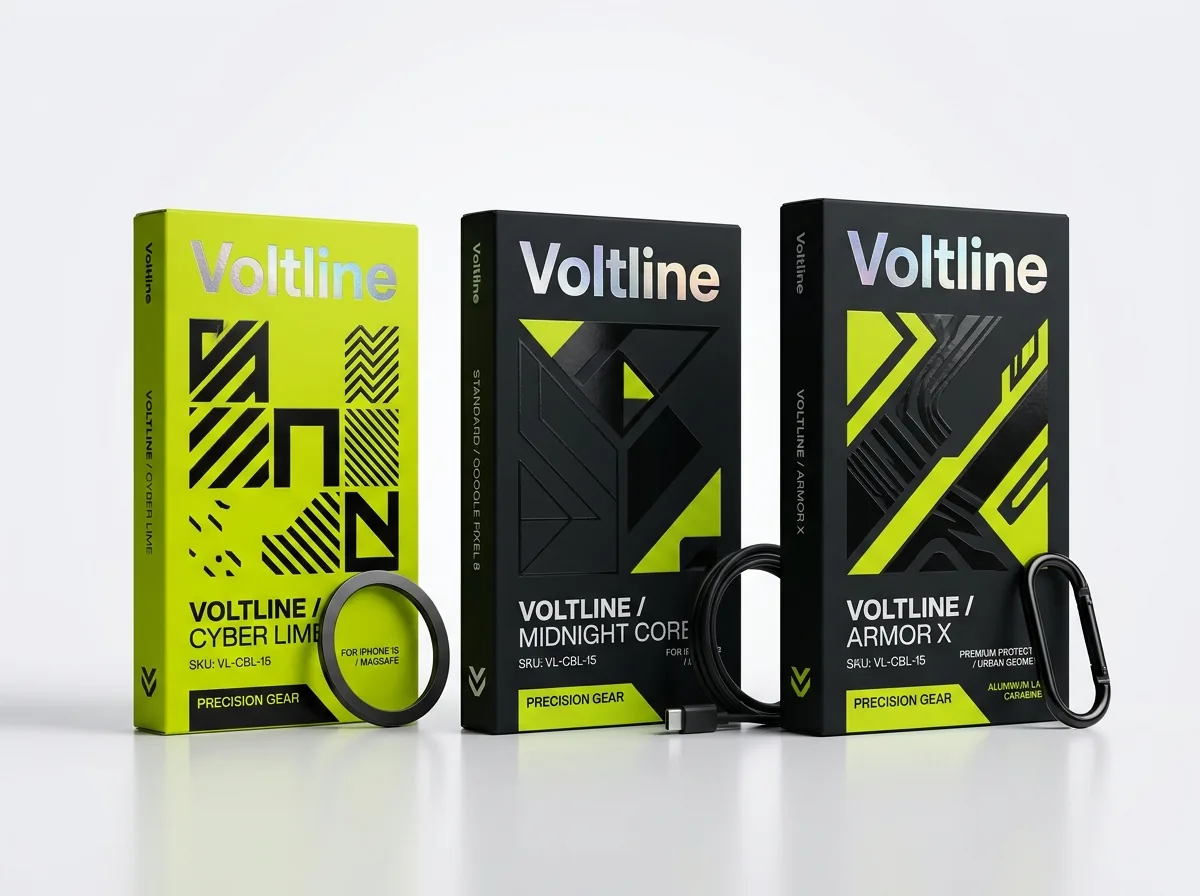
Ready to order phone case boxes? Compare up to 3 quantities with a free 3D mockup.
Request a Quote →Questions about phone case boxes
Which phone case box style has the lowest unit cost at 1,000 units?
A straight tuck end carton or a straight tuck carton with an open windowless thumb-feel cutout has the lowest unit cost because it prints and die-cuts from a single flat sheet of paperboard in one pass with no window film patching.
Does a tray-and-sleeve phone case box cost much more than a standard tuck carton?
A tray-and-sleeve box uses two die-cut paperboard pieces (the outer sleeve and the inner drawer tray), so it uses slightly more board than a basic tuck box, but it eliminates the need for a separate inner insert and still ships completely flat.
Can I add a clear window to a tray-and-sleeve drawer box?
Yes. Many mobile accessory brands die-cut a window or a MagSafe ring peephole into the front panel of the outer sleeve. As the customer slides the inner tray out, the case color moves across the window for an interactive reveal.
Should I use a Euro slot or a J-hook hang tab for US retail stores?
A centered horizontal Euro slot fits almost all single-prong and double-prong pegboard hooks used in US electronics, carrier and department stores, and keeps the 4.25-inch wide box hanging level without tilting to one side.
How do you make a phone case box tamper-evident for retail shelves?
On straight tuck and hang-tab window boxes, we leave unvarnished zones on the top and bottom tuck flaps for clear circular wafer seals. On tray-and-sleeve boxes, a perforated tear-strip security sticker bridges the bottom tray edge and outer sleeve.
Can I order samples of a window box and a tray-and-sleeve box to compare them?
Yes. Every quote includes free structural dielines, a digital proof and a 3D mockup before payment, and you can order our $50 material sample kit (credited to your first order) or request custom prototypes of your top two styles.
Still have a question? Ask a packaging specialist.
Request a Quote →Request your phone case boxes quote
Tell us your size and quantities, and one dedicated account manager prepares pricing for each tier.
- Free design & AI-to-print studio + 3D mockup
- No die or plate charges · 4–5 day rush available
- Free shipping to all 50 states
- 10% off your first order
This comparison draws on telecom carrier store merchandising standards (peg-hook weight distribution, Euro slot geometry and tamper-evident sealing) plus CubitPack production specs in our published product specifications. A packaging specialist reviewed every table row. Spot an error? Tell us and we will fix it.
Sources
What changed
- October 22, 2026: First published.
- October 22, 2026: Updated specifications, terminology, and verified source links.
More guides
New packaging guides by email
Sizes, materials and design tips. Unsubscribe anytime.