
What size cable box do I need for 3 ft to 25 ft USB, HDMI and audio cords?
Short answer: Multiply your cable's outer jacket thickness by 8 to 10 to find its safe circular coil diameter, then add 0.25 inch for wall clearance. Most 6 ft USB-C cords fit 3.25 × 1.125 × 4.75 inch custom cable boxes, while 6 ft to 10 ft HDMI 2.1 cords fit 4.00 × 1.50 × 5.50 inches.
On this page
- How do I calculate the minimum safe coil diameter and box width for my cable
- What are standard inside box dimensions for 3 ft to 25 ft cables
- Can 3 ft, 6 ft and 10 ft USB-C cables share one universal box size
- How do you size boxes for coiled keyboard aviator cables and audiophile cords
- When should you step up to an auto-lock bottom or E-flute box for long cables
- Common mistakes
- FAQs
Request a custom quoteFree dieline & 3D mockup
Sizing a carton for a cable works differently from sizing a box for a rigid charger or speaker because a cord's packaged footprint is governed by its minimum safe bend radius and loop stack thickness rather than a fixed rectangular body. If you squeeze a thick braided USB-C 240W cord, a shielded HDMI 2.1 video lead or an active optical cable into a narrow carton that forces a tight pinch fold, the internal copper foil shielding and connector strain reliefs can deform before the customer ever opens the box. Instead, wind the cord into a relaxed circular or oval loop that respects an 8x to 10x outer-diameter bend rule, measure the loop width and stack thickness, and add 0.75 to 1.00 inch of height at the top if you want to park both connector heads in a window card. Every order of printed cable boxes from CubitPack is cut to your exact dimensions with zero die fees.
How do I calculate the minimum safe coil diameter and box width for my cable?
Before picking an outer carton size, measure the outer diameter (OD) of your cable jacket with calipers and check how stiff the jacket feels when wound into a circle. A slim 3.5 mm (0.14 in) TPE phone cord bends easily into a 2.50-inch loop, whereas a heavy 7.5 mm (0.30 in) braided HDMI 2.1 or XLR microphone cable needs at least a 3.50-inch to 4.50-inch loop so it does not kink or push the box walls outward. Use the 8x-to-10x jacket multiplier below to find your relaxed coil width, then add the stack depth of the loops to set your inside Length × Width × Height in inches. Once you have those numbers, our design team can draft your custom cable boxes and internal paperboard winder card together.
- Relaxed coil diameter to Box Length (L): multiply the cable's outer jacket diameter by 8 (for flexible silicone/TPE) or 10 (for stiff braided nylon, coax or HDMI) and add 0.25 inch of side clearance.
- Loop stack thickness to Box Depth (W): wind the full length of the cord into circular loops, measure the front-to-back bundle thickness at the crossover point, and add 0.25 inch for the paperboard winder card.
- Connector parking height to Box Height (H): take the coil diameter and add 1.00 to 1.50 inches at the top so the two USB-C, HDMI or XLR plug shells can sit upright above the coil.
- Spring-back allowance: braided nylon and thick PVC cords push outward against the carton walls, so never size Length (L) tighter than the natural relaxed loop.
- Multi-pack multiplier: for a 2-pack or 3-pack of 6 ft cords, keep Length and Height the same and increase Depth (W) by 0.50 to 0.75 inch.
What are standard inside box dimensions for 3 ft to 25 ft cables?
While CubitPack cuts every carton and internal spool card to your exact sixteenth of an inch with zero die charges, consumer electronics stores, A/V installers and pro-audio walls rely on eight proven size brackets. Use the table below to benchmark your cord length and gauge before measuring your physical sample. Notice how the first four sizes stay between 0.875 and 1.50 inches deep front-to-back so 6 to 10 cartons fit on a standard retail pegboard hook without leaning forward. Keeping the front width between 2.75 and 4.00 inches also lets retail planogram managers hang four or five SKU facings across a single 18-inch pegboard section while leaving clear room on the front panel for 1:1 connector diagrams and wattage badges.
| Cable type & length | Typical inside size (L × W × H) | Recommended carton & winder setup |
|---|---|---|
| USB-C to 3.5 mm DAC audio dongle or 1 ft short lead | 2.50 × 0.625 × 3.75 in | Straight tuck + die-cut card clip |
| 3 ft (1 m) slim TPE or silicone USB-C / Lightning cable | 2.75 × 0.875 × 4.00 in | Hang tab straight tuck + paper belly band |
| 6 ft (2 m) braided 100W-240W USB-C or Thunderbolt cord | 3.25 × 1.125 × 4.75 in | Hang tab window box + plug-parking card |
| 10 ft (3 m) braided USB-C cord or 2-pack 6 ft bundle | 3.50 × 1.375 × 5.00 in | Hang tab carton + slit-lock tuck flaps |
| 6 ft-10 ft Ultra High Speed HDMI 2.1 or DisplayPort 2.1 | 4.00 × 1.50 × 5.50 in | Connector window box + circular spool card |
| 15 ft-25 ft braided HDMI, Cat6A Ethernet or 20 ft XLR mic cord | 5.00 × 1.75 × 6.25 in | Auto-lock bottom carton + heavy spool collar |
| Coiled mechanical keyboard cable with GX16/YC8 aviator plug | 7.50 × 3.25 × 1.50 in | Tray and sleeve drawer box + straight cradle |
| Custom sleeved PC PSU extension kit or 5-pack patch bundle | 6.50 × 5.00 × 2.25 in | E-flute corrugated mailer or two-piece box |
Can 3 ft, 6 ft and 10 ft USB-C cables share one universal box size?
Yes, and standardizing one outer carton across multiple lengths is one of the smartest ways to lower your packaging cost. If you sell a braided USB-C cable in 3-foot (1 m) and 6-foot (2 m) lengths, you do not need two different box dielines. A 3-foot cord wound into three 3.0-inch circular loops and a 6-foot cord wound into six 3.0-inch circular loops have the exact same loop diameter and differ by only about 0.20 inch in bundle thickness. By sizing your master carton at 3.25 × 1.125 × 4.75 inches, both the 3-foot and 6-foot versions fit comfortably on the same internal paperboard spool card. That lets you pool both lengths (plus Black, White and Braided Midnight colorways) into a single high-volume print run, while keeping every pegboard row in retail stores uniform. If you also carry a 10-foot (3 m) version, you can either keep the same 3.25 × 4.75 inch front face and bump the depth to 1.375 inches, or use the exact same box with a slightly tighter four-loop wind.
Know your size? Compare pricing across up to 3 quantities.
Request a Quote →How do you size boxes for coiled keyboard aviator cables and audiophile cords?
Custom mechanical keyboard cables with a tight 6-inch reverse-wound coil and a detachable 5-pin metal GX16, YC8 or Lemo aviator connector cannot be rolled into a circle like a regular phone cord. Bending the coiled barrel into a loop stretches the coil spacing and puts torque on the soldered aviator joints. Instead, measure the full straight length of the coiled barrel plus the straight aviator connector tail (typically 6.50 to 7.00 inches long) and lay the cord flat beside the coiled host lead inside a 7.50 × 3.25 × 1.50 inch tray and sleeve box or two-piece box. Inside the tray, a die-cut EVA foam insert or contoured paperboard bed holds the coil barrel straight and showcases the anodized aviator coupling right across the center of the box.
When should you step up to an auto-lock bottom or E-flute box for long cables?
While a 3-foot USB-C cord weighs less than 1.5 ounces, a 25-foot 24 AWG braided HDMI cable, a 25-foot XLR studio microphone lead or a 50-foot Cat6A Ethernet coil can weigh 12 to 28 ounces. Packing more than a pound of dense copper wire into a thin tuck-bottom carton causes the bottom flap to bow downward or pop open when lifted off a shelf. Once your coiled cable exceeds 8 ounces (or 10 feet in thick A/V and instrument gauges), step up to a 5.00 × 1.75 × 6.25 inch auto lock bottom box or an E-flute corrugated carton. The pre-glued crash-lock bottom supports heavy copper coils without sagging, and we pair it with a reinforced double-layer Euro hang tab on the back panel. Before locking in your final production run, wind a physical sample of each cable length with the exact velcro strap or paper belly band your assembly team will use on the packing line. Measure the wound coil after it sits on a table for ten minutes so any natural spring-back expansion is included in your inside carton width and depth.
What are the most common cable box sizing mistakes?
Almost every cable packaging failure happens when the box is sized around a tightly pinched cord instead of a relaxed circular coil. Avoid these five mistakes
- Pinching a thick HDMI 2.1, DisplayPort or braided 240W USB-C cord into a narrow 2.25-inch box that kinks the internal shielding.
- Measuring the coil diameter alone and forgetting to add 1.00 to 1.50 inches of vertical height for the top connector-parking window slots.
- Using a light straight-tuck bottom flap on a heavy 15-foot to 25-foot HDMI or XLR cable instead of a pre-glued auto-lock bottom.
- Rolling a coiled mechanical keyboard aviator cable into a circle instead of laying the coil barrel straight in a 7.50 × 3.25 × 1.50 in tray.
- Omitting slit-lock notches on the tuck flaps, allowing the outward spring force of a braided nylon cord to push the top lid open.
Find your size
Suggested inside size: 2.75 × 0.875 × 4.00 in
A starting point. Your account manager confirms the size with you before the proof.
Quote this size →Packaging for this
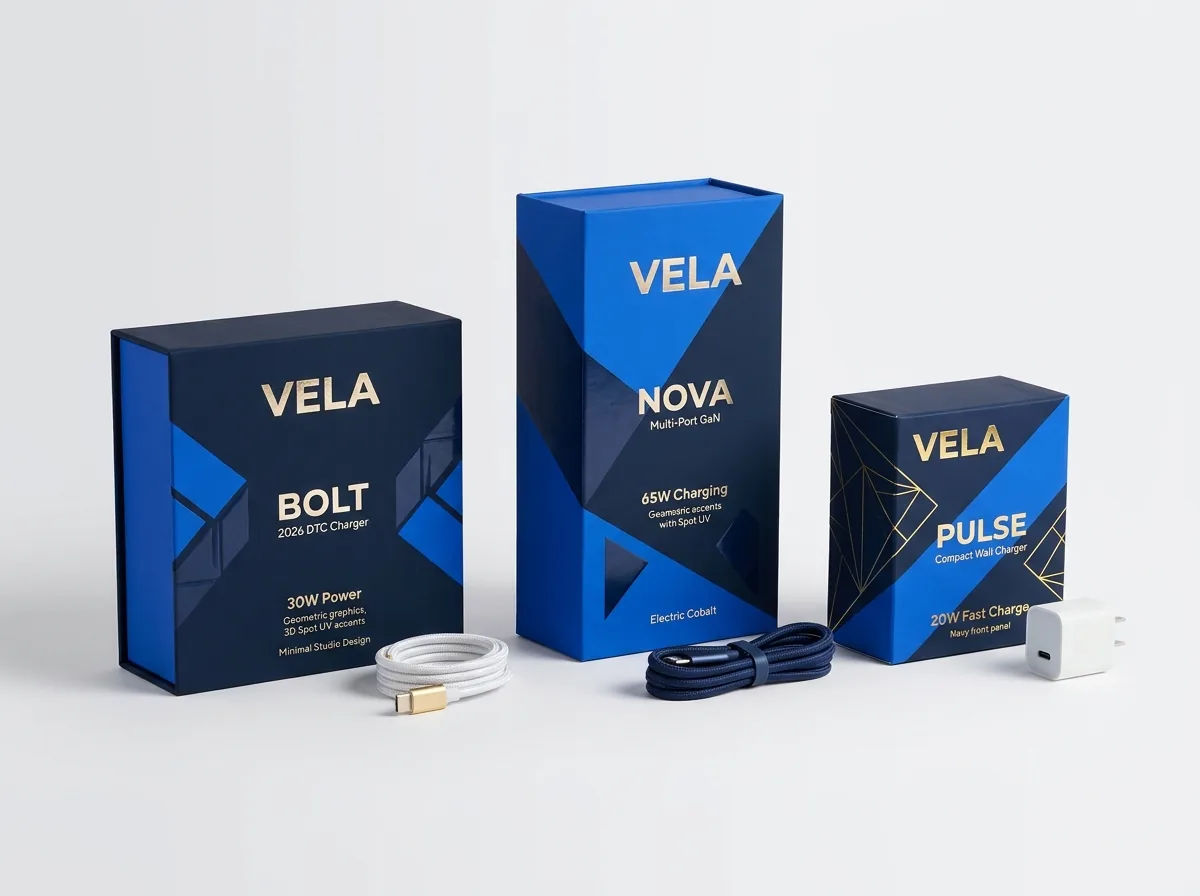
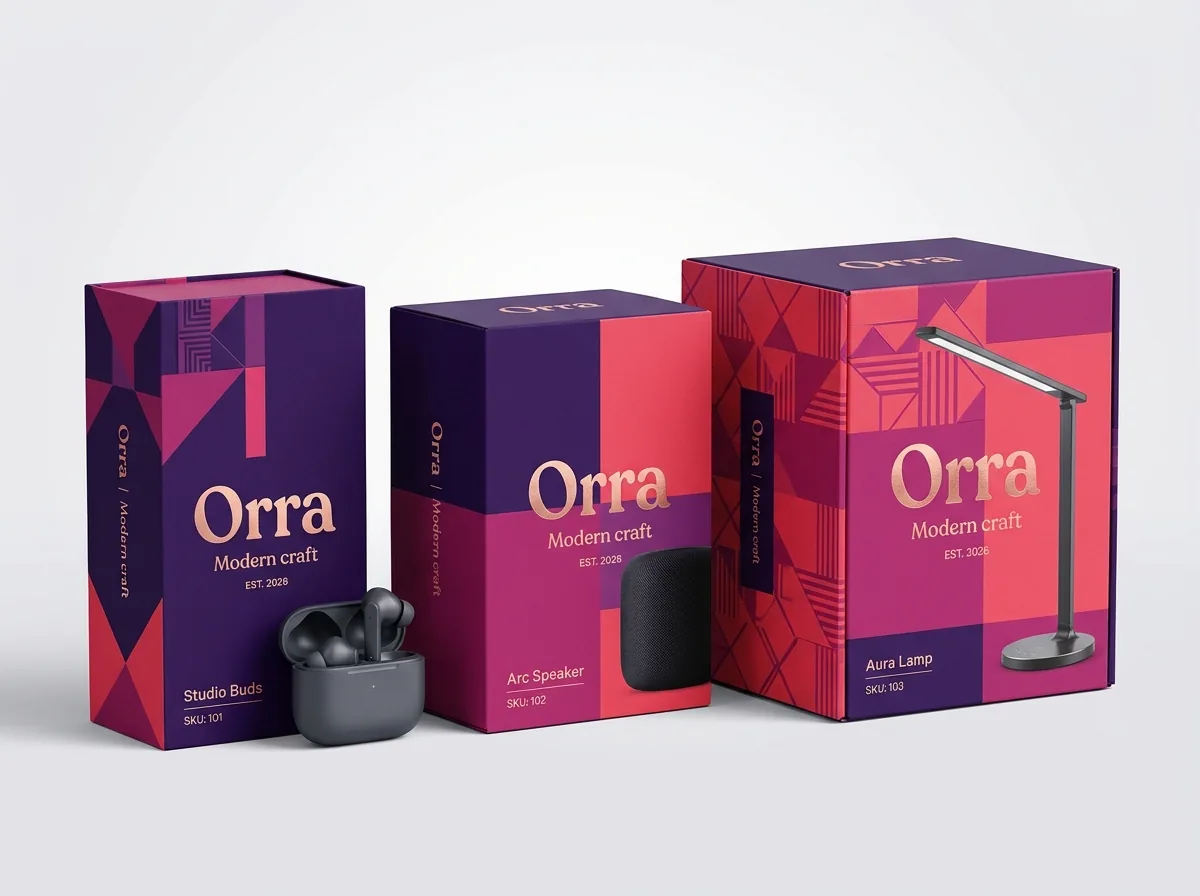
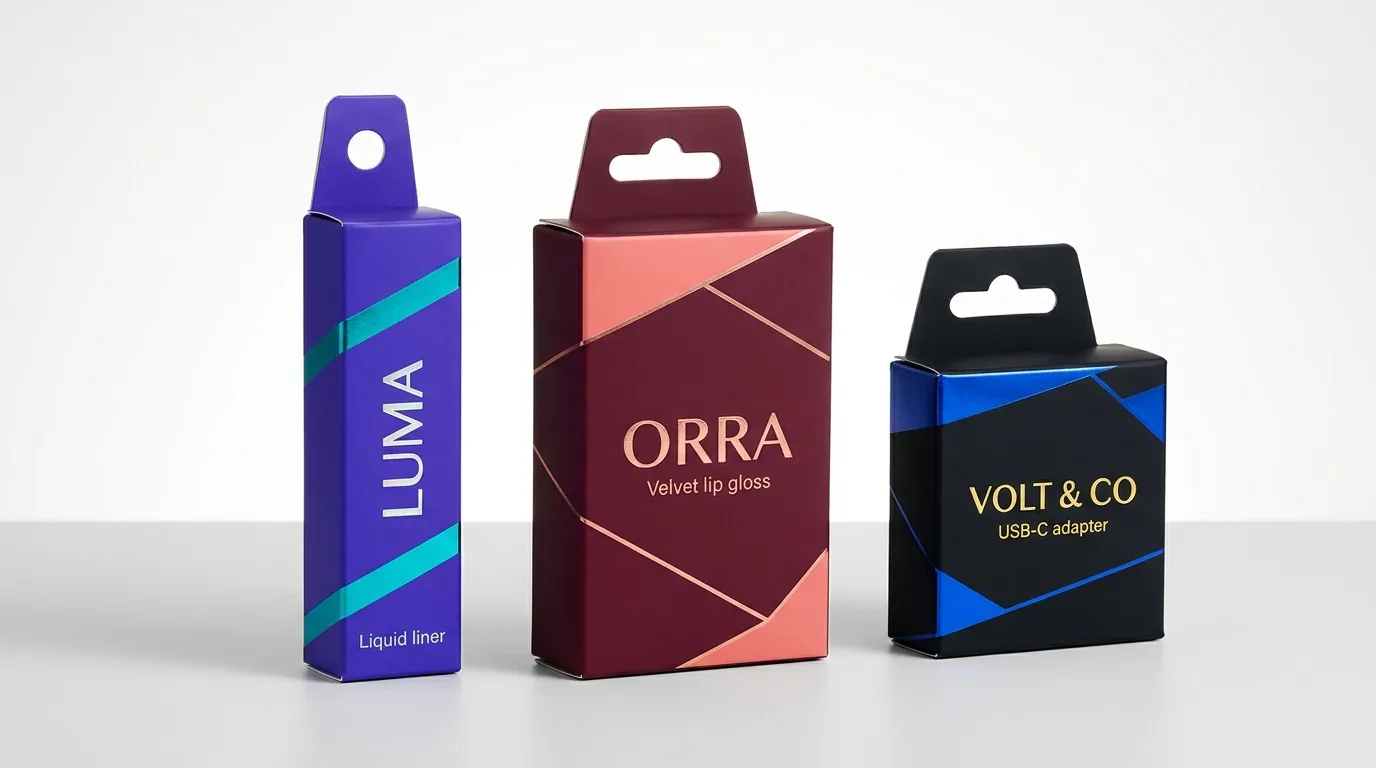
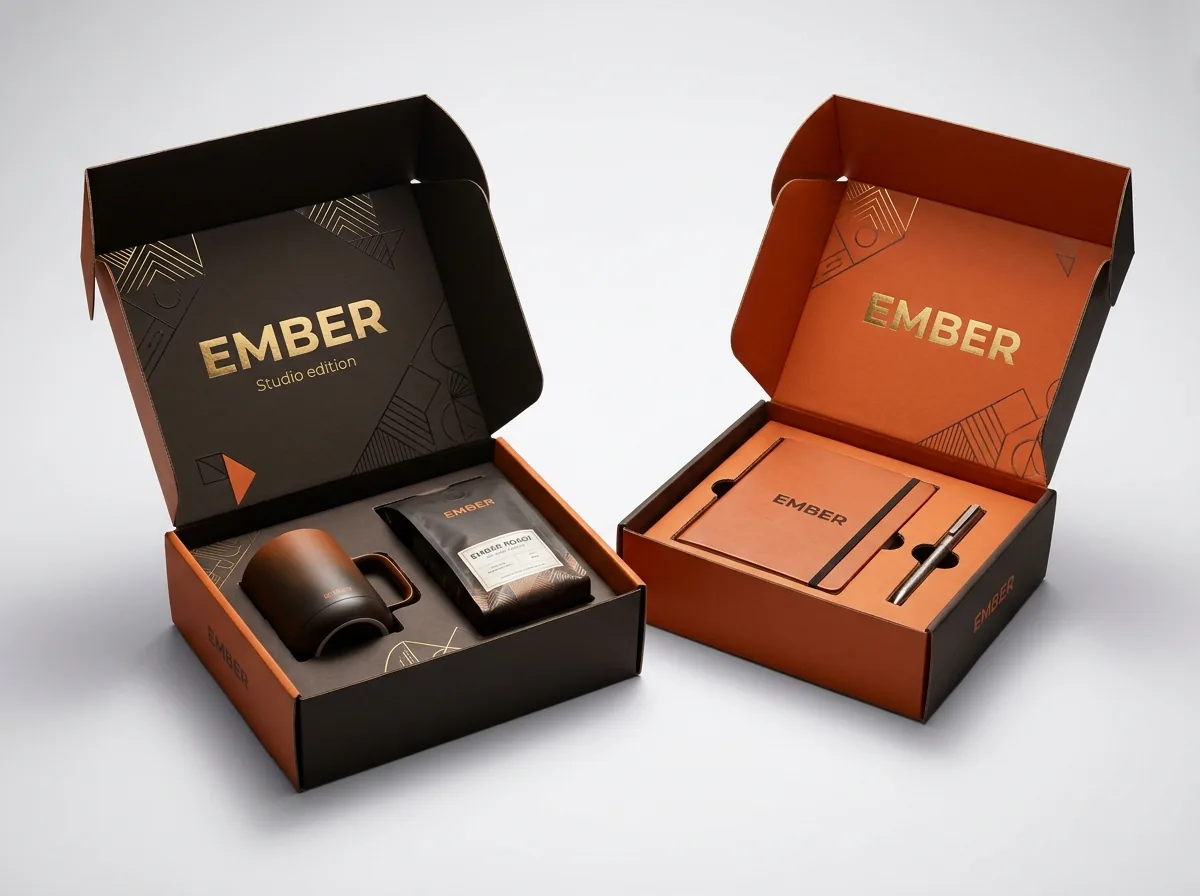
Ready to order cable boxes? Compare up to 3 quantities with a free 3D mockup.
Request a Quote →Questions about cable boxes
What is the most popular box size for a 6-foot (2 m) braided USB-C cable?
The industry standard for a 6-foot (2 m) braided USB-C or Lightning cable is 3.25 × 1.125 × 4.75 inches (inside Length × Width × Height). That gives the cord a relaxed 3.0-inch circular loop diameter at the bottom and leaves 1.5 inches at the top to display both connector heads.
How do I measure a cable to get Length × Width × Height?
Wind your cable into a comfortable circular loop and secure it with a paper band. Measure the horizontal width across the loop (Length L), the front-to-back thickness of the stacked loops plus plug heads (Width W), and the vertical height including the connector tips (Height H).
What size box fits a 6-foot or 10-foot HDMI 2.1 cable?
Ultra High Speed HDMI 2.1 cables have thicker 28–30 AWG shielded jackets that should not be wound tighter than a 3.5-inch loop. A 4.00 × 1.50 × 5.50 inch carton fits 6-foot to 10-foot HDMI leads cleanly without stressing the connector neck.
Can I pack a 2-pack or 3-pack of USB-C cables in one retail box?
Yes. Keep the front footprint at 3.25 × 4.75 inches or 3.50 × 5.00 inches and increase the front-to-back depth (W) from 1.125 inches to 1.50 or 1.75 inches. We can add a paperboard divider between the coils or park all four connector tips in a top window row.
Do you charge extra die fees for connector-parking slots or a Euro hang tab?
No. CubitPack never charges die or plate fees. Your custom outer cable carton, integral Euro hang tab, slit-lock flaps, front connector peephole window and internal paperboard spool card are all engineered with zero tooling charges.
Can I test my cable coil inside a physical prototype before ordering 1,000 boxes?
Yes. Every quote includes free vector dielines for the carton and inner winder card, plus a digital proof and 3D mockup before payment. You can also order our $50 sample kit (credited to your order) or request a custom physical prototype.
Still have a question? Ask a packaging specialist.
Request a Quote →Request your cable boxes quote
Tell us your size and quantities, and one dedicated account manager prepares pricing for each tier.
- Free design & AI-to-print studio + 3D mockup
- No die or plate charges · 4–5 day rush available
- Free shipping to all 50 states
- 10% off your first order
The coil-diameter formulas (8x to 10x jacket OD) and category size benchmarks in this guide are based on standard USB-C, Thunderbolt, HDMI 2.1, XLR and coiled keyboard cable gauges plus retail pegboard depth limits. A CubitPack packaging specialist checked every row. Spot an error? Tell us and we will fix it.
Sources
What changed
- October 22, 2026: First published.
- October 22, 2026: Updated specifications, terminology, and verified source links.
More guides
New packaging guides by email
Sizes, materials and design tips. Unsubscribe anytime.