
Auto-lock folding carton vs E-flute corrugated vs rigid power bank boxes: which holds heavy battery cells?
Short answer: Match the box structure to your battery weight: use straight-tuck or auto-lock paperboard folding cartons (from 1,000 units) for 5,000 to 10,000 mAh packs under 10 oz, E-flute corrugated cartons or mailers (from 250 units) for 15,000 to 20,000 mAh banks, and rigid setup boxes (from 50 units) for 27,000 mAh laptop custom power bank boxes.
On this page
- How do folding cartons, E-flute corrugated and rigid boxes compare by battery capacity
- Why do 10,000 to 20,000 mAh power banks need an auto-lock bottom instead of a tuck base
- When should you step up from paperboard to E-flute corrugated for a battery pack
- When is a two-piece or sleeve rigid box worth it for flagship laptop power banks
- Can a slide-out tray-and-sleeve box bridge the gap between folding and rigid
- Common mistakes
- FAQs
Request a custom quoteFree dieline & 3D mockup
Lithium-ion and lithium-polymer cells make portable chargers the densest items in the mobile accessory aisle: a palm-sized 20,000 mAh brick weighs 12 to 16 ounces, and a 27,000 mAh 140W laptop power bank tops 20 ounces. If you pack a 14-ounce battery brick into a standard thin paperboard straight-tuck box, the concentrated downward mass bows the bottom dust flaps and pops the tuck tab open when a shopper lifts the box off a pegboard hook or a courier drops the parcel. Choosing between a high-caliper auto-lock folding carton, an E-flute micro-corrugated carton or mailer, and a two-piece rigid chipboard (gray board) box comes down to three variables: total kit weight in ounces, whether the box hangs on retail hooks or ships direct, and your target run size (1,000 folding cartons, 250 mailers, or 50 rigid boxes). CubitPack engineers all three structures for printed power bank boxes with free structural dielines.
How do folding cartons, E-flute corrugated and rigid boxes compare by battery capacity?
Instead of picking a box style by looks alone, start with the physical mass of your assembled battery pack plus its bundled USB-C charging cord and travel pouch. A structure that works effortlessly for a 4.5-ounce 5,000 mAh MagSafe snap-on pack will fail a 3-foot parcel drop test when loaded with a 1.3-pound 27,000 mAh 3-cell laptop power bank. Use the engineering comparison table below to match your mAh tier and kit weight to the right board grade, bottom lock mechanism and CubitPack minimum order quantity before requesting a quote for custom power bank boxes. Notice how each step up in capacity shifts the structural load from the outer fold creases to the bottom base and internal cradle walls.
- 5,000 mAh slim wireless packs (4 to 6 oz): high-caliper paperboard straight-tuck or auto-lock carton with a folded card cradle.
- 10,000 mAh pocket banks (7 to 10 oz): pre-glued auto-lock paperboard carton with a two-pocket battery-and-cable divider.
- 15,000 to 20,000 mAh travel banks (11 to 16 oz): auto-lock E-flute corrugated carton or double-wall paperboard tray-and-sleeve box.
- 24,000 to 27,000 mAh 140W laptop banks (17 to 24 oz): two-piece rigid chipboard (gray board) box or heavy E-flute carton with die-cut EVA foam.
- Multi-port outdoor solar & camp kits (16 to 30 oz): E-flute corrugated mailer box with multi-cavity partitions for cords and carabiners.
| Feature or requirement | Auto-lock / tuck folding carton | E-flute corrugated carton or mailer | Two-piece or sleeve rigid box |
|---|---|---|---|
| Ideal battery capacity | 5,000 to 15,000 mAh | 15,000 to 24,000 mAh & solar kits | 20,000 to 27,000 mAh (100W-140W) |
| Recommended kit weight | Up to 10 oz (tuck) · 14 oz (auto-lock) | 10 oz to 24 oz+ | 12 oz to 32 oz+ |
| CubitPack minimum (MOQ) | 1,000 boxes | 250 boxes (mailer) · 1,000 (carton) | 50 boxes |
| Wall construction | Single-wall high-caliper SBS or kraft | 1/16 in micro-fluted corrugated board | Dense rigid chipboard (gray board) + printed wrap |
| Bottom closure strength | Pre-glued crash-lock or wafer-sealed tuck | Folded double-wall or crash-lock base | Solid non-folding rigid base tray |
| Retail peg-hook fit | Excellent (slim depth + double-ply Euro slot) | Good (auto-lock carton with Euro slot) | Countertop / locked display case only |
| Storage & freight footprint | Ships 100% flat (lowest freight volume) | Ships 100% flat in master bundles | Ships pre-assembled (or collapsible rigid) |
Why do 10,000 to 20,000 mAh power banks need an auto-lock bottom instead of a tuck base?
On a standard straight tuck end box or reverse tuck carton, the bottom flap closes by sliding a friction tab into a slot. That works well for a 4.5-ounce 5,000 mAh magnetic wireless pack, especially when secured with a clear tamper-evident wafer seal across the bottom seam. However, once a portable charger steps up to 10,000 or 20,000 mAh, the dense lithium cells act like a battering ram against the floor of the carton every time the package is set down or jostled. Switching to a pre-glued auto-lock bottom box (also called a crash-lock bottom) solves two problems at once. First, the four bottom flaps are diagonally folded and glued on our folder-gluer line so the interlocking base cannot spring open under a 12-to-16 ounce load. Second, your assembly-line workers pop the flat carton open into a locked 3D box in one second instead of folding and tucking four separate bottom flaps by hand, cutting manual packing time in half across multi-thousand-unit production runs.
When should you step up from paperboard to E-flute corrugated for a battery pack?
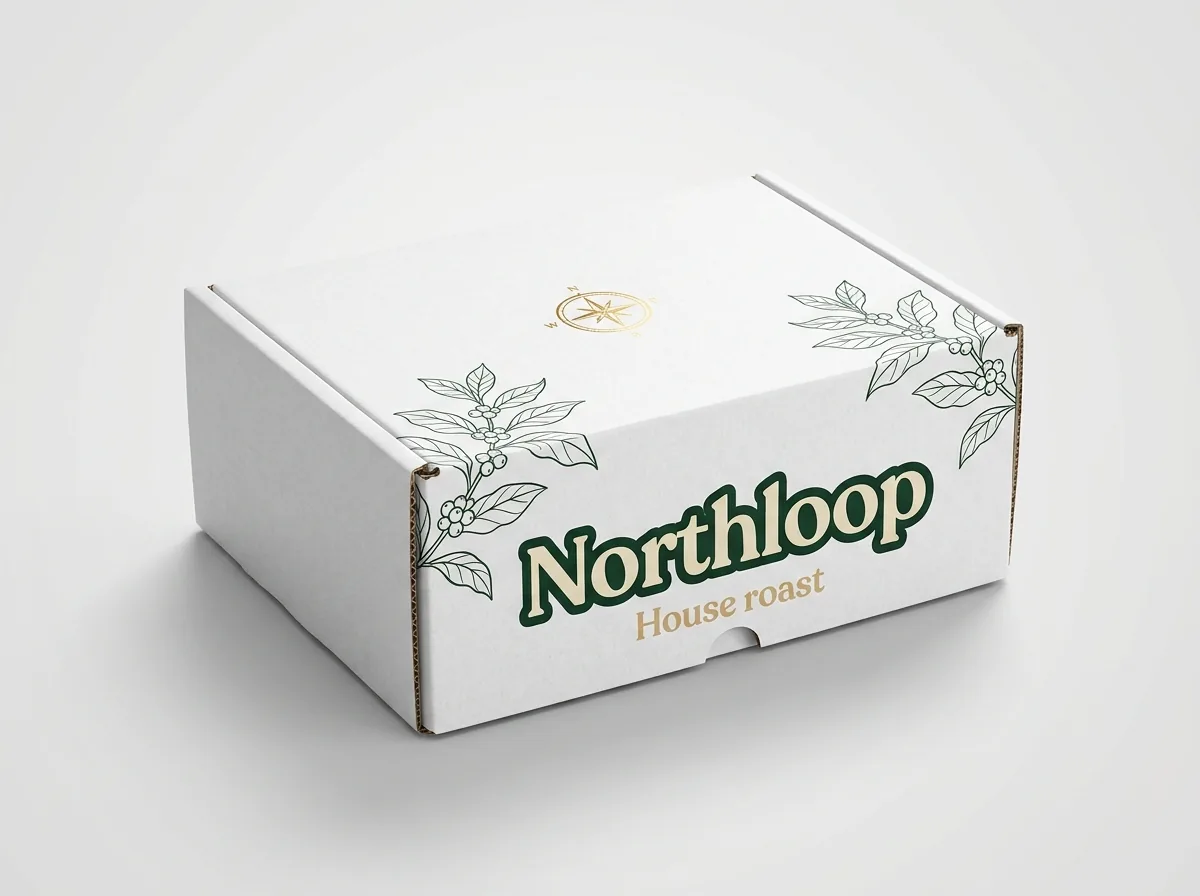
High-capacity 20,000 mAh travel banks, multi-port desktop power stations and rugged waterproof solar chargers face a different hazard: corner crush during parcel delivery. When a 1-pound battery pack drops on its corner inside an Amazon mailer or bubble envelope, a single sheet of folding paperboard can crease if the internal insert does not have enough crush buffer. Upgrading the carton or custom mailer box to E-flute corrugated board gives you 90 flutes per linear foot sandwiched between smooth inner and outer liners, all in a sleek 1/16-inch (1.6 mm) profile. Those microscopic flutes act like tiny shock absorbers around the battery cells, prevent the Euro hang tab from ripping under heavy peg-hook loads, and still accept litho-laminated CMYK printing, matte or soft-touch film lamination, and registered Spot UV over your 1:1 battery graphic.
Know your size? Compare pricing across up to 3 quantities.
Request a Quote →When is a two-piece or sleeve rigid box worth it for flagship laptop power banks?
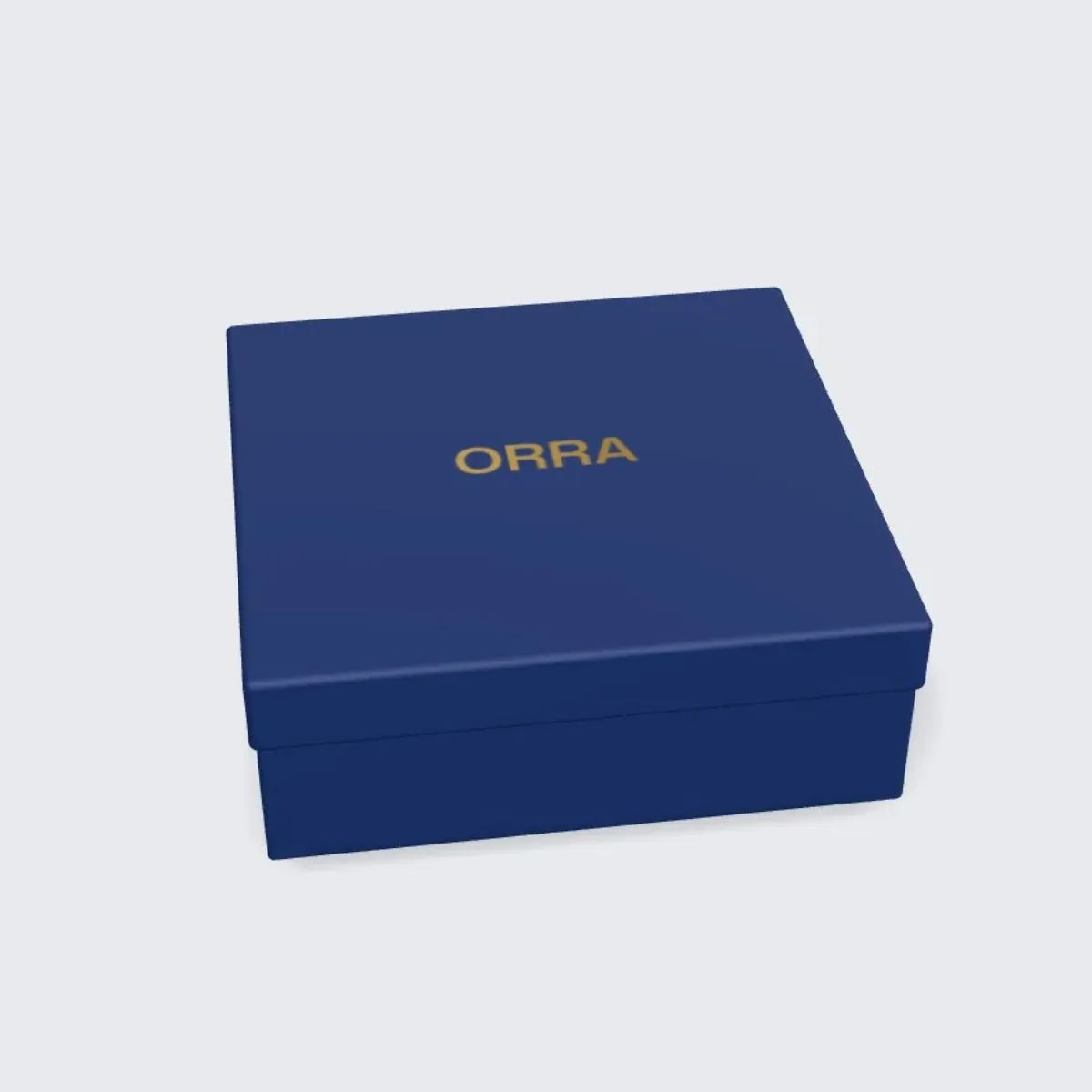
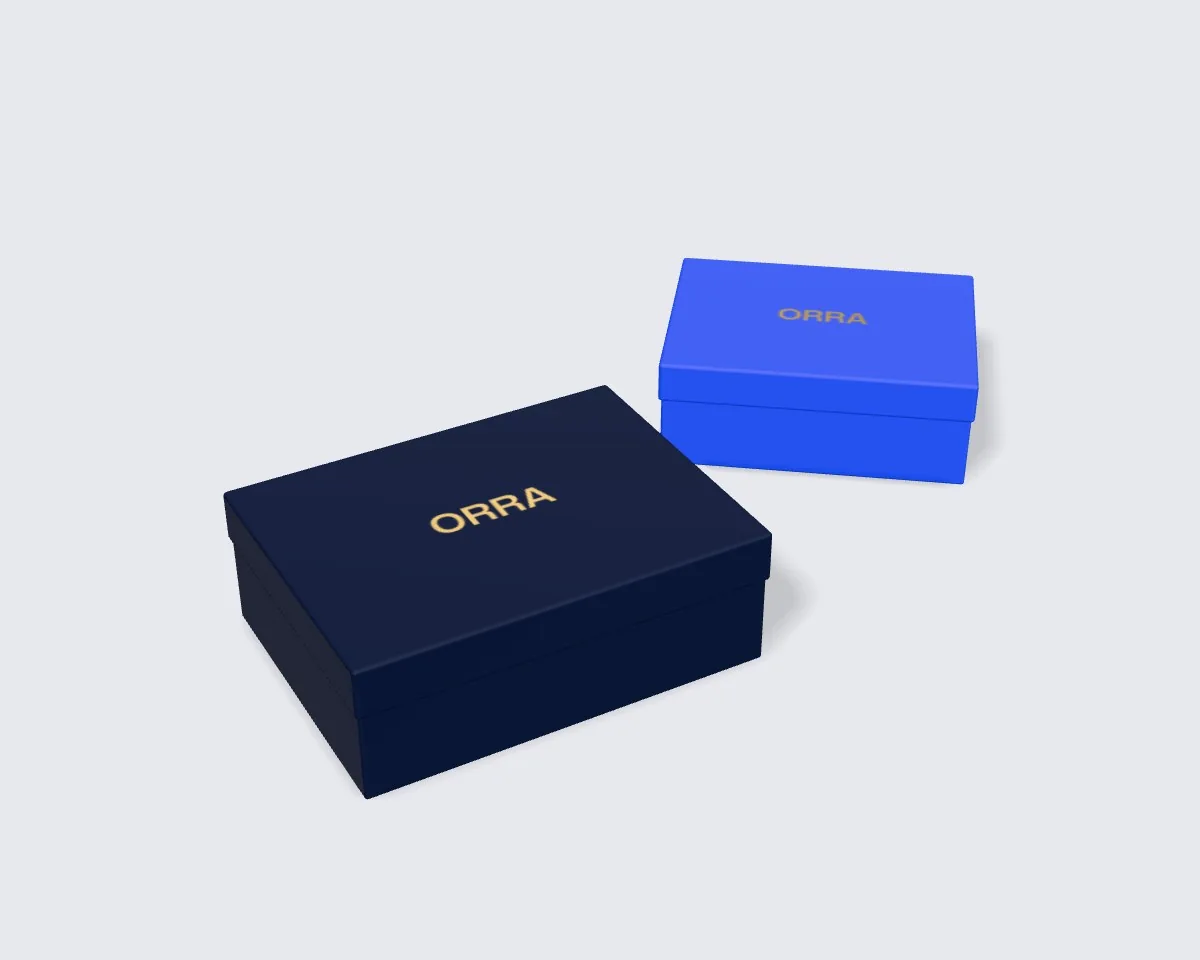
Flagship 24,000 to 27,000 mAh (99.9 Wh) power banks with 140W bidirectional USB-PD output, color OLED telemetry screens and anodized aluminum bodies compete at the top of the mobile tech market. Buyers expect these high-output bricks to unbox like a flagship smartphone or luxury audio product rather than a convenience-store phone cable. A two-piece rigid box or heavy tray and sleeve box built from dense chipboard and lined with a custom die-cut EVA foam insert delivers that slow-release telescoping lid lift and rock-solid drop protection. Better still, CubitPack's rigid box minimum is just 50 units (compared with 1,000 units for folding cartons), making rigid setup boxes ideal for crowdfunding hardware launches, executive corporate gift sets and limited-edition pro power banks.
Can a slide-out tray-and-sleeve box bridge the gap between folding and rigid?
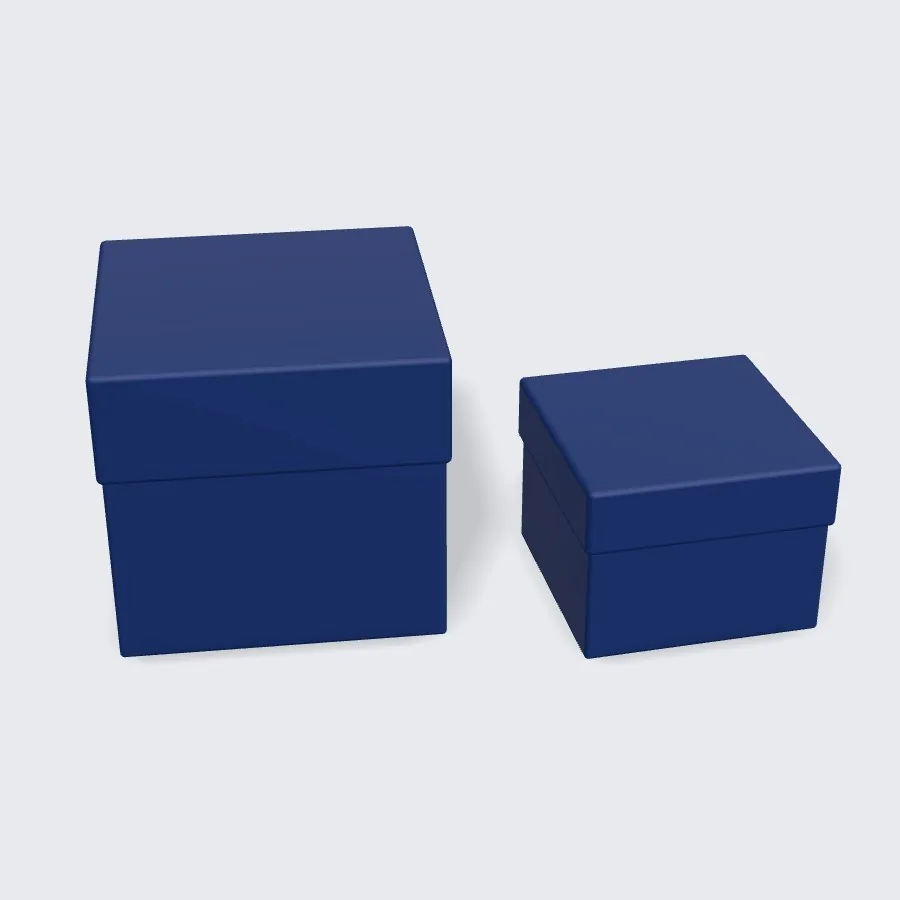
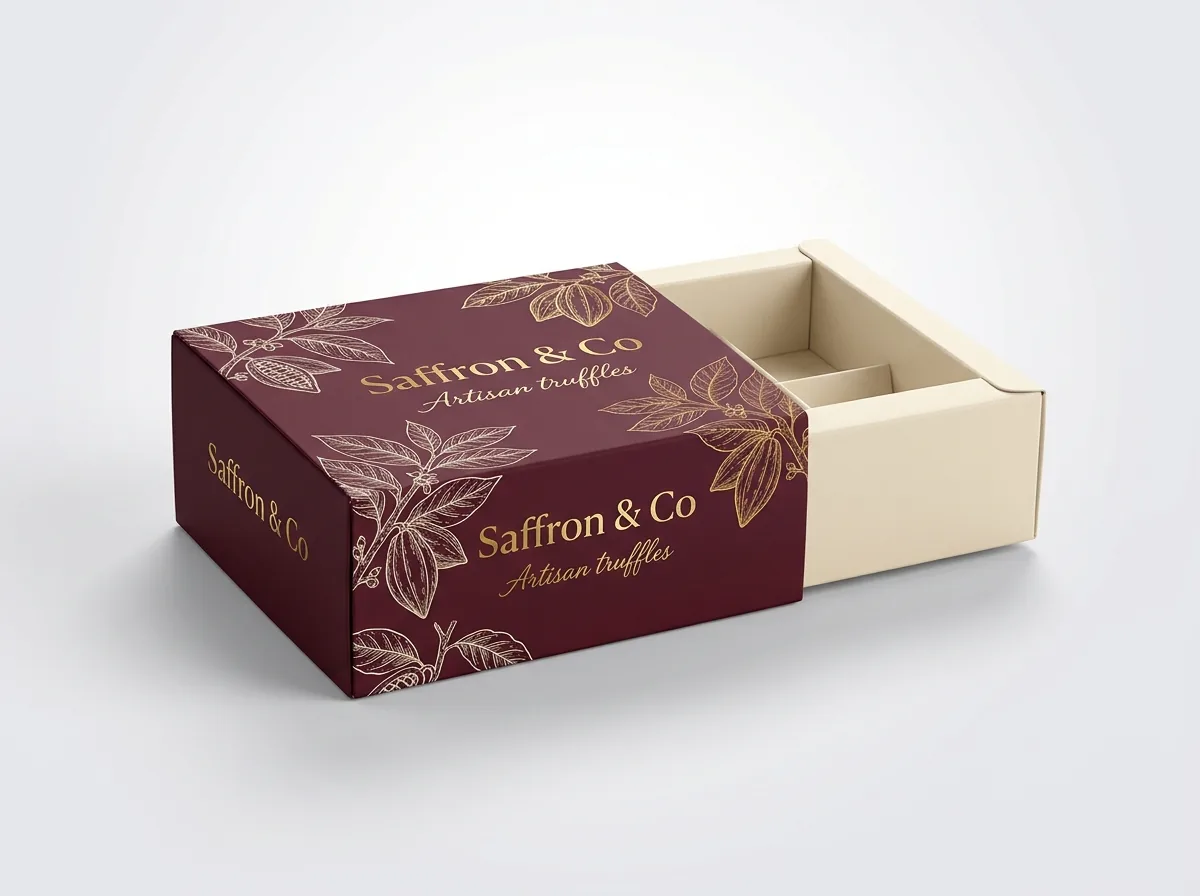
Yes. If you want a premium drawer-style unboxing for a 10,000 or 20,000 mAh battery pack while keeping the flat-shipping freight savings of a folding carton, a double-wall paperboard tray-and-sleeve structure is the smart middle ground. The outer printed sleeve carries your 1:1 Spot UV product render, mAh/Wh badges and back-panel USB-PD voltage table, while the inner drawer folds double-thick side walls around a two-compartment battery-and-cord cradle. Because the outer sleeve wraps completely around the tray top and bottom, there is zero risk of a bottom flap popping open under battery weight. Add a satin ribbon pull tab or a die-cut thumb notch on the end of the drawer so the customer slides the power bank out smoothly. When packing multiple SKUs (such as Matte Black, Titanium Silver and Cobalt Blue), you can use one universal unprinted inner tray across all colors and only swap the outer printed sleeves.
- Zero bottom-flap blowout risk: the continuous outer sleeve supports the full underside of the inner drawer.
- Double-wall crush resistance: rolled-over tray side walls create a 2-ply perimeter frame around the lithium cells.
- Ships 100% flat: both the outer sleeve and the die-cut inner drawer ship flat to your assembly plant, cutting freight volume.
- Multi-SKU efficiency: share one structural inner tray across several outer sleeve colorways or regional language versions.
What are the most common mistakes when choosing a power bank box structure?
Picking the wrong board grade or bottom closure for a dense lithium battery pack leads to crushed corners and popped flaps in transit. Avoid these five structural errors
- Packing a 14-ounce 20,000 mAh battery brick into an unglued friction-tuck paperboard carton instead of a pre-glued auto-lock bottom.
- Ordering a single-ply paperboard hang tab for a heavy battery pack without folding a double-ply reinforcement layer around the Euro slot.
- Using a thin folding carton with no fluted or foam crush buffer when shipping heavy laptop power banks in unpadded poly mailers.
- Assuming you must order 1,000 units for a pilot hardware launch when custom rigid power bank boxes start at 50 units and mailers start at 250.
- Pairing a heavy 27,000 mAh rigid box with a fragile vacuum-formed plastic blister instead of a dense paperboard or EVA foam cradle.
Find your size
Suggested inside size: 3.5 × 1.0 × 5.0 in
A starting point. Your account manager confirms the size with you before the proof.
Quote this size →Packaging for this

Ready to order power bank boxes? Compare up to 3 quantities with a free 3D mockup.
Request a Quote →Questions about power bank boxes
At what mAh capacity or weight should I switch from a straight tuck box to an auto-lock bottom?
Any portable battery pack weighing more than 8 ounces (which includes almost all 10,000 mAh, 20,000 mAh and 27,000 mAh banks) should use a pre-glued auto-lock bottom, a tray-and-sleeve structure, or a rigid base so the bottom cannot pop open.
Can E-flute corrugated power bank boxes still have matte lamination and Spot UV?
Yes. We litho-laminate a high-resolution printed sheet onto fine E-flute corrugated board, allowing the exact same matte or soft-touch lamination, metallic foil stamping and registered gloss Spot UV renders as a folding carton.
Why is the minimum order 50 units for rigid boxes and 1,000 units for folding cartons?
Folding cartons run at high speed on automated die-cutting and folder-gluer lines where setup favors 1,000+ units. Rigid setup boxes are wrapped and assembled in smaller precision batches, allowing a 50-box minimum.
Which power bank box structure packs fastest on a factory assembly line?
Auto-lock bottom folding cartons and two-piece rigid boxes pack the fastest. An auto-lock carton pops into a locked 3D box in one hand motion, while a rigid box comes pre-assembled with the foam insert already inside.
Can I add a retail Euro hang tab to an E-flute corrugated auto-lock box?
Yes. An integral E-flute Euro hang tab or a double-ply reinforced paperboard hang tab easily supports heavier 10,000 to 20,000 mAh battery packs on retail pegboard hooks without bending or tearing.
How can I compare paperboard, E-flute corrugated and rigid board in person before ordering?
Order our $50 sample kit (fully credited toward your first production order) to hold all three board structures and finishes in your hands, or request a custom physical prototype built around your battery pack.
Still have a question? Ask a packaging specialist.
Request a Quote →Request your power bank boxes quote
Tell us your size and quantities, and one dedicated account manager prepares pricing for each tier.
- Free design & AI-to-print studio + 3D mockup
- No die or plate charges · 4–5 day rush available
- Free shipping to all 50 states
- 10% off your first order
This comparison is built from CubitPack's decided minimums (1,000 folding cartons, 250 mailers, 50 rigid boxes) in our published product specifications and standard structural load benchmarks for 5,000 to 27,000 mAh lithium battery packs. A packaging specialist verified every comparison row. Spot an error? Tell us and we will fix it.
Sources
What changed
- October 22, 2026: First published.
- October 22, 2026: Updated specifications, terminology, and verified source links.
More guides
New packaging guides by email
Sizes, materials and design tips. Unsubscribe anytime.