
How do I design custom power bank boxes with mAh, Wh and USB-PD spec panels?
Short answer: Put three key buying signals on the front face (mAh capacity, max USB-C PD wattage, and a 1:1 Spot UV device render), print a clear watt-hour (Wh) airline carry-on badge and per-port voltage grid on the back, and use a walled two-pocket insert inside your custom power bank boxes.
On this page
- Why should your box display both mAh capacity and watt-hour (Wh) airline ratings
- What belongs on each panel of a retail power bank carton
- How do you engineer the inner tray so metal USB-C plugs never scratch the battery
- How do you set up Spot UV and embossing for MagSafe rings and OLED screens
- Why do battery boxes need unvarnished lot zones and inside button instructions
- Common mistakes
- FAQs
Request a custom quoteFree dieline & 3D mockup
Shoppers comparing portable chargers on a retail pegboard or online product listing scan for three answers in under five seconds: how many charges the battery holds (mAh), how fast it charges a phone or laptop (wattage and MagSafe/Qi2 support), and whether it is legal to bring in an airplane carry-on bag (watt-hours under 100 Wh). At the same time, the internal structural design must solve a mechanical problem: isolating the heavy anodized aluminum or soft-touch battery shell from the sharp metal tips of the bundled USB-C charging cable so neither the finish nor the digital percentage display scuffs during parcel transit. When you order printed power bank boxes from CubitPack, our prepress and structural engineers build your two-compartment divider dieline, verify your vector spec tables and barcode contrast, and send a 2D proof and 3D mockup before you pay.
Why should your box display both mAh capacity and watt-hour (Wh) airline ratings?
Consumers shop for portable battery packs by milliamp-hours (5,000 mAh, 10,000 mAh, 20,000 mAh or 27,000 mAh), but aviation authorities including the FAA and TSA regulate lithium-ion carry-on batteries by watt-hours (up to 100 Wh per battery in carry-on luggage without airline approval). If your retail carton and battery housing only print '27,000 mAh' without showing '99.9 Wh', airport travel shops hesitate to stock the SKU and travelers worry that security screeners will confiscate the brick. Make both numbers effortless to read on your custom power bank boxes: feature the mAh capacity and max output wattage (such as '20,000 mAh · 100W USB-C PD') on the lower third of the front panel, and place a dedicated 'Flight Carry-On Approved · 74 Wh (Under 100 Wh FAA Limit)' badge on the side spine and back specification table.
- 5,000 mAh at 3.7V nominal voltage = 18.5 Wh (ultra-slim magnetic snap-on tier).
- 10,000 mAh at 3.7V nominal voltage = 37.0 Wh (everyday pocket carry-on tier).
- 20,000 mAh at 3.7V nominal voltage = 74.0 Wh (multi-device travel carry-on tier).
- 27,000 mAh at 3.7V nominal voltage = 99.9 Wh (maximum TSA/FAA carry-on laptop tier without special approval).
- Bidirectional USB-C callout: clearly label which USB-C ports support both Input (recharging the bank) and Output.
What belongs on each panel of a retail power bank carton?
A cluttered front panel with twelve tiny bullet points makes a premium portable charger look like an unbranded commodity. Instead, divide your technical copy across the six outer faces and the inside lid so each panel serves a single step in the buyer's decision and unboxing journey. Keep the front face focused on capacity, wattage and a full-scale 1:1 hardware render, move the actual-size thickness diagram and cable inventory to the left and right spines, and reserve the back panel for multi-port PDO/PPS voltage matrices and regulatory icons. Use the panel-by-panel layout matrix below to organize your artwork layers before sending files to our free design team, or match the typography across your companion custom charger boxes and custom cable boxes.
| Carton panel zone | Primary visual or copy elements | Recommended finish or prepress spec |
|---|---|---|
| Front display face | Brand logo, 1:1 battery render, mAh rating, max PD wattage & MagSafe/Qi2 icon | Matte or soft-touch base + registered Spot UV over device & screen |
| Left spine panel | Actual-size side profile silhouette showing thickness in mm/in + port count | 1:1 scale vector outline + foil or high-contrast ink |
| Right spine panel | Airline carry-on Wh badge + 'What's in the Box' icon list (bank, cord, pouch) | Clean vector icons at ≥ 0.25 in height |
| Back technical panel | Input/Output PDO/PPS voltage table, recharge time, safety marks (FCC/CE/UL/RoHS) | 100% K black text on light box or crisp white knockouts (≥ 6.5 pt) |
| Bottom or lower back | Retail UPC-A barcode + unvarnished factory serial / battery batch date-code window | Knock out lamination in serial zone so thermal labels stick |
| Inside top lid or tray flap | First-use charge calibration tip, button press guide (check % vs low-current mode) & QR | Inside CMYK print + scannable warranty QR code |
How do you engineer the inner tray so metal USB-C plugs never scratch the battery?
Most modern power banks feature either a bead-blasted anodized aluminum shell, a velvety soft-touch rubberized coating, or a high-gloss acrylic panel covering a digital LED percentage display. If the bundled USB-C charging cord or metal-tipped lanyard sits loose in the same cavity, parcel vibration acts like sandpaper, leaving permanent silver rub marks across the battery face before the customer ever opens the box. We eliminate transit scuffing without plastic bags by engineering a two-compartment custom cardboard insert or dual-cavity EVA foam insert. A folded 2-ply paperboard partition wall separates the upper or left battery cradle from the lower or right cable well, while two 0.6-inch half-moon thumb notches let the user lift the heavy battery pack out cleanly.
- Walled cord compartment: a solid 2-ply paperboard or 0.375-inch EVA foam wall blocks nickel USB-C plugs from touching the battery.
- False-bottom accessory basement: hides the coiled cord, mesh travel pouch and manual underneath the top battery deck.
- Dual 0.6-inch thumb cutouts: half-moon finger notches on opposite sides let users lift dense 10,000-27,000 mAh bricks without tipping the box.
- Screen-safe top clearance: 0.125 inch of headspace above the cradle keeps the outer carton lid from rubbing against glossy OLED screens.
Know your size? Compare pricing across up to 3 quantities.
Request a Quote →How do you set up Spot UV and embossing for MagSafe rings and OLED screens?
Because retail shoppers cannot open a wafer-sealed power bank carton in the aisle, your front panel finish should let them feel the hardware texture with their fingertips. Wrapping the carton in matte or soft-touch lamination creates a deep, glare-free studio backdrop that resists fingerprints on dark charcoal, midnight navy or forest green boxes. Over that matte base, add a separate vector layer named SPOT_UV (set to 100% magenta spot color with overprint turned on) traced directly over the 1:1 battery photo, the glowing digital percentage numbers (such as 100% · 140W OUT), and the circular MagSafe/Qi2 magnetic alignment ring. Combining registered Spot UV with blind embossing on the magnetic coil ring and silver foil stamping on the wattage badge gives the carton unmistakable shelf presence.

Why do battery boxes need unvarnished lot zones and inside button instructions?
Lithium battery manufacturers track cell production batches by applying a thermal-transfer sticker with a serial number, manufacturing date code and lot barcode onto the outer carton during final packing. If your bottom panel is fully coated in slick gloss or soft-touch film lamination, those thermal stickers curl up and fall off in the warehouse. Always mark a 1.75 × 0.75 inch NO LAMINATION / UNVARNISHED rectangle on the dieline for your assembly plant's lot label. Finally, use inside printing on the top lid or inner tray flap to explain the most frequent support question for power banks: how to toggle trickle-charge (low-current) mode (usually a double-press or 3-second hold on the power button) for charging low-draw accessories like wireless earbuds and smart watches. Printing that 2-step diagram inside the lid prevents false warranty returns, pairs cleanly with custom insert cards, and cuts down on paper manual clutter.
- Unvarnished lot/serial rectangle: 1.75 × 0.75 in lamination knockout on the bottom panel so thermal batch labels bond permanently.
- Retail UPC-A barcode zone: dark bars on a crisp white panel with at least 0.125 in quiet zones on left and right.
- Inside-printed trickle-charge guide: 2-step diagram showing how to double-press the button for earbuds, smart rings and watches.
- Pass-through & flight safety tips: inside lid icons reminding travelers to pack lithium-ion power banks in carry-on cabin bags only.
What are the most common power bank box design and prepress mistakes?
A great battery carton protects the casing finish and answers technical compatibility questions in seconds. Check these five artwork and insert errors before approving your proof
- Printing only the mAh capacity (such as 20,000 mAh) and omitting the watt-hour rating (74 Wh) required by airline carry-on rules.
- Listing a combined multi-port output number (like 130W Total) without showing the single-port max USB-C PD wattage (like 100W Max per port).
- Packing the metal-tipped USB-C cord in the same cavity as the power bank without a paperboard or foam divider wall.
- Applying soft-touch or gloss lamination across the bottom lot/serial barcode zone where factory thermal batch labels must stick.
- Using low-resolution raster JPEGs for FCC, CE, UL, RoHS and battery recycling symbols instead of sharp vector paths.
Find your size
Suggested inside size: 3.5 × 1.0 × 5.0 in
A starting point. Your account manager confirms the size with you before the proof.
Quote this size →Packaging for this
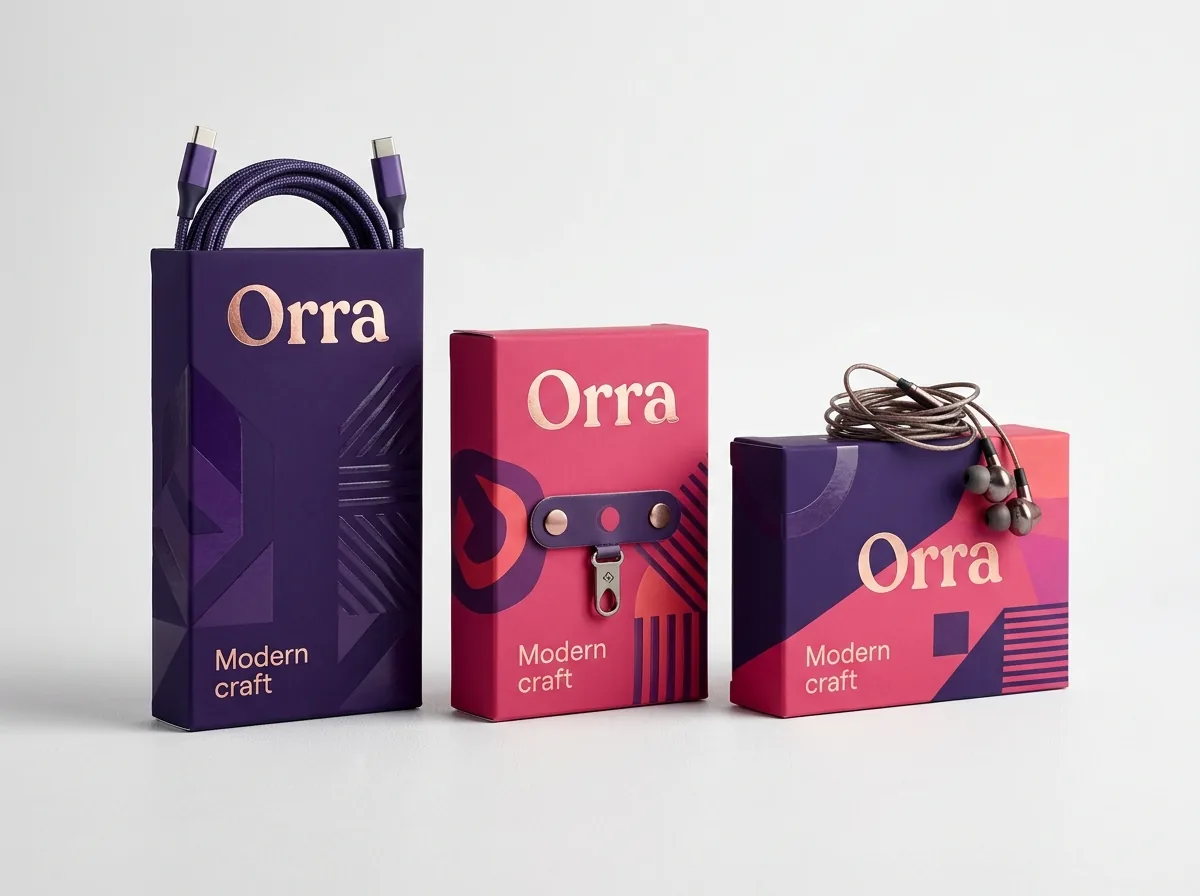

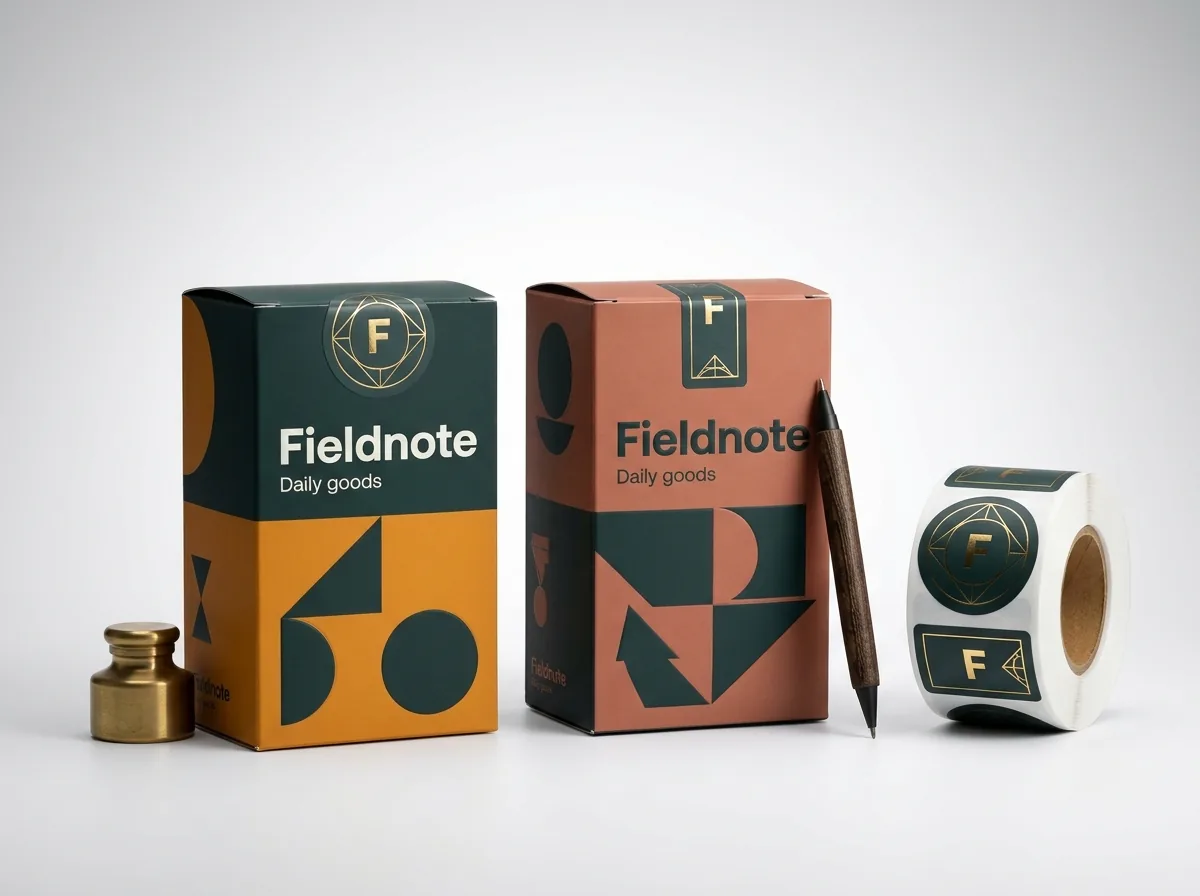
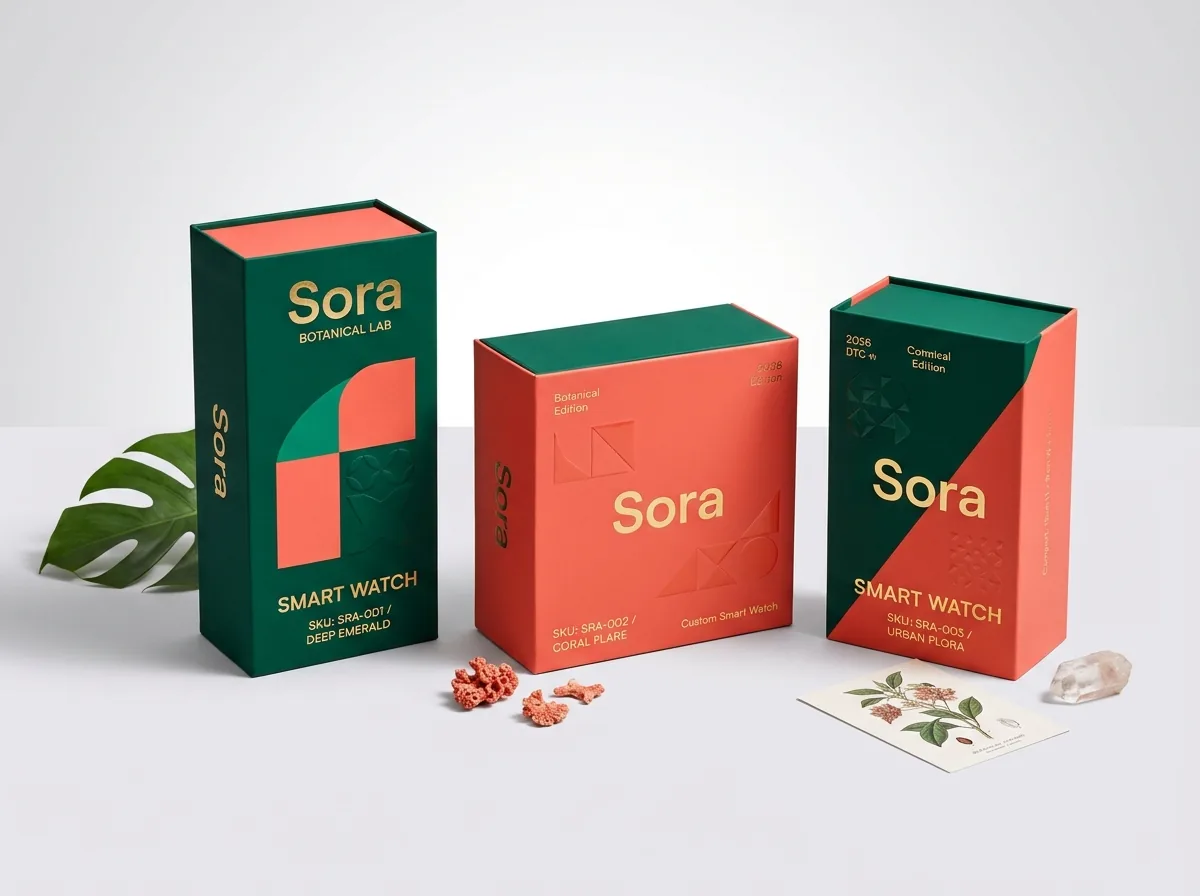
Ready to order power bank boxes? Compare up to 3 quantities with a free 3D mockup.
Request a Quote →Questions about power bank boxes
How do you calculate watt-hours (Wh) from mAh to print on a power bank box?
Multiply the battery capacity in amp-hours (mAh divided by 1,000) by the nominal internal cell voltage (typically 3.7V or 3.6V for lithium-ion cells). For example, a 10,000 mAh pack at 3.7V equals 37 Wh, and a 20,000 mAh pack equals 74 Wh.
What is the minimum font size for USB-PD voltage tables on the back of the box?
Keep technical specification tables (such as 5V=3A, 9V=3A, 15V=3A, 20V=5A) at 6.5 pt or larger in a clean sans-serif font. Print dark text in 100% K black ink or place white knockout text over a solid single-color patch.
Can your designers create the Spot UV mask and two-pocket insert dieline for us?
Yes. Free design help and free custom structural dielines are included with every CubitPack order. Send us your battery dimensions, product render and spec sheet, and we will build the dieline, Spot UV layer and 3D mockup before you pay.
Should we use a window cutout or a 1:1 Spot UV render on the front of the box?
Most portable charger brands prefer a 1:1 full-scale photorealistic render highlighted with gloss Spot UV over a matte carton rather than a plastic window. A solid front panel gives greater crush strength and more room for wattage and Wh badges.
How do we seal tuck-end or auto-lock power bank boxes for retail peg hooks?
We pair retail cartons with clear circular tamper-evident wafer seals applied across the top tuck flap (and bottom flap if not using a pre-glued auto-lock base) so customers know the battery pack and cable inside are factory-fresh.
Can we split a 1,000-box folding carton order across Black, White and Blue power bank SKUs?
Yes. When your colorways or capacity tiers share the exact same box and insert dieline size, we can split a production run across multiple artwork designs. Select 2 designs or 3+ designs in the quote form to get multi-SKU pricing.
Still have a question? Ask a packaging specialist.
Request a Quote →Request your power bank boxes quote
Tell us your size and quantities, and one dedicated account manager prepares pricing for each tier.
- Free design & AI-to-print studio + 3D mockup
- No die or plate charges · 4–5 day rush available
- Free shipping to all 50 states
- 10% off your first order
This design and prepress guide combines FAA PackSafe watt-hour labeling context, GS1 barcode contrast rules, and CubitPack's structural insert and Spot UV production specs from our published product specifications. A packaging specialist reviewed every section. Spot an error? Tell us and we will fix it.
Sources
What changed
- October 22, 2026: First published.
- October 22, 2026: Updated specifications, terminology, and verified source links.
More guides
New packaging guides by email
Sizes, materials and design tips. Unsubscribe anytime.