
What size gadget box do I need for pocket tech, smart trackers and multi-piece kits?
Short answer: Measure your gadget's 3D bounding box (outermost Length × Width × Height including triggers or lenses), add 0.25 to 0.5 inch per side for the insert rim, and add 0.5 to 1.25 inches for any cord well. Common custom gadget boxes range from 3.25 × 0.625 × 4.25 in to 5.75 × 3.75 × 1.75 in.
On this page
- How do you measure an oddly shaped or asymmetric gadget for a custom box
- What are standard inside sizes for smart trackers, pocket tech and creator kits
- How do you keep box lids from pressing down on joysticks, knobs and lenses
- What size paperboard carton replaces plastic clamshells for smart tags and pocket tools
- How much space do metal tripod mounts, carabiners and cables need inside a gadget kit
- Common mistakes
- FAQs
Request a custom quoteFree dieline & 3D mockup
Unlike cylindrical jars or rectangular books, consumer gadgets rarely have flat, symmetrical sides. A foldable smartphone gimbal, a handheld retro gaming console, a pocket synthesizer or an everyday-carry (EDC) multi-tool has curved grips, raised analog thumbsticks, rotary encoder dials, optical lenses and folding arms, plus loose accessories like keyring carabiners, 1/4-20 metal tripod screws and USB-C charging cables. To size a gadget carton accurately, you never measure the main body shell alone. Instead, you start with the 3D bounding box across the widest and tallest protrusions, add a perimeter shoulder for a contoured paperboard or die-cut EVA foam cradle, and allocate a walled lower or side compartment for metal mounts and cords. Every order of printed gadget boxes from CubitPack is cut to your exact inside dimensions with zero die fees, free design help, and free 50-state shipping.
How do you measure an oddly shaped or asymmetric gadget for a custom box?
When a hardware product has angled handles, offset camera lenses or side trigger buttons, measuring with a flat ruler across the center body will produce a carton that is 0.25 to 0.5 inch too narrow. The reliable method used by industrial designers is the 3D bounding-box method: export the outermost X, Y and Z dimensions from your 3D CAD assembly (STEP or IGES file), or place the physical prototype flat on a table between two straight blocks to capture its maximum footprint. Once you have the hardware bounding box, decide whether your accessories (charging cable, lanyard, keyring clip or mini tripod) will hide in a false-bottom pocket underneath the gadget cradle or sit beside it in a multi-cavity grid. Share those measurements with our structural team so we can engineer your custom gadget boxes and contoured insert dielines together.
- Maximum footprint (L × W): measure between the outermost points of the gadget in its folded or display position, including side buttons, hinges and keyring loops.
- Total height with controls (H): measure from the bottom feet to the tip of the highest analog joystick, rotary knob or lens bezel.
- Insert perimeter border: add 0.25 inch per side (0.5 inch total to L and W) for a folded paperboard tray, or 0.375 to 0.5 inch per side (0.75 to 1.0 inch total) for die-cut EVA foam.
- Lower cable & manual pocket (+H): add 0.5 to 0.625 inch to Height when a coiled USB-C cord and quick-start booklet sit underneath the main cradle.
- Side mount & tripod well (+L): add 1.25 to 2.0 inches to Length (plus a 0.25 to 0.375 inch divider wall) when a metal tripod screw, cold-shoe mount or carry pouch sits beside the gadget.
What are standard inside sizes for smart trackers, pocket tech and creator kits?
While CubitPack cuts every outer carton and inner paperboard or foam cradle to your exact hardware specs with no die charges, most pocket gadgets, EDC tools, gaming handhelds and crowdfunding creator kits fall into eight proven size brackets. Use the benchmark table below to compare slim blister-free checkout packs, compact desk gadget boxes, slide-out console sleeves and multi-cavity creator mailers. Notice how peg-hook retail cartons for smart tags and USB-C hubs stay under 1.25 inches deep so up to ten units hang on a single store pegboard hook, whereas creator and crowdfunding kits use wider, squarer footprints that open flat on a desk.
| Gadget category & kit contents | Typical inside size (L × W × H) | Usual carton & insert setup |
|---|---|---|
| Bluetooth smart tag, key finder or NFC wallet card | 3.25 × 0.625 × 4.25 in | Straight tuck + Euro hang tab + lock card |
| 4-pack Bluetooth item trackers or hardware security keys | 4.0 × 0.875 × 5.5 in | Hang tab or sleeve box + 4-well card tray |
| 7-in-1 USB-C hub, MagSafe wallet stand or EDC flashlight | 3.75 × 1.25 × 5.25 in | Straight tuck or window box + card cradle |
| Laser distance meter, pocket RGB light or smart remote | 4.5 × 3.25 × 2.0 in | Auto-lock bottom or sleeve + 2-tier tray |
| Handheld retro gaming console or pocket synthesizer + cord | 5.75 × 3.75 × 1.75 in | Tray and sleeve + contoured EVA foam |
| Wireless 2-tx lapel microphone kit + charging case + furry winds | 5.5 × 4.25 × 2.25 in | Tray and sleeve or two-piece + multi-well tray |
| Foldable 3-axis smartphone gimbal + mini tripod + USB cord | 6.25 × 4.25 × 2.5 in | Auto-lock carton or E-flute mailer + divider |
| Kickstarter Founder's Edition kit (gadget + mounts + pouch) | 7.0 × 5.5 × 2.75 in | E-flute mailer or two-piece rigid + EVA foam |
How do you keep box lids from pressing down on joysticks, knobs and lenses?
Handheld gaming consoles, macro stream decks, pocket synthesizers and laser distance meters almost always have active mechanical controls protruding from the top face: spring-loaded analog thumbsticks, clicky rotary encoders, mechanical keycaps or glass optical lenses. If the top of your gadget sits flush with the top of the carton walls, any weight stacked on the box during warehouse storage or parcel shipping will hold those buttons depressed for weeks and damage the switches. We prevent switch compression by engineering a stepped recess in your custom EVA foam inserts or custom cardboard inserts. The main body of the gadget rests on a lower shelf inside the cavity so the tallest tip of the joystick or rotary knob sits at least 0.125 to 0.25 inch below the top rim of the tray. When the outer sleeve or lid closes, an air gap remains above every control.
Know your size? Compare pricing across up to 3 quantities.
Request a Quote →What size paperboard carton replaces plastic clamshells for smart tags and pocket tools?
For years, small checkout gadgets like Bluetooth key finders, USB-C OTG adapters, micro multi-tools and key-chain flashlights were sealed inside thermoformed PVC plastic clamshells. Today, major electronics retailers and eco-conscious shoppers strongly prefer plastic-free paperboard hang-tab cartons that fit the exact same store pegboard hooks. A 3.25 × 0.625 × 4.25 inch or 3.5 × 0.75 × 5.0 inch straight-tuck folding carton with an integral Euro hang tab is the standard replacement for a single smart tag or pocket tool. Inside the carton, a folded paperboard lock card traps the tracker or keyring loop in front of a die-cut circular viewing window (or behind a solid front panel with a 1:1 Spot UV graphic), giving you a rigid, theft-deterrent retail pack that folds flat and recycles in curbside paper bins. If you sell a 2-pack or 4-pack of Bluetooth item finders for luggage and keys, widening the carton to 4.0 × 0.875 × 5.5 inches lets you display all four color-coded trackers in a two-by-two grid on the front carrier card while tucking the instruction leaflet and spare keyring loops into the back fold.
How much space do metal tripod mounts, carabiners and cables need inside a gadget kit?
Vlogging lights, action-camera gadgets, bike computers and outdoor EDC tools frequently ship with heavy steel or aluminum mounting hardware: 1/4-20 tripod screws, magnetic neck mounts, handlebar clamps or spring carabiners. If those metal pieces share an open compartment with your gadget, parcel vibration will chip anodized coatings and crack display glass. When sizing multi-piece kits (typically 6.25 × 4.25 × 2.5 inches or 7.0 × 5.5 × 2.75 inches), always leave at least a 0.25-inch folded double-wall paperboard barrier or a 0.375-inch EVA foam web between the primary hardware well and the accessory well. You can also pack all loose mounts, cables and microfiber pouches into a separate printed inner accessory box tucked beside the main cradle, just as brands do in custom electronics boxes and custom power bank boxes. Before locking in your final carton dimensions, our design team will send you a free 2D vector dieline for both the outer box and the multi-cavity insert along with a 3D mockup so your hardware team can verify every millimeter of clearance.
What are the most common gadget box sizing mistakes?
Oddly shaped hardware and small metal mounts create unique sizing traps if you only measure the bare casing. Avoid these five mistakes
- Measuring the main housing width while forgetting a 4 mm side trigger, lanyard loop or folding hinge that jams against the tray wall.
- Setting the carton height equal to the casing thickness so the closed lid presses down continuously on analog joysticks or rotary knobs.
- Cutting a rectangular insert hole for a round or triangular gadget, allowing the hardware to spin 45 degrees in transit.
- Placing a metal 1/4-20 tripod mount or carabiner clip in the same open well as an unprotected display screen.
- Making an impulse checkout hang-tab box deeper than 1.5 inches so fewer than six units fit on a standard retail peg hook.
Find your size
Suggested inside size: 3.25 × 0.625 × 4.25 in
A starting point. Your account manager confirms the size with you before the proof.
Quote this size →Packaging for this
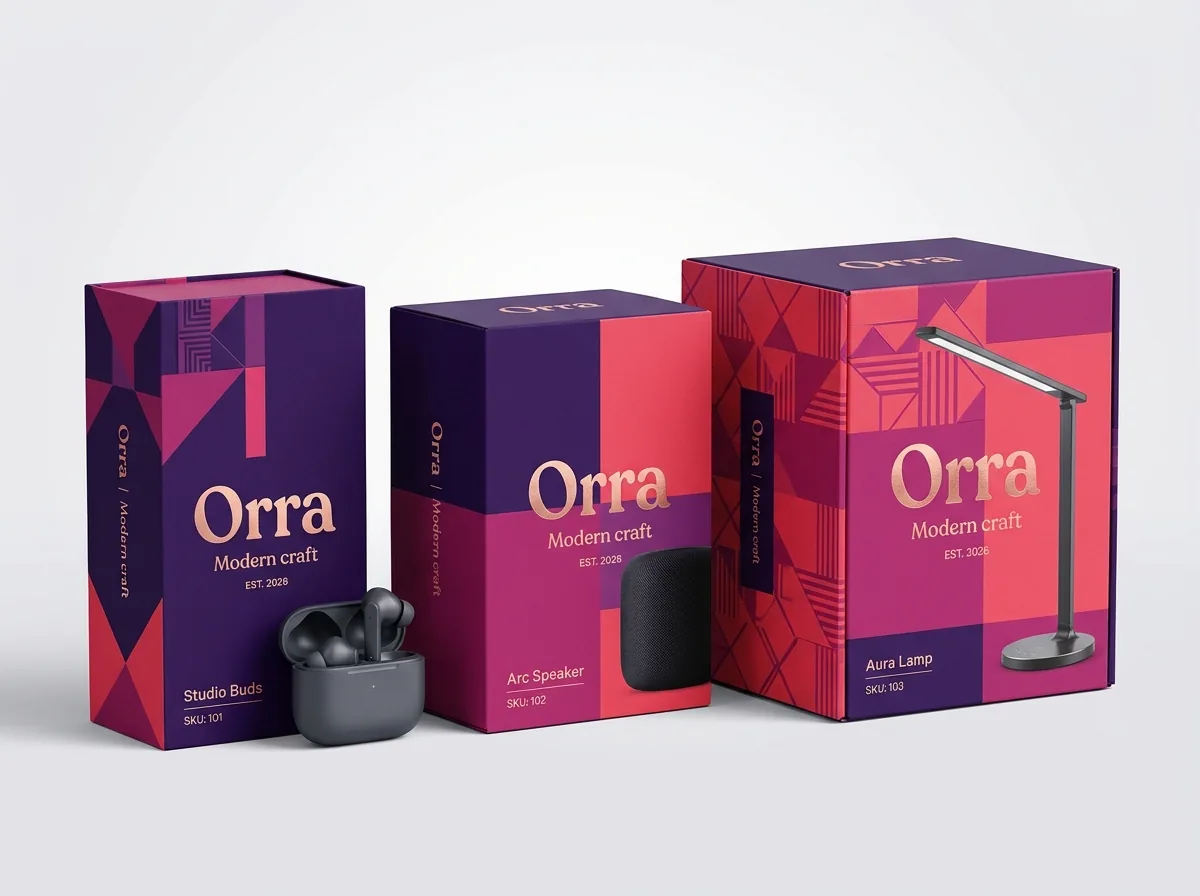
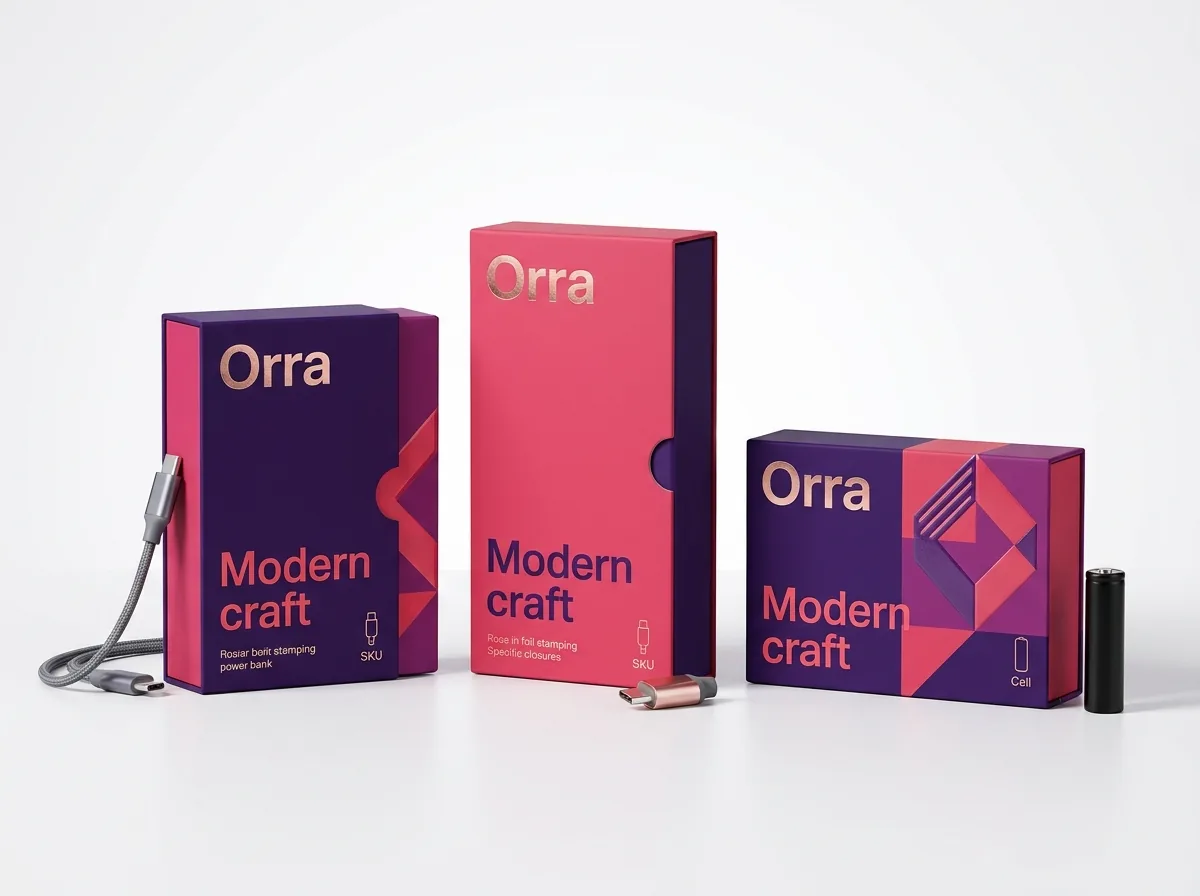
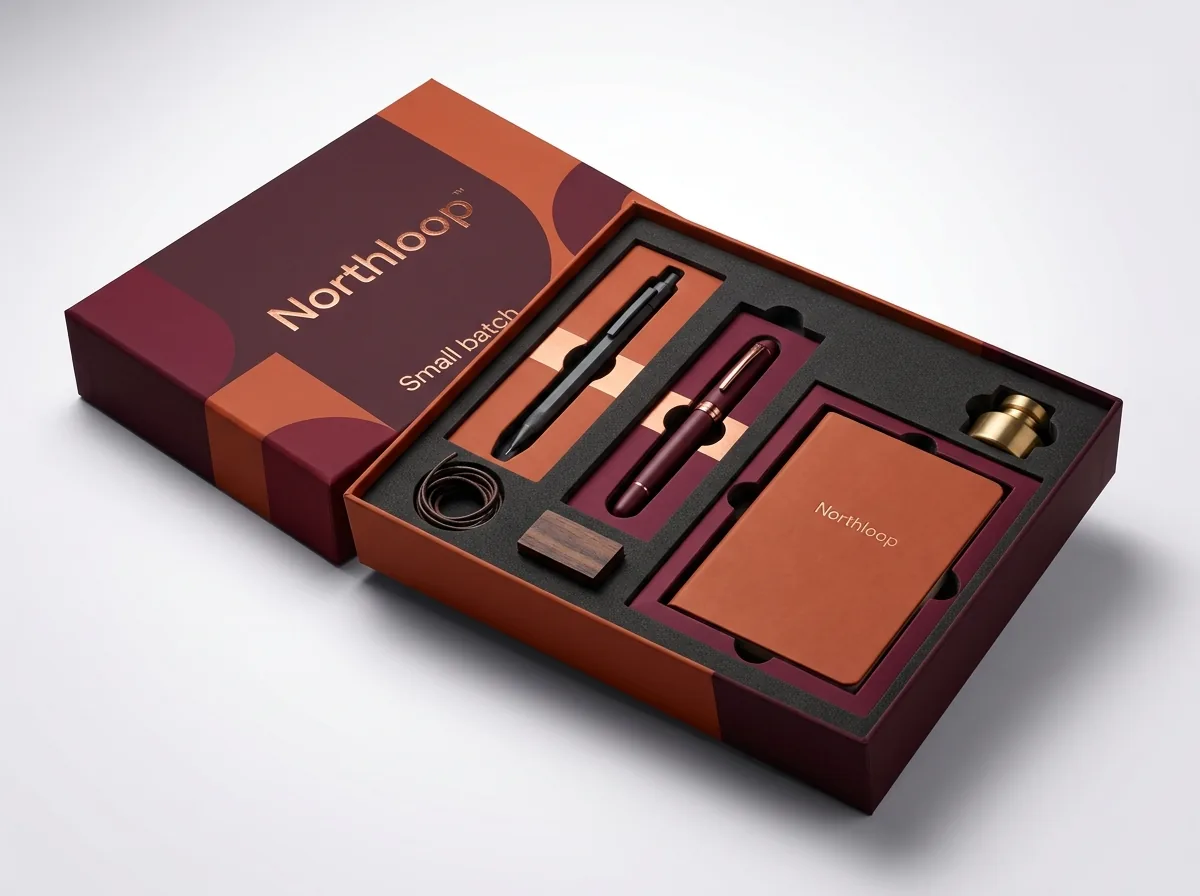

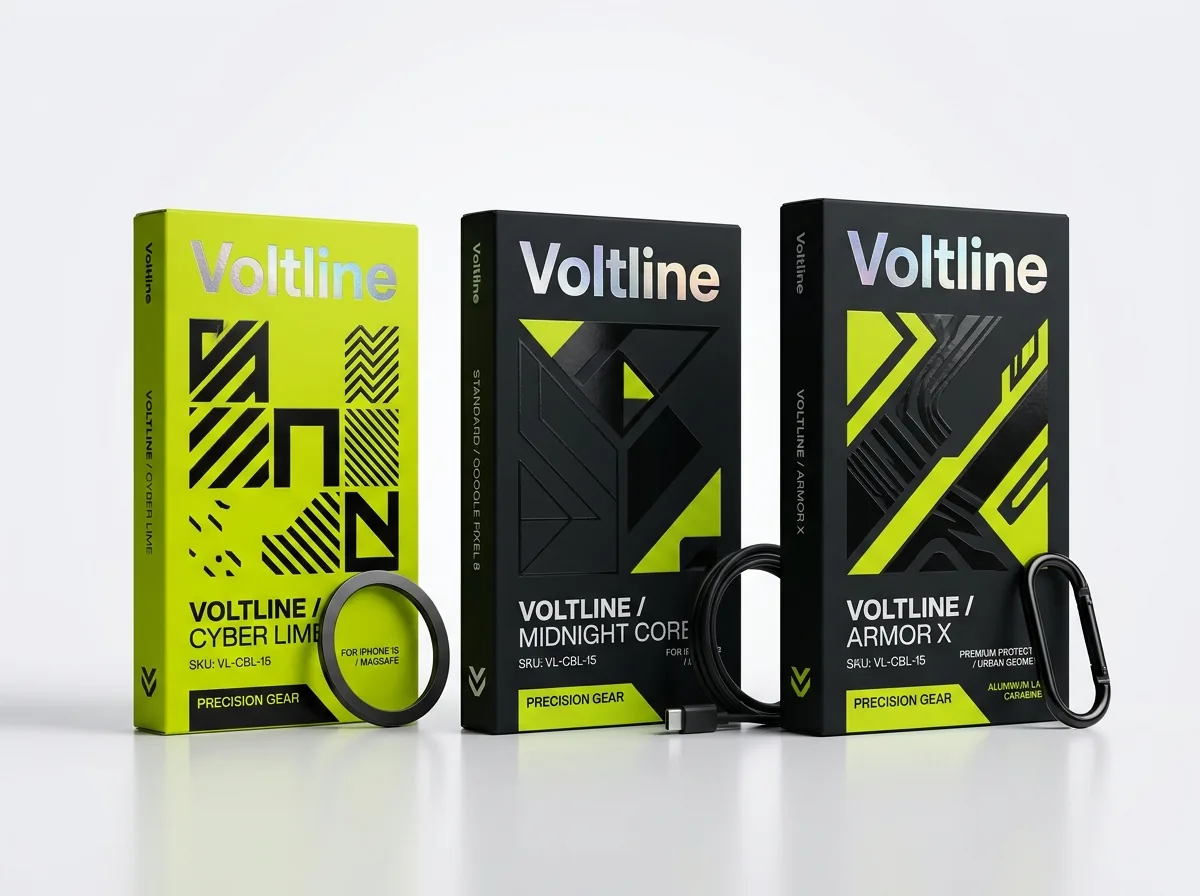
Ready to order gadget boxes? Compare up to 3 quantities with a free 3D mockup.
Request a Quote →Questions about gadget boxes
Can I send my 3D CAD file (STEP or IGES) so your engineers can size the gadget box and insert?
Yes. Share your 3D CAD assembly or bounding-box dimensions with your quote request, and our structural team will engineer both the outer carton dieline and the contoured paperboard or EVA foam insert for free.
What size box fits a single Bluetooth smart tag or key finder?
A single Bluetooth item tracker with a keyring loop or lanyard typically fits a slim 3.25 × 0.625 × 4.25 inch straight-tuck folding carton with an integral Euro hang tab and an internal paperboard carrier card.
What size box works best for a handheld retro gaming console or pocket synth?
Most pocket handheld consoles and compact controllers fit a 5.75 × 3.75 × 1.75 inch or 6.25 × 4.0 × 2.0 inch slide-out tray-and-sleeve box with a stepped EVA foam or paperboard cradle and a lower USB-C cable well.
How much clearance should we leave above protruding buttons or joysticks?
Always recess the gadget cradle so the tallest point of any analog stick, rotary encoder dial or camera lens sits at least 0.125 to 0.25 inch (3 to 6 mm) below the inside face of the closed lid.
Do you charge extra die fees for an asymmetric contour cutout in paperboard or foam?
No. CubitPack never charges die or plate fees. Your custom outer carton dieline, front viewing window and contoured paperboard or EVA foam insert cavity are all included with zero tooling charges.
Can I test my gadget and mounting accessories inside a physical sample box first?
Yes. Every order includes free vector dielines plus a digital proof and 3D mockup before payment. You can also order our $50 sample kit (credited to your order) or request a custom physical prototype.
Still have a question? Ask a packaging specialist.
Request a Quote →Request your gadget boxes quote
Tell us your size and quantities, and one dedicated account manager prepares pricing for each tier.
- Free design & AI-to-print studio + 3D mockup
- No die or plate charges · 4–5 day rush available
- Free shipping to all 50 states
- 10% off your first order
The sizing rules and category dimensions in this guide are based on common pocket hardware footprints (Bluetooth trackers, USB-C hubs, handheld consoles, pocket lights and 3-axis smartphone gimbals) and standard paperboard and EVA foam tolerances. A CubitPack packaging specialist verified every row. Spot an error? Tell us and we will fix it.
Sources
What changed
- October 22, 2026: First published.
- October 22, 2026: Updated specifications, terminology, and verified source links.
More guides
New packaging guides by email
Sizes, materials and design tips. Unsubscribe anytime.