
Wet-press smooth molded fiber vs dry-press kraft pulp inserts: which fits your product?
Short answer: Choose smooth hot-pressed wet-press custom molded pulp inserts (IMFA Type 3) when you want dense, lint-free, card-smooth trays inside luxury skincare, fragrance, or electronics rigid boxes; choose thicker oven-dried dry-press pulp (IMFA Type 2) to cushion heavy glass candles, wine bottles, and appliances in shipping mailers.

On this page
- How do wet-press and dry-press molded pulp manufacturing processes differ
- How do wet-press (Type 3) and dry-press (Type 2) trays compare on finish, tolerance and shock
- When should skincare, fragrance and electronics brands choose smooth wet-press fiber
- When is cushioned dry-press kraft pulp stronger for candles, glass bottles and appliances
- How do custom 3D mold tooling, fiber colors and order minimums compare across both grades
- Common mistakes
- FAQs
Request a custom quoteFree dieline & 3D mockup
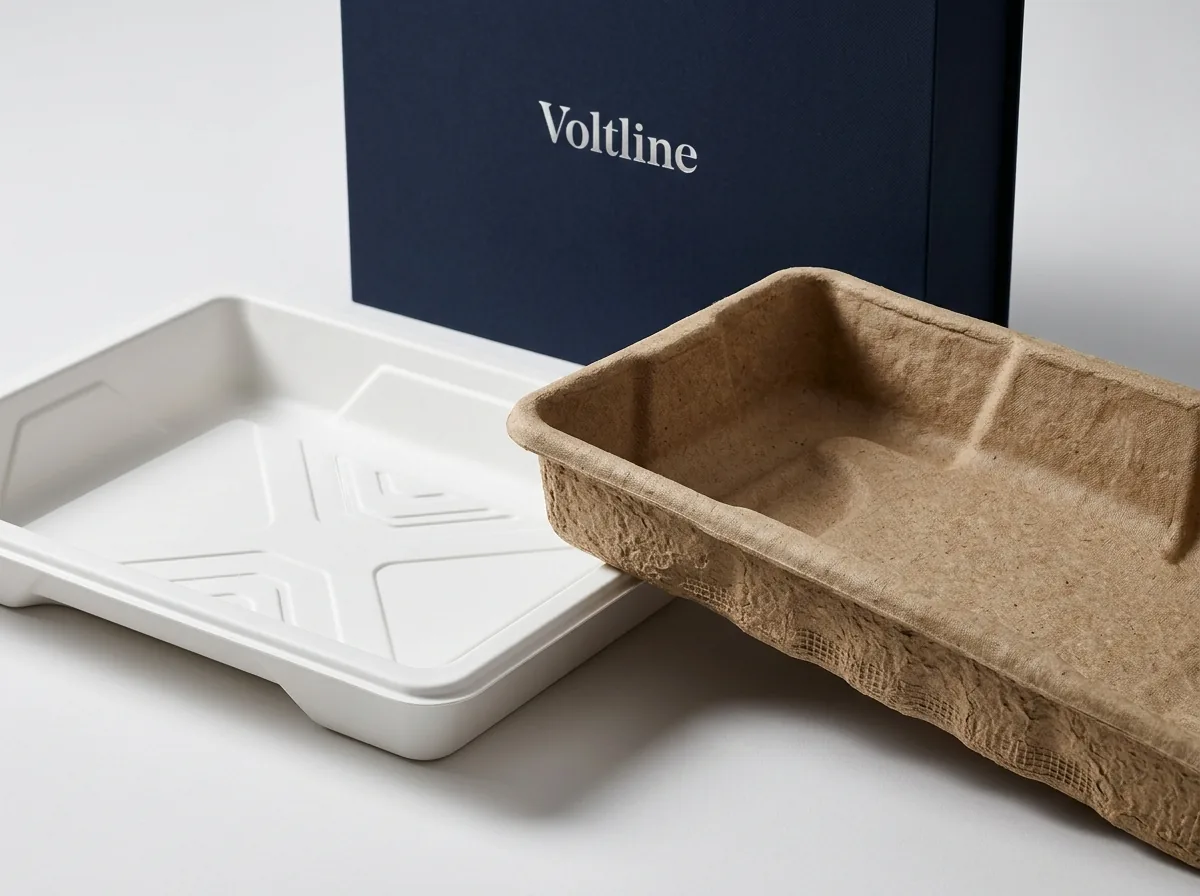
Not all molded fiber trays look like egg cartons. Under International Molded Fiber Association (IMFA) standards, custom box inserts divide into two distinct converting families: Type 3 thermoformed wet-press fiber and Type 2 transfer-molded dry-press pulp. Both start by vacuum-drawing water and paper or plant fibers onto a contoured 3D aluminum mesh screen, but they diverge at drying. Wet-press transfers the damp part directly into matched heated metal dies that iron both faces smooth to tight +/-0.5 mm tolerances. Dry-press moves the damp cradle through a convection drying tunnel, preserving a loftier 2.0 to 4.5 mm shock-absorbing wall with one smooth top face and a wire-screen underside. At CubitPack, standalone orders for either grade start at 250 units with custom 3D mold tooling quoted transparently per project, free structural CAD help, a 3D mockup before payment, 10 to 14 business day turnaround after sign-off, and free 50-state US shipping.
How do wet-press and dry-press molded pulp manufacturing processes differ?
When buyers hold two 3D molded fiber box inserts side by side and notice that one feels like satin matte paperboard while the other feels like a sturdy kraft protective shell, they are feeling the difference between die-pressing and tunnel-drying. Both processes form pulp slurry without plastic binders, yet the drying stage changes fiber density, edge sharpness, and mold complexity
- Wet-press thermoforming (IMFA Type 3) irons damp fiber inside heated metal dies: Right after vacuum forming, a transfer tool places the wet fiber preform between paired upper and lower heated CNC aluminum or steel dies. High mechanical pressure and heat flash-evaporate moisture inside the closed mold, compacting fibers into a dense 1.0 to 2.0 mm wall that is smooth on both top and bottom.
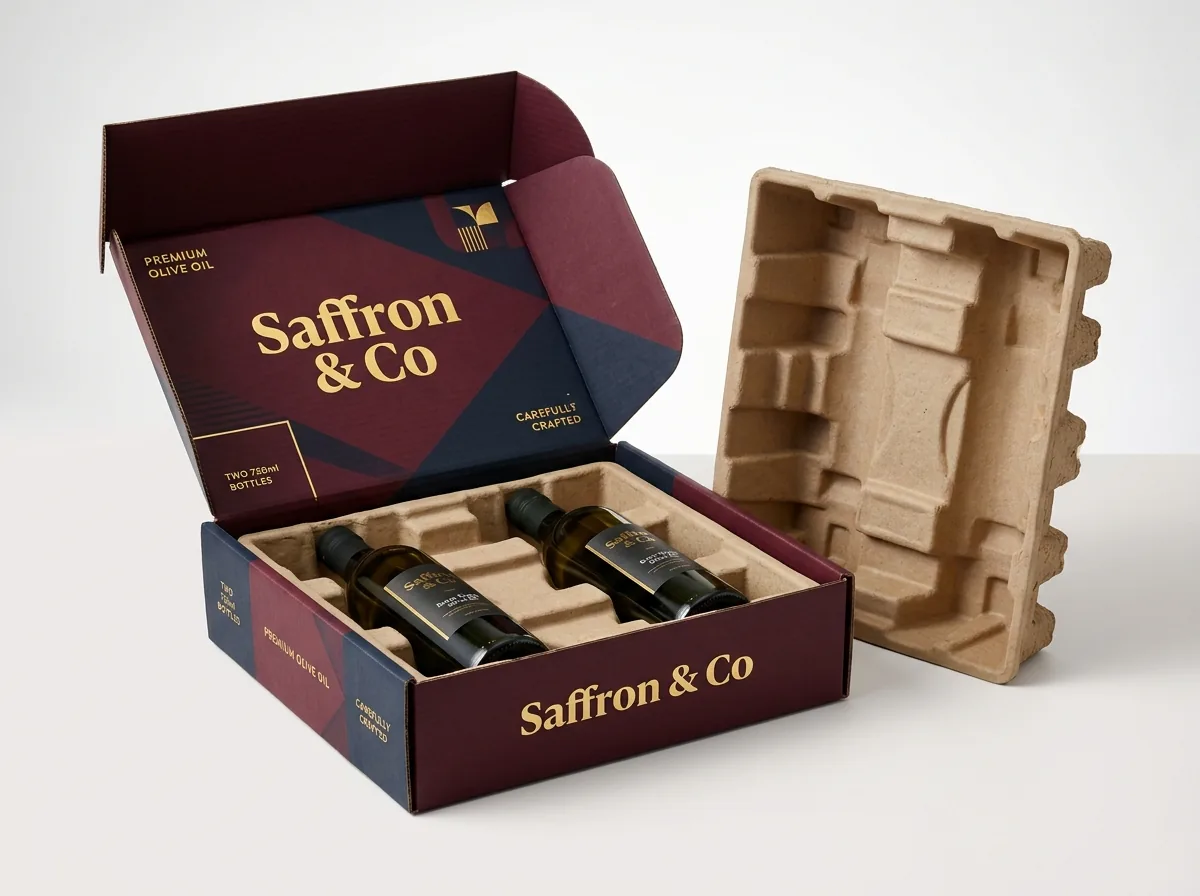
- Dry-press transfer molding (IMFA Type 2) dries fiber in a hot-air tunnel oven: After vacuum forming and a smooth transfer mold pass, parts ride a conveyor through an oven without closed-die clamping. Because fibers dry uncompacted, walls stay thicker (2.0 to 4.5 mm) and keep microscopic air pockets that cushion heavy impacts.
- Why IMFA Type 1 thick-wall industrial pulp rarely fits retail boxes: Unpressed Type 1 pulp has one very rough side and 5 to 10 mm walls built for heavy industrial motors rather than consumer unboxing.
- Both grades nest cleanly on warehouse pallets: Whether you pick wet-press at a 3 to 5 degree draft or dry-press at a 5 to 7 degree draft, empty trays stack tightly to save storage space.
How do wet-press (Type 3) and dry-press (Type 2) trays compare on finish, tolerance and shock?
Picking the wrong molding grade either inflates your custom 3D mold quote unnecessarily or leaves glossy consumer electronics dusted with loose kraft fibers. Because wet-press trays cure under heated mechanical clamping, fiber density rises substantially, producing crisp architectural creases, thinner 1.0 to 2.0 mm walls, and smooth mating flanges that drop into rigid chipboard bases with minimal play. Dry-press trays, by contrast, retain tiny internal air voids inside a thicker 2.0 to 4.5 mm fiber matrix that acts like a progressive crumple cushion under multi-pound glass tumblers and wine bottles. Review our companion draft angle and cavity sizing guide for wall geometry rules, and compare every engineering trade-off across both molded fiber grades in the matrix below
| Specification | Wet-press smooth (IMFA Type 3) | Dry-press cushioned (IMFA Type 2) | Practical buyer takeaway |
|---|---|---|---|
| Surface texture | Smooth, card-like on both faces; lint-free | Smooth top face; fine wire-mesh back | Wet-press suits open display decks; dry-press hides its underside in the box |
| Wall thickness | 1.0 to 2.0 mm compacted fiber | 2.0 to 4.5 mm porous fiber cushion | Dry-press gives thicker material bulk around heavy glass tumblers |
| Dimensional tolerance | Tight (+/-0.5 mm) for snap-in fit | Moderate (+/-1.0 to 1.5 mm) | Wet-press fits precision rigid boxes and handheld tech housings cleanly |
| Sidewall draft angle | 3° to 5° outward slope | 5° to 7° outward slope | Wet-press allows steeper, sharper architectural pocket walls |
| In-mold logo debossing | Crisp fine-line blind deboss or emboss | Broad bold recessed marks only | Hot-pressing stamps sharp typography right into the top flange |
| Custom 3D mold tooling | Forming screen + matched heated press dies | Forming screen + unheated transfer mold | Dry-press molds cost less upfront; both are quoted per project |
When should skincare, fragrance and electronics brands choose smooth wet-press fiber?
Wet-press thermoformed fiber became famous in flagship smartphone, earbud, and clinical skincare launches because it replaces thermoformed PET or PVC plastic blisters with zero visual compromise. Specify smooth wet-press custom molded pulp trays whenever unboxing touch, lint control, and sub-millimeter fit drive product value
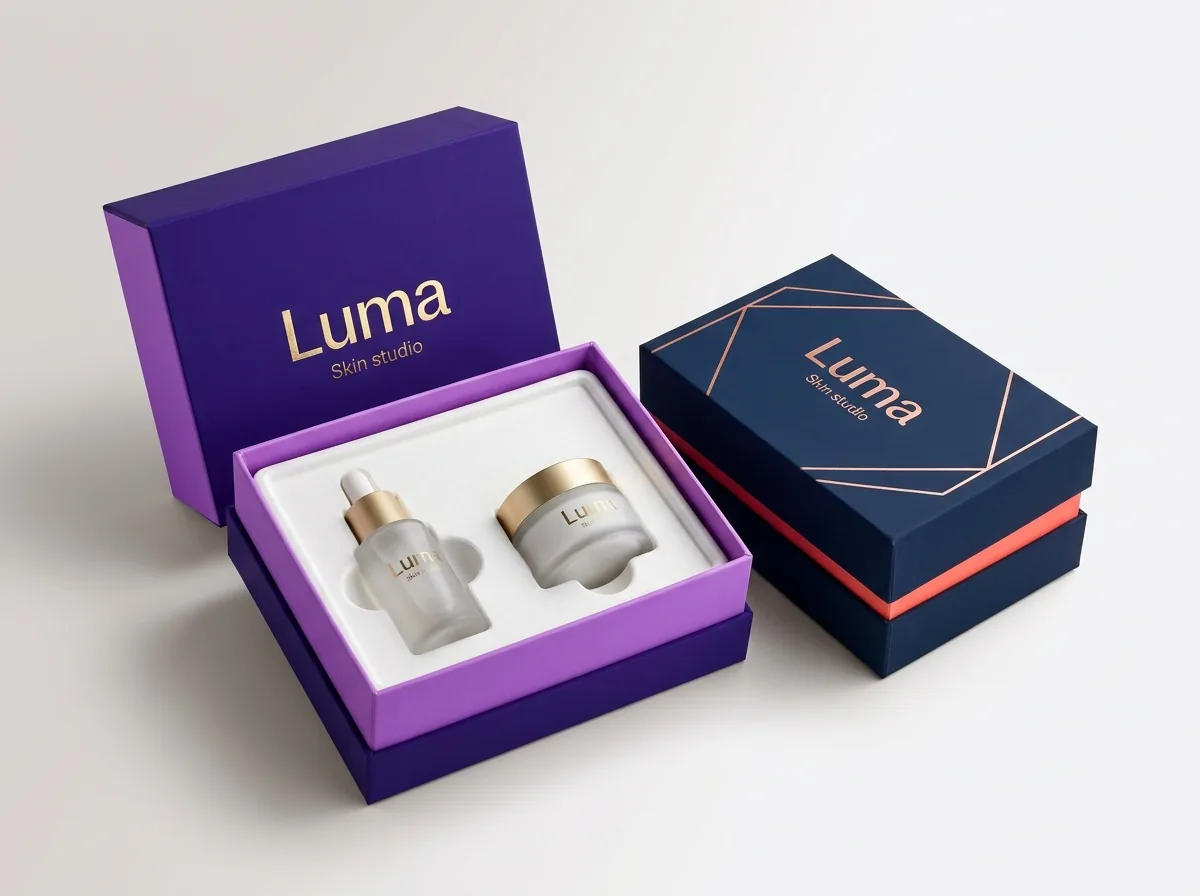
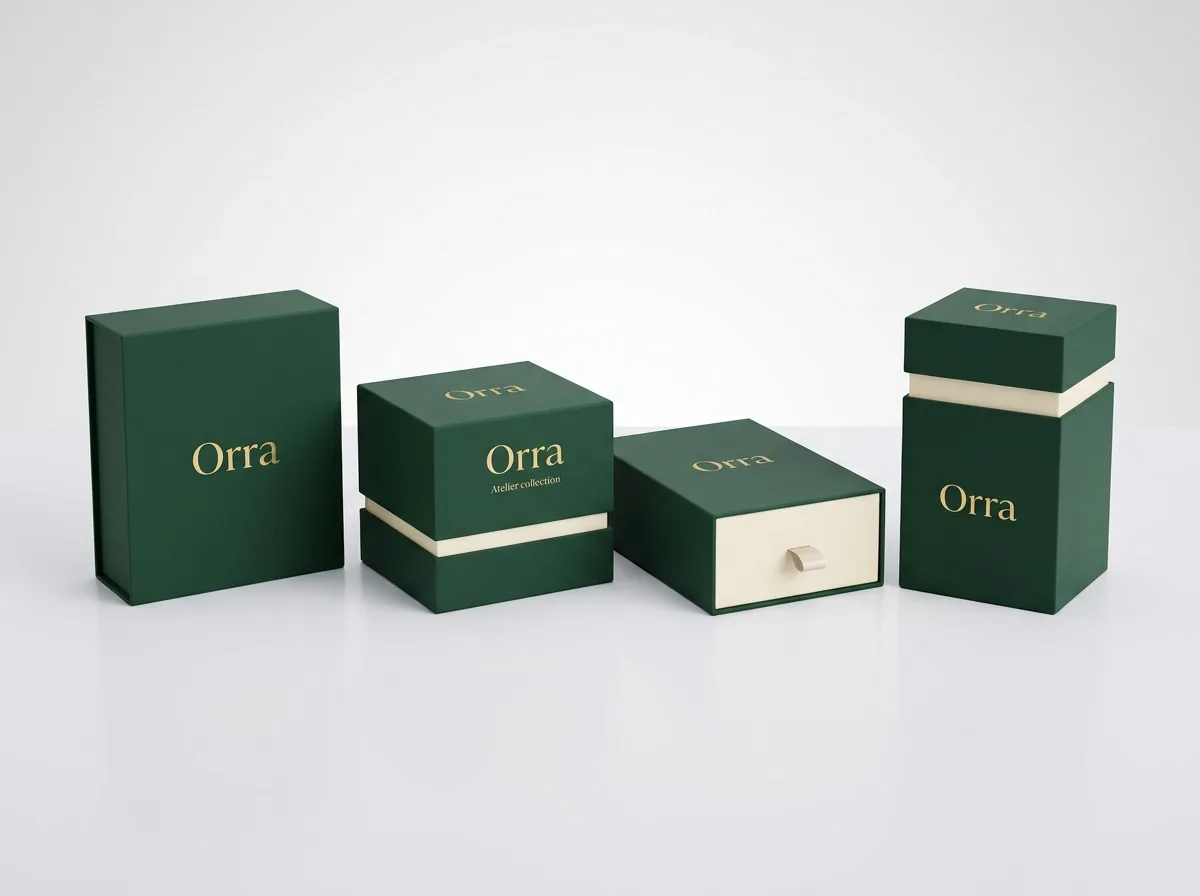
- Luxury rigid boxes with tight corner tolerances: Inside custom rigid boxes and magnetic closure gift sets, a +/-0.5 mm hot-pressed flange sits dead-flat from corner to corner without warpage or edge curl.
- Optical lenses, smart devices, and matte-coated glass bottles: High-pressure heated dies lock surface fibers down so zero loose paper dust transfers onto anodized aluminum, camera glass, or soft-touch serum droppers inside custom skincare boxes and custom electronics boxes.
- Multi-tier accessory stacking and cord channels: Wet-press holds crisp 2.5 mm internal radii and stepped ledges, allowing a thin top device tray to sit directly above a lower USB-C power adapter and manual well.
- Ink-free blind debossed brand marks: Engraving your logo into the heated press die presses a clean, shadow-catching mark into bleached white, off-white, or slate-gray fiber without adding an ink pass.
Know your size? Compare pricing across up to 3 quantities.
Request a Quote →When is cushioned dry-press kraft pulp stronger for candles, glass bottles and appliances?
When a parcel weighs 3 to 12 lb and travels directly through parcel carrier sorting chutes inside a corrugated carton, wall loft and rib deflection matter far more than a smooth underside. Dry-press transfer pulp excels in high-impact e-commerce fulfillment
- Heavy glass candles, ceramic mugs, and diffuser vessels: Paired with custom candle boxes or custom mailer boxes with inserts, a 3 mm dry-press cradle with perimeter crush ribs dampens corner drops that would crack thin plastic trays.
- Two-piece clamshell bottle shippers for 750 ml glass: Matched top and bottom dry-press troughs lock wine, craft spirits, and olive oil bottles horizontally inside custom wine boxes so glass shoulders never clink.
- Lower upfront 3D mold tooling complexity: Because dry-press skips heated high-tonnage press dies, custom aluminum forming tooling is simpler and faster to machine per project than matched wet-press sets.
- Warm organic aesthetic in natural unbleached kraft: Unbleached brown or recycled kraft pulp pairs naturally with brown corrugated e-commerce mailers.
How do custom 3D mold tooling, fiber colors and order minimums compare across both grades?
Whether your product calls for clinical white wet-press inside retail perfume boxes or rugged kraft dry-press inside heavy corrugated shippers, procurement teams can evaluate both processes side by side in a single CubitPack quote. Fiber slurry tone also plays a major branding role: bleached white and soft off-white furnishes highlight glass skincare droppers and metallic hardware, while unbleached natural brown kraft and neutral gray recycled slurries reinforce botanical, apothecary, and home fragrance palettes without chemical coatings. You can also explore volume breakpoints in our molded pulp tooling and foam switch guide
- 250-unit standalone minimum on both processes: Order from 250 standalone molded pulp inserts or match your paired outer box MOQ, and enter three quantities (such as 500, 1,000, and 2,500) in Step 1 of the quote form to see how per-project 3D mold tooling amortizes across larger runs.
- Zero-tooling paper alternatives for small test launches: If you are testing a new SKU at 250 units and want zero tooling fees before investing in 3D aluminum pulp molds, ask us to quote die-cut custom cardboard inserts or custom honeycomb inserts alongside pulp.
- Free CAD engineering, 3D mockups, and 50-state shipping: Get a quote reply in 5 to 7 minutes (24/7), review your 2D drawing and interactive 3D mockup before payment, save 10% on your first order, and receive free US shipping in 10 to 14 business days after proof and mold sign-off.
What mistakes happen when choosing between wet-press and dry-press pulp inserts?
Avoid these five specification mismatches when selecting your molded fiber grade
- Using unpressed or dry-press pulp next to glossy black electronics or optical glass where trace fiber lint is visible on unboxing.
- Putting a thin 1.2 mm wet-press tray without crush ribs under a heavy 750 ml glass bottle shipped in parcel networks.
- Paying for matched heated wet-press dies on hidden internal shipping end caps where oven-dried dry-press protects for less tooling cost.
- Expecting fine 8-point debossed typography to read clearly on textured dry-press kraft instead of smooth hot-pressed wet-press decks.
- Assuming either 3D molded pulp grade has zero die fees like flat paperboard rather than amortizing custom aluminum molds across your order.
Packaging for this

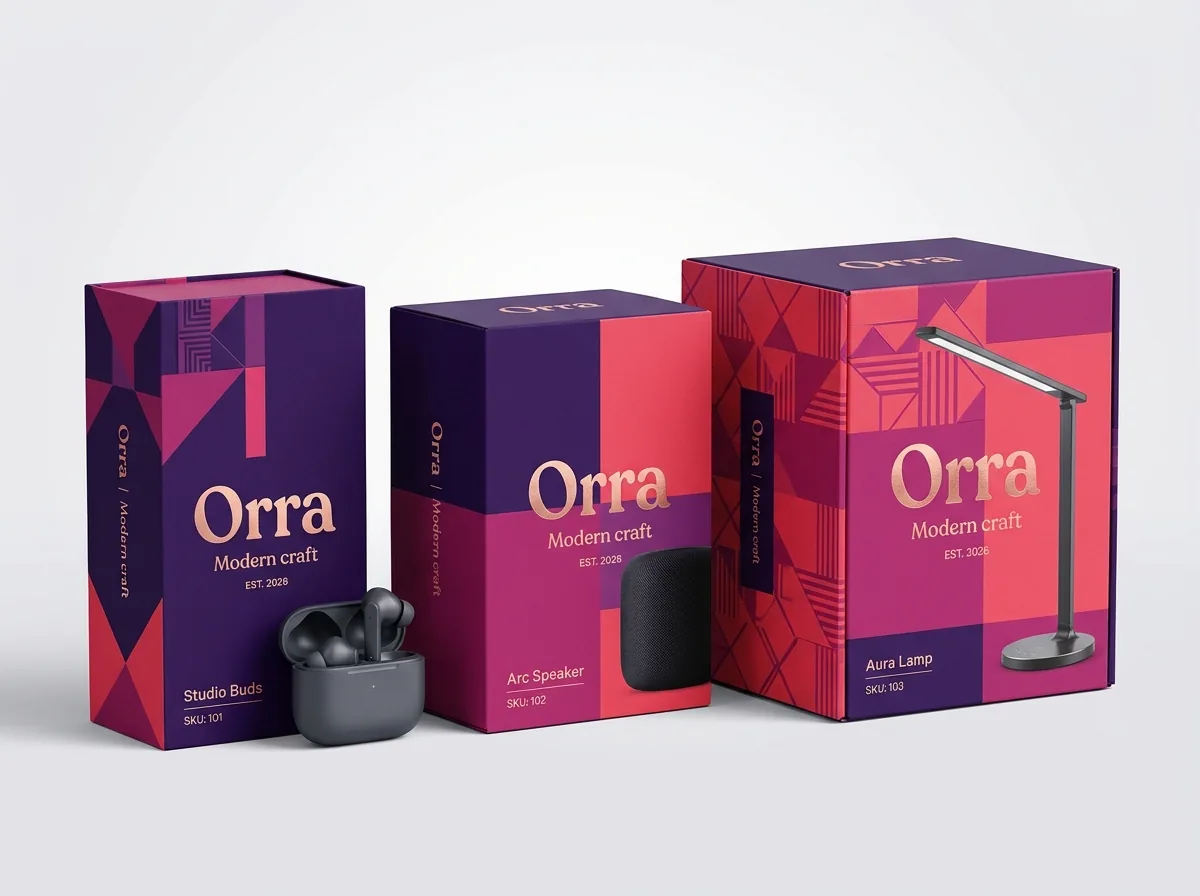
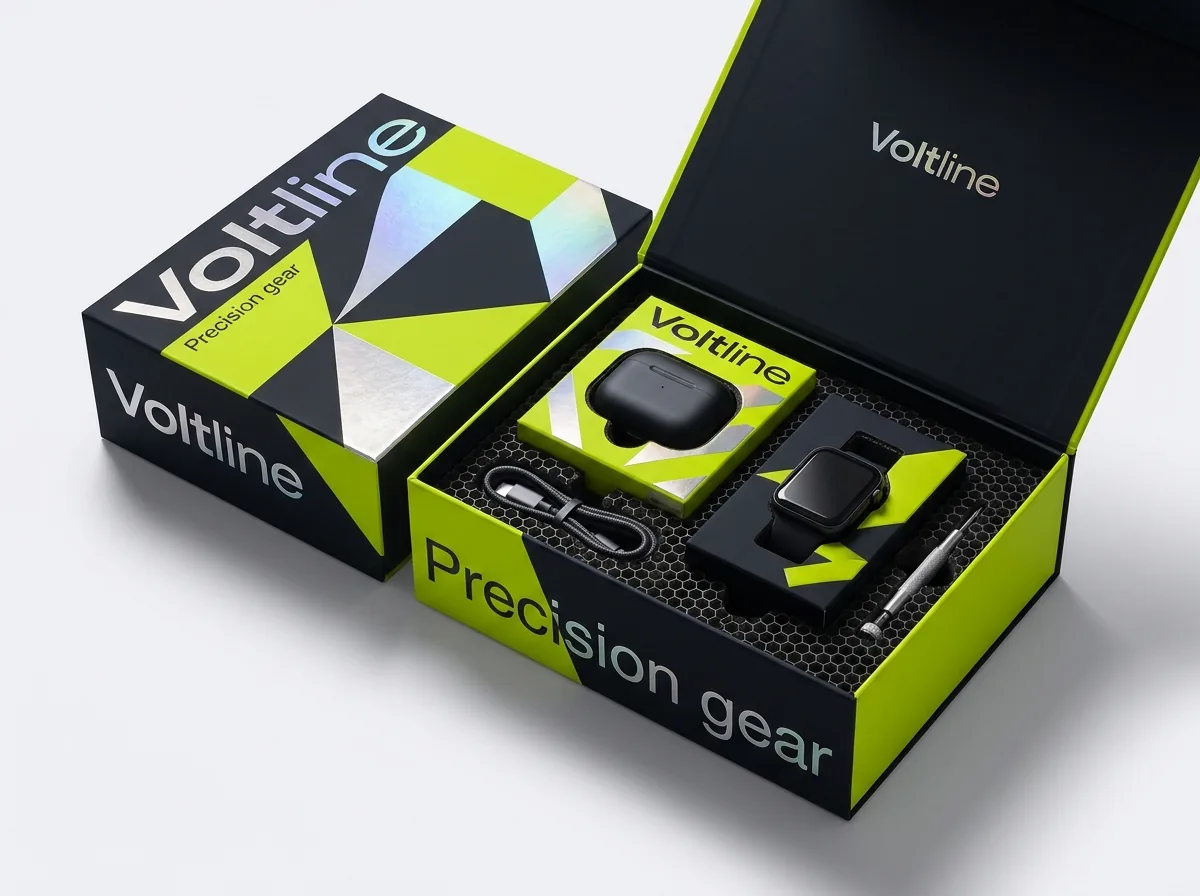
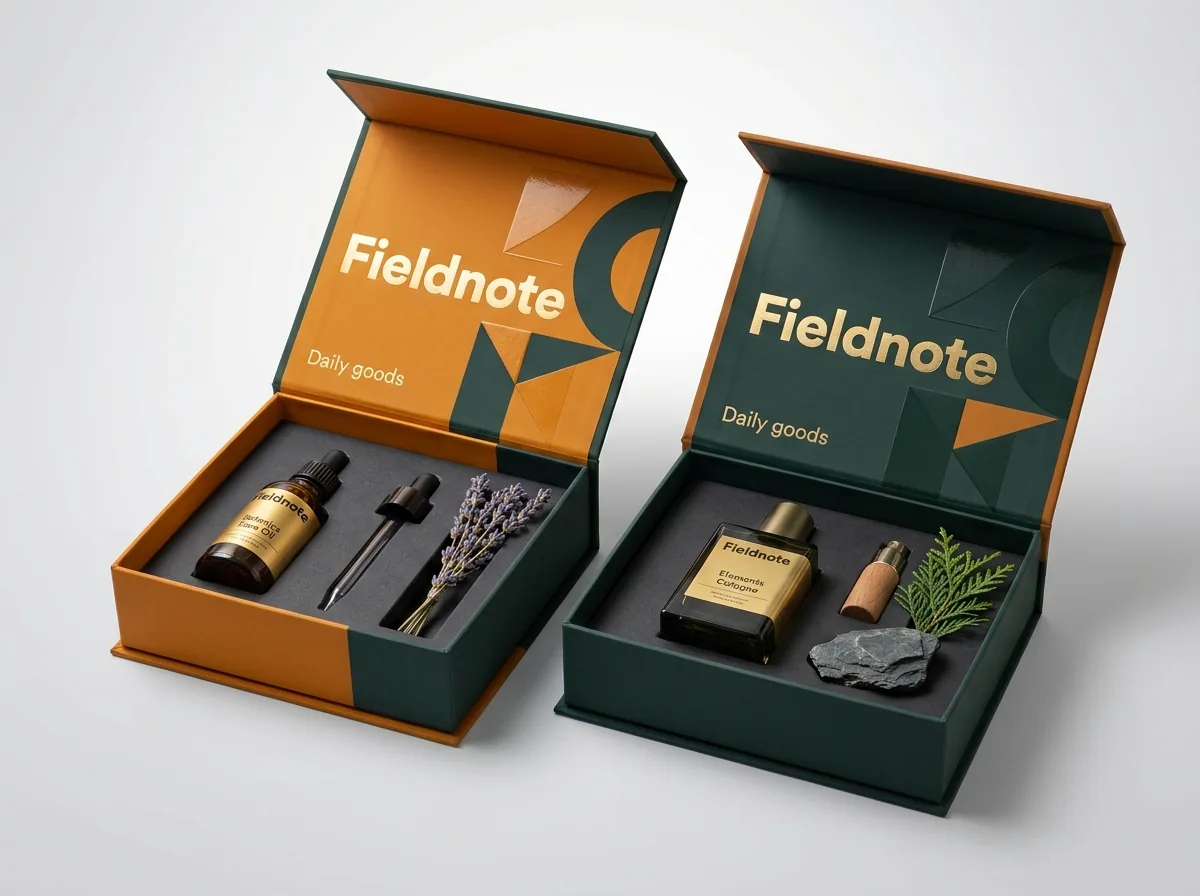
Ready to order molded pulp inserts? Compare up to 3 quantities with a free 3D mockup.
Request a Quote →Questions about molded pulp inserts
Why is wet-press molded pulp smooth on both sides while dry-press has one rough side?
Wet-press (IMFA Type 3) clamps damp fiber between two smooth heated metal dies under high pressure, ironing both the top and bottom surfaces flat. Dry-press (IMFA Type 2) dries on a conveyor without a second heated press die, keeping a smooth top face and a wire-screen texture underneath.
Does wet-press molded pulp cost more to tool than dry-press molded pulp?
Yes. Wet-press requires both a CNC-machined vacuum forming screen and matched upper and lower heated press dies, whereas dry-press uses a forming screen and simpler unheated transfer mold. We quote custom 3D mold tooling transparently per project so you can compare both options.
Which molded pulp grade is better for luxury cosmetics and consumer electronics?
Smooth wet-press thermoformed fiber (Type 3) is the standard choice for cosmetics, perfume, and consumer electronics. Its +/-0.5 mm dimensional accuracy fits flush inside rigid boxes, its compacted surface sheds zero lint onto glass or screens, and its flange accepts sharp blind debossing.
Can dry-press molded pulp come in white as well as natural brown kraft?
Yes. While unbleached brown kraft is popular for dry-press candle, wine, and appliance cradles, dry-press slurry can also be formed from bleached white or off-white paper fibers, gray recycled furnish, or custom dyed pulp.
Are both wet-press and dry-press molded pulp inserts recyclable in paper bins?
Unlaminated wet-press and dry-press trays are formed from water and paper or plant fibers without plastic binders, allowing customers to place clean inserts into household paper and cardboard recycling bins where molded fiber is accepted. FSC fiber is available on request.
What if my first run is too small to justify custom 3D pulp mold tooling?
Standalone molded pulp orders start at 250 units, though 3D mold tooling amortizes much better at 1,000 to 2,500+ units. For a small 250-unit test run needing zero tooling fees, ask our team to quote die-cut custom cardboard inserts or custom honeycomb inserts.
Still have a question? Ask a packaging specialist.
Request a Quote →Request your molded pulp inserts quote
Tell us your size and quantities, and one dedicated account manager prepares pricing for each tier.
- Free design & AI-to-print studio + 3D mockup
- No die or plate charges · 4–5 day rush available
- Free shipping to all 50 states
- 10% off your first order
We checked IMFA Type 2 (transfer/dry-press) and Type 3 (thermoformed/wet-press) process steps, wall thickness ranges, dimensional tolerances, and drop-cushioning trade-offs against International Molded Fiber Association (IMFA) classifications, TAPPI fiber forming standards, and ISTA transit procedures. A packaging specialist verified every CubitPack offer and minimum. Spot an error? Tell us and we fix it.
Sources
- Process definitions, wall thickness ranges, dimensional tolerances, and surface finish profiles for wet-press and dry-press molded fiber.
- Shock-absorption comparison of thick porous dry-press cradles versus dense thermoformed wet-press trays.
- Fiber compaction under heated press dies, lint control, and moisture equilibration.
What changed
- November 16, 2026: First published comparing IMFA Type 3 wet-press smooth fiber vs Type 2 dry-press kraft pulp across finish, tolerance, shock protection, and mold tooling.
More guides
New packaging guides by email
Sizes, materials and design tips. Unsubscribe anytime.