
How do you size custom EVA foam inserts and pinch-fit cavities for your box?
Short answer: Size the outer tray 0.5 to 1.0 mm smaller than your box's inside length and width so it drops in flat, and cut each cavity 0.5 to 1.5 mm narrower than your rigid item for a snug pinch fit. Order custom EVA foam inserts with at least 10 to 12 mm walls.
On this page
- What are the 5 engineering rules for sizing a custom EVA foam insert
- What pinch-fit allowance, wall width and cavity depth fit common luxury products
- How do multi-layer laminated EVA trays create blind cavities and stepped depths
- How do you measure tapered jars, curved bottles and finger lift notches
- How much vertical headspace should you leave between the foam tray and box lid
- Common mistakes
- FAQs
Request a custom quoteFree dieline & 3D mockup
Unlike folded paperboard trays that require positive clearance around the product, closed-cell ethylene-vinyl acetate (EVA) foam relies on negative interference - called a pinch fit - to grip glass bottles, watches, jewelry and electronics so they cannot rattle or pop out when a parcel flips upside down. If you cut an EVA foam cavity to the exact caliper measurement of a perfume flacon, the bottle will slide loose in transit. Instead, structural engineers undersize each cutout by 0.5 to 1.5 mm (1/32 to 1/16 in) along two opposing gripping edges, sink the product 60% to 80% of its height into the top foam layer, bond a 3 to 5 mm solid bottom pad underneath, and maintain at least 10 to 12 mm (3/8 to 1/2 in) of foam wall between adjacent pockets.
What are the 5 engineering rules for sizing a custom EVA foam insert?
Every EVA foam tray has two separate sets of tolerances: the outer perimeter dimensions that fit inside your rigid box or corrugated mailer, and the internal cavity dimensions that grip your product. If the outer tray is cut too wide, its corners will bow upward inside the box; if the inner cavity is cut too wide, the product will rattle. When you order die-cut EVA foam inserts from CubitPack, our structural CAD engineers apply the five sizing formulas below to build your 2D dieline and 3D mockup for free before production.
- Outer Tray Length & Width = Box Interior Length & Width minus 0.5 to 1.0 mm (1/32 in) so the foam drops into the base without buckling.
- Rigid Item Cavity Width = Product Width minus 0.5 to 1.5 mm (1/32 to 1/16 in) along the gripping walls for a non-rattling pinch fit.
- Fragile Paper Tube Cavity Width = Product Width minus 0.0 to 0.3 mm (line-to-line fit) so firm EVA walls do not dent thin paperboard sleeves.
- Minimum Perimeter & Bridge Wall = 10 to 12 mm (0.4 to 0.5 in) on trays up to 20 mm thick, or 15 mm (0.6 in) on deeper 25 to 50 mm trays.
- Blind Cavity Depth = 60% to 80% of product height (or 100% flush depth plus two 12 to 16 mm semicircular finger lift notches).
What pinch-fit allowance, wall width and cavity depth fit common luxury products?
The ideal pinch-fit interference depends on both your product's shell stiffness and the Shore C hardness of your EVA foam. A heavy glass cologne bottle or anodized aluminum power bank can handle 1.0 to 1.5 mm of foam compression, whereas a delicate velvet ring pillow or hollow chocolate truffle needs a gentler fit. Use the benchmark table below to plan your tray dimensions.
| Product category | Pinch-fit allowance (vs item) | Recommended cavity depth & base pad | Min bridge wall & thumb notches |
|---|---|---|---|
| Fine jewelry (rings, earrings, charms) | Slot cut (1.5-2 mm wide) or -0.5 mm pocket | 12-18 mm slit depth + 3 mm base pad | 8-10 mm wall; no notch needed on upright slits |
| Watches on cuff pillow | -0.5 mm around pillow; -1.0 mm on bezel well | 35-45 mm deep well + 5 mm base pad | 12-15 mm perimeter wall; side finger recesses |
| 30-100 ml glass perfume & serum bottles | -1.0 to -1.5 mm (1/16 in) along bottle sides | 70-100% bottle depth + 5 mm solid base pad | 12 mm bridge; two 14 mm half-moon notches |
| Cosmetic discovery kits (3-6 vials/tubes) | -0.5 to -1.0 mm per cylindrical well | 75% recessed depth + 3-5 mm base pad | 10-12 mm bridge between adjacent vials |
| Smart hardware, audio gear & dongles | -1.0 mm on metal chassis; +0.5 mm on cable well | Stepped 2-depth layers + 5 mm base pad | 12-15 mm wall; 15 mm thumb notch on device |
| Challenge coins, medals & collectibles | -0.5 to -0.8 mm around coin diameter | Flush 100% coin thickness + 3 mm base pad | 10 mm border; single 12 mm bottom finger notch |
| Heavy spirits decanters & 750 ml bottles | -1.5 mm along body and neck collar | 80-100% depth + 6-10 mm bottom cushion pad | 18-25 mm outer wall; two 18 mm grip cutouts |
How do multi-layer laminated EVA trays create blind cavities and stepped depths?
Never cut a heavy product pocket all the way through a single sheet of foam and leave the bare cardboard floor of the box exposed underneath. On a parcel drop, a through-cut cavity offers zero bottom shock absorption, and the exposed paperboard floor ruins the look of a luxury presentation box. Instead, CubitPack builds blind cavities by die-cutting your pocket shapes through a top EVA layer (for example, 15 mm or 25 mm thick) and thermally or adhesively laminating it onto a solid 3 mm to 6 mm bottom EVA base pad. When a gift set holds items of different thicknesses - such as a 38 mm thick glass cream jar beside a 16 mm thick dropper bottle and a 10 mm Gua Sha stone - we stack two or three die-cut EVA layers of graduated thicknesses so the top faces of all three items sit on the exact same visual plane when your customer opens your custom rigid boxes.
Know your size? Compare pricing across up to 3 quantities.
Request a Quote →How do you measure tapered jars, curved bottles and finger lift notches?
Very few luxury bottles or electronic devices are simple rectangular blocks. Glass dropper bottles have rounded shoulders and threaded caps, cosmetic jars often taper toward the base, and wireless earbuds sit inside curved charging cases. Always measure each item with digital calipers at three points: its maximum width (including pump collars or lugs), its base width, and its total height. When an item is sunk 80% to 100% flush into firm EVA foam, your customer cannot get their fingertips around its sides unless you add finger lift notches. Standard semicircular thumb cutouts measure 12 to 16 mm (0.5 to 0.625 in) in diameter placed on two opposite sides of the cavity at the balance point of the bottle. If your payload is heavy industrial gear requiring thick 1-inch shock walls rather than a tight cosmetic display, compare our custom EPE foam inserts, custom box inserts and custom cardboard inserts.
How much vertical headspace should you leave between the foam tray and box lid?
Vertical sizing inside a box equals Bottom Base Pad Thickness + Top Cutout Layer Thickness + Product Protrusion Above Foam = Interior Box Height. If your product sits 100% flush with the top surface of the EVA tray, the foam height matches the interior depth of the box base (or sits 1 to 2 mm below the rim if you include an onboarding booklet or velvet dust pad on top). If you design a podium presentation where the top 25% of a bottle or watch rises above the foam deck inside a two-piece lift-off lid box or shoulder-neck box, verify that the lid has at least 2 to 3 mm of vertical clearance above the highest cap point so the lid closes all the way down without teetering on the product. Our design team always cross-check your box base depth and lid height against the stacked EVA layers before releasing your free 3D proof.
- Flush deck layout: Foam total thickness = Box interior depth (minus 1-2 mm if placing a printed booklet on top).
- Podium layout (60-75% sink): Base pad + Cutout foam + Exposed product height + 2 mm clearance <= Total box interior height.
- Shoulder-neck rigid boxes: Set the EVA foam top flush with the inner neck ring so the protruding bottle neck centers inside the lid.
- Hinged magnetic lids: Leave 8 to 10 mm of border margin along the back hinge wall so the lid ribbon or hinge cloth folds cleanly.
What are the most common custom EVA foam sizing mistakes?
Almost every foam insert fit problem traces back to cutting cavities too loose or narrowing bridge walls until they bow. Avoid these five mistakes
- Cutting EVA cavities to the exact product width or wider (+1 mm clearance), which lets glass bottles and devices fall out during shipping.
- Leaving bridge walls narrower than 8 mm between two pockets, causing the thin foam divider to bend when the second item is pressed in.
- Cutting through-holes with no solid 3 to 5 mm bottom base pad, leaving the bare box floor exposed to drop impacts.
- Forgetting 12 to 16 mm semicircular thumb notches on flush-mounted cavities, trapping tight bottles inside the foam.
- Sizing the outer foam tray to the outside dimensions of the box instead of inside dimensions minus 0.5 to 1.0 mm.
Packaging for this
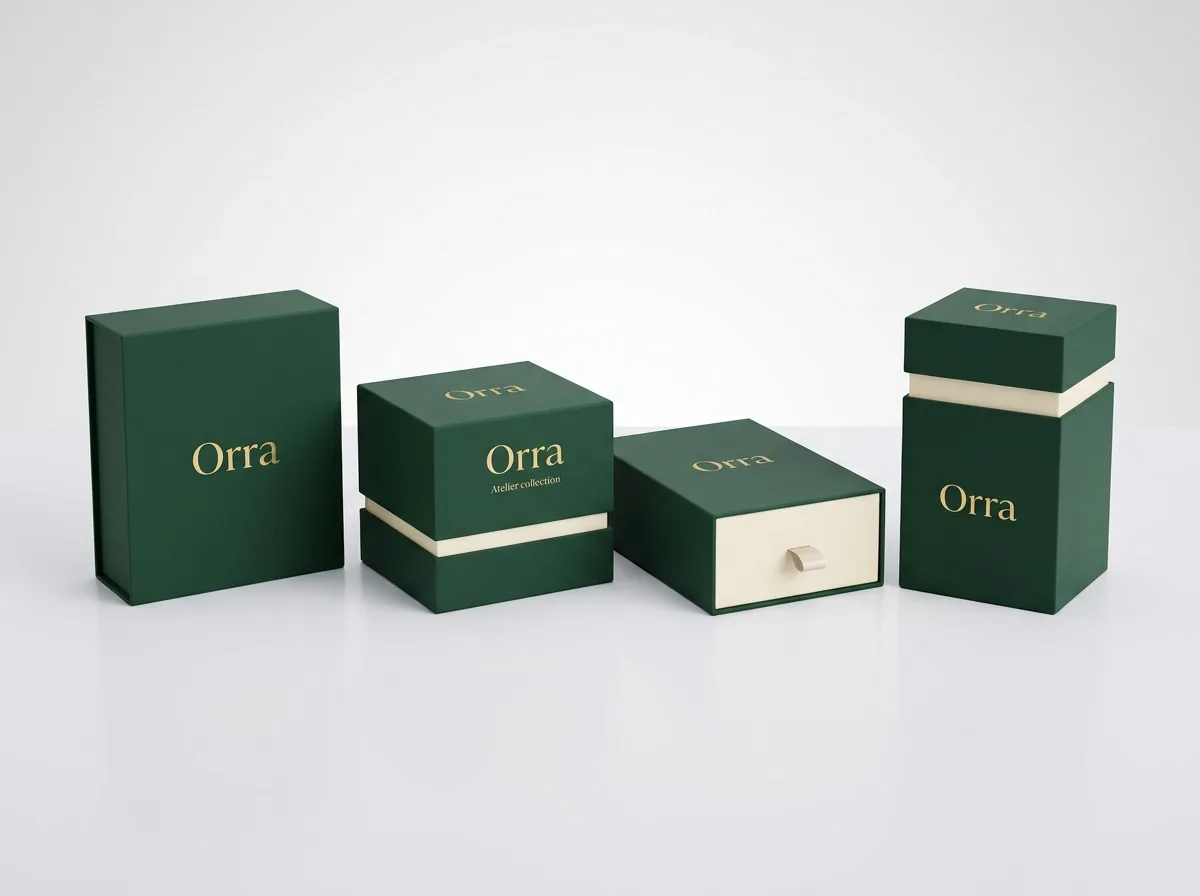



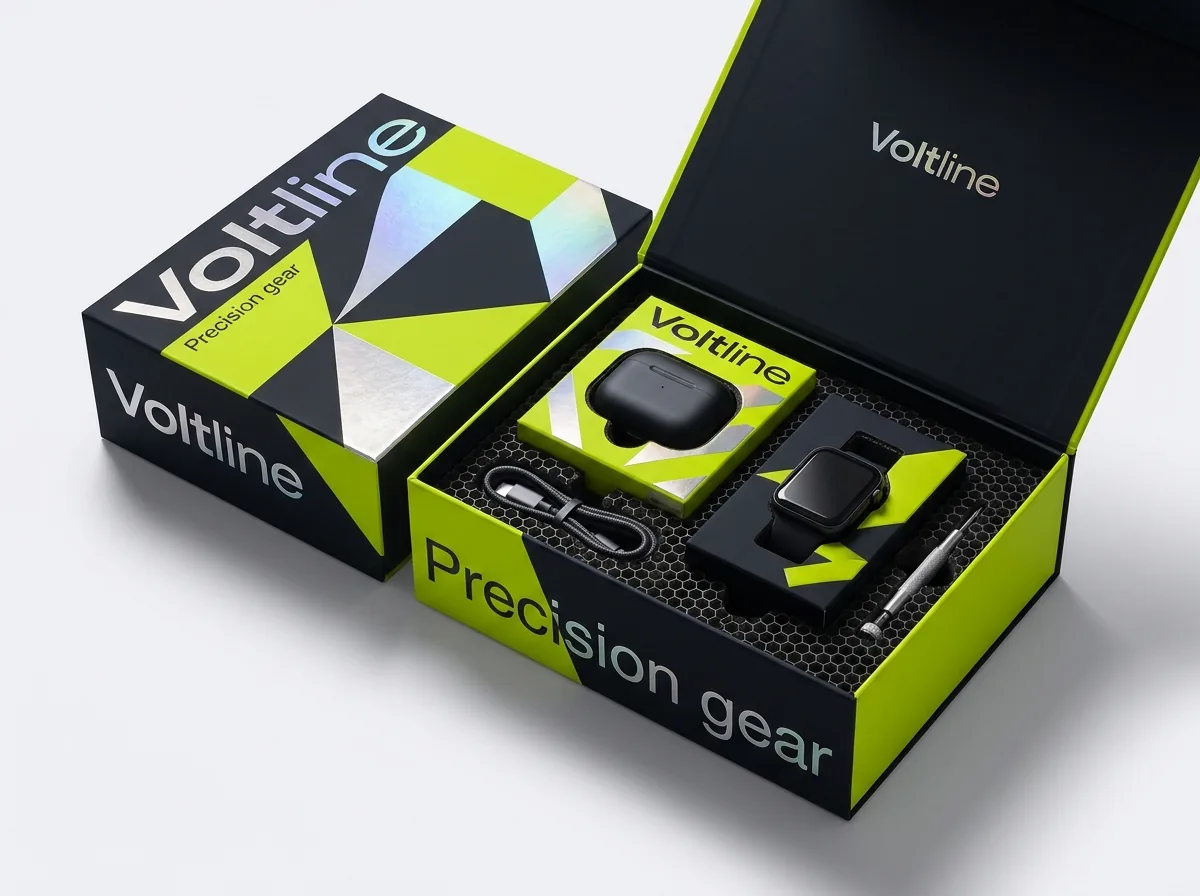
Ready to order eva foam inserts? Compare up to 3 quantities with a free 3D mockup.
Request a Quote →Questions about eva foam inserts
Why should an EVA foam cavity be cut smaller than my product?
Closed-cell EVA foam is elastic. Cutting the cavity 0.5 to 1.5 mm (1/32 to 1/16 in) narrower than a rigid bottle, watch or metal device creates gentle compression (pinch fit) that grips the item so it stays in place even if the box flips upside down.
Should I use negative pinch-fit sizing for thin paperboard tubes or cartons inside EVA foam?
No. If the item going into the foam is a thin hollow paper tube or folding carton that could crush under side pressure, size the cavity line-to-line (0.0 to -0.3 mm) and add thumb notches so the foam holds it without denting its walls.
What is the minimum wall thickness between two cutouts in an EVA foam tray?
Keep at least 10 to 12 mm (0.4 to 0.5 in) of foam between adjacent cavities and along the outer border on trays up to 20 mm thick. On deeper 25 to 50 mm trays, increase bridge walls to 15 mm so walls stay vertical during die-cutting.
How much smaller than the inside of my box should the outer EVA tray be?
Size the outer length and width of the EVA tray 0.5 to 1.0 mm (about 1/32 in) smaller than the interior length and width of your rigid box or mailer. That slight clearance lets packers drop the tray in smoothly without corner buckling.
How big should semicircular finger notches be on an EVA foam insert?
Standard half-moon finger or thumb notches measure 12 to 16 mm (0.5 to 0.625 in) in diameter for cosmetics, electronics and jewelry, and 18 to 20 mm for heavy glass bottles or decanters.
Do I need to draw my own CAD dieline to order custom EVA foam inserts?
No. Share your box interior dimensions and your product measurements (or mail us a physical product sample), and CubitPack's structural engineers will build your 2D dieline and 3D mockup for free before you pay.
Still have a question? Ask a packaging specialist.
Request a Quote →Request your eva foam inserts quote
Tell us your size and quantities, and one dedicated account manager prepares pricing for each tier.
- Free design & AI-to-print studio + 3D mockup
- No die or plate charges · 4–5 day rush available
- Free shipping to all 50 states
- 10% off your first order
The negative pinch-fit interference tolerances (-0.5 to -1.5 mm), minimum bridge wall rules (10 to 15 mm) and stepped layer depth calculations in this guide follow standard flatbed steel-rule foam die-cutting and rigid box assembly tolerances, checked by a CubitPack packaging specialist. Spot an error? Let us know and we will fix it.
Sources
What changed
- October 22, 2026: First published.
- October 22, 2026: Updated specifications, terminology, and verified source links.
More guides
New packaging guides by email
Sizes, materials and design tips. Unsubscribe anytime.