
Kraft honeycomb inserts vs EPE foam vs molded pulp: which should you choose?
Short answer: Choose custom honeycomb inserts when you want thick, curbside-recyclable paper cushioning for glass jars, candles or appliances with zero mold or die fees. Choose EPE closed-cell foam when your payload needs elastic multi-drop rebound or waterproof oil resistance, and reserve molded pulp for massive six-figure runs.
On this page
- How do kraft honeycomb, EPE foam and molded pulp inserts compare
- Why do brands pick die-cut honeycomb over molded pulp for runs under 25,000
- When does kraft honeycomb beat EPE foam, and when is EPE foam still necessary
- How do two-piece honeycomb end caps replace molded EPS styrofoam blocks
- Can I combine die-cut honeycomb inserts with expandable honeycomb paper wrap
- Common mistakes
- FAQs
Request a custom quoteFree dieline & 3D mockup
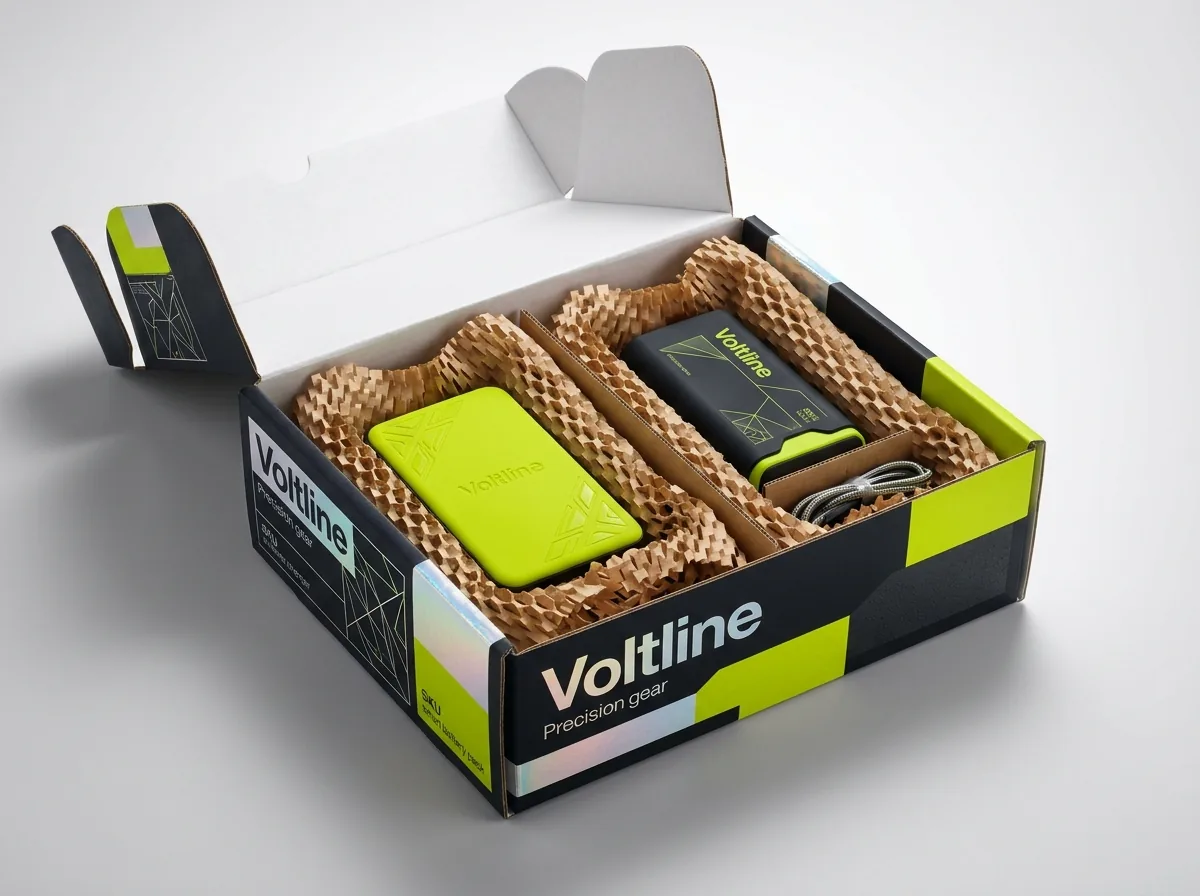
Brands shipping heavy glass jars, ceramic tableware, small appliances or electronics often want to move away from expanded polystyrene (EPS styrofoam) and plastic foam, only to discover that custom wet-press or dry-press molded pulp trays require thousands of dollars in CNC aluminum forming molds and huge minimum order quantities. Structural kraft honeycomb inserts solve that exact dilemma for growing brands. Built from a hexagonal kraft paper core sandwiched between flat paperboard liners, honeycomb panels are die-cut on standard flat-bed presses with zero tooling or die charges at CubitPack. While closed-cell EPE polyethylene foam still wins when a heavy device must survive repeated elastic drops on the exact same corner or resist machine oil and water, die-cut kraft honeycomb delivers formidable vertical crush strength and 0.75-inch to 2.0-inch shock buffers in a clean, all-paper format.
How do kraft honeycomb, EPE foam and molded pulp inserts compare?
Evaluating protective packaging requires looking past the raw material name to compare upfront tooling fees, lead times, single-drop vs multi-drop compression behavior, and what happens when your customer opens the box next to their household recycling bin. A 20 mm (0.8 in) or 30 mm (1.2 in) structural kraft honeycomb board uses vertical hexagonal paper columns to resist flatwise compression loads while weighing a fraction of solid paperboard. Use the engineering comparison table below to weigh custom die-cut honeycomb inserts against closed-cell EPE polyethylene foam, custom molded fiber pulp and traditional folded paperboard risers.
| Criterion | Kraft honeycomb insert | EPE foam vs Molded pulp |
|---|---|---|
| Core composition | Hexagonal kraft paper core + flat paperboard liners | EPE: #4 LDPE closed-cell foam · Pulp: wet/dry molded fiber |
| Upfront tooling / die cost | Zero at CubitPack (flat-bed steel-rule die-cut) | EPE: Zero at CubitPack · Pulp: high 3D metal mold fees |
| Curbside paper recycling | Yes (all-paper core & water-based glue ) | EPE: plastic film/foam stream · Pulp: curbside paper |
| Cushioning mechanics | High vertical crush strength; progressive cell collapse | EPE: elastic multi-drop rebound · Pulp: semi-rigid rib flex |
| Surface printability | Natural kraft, white or full CMYK/Pantone top card | EPE: via card top-sheet · Pulp: rough unprinted fiber |
| Moisture & oil resistance | Dry goods & sealed jars (absorbs liquid if soaked) | EPE: 100% waterproof & oil-proof · Pulp: absorbs water |
| Ideal order scale | 250 to 25,000+ units with fast 10-14 day turnaround | EPE: 250 to 25,000+ units · Pulp: 25,000 to 100,000+ units |
Why do brands pick die-cut honeycomb over molded pulp for runs under 25,000?
Molded pulp (the egg-carton or thermoformed fiber tray seen inside mass-market smartphone boxes) is a great material when you are manufacturing 100,000 identical units on a multi-year product cycle. For growing e-commerce brands, seasonal gift sets or industrial hardware lines ordering 250, 500, 1,000 or 5,000 units per SKU, custom molded pulp hits two roadblocks: expensive machined metal screen molds and 6-to-10-week tooling lead times. Worse, if you change your bottle diameter by 3 mm next quarter, you have to scrap the metal mold and pay for a new one. Structural kraft honeycomb gives you the same all-paper, curbside-recyclable positioning as molded pulp without a single dollar of mold tooling. Because honeycomb arrives as flat laminated sheets (from 0.4 in to 1.6+ in thick), we stamp your exact cavity outlines on a flat-bed die-cutter in 10 to 14 business days - and unlike rough gray molded pulp, the flat top linerboard of a honeycomb tray can be smooth white or printed in full color.
When does kraft honeycomb beat EPE foam, and when is EPE foam still necessary?
Both structural honeycomb and custom EPE foam inserts protect heavy products by placing a thick 0.75-inch to 1.5-inch shock-absorbing wall between your item and the outer corrugated box. However, their cell walls absorb energy through different physical mechanisms. Expanded polyethylene is an elastic closed-cell polymer: when dropped, the sealed air bubbles compress and spring back to nearly 100% of their original thickness. Kraft honeycomb is an engineered crush-zone material. Its vertical hexagonal paper columns support remarkably high static stacking weights without sagging, and under a severe drop impact, the paper cells buckle progressively to absorb the kinetic energy so your glass jar or ceramic mug stays intact. Choose kraft honeycomb for single-trip e-commerce parcels, candles, cosmetics, gourmet glass jars and plastic-free unboxing. Choose EPE foam when shipping heavy 10-pound metal tools, reusable field-service cases that open and close hundreds of times, or parts coated in machine oil.
- Pick kraft honeycomb for: glass candles, skincare bottles, ceramic mugs, gourmet jars and plastic-free DTC unboxing.
- Pick EPE closed-cell foam for: heavy multi-drop electronics, reusable tool cases, oiled metal parts and ESD circuit boards.
- Pick EVA closed-cell foam for: ultra-smooth luxury presentation inside magnetic rigid gift boxes.
- Pick folded cardboard inserts for: lightweight retail cartons (< 1.5 lbs) that need flat warehouse storage.
Know your size? Compare pricing across up to 3 quantities.
Request a Quote →How do two-piece honeycomb end caps replace molded EPS styrofoam blocks?
Nothing ruins a customer's unboxing faster than pulling a new espresso machine, smart speaker or ceramic lamp out of a box and having static-charged white styrofoam (EPS) beads cling to their clothes and carpet. Beyond the mess, expanded polystyrene is banned or restricted in several jurisdictions and cannot go into household recycling bins. You can replace molded EPS end blocks one-for-one with two-piece laminated honeycomb suspension blocks or V-grooved fold-up honeycomb pads inside custom shipping boxes. By bonding two or three die-cut layers of 1.0-inch (25 mm) or 1.5-inch (38 mm) kraft honeycomb together, we form deep recessed end caps that cradle the left and right ends (or top and bottom) of your 5 lb to 15 lb appliance with a 1.0-inch to 1.5-inch perimeter crush buffer. The customer gets clean, dust-free unpacking and folds the paper blocks straight into their recycling bin.
- Zero styrofoam static crumbs: flat kraft linerboards keep electronics and dark fabrics 100% clean.
- Multi-layer recess depth: 2 or 3 bonded honeycomb layers grip appliance corners by 1.5 to 3.0 inches.
- V-grooved flat-pack option: ships flat on pallets and folds 90 degrees around the product at packing.
- Curbside paper disposal: customers recycle the honeycomb blocks right alongside the outer shipping carton.
Can I combine die-cut honeycomb inserts with expandable honeycomb paper wrap?
Yes - and for fragile glass sets or multi-item ceramic boxes, pairing both honeycomb formats creates an all-paper shock system that eliminates both plastic foam trays and plastic bubble wrap. Use a rigid die-cut honeycomb base tray (such as 1.5 inches thick with a 0.4 inch solid bottom pad and 0.75 inch divider bridges) at the bottom of your custom mailer boxes with inserts to lock each jar or mug into its own recessed cell so items never clink together laterally. Then wrap the upper necks or top the tray with a sheet of expandable custom honeycomb paper before closing the lid. The 3D interlocking kraft mesh fills the top 0.5 to 1.0 inch of headspace, presses gently downward on the jars so they cannot bounce out of their wells during an inverted parcel drop, and keeps your entire bill of materials paper-based.
- Bottom layer: 0.4 in solid honeycomb or corrugated pad absorbs flat base drops.
- Middle collar: 1.0 to 2.0 in die-cut honeycomb tray separates glass jars with 0.75 in bridges.
- Top headspace fill: expandable slit-kraft honeycomb paper wrap stops upward vertical bounce.
- Branded finish: seal the top honeycomb paper wrap with a custom circle sticker and thank you card.
What mistakes should you avoid when switching from foam to honeycomb inserts?
Switching from plastic foam to structural paper honeycomb is straightforward as long as you adjust your cavity tolerances for paperboard liners. Avoid these five mistakes
- Copying a foam dieline with -1/16 inch pinch-fit cavities directly onto honeycomb board without relaxing the cutouts to exact size or +1/32 inch slip fit.
- Keeping narrow 0.375 inch foam-style divider bridges instead of widening them to 0.625 or 0.75 inches to accommodate full hexagonal cells.
- Using unlaminated kraft honeycomb inside wet, humid or oil-soaked industrial tool kits where closed-cell EPE foam is required.
- Paying thousands of dollars for custom molded pulp tooling on a 1,000-unit launch when die-cut honeycomb requires zero tooling fees.
- Skipping a physical drop test when converting a heavy 8-pound appliance from thick EPS styrofoam to paper honeycomb end caps.
Packaging for this

Ready to order honeycomb inserts? Compare up to 3 quantities with a free 3D mockup.
Request a Quote →Questions about honeycomb inserts
Can I request quotes for both kraft honeycomb and EPE foam inserts to compare?
Yes. Choose Honeycomb in Step 2 of the quote form and add a note in Step 3 asking your account manager to price the exact same tray in EPE foam (or folded corrugated board) so you can compare unit costs side by side.
Are custom honeycomb box inserts strong enough to ship heavy glass bottles?
Yes. Because the hexagonal kraft cells stand vertically between two flat linerboards, honeycomb panels have high flatwise compression strength. With a 0.75 to 1.0 inch perimeter buffer and a 0.4 to 0.6 inch base pad, they protect 750 ml glass bottles and heavy candle jars reliably.
Why does molded pulp have high tooling fees while honeycomb inserts do not?
Molded pulp is formed by vacuum-drawing wet paper slurry onto a custom CNC-machined 3D metal screen mold and pressing it in heated dies. Honeycomb inserts are cut from pre-manufactured flat hex-cell boards using flat-bed steel-rule dies, and CubitPack charges zero die fees.
Do kraft honeycomb inserts shed paper dust onto dark glass or matte bottles?
Structural honeycomb panels have smooth top and bottom kraft or white linerboards that keep the internal core sealed. Precision steel-rule die-cutting produces clean edges with minimal fiber lint compared with rough wet-pressed molded pulp.
Can customers recycle a kraft honeycomb insert in their normal curbside bin?
Unlaminated natural kraft and white honeycomb inserts are made from paperboard liners, kraft core paper and water-based adhesive, allowing them to be recycled alongside corrugated shipping boxes in standard household paper recycling streams.
What if my product needs a smooth full-color printed surface on top of the honeycomb?
We can manufacture your honeycomb insert with a smooth white top liner or laminate a custom printed CMYK or Pantone paperboard top-sheet (with matte, soft-touch or foil finishes) over the top of the honeycomb block.
Still have a question? Ask a packaging specialist.
Request a Quote →Request your honeycomb inserts quote
Tell us your size and quantities, and one dedicated account manager prepares pricing for each tier.
- Free design & AI-to-print studio + 3D mockup
- No die or plate charges · 4–5 day rush available
- Free shipping to all 50 states
- 10% off your first order
This comparison of structural kraft honeycomb, closed-cell EPE polyethylene foam and molded fiber pulp draws on CubitPack's decided insert capabilities and TAPPI / ASTM / ISTA protective packaging standards, checked by a packaging specialist. Spot an error? Tell us and we will fix it.
Sources
What changed
- October 22, 2026: First published.
- October 22, 2026: Updated specifications, terminology, and verified source links.
More guides
New packaging guides by email
Sizes, materials and design tips. Unsubscribe anytime.