
How are die-cut and V-grooved custom honeycomb box inserts designed and priced?
Short answer: We engineer custom honeycomb inserts in two core formats: multi-layer die-cut trays with stepped cavities for cosmetic, candle and bottle kits, and V-grooved flat-shipping pads that hinge 90 degrees into 3D corner cradles. Unit price depends on panel thickness, layer count, top-liner printing and quantity.
On this page
- How do the four honeycomb insert constructions compare in design and cost
- How do V-grooved mitre cuts let a rigid 1-inch honeycomb panel fold 90 degrees
- How do exposed hex-core windows and printed top liners upgrade unboxing
- What drives the unit price of custom honeycomb box inserts
- How do free CAD engineering and zero die fees simplify honeycomb testing
- Common mistakes
- FAQs
Request a custom quoteFree dieline & 3D mockup
Structural kraft honeycomb is one of the most versatile protective materials in packaging because it can be converted either like a multi-layer foam block or like a scored folding sheet. When you need a contoured multi-cavity stage for skincare bottles, candle jars or gourmet food sets, we die-cut individual honeycomb panels on a flat-bed press and bond them over a solid base pad to create stepped pocket depths and semicircular finger notches. When you need high-volume transit protection for wine bottles, ceramics, monitors or small appliances without dedicating warehouse space to bulky pre-stacked blocks, we run the honeycomb board through V-grooving blades that cut a 90-degree channel through one liner and the hex core while leaving the outer kraft liner intact as a living hinge. Both formats carry zero die charges at CubitPack and ship free across all 50 US states.
How do the four honeycomb insert constructions compare in design and cost?
Before locking in your dieline, decide whether your fulfillment team values instant drop-in speed (a pre-bonded multi-layer tray that arrives at full 1.5 inch to 3.5 inch depth) or flat pallet storage (a V-grooved or scored honeycomb pad that ships flat and folds up around the item in two seconds). Standard honeycomb panels range from 10 mm (0.4 in) to 40 mm (1.6 in) in single-sheet thickness and can be stacked to any depth. Compare the four structural approaches we engineer on our custom kraft honeycomb inserts line below to see how layer count, folding geometry and top-liner finishes affect both warehouse space and unit cost.
| Honeycomb construction | How it ships & assembles | Relative unit cost & best use |
|---|---|---|
| Single-layer die-cut collar + base pad | Ships at full depth (0.8 to 1.5 in); drops straight in | Lowest tray cost · 1 to 4 uniform jars or bottles |
| V-grooved fold-up honeycomb cradle | Ships flat on pallets; folds 90° along living hinges | Lowest freight & storage cost · bottles, frames, appliances |
| Multi-layer stepped honeycomb block | 2 to 3 bonded layers ship at full depth (1.5 to 3.5 in) | Mid-tier cost · uneven skincare, candle & PR kits |
| Exposed-core or printed-card top tray | Ships at full depth with stripped window or CMYK top card | Premium presentation · honey, botanical & gift sets |
How do V-grooved mitre cuts let a rigid 1-inch honeycomb panel fold 90 degrees?
If you try to bend an un-scored 1-inch (25 mm) structural honeycomb board by hand, the rigid sandwich panel will resist until the inner liner buckles awkwardly. To turn a flat honeycomb board into a precision folding cradle, converters use V-grooving (also called mitre grooving) or crush-scoring. A V-shaped rotary blade mills a 90-degree wedge through the top paperboard liner and the internal hexagonal kraft core while stopping just shy of the bottom kraft linerboard. That intact bottom liner acts as a tough paper hinge. Your warehouse team pulls a flat honeycomb sheet off the stack, folds the left, right, top and bottom wings upward 90 degrees until the V-cut bevels meet cleanly, and drops the folded U-channel or four-sided bumper into your custom shipping boxes. One pallet of flat V-grooved honeycomb pads holds as many units as four pallets of pre-glued foam blocks.
- Single V-groove (90-degree fold): turns a flat strip into an L-shaped edge or corner protector.
- Parallel twin V-grooves: folds a flat sheet into a U-channel cradle around bottles, frames or monitors.
- Double-fold 180-degree mitre: folds one layer back over itself to double wall thickness at impact corners.
- Cross-slotted honeycomb partitions: interlocking flat honeycomb strips that form 4-cell or 6-cell bottle grids.
How do exposed hex-core windows and printed top liners upgrade unboxing?
Standard honeycomb panels arrive with smooth brown kraft or bleached white facing liners covering both sides, which means the hexagonal core is only visible along the vertical walls inside each product cutout. Many natural, apothecary, candle and gourmet honey brands want the unmistakable six-sided beehive geometry to be the hero visual the moment the customer opens their custom mailer boxes with inserts. We achieve that in two ways. First, we can kiss-cut and strip away a border or full panel of the top kraft liner so the open hexagonal paper cells frame your glass jar directly. Second, if you want luxury typography, ritual step numbers or botanical illustrations on the top deck, we can print on the white or kraft liner or laminate a matte, soft-touch or foil-stamped paperboard top-sheet over the honeycomb core.
- Natural brown kraft liner: warm, unbleached organic surface that pairs with kraft mailers and white ink.
- Smooth white liner: crisp high-contrast deck for clinical skincare, modern candles and bright labels.
- Printed & foil-stamped top card: full CMYK, Pantone, matte or foil badging bonded over the honeycomb pad.
- Exposed hexagonal core zone: stripped top liner that showcases the raw beehive cell structure.
Know your size? Compare pricing across up to 3 quantities.
Request a Quote →What drives the unit price of custom honeycomb box inserts?
Like corrugated and foam converting, custom honeycomb pricing is driven primarily by board area, panel thickness, number of laminated layers and order quantity. A single 0.8-inch (20 mm) or 1.0-inch (25 mm) die-cut honeycomb collar bonded to a 0.125-inch E-flute or 0.25-inch B-flute corrugated base pad uses one die-cut pass and one lamination pass, keeping unit cost very close to a heavy corrugated insert. Adding a second or third stepped honeycomb layer to accommodate three different bottle depths increases both raw board consumption and bonding labor. To keep your unit quote as low as possible, group items of similar thickness onto the same cavity depth tier, orient tall bottles so the outer tray footprint nests efficiently on the master honeycomb sheet, and compare three quantity presets (such as 250, 500 and 1,000) in Step 1 of the quote form.
- Consolidate cavity depths: use 1 die-cut honeycomb collar + 1 corrugated base pad whenever item heights allow.
- Use V-grooved flat pads for bulky shippers: cuts inbound freight volume by 60% to 75% vs stacked blocks.
- Keep 0.625 to 0.75 in bridge walls: prevents waste from crushed cells during high-speed flat-bed die-cutting.
- Quote 3 quantity presets: compare 250, 500 and 1,000+ units to see master-board volume breaks.
How do free CAD engineering and zero die fees simplify honeycomb testing?
Whether you are designing a 6-cavity botanical gift box or replacing styrofoam end caps on a kitchen appliance, you never pay cutting die or printing plate fees at CubitPack. Minimums depend on the product and are confirmed with your quote. Once you submit your box size and product dimensions through our quote form - or explore companion options on our custom cardboard inserts and custom box inserts pages - our design team reply within 5-7 minutes, 24/7. We build your CAD dieline, digital proof and 3D mockup for free before payment, and can produce physical prototypes for drop and crush testing.
- Zero die or plate charges: multi-cavity cutouts, thumb notches and V-grooves never add tooling fees.
- Free CAD & 3D mockup: verify cavity spacing and stepped depths before you pay.
- 10% off your first order: automatic discount for first-time CubitPack customers.
- 10 to 14 business days turnaround: with 4 to 5 business day rush available and free 50-state shipping.
What design mistakes should you avoid on custom honeycomb box inserts?
Most honeycomb layout mistakes involve over-complicating layer depths or bending panels without proper V-grooves. Avoid these five mistakes
- Trying to fold a thick 0.8 inch or 1.0 inch honeycomb pad by hand without specifying V-grooved mitre cuts along the hinge lines.
- Specifying three separate laminated honeycomb layers when one honeycomb collar bonded to a thin corrugated base pad would hold the kit securely.
- Shipping 2,500 bulky pre-bonded end-cap blocks across the country when a flat-shipping V-grooved cradle would cut pallet volume by 70%.
- Placing tiny 6 pt text or fine line art across an exposed hexagonal core zone instead of printing on the smooth flat facing liner.
- Ordering only one quantity tier on your quote instead of comparing 250, 500 and 1,000 pieces to see the volume price break.
Packaging for this
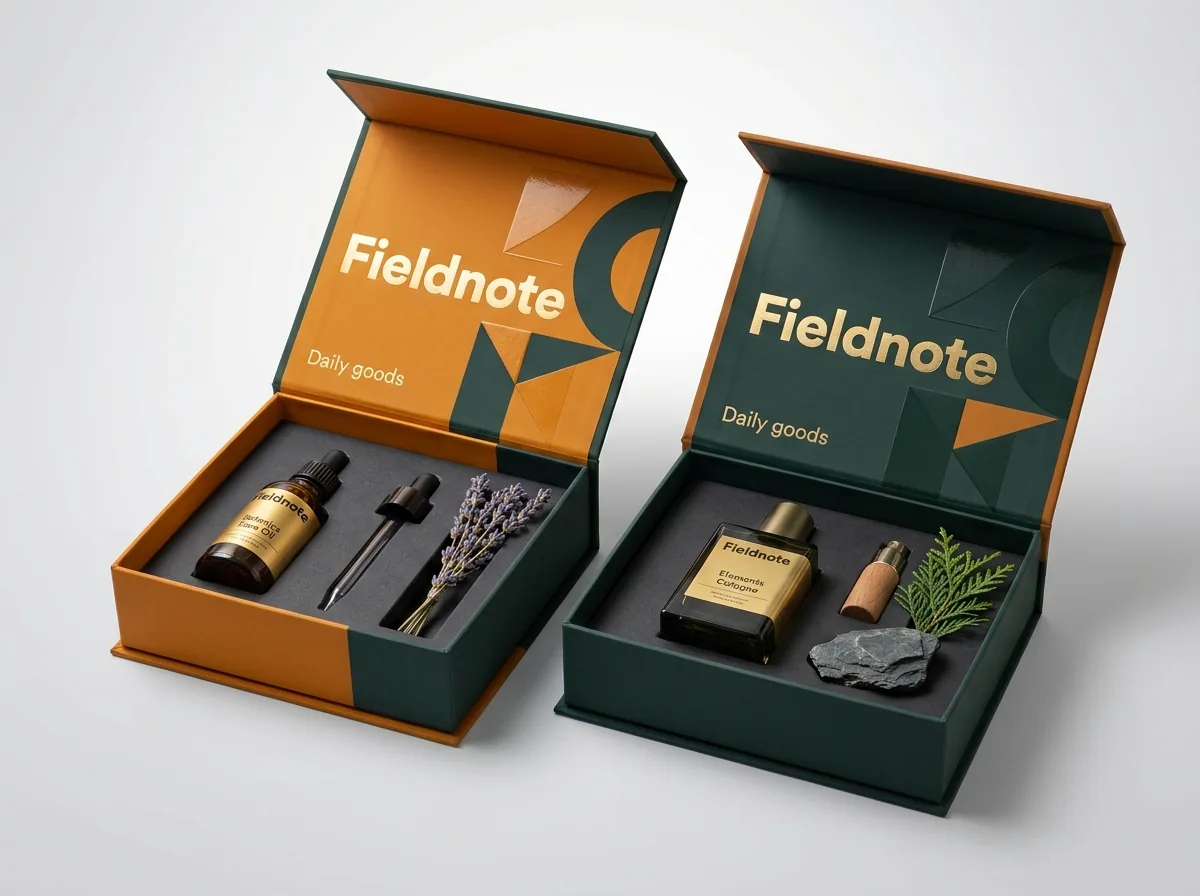
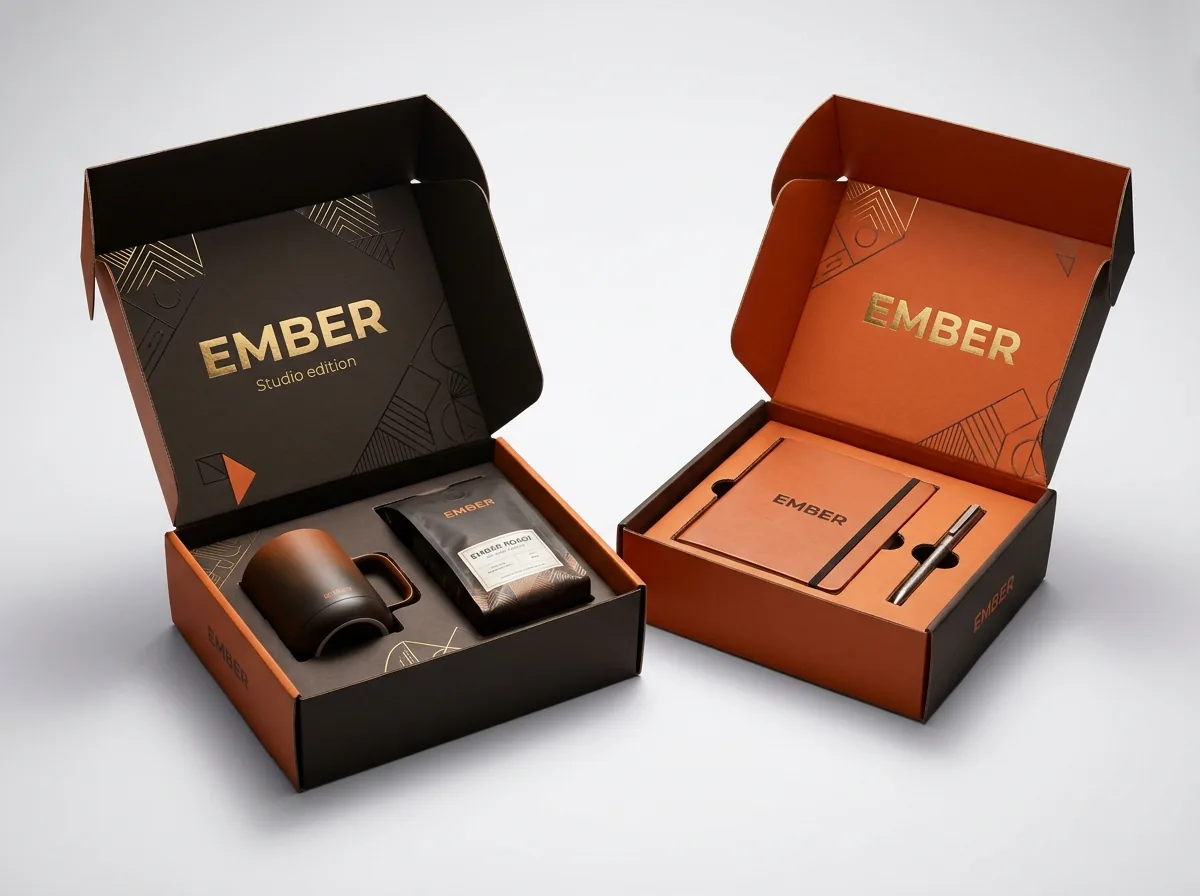
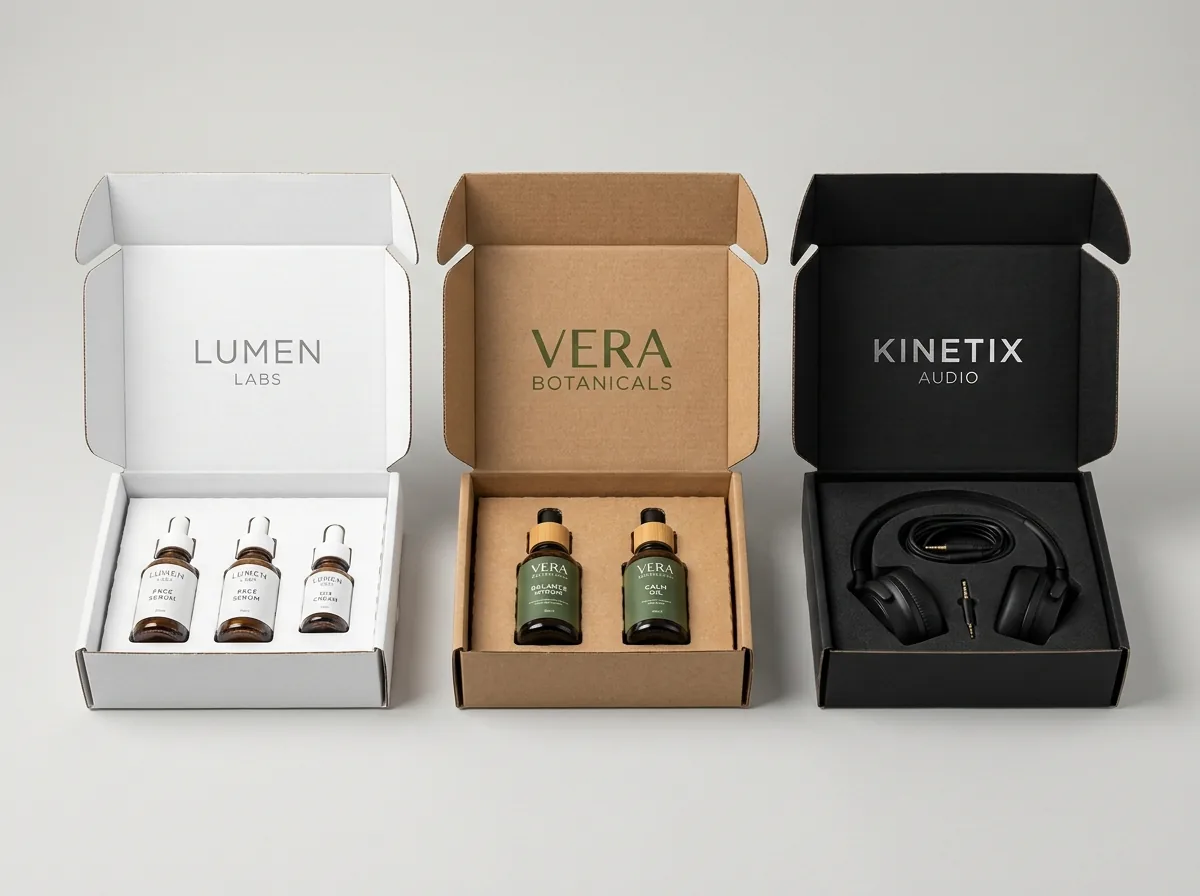
Ready to order honeycomb inserts? Compare up to 3 quantities with a free 3D mockup.
Request a Quote →Questions about honeycomb inserts
What is a V-grooved honeycomb insert and how does it work?
A V-grooved honeycomb insert is a flat structural honeycomb panel with 90-degree V-shaped channels cut through one paper liner and the hex core, leaving the opposite liner intact as a hinge. It ships completely flat and folds by hand into a 3D cushioning cradle.
Do V-grooved fold-up honeycomb cradles need tape or glue to stay folded?
No. Once you fold the V-grooved wings upward 90 degrees around your bottle or appliance and slide the assembly into a snug corrugated box, the outer box walls hold the honeycomb wings locked in position without tape or glue.
Can you expose the hexagonal honeycomb cells on the top of my insert?
Yes. We can kiss-cut and strip away the top facing liner in specific zones - or supply single-faced honeycomb pads - so the geometric six-sided kraft paper cells are visible around your jars.
Is it cheaper to use a corrugated bottom pad under a honeycomb collar?
Yes. Bonding a thick die-cut honeycomb collar (such as 1.0 or 1.5 inches thick) onto a 0.125 or 0.25 inch corrugated base pad gives you a solid cushioned floor while saving vertical height and board cost compared with a second honeycomb slab.
Can you print white ink on natural brown kraft honeycomb liners?
Yes. Opaque white ink, dark espresso or forest green Pantone spot colors print cleanly on natural brown kraft top liners, or we can laminate a full-color CMYK printed card top-sheet over the honeycomb.
How long does it take to get a custom honeycomb insert prototype and production run?
We reply to quote requests in 5-7 minutes, 24/7, and provide a free CAD dieline and 3D mockup before payment. Standard production takes 10 to 14 business days (rush 4 to 5 days, quoted) with free shipping to all 50 US states.
Still have a question? Ask a packaging specialist.
Request a Quote →Request your honeycomb inserts quote
Tell us your size and quantities, and one dedicated account manager prepares pricing for each tier.
- Free design & AI-to-print studio + 3D mockup
- No die or plate charges · 4–5 day rush available
- Free shipping to all 50 states
- 10% off your first order
The V-groove mitre folding, multi-layer bonding and cost-driver guidelines in this post come from TAPPI paper honeycomb converting standards and CubitPack's decided offers (zero die fees, 10-14 business day turnaround, free US shipping), verified by a packaging specialist. Spot an error? Tell us and we will fix it.
Sources
What changed
- October 22, 2026: First published.
- October 22, 2026: Updated specifications, terminology, and verified source links.
More guides
New packaging guides by email
Sizes, materials and design tips. Unsubscribe anytime.