
Tuck end vs auto lock bottom serum boxes: which protects glass droppers?
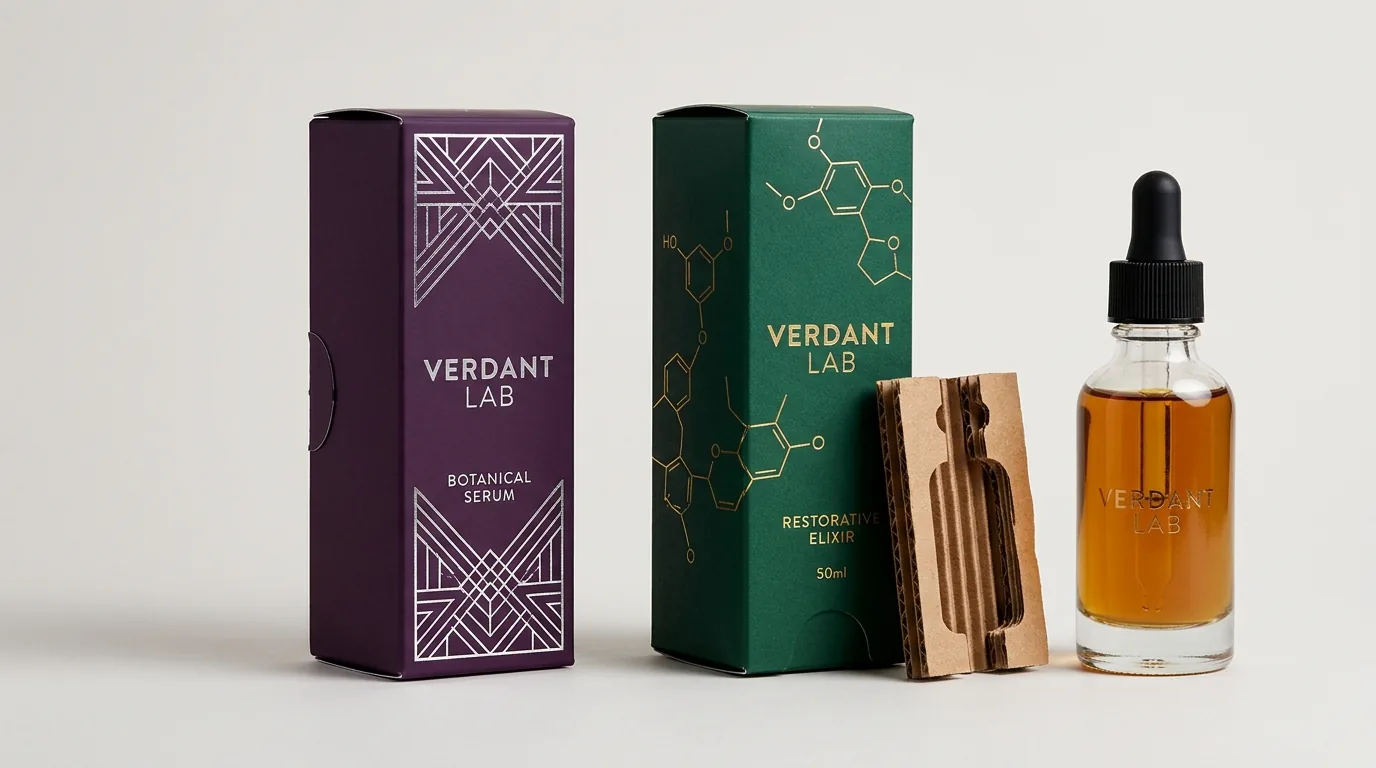
Short answer: Choose straight tuck end or reverse tuck end for standard 15 ml and 30 ml serum vials, and upgrade to an auto lock bottom for heavy 50 ml thick-wall glass bottles or two-bottle sets. Every style of custom serum boxes can include a card neck insert for transit safety.
On this page
- How do straight tuck, reverse tuck, auto lock and sleeve serum boxes compare
- Straight tuck end vs reverse tuck end: which is better for 30 ml serums
- When should I upgrade to an auto lock bottom serum box
- How do built-in neck tabs compare with separate card and foam inserts
- How does my sales channel (retail shelf vs e-commerce) affect style choice
- Common mistakes
- FAQs
Request a custom quoteFree dieline & 3D mockup
The right carton structure for a skincare serum depends on the glass weight of your bottle, your retail display needs and how you ship orders. Straight tuck end (STE) cartons fold both the top and bottom flaps toward the rear panel, giving 15 ml and 30 ml serums a clean, uninterrupted front face on store shelves. Reverse tuck end (RTE) cartons alternate the top and bottom flap folds so flat blanks nest tightly on the press sheet, making them an efficient choice for high-volume e-commerce runs. When your formula sits in a heavy 50 ml or 60 ml thick-base glass bottle, or when you pack two bottles in a duo carton, a pre-glued auto lock bottom prevents the base from popping open and snaps into shape in one motion during fulfillment. Adding an internal card neck collar stops narrow glass dropper tips from tilting or breaking inside any of these styles.
How do straight tuck, reverse tuck, auto lock and sleeve serum boxes compare?
Glass serum bottles concentrate weight in a narrow footprint while leaving a hollow space around the narrow dropper neck at the top of the box. Because of that top-to-bottom imbalance, choosing a box style is about matching base load capacity with top-end neck immobilization. Compare the five primary folding carton architectures used for printed serum boxes in the table below. All five structures ship flat to save warehouse space, use zero die or plate charges at CubitPack, and start at 1,000 units. Where they differ is how the bottom flaps lock under the glass base, whether a raw cardboard seam shows at the bottom of the front panel, and how fast your packing line can assemble each box.
| Carton style | Best bottle weight & format | Front look & packing speed |
|---|---|---|
| Straight tuck end (STE) | 10 ml to 30 ml droppers and airless pumps | Cleanest front face; manual top & bottom tuck |
| Reverse tuck end (RTE) | 15 ml to 30 ml high-volume e-commerce SKUs | Bottom fold edge on front; nests tightly on sheet |
| Snap lock (1-2-3) bottom | 30 ml to 50 ml medium-weight glass vials | Four interlocking bottom flaps; slower hand fold |
| Auto lock bottom (crash lock) | 50 ml+ heavy glass or 2-bottle duo sets | Pre-glued bottom pops locked in 1 second |
| Tray and sleeve | Multi-vial ampoule kits and prestige gift sets | Slide-out drawer reveal; double-wall tray base |
Straight tuck end vs reverse tuck end: which is better for 30 ml serums?
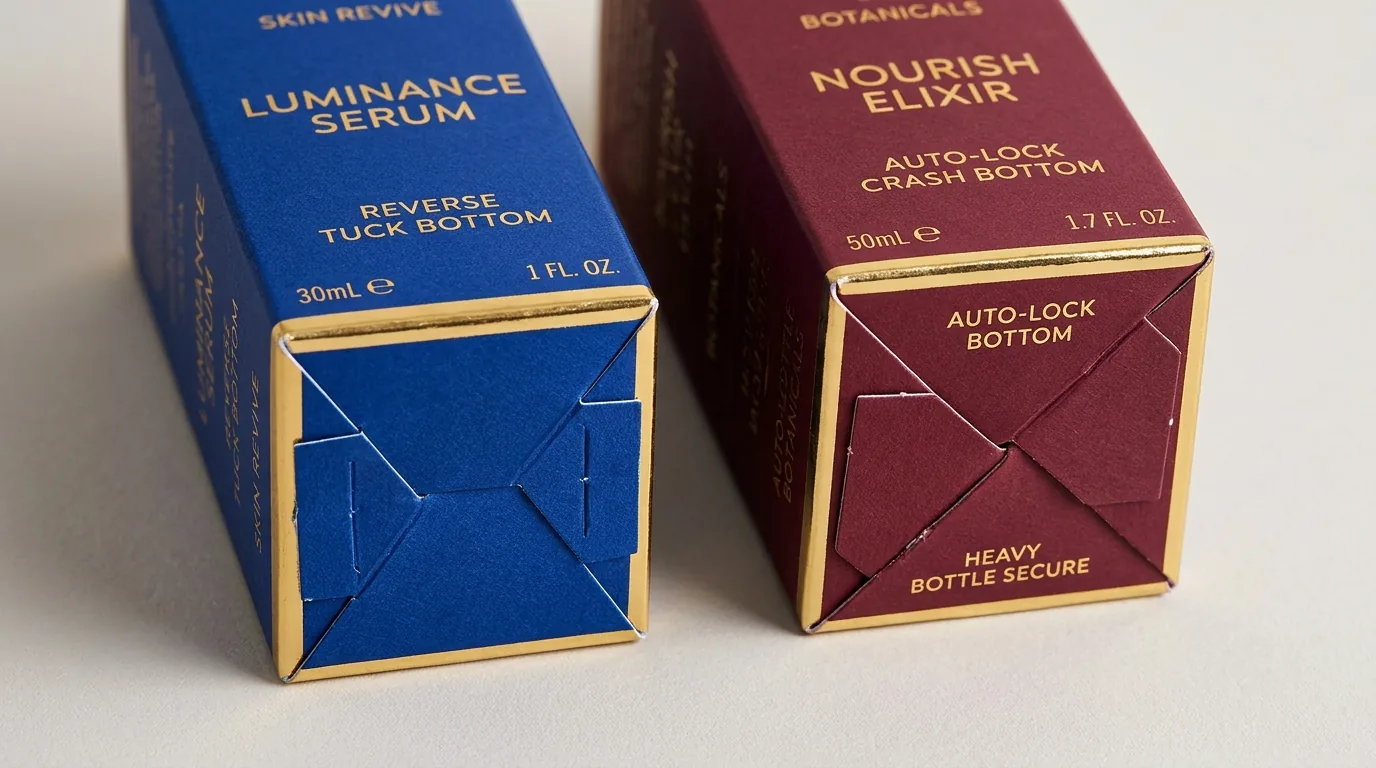
For a standard 15 ml or 30 ml bottle, your first decision is between straight tuck end boxes and reverse tuck end boxes. Structurally, both hold the exact same weight and use the same dust flaps and slit-lock or friction-lock tabs. The difference is which panel the top and bottom flaps hinge from. On a straight tuck end carton, both the top lid flap and the bottom base flap hinge off the back panel and tuck behind the front panel. That means the entire front face of your serum box is a single continuous sheet of paperboard from top to bottom, with no horizontal cut line or raw white board edge visible at the base. Cosmetic brands selling on boutique shelves or shooting close-up studio photography almost always prefer straight tuck end for that clean front edge. On a reverse tuck end carton, one flap hinges from the front and the other hinges from the back, allowing adjacent cartons to interlock like puzzle pieces on the parent press sheet. If your serum ships primarily in e-commerce mailers and you want to maximize board efficiency across large runs, reverse tuck end performs identically in transit.
When should I upgrade to an auto lock bottom serum box?
Once a skincare bottle moves past 30 ml into 50 ml (1.7 oz) or 60 ml (2 oz) heavy-wall glass, or when a single carton holds two 30 ml dropper bottles side by side, the concentrated downward weight can bow a standard tuck flap when a shopper picks the box up off a shelf. An auto lock bottom box (often called a crash-lock bottom) solves both bottom weight support and fulfillment line speed at the same time. During production, our folder-gluer machine pre-glues the opposing bottom flaps at a diagonal crease before shipping the cartons flat in master cases. When your fulfillment team squeezes the two side panels of a flat carton, the bottom automatically snaps into a flat, overlapping four-layer lock without a single extra hand fold. On a 2,500-unit or 5,000-unit serum launch, cutting 4 to 6 seconds of manual bottom-tucking per carton saves hours of co-packing labor while giving heavy glass dropper bottles a rigid base that cannot accidentally unlatch.
- Standard 15 ml and 30 ml single vials: straight or reverse tuck end with a slit-lock bottom is sufficient.
- Thick-base 50 ml and 60 ml glass bottles: upgrade to an auto lock bottom so the base never sags or pops open.
- Two-bottle AM/PM serum duos: use an auto lock bottom paired with a center card partition.
- High-speed co-packing lines: auto lock bottom cuts manual carton erection time in half.
Know your size? Compare pricing across up to 3 quantities.
Request a Quote →How do built-in neck tabs compare with separate card and foam inserts?
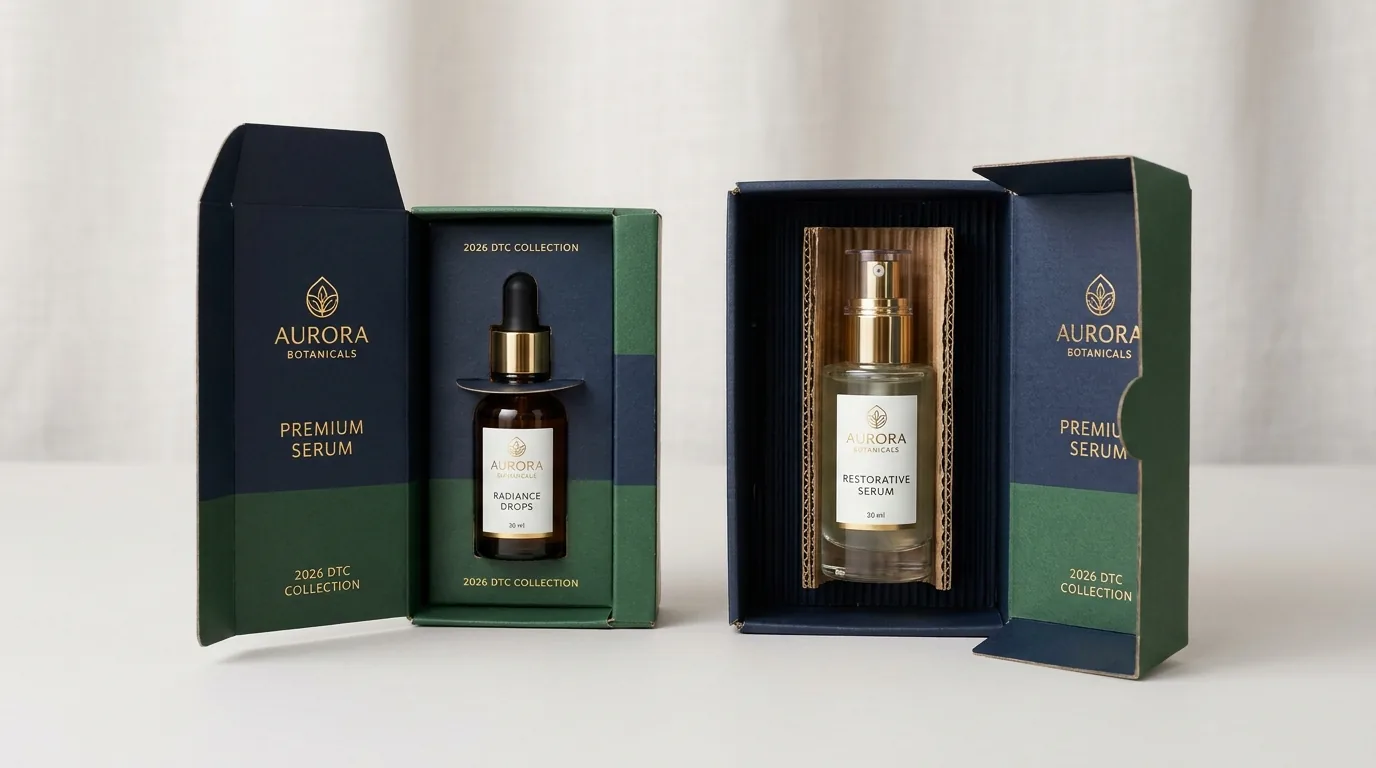
Regardless of whether you pick a tuck bottom or an auto lock bottom, a glass dropper bottle narrows sharply at the shoulder. Without an upper restraint, the narrow dropper cap sits in open air inside the top third of the carton. If the box drops upside down or tumbles inside a shipping parcel, the glass pipette tip and rubber bulb take the full shock. You can immobilize the dropper neck in three ways. First, a built-in fifth-panel neck tab extends directly from the top side panel of the carton dieline and folds horizontally across the inside of the box with a die-cut circle that hugs the bottle collar. Because it prints and die-cuts as part of the one-piece box blank, it keeps material cost low and eliminates matching a separate insert SKU during packing. Second, a separate folded custom cardboard insert creates a full inner cradle around both the base and the neck, adding a double wall of cushioning for heavy glass shipped via parcel carriers. Third, for multi-vial glass ampoule sets or prestige gift boxes, a die-cut EVA foam tray or a tray and sleeve box holds each fragile vial in a recessed well.
How does my sales channel (retail shelf vs e-commerce) affect style choice?
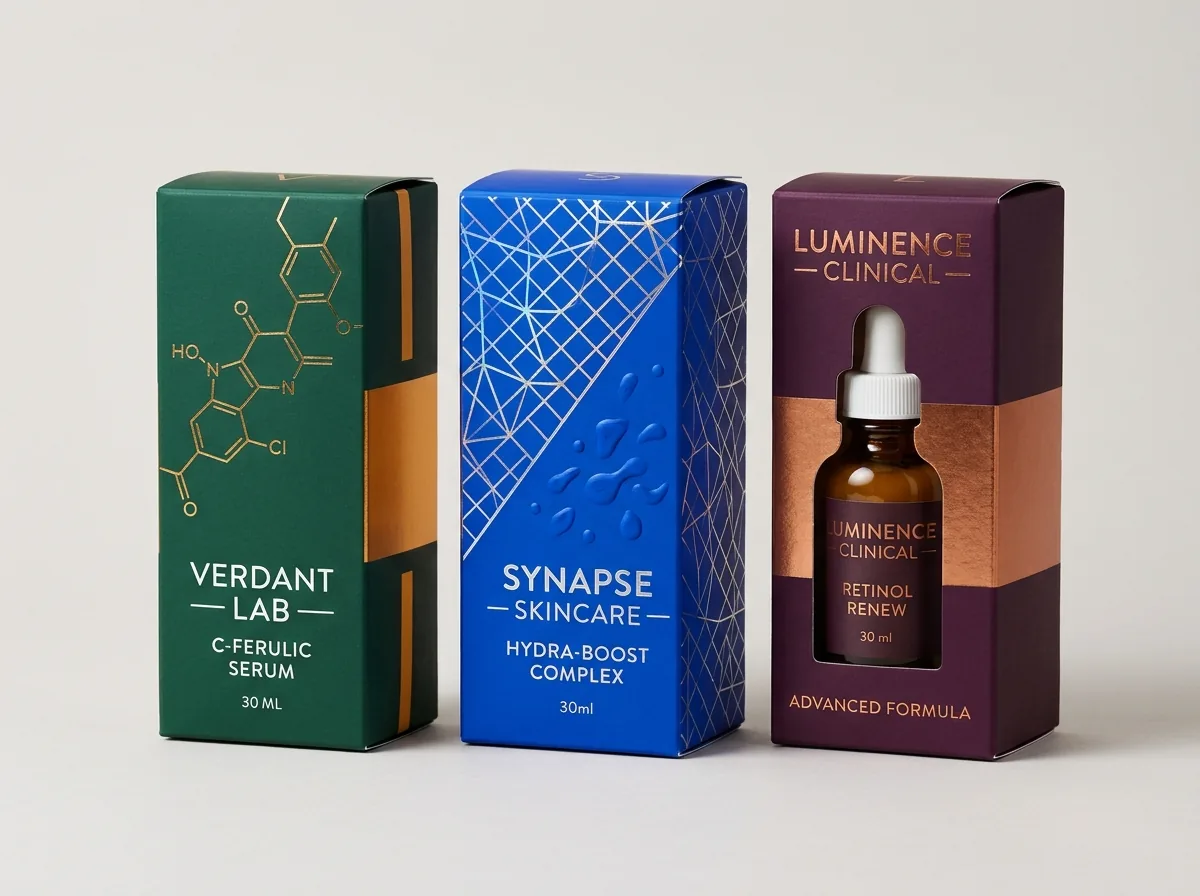
Think about how your customer first encounters the serum box. In brick-and-mortar beauty retail or med-spa display cases, shoppers handle the carton directly and view it at eye level. A straight tuck end carton in smooth white card with soft-touch lamination, a slit-lock base and a tamper-evident seal sticker over the top flap gives a clean presentation and prevents casual opening on the shelf. In direct-to-consumer e-commerce and subscription beauty boxes, the serum carton rides inside a corrugated mailer alongside other jars or tubes. Vibration scruffs and corner drops are the primary hazards. Here, pairing a snug straight or reverse tuck carton (or an auto lock bottom for 50 ml bottles) with a shoulder-locking neck collar and protective lamination ensures the inner carton looks retail-fresh when the customer unboxes their order.
What are the most common mistakes when choosing a serum box style?
Most transit breakage and shelf sagging comes from mismatching the base lock or skipping neck support. Watch out for these five mistakes
- Using an un-notched friction-tuck bottom under a heavy 50 ml glass bottle instead of a slit-lock or auto lock bottom.
- Putting a narrow-neck dropper bottle into a plain carton for e-commerce shipping without a shoulder-bracing neck tab.
- Choosing a reverse tuck end box when a dark full-bleed front background will expose a raw white paperboard edge along the bottom front crease.
- Designing the neck insert hole wider than the bottle shoulder so the bottle slides straight through the collar during an upside-down drop.
- Forgetting to add 1/4 to 3/8 inch of outer carton width when switching from a built-in top tab to a separate wrap-around card cradle.
Find your size
Suggested inside size: 1.375 × 1.375 × 3.75 in
A starting point. Your account manager confirms the size with you before the proof.
Quote this size →Packaging for this
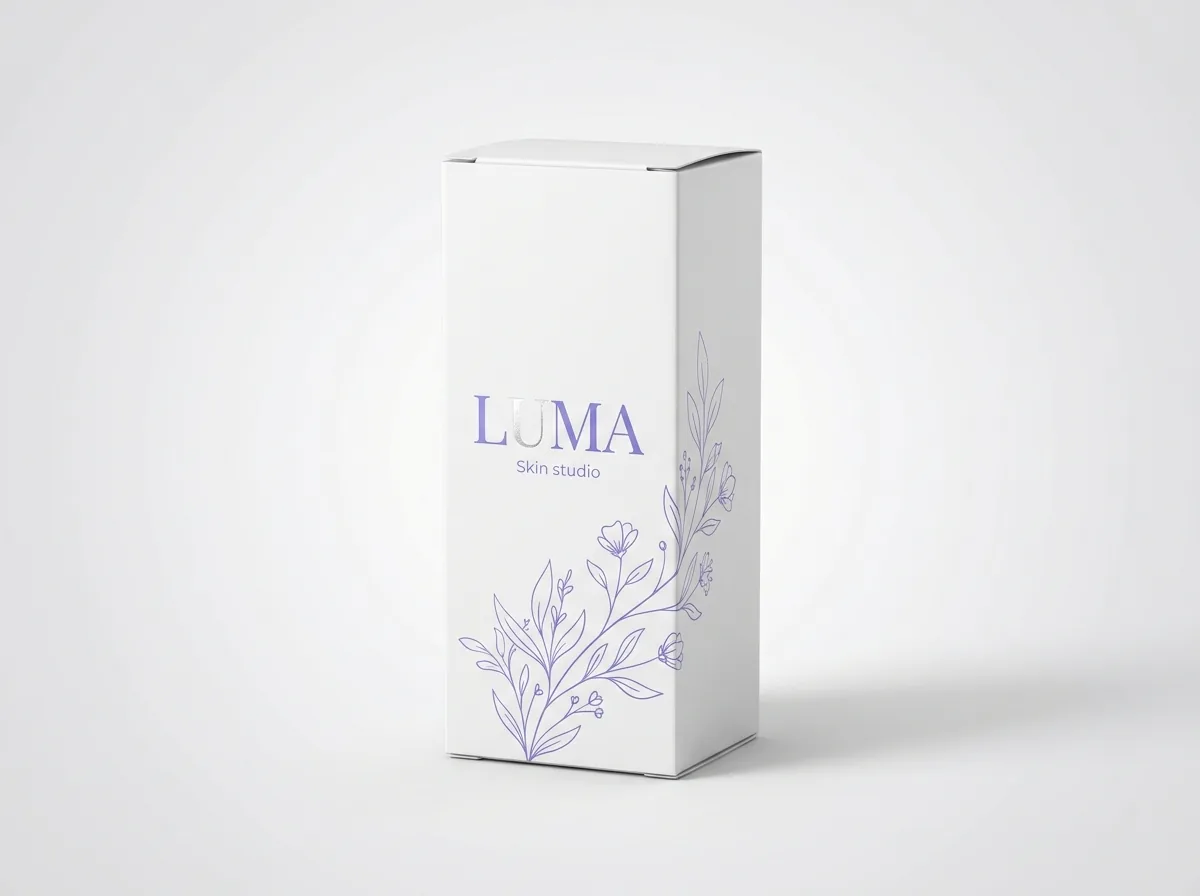
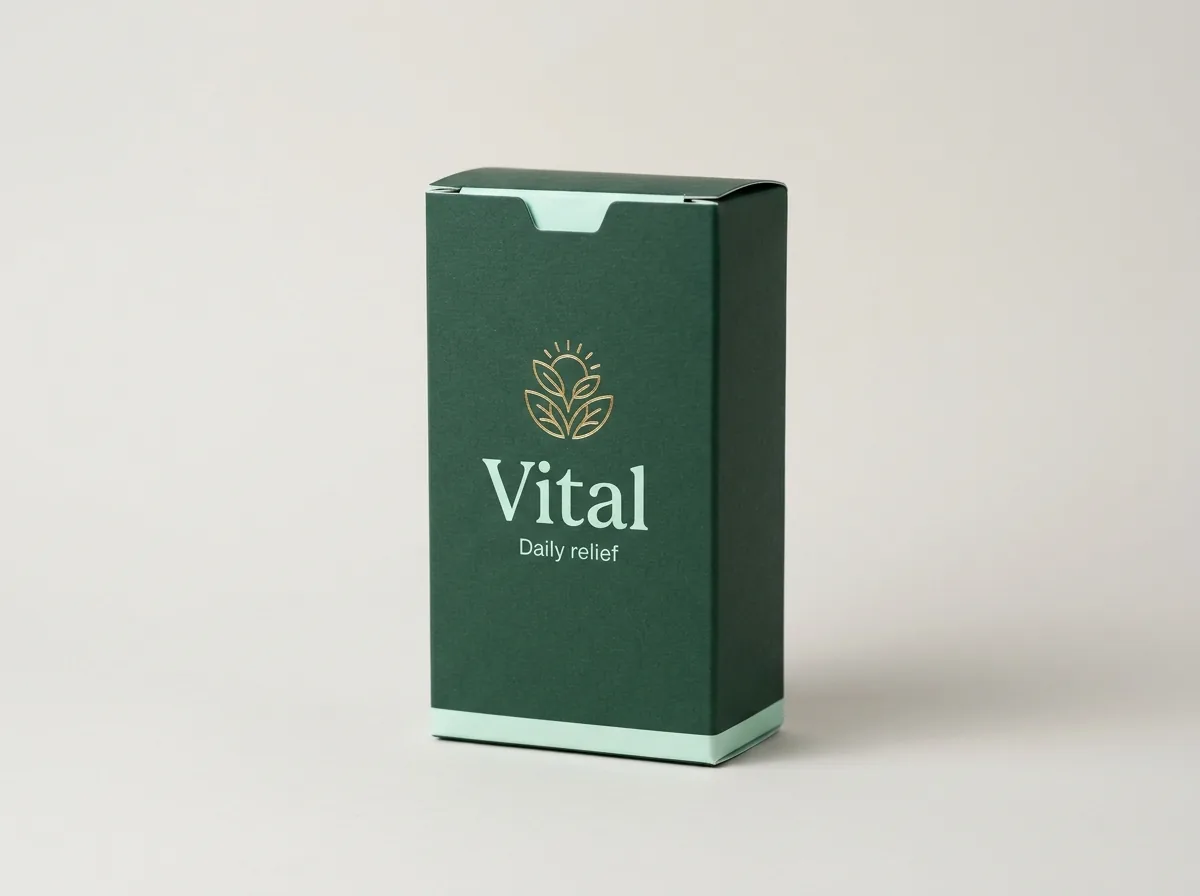
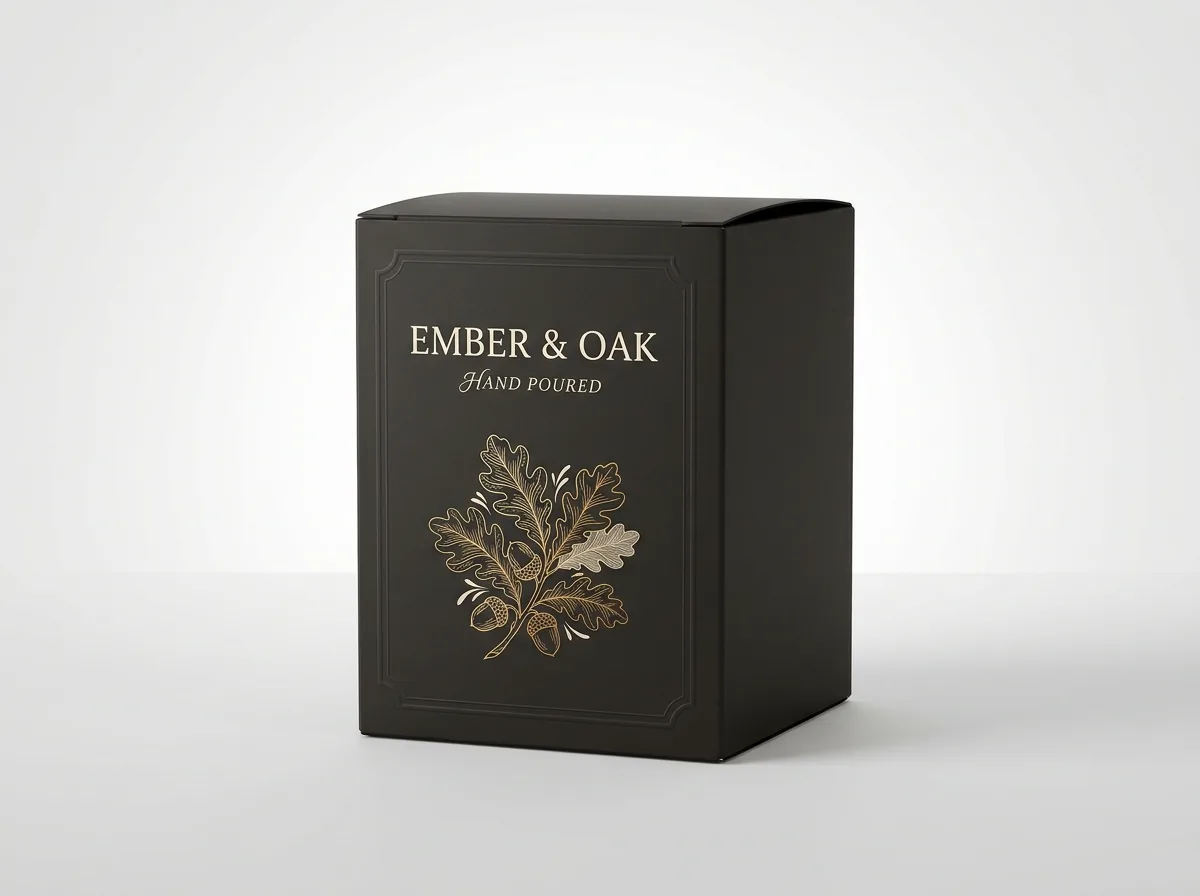

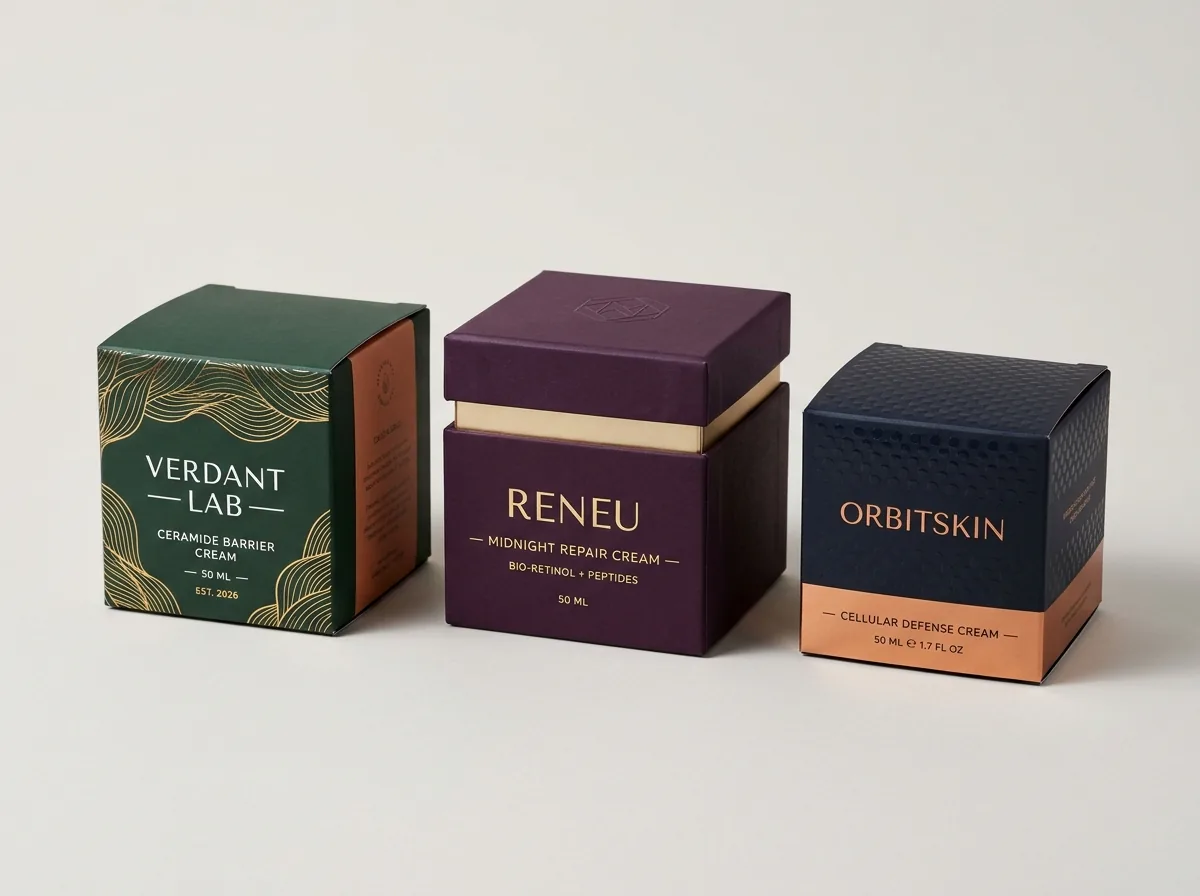
Ready to order serum boxes? Compare up to 3 quantities with a free 3D mockup.
Request a Quote →Questions about serum boxes
Does a straight tuck end serum box cost more than a reverse tuck end box?
They are very close in price. Reverse tuck end blanks can nest slightly closer together on the press sheet on large production runs, while straight tuck end gives a cleaner front face with both flaps folding to the back. Request both in your quote notes to compare.
At what bottle size should I switch from a tuck bottom to an auto lock bottom?
Most brands use a slit-lock tuck bottom for 10 ml, 15 ml and standard 30 ml serum bottles, and switch to a pre-glued auto lock bottom for heavy-wall 50 ml and 60 ml glass bottles or two-bottle duo sets.
Can a straight tuck end box have a built-in neck insert for a dropper bottle?
Yes. Our structural designers can add an extended fifth-panel flap or extended dust flap with a circular die-cut hole that folds down over the bottle neck, bracing the shoulder without needing a separate insert piece.
What is a slit lock (cherry lock) on a serum carton?
A slit lock consists of two small notched shoulders on the tuck flap that hook into matching slits at the base of the dust flaps. Unlike a plain friction flap that stays shut only by board tension, a slit lock mechanically holds the bottom closed.
Are auto lock bottom serum boxes shipped flat or assembled?
They ship completely flat in protective master cartons, just like tuck-end boxes. The bottom flaps are pre-glued along diagonal fold scores so the base pops into a locked position as soon as you squeeze the sides open.
Can I see a 3D mockup of my serum box style and neck insert before paying?
Yes. Every CubitPack quote includes free structural design help, a custom 2D dieline and an interactive 3D mockup before you pay. You can also order our $50 sample kit (credited to your first order) to compare board stocks and finishes.
Still have a question? Ask a packaging specialist.
Request a Quote →Request your serum boxes quote
Tell us your size and quantities, and one dedicated account manager prepares pricing for each tier.
- Free design & AI-to-print studio + 3D mockup
- No die or plate charges · 4–5 day rush available
- Free shipping to all 50 states
- 10% off your first order
This structural comparison draws on folding carton dieline standards (ECMA / FEFCO style conventions) and glass vial parcel drop-testing principles. A CubitPack packaging specialist reviewed every structural recommendation. Spot an error? Tell us and we will fix it.
Sources
What changed
- October 22, 2026: First published.
- October 22, 2026: Updated specifications, terminology, and verified source links.
More guides
New packaging guides by email
Sizes, materials and design tips. Unsubscribe anytime.