
How do I lay out custom serum box artwork, INCI lists and foil accents?
Short answer: Dedicate the front panel to your brand, active ingredient and net volume, place usage directions on one side panel, reserve the back panel for the INCI ingredient list and warnings, and put the barcode on the second side panel. We check every file for custom serum boxes free before payment.
On this page
- What belongs on each panel of a 4-sided serum carton
- How do I keep 5 pt to 6 pt INCI ingredient text crisp on narrow panels
- Where should the UPC barcode and batch lot code go on a 1.5 inch wide box
- How do inside printing and multi-SKU grouping lower serum packaging costs
- Which finishes and foil accents work best on skincare serum cartons
- Common mistakes
- FAQs
Request a custom quoteFree dieline & 3D mockup
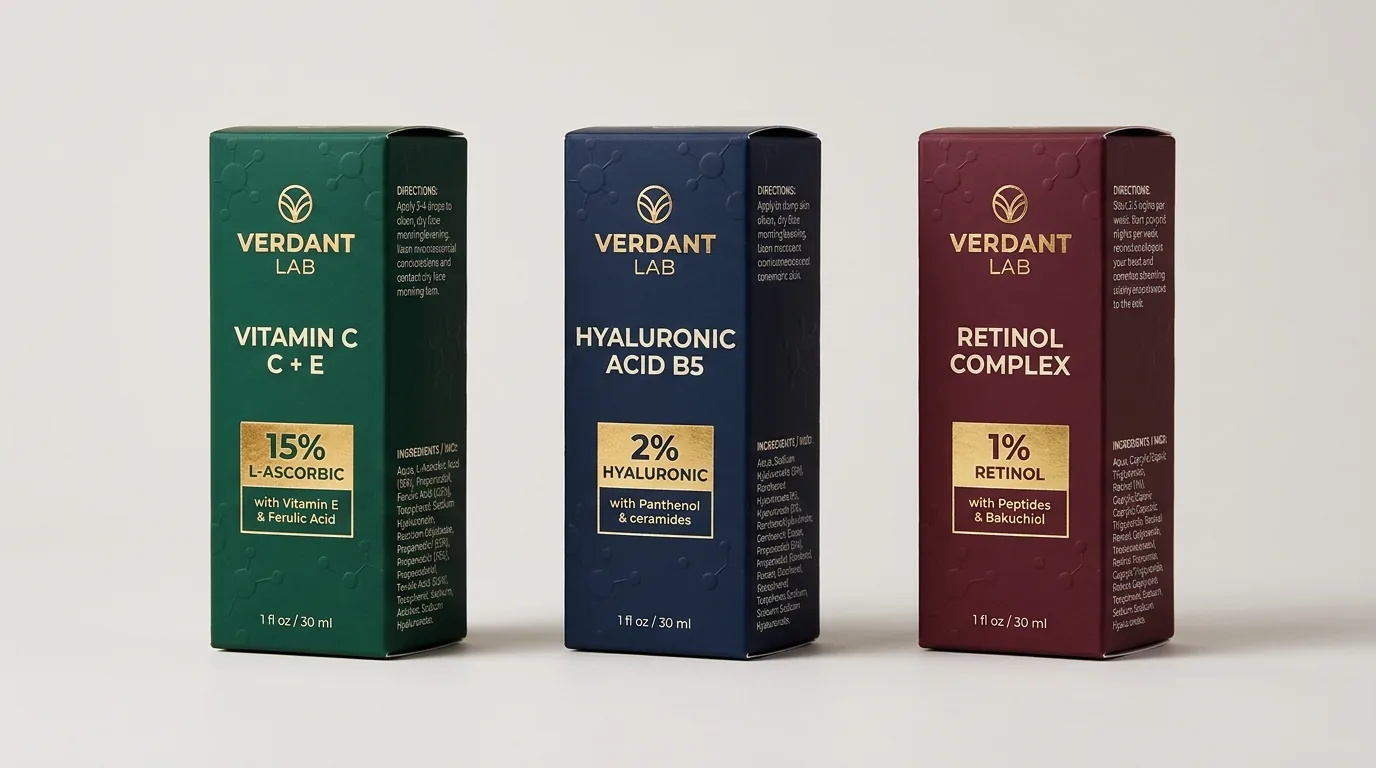
Designing a serum box requires fitting mandatory cosmetic disclosures onto four narrow vertical panels that are often only 1.375 to 1.75 inches wide. A clean panel architecture puts your brand mark, serum name, key active percentage and net quantity declaration (in both fluid ounces and milliliters) on the front principal display panel, while moving detailed usage instructions, full INCI ingredient lists, distributor address, PAO symbol and the UPC barcode to the side, back and bottom panels. Keep all live typography at least 1/8 inch (0.125 in) inside the fold score lines, extend background colors 1/8 inch past the outer cut lines for bleed, and print 5 pt to 6 pt ingredient text in a single dark ink over a light background for crisp legibility. If you need extra space for multi-step skincare routines, print inside the carton walls instead of paying for a separate paper leaflet.
What belongs on each panel of a 4-sided serum carton?
A standard 30 ml serum carton gives you four tall, narrow vertical panels (each typically 1.5 to 1.75 inches wide by 4.25 to 4.625 inches tall), plus a top lid flap and a bottom base flap. Trying to cram benefits, routines and ingredients onto the front face makes a clinical serum look cluttered. Use the panel map below to assign every required element its own dedicated home on your printed serum cartons. Under US cosmetic labeling rules, the front principal display panel (PDP) must clearly state the product identity (for example, "Vitamin C Brightening Serum") and the net quantity of contents near the bottom in both US customary and metric units (such as "1 FL. OZ. / 30 mL"). Every other technical block belongs on the secondary panels or inside the carton.
| Carton panel | Primary content to include | Typography & prepress rule |
|---|---|---|
| Front panel (PDP) | Brand logo, serum name, hero active %, net contents (fl oz / ml) | Keep 1/8 in safe margin inside left & right fold scores |
| Right side panel | How to use (AM/PM steps), skin type icons, key active callouts | 6 pt to 8 pt sans-serif; align icons vertically |
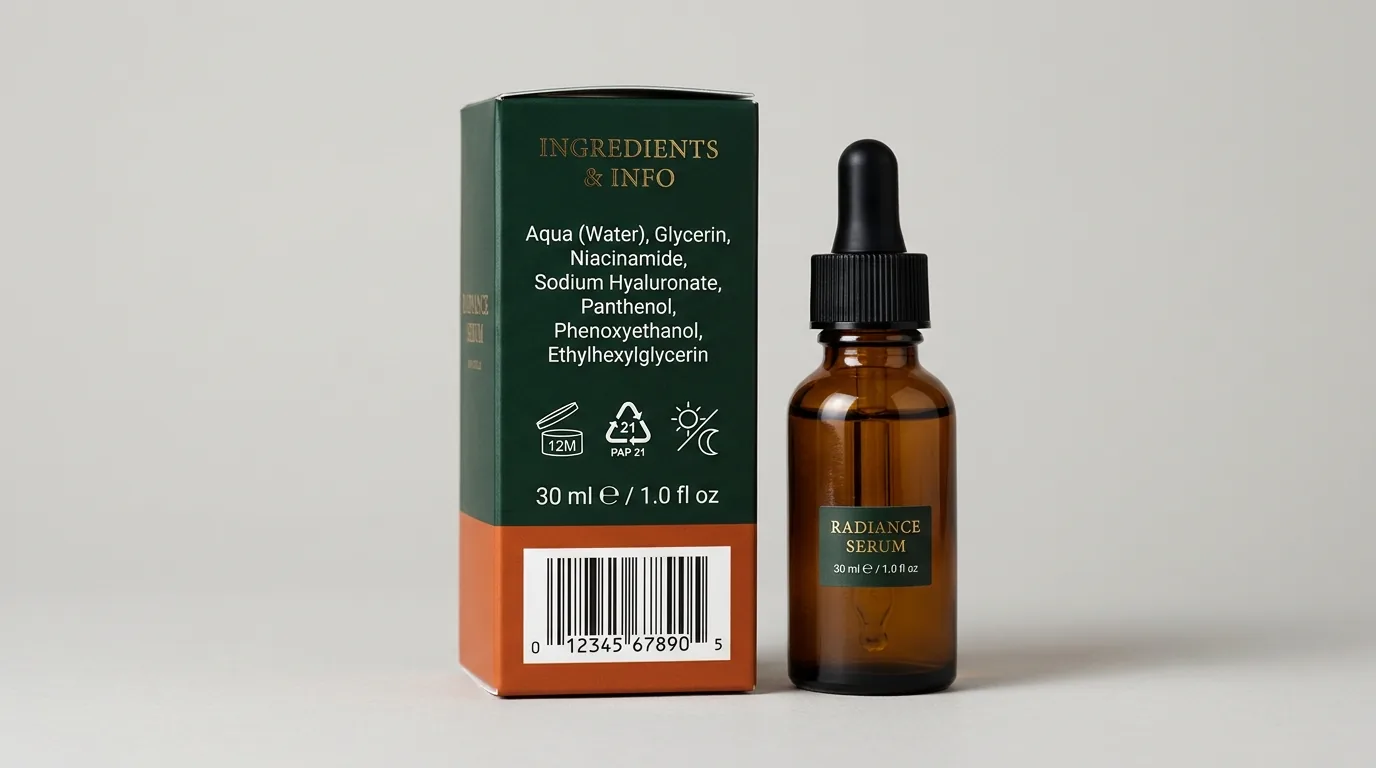
| Back panel | Full INCI ingredient list, caution/patch-test statement, company address | 5 pt to 6 pt single-color dark ink on light background |
| Left side panel | Retail UPC barcode, recycling icons, PAO jar symbol (e.g., 12M), batch note | Black bars on solid white box; ladder (vertical) orientation if narrow |
| Top tuck flap | Monogram crest, droplet icon or 'Open here' prompt | Center artwork; avoid placing text across the flap score |
| Bottom tuck flap | Unvarnished knock-out window for inkjet lot number & expiry date | Leave glue/coat-free rectangle if stamping batch codes after packing |
| Inside carton walls | Full multi-step skincare routine, founder note or QR code to video guide | Replaces separate folded paper insert leaflet |
How do I keep 5 pt to 6 pt INCI ingredient text crisp on narrow panels?
Active serums often contain 20 to 40 botanical extracts, peptides, humectants and preservatives that must be listed in descending order of predominance on the outer carton. On a 1.5-inch-wide panel, fitting that entire ingredient block alongside caution text, batch note and your distributor address usually requires setting the type between 5 pt and 6 pt with 6 pt to 7 pt line spacing. Small typography fails on press when designers build the text in four-color CMYK rich black or reverse white text out of a dark four-color background. Even a microscopic registration shift between the cyan, magenta, yellow and black printing plates will blur a 5 pt letterform. Follow two simple prepress habits: first, set dark ingredient text in 100% K (black ink only) or a single dark Pantone spot ink over a white or pale pastel panel. Second, if your brand aesthetic uses a deep navy, charcoal or burgundy box, place your INCI text inside a clean white or cream panel on the back, or use a slightly heavier medium-weight sans-serif font (at least 6 pt) when knocking white text out of a single dark spot color.
- Bleed: extend background colors and patterns 1/8 inch (0.125 in) past the solid outer cut lines.
- Safe zone: keep all INCI text, borders and logos at least 1/8 inch inside every dashed fold score so letters never wrap around a corner.
- Single-ink micro-type: build small ingredient and warning text in 100% black (0C 0M 0Y 100K) or one dark Pantone color, never 4-color rich black.
- Outline fonts: convert all typography to vector outlines (or embed fonts in a print-ready PDF) before uploading your file.
Where should the UPC barcode and batch lot code go on a 1.5 inch wide box?
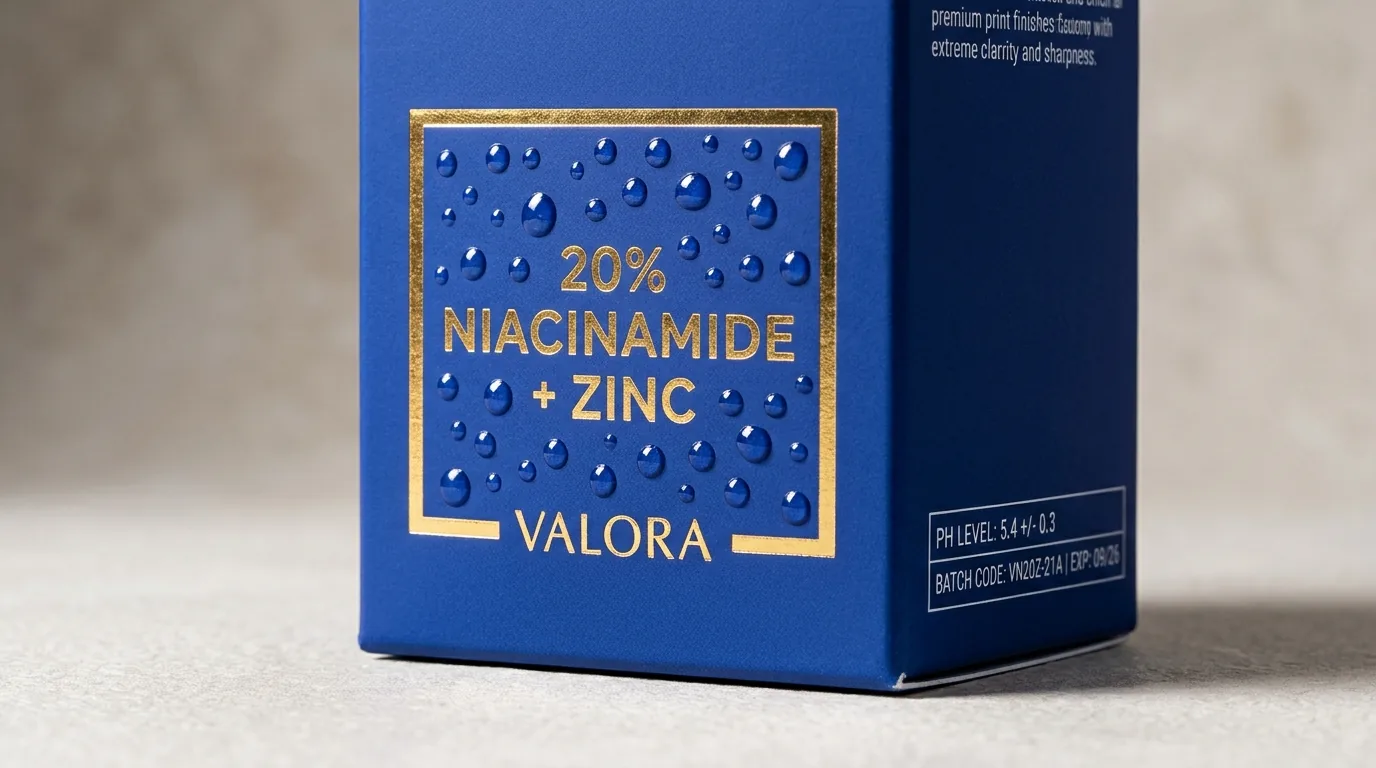
A standard retail UPC-A barcode at 100% magnification is 1.469 inches wide including its left and right white quiet zones. On a 1.375-inch or 1.5-inch serum box panel, placing a 100% barcode horizontally leaves almost zero margin before the bars hit the left and right fold creases, which causes retail laser and camera scanners to fail. The clean solution on narrow serum cartons is to rotate the barcode 90 degrees into a vertical "ladder" orientation on the lower half of the side or back panel, or scale the barcode down to 80% magnification (the minimum standard retail size, about 1.18 inches wide) inside a solid white rectangle. Also remember batch and expiration coding: if your contract filler stamps or inkjets a lot number onto the bottom flap after packing the bottle, leave a 1 × 0.5 inch unlaminated, unvarnished white rectangle on the bottom flap so the coding ink bonds to the paper fibers without smearing.
Know your size? Compare pricing across up to 3 quantities.
Request a Quote →How do inside printing and multi-SKU grouping lower serum packaging costs?
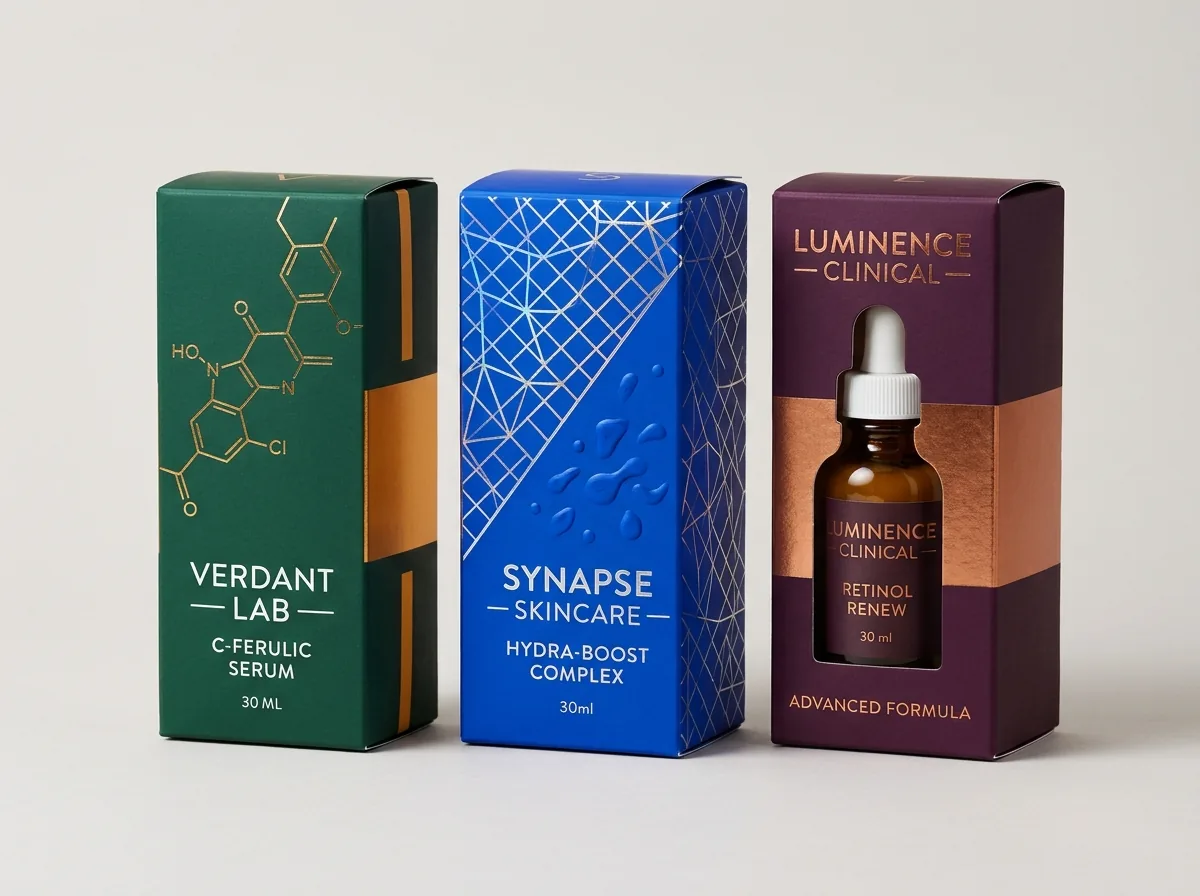
Two smart artwork decisions can cut your total packaging spend without sacrificing a prestige look. First, use inside carton printing instead of ordering a separate folded paper instruction leaflet. Many clinical serums require explaining morning vs evening layering, retinoid purging tips, or sun-sensitivity warnings. Printing those steps directly onto the interior walls of the carton means customers see the guide as soon as they pop the top flap open, and you save both the cost of printing paper inserts and the co-packing labor of stuffing them into every box. Second, standardize one bottle and carton dieline across your serum range. If your Vitamin C Serum, Hyaluronic Acid B5 Serum and Niacinamide Zinc Serum all use the exact same 30 ml dropper bottle and 1.5 × 1.5 × 4.25 in carton, you can select "2 designs" or "3+ designs" in the quote form to run all three artworks in one combined order. You can even pair a printed outer carton with coordinated custom cosmetic labels or custom bottle labels so the inner dropper vial matches the box.
Which finishes and foil accents work best on skincare serum cartons?
Because serums are typically the highest-value item per milliliter in a skincare routine, brands use tactile finishes to set them apart from everyday cleansers. Soft-touch lamination is the most popular base coat for custom skincare boxes and serum cartons: it gives white card a velvety, low-glare surface that resists fingerprint oils and prevents dark ink from cracking along the fold scores. To create visual contrast against a matte or soft-touch background, add one focal accent rather than layering every finish at once. Hot foil stamping in gold, silver, rose gold or copper makes an active percentage badge (such as "10% NIACINAMIDE" or "2% GRANACTIVE RETINOID") catch the light from across a retail store aisle. Alternatively, spot UV coating laid over a droplet pattern or brand monogram creates a glossy wet-look texture that costs less than metallic foil while adding durable tactile depth on the vanity.
What are the most common custom serum box artwork mistakes?
Narrow panels magnify small prepress mistakes. Check these five items before approving your digital proof
- Setting 5 pt INCI ingredient text in 4-color rich black or thin reversed white type, which blurs if press plates shift slightly.
- Placing a wide horizontal UPC barcode across a 1.375 inch panel so the outer bars wrap around the fold creases and fail to scan.
- Running text or border boxes right up to the dashed fold score lines instead of leaving a 1/8 inch (0.125 in) inner safe margin.
- Covering the bottom lot-code and expiration-date stamp area with gloss UV or soft-touch lamination so inkjet coders smear.
- Cracking dark unlaminated ink along the vertical fold scores by skipping exterior lamination on heavy solid-colored cartons.
Find your size
Suggested inside size: 1.375 × 1.375 × 3.75 in
A starting point. Your account manager confirms the size with you before the proof.
Quote this size →Packaging for this
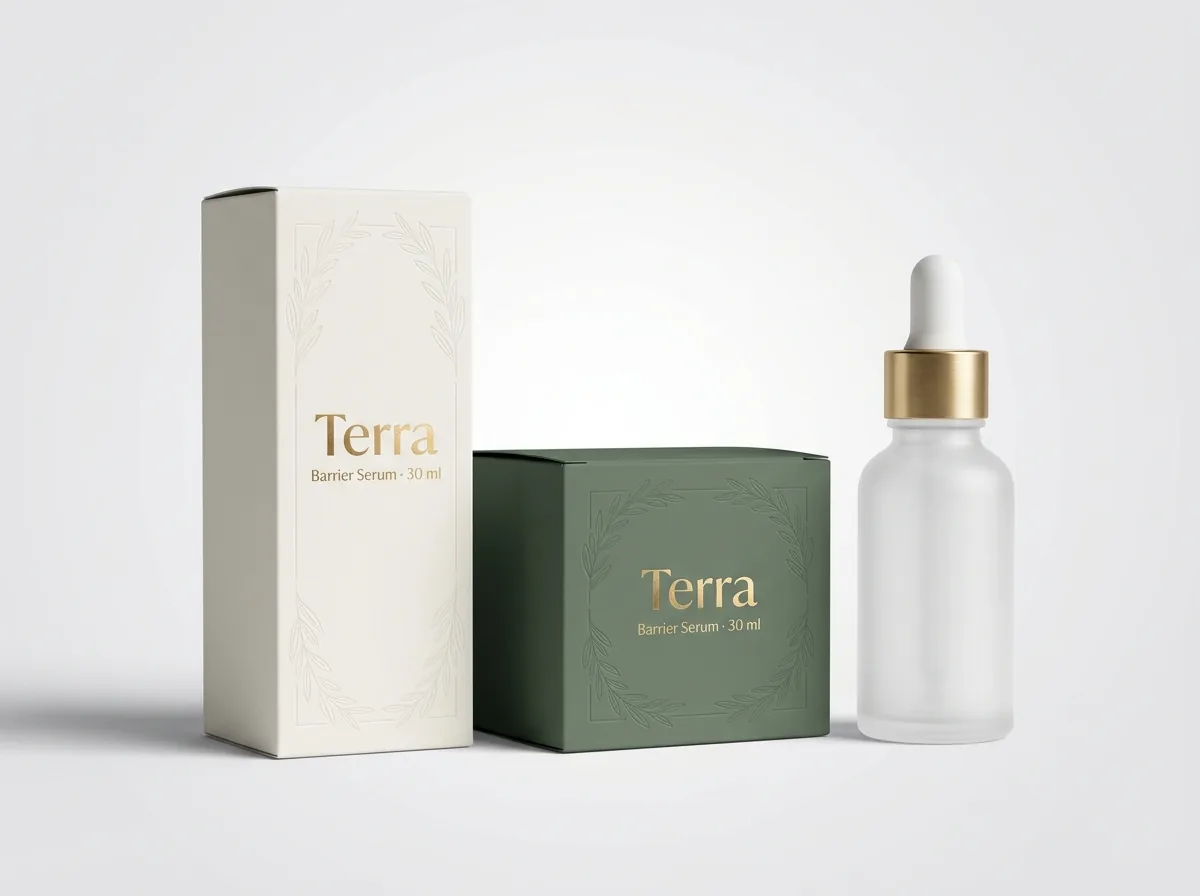
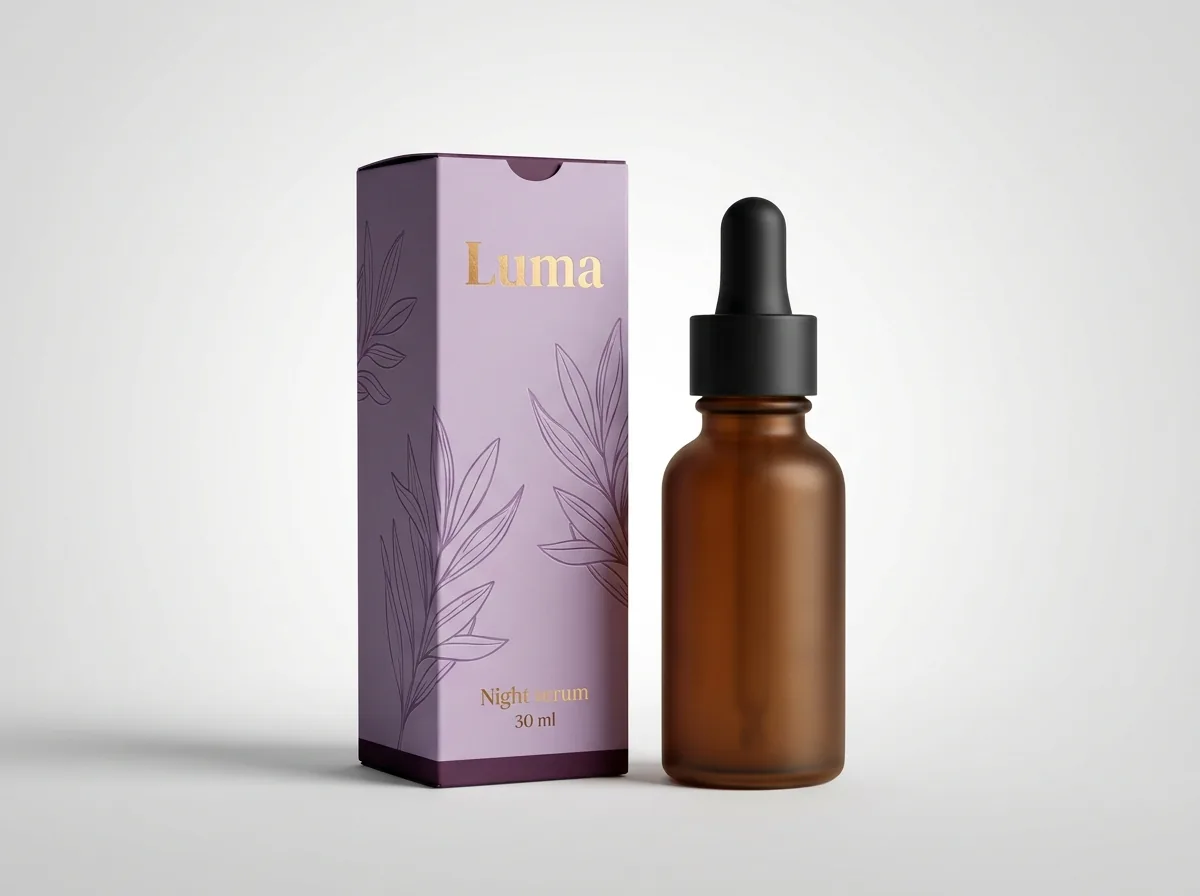
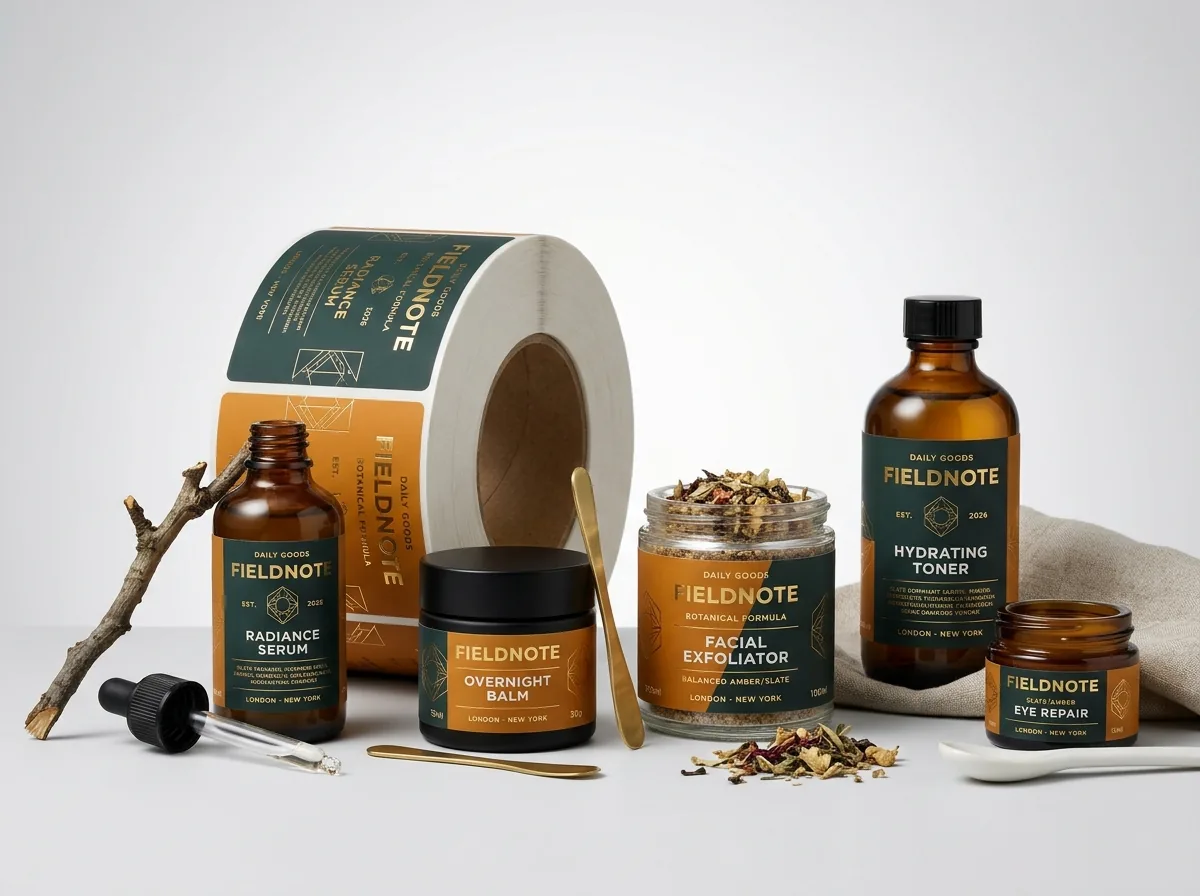
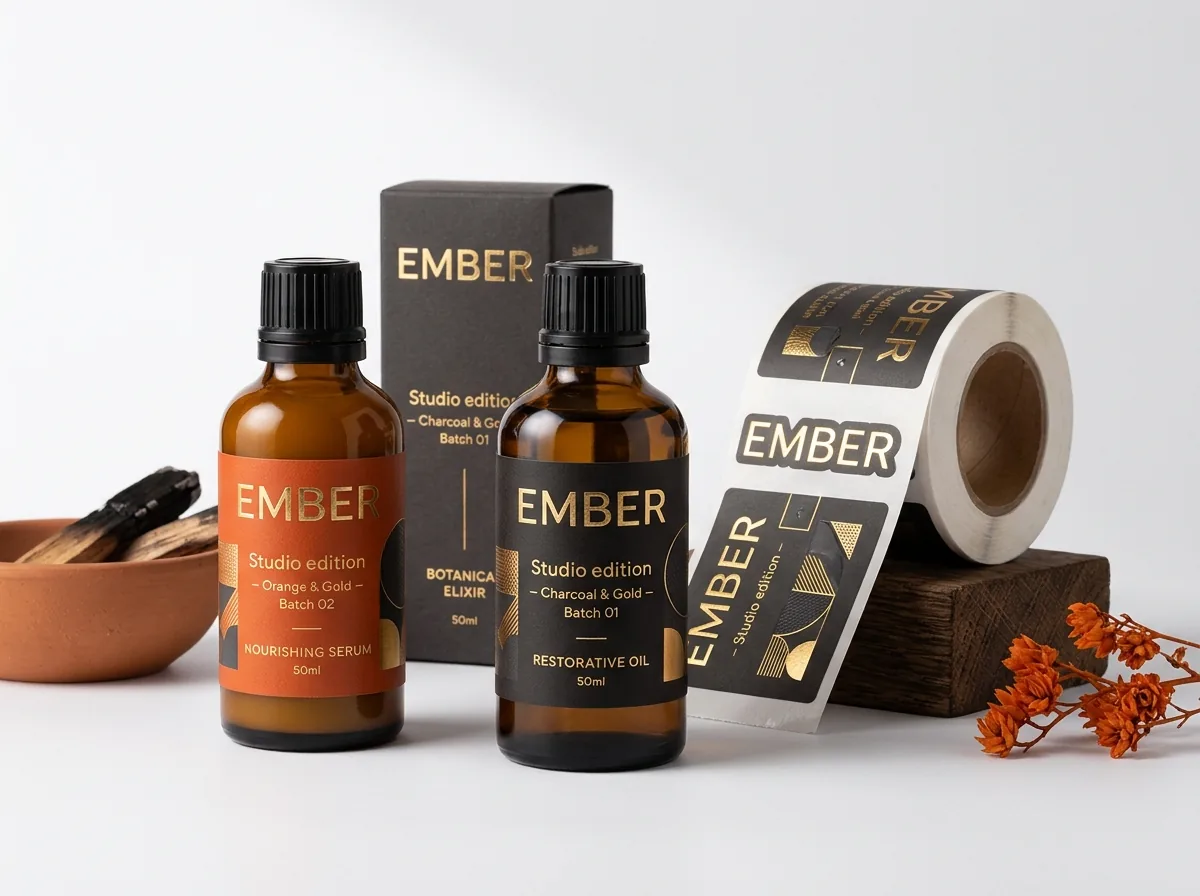
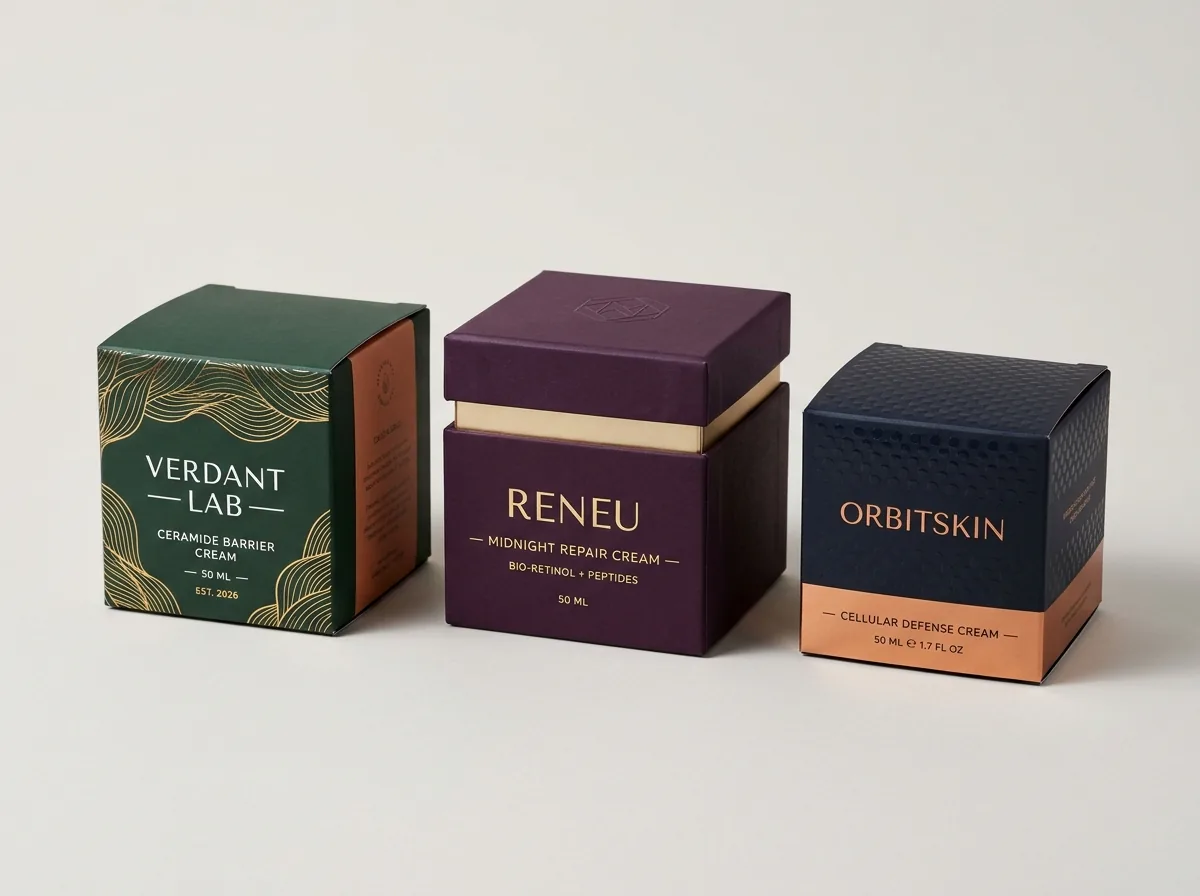
Ready to order serum boxes? Compare up to 3 quantities with a free 3D mockup.
Request a Quote →Questions about serum boxes
Do you provide a free blank dieline template for my serum box size?
Yes. Tell us your bottle dimensions or desired inside box size (Length × Width × Height), and our prepress team sends you a custom vector PDF/AI dieline with cut lines, fold scores and bleed guides at no charge.
What is the smallest font size that prints clearly on a serum carton?
For dark text printed on a white or light background, 5 pt is the practical minimum and 6 pt is recommended for comfortable reading. If you reverse white text out of a dark background, use at least 6 pt medium-weight type.
Can you print my AI-generated skincare design on a custom serum box?
Yes. Upload your AI concept in the quote form and pick 'AI image' under Artwork. Our designers clean up the file, convert all ingredient text and logos into sharp vectors, fit it onto your dieline and show you a free 3D mockup.
How do you guarantee my brand's exact pastel or clinical color matches?
You can specify Pantone (PMS) spot colors for your brand background or logo. CubitPack guarantees Pantone color matching: if a printed Pantone shade is clearly off from your approved proof, we reprint the order.
Does inside printing require a separate artwork file?
No. When you request inside printing, we send you a two-sided dieline template (outside and inside views) so your designer, or our free design team, can place your routine steps on the exact interior panels.
How do I prevent dark ink from cracking on the edges of my serum box?
Add matte, gloss or soft-touch lamination to the outside of the carton. The thin protective film flexes over the 90-degree crease scores during folding so deep navy, black or forest green backgrounds stay smooth along every edge.
Still have a question? Ask a packaging specialist.
Request a Quote →Request your serum boxes quote
Tell us your size and quantities, and one dedicated account manager prepares pricing for each tier.
- Free design & AI-to-print studio + 3D mockup
- No die or plate charges · 4–5 day rush available
- Free shipping to all 50 states
- 10% off your first order
This prepress and panel layout guide follows US FDA cosmetic outer-carton labeling rules (21 CFR Part 701), GS1 US barcode quiet-zone standards, and offset lithographic tolerances for paperboard folding cartons. A CubitPack packaging specialist checked every specification. Spot something wrong? Contact us and we will fix it.
Sources
What changed
- October 22, 2026: First published.
- October 22, 2026: Updated specifications, terminology, and verified source links.
More guides
New packaging guides by email
Sizes, materials and design tips. Unsubscribe anytime.